Brexit Catastrophisation Watch, Part 9 – Another Song For Europe

The long-awaited follow-up single is finally here…

Madeleina Kay, an almost Vera Lynn-like character among disappointed Remainers, has released another classic ode to the EU, following up on her first hit, “All I Want For Christmas Is EU“.

This one is an adaptation of the Elvis Presley classic “Can’t Help Falling in Love”, re-engineered as a tearful plea from a contrite Britain for the European Union to take us back.

The immortal lyrics:

Wise men say
Only fools Vote Leave
‘Cause I can’t help falling in love with EU
Shall we stay
Would it be a sin
If we can’t help falling in love with EU?

Every Remainer knows
It’s a catastrophe
But Brexit rest assured
It’s not meant to be

Take my hand
Accept this apology
‘Cause I can’t help falling in love with EU

As the Ode to Joy from Beethoven’s Ninth Symphony has been co-opted to serve as the European Union’s anthem, let this effort – sung here with the sweet innocence of a child – become the EU equivalent of Parry’s “Jerusalem”, etched into the hearts of every European citizen and fondly sung on all those many euro-patriotic occasions which we have in common across the continent, and which are so important to us all.

Deep breath.

Think about the European Union for a moment. Think about what the EU actually is, how it was founded, how it deliberately grew by stealth, its deliberate corrosion of member state democracy and the impact that the outsourcing of government to a supra-national level has had on political engagement across an entire continent.

Think about the harm that the EU’s protectionist trade policies have wrought on developing nations without and on economic competitiveness within.

Think about the way that this hulking relic from the post-war era, totally lacking in popular legitimacy and unable to meet the challenges of the 21st century without inevitably making them immeasurably worse, grinds ever-onward towards its pre-ordained federalist destination, deaf to all opposition.

Then imagine writing not one, but two love songs to that organisation.

Just think about it for a moment.

The more I see of Kay’s output, the more I am starting to suspect that she may actually be a cunning Brexiteer, trolling the pro-EU Brexit-deniers from deep behind enemy lines.

If so, then she is doing an absolutely masterful job.


madeleina-kay-cant-help-falling-in-love-with-eu

Support Semi-Partisan Politics with a one-time or recurring donation:

Agree with this article? Violently disagree? Scroll down to leave a comment.

Follow Semi-Partisan Politics on TwitterFacebook and Medium.

After Brexit, A Swift US-UK Free Trade Agreement Will Be Economically And Diplomatically Beneficial

The National Review might not be down on all the fine details of Brexit*, and quite possibly put too much faith in the elimination of tariffs as a means of spurring trade, given the modern shift toward non-tariff barriers, but their forthright and optimistic call for a swift US-UK trade agreement is most welcome nonetheless.

(*In which they are hardly alone, joined by most of the UK media and many elected British politicians, who unlike the National Review have no excuse for their ignorance)

Stephen Meyer writes:

First, a free-trade agreement between the U.S. and U.K. would foster trade and growth in both countries without subjecting either to the onerous external regulation and loss of democratic control that Britain has experienced in the European Union. Until now, the exclusive nature of the EU prevented Britain from establishing a free-trade pact with America, its most lucrative trading partner, to the detriment of tariff-paying businesses in both countries.

Nevertheless, under treaties governing EU membership, the U.K. cannot make free trade deals with non-EU partners. It must apply the growth-suppressing common EU external tariff, an average of 4.5 percent, to all imports. Once Britain legally extricates itself from the EU, that can change — and should. An agreement between the world’s largest and fifth-largest economies will create a huge free trade zone, benefiting businesses and spurring growth on both sides of the Atlantic.

Second, an agreement that focuses on eliminating tariffs, but not creating supranational oversight bodies, will protect both countries from the loss of sovereignty that British voters rejected with Brexit and that Mr. Trump has criticized. Such a simplified deal would require U.S. companies operating in (or exporting to) the U.K. to accept U.K. law, and U.K. companies operating in the U.S. to do the same. Since U.K. and U.S. law is so similar and both countries have so many lawyers versed in the commercial law of the other, international oversight would prove largely unnecessary. In a bilateral treaty, significant disputes or grievances can simply trigger provisions to renegotiate terms — or to accept arbitration in limited cases before mutually agreed tribunals.

This, of course, serves to underscore the importance of freeing ourselves from the customs union as part of any interim and permanent Brexit deal. To do otherwise would truly be an act of self-harm, constraining Britain’s ability to negotiate freely with other countries just so that bitter Remainers can cling slightly closer to the vestiges of their European dream, with no commensurate benefit whatsoever.

But as Meyer notes, a US-UK trade deal would matter symbolically and diplomatically just as much as economically:

A free trade offer will also help repair the U.S.-U.K. special relationship after eight years of intentional neglect and decades of slow erosion as the result of Britain’s gradual absorption into the EU. Strengthening the alliance with Britain will promote U.S. national security because it will free the U.K. to act decisively as a bilateral partner when the strategic interests of our two countries align — as they often have.

The Obama years have witnessed a dramatic weakening in the strategic position of the United States and the West, as well as a diminution of U.S. military power. In addition to rebuilding military capacity, as Trump has promised, the United States now badly needs genuine allies with shared interests who have demonstrated the will and capability to stand alongside America in times of international crisis. More than any other ally, Great Britain has consistently demonstrated that proclivity and capability: Apart from France, only the U.K. among U.S. allies maintains an independent nuclear deterrent and the capacity to project significant naval power. Among NATO allies, only the U.K. keeps its treaty commitment to spend 2 percent of GDP on defense.

Whatever else one may think of Donald Trump – and this blog is not a fan – it is at least heartening to hear some vaguely warm sentiments being spoken about Britain again from soon-to-be White House aides.

This blog has generally admired Barack Obama’s temperament (if not his policies), but his thinly-disguised disdain for Britain and the transatlantic alliance will not be missed. President Obama can be as chummy as he likes with Chancellor Merkel, but when the going gets tough, it is the UK with our nuclear deterrent, blue water navy, deployable armed forces and positive disposition toward America upon which the United States will immediately rely. America’s natural closest allies have not always felt the warmth they might have reasonably expected from the Obama White House. Hopefully this will soon change.

Meyer concludes:

Offering the right kind of trade deal to the British — as they negotiate the return of their own national sovereignty — will decisively advance that goal.

A pragmatic assessment of the mutual shared interests of two great powers and firm allies. Now, doesn’t that sound an awful lot better than Barack Obama’s rigid and unimaginative defence of the failing European supranational project, and his haughty insistence that Britain would go to the “back of the queue” in America’s estimation?


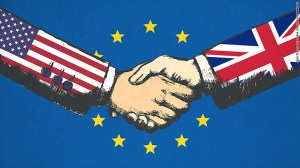
European Union - USA - UK British flags

Support Semi-Partisan Politics with a one-time or recurring donation:

Agree with this article? Violently disagree? Scroll down to leave a comment.

Follow Semi-Partisan Politics on TwitterFacebook and Medium.

Oh, So Now You’re A Liberal? Part 2 – Maajid Nawaz Calls Out The Illiberal British Left

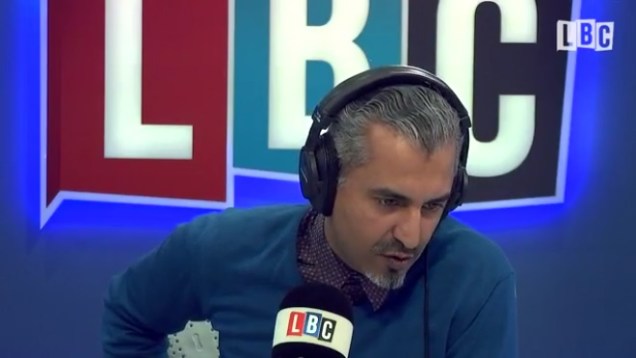
maajid-nawaz-lbc-liberalism-left-authoritarianism

Maajid Nawaz warns about the rise of the “Control Left”, an authoritarian tendency which has left liberalism and liberal values far behind

Recently, this blog took to task those on the authoritarian Left who have reacted to Brexit and the election of Donald Trump by falsely draping themselves in the clothes of liberalism and hysterically mourning an idealised liberal past which they did as much as anybody else to knife in the back.

In that piece, I made the point that people who only weeks ago could be found arguing for greater censorship, the expansion of “hate crime” legislation, trigger warnings, safe spaces, higher taxes on alcohol and tobacco, national ID cards, longer pre-trial detention periods and even more intrusive government surveillance have absolutely no business calling themselves “liberal”.

Though the authoritarian Right are by no means innocent in this regard, it must be acknowledged that most of the recent assaults on liberty and liberalism have come from the Left, in America as well as Britain.

Picking up on this thread, Maajid Nawaz hits the nail on the head on his LBC talk radio show yesterday:

I suspect that the most vocal elements of the Left – and I don’t mean every single person who sympathises with left-wing views, let me make that very clear, I’m talking about the organised left, the most vocal elements of our Left, and the Left in the form of Momentum who have taken over the Labour Party under Jeremy Corbyn – my view is that that Left, today’s Left, today’s active, organised Left is no longer liberal.

What do I mean by that? Well let’s look at a few things that I don’t consider to be liberal. Let’s look at censorship, let’s look at being “post-factual”, let’s look at violence being seen as an option, let’s look at prioritising group identity over individual rights. None of these four traits are liberal.

Censorship is not liberal, so when today’s organised Left begins organising in campuses and across colleges across the nation, across the world, and says things like “you cannot say that here, this is a safe space, we will exclude you from speaking because your views offend us”, when they choose to take offence, when they become more sensitive, and so sensitive in fact that they want to shut debate down simply because they don’t like what somebody is saying, that’s not a liberal approach. A liberal will always prioritise free speech over offence.

What about being post-factual? Well I remember – and I hope many of you remember – at the beginning of this year, the way in which mass sex attacks were reported in the German city of Cologne. And what was known then as the liberal press actively conspired to cover up that news. Facts were known and they were not reported because they didn’t want to be accused of being racist. The German state television station had to come out and openly apologise, days later, when they realised that this story was not one that they could cover up. So being post-factual is also not being liberal.

What about considering violence as an option? When you have the Shadow Chancellor of the UK Labour Party, John McDonnell, being caught on video saying that it’s okay to riot, it’s okay to destroy property and to ruin people’s lives and their private property, that’s not liberal. That may be anarchist, it may be revolutionary hard-left socialist, as John McTernan suggested, but it isn’t liberal.

When people are prioritising group identity over individual rights, saying things like “kill all white men”, saying things like “black people can’t be racist because racism is about power and only white men have power” – Diane Abbott says that. Well I’m sorry Diane Abbott MP, go and walk into any council estate and speak to a white working class lad and try and have a rational, reasonable conversation with that young white working class lad and tell him that he has more power than you, and that’s why you can’t be racist towards him. Complete and utter rubbish. But when group identity is prioritised over individual rights in that way, when leftist activists think it’s okay to say “kill all white men” and that that’s somehow an empowering statement, when they think it’s okay to be racist to all white people as a group, and think somehow that’s what it means to be progressive, erasing the individual, stereotyping entire groups, that is not liberal.

So I have taken the view that this behaviour – censorship on the organised Left, post-factual behaviour, violence being seen as an option and prioritising group identity over individual rights, that isn’t liberal. And like the alt-right has emerged, we’ve now got this new group – it’s called the Control Left. They want to control our lives, control what we think, control how we behave, control how we even feel. And control what we think. That is not liberal. That is the Control Left.

So my message to you, Control Left, is stop telling us you are liberal. My message to the press: stop describing them as the liberal Left, they are no longer liberal. Call them for what they are – Control Left.

A devastating excoriation of the modern Left. And while I’m not sure that Nawaz’s preferred phrase “the Control Left” will catch on, it does describe quite plainly their new strategy of bringing about change not through persuasion but by coercion and force.

Maajid Nawaz has cause to be particularly aware of the new illiberalism gripping the Left, having recently been singled out by the fabled Southern Poverty Law Center in America for supposedly promoting anti-Islamic extremism, a ludicrous accusation given that Nawaz is himself a Muslim. (Nawaz’s real sin was to call for moderate Islam to take more responsibility for its violent, fundamentalist offshoots at a time when much of the Left is furiously pretending that “there is nothing Islamic about ISIS”).

We now need many more people to summon the courage and willingness to tell truth to power exhibited by Maajid Nawaz. It’s all very well having dyed-in-the-wool conservative, libertarian or conservatarian journalists and bloggers such as myself ranting on about the many ways that the modern Left has left liberalism behind. But we can only carry the message so far – since it is we who are most often the targets of this censorship and identity politics, it is too easy for the Control Left to accuse us of acting in our own self-interest rather than the national interest.

Therefore it is vital that more left-wing liberals like Maajid Nawaz stand up and call out these authoritarian tendencies, declaring “not in my name” to the censorship, bullying and control freakery of the modern Left. This is in their interest as much as anyone else’s – with the election of Donald Trump in America, we have seen that peddling a constant diet of authoritarian identity politics eventually provokes a similar identity politics backlash among those groups not marked out for special favour by the Left.

So for the country’s sake as much as their own, those on the Left must learn to renounce authoritarianism and seek to achieve their political agenda through persuasion rather than coercion. To continue on their present course is to plant the seeds of their own destruction, as well as ours.


liberalism

Support Semi-Partisan Politics with a one-time or recurring donation:

Agree with this article? Violently disagree? Scroll down to leave a comment.

Follow Semi-Partisan Politics on TwitterFacebook and Medium.

The Myth Of Post-Factual Politics

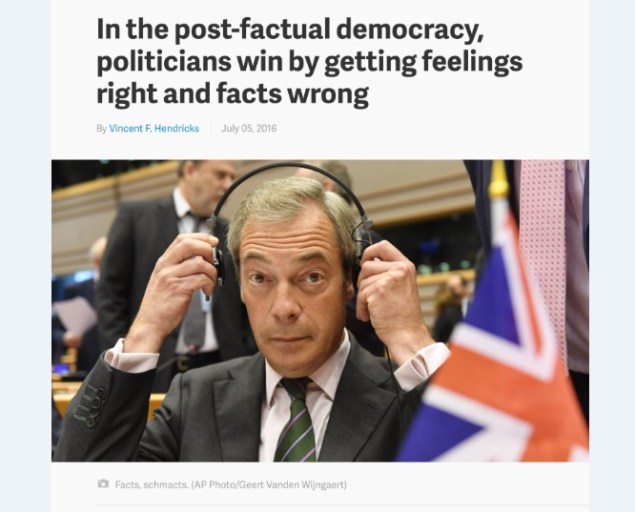
post-factual-post-truth-democracy

The term “post-truth politics” is starting to become an emotional comfort blanket for those people unwilling to examine the reason for legitimate electoral failure

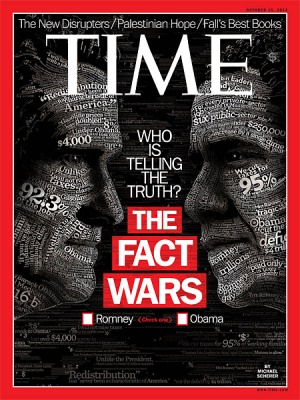
In these interesting times, a lot is being made of the idea that we live in a supposedly “post-truth” or “post-factual” society, where political debates take place and elections are swung not on the basis of evidence and rationality but rather on the basis of bluster and superstition.

Even those of us who supported either Brexit or the election of Donald Trump (this blog was strongly in favour of the former but against the latter) should acknowledge that there is a degree of truth to this criticism of the modern media landscape. As this Buzzfeed article makes clear, when there is a whole industry comprised of people producing inflammatory, fake pro-Trump news articles to earn ad revenue from the clicks of credulous partisans eager to have their existing biases confirmed, something is clearly awry.

But it is also true that dismissing electoral losses as the result of dumb people being duped in a lamentably post-factual world – just as some Trump supporters prepared for defeat by insisting that losing to Hillary Clinton could only be the result of a shadowy conspiracy – is an emotional comfort blanket too easily seized by people who don’t want to do the hard work of understanding why their own ideas were rejected by the public.

I recently attended the debate marking the launch of the 2017 Orwell Prize in London, where the panel – including Polly Toynbee and the excellent Christopher Snowdon – debated the role of the media and of “experts” in the recent EU referendum. Snowdon gives an excellent summary of his own remarks here, and concluded his speech:

Lying may be more morally objectionable, but bullshit is more common and it is just as damaging to public understanding of the world we live in. My argument is not that we are living in a truthful age. On the contrary, there is bullshit everywhere but deliberate political lies make up a very small portion of it – and that portion is not growing.

As long as people have an appetite for having their biases confirmed, newspapers will continue printing bullshit. As long as people think they can get away with it, they’re going to mislead the public. I don’t think we live in the post-truth era because I don’t think there was ever an era of truth. We are still in the pre-truth era and probably always will be.

As the other panellists – Toynbee most forcefully, of course – lamented the way in which the Evil Murdoch Press had supposedly manipulated its uniquely gullible readership with lies and disinformation while Evil politicians like Michael Gove encouraged people to ignore the pro-Remain advice of self-described “experts”, thus causing Brexit, I felt the need to take a stand. So at the appropriate time I seized the microphone and pointed out that wheeling out expert after expert to repeat the establishment line that Brexit would ruin the British economy (as though none of these experts didn’t let their personal biases and preferences colour their opinions) made all other aspects of the decision secondary considerations.

Sky News and the BBC had an endless parade of self-described experts talking about the theoretical economic consequences of Brexit, yet hardly any time was given to experts on governance, democracy, history or constitutional matters. At some point a decision was made that this debate would be All About Economics, and nothing else. One can dispute the dismal predictions of the Remain campaign’s economic “experts” – this blog certainly did – but at least we discussed economics. There was barely a proper discussion about democracy or the constitutional implications of staying or leaving the EU.

This was unfortunately taken by the debate’s moderator to mean that “feelings matter too”, which is not what I was saying at all. My point was that qualitative facts are every bit as important as quantitative ones, and often even more so. I would have expected more sympathy for my viewpoint – among the trendy-lefty, pro-Corbyn crowd at the event were countless people who clearly spend much of their time railing against free markets and capitalism, yet who seem to unquestioningly believe that the slightest potential threat to future GDP growth would make seceding from the European Union in pursuit of democratic renewal a calamitous idea.

When it comes to British membership of the EU, the Remain campaign’s Project Fear spoke only about numbers (and skewed ones at that), with only the occasional bit of fluff about “friendship ‘n cooperation” thrown in as a rhetorical garnish. My point was that in voting for Brexit, it is not that the British people disregarded the numeric facts entirely, but rather that they cared more about other, qualitative facts. Facts to which the Remain campaign never sought to acknowledge, let alone tackle.

The facts vs emotion reduction which met my contribution to the Orwell debate and which now colours nearly all of the media coverage of our supposedly “post-truth society” is therefore a bit too simplistic. There are quantitative facts but there are also qualitative facts – truths which are not based on emotion or hunch or prejudice, but which nonetheless cannot be added up in an Excel spreadsheet, slapped on an infographic and shared on social media.

I voted for Brexit because I believe that the EU actively harms and undermines the democracies of its member states, by deliberate design. I marshalled many facts to back up this position during the campaign – from primary and secondary historical sources, the stated positions of current EU leaders and various other proofs. Just because they are not quantifiable and I could not declare (for example) that leaving the EU will make Britain 11.2% more democratic and give the people 8.4% more control over the decision makers does not make the facts on which I argued my case untrue. And reducing those qualitative facts about democratic control, accountability and the known history and trajectory of the EU as mere “emotion” unfairly diminishes those facts.

When Brexiteers present quotes from EU “founding fathers” speaking of their vision for a federal Europe and tie them to quotes and draft bills from contemporary EU politicians pushing towards the same goals, these are facts. They are not quantifiable, but they are solid facts, much more than mere emotion. And they deserved to be considered and engaged with, yet by and large they were not during the campaign.

Modern politics has become excessively numbers driven. But when the Overton Window is so narrow, the range of policy options so constrained and politics largely reduced to the technocratic management of our public services then that probably becomes inevitable. And we must counter this trend by giving more of a focus to narratives and general principles again. That will lead to greater political engagement.

At present there is far too much self-satisfied criticism of “post-factual politics” in which defeated pro-EU supporters express alarm that people supposedly ignored the only facts available to them and made irrational decisions against their own self interest, and this is not so. There were other, unquantifiable facts which moved people to vote for Brexit. And these pivotal criteria deserve to be acknowledged as legitimate facts, not dismissed as mere emotions.

It is easy and comforting to believe that one’s own side thinks and acts according to reason, logic and evidence while one’s opponents are moved by base emotion, superstition or prejudice. But the divide is very rarely so clear.

And if the “post-truth politics” crowd do not soon realise this and practice some humility, that emotional comfort blanket could all too quickly become a funeral shroud when they next face the electorate.


time-magazine-the-fact-wars

Support Semi-Partisan Politics with a one-time or recurring donation:

Agree with this article? Violently disagree? Scroll down to leave a comment.

Follow Semi-Partisan Politics on TwitterFacebook and Medium.

Oh, So Now You’re A Liberal?

liberalism

The vote for Brexit and Donald Trump’s presidential election victory seems to have wrongly convinced an entire army of snarling, leftist authoritarians that they are actually the virtuous defenders of liberalism

Is anybody else getting mighty sick of the constant parade of left-wing, Big Government-supporting authoritarians suddenly rushing to cloak themselves in the veil of “liberalism” as they struggle to process what they see as successive defeats in the EU referendum and the US presidential election?

I can’t think of a word that has been more overused by pundits since everybody got together a couple of years ago and decided that the related N-word (neoliberalism) was this season’s hottest fashion statement, and started accusing everybody whose views they dislike of being an Evil Neoliberal, as though it were some devastatingly intellectual insult.

Here’s the FT, weeping into their cornflakes about the supposed death-throes of liberalism:

Mr Trump’s victory, coming after the Brexit referendum vote in Britain, looks like another grievous blow to the liberal international order. Mr Trump must decide, by his actions and words, whether he intends to contribute to the great unravelling, at incalculable cost to the west.

And the Independent:

Democracy is changing, and not for the better, but those who believe in liberal values, tolerance and protecting the environment can learn from this setback and fight back.

The Independent, of course, promotes liberal tolerance through its courteous and magnanimous treatment of those who dare to dissent from its positions on social issues, climate change and global governance.

Here’s the Spectator:

In her concession speech, Clinton said her goal had been ‘breaking down all the barriers that hold any American back from achieving their dreams‘. This is the dream of liberalism, which seeks freedom from any social or economic constraint. Elites like Clinton feel confident that they can navigate a deregulated society in which class, gender, and race are all fluid. They support deregulated markets as well, confident that free trade and open borders will serve their own interests in the near term and the whole country’s in the longer term.

Freedom from any social constraint? Only if one happens to agree with the elite.

And the Spectator again, covering itself in even more glory:

The challenge to liberalism is still seen as an argument to be won rather than an irreversible sea-change. But, if anything, the scale of the problem has been understated. The core tenets of liberalism are freedom and equality, ideas that are under siege.

Oh, and let’s not forget the prime minister herself, Theresa May, speaking at the Lord Mayor’s banquet on Monday evening:

Change is in the air. And when people demand change, it is the job of politicians to respond.

But it’s also the job of all those in positions of influence and power – politicians, business leaders and others – to understand the drivers of that demand too.

And I think that if we take a step back and look at the world around us, one of the most important drivers becomes clear – the forces of liberalism and globalisation which have held sway in Britain, America and across the Western world for years have left too many people behind.

Let’s be clear: those forces have had – and continue to have – an overwhelmingly positive impact on our world.

It really has come to something quite strange when Theresa May – a flinty eyed authoritarian who gives me pause any time I check a book out of the library, lest her government use my borrowing history as a pretext for throwing me in jail next week – seeks to wrap herself in the mantle of small-L liberalism.

But now everyone seems to be at it, suddenly claiming that they are terribly “liberal” while the people they dislike are not. Politicians and pundits who only months ago could be found calling for people to be banned from entering the country due to their political beliefs are now rending their garments at the election of a man who suggested that people should be banned because of their religious ones. And in so doing, they declare themselves to be the defenders of liberalism, while utterly oblivious to the irony of it all.

People who wanted to usher in national ID cards, strengthen the surveillance state, extend pre-charge detention, ban UKIP voters from fostering or adopting children, throw people in jail for their Facebook and Twitter posts, arrest people for singing the wrong songs at a football match, ban advertisements for being offensive, hike taxes even higher on cigarettes or alcohol or ban them altogether, levy regressive taxes on soft drinks, erect safe spaces on university campuses, slap trigger warnings on academic syllabuses, shame or punish people for the Halloween costumes that they choose to wear, get people fired from their jobs for holding or expressing the wrong opinion, strangle religious freedom and force people to violate their faiths by positively affirming the actions and lifestyle choices of others – these people are suddenly all over the airwaves, lamenting that it is actually those Evil Brexiteers and Donald Trump supporters who have supposedly brought our previously-idyllic liberal age crashing down in flames.

Well sorry, but this pious, self-aggrandising argument is complete baloney. I can’t speak for Donald Trump supporters, not being one myself, but I am very adamant that my vote for Brexit was a liberal vote for strong, globally-engaged nation state democracy. I and millions of others voted to leave the European Union because it sought to impose a degree of supranational government upon us which far outweighs the limited extent to which most Britons consider themselves European and consent to such governance. I did so because I judged that my inalienable rights to life, liberty and the pursuit of happiness are to this day best defended by a strong nation state with a reinvigorated national democracy, and not a remote supranational union with some of the superficial trappings – but none of the spirit – of democratic accountability. Voting for Brexit was perhaps the most profoundly liberal thing I have done on my thirty-three years on this good Earth.

And yet now I am supposed to sit back while every two-bit authoritarian with a newspaper column publishes tedious identikit dirges alleging that I, a staunch libertarian conservative, am supposedly at the vanguard of a dystopian new illiberal movement sweeping across the world and shrouding humanity in darkness and uncertainty? Hell no.

If liberalism is so great – and by and large, it is – then it would be nice if some of liberalism’s new fair-weather friends tried to remember the ideology’s core principles once they have finished weeping about Trump and Brexit and turned their attention back to more mundane political events. Perhaps they might care to remember the term they so glibly appropriated next time they call for something they disagree with to be banned, or for somebody who offends them to be punished by the criminal justice system. What do you think are the chances that this will happen?

After a week of this incessant, tedious refrain about the “death of liberalism” from the commentariat, I have just about had enough of my liberalism being culturally appropriated by the snarlingly authoritarian Regressive Left. It is only in the reflection of Donald Trump or Nigel Farage’s wildest rhetoric that their own paternalistic, control-freakish, coercive instincts can be even semi-plausibly pitched as being remotely liberal, and those of us with long memories and functioning brains know these pearl-clutchers for what they really are – persistent, deadly enemies to true liberalism.


Postscript: In this excellent piece, Pete North slaps down the idea that the West is somehow turning its back on liberalism, drawing a crucial distinction between genuine small-L liberalism which is as popular as ever and its decadent, identity politics and victimhood culture-infused cousin which has indeed been rejected by the electorate.

Money quote:

In a liberal society we appreciate that we all have our distinctions and limitations and we recognise that nobody should endure discrimination or punishment for those facets which cannot be changed. Gender, sexual preference, skin colour. But it goes further than that. We try to open doors for people os that people can break out of predetermined roles and destinies. That to me is social progress, where nobody is limited by class and physical attributes.

But when liberals begin to attack the very foundation of our morality and our values and seek to replace them with an ultra-permissive, anything goes morality we lose any kind of cohesion and moral authority. Moral relativism takes hold to such an extent that we can no longer defend those things we value.

What the left have done is to identify all social norms as inherently evil – which has given rise to the cult of the self which in turn has spawned the now toxic brand of feminism we see on the internet and the perverse social justice movement which processes everything through the prism of identity. It centres around a certain narcissism whereby individual rights become entitlements on the basis of one’s sense of victimhood. From this is born the right not to be offended or triggered – and with that goes the death of free speech. Opposition is inherently oppression it seems.

And this is why the culture war of the last decade goes so heavily with what is happening on a more visible level in politics. In what is now seen as a backlash against political correctness, there is something more seismic happening.

And North’s conclusion:

But then this tyranny of what is laughingly known as progressivism is on borrowed time. It always was a moral and intellectual perversion and it was always a minority view. How it came to be one of the most powerful ideas of a century is for the historians but now it seems the majority have finally lost patience and stood up to the left. In this we are not turning our backs on liberalism. We are merely putting an end to the gradual erosion of those, dare I say it, traditional values on which our modern and open society is built. I think this is what makes Theresa May, herself a church and shires Conservative, the right lady at the right time.

The sad part of this is that there will inevitably be a tiny minority who think we are going back to the old days where rampant and open homophobia is acceptable and we will no doubt see an unfortunate spike in racist incidents. But it is a typical left wing lie to say that mainstream society has suddenly become intolerant and racist. That trick might have worked for the last twenty years but the election of Trump tells you that the majority no longer care what you call them. The more offensive to the left the better.

And it is so telling that across the USA we now see the left spitting venom. We now see the true face of the “tolerant” left in all its bile. We can see that it was never about advancing a better society for all. It was about the minority wielding power over the majority – to impose a twisted morality on society without its consent – from the United Nations to the local primary school.

I repeat: genuine, small-L liberalism has not been rejected by the people, and is only under marginally more serious threat from ignorant authoritarians like Donald Trump than it has been over the past decades from highly learned progressives who sought to impose their “progressive” worldview on an uncertain population while actively criminalising dissent.

Those weeping most loudly today about the supposed death of liberalism have often themselves done as much as anyone to damage liberalism themselves through their decidedly illiberal and intolerant past behaviour.


liberalism-john-stuart-mill

liberal-definition

Support Semi-Partisan Politics with a one-time or recurring donation:

Agree with this article? Violently disagree? Scroll down to leave a comment.

Follow Semi-Partisan Politics on TwitterFacebook and Medium.