Quote For The Day

Brendan O’Neill, writing on Facebook:

With trustafarian Corbynistas on one side and media Blairites on the other, Labour is now entirely the property of people who do not labour, and have never laboured, and will never labour, and whose only experience of labour is when they keep an eye on the stupid bloke from Barking who probably voted Brexit as he fixes their boiler, to make sure he doesn’t steal anything.

An insult made devastating because it is so undeniably true.

This is not to say that there are not still (potentially) many good people within the Labour Party – people who perhaps voted Remain but who do not see Brexiteers as unthinking, subhuman trolls with racist tendencies, people who want to bend markets to do more of the state’s bidding but who have fundamentally made their peace with capitalism.

In fact, Brendan O’Neill was at pains to say that the Labour Party is now the “property” of the elites, not that the entire composition is rotten – just the Corbynite and centrist factions together with their sycophantic allies. Meanwhile, the decent people of moderate left-wing persuasion are utterly out of power and deep in the political wilderness right now. The direction of the party is firmly out of their hands.

Instead, with one hand on the reins of power we have the die-hard Corbynistas with their coherent but deeply unpopular worldview, and on the other we have the angry, bitter centrists, furious at having been forced from power since 2015 and eager to snatch back control so that they can pick up right where they left off, ratcheting up the size of the state, bowing down to public sector interests and eagerly fellating the NHS-Industrial Complex.

Both groups are led (if not wholly constituted) by elites – on the Corbyn side, the kind of “trustafarians” who will never have to worry if far-left policies tank the economy and render millions permanently unemployed, and on the centrist side, London-dwelling political and media types locked in an unhealthy symbiotic parasitic relationship and utterly beholden to the previous pro-EU status quo.

Where are the Labour MPs who rise up through the trades union, who might have some tangential claim to represent the interests of ordinary workers? Where are the Labour parliamentary candidates with actual firsthand knowledge of working in modern day call centres, warehouses and retail environments? Where is the great body of Labour MPs and candidates who represent the 52% of British voters who voted for Brexit in a non-partisan referendum? As a solid caucus within the Parliamentary Labour Party, they simply do not exist.

The Labour Party is not run for their benefit and so does not require their input.


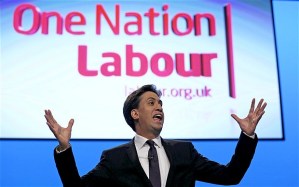
Ed Miliband Labour One Nation

Support Semi-Partisan Politics with a one-time or recurring donation:

Agree with this article? Violently disagree? Scroll down to leave a comment.

Follow Semi-Partisan Politics on TwitterFacebook and Medium.

On Article 50 Day

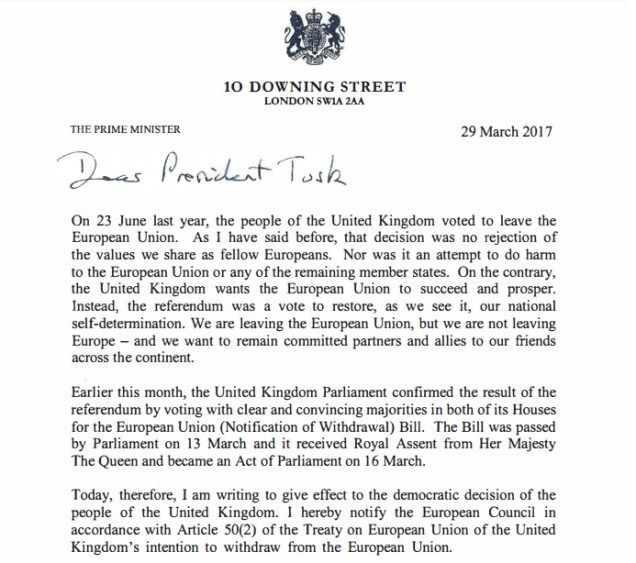
United Kingdom Britain EU Secession - Article 50 Letter - Downing Street - Theresa May - Donald Tusk - European Union

A genuine opportunity for democratic renewal – if we can keep it

Many believed – either through arrogance or hopelessness – that this day would never come.

Article 50 Day: the day that the British government triggered Article 50 of the Lisbon Treaty and formally signalled to the European Union our decision to secede from that dysfunctional, anachronistic and profoundly anti-democratic political union, conceived more than a century ago and constructed in a post-war age now almost completely alien to us.

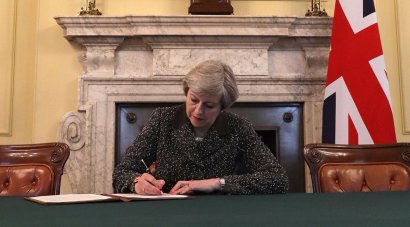
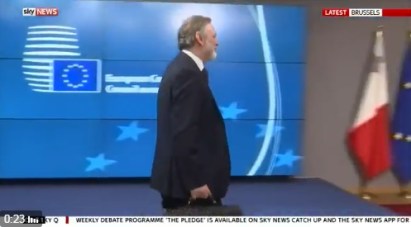
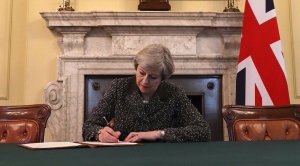
Of the many pictures which may come to represent “Brexit Day” in historical memory, the two images which struck me are the photograph of Theresa May signing the Article 50 notification letter in Downing Street last night, and the television footage of the British official (Ambassador Sir Tim Barrow) in Brussels, striding into the European Council building to deliver the note to president Donald Tusk.

Why? Because these images more than any other represent the astonishing triumph of democracy over the near-unanimous will of the political establishment.

Theresa May signing Article 50 Letter - Downing Street - Brexit - EU

Sir Tim Barrow - Article 50 letter - Brexit- European Union - Britain

Theresa May did not want to sign the Article 50 letter. During the referendum she campaigned, albeit half-heartedly and often nearly invisibly, for Britain to remain in the European Union before accepting the inevitable and promising to implement Brexit as she manoeuvred for the Tory leadership.

And the British civil service, foreign office and diplomatic corps, represented here by Tim Barrow, our Permanent Representative to the EU, certainly did not want to deliver the letter, so accustomed are they to thinking and operating only within the narrow tramlines of those competencies not surrendered to Brussels..

The generations of politicians, diplomats and bureaucrats who currently run Britain were raised on a narrative of national decline and inevitable dependence on the Brussels political union as the only means of amplifying our fading voice in world affairs. Their formative years were spent during the Winter of Discontent and marked by one post-war national humiliation after another. The tremendous post-1970s (Thatcherite) revival has failed to disabuse them of the utterly false, poisonous notion that Britain is a small and insignificant country, no longer capable of governing herself in the manner of other independent countries such as Canada or Australia, let alone as the fifth largest economy and major cultural, commercial, diplomatic and military power that we truly are.

By huge margins, these people were deeply wedded to Britain’s inevitable future as a European Union member state, and consider Brexit a huge mistake bordering on a tragic act of national self-harm. And yet Theresa May signed the letter, Tim Barrow delivered it, Article 50 was duly triggered and the process of Britain’s secession from the European Union was put into motion.

Why is this something to be celebrated? Because at a time when there is every reason for cynicism and doubt, it shows that at a fundamental level, the British people are indeed still in charge of their own destiny.

Theresa May did not want to sign the letter and Tim Barrow did not want to deliver it, but they did so because they retain a sufficient fear of (if not respect for) the public that they dared not abuse their power by overriding the results of a public referendum. Note that there is no such reticence about subverting democracy in the diminished union we are now leaving – unfavourable referendum results in member states (relating to EU treaties or the ill-fated constitution) have consistently been treated as unfortunate but minor setbacks and then sidestepped by the Brussels machinery, its leaders safe in the knowledge that they are so insulated from democratic accountability that they will suffer no consequences for their actions.

In Britain, however, there remained just enough fear of the people for our leaders to be forced to do the right thing, against their will. That’s not to say that they will get Brexit right, not by a long stretch – right up until Referendum Day, many Brexiteers were too busy hating the EU to identify the future relationship they wanted to have with it, while bitter Remainers did much to poison public and media opinion against the kind of transitional EEA deal which would have caused the least economic disruption. But given a mandate to take Britain out of the European Union our leaders are now doing so, however clumsily and against their will. This is as it should be.

Brendan O’Neill also gets it:

What we’re witnessing in Britain today, with Theresa May triggering Article 50, is something radical: the political class is going against its own judgement under the duress of the demos. The polite, peaceful duress of the demos, it should be pointed out.

We know that 73 per cent of MPs want to stay in the EU. We know many in the House of Lords are horrified by Brexit and were keen to hold it up. We know 70 per cent of business leaders wanted Britain to remain, and that some of them launched costly legal battles to try to stymie the Brexit momentum. And yet in the end, all of them, every one, has had to roll over and give in to the masses: to the builders, nurses, teachers, mums, old blokes, unemployed people and others who effectively said to the political class: ‘You’re wrong. We should leave’. To the people surprised that such a state of affairs can exist, that the political set can be made to do something it doesn’t want to by the mass of society, including even uneducated people: what did you think democracy meant? This is what it means.

Yes, this is what democracy means. To do anything else – to override or subvert the referendum decision for Brexit – would mean the triumph of technocracy  and well-meaning dictatorship over democracy.

We tend to forget, because it has not been this way within living memory for many citizens, but in a democracy the leaders are supposed to fear and respect the people and their judgment, not the other way around. As government relentlessly expanded and the bureaucratic state encroached ever more on our lives, we have unfortunately come to fear the government far more than government leaders fear the public – but not so with Brexit. Government ministers know that to defy the Brexit vote and seek to remain in the EU against the wishes of the people would visit such anarchy and destruction upon the country that they daren’t seriously even consider it (save inconsequential politicians such as Tim Farron). And so no matter how much they dislike it, today they implement our instructions.

Of course, Brexit is just one issue. In many other arenas of public life, officials have absolutely no qualms about defying public opinion and treating voters as polling units to be managed or placated rather than autonomous, thinking and engaged citizens to be feared and respected. We must take care not to merely repatriate powers from Brussels back into the arms of a power-hungry, over-centralised Westminster government that will fail to act in the interest of the UK’s diverse home nations and regions, and which carelessly surrendered its own powers to Brussels without democratic consent in the first place. Now, more than ever, we must hold our politicians and civil servants to account.

Brexit is the start of an opportunity for real democratic and constitutional reform, not an outcome in itself. Secession from the European Union makes the rejuvenation of our democracy possible, but by no means inevitable.

When queried by a stranger as to the outcome of the constitutional convention he was leaving, American founding father Benjamin Franklin famously replied: “A Republic, if you can keep it”.

Today, as Theresa May’s government (for all its many flaws) triggers Article 50 and serves notice on the European Union, we seek to reclaim our national self-determination and renew our democracy – if we can keep it. If we can rise to the occasion and collectively seize the great opportunity which now stands before us.


Theresa May signing Article 50 Letter - Downing Street - Brexit - EU

Support Semi-Partisan Politics with a one-time or recurring donation:

Agree with this article? Violently disagree? Scroll down to leave a comment.

Follow Semi-Partisan Politics on TwitterFacebook and Medium.

Donald Trump Victory Reaction: Everybody Take A Deep Breath

shun-the-non-believer

America’s new president-elect is bad, but he is hardly evil on a world-historical scale. Unfortunately, the hysterical media reaction to Donald Trump’s election victory leaves no room for nuance or restraint

In these fractious times, it is very difficult for those of us who fall into the “really didn’t want Donald Trump to win, but don’t consider his victory to be quite the end of civilisation” crowd to say anything, for fear of reprisal – not from Donald Trump supporters, but from certain anti-Trump activists who have taken to using a person’s level of anger at the election result as an indicator of their personal moral code or worth.

Since Trump’s unexpected victory, the strong message being transmitted by much of the left-wing post-election commentary has been that if you aren’t rending your garments, taking to the streets with burning torches, retreating to a safe space or dissolving into tears every five minutes then you must be a closeted Donald Trump supporter.

Look: I really really did not want Donald Trump to be the next president of the United States. This blog has been pretty clear about my estimation of Donald Trump and the low regard in which I hold the president-elect. But not every charge flung at Donald Trump by left-wing partisans deserves to stick, because some of them are major overreaches prompted by partisan fervour rather than objective accuracy. And it should be possible to point out where criticism of Donald Trump goes too far, or is flat-out wrong, without being accused of supporting the man himself.

It does nobody any good if this election causes America to fracture into three distinct factions: unapologetic pro-Trump supporters, furious anti-Trump activists and a group of pragmatists who want to make the best of a difficult situation but who have been cowed into sullen silence for failing to pick a side and express either blanket admiration or total hatred for Donald Trump. If the country is to knit back together, it is this final group which must act as the cords which bind the nation’s wounds and bridge mutual suspicion. Assailing people for neither hero-worshipping Trump nor treating him like Hitler really is not the smartest thing to do in terms of improving the toxic atmosphere in American politics.

I’m told that I cannot possibly understand what it is like to be black, disabled, Mexican, female, gay or transgender in Trump’s America. Well, okay. But I did grow up mixed race in 1990s Britain, when not everybody was super friendly toward people who are not white. Sure, I never had to fear being gunned down in the street by a policeman for walking or driving suspiciously, but as a child I have been shoved and called all the worst racial epithets one can think of. I didn’t let it scar me for life and as I’ve grown older I can probably count the total number of verbally or physically hostile interactions over the past decade on two hands, but I certainly don’t have the dreaded “white privilege”. Yet while I certainly do not look forward to Donald Trump’s presidency, I do not fear it in a physical sense.

Donald Trump is objectionable for all of the reasons that the mainstream media has (belatedly) gotten around to pointing out. He is vulgar and thin-skinned, and in a confrontational situation he will use any defining characteristic to taunt or belittle an opponent. If you are fat, Trump will harp on about how massive you are. If you are not conventionally attractive, Trump will be sure to point that fact out to everyone. And most distastefully, he will apparently do the same if you are disabled. Donald Trump is not a nice person.

But there is vast gulf between being personally repellent and representing an active physical danger to the very same people that Trump insults on Twitter, in television interviews or on stage at his rallies. And we need to recognise that fact. It should be possible to abhor Donald Trump’s mockery of a disabled journalist without making the leap of imagination that a Trump presidency will somehow lead to the state-sanctioned persecution of disabled people. It should be possible to oppose Donald Trump’s most ignorant or insulting rhetoric about racial minorities without imagining World War 2 era Japanese internment camps for black people and lawful, legal immigrants.

The point is this: if we go nuclear in every single criticism of Donald Trump, we have nowhere left to go when somebody with truly severely racist or homophobic views comes along. It is important to leave some slack in our language so that we have room left to describe true evil when it crosses our path. If we wear out our strongest warnings and our most alarmist rhetoric on somebody who has a foul mouth but no evident plans to single out American citizens for persecution, what do we do if one day there is a presidential candidate who actively refuses to associate with black, Hispanic, gay or trans people and who runs on an unabashedly Jim Crow platform?

(Furthermore, I feel compelled to note that right now it is the Social Justice, Identity Politics Left which is clamouring to bring back racial and gender segregation, and not the conventional or alt-right).

Even as I write this, I can feel some people becoming outraged and accusing me of being a Trump apologist. But Trump is terrible! Yes, he is really bad. But the momentary catharsis of accusing Donald Trump of every prejudice and evil under the sun, whether each one is deserved or not, is really not worth the additional damage which going nuclear is doing to our political discourse. At some point it might be nice to persuade some of those who voted for Donald Trump in 2016 to vote for somebody else in 2020. It will be much easier to engage them in dialogue if we have not first accused them of being latter-day Nazi collaborators.

If it sounds like I am rather treading on eggshells in this piece, it is because I am. Trump’s election victory has divided America, divided the world, divided families. And maybe two weeks after the election is too soon to expect the blood to have cooled and objectivity to reign. So while I struggle to put into words what I am trying to say, I encourage everybody to read this piece by Scott Alexander of the SlateStarCodex blog, who offers some excellent perspective and advice.

(Hat tip to Brendan O’Neill for bringing the piece to my attention on Facebook).

It’s a long piece of analysis, but I will quote the conclusion, which should be required reading for everyone in America (and anyone else moved to write about American politics):

Stop fearmongering. Somewhere in America, there are still like three or four people who believe the media, and those people are cowering in their houses waiting for the death squads.

Stop crying wolf. God forbid, one day we might have somebody who doesn’t give speeches about how diversity makes this country great and how he wants to fight for minorities, who doesn’t pose holding a rainbow flag and state that he proudly supports transgender people, who doesn’t outperform his party among minority voters, who wasn’t the leader of the Salute to Israel Parade, and who doesn’t offer minorities major cabinet positions. And we won’t be able to call that guy an “openly white supremacist Nazi homophobe”, because we already wasted all those terms this year.

Stop talking about dog whistles. The kabbalistic similarities between “dog-whistling” and “wolf-crying” are too obvious to ignore.

Stop writing articles breathlessly following everything the KKK says. Stop writing several times more articles about the KKK than there are actual Klansmen. Remember that thing where Trump started out as a random joke, and then the media covered him way more than any other candidate because he was so outrageous, and gave him what was essentially free advertising, and then he became President-elect of the United States? Is the lesson you learned from this experience that you need 24-7 coverage of the Ku Klux Klan?

[..] Stop turning everything into identity politics. The only thing the media has been able to do for the last five years is shout “IDENTITY POLITICS IDENTITY POLITICS IDENTITY POLITICS IDENTITY POLITICS IDENTITY POLITICS!” at everything, and then when the right wing finally says “Um, i…den-tity….poli-tics?” you freak out and figure that the only way they could have possibly learned that phrase is from the KKK.

Stop calling Trump voters racist. A metaphor: we have freedom of speech not because all speech is good, but because the temptation to ban speech is so great that, unless given a blanket prohibition, it would slide into universal censorship of any unpopular opinion. Likewise, I would recommend you stop calling Trump voters racist – not because none of them are, but because as soon as you give yourself that opportunity, it’s a slippery slope down to “anyone who disagrees with me on anything does so entirely out of raw seething hatred, and my entire outgroup is secret members of the KKK and so I am justified in considering them worthless human trash”. I’m not saying you’re teetering on the edge of that slope. I’m saying you’re way at the bottom, covered by dozens of feet of fallen rocks and snow. Also, I hear that accusing people of racism constantly for no reason is the best way to get them to vote for your candidate next time around. Assuming there is a next time.

My emphasis in bold. Scott Alexander concludes with this plea:

Stop centering criticism of Donald Trump around this sort of stuff, and switch to literally anything else. Here is an incompetent thin-skinned ignorant boorish fraudulent omnihypocritical demagogue with no idea how to run a country, whose philosophy of governance basically boils down to “I’m going to win and not lose, details to be filled in later”, and all you can do is repeat, again and again, how he seems popular among weird Internet teenagers who post frog memes.

In the middle of an emotionally incontinent reality TV show host getting his hand on the nuclear button, your chief complaint is that in the middle of a few dozen denunciations of the KKK, he once delayed denouncing the KKK for an entire 24 hours before going back to denouncing it again. When a guy who says outright that he won’t respect elections unless he wins them does, somehow, win an election, the headlines are how he once said he didn’t like globalists which means he must be anti-Semitic.

Stop making people suicidal. Stop telling people they’re going to be killed. Stop terrifying children. Stop giving racism free advertising. Stop trying to convince Americans that all the other Americans hate them. Stop. Stop. Stop.

I have no desire to denigrate the fear and pain of anybody who is in genuine fear following Trump’s election victory. I do not take perverse joy from laughing at the terror and misery of other people. But it is my contention that much of this fear has been manufactured by various people and for various reasons – some vaguely noble, others much less so.

Frequently we hear the refrain that various identity groups “no longer feel welcome in America”. Would that include gay people, whom President Barack Obama did not consider worthy of the institution of marriage until changing public opinion (and a big helping hand from Joe Biden) caused him to shift position? Would that include illegal immigrants, whom Hillary Clinton voted to thwart with a border fence and Barack Obama deported in record numbers? Would that include black people, whom the sainted Hillary Clinton once described as “super-predators“?

Once the excitement of the election has properly died down we urgently need to separate the things which are actually concerning about Donald Trump from the frivolous dangers which exist mostly in people’s minds.

Much is (belatedly) being written about how the media failed to do a good job covering Donald Trump’s presidential candidacy in the early months. Quite right too – they chased ratings, broadcast voyeuristically lingering live coverage of his meandering speeches for entertainment rather than educational value and failed to ask tough questions or do proper investigative journalism until way too late in the process.

But the media is failing now in a different way, having overcompensated for past sins by now reporting any hysterical fear about Donald Trump, no matter how absurd or far-fetched, as though it is inherently legitimate and worthy of consideration. Take this hypersensitivity to Donald Trump’s boorish rhetoric coupled with an infantilised population who sometimes seem to prefer to act like helpless babes rather than autonomous and resilient adults, and the result is not pretty. In fact, it is downright ugly.

I am very aware that this blog post is not up to the usual standard – it probably does not “flow” as it should, and is much more a stream of consciousness than anything else. But the bottom line is this: there will be enough work to do scrutinising the Trump administration and keeping its worst excesses at bay for the next few years without also turning on each other, fellow people who opposed Trump’s candidacy.

This post will likely see me damned by those who are fully on board the Trump train as well as those implacably opposed to Donald Trump (as I was) and determined to see only evil in everything that occurs until he departs the scene. So be it. I find it very strange to be in the position of the “moderate middle” for once – somewhere I never find myself when it comes to British politics – but there we are.

I knew there was a reason why I named this blog Semi-Partisan Politics.
 

donald-trump-presidential-election-victory-speech

Support Semi-Partisan Politics with a one-time or recurring donation:

Agree with this article? Violently disagree? Scroll down to leave a comment.

Follow Semi-Partisan Politics on TwitterFacebook and Medium.

Britain’s Leftist Open Borders Zealots Have Turned Migrants And Refugees Into Political Pawns

lily-allen-calais-jungle-child-migrants-refugees-2

The migrant crisis is too great an opportunity to ignore for many virtue-signalling members of Generation Me, Me, Me

Brendan O’Neill hits the nail on the head with his latest criticism of sanctimonious celebrity campaigners for open borders, in a piece entitled “You’re so vain, you think the refugee crisis is about you”.

O’Neill writes:

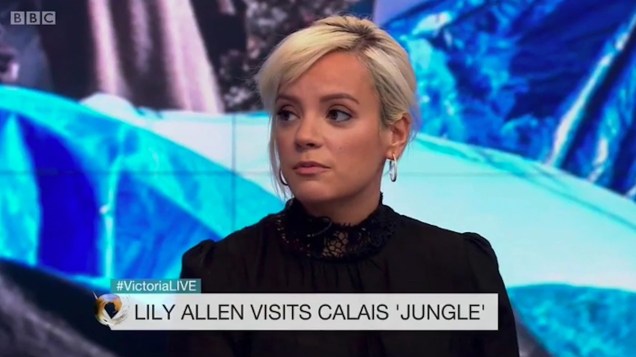
Narcissism runs through the discussion. The question these refugees raise is ‘What kind of people do we want to be?’, says one columnist. The keyword here: ‘we’. On the supposedly pro-refugee side, the game of self-reflection has been intense. Witness Allen’s TV-camera tears when she was chatting to an Afghan boy in Calais, after which the entire discussion became about her. Her image was everywhere. There was a thinkpiece war, some saying ‘Allen was right’, others saying ‘Allen was wrong’. It became about the role of celebrities in public life and whether emotionalism has a part to play in political decision-making, with the migrants reduced to mere objects of our self-reflection, and our tears, not the subjects of their own story.

Then there was Stella Creasy, the self-promoting Labour MP, interviewed in the London Evening Standard, promising to stand up for these child migrants regardless of how much flak she will get (shorter version: ‘I am brave’). The piece was accompanied by a massive picture of Creasy: no image of refugees, just her, because this is about her, not them. Then the story became all about Lineker, after he tweeted his concern for the refugees and was blasted by the Sun for doing so. What is the role of BBC people if not to be morally switched-on, a thousand op-ed scribblers asked, because this is about the Beeb, and the media, and us, not them. Jeremy Corbyn got stuck into the discussion of ‘what kind of people we want to be’ by praising Allen and Lineker for showing ‘Britain at its best’. It was a surreal illustration of the evacuation of substance and seriousness from public debate and their replacement by The Spectacle, largely of emotion: a political leader hailing media representations of sorrow for migrants over anything solid or concrete in relation to the actual lives of the actual migrants.

The media discussion has provided a striking insight into what being pro-migration largely means today: that you – the keyword being ‘you’ – are compassionate. Migrants are latched on to, not because of a genuine commitment to the idea of free movement (witness Creasy saying of course some migrants will have to be kept out), but rather as a means of self-distinction. To be pro-migrant is to be superior to those badly informed Others, who have a name now: Brexiteers. This is why so much of the child-refugee discussion has become bound up with Brexit-bashing. ‘What do we see each morning, post-Brexit, when we look in the mirror?’, asked a Guardian columnist of the child-refugee situation (keyword: ‘mirror’). He says we see a nation ‘hollowed out in terms of compassion’, but of course he means that is what ordinary, ugly, Brexit-voting Brits see in the mirror, not the migrant-loving Brits at the Guardian.

My emphasis in bold.

To be fair, Brendan also accuses many of the most strident anti-migrant voices of the same sin; I do not want to misrepresent his piece. But then Brendan O’Neill and Spiked (bless them) are enthusiastic advocates for completely open borders and the free movement of people everywhere – “it doesn’t matter if they’re kids, teens or adults: the length of their journey and the strength of their desire to live and work on Britain are surely sufficient to grant them access” – an idea rather ahead of its time (not to mention politically toxic so long as such disparities of wealth, culture and values persist).

But Brendan is absolutely right to note that the people of the Calais Jungle – genuine refugees and economic migrants alike – have largely been become political pawns in the ongoing British immigration debate. What matters to many people is how they are seen to talk about the migrant crisis rather than there being found an effective solution – as we saw only this week when Labour MP Chi Onwurah got upset about a poster mocking leftist credulity about migrants posing as refugees, claiming that it was “offensive” when it in no way targeted genuine child refugees.

O’Neill also writes perceptively of the “moral thrill” experienced by many of the “let them all in” camp, and indeed you see it coursing through numerous posts on social media, the intent of many seems far more to do with aggrandising the poster than trying to reach a reasonable compromise with those who do not want to let every last person into Britain unquestioningly.

But to his criticism of the political right:

The narcissism of the other side is striking, too. It is hard to believe that these right-leaning observers really believe that 70 young people coming to Britain will have any kind of terrible impact. And yet they demand that the arrivals’ teeth be checked to see how old they are, and furiously tweet photos of the young men with adolescent moustaches and mobile phones as if to say: ‘See! They’re grown-up! They’re dangerous!’ This is a performance of toughness, of security, to match the performance of compassion of the other side. Just as the pro-refugee side sidelines serious debate about freedom of movement and the role of their beloved EU and its Fortress Europe in creating this crisis, so the anti-refugee side dodges difficult questions of what is really causing a sense of insecurity in 21st-century Europe in favour of turning a handful of young refugees into symbols of existential disarray. Indicators, symbols, mirrors – that’s all these people are, to both sides.

I don’t see it that way at all. While some people do demand that Britain stop accepting any further refugees, a majority would be happy, I believe, if the UK government was simply a little less credulous and a bit more discerning about the people we do accept – both as to their age and the validity of their status as refugees rather than economic migrants.

The pictures do not lie – many of those already brought to Britain from the dismantled Calais Jungle camp are clearly adults. Does that automatically mean that they are not deserving of help? No, and I don’t think that anybody serious has claimed otherwise. But if this country is accepting fully grown men who claim to be children, what is to say that other levels of scrutiny which are supposedly taking place – like checking that entrants are not violent jihadists – are any more reliable? If the UK government is squeamish about insisting that child refugee applicants submit to dental tests to verify their age, have they also been reticent to ask whether the people they are ferrying from Calais to Croydon intend to wage jihad from inside their adoptive country? The incompetence we have already seen rightly makes us wonder about the incompetence which is being kept hidden from us.

These are perfectly legitimate questions to ask, and they do not constitute virtue signalling in the same way that the Left have seized on the migrant crisis to portray themselves as saints and the rest of us as sinners. Particularly in the context of the recent bloody history of ISIS using the migration crisis as a cover to slip Islamist extremists into Western countries, a basic level of scrutiny should be one of the first duties of government – yet there is now legitimate cause to fear that this scrutiny is not being applied for fear of causing “offence”, either to the migrants themselves or (more likely) to their powerful left-wing cheerleaders.

And here’s the thing.

Far right-wing rhetoric may be much more unpleasant to the ear than trendy lefty dronings about a borderless world of people holding hands beneath a rainbow. But leftist rhetoric and actions when it comes to the migrant crisis have killed far more people than anything said or done by those who are sceptical of accepting every last economic migrant who fancies a new life in Britain.

It was the leftist cheerleaders of Angela Merkel’s “open doors” policy who encouraged thousands more people to make the treacherous journey across Europe, some in genuine fear of imminent harm but many simply seeking a better life.

It was the leftist campaigners who accused sceptics of heartlessness for wanting to start turning boats back as a disincentive to make perilous the sea voyage who tacitly encouraged many more people to do so, and drown in the process.

And it was the false hope given by leftist agitators that Britain would ultimately accept a trumped-up moral obligation to accept thousands of people already enjoying the protection of France, hardly the most dangerous country in the world, which encouraged even more people to flock to the Jungle and remain there.

And yet we are supposed to believe that open borders zealots and sceptics are equally at fault when it comes to virtue signalling about the migrant crisis? Absolutely not. Exploiting migrants and refugees to burnish their own compassion credentials is the Left’s bread and butter, and it is an emotional comfort blanket whose cost can be measured in human lives.

So let’s not pretend that there is any moral equivalency in terms of blame for the suffering of migrants holed up in Calais. There is none. This is a crisis manufactured by the Left and encouraged by the Left for the benefit of the Left. They own it.

And all of Lily Allen’s tears will not wash away their culpability.


lily-allen-calais-jungle-child-migrants-refugees

Support Semi-Partisan Politics with a one-time or recurring donation:

Agree with this article? Violently disagree? Scroll down to leave a comment.

Follow Semi-Partisan Politics on TwitterFacebook and Medium.

Tales From The Safe Space, Part 41 – UCL Archaeology Students Triggered By ‘Scary Bones’

In tracking the spread of social justice/identity politics poison through the academic world, every day now seems to bring some new ridiculous example of petty intolerance or exaggerated student fragility. And each new story prompts the incredulous reaction that things can’t possibly get any more surreal, that we must surely have now reached Peak SJW. And then something even more ridiculous transpires on a Western university campus.

From the Daily Mail:

Students at UCL taking the archaeologies of modern conflict course have been told that they will encounter ‘historical events that may be disturbing, even traumatising’.

If they feel stressed, they can ‘step outside’ for the rest of the class ‘without penalty’, though they should catch up by copying the notes of another student.

Lecturer Gabriel Moshenska, who co-ordinates the UCL course on how archaeology can help unearth the truth about 20th and 21st century conflicts, said some students had been in the Armed Forces and may have suffered psychological trauma.

He admitted no one had ever complained that they found one of his talks upsetting and said the alert was ‘precautionary’.

What’s particularly concerning here is that the professor involved, Gabriel Moshenska, took the decision to add the precautionary trigger warning to his class entirely voluntarily, through his own initiative. There was no coercion to do so by angry students staging a sit-in outside his office, or through a coordinated social media campaign. Moschenska simply decided that people who had signed up to study the archaeology of modern conflict might need to be warned that they would encounter the remnants of conflict during the course of their studies.

What this shows us is that the Cult of Social Justice and Identity Politics, and its associated infantilising of students, has reached a critical mass whereby the culture of enforcing safe spaces, trigger warnings and treating grown adults like they are children takes place automatically without any further need for threats or campaigns. Professors and lecturers are capitulating to the student babies before anything is even demanded of them, either because they simply want an easy life and to avoid conflict, or because they actively support these efforts to infantilise young adults.

This is not a good development. If we thought it was bad when universities like Yale and Mizzou limply rolled over and capitulated when threatened by snarling, baby-faced SJWs with their protests and boycotts, that’s nothing compared to the further setbacks we may witness when faculty are active co-conspirators.

And this can lead nowhere good, as Brendan O’Neill laments The Spectator:

But of course there’s a major problem here: the relentless infantilisation of students, the treatment of them as overgrown children liable to be plunged by mere words or images into actual trauma (‘a disturbing experience which affects the mind or nerves of a person so as to induce hysteria or psychic conditions’: OED). The very idea of the university becomes impossible if students are presumed to be so mentally fragile that even class chatter could unhinge them psychically.

[..] This presumption of mental frailty among students, now seen as so psychically vulnerable that even F Scott Fitzgerald might traumatise them, is antithetical to the whole idea of university life, whose starting point must surely be that young adults are not only mentally competent but morally autonomous and intellectually curious. The overuse of the word ‘trauma’ to describe everything from an archaeology class to an old play shows how entrenched this view of students has become. As an American professor of psychology says, ‘When we describe misfortune, sadness or even pain as trauma… [we] turn every event into a catastrophe, leaving us helpless, broken and unable to move on’. In short, the more we tell young adults that everything is potentially traumatic, the more likely they are to experience everything as traumatic, or at least terrifying. We’re seriously teaching young people to see Shakespeare as potentially harmful to their mental health.

Strikingly, the UCL archaeology lecturer says that so far none of his students has accepted his offer to leave a ‘traumatic’ class discussion. That’s encouraging. It’s also revealing. It suggests the new campus craziness, the wild allergy to difficult debate and fear of offensive texts, doesn’t always come from students themselves. It’s been institutionalised, among actual academics, to such an extent that universities no longer instil in their students the Kantian idea that one should ‘Dare to know’ but rather tell them: ‘Sometimes it’s risky to know. What you find out might hurt you. So maybe you shouldn’t know that thing, or read that book, or listen to this lecture.’ The safety of ignorance.

Brendan O’Neill is more optimistic than I – he sees it as a positive thing that none of Nanny Moshenska’s students have yet chosen to avail themselves of their Right to Flee. And I suppose it is a good thing. But when professors provide even the option of leaving the classroom when confronted with learning material that arouses anything but positive emotions, they effectively legitimise the idea that words and ideas can cause actual physical harm, that being exposed to contrary viewpoints or shocking information is somehow dangerous, and that avoidance coping (staying away from things that upset you) actually works. In reality, there is no proof for any of these assertions, and many reasons to suspect that they are complete psychobabble hokum.

This year’s intake of Archaeologies of Modern Conflict students may be a hardy bunch (by the low standards we now set for young adults, meaning they won’t burst into tears and soil themselves at the sight of a human skull). But now that it is widely known that professors and Serious Adults consider it perfectly acceptable if students do have extreme reactions to academic material and need to flee the lecture hall, such behaviour is normalised and given the tacit approval of university authorities, making it much more likely that future students – believing it to be normal – will opt out of lectures which cause them emotional or intellectual discomfort.

In other words, academic freedom (and the reasonable expectation that students be treated like responsible adults) is now trapped in a pincer movement, with angry SJWs demanding to be infantilised on one side, and spineless collaborationist professors happy to oblige them on the other.

If there is an upside to all this, it can only be that with student populations and turncoat faculties now racing to outdo each other in their contempt for academic freedom and personal resilience, we will now reach our eventual rock bottom – wherever that may be – sooner than was previously the case.

Rejoice and be glad.


Safe Space Notice - 2

Support Semi-Partisan Politics with a one-time or recurring donation:

Agree with this article? Violently disagree? Scroll down to leave a comment.

Follow Semi-Partisan Politics on TwitterFacebook and Medium.