The Mainstream Media Will Never Rebuild Public Trust So Long As It Covers Immigration With Such Overt Bias

immigration-undocumented-vs-illegal-media-propaganda-journalism

If the mainstream media really wants to rebuild public trust in their own reporting and editorial content, they should halt their their insidious campaigning for open borders and hysterical scaremongering about proper border controls and finally cover the immigration debate with impartiality and objectivity

For those who still do not quite understand why so many people are no longer willing to be spoon-fed “facts” and opinions from the mainstream media and their patrons within the establishment, I can do no better than give you this case study from the Sacramento Bee, and that newspaper’s editorial about president-elect Donald Trump’s likely policies on illegal immigration.

From the Editorial Board’s article:

When President-elect Donald Trump vowed at times during his campaign to expel 11 million undocumented immigrants upon taking office, Americans wondered whether he was just opening a negotiation or seriously telling the foreign-born that they should be very afraid.

The answer appears to be some of both. In his post-election interview with “60 Minutes,” Trump lowered his number, saying his administration would focus, at least initially, on “people that are criminal and have criminal records – gang members, drug dealers, we have a lot of these people, probably 2 million, it could be even 3 million.”

“We are getting them out of the country,” he said, “or we are going to incarcerate.”

No one wants gang members and drug dealers to be out committing crimes, with or without papers. But beyond that, Team Trump has offered little to reassure this nation of immigrants.

My emphasis in bold.

The Sacramento Bee is utterly unable (or more likely unwilling) to distinguish between illegal immigrants – people who either entered the United States without permission or else deliberately overstayed their short term residencies – and “the foreign-born” in general.

To aid in that deliberate blurring of the boundaries, the word “undocumented” has been brought in to replace “illegal” as an attempt to bridge the gulf between people who join the back of the queue and emigrate to the United States through the lawful channels and those who (for whatever reason) choose to circumvent the process and make a mockery of those laws and the people who follow them.

(Indeed, elsewhere in the media there are people like despicable propagandist Jorge Rivas who ludicrously try to suggest that “undocumented” is somehow the neutral term while the more accurate “illegal” carries negative connotations that we should somehow swat away and ignore in the name of social justice).

But why should the “foreign-born” as a generic group be afraid of Donald Trump, as the Sacramento Bee suggests? Why should somebody who married a US citizen and completed the proper paperwork to become a legal resident or citizen of the United States fear? Why should somebody whose firm transferred them to the United States for a certain period of time, in compliance with the various visa requirements? Why should future US citizens such as myself – married to an American, with the ultimate intention of settling back in the United States – be concerned that Donald Trump intends to thwart our plans?

The answer, of course, is that none of these groups have any reason to fear the presidency of Donald Trump. The only people who may be immediately impacted by the new administration’s immigration policies will be those currently residing in the United States illegally. But the Sacramento Bee – together with nearly all of the mainstream print and television news media – are determined to suggest otherwise, to imply that the Evil Donald Trump intends to purge America of anyone with dark skin or a funny surname.

The media does this first by softening the language to downplay the lawbreaking aspect of the situation, re-branding illegal immigrants as merely “undocumented immigrants” – people who have every right to remain in the United States, but whose passports, visas and other documents proving their eligibility mysteriously disappeared in a puff of smoke, rendering them sadly undocumented. And then they falsely suggest that Donald Trump’s (and much of America’s) concern about illegal immigration is about immigration in general.

Of course, Britain has experienced a very similar phenomenon, most visible during the EU referendum in Britain. Since the previous Labour government’s refusal to adopt transitory controls on immigration (or even consult the people about such a measure) when the A10 Eastern European countries joined the European Union, net migration to the United Kingdom has increased at a rate far above the previous normal baseline, outstripping the growth of housing, the upgrading of infrastructure and (sometimes) the ability of communities to socially assimilate the new arrivals. Meanwhile, the government’s approach to those immigrants from outside the EU was equally “hands-off”, asking little by way of assimilation or community contribution from those who arrived, many of whom set up parallel communities based on ethnicity or religion, openly refusing the give-and-take of the melting pot in favour of a stubborn refusal to participate in the wider society.

But for over a decade, to even question the inherent virtue of fully open borders was denounced by the hysterical Left as being xenophobic at best, and deeply racist and fascistic at worst. Even when articulate explanations were made that the issue is not a hatred of foreigners but rather the absence of democratic consent and the fact that net migration continues to outstrip our present ability to manage without adverse side-effects, still the leftists roared that the people with concerns were racists hiding behind a thin veneer of respectability.

For me, the real low point came when a Sky News presenter interviewing schoolchildren for a feature about the rise of UKIP just prior to the general election, asked a credulous boy what he would think of an MP in Westminster who “says it is a problem” for people to have Polish or Bulgarian friends (neither of UKIP’s two MPs at the time were remotely racist or had ever expressed opposition to friendship between British people and legal immigrants).

Here was a reporter for a national TV news channel so utterly unaware of his own internal biases (I’ll be kind and refrain from accusing him of deliberate malevolence) that he thought nothing of suggesting to an innocent schoolkid (and millions of viewers watching at home) that the one party seriously committed at the time to controlling immigration volumes was racist and against anybody befriending people of other nationalities.

And this remark went completely unnoticed, unpunished by Ofcom (the regulator) because it was so utterly typical of the mainstream media’s approach to immigration.

And that approach can be described as follows: All immigration, legal and illegal, skilled and unskilled, is to be encouraged to the fullest extent possible. There is no moral difference between coming to live in a (Western) country legally and doing so illegally. If anything, illegal immigrants are to be praised and put on a pedestal for their courage in flouting the law. Any attempts to limit immigration volumes in response to popular concerns are inherently racist, and are to be ignored or shouted down as forcefully as possible, while those people daring to express such views should be publicly demonised and accused of harbouring intolerant, xenophobic opinions. Private citizens demanding controls on immigration are racist. Politicians seeking to respond to public concerns about immigration are irresponsible populists seeking to stir dark and malevolent forces of bigotry.

The thing is, eventually people get sick of being told that they are mean or intolerant or racist simply for wanting to see the law properly enforced, or for the integrity of national borders to be defended. And while half the country (Britain or America) seem happy to lap up the Kool-Aid and parrot the establishment talking points that unlimited immigration is a good thing – usually those Americans who only ever see the positive sides of immigration, and whose economic position insulates them from the negative sides – the other half of the country is increasingly unwilling to let itself be cowed into silence by the moralising minority.

Americans are fully aware that they are a “nation of immigrants”, as the Sacramento Bee insufferably sees fit to remind their readers. And none of those first-generation immigrants who respected the law have the slightest thing to worry about. But the mainstream media and other open borders cheerleaders cannot admit this fact, as their only hope of achieving their open borders dream is by mobilising a political movement based on the false idea that all immigrants are under threat. This is nonsense.

Most Americans are probably willing to be reasonable about illegal immigration. They would be receptive to the argument that were they in the position of poor or desperate migrants looking for a better life for their families, they would probably be tempted to flout immigration law too. Many Americans understand that it is neither feasible nor moral to deport up to 11 million people overnight, and that to attempt to do so would be bad for the people involved, bad for an economy which relies on their labour and bad for the federal budget which would have to burden the cost of increased deportations.

In other words, a reasonable compromise around immigration – involving greater border security, the deportation of those illegal immigrants who have committed other crimes while in the United States and a path toward permanent residency (if not full citizenship) for those involved – was within reach. At least prior to the election of Donald Trump.

But no – the media and their establishment backers overreached. They did not want reasonable compromise (not, it should be noted, that the Republicans presented a tremendously friendly face for negotiating such a deal), preferring to shoot for everything they wanted (de facto open borders, legalisation of all those currently illegally living in the United States and less stringent rules for newcomers) by demonising all of those who dared to oppose that agenda.

And even now they can’t stop. Even now their maximalist position on open borders has helped to deliver Donald Trump to the White House, media outlets like the Sacramento Bee are wringing their hands that Trump intends to persecute all immigrants, and suggesting that there is no moral difference between “undocumented immigrants” and those who seek to become new Americans the legal way.

At this point the mainstream media deserve their fate. The fruits of their hysterical demonising of anybody with doubts about uncontrolled immigration are staring back at them in the form of president-elect Donald J Trump, and even now they are unable or unwilling to change the script, or to concede that perhaps not everybody with qualms about immigration harbours a seething hostility to brown people.

The media’s overt, unapologetic bias on the subject of immigration has helped to deliver Brexit to the United Kingdom and President Donald Trump to the United States – both results which they absolutely feared and detested. So given that their current strategy of overt bias is not working, why do they still refuse to compromise and play it straight with the people? Why will they not realise that openly cheering for one side while demonising the other simply doesn’t work in the age of alternative media and the independent blogosphere?

This is going to get worse before it gets better, unless the mainstream media stops mindlessly reciting the propaganda of the open borders zealots and starts reporting on immigration more objectively and less manipulatively. And right now, there is very little chance of such a miracle occurring.
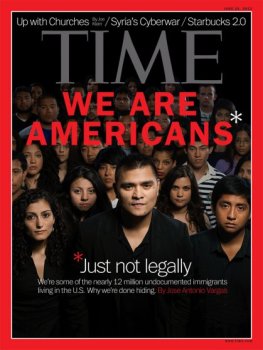
 

g9510.20_Immigration.cover

Support Semi-Partisan Politics with a one-time or recurring donation:

Agree with this article? Violently disagree? Scroll down to leave a comment.

Follow Semi-Partisan Politics on TwitterFacebook and Medium.

Should Journalists Have To Declare Their Political Biases And Donations?

NXT-TRIVIA KRT

Belief that the media is biased is one thing that unites conservatives and leftists in America and Britain. So why not demand that journalists reveal any political affiliations upfront, to give us better context for their reporting and commentary?

Should online, print and television journalists declare their political leanings (and donations) upfront, in the name of transparency? Jonah Goldberg thinks so, and makes a persuasive case.

Goldberg writes in the National Review:

One of the reasons I like good opinion journalism, particularly in long-form magazine articles, is that it doesn’t hide from the fact it is making an argument. You know where the author is coming from, and you can take that into account as he or she marshals facts and evidence for his or her case. We know opposing lawyers in a courtroom are biased, but if they don’t make strong arguments, they lose.

I understand bans on reporters giving to campaigns, but we should understand what those bans are: a means of hiding the political leanings of reporters from readers and viewers.

This has become a particularly hot topic after a report issued by the Center for Public Integrity confirmed the unsurprising fact that American journalists and media personalities give vastly more in campaign contributions to Hillary Clinton and the Democratic Party than to Donald Trump and the Republicans.

And given this vast discrepancy – with $382,000 given by hundreds of media personalities to Clinton and just $14,000 by a handful of people to Trump – Goldberg points out that hiding behind the fig leaf of impartiality or being a political “independent” is no longer fooling anyone:

Anyone who has spent a moment around elite reporters or studied their output knows that they tend to be left of center. In 1981, S. Robert Lichter and Stanley Rothman surveyed 240 leading journalists and found that 94 percent of them voted for Lyndon Johnson in 1964, 81 percent voted for George McGovern in 1972, and 81 percent voted for Jimmy Carter in 1976. Only 19 percent placed themselves on the right side of the political spectrum. Does anyone think the media have become less liberal since then?

None of this means liberals — or conservatives — can’t be good reporters, but the idea that media bias is nonexistent is ludicrous. Judges have far greater incentives to be neutral and objective, yet we know that Democrat-appointed judges tend to issue liberal decisions, and Republican-appointed judges tend to issue conservative decisions.

The Obama administration and campaigns have hired dozens of prominent, supposedly nonpartisan journalists, including former White House press secretary and Time magazine reporter Jay Carney, former Time managing editor Rick Stengel, the Washington Post’s Shailagh Murray, and ABC’s Linda Douglass.

Was it just a coincidence that they were all ideologically simpatico with the Obama agenda? How did the Obama team even figure out they were liberals in the first place?

Of course, exactly the same revolving door between the media and political worlds can be found in Britain, with well-known television journalists from BBC and ITV news suddenly shedding the white robes of virtuous objectivity to mysteriously shack up in Downing Street in a political communications role. This transcends party politics, and the Conservatives are by no means the only ones at fault – in the case of Jeremy Corbyn’s ideological henchman Seumas Milne, we have seen a Guardian polemicist not even leaving his job but merely take a leave of absence to become head of communications for the opposition Labour Party.

You can’t stop this from happening, and nor should anyone necessarily try. But the public do have a moral right to know the political leanings and affiliations of those who report and interpret the news. We expect MPs and Lords to declare their financial interests so that we can monitor their behaviour and ensure that they are not unduly influenced by their commercial connections. But a well-functioning press is every bit as vital to our democracy, so why should we not understand the motivations of reporters, commentators and editors.

Consider the case of Jasmine Lawrence, editor of the BBC’s 24-hour news channel. Lawrence was caught posting virulently hostile (and ignorant) thoughts about UKIP on social media prior to the 2014 European Parliament elections, and received only the mildest of cautions from her bosses.

As this blog noted at the time:

What the BBC fail to address in their response is the fact that the remainder of the BBC’s election coverage is not the problem. The problem is the fact that Jasmine Lawrence will remain the editor of the BBC News Channel, presumably resuming full duties as soon as the election coverage is completed on Sunday.

Yes, it is certainly likely that she caused editorial harm and biased coverage in the weeks leading up to the election before her ill-advised tweet saw her stripped of her duties, but how much more damage can she now do in the coming year leading up to the general election?

We all have political preferences, and that’s fine. But the Jasmine Lawrence tweet doesn’t just reveal a tendency to lean one way or the other along the political spectrum. The editor of the BBC News Channel clearly has a deeply ingrained, long held antipathy toward UKIP and the people who support that party or agree with its policies.

Are we really supposed to believe that when she walks into the BBC offices in the morning, Jasmine Lawrence takes off her scornful, UKIP-denigrating hat and puts on her cap of unblemished impartiality, and that the decisions she makes regarding story selection, focusing of time and resources, determining which guests to interview, lines of questioning and other matters will not be influenced by the same sentiments that prompted her to call UKIP supporters white, middle aged sexists and racists?

At present, we are deluding ourselves that the people who report the news – and worse still, the people who get to decide what even counts as news in the first place – are uniformly honest and committed to impartiality, and that the possibility of subconscious bias simply doesn’t exist. And this is holding human beings to a standard of behaviour which cannot possibly be met.

Far better that we more fully embrace the free market in our journalism, and equip news consumers (i.e. ordinary voters) with more perfect information – not just about our politicians, but also about the people who report on them. That way, television and print journalists can continue to strive for objectivity where appropriate, but we will have the backup of knowing about any political memberships, donations or affiliations that may influence their reporting, either consciously or subconsciously.

This doesn’t need to be an official thing. Indeed, nothing would be worse or more totalitarian than keeping a centralised state register of journalists’ political affiliations – that would be Orwellian in the extreme. Rather, the culture should be changed so that declaring one’s political allegiances upfront comes to be seen as a matter of honour and journalistic best practice.

Only earlier this week, a BBC television journalist named Danny Carpenter was suspended from his job for describing Theresa May’s new Conservative government as “the new Nazis” on his personal Facebook page.

The Daily Mail reports:

A BBC news presenter has been suspended for allegedly calling the Tory government ‘the new Nazis’ in an online social media rant.

BBC Look North’s Danny Carpenter reportedly accused the government of being ‘cynical, vicious, racist and xenophobic’ in a Facebook rant and has now been suspended by the corporation as they carry out an investigation.

Mr Carpenter is also said to have called for the Brexit to be ‘voted out’ by Parliament because of a ‘combination of dishonest fear-mongering and lies about the economy’.

This is clearly a partisan zealot of the highest order, someone with political beliefs even more pungent than those of this blog – and clearly very ideologically different. But just as I would never expect to be allowed to stand in front of a television camera reporting the news with a straight face, so Danny Carpenter should never have been allowed within 5 miles of a BBC studio except as a paid opinion contributor (like my star turn on the BBC Daily Politics earlier this year).

Jonah Goldberg is quite right to point out that the pretence of journalistic impartiality is a fraud which we all perpetrate on ourselves. Pretending that we are being served a conscientiously-curated stream of objective, unbiased reporting at all times lulls those of us credulous enough to believe it into a false sense of security, meaning that people do not apply their own scepticism or challenge what they are told.

And the rest of us, fully aware that what is being sold to us as objective coverage is in fact ideologically skewed, are increasingly spurning the mainstream media. More and more of us are taking refuge in new independent media sources, curated for us by algorithms and presented through social media, some of which are diligent and honourable but many of which can trap us in an ideological bubble of bias confirmation.

Goldberg concludes:

This lack of transparency benefits news organizations, but it really doesn’t fool anybody — except maybe the reporters themselves.

I agree. And playing along with the deception by furiously pretending that we have an impartial media only fuels the atmosphere of distrust and resentment in our politics. Having prominent journalists declare any strong political allegiances upfront would not solve all of our problems by magic. But it certainly wouldn’t do any harm.


newspaper

Support Semi-Partisan Politics with a one-time or recurring donation:

Agree with this article? Violently disagree? Scroll down to leave a comment.

Follow Semi-Partisan Politics on TwitterFacebook and Medium.

Politicians Aren’t Entitled To Their Own Facts, But Neither Is The Media

An independent political press corps with the knowledge and authority to call the shots and confidently call out lies when politicians tell them – rather than giving equal credence to two diametrically opposed crazy positions – is a great idea. If only our media was sufficiently trustworthy and capable of performing such a nuanced, sensitive role

Something funny seems to have happened to the New York Times.

For the past week or so, the newspaper which once twisted itself into a risible-looking pretzel trying to justify calling the practice of waterboarding “torture” when inflicted by America’s enemies but “enhanced interrogation” when conducted by American forces has discovered a new passion for clarity and bold truth-telling.

Peter Beinart explains, over at The Atlantic:

Last Saturday, The New York Times published an extraordinary story. What made the story extraordinary wasn’t the event the Times covered. What made it extraordinary was the way the Times covered it.

On its front page, top right—the most precious space in American print journalism—the Times wrote about Friday’s press conference in which Donald Trump declared that a) he now believed Barack Obama was a US citizen, b) he deserved credit for having established that fact despite rumors to the contrary and c) Hillary Clinton was to blame for the rumors. Traditionally, when a political candidate assembles facts so as to aggrandize himself and belittle his opponent, “objective” journalists like those at the Times respond with a “he said, she said” story.

Such stories, according to the NYU journalism professor Jay Rosen, follow this formula: “There’s a public dispute. The dispute makes news. No real attempt is made to assess clashing truth claims in the story … The symmetry of two sides making opposite claims puts the reporter in the middle between polarized extremes.”

[..] But the Times, once a champion practitioner of the “he said, she said” campaign story, discarded it with astonishing bluntness. The Times responded to Trump’s press conference by running a “News Analysis,” a genre that gives reporters more freedom to explain a story’s significance. But “News Analysis” pieces generally supplement traditional news stories. On Saturday, by contrast, the Times ran its “News Analysis” atop Page One while relegating its news story on Trump’s press conference to page A10. Moreover, “News Analysis” stories generally offer context. They don’t offer thundering condemnation.

Yet thundering condemnation is exactly what the Times story provided. Its headline read, “Trump Gives Up a Lie But Refuses to Repent.” Not “falsehood,” which leaves open the possibility that Trump was merely mistaken, but “lie,” which suggests, accurately, that Trump had every reason to know that what he was saying about Obama’s citizenship was false.

In other words, the New York Times has sporadically started to report objective facts and truth, rather than doing what has long been traditional among the political press corps – walking a neutral tightrope between two partisan positions of staggeringly obvious falsehood or stupidity.

Despite his protestations and evasions, Donald Trump has been one of the key players in the birther movement from the beginning – picking up from the memorably loopy Orly Taitz – and has certainly been the conspiracy movement’s most public face. I remember blogging about it over four years ago, back in 2012.

Given the context of a presidential election and the extra scrutiny on media bias, it is surprising and rather heartening to see the Times displaying the courage to report fact rather than controversy; the same headline a month ago might easily have read “Trump Withdraws Birther Allegation”, with no reference to the established facts and outcome of the story.

Jon Stewart (formerly of The Daily Show) must be smiling. Since 2004 and even earlier, Stewart railed against political coverage which ginned up conflict in pursuit of ratings and incessantly reported issues through the prism of Left vs Right, Democrat vs Republican without ever seeking to either restrict coverage to facts or move beyond partisan talking points to get to the truth. The video at the top of this article shows Stewart’s memorable appearance on CNN’s Crossfire show, in which he castigated the hosts for “hurting America” by injecting partisanship and sucking nuance out of the political discourse.

Obviously the New York Times does not inhabit quite the same infotainment space as Crossfire, but the basic operating principle has been very much the same of late – present two or more strongly opposing partisan viewpoints, let the talking heads (or journalistic sources) slug it out in defence of their respective positions, and then move on without ever really applying any kind of judgment as to the respective merits of the contrasting positions.

Nowhere is this approach better summed up than the slogan of the Fox News Channel – “we report, you decide”. It is a relativist worldview which suggests there is no truth in even quite straightforward binary debates, and that we are free to pick our own facts and construct our own reality in accordance with our personal biases and interests.

Now, there is yet more evidence that the New York Times is moving away from this risk-averse and rather cowardly stance – yesterday the newspaper described as “false” Donald Trump’s claims that Hillary Clinton has sinister plan to destroy the Second Amendment:

In justifying his remarks, Mr. Trump falsely claimed that Mrs. Clinton wants to “destroy your Second Amendment,” apparently a reference to her gun control policies.

My emphasis in bold.

At face value this is a good development – the “he said she said” approach to political coverage is what has enabled so much of the spineless print journalism and sensationalist, conflict-stoking television news reporting in Britain and America. Seeing a “respectable” institution finally buck that trend and push back against the toxic idea that reality is malleable and truth exists only in the eye of the super-partisan beholder is, in theory, a very good thing.

Peter Beinart certainly seems to think so:

A certain etiquette has long governed the relationship between presidential candidates and the elite media. Candidates stretch the truth, but try not to be too blatant about it. Candidates appeal to bigotry, but subtly. In turn, journalists respond with a delicacy of their own. They quote partisans rather than saying things in their own words. They use euphemisms like “polarizing” and “incendiary,” instead of “racist” and “demagogic.”

Previous politicians have exploited this system. But Trump has done something unprecedented. He has so brazenly lied, so nakedly appealed to bigotry, and so frontally challenged the rule of law that he has made the elite media’s decorum absurd. He’s turned highbrow journalists into referees in a World Wrestling Entertainment match.

Last Saturday, the Times answered Trump’s challenge. He’s changed the rules, so it did, too.

But this analysis only holds if one has reasonable grounds to trust the journalistic institution or media outlet doing the reporting; will they reserve their merciless news analysis features for instances when there really is a right and wrong binary perspective, or will editorial judgment and personal bias cloud the picture?

Remember, the New York Times was happy to characterise the EU referendum and the Brexit campaign as being motivated not out of concerns for democracy and sovereignty but primarily by xenophobia and anti-immigrant prejudice. And while there were highly visible elements of the latter, under the “News Analysis” model what would prevent the Times deciding that the entire Leave campaign was based on racism and then reporting this skewed perspective to their readers as simple, self-evident “truth”?

While the “he said, she said” ra-ra approach may be divisive and unseemly, it at least offers a right of reply to those whose views are misinterpreted or deliberately slandered by shameless opponents. And while conventional wisdom might hold that it is more often conservative voices who live in a sealed bubble of their own facts, in reality we would all be vulnerable to a style of news reporting in which reporters and editors are given sweeping new authority to pass what often amount to value judgments on behalf of readers. At some point in the future, any one of us could find our unpopular, minority opinion almost entirely  frozen out of the public discourse.

So this blog will cautiously cheer along with Peter Beinart at the New York Times’ sudden willingness to call out lies – provided that this is to be genuinely bipartisan new scrutiny rather than merely a one-sided club with which to bash the Trump campaign.

But we should be aware that we are at the top of a slippery slope here. Smacking down candidates and their statements is a positively good thing when we are dealing with easily proven questions of who said what, and when. But the temptation to apply this swashbucklingly assertive style of journalism to more subjective debates (like economic policy, immigration or foreign affairs) may prove to be irresistible for journalists with human biases and editorial boards with agendas.

In case they hadn’t noticed, the mainstream media doesn’t presently enjoy a particularly enviable trustworthiness rating among the general public. Abuse “news analysis” by using it as a blatantly partisan cudgel and they will drive that rock-bottom rating still lower.


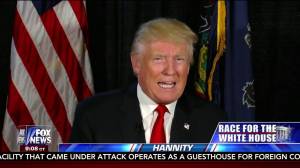
donald-trump-fox-news

Support Semi-Partisan Politics with a one-time or recurring donation:

Agree with this article? Violently disagree? Scroll down to leave a comment.

Follow Semi-Partisan Politics on TwitterFacebook and Medium.

No, Donald Trump Did Not Call For Hillary Clinton’s Assassination (This Time…)

Donald Trump already provides ample evidence that he is temperamentally unsuitable to be US president without the biased, pro-Hillary American media putting words in his mouth

There is a particularly pernicious story making the rounds at the moment that Donald Trump supposedly called for the assassination of Hillary Clinton (again).

From the New York Times:

Donald J. Trump once again raised the specter of violence against Hillary Clinton, suggesting Friday that the Secret Service agents who guard her voluntarily disarm to “see what happens to her” without their protection.

“I think that her bodyguards should drop all weapons,” Mr. Trump said at a rally in Miami, to loud applause. “I think they should disarm. Immediately.”

He went on: “Let’s see what happens to her. Take their guns away, O.K. It’ll be very dangerous.”

In justifying his remarks, Mr. Trump falsely claimed that Mrs. Clinton wants to “destroy your Second Amendment,” apparently a reference to her gun control policies.

[..] On Friday night, breaking from his prepared remarks and turning his gaze from the teleprompters, Mr. Trump looked straight into the crowd as he made the insinuation about Mrs. Clinton’s safety. He gestured emphatically with his hands as he spoke, at one time pointing to a member in the crowd to find agreement.

And the US Guardian:

In a sometimes bizarre 45-minute speech on Friday night, which opened with the unfurling of a new “Les Deplorables” battlefield flag backdrop, the Republican nominee went off-script to call for his opponent’s bodyguards to “disarm immediately” – adding, “Let’s see what happens to her.”

“Take their guns away!” Trump demanded to loud cheers during a section of the speech in which he said his rival wanted to “destroy your second amendment” and he accused Clinton of “arrogance and entitlement”.

In a statement, Clinton campaign manager Robby Mook denounced Trump’s comments: “Donald Trump, the Republican nominee for President, has a pattern of inciting people to violence. Whether this is done to provoke protesters at a rally or casually or even as a joke, it is an unacceptable quality in anyone seeking the job of Commander in Chief.”

“But we’ve seen again and again that no amount of failed resets can change who Donald Trump is.”

The call to leave the Democratic nominee protected by unarmed secret service agents, first made by Trump in May, raised eyebrows as a reversion to the undisciplined candidate of the primaries rather than the more scripted one of recent weeks. Trump also suggested in August that if Clinton was elected president, “the second amendment people” might be able to stop her from appointing judges. That statement was widely interpreted as a veiled assassination threat as well at the time.

The tone and inference of both of these articles are shockingly misleading.

The point that Donald Trump was making was that it is rather hypocritical of Hillary Clinton to advocate for stronger gun control laws which potentially limit the ability of the citizenry to defend itself when she herself is surrounded by the best trained and equipped armed guards in the world, and does not have to worry for her own safety. Trump was suggesting that were Clinton’s Secret Service protection revoked, forcing her to provide for her own personal security, she might not be so keen to limit the types of weapons available to private citizens.

Now, one can disagree with the premise of Trump’s point and poke all kinds of holes in the logic (though this blog considers the basic thrust of the argument to be quite sound), but by no stretch of the imagination does this amount to a snide assassination threat. It does not even amount to a charge of inciting his supporters to imagine the horrific scenario of an assassination. It is merely a reductio ad absurdum argument intended to make the point that well-protected senior members of the US government should perhaps refrain from dictating to ordinary Americans the manner in which they can defend themselves.

John Hinderaker of the Powerline blog makes the same point:

Trump obviously was making the point that he and countless others have made many times before: liberals like Hillary Clinton, who are protected 24/7 by armed guards, are deeply hypocritical when they try to disarm millions of Americans who don’t have taxpayer-funded protection and rely on their own firearms for self-defense. The point is a powerful one, which is why liberal reporters don’t want to acknowledge it. Instead, they absurdly pretend that Trump was hinting that Hillary should be assassinated.

This kind of thing fools no one. Millions of Americans are quietly fuming over the press’s overreach, going over the top, day after day, to defeat Donald Trump. The blowback is building, and will continue building until election day.

At one point, when I was opposing Trump during the GOP primaries, I said to the press: Stop attacking Trump! Liberal reporters often began with a valid point, but their hysterical hatred for Trump caused them to go too far, making arguments that were patently unfair and unsustainable. Therefore, the more they attacked Trump the more his support grew. The same thing is happening now: most Americans have a pretty good sense of fair play, and they know that Trump is being treated badly by the establishment–a group for whom most Americans have no great affection.

But the media, always on the lookout for the next Trumpian outrage, refused to see reality in these terms. Rather than reporting Trump’s rather simplistic but sound argument – one which was worthy of discussion and a response – many media outlets instead chose to claim, with no evidence, that Trump had done something far worse.

This blog has no problem calling out Donald Trump’s extreme and unacceptable language when he actually says something bad – the infamous “second amendment remedies” comment in August being of another order altogether. But on this occasion, Trump was not making an extremist or reckless point, though the media chose to report the two stories with the same level of outrage.

And it is this behaviour, right here, which erodes public trust in the mainstream media. It is tawdry, opportunistic media overreaches like this, so clearly betraying a seething partisan agenda, which drive decent but concerned citizens into the arms of the extremist fringe and the conspiracy theorists.

Sometimes, to watch the American media openly campaign for Hillary Clinton, one wonders if everybody else inhabits a slightly different universe. We all witnessed disturbing footage of Clinton’s lifeless body being dragged into the back of her waiting secret service van on the occasion of the 9/11 memorial in New York City, yet the chirpy presenter on MSNBC that afternoon casually announced that she merely “stumbled” a little – the definition of “stumbled” having been temporarily extended to include loss of motor control and even consciousness. What we see with our own eyes and what the media choose to report are increasingly two very different things.

And while Donald Trump has a treasure trove of past incendiary statements positively bulging with potential scandal, that is apparently not enough for the media – they must also twist Trump’s words and breathlessly and falsely report to the public that the Republican presidential nominee just called for the assassination of his rival.

You don’t need to admire or support Donald Trump to be outraged at the lazy, biased journalism on display here. This blog is certainly no Trump fan. But if someone does happen to support Trump then these unnecessary extra efforts by the media to demonise the candidate and his supporters will only harden their support and erode what little trust is left in the media.

Those perpetually outraged American liberals in the media, on the hunt for their next anti-Trump scandal, should bear in mind that hysterical and obviously-inflated charges will not have the effect of somehow “bringing Trump supporters to their senses”. On the contrary, it will simply drive Trump loyalists and even wavering voters to alternative, less scrupulous sources which echo rather than castigate their beliefs.

Lying to the American public and pretending that Donald Trump’s remarks were a de facto call for Hillary Clinton’s assassination will not cause a single person to flip from supporting Trump to supporting Clinton. But it will ensure that a number of readers wave goodbye to the New York Times and the Guardian, instead placing their trust in pro-Trump outlets like InfoWars or Mike Cernovich.

Now, is the catharsis of manufactured outrage and liberal media grandstanding really worth the potential risk of shoring up Trump’s base?


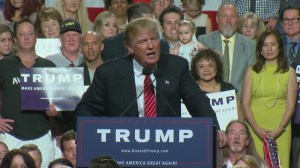
Donald Trump Rally

Support Semi-Partisan Politics with a one-time or recurring donation:

Agree with this article? Violently disagree? Scroll down to leave a comment.

Follow Semi-Partisan Politics on TwitterFacebook and Medium.

Pathologising Donald Trump Supporters Will Not Diminish His Appeal

The voices in this New York Times video of Donald Trump supporters may be “unfiltered”, but they were chosen very carefully indeed to reinforce every negative liberal stereotype about people who have the temerity to support Donald Trump

It is hard to understand exactly the New York Times thinks it is trying to accomplish with videos like this one, published today, scornfully “studying” Donald Trump supporters with a keen anthropologist’s eye, while tarring his many moderate supporters by associating them all with the most intemperate, rude and racist characters that their camera can find.

The Times helpfully explains to its readers that “at Donald Trump’s rallies, some supporters express themselves with slurs and violent language”, before linking them to a video in which the absolute worst dregs of the Trump campaign are paraded before the Times’ liberal audience like it were some kind of Victorian circus freak show.

And sure enough, after the obligatory trigger warning from the Times, the video’s subjects make themselves look extremely stupid, as well as racist and misogynistic in places. But this in itself is hardly surprising – it is obvious that racists and other undesirables will be disproportionately (though not exclusively) drawn to a populist politician like Trump, but this does not mean that a majority of Trump supporters share these vile sentiments.

In fact, one wonders why the liberal media which goes to excessive pains to avoid linking all Muslims with the actions of Islamist terrorists, and which frets about broadcasting the names and biographies of mass shooting perpetrators suddenly loses all squeamishness when it comes to linking all Donald Trump supporters with the specimens shown in their video. Why does the Times titillate its readers by showing the worst side of the Donald Trump campaign rather than making a hard-hitting and informative piece  debating the issues with some of the many Trump supporters who turn up to his rallies minus white robes and burning crosses?

If anything, this video reveals the bias of the New York Times, and the desperate liberal (in the American sense of the word) need to paint anything contradictory to their own worldview as being seeded in intolerance, bigotry and hate. This bias is never clearer when the Times’ video attempts to portray Trump supporters as anti-immigration, period. At one point in the video, an editor’s caption reads “vitriolic language is often aimed at immigrants”.

If the filmmakers wanted to produce a respectable, balanced piece rather than juicy footage for their Trump freak show, they might have engaged those supporters in conversation. But had they done so, it would have quickly become apparent that the Trump supporters oppose illegal immigration, not all immigration. These days, of course, the decadent New York Times is completely incapable of distinguishing between the two. All immigrants are saintly figures holding hands beneath a rainbow to the Times, a newspaper which long ago ceased any mention of illegality and started talking about “undocumented” migrants instead (whoops, where did their documents go, one wonders). And so the camera rolls, the supporters chant “build the wall!” and New York Times readers are bolstered in their prejudice that anybody who opposes illegal immigration is a big fat racist who actually opposes all immigration.

And so it goes on, for issue after issue. Legitimate questions and concerns about Hillary Clinton’s conduct and record are ignored while footage of a Trump supporter shouting “Hillary is a whore!” feeds the narrative that Trump supporters are entirely unreasoning and uncouth creatures. Serious questions about how the American political establishment speaks about and responds to Islamist terror attacks are swatted aside so that we can focus on the redneck wearing a “Fuck Islam” shirt. Forget nuance. Forget the decent people who go to Trump rallies as a fun family day out. Just focus on the morons and reinforce the message: the people who support Donald Trump are as unacceptable as the candidate himself.

Watching the New York Times (and much of the establishment media) report on Donald Trump supporters is like watching a David Attenborough wildlife documentary in which the grizzled naturalist attempts to explain to us the feeding and mating rituals of some lower primate species – recognisably similar to us in some ways, but far more primitive and with rituals and customs which we civilised people cannot possibly understand without their expert interpretation.

Watch the video. I challenge you to watch it and come away feeling anything other than that this is an unbearably condescending hit piece on Trump supporters, a nauseating attempt by a Clinton-backing newspaper to “play to the gallery” with a compilation of all the worst Trump supporters imaginable rather than an attempt at serious journalistic enquiry.

I’ve said it before (in the context of the Brexit debate and, repeatedly, the US presidential election) and I’ll say it again: pathologising one’s political opponents and assuming (or at least publicly declaring) that they are motivated by hatred and malevolence is the sure path to defeat, and is no way to unite a fraying country. And prissy little video explainers like this one by the New York Times only serve to further divide Americans, giving liberals more reason to be smug and Trump supporters more reason to feel besieged.

Imagine that you are a wealthy, Times-reading East Coaster. Does this video make you question any of the beliefs which currently make you want to vote for Hillary Clinton? Does the video make you question whether the Trump supporters have even the kernel of a legitimate point about immigration, or trade, or national security? Or does the video boldly reinforce all of your existing prejudices about Trump supporters, reassure you that you are quite right to fear and despise them, and encourage you to keep shouting your own message louder and louder rather seeking dialogue with people the New York Times clearly portrays as being impenetrable to reason?

This is coastal elitist mockery of flyover country writ large. It is unbearably sanctimonious, and does nothing to further understanding and dialogue between Americans of different political and cultural backgrounds. It serves to further validate the accurate perception among Trump supporters that they are looked down on and belittled by the rest of the country. And, if another external economic, security or political shock turns this election into a dead heat between Hillary Clinton and Donald Trump, the high-handedly arrogant way in which the establishment media treats the insurgents could push Donald Trump over the line on Tuesday 8 November.

This blog has no time whatsoever for Donald Trump. But I have endless time for his supporters, the majority of whom are decent people – to think otherwise would be to write off a massive proportion of the country based on their political views. And while I firmly believe that Trump’s simplistic solutions, policy ignorance and prickly ego would do immense harm if set loose in the Oval Office, right now I am more offended by the New York Times’ portrayal of all Trump supporters as though they are somehow less than human, less intelligent, with less self control and possessed of unique and grievous character defects which are supposedly entirely missing from their more enlightened, liberal compatriots.

One expects this kind of two-dimensional, good vs evil, sanctimonious ra-ra nonsense from the Huffington Post or other leftist agitprop sites. But the New York Times supposedly aspires to something higher, something more closely resembling journalism.

Everything about this video fails that test.


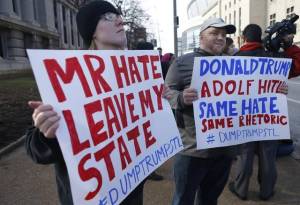
Donald Trump Protesters - St Louis

Support Semi-Partisan Politics with a one-time or recurring donation:

Agree with this article? Violently disagree? Scroll down to leave a comment.

Follow Semi-Partisan Politics on TwitterFacebook and Medium.