Any Artist Worth Their Salt Should Abhor The Insidious, Antidemocratic EU

Save EUYO - European Union Youth Orchestra - Propaganda

The British artistic and cultural community’s almost reflexive support for the European Union and disdain for reclaiming our democracy should be a source of great shame

Like this blog, the Telegraph’s Allison Pearson is surprised that a conclave of the nation’s most successful creative types seem to prefer the dull conformity and supranational managerialism of the European Union to the democracy and freedom which could potentially flourish outside the EU.

Pearson writes:

What they really love, then, is a platonic ideal of Europe, of solidarity between friendly nations with each other’s best interests at heart. Marvellous idea, darlings, until you look at Greece. Punished, fearful and running out of medicine, the Greek people had to be sacrificed for the greater European ideal. Orwell was right. All animals are equal, but some animals are more equal than others.

Why do all these senior cultural figures support the rotten EU status quo when they should be leading the revolt against it? Munira Munzi, who was in charge of cultural policy in London under Boris Johnson, claims that many arts people agree with Brexit, but “they are worried about their careers and what people might think of them. They assume that everyone who wants to leave the EU must be anti-immigration”.

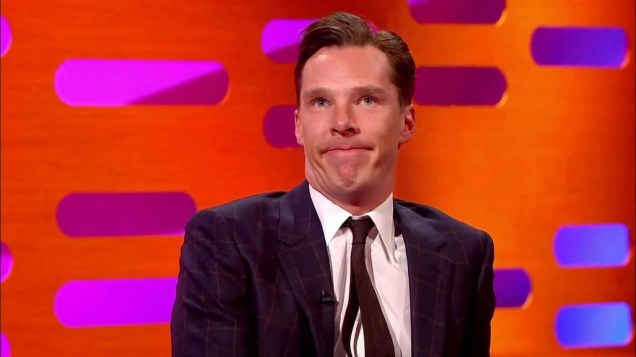
Still, not all creative types are too mushily politically correct to understand what’s at stake on June 23. Take the actor who said: “There’s so much in the 21st century that’s stymied by bureaucracy and mediocrity and committee.” His name was Benedict Cumberbatch.

The “platonic ideal of Europe” – that’s exactly it. Not the reality.

There are two factors at work here. First is the immense groupthink and social pressure within the cultural elite to hold right-on, progressive political opinions, and the potential ostracisation (or worse) which could befall particularly young artists and actors trying to make professional connections, build a network and establish their careers if they associate themselves with a movement lazily assumed to be all about xenophobia and nationalism.

Many of the key people and institutions are rabidly pro-EU beyond all reason. Classical Music magazine spent most of Friday pumping out endless “Save the EU Youth Orchestra” propaganda on Twitter, regardless of the sentiments of their readers about the coming referendum, and utterly oblivious to the fact that moments like these are precisely why the EU funds orchestras and the like in the first place – so that they have a guaranteed praise chorus ready to spring into action as soon as the hand which feeds finds itself threatened, in this case by Brexit.

(The EUYO is under threat because of a recent withdrawal of funding from Brussels, and not specifically because of Brexit).

Say you are a young orchestral musician and a supporter of democracy. Knowing that a majority of your colleagues, the trade publications and the key influencers with the ability to help your career are all passionate defenders of the EU, are you more likely to say “the hell with it!” and publicly campaign for Brexit anyway, or quietly swallow your political feelings and go with the crowd? And who could blame such a person from choosing the latter, quieter path?

The second factor leading to the infamous Britain Stronger in Europe letter is good old fashioned woolly thinking – the idea that the warm, platonic ideal of Europe in the minds of the EU’s supporters in any way actually resembles the snarling, antidemocratic beast which exists in reality.

I took this apart yesterday:

This referendum is serious business. So can Remainers please stop projecting whatever they desperately wish the EU to be onto an organisation which has never really been about friendly trade and cooperation, but is actually all about slowly and inexorably becoming a supranational government of Europe. And which is not going to abandon that long-held goal just because the British are now expressing a few doubts.

Right now, too many of our cultural leaders and elites are letting short term financial greed and/or wishful thinking about the EU’s true nature get in the way of their responsibility to think and act as engaged citizens.

Sure, if one buries one’s head in the sand and ignores the stated intentions of the EU’s founding fathers, the trajectory of integration since the 1957 and the imperative for further integration if the euro is to survive, one might successfully convince oneself that the EU is just a harmless gathering of countries who come together to trade, tell jokes, save the Earth and advance human rights. It takes near Olympian levels of denialism or apathy to maintain this self delusion, but clearly a great number of our most prominent actors, directors, producers and musicians are willing to do what it takes.

Pretending that the EU is a benign club with no pretensions or aspirations to statehood is ridiculous, and increasingly untenable. But even more unforgivable than that is being willing to overlook this reality in the grubby pursuit of grants and funding from EU bodies, or out of a desperate desire to appear forward-thinking and progressive.

And the unedifying sight of so many “household name” artists lining up to sing the praises of an explicitly political construct which falsely attempts to take credit for the cultural achievements of an entire continent is, frankly, sickening.

It has been claimed by some people that democracy is killing art. Others claim that it is liberalism which is destroying art. I disagree with both theories.

Though repression can occasionally produce its own kind of tortured beauty (see Shostakovich), generally speaking the extent to which an artist is not free and is required to make their work conform to certain external directives, requirements or purposes is the same extent to which their output falls short of greatness.

Real artists care about freedom, and cannot function without it. Unlike Benedict Cumberbatch and Sir Patrick Stewart, they don’t actively collude in suppressing freedom in order to protect the integrity of their EU begging bowl.


 

EUYO - European Union Youth Orchestra

European Union - United Kingdom - Britain - Flags

Support Semi-Partisan Politics with a one-time or recurring donation:

Agree with this article? Violently disagree? Scroll down to leave a comment.

Follow Semi-Partisan Politics on TwitterFacebook and Medium.

Bring It, Benedict

Benedict Cumberbatch - EU Referendum - Brexit

In their barely literate open letter praising the European Union, Benedict Cumberbatch and his cohort of EU apologist luvvies not only fail to understand what the EU is or how it works, they also shamefully pass off their own financial self interest as high-minded concern for the future of Britain

If assorted celebrities are going to sign their names to a public letter calling for the British people to vote a certain way in a referendum of existential importance, it would be decent of them to be honest about why they really want people to make that choice.

This is hardly rocket science, but apparently it was too much for the cognitively tepid minds who signed their names to a letter calling for Britons to reject Brexit for the supposed good of the arts.

The signatories are exactly the kind of people you would expect to see flaunting their right-on, progressive virtue to their fans and peers. Tracey Emin. Anish Kapoor. Vivienne Westwood. Jo Brand. Patrick Stewart. Keira Knightley. Jude Law. John Hurt. The ubiquitous Benedict Cumberbatch.

So to what exactly did they put their gilded names? Here is the full text of the letter:

The EU referendum marks the biggest democratic decision of our time, and the outcome will have lasting and far-reaching consequences for the future of this country for generations to come.

The referendum forces us to look in the mirror and ask ourselves: what kind of nation do we want to be? Are we outward-looking and open to working with others to achieve more? Or do we close ourselves off from our friends and neighbours at a time of increasing global uncertainty?

Because choosing to step out of a steadily integrating political union with an overarching supra-national government obviously means “closing ourselves off”. There are only two models of engaging with the world – the path to euro federalism or North Korea. Absolutely no other options in there at all. Sure.

From the smallest gallery to the biggest blockbuster, many of us have worked on projects that would never have happened without vital EU funding or by collaborating across borders. Britain is not just stronger in Europe, it is more imaginative and more creative, and our global creative success would be severely weakened by walking away.

And where exactly do you think that “vital EU funding” actually comes from, Benedict? Did you fall for that old chestnut about the secret magic money volcano deep beneath the European Parliament building in Strasbourg, regularly belching out €500 notes and showering them down upon grateful starving artists?

Of course there is no “EU money”. There is only British taxpayer money, the majority of which contributes toward general EU spending with only a small proportion being disbursed to various organisations in Britain, to be spent strictly as agreed by whichever organ of Brussels loftily granted it in the first place.

So is your argument actually that if Britain no longer contributed to EU cultural initiatives, the government would be inclined to use the money for other purposes? And if that is your legitimate fear, why don’t you take it up with your fellow citizens, whom you apparently believe do not value the arts highly enough? Why are you content for higher levels of taxpayer funding of the arts to take place in Britain than you think the British people themselves would allow? Doesn’t that make you the textbook definition of an enemy of democracy?

And what is all this bilge about “collaborating across borders”? Nearly all of the high profile signatories to the letter have worked on various international projects – many of them involving the United States of America, with whom of course we share no political union. Does the lack of a parliament overseeing both Britain and America mean that artists in each country can no longer collaborate on projects? Hardly.

The letter continues:

And what would ‘Out’ really mean? Leaving Europe would be a leap into the unknown for millions of people across the UK who work in the creative industries, and for the millions more at home and abroad who benefit from the growth and vibrancy of Britain’s cultural sector.

Remember when art was bold and visionary? No, neither do I. I was born in 1982, so I do not recall a time when the artistic establishment was not firmly in the orbit of government, keeping the politicos sweet in order to keep a hand in the Treasury.

But despite never having known a time when (unlike the United States of America) our greatest artistic institutions were privately funded and supported by great philanthropists, I still get the nagging feeling that any artist worth their salt – unless of the Soviet variety – should instinctively chafe at the idea of stale political union and remote continental governance, rather than rejoice in it and argue for its continuance.

Leaps into the unknown seem to me to be the whole purpose of art – to boldly go in new directions, try new things and above all seek the maximum freedom possible (the EU hardly being synonymous with freedom). And yet here assembled are the great and the good of Britain’s acting crop, telling us that the best we can now hope for is continued membership of an anachronistic 1950s model of governance dreamed up by old men scarred from the 20th century’s wars. The utter lack of vision and ambition from people supposedly paid to be bold visionaries is as shocking as it is profoundly depressing.

More:

From the Bard to Bowie, British creativity inspires and influences the rest of the world. We believe that being part of the EU bolsters Britain’s leading role on the world stage.

Let’s not become an outsider shouting from the wings.

“We believe”. Well, good for you. I believe in unicorns. But just stating a belief does not make it so. Where is the proof that being a member state of the European Union increases the demand for art, films, television programmes, sculptures, compositions, songs, albums, plays, skits, musicals or operas conceived, designed or produced in the UK? They provide no evidence because there is no evidence. If and when Britain exits the European Union and moves to an interim EFTA/EEA relationship to maintain single market access, the only thing we lose is the supra-national government. Is Cumberbatch seriously suggesting that the political institutions of the EU are his muse of fire?

It hardly needs pointing out that the two British icons cited by the signatories themselves – William Shakespeare and David Bowie – both took the world by storm before Britain joined the European Economic Community, in Shakespeare’s case by quite a few years. The beauty of art is that good or bad, high or low, it has ways of crossing political and cultural boundaries. That’s how a future North Korean defector came to watch a smuggled copy of Titanic in silent wonder, shocked and captivated by the idea of dying for a love other than love of the Dear Leader. That’s how the opening bars of Beethoven’s Fifth Symphony became a symbol of British resistance when all around us was pulverised to rubble during the Blitz. So don’t stand there and fatuously tell me that political union is required in order for art to thrive and spread, Mr. Cumberbatch. You should know that this much is a filthy lie.

Ultimately, one simply cannot take this letter seriously. And neither can one take the signatories seriously. It is certainly much harder to respect someone in public life when they knowingly use their public position to help propagate a series of lies, half-truths and obfuscations in service to an anti-democratic, embryonic government of Europe; an unrequested, unwanted and unloved supra-national government which buys the unconditional praise of scientists, university leaders, politicians and artists with your taxes and mine.

If Benedict Cumberbatch and his right-on friends want to virtue-signal their trendy, progressive opinions then good for them. Have at it. But when they seek to use their fame to influence others in the referendum debate, they should expect to be attacked for casually parachuting into the middle of the fray for the sole purpose of spreading lies, half-truths and a childishly naive view of the European Union which makes one wonder when they last watched the news (if ever).

This risible letter is nothing but a childish hymn of praise to the EU written by people convinced of their own righteousness despite being among the least educated on the topic, and who think they can trick the public by constantly conflating Europe with the power-hungry political entity which wishes to control it. In other words, the letter’s signatories are pawns, and not very bright ones at that, to allow themselves to be used in such a way. I give the whole sorry performance one star out of five, and I’m probably being too generous.

Don’t like what I’m saying? Then bring it, Benedict. I’m available to debate morning, noon or night, any time between now and the referendum. You’re an actor. I have been a lifelong supporter of the arts, and in my 20s was the London Symphony Orchestra’s youngest ever patron. You pick the time and the place, and we’ll talk a bit about the role of the arts in British and European life, and just how intertwined – or not – they are with the political construct known as the European Union.

But do your homework first – and I don’t mean learning canned lines from Britain Stronger in Europe. I mean actually trying to learn something about the subject before you start grandly soliloquising and attempting to sway other people.

Maybe the kind of unrehearsed extemporising revealed in this letter works when you try it on hordes of screaming fans at the rope line after one of your performances. But when you try and pull the same stunt in front of the British electorate you and your chums in the art world look stupid. Very stupid.

And until you either issue a retraction or double down with a proper grown-up argument, I will continue to say so.


European Union - United Kingdom - Britain - Flags

Support Semi-Partisan Politics with a one-time or recurring donation:

Agree with this article? Violently disagree? Scroll down to leave a comment.

Follow Semi-Partisan Politics on TwitterFacebook and Medium.

An Icon Turns 10

disneyconcerthall


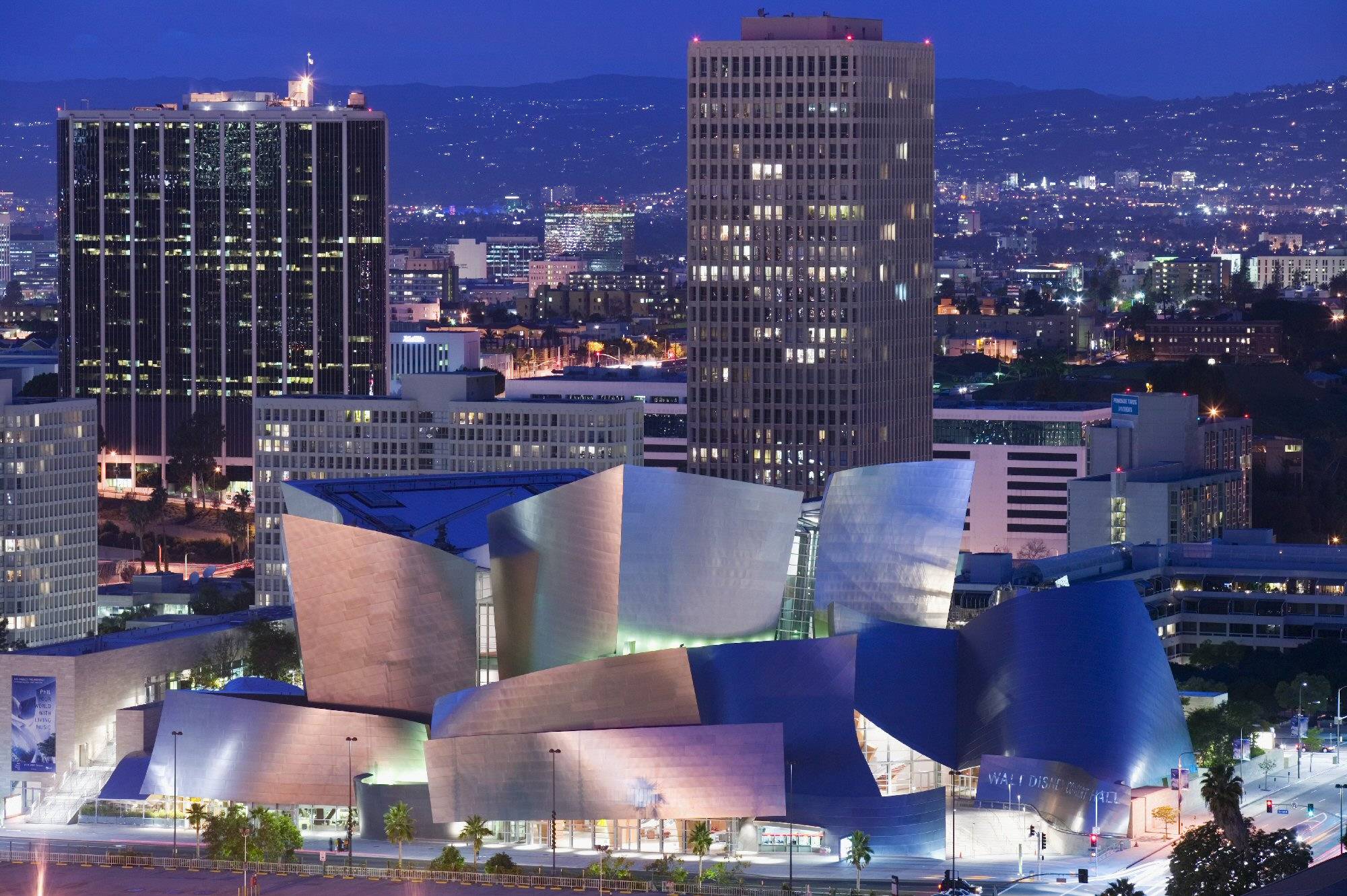
The wonderfully designed Walt Disney Concert Hall in Los Angeles, California, turns 10 years old this year. With its sweeping, idiosyncratic curves. metallic finish and public spaces, it is doing a lot (at least in LA terms) to revitalise the downtown area.

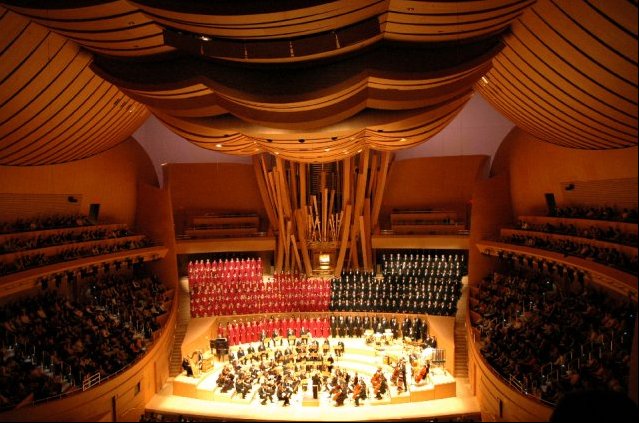
The interior is also beautifully designed, with seating in the round (limited audience seating behind the choir) and a very dramatic organ placement. The warm finish of the interior contrasts strikingly with the bright, metallic exterior.

disneyconcerthall2

Gramophone Magazine reports:

The Los Angeles Philharmonic is celebrating the 10th anniversary of its Walt Disney Concert Hall with ‘insideOUT’, a number of special events taking place during September, October and November featuring music director Gustavo Dudamel, Esa-Pekka Salonen, Yo-Yo Ma, Leif Ove Andsnes, Yefim Bronfman and Julie Andrews.

There will also be public forums with Frank Gehry, designer of the concert hall (Oct 2, 15), who writes of his building: ‘One of the primary considerations when conceiving the design for Walt Disney Concert Hall was to preserve the iconic importance of the LA Phil, but break down the often imposing scale of a traditional concert hall. Walt Disney Concert Hall is not just a building for music, but a building for the people. From the inside out, the building was designed to respond to its surrounding, and serve as a gathering place.’

Semi-Partisan Sam hopes to make his own visit to the Disney Concert Hall in the coming few years.

Music For The Day

“Quiet City”, by Aaron Copland, 1941. A beautiful, haunting piece for english horn, trumpet and strings, but most remarkable for the beautiful, yearning, pure, melismatic trumpet solo which soars over the still, muted orchestral accompaniment.


My favourite recording of this piece is by the London Symphony Orchestra and their principal trumpet of the time, Howard Snell, conducted by the composer himself; but in this case the images of still, quiet cities in the accompanying YouTube video make this the version to share.

The original version, scored for trumpet, saxophone, clarinets and piano (written as music for a play but never used) can be found here.

Wishing everyone a peaceful and productive start to the new week.

Snobbery In Classical Music

classical music snobbery


Some arguments that are so well-worn and overused that they are accepted as truth with little analysis or proper consideration. One such example is the tired old line that the world of classical music – actually going to classical concerts, recitals or opera performances – is deliberately and unnecessarily intimidating to the uninitiated, the young, the infirm, the poor, the disabled, the racial minority, in short anyone who is not white and upper-middle-class.

From personal experience – as one who is under 30 years of age, mixed race, jeans-wearing, and that highest of cultural crimes, hailing from Essex – I can attest that this argument is complete and utter tosh. One can see how it continues to be propogated – if you hardly ever attend classical music concerts and you are unfortunate enough to defy the odds and have a bad experience, your perception will be skewed, and it is those cases that make the news and opinion pages. But that does not mean that it is typical or commonplace in any way for newcomers or “non-traditional” attendees to encounter condescension, harassment or any other type of misbehaviour when they go to see classical music.

Sadly, this does not stop The New Statesman magazine from succumbing to the conventional wisdom, in an article published yesterday by Andrew Mellor, in which the author moans that “Classical music should be about more than elite parties and private schools”.

Is that what it classical music is all about? That’s news to me. But not to Mellor, who writes:

The truth is that prejudice in our concert halls and opera houses stretches far beyond race. I too have felt the isolation Allen describes, but the difference is I’m a white male who writes about classical music for a living. I’m frequently uncomfortable at the concerts and operas I attend in the UK, and I’m at an average of three per week.

This seems highly doubtful. If you are uncomfortable on a regular basis when you are doing your job as a music critic, there’s probably something more fundamentally wrong in terms of your compatability with your profession than the icy stares and barbed words of some elderly, patrician concertgoers. So what could be causing this discomfort?

The Proms will open on Friday, and if you turn up and buy a programme – which will cost marginally less than a £5 arena ticket – you’ll find it stuffed full with adverts for private schools. The subtext is as clear as it is nonsensical: we’ve all got money, that’s why we like this sort of music.

That concert and opera programmes seem to entertain such a bizarre obsession with private education – I don’t see football clubs whose ticket prices are far more exclusive carrying multiple adverts for private schools in their match-day programmes – is indicative of a sinister brand of class positioning that’s as common front-of-house in the classical music world as it is alien on the stage. Orchestras and opera companies can decide who advertises in their programmes, but they’ve got their work cut out when it comes to the arrogant and judgemental behaviour of large sections of their audience.

It starts to become clear – Mr. Mellor doesn’t like private education very much (he is writing in The New Statesman, after all), and seeing all of these advertisements enticing mummy and daddy to send little Rupert or Imogen to this-or-that private school rubs him up the wrong way.

Where to begin with this? Perhaps the free market argument that economic agents such as symphony orchestras and private schools have the right to make whatever advertising arrangements they like between themselves, and that allowing said advertising does not emply endorsement of the product or suggest that those who do not purchase the product are in any way inferior. Or the fact that it is private money – through advertising, corporate sponsorship and individual giving – that helps to pay for the arts so that young, poorer children such as myself could attend classical music concerts with my mother for very low prices, helping to build the foundations for a lifetime of appreciation and learning.

Mellor then overreacts to that familiar presence at the concert hall, the loudly-spoken “authority” on the music being played:

At so many concerts and operas in the UK, if you don’t look and sound like you know what you’re talking about you may well be stared at, judged and made to feel uncomfortable by someone who thinks they do – an assessment usually based on how you’re dressed, how you talk and what you’re talking about (stay off popular culture/television/non-classical music) or even, as in Candace Allen’s case, what colour your skin is. People around you might well be keen to assert their knowledge by talking loudly and in confidently unchallengeable tones about the last time they saw such and such an conductor or heard such and such a piece. All of this is designed to create an atmosphere of intellectual superiority – far more important, of course, than allowing you to be moved by a great piece of art on your own terms (intellectual or otherwise).

Yes, of course you get these people sometimes. I’ve often heard a concertgoer holding forth, in a loud voice designed to be heard, about the piece of music that has just been played, in order to show off their classical music knowledge credentials. It is by no means a majority though; most concertgoers are happy to sit and enjoy the music without the need to show off, and I have yet to see the case where remaining silent or uttering a less-than-learned comment on a piece of music has resulted in widespread ostracisation by the rest of the audience.

Besides, if I were to take some of my septugenarian friends – fellow Patrons of the London Symphony Orchestra – to a Radiohead concert, or to the V Festival, would they really be extended any warmer a welcome than a young festivalgoer would receive at Glyndebourne? I would wager good money that the elderly classical music concertgoer would be greeted with a good deal more mirth, scorn and derision, and far less courtesy at Glastonbury than would be afforded to a festivalgoer at a piano recital at Wigmore Hall.

Am I wrong about that, Mr. Mellor? Would you argue the opposite? And if not, where is your article bemoaning the closed, insular, cliquish world of popular music?

He then takes aim at the people who actually bankroll the concerts that he attends and writes about:

Stage-bound frippery is one thing, but these precious hierarchies are increasingly creeping front-of-house. As orchestras in particular look to consolidate their donor and sponsor bases in the face of public funding cuts, it’s all too easy to feel as though you’re not part of the club – no access to this roped-off area and that sign-posted “private reception”.

Of course, you would never see such a VIP area at a Premier League football match, or a Rihanna concert. Oh, wait…

Full disclosure – as a Patron of the London Symphony Orchestra for the past five years, I have had the opportunity to be on the other side of the “velvet rope” at various classical music events, and these receptions really, really aren’t intimidating or off-putting, no matter on which side of the rope you happen to be on the night. In fact, the atmosphere on a typical evening at the Barbican Centre, where the LSO give most of their concerts, is always lively, convivial and abuzz with people of all ages and backgrounds enjoying the music and the occasion.

If a mid-priced glass of wine, a canape or two and the chance to congratulate the Principal Bassoon on a job well done during the interval helps to give a little recognition to the fact that these people (and I am very, very small fry compared to most of them) pay to subsidise a large part of an orchestra’s concert-giving activities, I think that is a fair and reasonable thing to do, given that it does not detract one iota from anyone else’s concertgoing experience.

But what do we know? As the article trumpets at its conclusion: “Andrew Mellor was shortlisted for the New Statesman’s Young Music Critic prize in 2011“.

So he can’t be wrong.