British schools and universities represent an oppressive and highly unsafe space for young students who believe in free speech or hold pro-Brexit beliefs
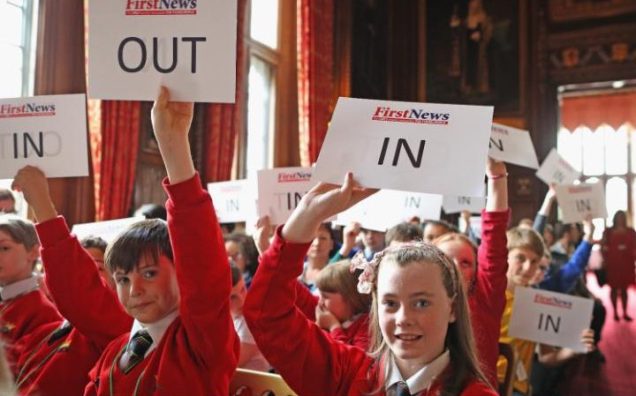
If you think that you have been made to feel uncomfortable for holding eurosceptic, pro-Brexit beliefs, spare a thought for those young Brexiteers trapped firmly behind enemy lines in the clutches of Britain’s left-wing educational establishment.
Tanya Kekic, a sixth-form student, writes in Spiked about the post-referendum climate endured by those who supported Brexit:
As they had scarcely met anyone supporting Brexit, they could not understand how this had happened. Their only explanation was that the electorate was misguided, brainwashed, uneducated and motivated only by their hatred of immigrants. They were not at all embarrassed by their disdain for ordinary people. In fact, teachers and pupils openly said that democracy is a sham, that we need ‘experts’ to make the big decisions and that idiot Leavers should not have been able to vote in the first place. I’ve not been around long, but I have never seen anything like it. I knew this kind of loathing of the ‘masses’ existed, but in the past it had been disguised.
The same low opinion of people is shown by my teachers’ and classmates’ rejection of freedom of speech on the grounds that, firstly, the public are too uneducated to hear dangerous views, and, secondly, the public are too weak and vulnerable to hear something that might offend them. Over the past year my freedom-loving friend and I have had ongoing debates at school about whether there should be a limit to freedom of expression. We have not yet found a teacher who believes in unfettered freedom of speech.
The most shocking encounters have been with our philosophy teacher. First of all, she declared that she completely disagrees with freedom of speech and the very idea of a free press. (I am not kidding.) Secondly, she became hysterical when we said that no religion, including Islam, should be above mockery or criticism (this was after we were shown a video ridiculing Christianity). She told us to ‘get out’ of the classroom, while whining that we can’t criticise the prophet Muhammad because it says not to in the Koran. We heard from another teacher that apparently we have ‘extreme’ views. (As far as I know, we haven’t yet been reported to Prevent.)
If believing in freedom and democracy makes you an extremist, we are really in trouble. Schools are encouraged to teach students about British values, such as tolerance and pluralism. But when they don’t know what these principles are, little wonder they fail to uphold them in practice. In particular, the idea of tolerance is very confused. We are not told to allow unpleasant views to be shared and then to challenge and criticise them; rather, we are told either to shut up and respect all beliefs, or to censor and shut them down. To understand why hypersensitive university students are cowering in Safe Spaces and banning ideas they disagree with, you only need to sit in on a Year Eight citizenship lesson.
This is concerning indeed, though not surprising. This blog has previously reported on the plaintive cries for help and/or of frustration from young conservatives, eurosceptics and civil libertarians who found themselves being ruthlessly persecuted at school, often with the full knowledge and participation of their own teachers. And clearly the EU referendum has taken that pre-existing hostile climate for free speech and injected it with steroids.
One marvels in particular at the philosophy teacher who “became hysterical” at the mere idea (not even the act) of criticising Islam, and who pre-emptively ejected Kekic and her friend from class as punishment for daring to suggest that all ideas should be open to debate and criticism. On might have thought that adherence to this view would be a prerequisite for anybody seeking to teach philosophy of all subjects, but apparently there are now schools employing philosophy teachers who actively oppose the idea of critiquing certain ideas and belief systems.
Where teachers lead, impressionable students will often follow. And the clear message being sent by the academic establishment – not only at the university level but at the school level too – is that the Cult of Social Justice and Identity Politics is firmly in charge now. Free speech is even less of an absolute right than it was before, woolly metro-leftism is firmly established as the only acceptable political worldview and ideas should no longer be judged on their own merit, but rather on the identity of their proponent and the position which they occupy in the Hierarchy of Privilege.
When I appeared on the BBC Daily Politics earlier this year to discuss the phenomenon of oversensitive students, I joked that something strange seems to happen in the minds of otherwise sensible young people the moment they first set foot on a university campus, making them suddenly obsessed with their racial and gender identities and utterly incapable of tolerating alternative viewpoints. But of course this facetiousness disguised an important truth, made clear by Kekic: the fact that we are raising our children to be this way from birth, through our therapeutic culture, worshipping of the self, encouraging of a state of constant personal fragility and a starkly authoritarian attitude toward any speech which even remotely contradicts certain established orthodoxies (Islam is above reproach, the EU is fundamentally good, etc.)
There are already whole industries – certainly in academia but elsewhere too – where holding conservative or eurosceptic beliefs amounts to social or professional suicide. The other day I attended a meeting of good people involved in various social enterprises and charities in the third sector. After I brought up the topic of the EU referendum in passing, the speaker proceeded to wax lyrical about just how awful Brexit is, never thinking for a moment that anybody in the room might possibly disagree with her. Though it was amusing, I also felt a pang of awkwardness and discomfort, knowing that I was surrounded by people who would be utterly repelled if I revealed my own true feelings about Brexit (I did anyway).
The point is that as a grown man and a political blogger well used to debate and disagreement, I still paused momentarily before airing a perfectly mainstream and acceptable opinion in front of people who strongly disagreed and who thought that those who supported Britain leaving the EU were stupid at best and malicious at worst. How, then, must those young people with conservative or eurosceptic beliefs feel, who have not yet developed so thick a skin? How are they to feel comfortable expressing their sincerely and legitimately held political views when finger-wagging teachers casually accuse them of “extremism” and conspire to silence them altogether?
There is a cancer in our schools and universities, metastasising throughout the entire educational establishment. It is a tumour which sucks the life out of free speech and academic freedom, and encourages dull, lumpen conformity invigilated by a watchful, censorious, politically correct Taliban.
We need to excise that tumour before it kills off independent thinking, freedom of speech and academic enquiry for good.
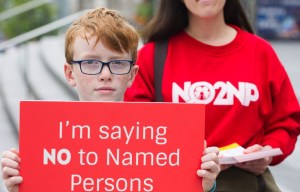
The UK Supreme Court slaps down the SNP-led Scottish Government’s assault on privacy and individual liberty manifested in the evil Named Person scheme, citing the creeping threat of totalitarianism
Specifically the Supreme Court struck down provisions which allowed the sharing of sensitive data about Scottish children between agencies, which the court held to be in breach of the right to privacy and a family life under Article 8 of the European Convention on Human Rights.
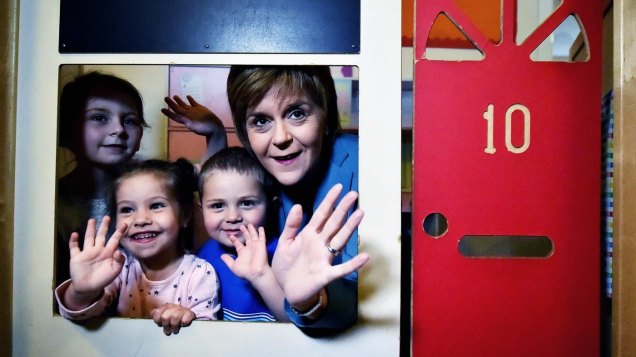
The court further held that several of the provisions for data sharing in the Children and Young People (Scotland) Act 2014 were beyond the legislative competence of the Scottish Government – in other words that Nicola Sturgeon’s nationalist government has been getting far too big for its boots, and should perhaps focus on trying to deliver better governance for Scotland instead of greedily seeking to acquire ever more power over its own citizens.
What is most encouraging about this ruling – besides Nicola Sturgeon being put firmly back in her box, of course – is the strong, uncompromising language used by the justices in their decision.
Individual differences are the product of the interplay between the individual person and his upbringing and environment. Different upbringings produce different people. The first thing that a totalitarian regime tries to do is to get at the children, to distance them from the subversive, varied influences of their families, and indoctrinate them in their rulers’ view of the world. Within limits, families must be left to bring up their children in their own way.
The justices then go on to quote the late US supreme court justice James Clark McReynolds, who held in Pierce v Society of Sisters:
“The fundamental theory of liberty upon which all governments in this Union repose excludes any general power of the state to standardize its children by forcing them to accept instruction from public teachers only. The child is not the mere creature of the state; those who nurture him and direct his destiny have the right, coupled with the high duty, to recognize and prepare him for additional obligations.”
The child is not the mere creature of the state – a universal truth, but one seemingly forgotten by the Scottish National Party in their paranoid desire to centralise and monitor everything that takes place north of the border.
This is a remarkable tirade against totalitarianism and in favour of individual liberty, and can only be seen as a stunning repudiation of the SNP’s entire suffocating, infantilising attitude towards their own citizens. To warn about the slippery slope toward totalitarianism in such an clear way only serves to underscore just how illiberal – and vastly disconnected from the welfare of the child – the Named Person scheme really is.
What is even more remarkable is that such a start warning against totalitarian instincts came not from a mainstream elected politician, but from unelected judges. In its short history, the UK Supreme Court’s judgments have not exactly set the world on fire or shifted numerous copies of approving books in the way that one might pore over the dissents of Ruth Bader Ginsburg or the late Antonin Scalia. That mild-mannered UK supreme court justices are mentioning totalitarianism and quoting McReynolds at all is proof that we are in trouble.
In their reporting, the British press has been making much of the fact that the ruling later goes on to call the Children and Young People (Scotland) Act 2014 “unquestionably benign”. In their article, the BBC makes no mention of these pointed references to totalitarianism in the judgment, immediately revealing the corporation’s bias and reluctance to report properly on stories which are critical of the authoritarian leftist Scottish government.
But as it was with the shock Brexit vote in the EU referendum, once again the media’s barely concealed support for infantilising, authoritarian Big Government policies has been overridden. In this case, the supreme court has spoken (though how much better it would have been had the Supreme Court been able to strike down the Named Person Act with reference to a British Bill of Rights or constitution rather than the expansionist ECHR).
As this blog noted when the Named Person scheme was last being debated prior to the 2016 Holyrood elections:
Whether any given Scottish person wants their top layer of government to reside in Holyrood or Westminster, surely anybody should agree that the bottom layer of government should not intrude deep into the family unit in the way that the Named Person Scheme does.
[..] This is the SNP at work in government. A hectoring, overbearing movement which seeks to centralise everything they can touch, from the state monitoring of children to the police and fire services – with deadly consequences, in the latter cases.
Today, a blow has been struck against the insidious ratchet effect underway in Britain, leading inexorably to a larger and more interfering state. We should be grateful to the Supreme Court for their decision, and to The Christian Institute and other appellants for fighting the case.
But it should not fall to an unelected judiciary to make the bold and uncompromising case for individual liberty. Ruth Davidson did a magnificent job opposing the Named Person scheme on behalf of the Scottish Tories, but we need more politicians across the board who are willing to stand up for liberty and who possess the imagination to conceive of a world where government is not the answer to every single problem.
The Supreme Court did us proud today. It is about time for more of our elected politicians to do the same.
Faced with a choice between Donald Trump and Hillary Clinton, nobody will come away from this American presidential election looking very good. But there is still a right choice, and a wrong one
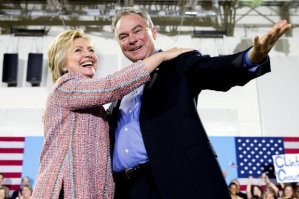
Faced with the choice between Donald Trump and Hillary Clinton, I’m with her.
I do so with zero enthusiasm – certainly far less than Andrew Sullivan, once the most vocal of Clinton’s enemies, now seems to be displaying:
Some readers think I’ve been too negative, even cynical, tonight. Believe me, I am utterly uncynical about this election. I’m worried sick. We need to put behind us any lingering beefs, any grudges, any memories from the past – and you know how I feel about the Clintons’ past – in order to save liberal democracy. The only thing between him and us is her. So – against all my previous emphatic denials – I’m with her now. As passionately as I ever was with Obama. For his legacy is at stake aswell.
I support Hillary Clinton over Donald Trump not in the expectation that a second Clinton family presidency will do anything to make America significantly better – she is nothing if not a continuity candidate, the living embodiment of a third (and quite possibly fourth) Obama term. I find myself supporting Clinton because the anti-establishment wave which helped deliver Brexit and the hope of return to self-government for Britain promises no equally great benefits for America so long as it is led by a charlatan like Trump.
However tawdry and oversimplified the mainstream Brexit campaign may have been, the dream of freeing Britain from a suffocating, steadily tightening political union with Europe was and remains a noble and vital goal. Trump’s goal for his own country consists of Making America Great Again (MAGA), which he plans to accomplish by building a massive wall and sending the bill to a country who will refuse to pay it, and by defeating the Islamic State and ending the scourge of Islamist terror attacks “very quickly” with a few harsh words from the Oval Office and no American boots on the ground.
Of course the United States has constitutional firewalls and checks & balances to prevent excessive overreach by the executive branch, but the man is just appalling – a shallow, vindictive egotist with almost zero attention span (as proved by his reputed offer to give John Kasich complete control of foreign and domestic policy, and nearly every speech he has ever given).
Many of Trump’s apologists in the Republican Party have been reduced to saying “oh, it’s just a persona” as if that somehow makes it better. Either he means what he says when he promises authoritarian, big government solutions or his populism is just a lie and he is going to massively let down his voters in office, creating an even more wild backlash which nobody will be able to control. Neither option bodes well for sensible conservative government.
And so while a Hillary Clinton presidency will be technocratic, soul-sappingly un-ideological, politically calculating and almost certainly stymied by furious GOP obstructionism, at least it buys time for the Republicans to wake up and try to engage with the public anger against the political elites in a more constructive way.
The Republicans have tried riding the Tea Party tiger, and were consumed by it. Now they have hitched their fortunes to Donald Trump, who will (barring further Islamist attacks or police shootings) lead them to defeat with dishonour. It is difficult to imagine a rock bottom lower than being led to defeat against Hillary Clinton by Donald Trump. Hopefully this is that rock bottom, and the party of Abraham Lincoln will rise from the ashes of defeat in 2016 chastened and renewed.
But even if none of this comes to pass, even if the GOP learns absolutely nothing and goes on to nominate Herman Cain or Sarah Palin in 2020, at least we have bought four more years of relative stability. If you take Donald Trump at his word, he is a dangerous demagogue. If you belong to the school of thought which says that it is all an act, then he is perpetrating a fraud on those millions of his supporters who take his public utterances seriously. Neither option is good. This is not somebody fit for the presidency.
Many of the scandals hanging over Hillary Clinton have substance, and she undoubtedly has been dishonest in her handling of the email scandal – she was wrong to conduct sensitive government business over a bootleg server installed in her home, and she was most definitely wrong to be so evasive and even downright false in her subsequent explanations of her behaviour. In any other circumstance – and I mean any other circumstance – this alone would disqualify Clinton from the presidency.
But these are extenuating circumstances. I’m sorry Trump supporters, but I have searched and searched and I cannot see in Donald Trump the principled, fearless happy warrior fighting the elite on behalf of ordinary Americans which you see. I see a shrewd, calculating and undeniably effective demagogue, one who understands better than any other recent insurgent politician how to command public attention, and who was aided in this tawdry work by a debased American media class whose great crime in giving undeserved oxygen to the Trump campaign in the hunt for ratings surpasses even their craven and servile attitude toward the Bush administration in the years after 9/11.
And in these exceptional times, the only responsible thing to do is to pick the lesser of two evils. Hillary Clinton continues the dubious tradition of American presidential dynasties. She has a perpetual cloud of scandal hanging over her head which cannot all be dismissed as the fact-free imaginings of Newt Gingrich. And she is a political weathervane with seemingly no fixed political convictions or guiding ideology. But even for all of these flaws, at least she is not Donald J Trump.
However, this blog is concerned that the current Hollywood celebrity love-fest taking place at the DNC convention in Philadelphia, while buoying the spirits of Hillary fans (and disappointed Bernie Sanders supporters) is actually feeding the Trump campaign’s effective – and partially true – message that the American cultural elite is bullying ordinary people into feeling ashamed of their often perfectly legitimate political concerns.
And never more so than on the topic of immigration, where whatever racism and xenophobia exists at the fringe of the Republican Party is more than cancelled out by the gleeful subversion of law and language encouraged by many mainstream Democrats, with their embrace of the exculpatory term “undocumented immigrants” and repeated, tawdry attempts to ennoble the idea of living in America illegally.
Witness what we have just seen: One candidate for president has been the first-ever candidate for president endorsed by the union of Border Patrol agents. The other candidate proudly features, on the first night of her convention, illegal aliens up on the main stage, while Democrats nationwide cheer.
If you wanted to understand the hold that Donald Trump has on a large swathe of conservatives and even fed-up Democrats and independents, the Democratic convention is pretty much a living explanation.
At this point, we’ve become so accustomed to the Democrats’ immigration lawlessness that too many of us accept it. We think there is simply nothing strange about one of our two political parties happily parading lawbreakers in a forum where they are celebrated for their law-breaking.
As a future American citizen (proudly married to a Texan, with the ultimate intention of living back in the United States) who will one day gratefully join the back of the line and emigrate the lawful way, nothing enrages me more than this holding-hands-underneath-a-rainbow celebration of people who either snuck into America illegally or otherwise outstayed their visas. But the Clinton campaign’s emotion-based, identity politics-ridden position on “undocumenteds” (whoops, where did their documents go? Never mind, no point being a stickler for the rules) should not just be offensive to current and future legal immigrants who played by the rules. It should be offensive to every single person who places value in the rule of law.
Donald Trump has the greatest potential to harm America in the sphere of foreign policy. When it comes to domestic matters, the ability of the executive branch to take drastic or radical action is fairly well constraint by the checks and balances built into the American system of government. But in managing America’s relationship with other countries, President Donald Trump would have wide-ranging abilities to antagonise or alienate other countries in a way which the Constitution is not designed to constrain. Now, some of those countries may well deserve a tongue-lashing from Donald Trump – that is a large part of his appeal, the ability to come out strongly against the indefensible. But if Donald Trump has a coherent foreign policy, it is a closely guarded secret. There is certainly no mention on his campaign website. Therefore, there is no guarantee that Trump will antagonise only those countries which America can afford to alienate.
One may disagree with many of Hillary Clinton’s decisions while serving as Secretary of State, but at least she knows her way around foreign policy and will not need to keep Wikipedia to hand as she takes congratulatory calls from world leaders if she wins the election. That matters. Leadership matters, even if the direction of that leadership is sometimes less than optimal. While the American presidency always involves on-the-job training with incredibly high stakes, to bestow that office on somebody with no record of or interest in public service prior to this point would be reckless in the extreme.
Yet Hillary Clinton can easily lose this election. More to the point, her supporters can lose this election for her with their sanctimonious moral grandstanding, finger-wagging lectures to Middle America and constant diminution of the issues and concerns which motivate Trump supporters. In Britain we have already seen how endless celebrity interventions accusing Brexit supporters of racism and evil intent quite rightly provoked a backlash against the bien-pensant clerisy who haughtily preached that Britain is no good and that we could not survive without the EU’s antidemocratic supranational government. Piling up the celebrity endorsements could end up harming Hillary Clinton more than helping her.
And so the need now comes hardest upon the Clinton campaign manager, Robby Mook, to be a skilled and fearless strategist. Trump will not be beaten easily. The gaffes and missteps which harm normal political candidates only further cement his popularity among his most ardent supporters. And Hillary Clinton is a famously weak political candidate, less effective on the campaign trail than she is when in office.
This blog takes absolutely no delight in making its choice for the 2016 presidential race. I would have leapt at the chance to support a smart, sane conservative alternative to Democratic Party occupancy of the White House. But eight years of hysterical, hyperbolic opposition to Barack Obama effectively put rocket boosters on the GOP’s crazy wing, and now there is no smart, sane conservative left to support. In fact, there is no small-c conservative running in this presidential race at all.
That failure is not the fault of Barack Obama. He did not spike the juice of every Republican politician with crazy powder over the past seven years. This is an entirely self-inflicted wound struck by obstructionist conservative politicians who chose to make American politics this angry and volatile, aided by the conservative-industrial complex of media and punditry who cynically portrayed what has been a frustratingly uneven economic recovery and an overly timid and contradictory foreign policy as an unprecedented American decline brought about by Kenyan socialism.
In short, it is the fault of the political-media class, and the opportunistic Republican Party in particular, that Donald Trump was able to take over the GOP so easily. It is their fault that the only semi-responsible choice on the ballot paper will be for Hillary Clinton’s predictable, uninspiring centre-leftism.
And it is their fault that this blog is left with no choice but to follow my conscience and support Hillary Rodham Clinton for president – very much the lesser of two evils.
–
Support Semi-Partisan Politics with a one-time or recurring donation:
–
Agree with this article? Violently disagree? Scroll down to leave a comment.
The cold blooded murder of a Catholic priest, executed at the altar of his own church by young Islamist thugs, demands a greater response from us than the usual standard, sorrowful Twitter hashtag
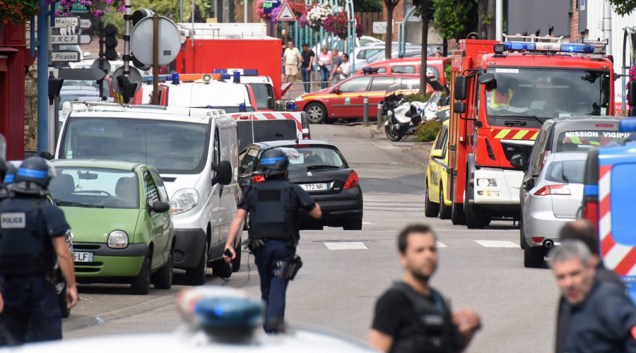
Another day, another abhorrent, despicable and unacceptable Islamo-fascist terror attack in France, this time targeting a Catholic church in which an 86 year old priest had his throat slit – while celebrating Mass – by Islamist thugs acting in the name of ISIS.
What happens when the sheer number of small and medium size Islamo-fascist terror attacks (or the aura of politically correct unease at confronting them) becomes so great that the media simply stop reporting them fully?
In Michel Houellebecq’s novel, Submission, about a Muslim Brotherhood takeover of the French government (liberals and conservatives agreed this would be preferable to a National Front government), the interestingly prescient element was the non-reporting by television and papers of outbreaks of violence prior to the change of government (Twitter didn’t really feature in this novel). And that rings true. We’ve already got self-censorship when it comes to reporting attacks by Muslim refugees (the gun attack by a German-Iranian patently fell into a different category) in Germany and Scandinavia, and an almost comical reluctance anywhere in Europe to identify Islamist attacks as such – until IS takes credit for them, even the work of freelances. Plainly we have to guard against language that would demonise an entire community, but within that reasonable limit, we must require both politicians and public service broadcasters to talk plainly. And when Muslim extremists slit the throat of a priest in his own church, we’re looking at religiously motivated murder, entirely of a piece with the same religiously motivated murder of Christians and others being carried out in the Middle East. Shall we say so?
This is my concern too. While reading Houllebecq’s Soumission last year I was struck by the plausibility of the author’s scenario – a craven political/media class desperate to avoid facing up to the nature of the threat ultimately ceasing to report on the fundamentalist religious violence even as it grew. One scene features a wealthy society event attended by the academic elite of Paris, interrupted by the sounds of distant gunfire in Paris – an Islamist attack or far-right counter-attack which was barely acknowledged by the partygoers let alone mentioned on the later television news bulletins.
Already we have seen the first signs of “terror fatigue” in the mainstream media. When a suicide bomber detonated his explosives at the gates of a music festival in Ansbach, Germany late on Sunday night, Britain’s rolling TV news channels briefly mentioned that an incident was underway, but otherwise continued with their normal programming. By the early hours of Monday morning they had bothered to get a couple of eyewitnesses on air via telephone, but it was not until the breakfast news that they gave it the full terror attack treatment which we have come to expect from the news. Evidently these incidents are now coming so thick and fast that the BBC did not consider it worthwhile waking up their A-team presenters or reporters in the middle of the night for “just another” suicide attack on the streets of Europe.
This is the new normal. And as this blog argued yesterday, Europe’s political class and virtue-signalling members of the public must shoulder their share of the responsibility for our increased vulnerability to attack. Whether it is by cheering on the opening of Europe’s gates to millions of improperly-vetted migrants, a small number of whom have deadly intent, or furiously refusing to confront the fundamentalist religious nature behind that evil intent, we have denied ourselves the ideological, spiritual, procedural and technological means to properly defend ourselves and our civilisation.
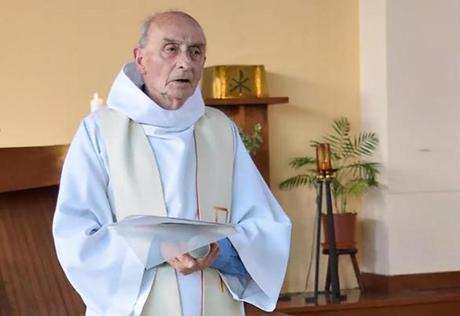
Father Jacques Hamel died doing what he had done for 58 years of faithful service – proclaiming the Word of the Lord and celebrating the Eucharist. Though his death was unimaginably barbaric and violent, at least the name of Fr. Jacques will live on as somebody who proclaimed his truth and defended his values to his last day. Can the same be said for many of us, especially those of us who seek to reach some kind of appalling and unachievable truce with the Islamo-fascists? How will those of us be remembered in history who seek to excuse Islamist terror, laughably excusing it or explaining it away on the grounds of foreign policy or housing policy or welfare cuts?
On this one grim occasion we can at least be grateful for France’s historically strong secular traditions. The cold-blooded murder of a priest celebrating Mass in a more devout country could well have lit the touchpaper for religious war and serious civil strife. France, being more secular, will likely not see as great an anti-Islamic backlash as if this had happened in more Catholic country like Poland.
But there the good news ends. If they were not already high on the list of potential targets, churches, synagogues and the priests and rabbis who lead worship in them will now be in the crosshairs of every budding wannabe jihadist already in Europe, as well as those who have yet to arrive. Every parishioner going to Mass will now have pause to stop and consider their safety as they fill the pews this Sunday, and every subsequent Sunday. It is physically impossible to protect every church in the country, particularly against assailants armed only with knives and fake explosives.
On the plus side, President Francois Hollande has finally been shamed by events (the weekly accumulation of terrorist atrocities and the growing death toll) into declaring that France is at war with the Islamic State and therefore, by extension, with the extremist fundamentalist ideology behind it. But it is too little, too late.
So we should remember this: the truly great leaders now, those who can genuinely bring security and are worth voting for, will not be those such as Marine Le Pen who seek to exploit division for power. But neither, crucially, will they come from the ranks of those who fail to address what voters see as blindingly obvious: that terror and immigration are connected. If Angela Merkel persists in doing so, even she will be brought low by it. If the Democrats continue not to talk about terror, it could cost Hillary Clinton the White House.
In Britain we have grown used to talking throughout the Brexit campaign about a disconnect between politicians and the public. “They just don’t get it,” said the ranks of the disaffected, as they deserted Labour for Ukip and voted Leave. Even now, our main parties are struggling to offer even an initial response to the economic impacts of globalisation.
But the consequences of a similar disconnection between public and politicians over terror would be unthinkable – menacing to the liberty and liberal values that define our societies.
The politicians to prize, then, are those who can pull their heads out of the sand without stirring up the mob.
Such prize politicians seem few and far between in France, Germany and Britain. In fact it is hard to remember a time when the quality of leadership was held in such low esteem by a political class who now prize the ability to pander to chosen voting constituencies above all else. With the partial exception of Jeremy Corbyn on the Left, Britain’s major political parties have zero interest in telling hard truths to the British people or proposing anything other than glib, painless (and ultimately unworkable) fixes.
One faction of the country in particular – the Guardianista metro left – is not even yet willing to describe these attacks as religiously motivated, ascribing them simply to “troubled individuals”. When half the country is unable (or stubbornly, desperately refuses) to identify the ideology which murdered an octogenarian priest at the altar of his own church, how do we ever confront it?
May God grant eternal rest to His faithful servant Fr. Jacques Hamel.
May he rest in peace and rise in glory.
And may we finally come up with a response to this sustained Islamist assault on democracy and freedom of speech and religion which amounts to more than a Twitter hashtag and a few bunches of flowers.
–
Support Semi-Partisan Politics with a one-time or recurring donation:
–
Agree with this article? Violently disagree? Scroll down to leave a comment.
Immediately after the vote, commentators said it was about class – about professionals living and working in big cities, especially London (who voted Remain), versus working class people in smaller towns, especially in the north of England (who voted Leave).
So you would think that if you know that someone is working class and has a low income, you’d be able to confidently guess they voted Leave. But according to Stian Westlake, Head of Research at the think tank Nesta, this is not the case.
“If you look at someone’s class status and their income, and you try and use that to guess whether or not they voted Remain, it turns out it’s not that much better than guesswork. It gives you around 55% accuracy, and obviously a guess would give you 50% accuracy,” Westlake says.
His figures come from the British Election Study, in which around 24,000 people were asked about their voting intentions in the EU referendum.
Respondents to the survey were also questioned on their views on other things, such as the death penalty – and this provides a much better indicator of how people voted, Westlake argues.
“If you look at attitudes to questions such as, ‘Do you think criminals should be publicly whipped?’ or ‘Are you in favour of the death penalty?’ – those things are much better predictors, and you get over 70% accuracy,” he says.
“To give you an idea of how good a predictor that is, if you ask someone, ‘Do you think there is too much European integration?’ – which you’d think is a pretty good indicator – that only gets you to the high 70s. So if you can get to 71% or 72% prediction from these questions about traditional values, then it suggests it is that, rather than income or class, that is really driving the vote for Leave.”
So now Brexiteers are violent savages, dangerous authoritarian people who cannot keep their base desire for retribution and “an eye for an eye” under control. Brexit Britain will see a return of the stocks, the scold’s bridle and even the gallows in the town square if we get our way, the BBC is effectively telling its readers.
And of course this fits in with everything that Remainers like to think about themselves, and tell themselves about those who want Britain out of the European Union. To their minds, Remainers are compassionate, progressive, outward-looking, tolerant and fair, while Leavers are sneaky, conniving, closed-minded, inward-looking, highly intolerant and “post-factual”. Remainers want to hug a hoodie. We, apparently, want to bash their heads in with a brick and hang them from lamp posts as a warning to others.
Except that in their haste to demonise Brexiteers, the BBC neglected to mention the percentage of Remainers who also back the authoritarian policies cited in the survey. And there is a reason for this – to some extent, the data actually exonerates Brexiteers, while painting Remainers in an equally bad light, if not worse.
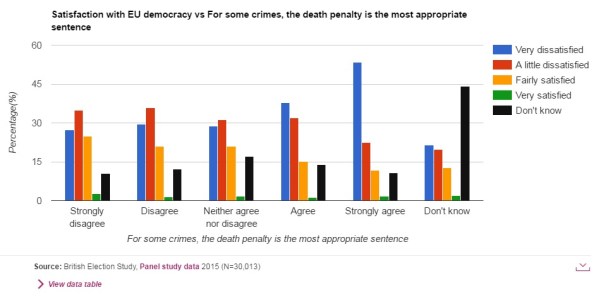
This chart plots satisfaction with EU democracy (a reasonable indicator of general euroscepticism given the fact that sovereignty and democracy were given as the primary motivation for voting to leave, according to post-referendum polling) against strength of agreement with the death penalty. The data is taken from the British Election Study, and and can be freely found and researched on their website.
And what we see here is that of those who strongly oppose the death penalty, over 62% are eurosceptic (that is, either very dissatisfied or a little dissatisfied with EU democracy). Of those who disagree with the death penalty a little less staunchly, over 65% are eurosceptic.
Admittedly, more staunch eurosceptics take up a much larger proportion of those who agree or strongly agree with the death penalty. But the europhiles (taken as those fairly satisfied or very satisfied with EU democracy) hardly cover themselves in glory as principled death penalty abolitionists. The proportion of europhiles either against or strongly against the death penalty struggles to break much above 20%.
This would seem to suggest that however much the BBC’s “traditionalist” narrative may play a part, there are also a significant number of very firm eurosceptic death penalty opponents who supported Brexit. That would make sense. This blog is one of them, as is nearly every other Brexiteer I happen to know. But why report on the principled band of anti death penalty Brexiteers when you can just play to the gallery and point at those eurosceptics who want to bring back hanging? It just fits so neatly into the tidy little narrative about primitive, left-behind idiots voting for Brexit against their own supposed interests.
But perhaps if the data tells us anything at all, it is that people with strong opinions on either side of the death penalty issue (and perhaps other issues too) tended to favour leaving the European Union, while Britain’s army of vague, wishy-washy and noncommittal people wanted us to remain, guided as always by their dithering uncertainty and fear of change. After all, when it came to strongly disagreeing (or even strongly agreeing) with the death penalty, Britain’s EU cheerleaders are almost nowhere to be seen. That hardly fits with their sanctimonious claim to be more open and tolerant than the rest of us.
But that doesn’t quite fit the BBC’s preferred narrative. Far better to concentrate on the spike and declare all Brexiteers to be violent, vengeful authoritarians. That is the narrative the BBC loves to tell and Remainers love to hear, so that is the narrative which we will continue to get.








This is concerning indeed, though not surprising. This blog has previously reported on the plaintive cries for help and/or of frustration from young conservatives, eurosceptics and civil libertarians who found themselves being ruthlessly persecuted at school, often with the full knowledge and participation of their own teachers. And clearly the EU referendum has taken that pre-existing hostile climate for free speech and injected it with steroids.
One marvels in particular at the philosophy teacher who “became hysterical” at the mere idea (not even the act) of criticising Islam, and who pre-emptively ejected Kekic and her friend from class as punishment for daring to suggest that all ideas should be open to debate and criticism. On might have thought that adherence to this view would be a prerequisite for anybody seeking to teach philosophy of all subjects, but apparently there are now schools employing philosophy teachers who actively oppose the idea of critiquing certain ideas and belief systems.
Where teachers lead, impressionable students will often follow. And the clear message being sent by the academic establishment – not only at the university level but at the school level too – is that the Cult of Social Justice and Identity Politics is firmly in charge now. Free speech is even less of an absolute right than it was before, woolly metro-leftism is firmly established as the only acceptable political worldview and ideas should no longer be judged on their own merit, but rather on the identity of their proponent and the position which they occupy in the Hierarchy of Privilege.
When I appeared on the BBC Daily Politics earlier this year to discuss the phenomenon of oversensitive students, I joked that something strange seems to happen in the minds of otherwise sensible young people the moment they first set foot on a university campus, making them suddenly obsessed with their racial and gender identities and utterly incapable of tolerating alternative viewpoints. But of course this facetiousness disguised an important truth, made clear by Kekic: the fact that we are raising our children to be this way from birth, through our therapeutic culture, worshipping of the self, encouraging of a state of constant personal fragility and a starkly authoritarian attitude toward any speech which even remotely contradicts certain established orthodoxies (Islam is above reproach, the EU is fundamentally good, etc.)
There are already whole industries – certainly in academia but elsewhere too – where holding conservative or eurosceptic beliefs amounts to social or professional suicide. The other day I attended a meeting of good people involved in various social enterprises and charities in the third sector. After I brought up the topic of the EU referendum in passing, the speaker proceeded to wax lyrical about just how awful Brexit is, never thinking for a moment that anybody in the room might possibly disagree with her. Though it was amusing, I also felt a pang of awkwardness and discomfort, knowing that I was surrounded by people who would be utterly repelled if I revealed my own true feelings about Brexit (I did anyway).
The point is that as a grown man and a political blogger well used to debate and disagreement, I still paused momentarily before airing a perfectly mainstream and acceptable opinion in front of people who strongly disagreed and who thought that those who supported Britain leaving the EU were stupid at best and malicious at worst. How, then, must those young people with conservative or eurosceptic beliefs feel, who have not yet developed so thick a skin? How are they to feel comfortable expressing their sincerely and legitimately held political views when finger-wagging teachers casually accuse them of “extremism” and conspire to silence them altogether?
There is a cancer in our schools and universities, metastasising throughout the entire educational establishment. It is a tumour which sucks the life out of free speech and academic freedom, and encourages dull, lumpen conformity invigilated by a watchful, censorious, politically correct Taliban.
We need to excise that tumour before it kills off independent thinking, freedom of speech and academic enquiry for good.
–
Top Image: Telegraph
–
Support Semi-Partisan Politics with a one-time or recurring donation:
–
Agree with this article? Violently disagree? Scroll down to leave a comment.
Follow Semi-Partisan Politics on Twitter, Facebook and Medium.