The advertising in this bus stop is a little more…let’s say interactive, than your average.
And the resulting YouTube ad for Qualcomm, a mobile technology company, becomes Best Thing Of The Day.
The advertising in this bus stop is a little more…let’s say interactive, than your average.
And the resulting YouTube ad for Qualcomm, a mobile technology company, becomes Best Thing Of The Day.

Trois Pièces by Francois Poulenc.
1. Pastorale
2. Hymne
3. Toccata
The Hymne, in particular, is quite stunning. And the Toccata fiendishly difficult!
I do like these YouTube videos where you are able to follow the score along with the music.
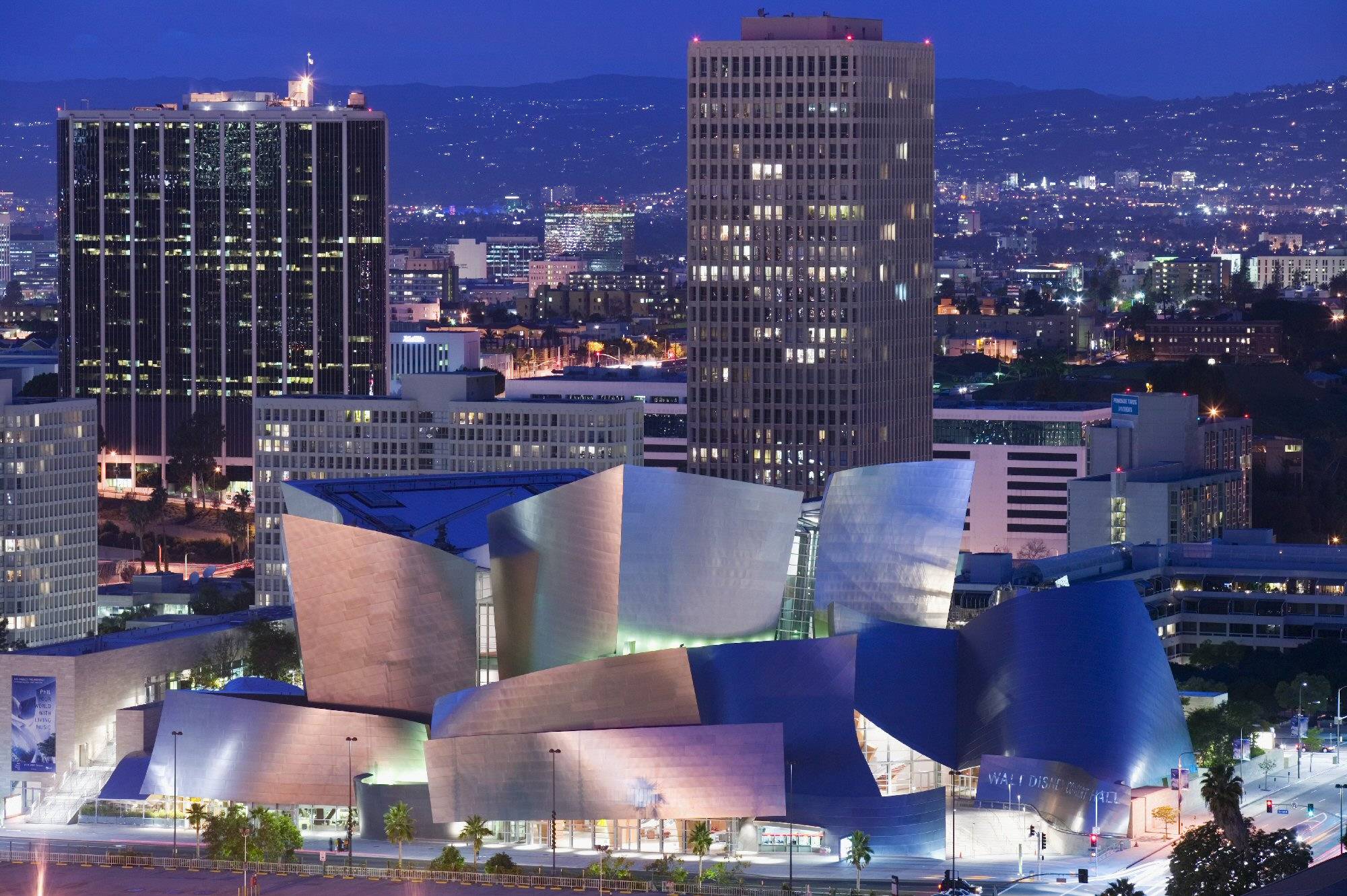
The wonderfully designed Walt Disney Concert Hall in Los Angeles, California, turns 10 years old this year. With its sweeping, idiosyncratic curves. metallic finish and public spaces, it is doing a lot (at least in LA terms) to revitalise the downtown area.
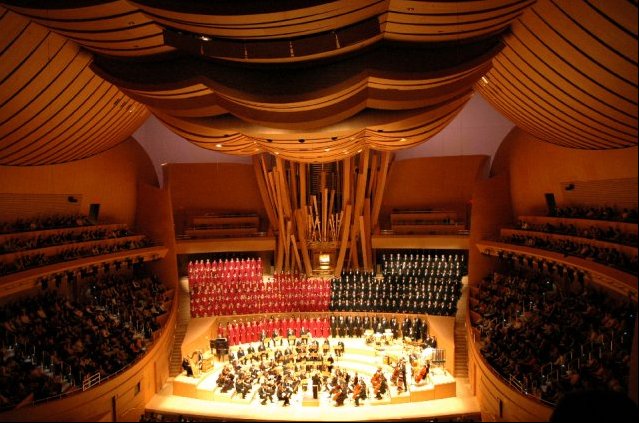
The interior is also beautifully designed, with seating in the round (limited audience seating behind the choir) and a very dramatic organ placement. The warm finish of the interior contrasts strikingly with the bright, metallic exterior.
Gramophone Magazine reports:
The Los Angeles Philharmonic is celebrating the 10th anniversary of its Walt Disney Concert Hall with ‘insideOUT’, a number of special events taking place during September, October and November featuring music director Gustavo Dudamel, Esa-Pekka Salonen, Yo-Yo Ma, Leif Ove Andsnes, Yefim Bronfman and Julie Andrews.
There will also be public forums with Frank Gehry, designer of the concert hall (Oct 2, 15), who writes of his building: ‘One of the primary considerations when conceiving the design for Walt Disney Concert Hall was to preserve the iconic importance of the LA Phil, but break down the often imposing scale of a traditional concert hall. Walt Disney Concert Hall is not just a building for music, but a building for the people. From the inside out, the building was designed to respond to its surrounding, and serve as a gathering place.’
Semi-Partisan Sam hopes to make his own visit to the Disney Concert Hall in the coming few years.

Apparently, continuing his penchant for calling regular people out of the blue and surprising them, Pope Francis has made a telephone call to a young gay Catholic man in France, in response to a letter the man sent him expressing his emotional turmoil and stress at the thought that his nature was in some way against God or church teaching.

The Huffington Post reports the account as follows:
“He said ‘Christopher? It’s Pope Francis’. I was unsettled, of course. I asked, ” Really? ” He replied : “Yes.”
“I received the letter that you sent me. You need to remain courageous and continue to believe and pray and stay good,” the Pope told him during the nine-minute conversation in Spanish.
“Your homosexuality. It doesn’t matter. One way or another , we are all children of God. This is why we must continue to be good,” the Pope told him.
Though many writers have argued that Francis’ more inclusive and friendly tone does not necessarily mark any great upcoming shift in church teachings on homosexuality, it is certainly a good beginning, and a vast improvement from the cold, clinical indifference that was the hallmark of the Benedict XVI papacy:
While Francis’ predecessor Benedict XVI was an extreme opponent of gay rights – once describing homosexuality as a “defection of human nature” – the most recent Pope has expressed his tolerance towards homosexuality.
During his recent visit to Brazil he said: “If a person is gay and seeks God and has good will, who am I to judge?”
Once this spirit of friendship and true empathy is established, as Pope Francis is working so hard to achieve now – not just in terms of Church attitudes toward gay people, but also the poor, underprivileged and dispossessed – the opportunity may eventually present itself for a revision of Church teaching in this regard.


We are at that point in the eternal cycle again. Something bad is afoot in the world, the United States of America pricked up its ears and made noises about military intervention, and the world turned to look at Britain to see whether we would leap on board too. And to begin with, everything was proceeding according to the long-established formula. The Prime Minister made the usual belligerent noises, condemned the atrocities taking place (in Syria this time, in case anyone was sitting this round out) and urged the United States to take a strong stance, with the obvious implication that Britain would occupy her usual place in the co-pilot seat.
But then something unusual and unscripted happened – the Prime Minister was manoeuvred into seeking approval from Parliament. MPs, annoyed at being called back from their summer vacations, wary of government intelligence in the wake of Iraq and, as always, looking to protect their own political hides, voted against authorising UK military action. Scandal! Or actually, just democracy working as it should.
And now, all anyone can talk about is how much this foolhardy decision must have diminished us as country, about how we have deteriorated and declined as a nation, and will continue to do so, and how everything is wretched and terrible and how awfully embarrassing it must be for our political leaders to have to represent Britain abroad when Zimbabwe and Somalia are clearly so much better.
Anyone following British television or print media’s coverage of the G20 summit currently taking place in St Petersburg, or the international response to the British parliamentary vote in general, will have been treated to a parade of insecure, snivelling, sometimes self-righteous commentators solemnly telling us that the special relationship between the United States and the United Kingdom has been dealt a death blow, that Britain’s international credibility is in tatters, that we are the laughing stock of the world and that there is little left for our nation to do but limp out to a desolate spot in the north Atlantic and sink ourselves.
What nonsense.
Britain doesn’t sit at the big table because we dutifully follow the United States from one armed conflict to the next. That is not – repeat not – the reason. We sit at the big table because of the hundreds of countries in the world, our economy remains the seventh largest, and one of even fewer lynchpins of the global economy. Many of the world’s greatest inventions and finest companies originated and are based on our shores. Our capital city is the capital city of the world, an indispensable hub for global finance, commerce and culture.
We are a declared nuclear power, and possess one of five permanent, veto-wielding seats on the United Nations Security Council. Our military and intelligence gathering organisations are integrated with their sister organisations in the United States to a degree that no other nation can claim. Our armed forces (despite unwise government cutbacks) are among the most well trained, powerful and deployable in the world, and our country fields one of only three blue water navies to command the oceans.
British popular music, art, literature, film, television and all forms of culture enjoy a popularity and international cultural hegemony second only to the United States. Our people are industrious, friendly, stoic and tolerant. We invented the English language and yes, we speak it better than our transatlantic cousins.
That is why Britain matters, is respected, and is a force to be reckoned with. Not because we go along with Plan X or Plan Y to come floating out of the halls of Washington DC. Sometimes I find myself aghast at the need to remind my compatriots of these simple facts.
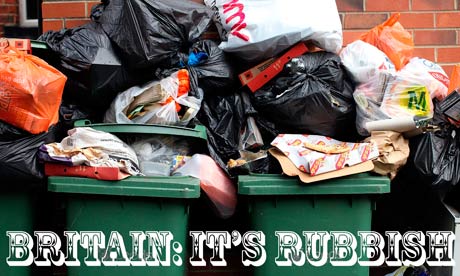
Did growing up in unionised, socialist, pre-Thatcher, pre-1979 Britain so affect and wound the collective psyche of our political leaders, journalists and commentariat class that they will disregard these manifold blessings and benefits – attributes that any country would be proud to possess – at the mere sight of a negative headline in an American newspaper or an off-the-cuff remark by a junior American administration official? For shame.
If nervous, wet politicians and journalists want to wring their hands and fret because John Kerry called France the oldest ally of the United States (a historical, verifiable fact rather than a poke in the eyes of the British), so be it. But recall that President Obama, speaking from the Rose Garden of the White House, correctly referred to the United Kingdom as America’s closest ally. Because it is demonstrably true, has been for years, and will continue to be so.
The bottom line is this: Britain can afford to sit out a round or two of military intervention now and then, and with so many other countries in the world who profess to care about human rights, we don’t always have to be the ones spilling the blood and treasure in their defence. Britain is a strong, enduring nation, and does not need to prove this fact to the world by getting actively involved in every military conflict, all the while dividing our population and depleting our treasury. America will not stop taking our calls because we sit out this particular action in Syria.
And since when did an expression of British democracy in action – our elected House of Commons voting “no” to a government motion authorising military action – become something to be ashamed of, or to apologise for? Do those people who fret that Britain’s non-participation will be the end of our global prestige really think that bombing sovereign nations at will without consulting the people is more worthy of respect than consulting the people, and holding back when the peoples’ representatives enforce their will?
I do not care to live in their mental version of Britain. Whilst I ache for a written constitution for the United Kingdom and clearly delineated separation of powers, this parliamentary debate, on the whole, was a moment to be proud of.
It concerns me that even our Prime Minister has difficulty articulating the virtues of Britain and making a robust defence when pressed by interviewers who detect political blood in the water and incorrectly perceive our standing in the world as being diminished whenever we are not in lock-step with the United States. It often seems that all David Cameron can do in response to these interview ambushes is stare at his feet and mumble about how many times a day he speaks to Barack Obama, when what he should be doing is reciting a lusty, more eloquently written version of this very article.
We are British. We are a great country. Our economy may still be in the toilet, and we may be governed at present by dilettantish non-entities in the mode of David Cameron, George Osborne and Nick Clegg, but these things shall pass. And when they do, Britain will still be a great country.
Here’s a closing thought: the world might respect Britain a lot more if we showed ourselves more respect for who we are, what we have done and what we can do as a nation.


