James Kirkup, writing in The Telegraph, asks “How much would you pay to reduce immigration?”, in an article praising UKIP’s Nigel Farage for making the supposedly bold proclamation that he would rather be slightly less well-off in return for lower levels of immigration into the United Kingdom – in other words, that he is willing to pay out of his own pocket to reduce immigration.
[Farage] added: “If you said to me, would I like to see over the next ten years a further five million people come in to Britain and if that happened we’d all be slightly richer, I’d say, I’d rather we weren’t slightly richer, and I’d rather we had communities that were united and where young unemployed British people had a realistic chance of getting a job.
“I think the social side of this matters more than pure market economics.”
Kirkup, who considers this to be a “genuinely interesting” way for Farage to reframe the debate, phrases the quandry this way:
How much economic growth should we give up? How much of your fellow citizens’ prosperity, are you willing to sacrifice in order to cut the number of people entering Britain from abroad?
To be precise, how much — to the nearest £1, please — would you pay to reduce immigration?
Unfortunately, by accepting Farage’s premise that immigration is harmful in all spheres other than the economic – and the idea that immigration must automatically be a negative thing, a cause for concern or something to be ameliorated.
This is yet another argument where the two opposing sides seem to argue back and forth over an irrelevant distraction rather than the main issue. Why is it that immigration has, at times, led to divided communities and fractured society? Why must it be that immigration puts the young British unemployed at even more of a disadvantage? If only we could begin to address and turn around these key issues, surely the matter of net immigration into the UK would cease to be of almost any importance at all.
For example, we should re-examine how Britain can better to integrate and assimilate new immigrants into our society, avoiding the mistakes of countries such as France and learning from those such as the United States. How can we ensure the right balance between providing support and assistance to help new arrivals find their feet and integrate into society, and using “tough love” where necessary to ensure that the state is not enabling immigrant communities to isolate and refuse to become part of British society?
We should take a long, hard look at our education system and parenting culture and ask why it is that a young adult born and raised behind the iron curtain in an economic, political and social environment far less prosperous and nurturing than that of the UK is so often preferable, in the eyes of so many reputable and rational employers, to a British-born young jobseeker who has enjoyed all of these advantages.
And yes, we should look at the topics of welfare and the terms of our relationship with the European Union, and decide whether allowing brand new economic migrants to our shores to benefit from the welfare system that the rest of us have paid into over a longer period is really a cost that we are willing to continue to pay in order to maintain our EU membership in its current form.
None of this debate will happen as long as we accept the premise that economics aside, immigration is an inherently bad thing – to shrug our shoulders and go along with Nigel Farage’s line of reasoning, as James Kirkup and others do so willingly.
How much would people pay to have an informed debate about the real social, educational and economic issues around immigration? More than our politicians and media seem to realise.
Sometimes, when you spend too long in the corporate bubble, bad things start to happen. You can start to believe that everyone back in the real world is also drinking the brand-building Kool-Aid, and that they are as concerned about the fortunes of the ACME Widget-making Company as you are. And that mindset can lead to unfortunate and excruciating public exhibitions such as the above from Coca-Cola.
It doesn’t start promisingly, because there is a choir. Not the Halifax choir imploring us to believe how well we will be treated if we switch our current accounts into their loving care – no, it’s the worst kind of choir when it comes to television commercials. A youth choir.
It’s a youth choir singing an inspirational song. Run. RUN!
As the adorable, angelic youth choir intones “sometimes I feel like throwing my hands up in the air”, we are treated to bland, politically correct, focus group-approved pseudo-inspirational statements flashed on our screens, such as:
“For every tank being built… there are 1000s of cakes being baked” – contrast picture of an evil tank factory with a birthday cake
“For every person running from the law… there are 100s running for a cure” – to the backdrop of people running in a charity race
“Each time a red card is given… there are 12 celebratory hugs” – cue footage of the winning goal celebrations
“For every display of hatred… there are 5000 celebrations of love” – cut to footage of a newly married gay couple at their wedding
The grotesque display of emotional manipulation culminates in the inevitable:
“For everyone who doesn’t get along [cue two siblings arguing]… there are many more sharing a Coke”
Okay, Coca-Cola Corporation. I get it. You hate war, criminality, intemperate bad sportsmanship, public rioting and sibling rivalry. And…what? By drinking your carbonated brown sugary liquid, we can extinguish these evils from our world? Increasing the presence of Coca-Cola in our refrigerators will bring peace to the streets of Fallujah?
Tone it down a bit, little Billy.
For the final coup-de-grace, we are encouraged to submit our own “reasons to believe” (as to what, it is never explained) using the Twitter hashtag #ReasonsToBelieve. Because clearly none of us have anything better to do than become servile, willing pawns in Coca-Cola’s latest social media campaign.
Each time a large corporation tries to shoehorn its way into the nation’s affection with an affected, overly sentimental commercial in which they try to imbue their brand with the universal ideas of peace, love and goodwill… Semi-Partisan Sam throws up a little in his mouth.
Did they really just do that?
Bring back the “Holidays Are Coming” Coke ad. At least that one made a modicum of sense.
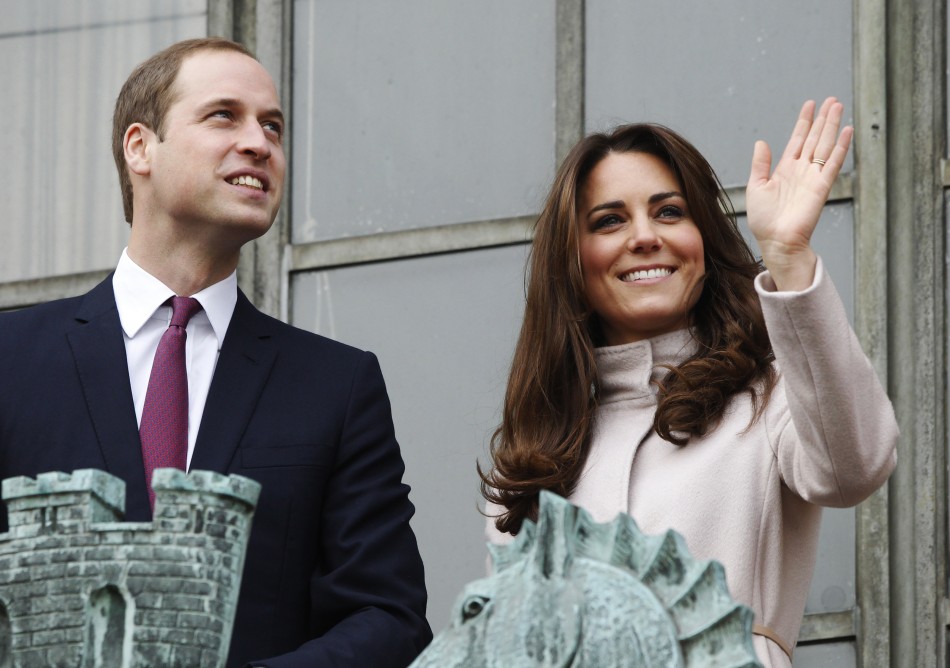
Having devoted considerable time to bemoaning his father’s various foibles and misdeeds on the pages of this blog, it feels somewhat unusual to be charging to the defence of Prince William today, but I do so because a lot of the faux outrage about the Duke of Cambridge’s admission to Cambridge University for what is essentially a privately-funded executive education course is entirely misinformed, off-the-mark and deserves rebuttal.
Perhaps I should not jump on someone who is still in university herself, but Melissa Berrill, writing in The Guardian (and therefore already doing much better than me), seems to have best epitomised the non-story nature of the whole affair in her polemical piece entitled “William’s on his way – and Cambridge should be ashamed”.
The basic thrust of her argument is that all of the work she has done convincing people that Cambridge University is socially inclusive and not the walled-off preserve of the posh, entitled blue-bloods has been undone in a heartbeat, and all because William is coming to study. The horror!
I’d tell them that I’d been to the local state school, and explain that it isn’t like the old days at Cambridge any more. You can’t get in just because you’re rich, or because your dad knows the right people. The admissions system isn’t perfect, but nowadays they work extremely hard to make sure they admit students based on merit, not class or family connections.
It was a spiel that came easily to me, because I’d done it many times before; on countless open days and access visits around the country throughout my degree. It didn’t always convince people – some had an impression burned too deeply to change. But sometimes it did; sometimes it made a difference.
She then proceeds to throw her toys out of the pram:
I could, for example, have spent it [her time] smashing up restaurants in full evening dress. Or snorting champagne up my nostril through a straw. Or posting Facebook pictures of me lying on a bed of gold coins wearing a top hat. For all the difference it will now make, I may as well have spent it doing all these things – because my argument is now worthless.
This would be a great point, a devastatingly effective rebuke to Cambridge University and a nice little dig at the Bullingdon Club too – if only there were any element of truth and reason to it. But there is not, and Berrill torpedoes her own argument in the very next paragraph:
It doesn’t matter that he’s actually been admitted to a 10-week “professional” course whose admissions process doesn’t directly compare to the mainstream Cambridge one – not a single news outlet has bothered to make that distinction and, to the world at large, “William’s going to Cambridge” is the only message that will be taken away.
Now, I flunked out of Cambridge University half way through my Economics degree so maybe I’m not best placed to talk, but as someone who has successfully completed her undergraduate studies at that fine institution, should Berrill (and the many journalists and columnists who have uttered similar words of disapprobation) not be concerned precisely with the truth of the matter rather than the way that it may be erroneously perceived by others? Isn’t the pursuit of truth and knowledge kind of what the whole university and higher education thing is all about? Is Melissa Berrill really saying that because something quite innocent might look bad, we should avoid doing it? And has she herself not aided and abetted the “news outlets” and the “world at large” in their misunderstanding by joining in this outrage at a totally false straw man argument (that Prince William has somehow snuck in and snatched the coveted university place of some plucky, honest-to-God, working class, AAA-achieving eighteen year old for his own, lazy ends)?
Berrill rages:
Admitting Prince William is an insult to every student, whatever their background, who got into Cambridge by getting the required A-level or degree results. It’s an insult to every student whose A-levels and degree are the same or better than his, and who didn’t get a free pass to Cambridge in spite of them.
Admitting Prince William to this custom-made executive education course is not a particular insult to anyone, and to argue that it is insulting to students in the main academic programme is akin to saying that me watching an Olympic football game at London 2012 was a slap in the face to the Olympic athletes who worked so hard to earn the right to represent their respective countries in the Games. Not so. Just like me at the Olympics, William will be going there to spectate, to soak in the atmosphere, and – crucially – will pay his own way. Just as I did not walk out of Wembley Stadium with a gold medal around my neck, so William will not be walking out with a coveted Cambridge University degree.
This not-so-subtle nuance seems to have evaded the highly educated Oxbridge mind of Melissa Berrill.
If there is to be any outrage, why not get worked up about the fact that it appears that the University’s Cambridge Programme for Sustainable Leadership has custom-made the course for the benefit of one person? Why not check whether or not there is any precedent for offering this type of course to a small group of private individuals, and ensure that the fee payable to the University by William will be the market rate that anybody else would be expected to pay? Why not – if you really want to push the boat out – have a debate about whether executive education is a good thing at all, about the merits of allowing rich and fat executives from FTSE 100 companies to pay lots of money to spend a few weeks on campus getting drunk and hooking up, and walking away with a certificate bearing the name of a famous academic institution?
Why have we not seen these lines of enquiry and debate play out in the newspapers instead of the William-gate or Cambridge-gate style narrative that we have been fed instead? Perhaps because to do so would require some real, actual research and journalism, as opposed to a simple good vs. bad, black/white debate designed to polarise and sell papers.
If we are going to object to something, let’s keep the arguments tight and to the point, not vague and fatuous. Those protesting Prince William’s enrollment at Cambridge have failed this test.
The Guardian trails a new Labour proposal for “debt-free degrees” for up to 50,000 students per year, an idea which may well end up in the Labour party’s 2015 general election manifesto. The Guardian’s political editor, cheerleading the idea, claims that this scheme will “tailor university education more closely to the needs of business and young people”. Of course, it doesn’t take long for the enquiring mind to begin picking holes in the concept.
From the top:
Under the scheme, people in employment will be able to study for a degree relevant to their existing and future work, with the costs being paid jointly by government and their employers. The degrees would carry no fees and the in-work students would receive a wage or training allowance from their employer during their period of study.
There is a world of difference between a short course designed to brush up an employee’s computing skills, or even a slightly longer and more involved course in a field such as project management, and the rigorous demands of a university degree. Whilst an employer may see the immediate short-medium term benefit in paying for their staff to undertake the former on company time, it would be a generous boss indeed who would take the dual hit of lost working time and course fees to fund a whole degree.
The costings for the proposal are worked out with the astonishing level of detail and realism that we have all come to expect from Labour under Ed Miliband’s leadership:
Denham, who will outline the plans in a lecture to the Royal Society of Arts on 16 January, says the government’s financial contribution will be found by redirecting money currently spent on writing off unpayable student debt from fees and maintenance loans, and on student grants.
I have read this sentence through several times, and if it makes any more sense to a reader than it does to me, I would love to have the translation in plain English. You don’t “spend money” writing off debts from unrepayable student loans. And if John Denham, the policy’s champion, is suggesting that the £3bn shortfall between expected and actual repayments on student loans over the course of the next parliament can be easily resolved by tracking down students who have moved abroad and shaking them down for money, or by waving a magic wand and making graduates suddenly earn income above the £21,000 threshold so as to become eligible to make repayments, then I will take this as just another sad sign that Her Majesty’s Loyal Opposition has no grip on economic reality or the way that public finances work. Whenever we are told that the money for some policy “will be found by redirecting money currently spent on…”, I take it as seriously as I would if Denham told me that he would fund his policy through “efficiency savings”.
There is then, of course, the question of the nature and value of these new degrees, were they to be taught in the classroom. If, as the Guardian claims, they are to be closely “tailor[ed] … more closely to the needs of business”, the degrees are likely to be highly specialised, with much less transferability to other fields of work than more generalist degrees. Indeed, any sensible employer acting in their own interests would be almost certain to demand this – if you are going to pay for someone to get a degree, it is in your interests as an employer to make sure that that degree will be of maximum use to the employee whilst they are working for you, and as little use to them as possible when they come to take that degree and use it elsewhere – so as to act as a deterrent to leaving.
But seeing only the positives, Denham imagines that business will embrace the idea of paying for their employees’ qualifications:
Denham says the proposals will prove attractive to many businesses as they will save money on recruitment and retention, having trained handpicked staff. They will also save on in-house training costs. Employers and students will also be able to shape the courses to ensure they are relevant.
But apparently under the precursor to this policy, employers were expected to contribute £3000 towards tuition costs, and would also be expected to pay a wage or training allowance to their employees as they studied “intensively over two years” or longer. I find it hard to imagine that any savings on recruitment, retention or in-house training will be sufficient to make incurring these expenses an attractive option.
The Guardian further joins the Labour Party in proclaiming that the new policy proposal is in direct response to demand from industry and the private sector, as the article continues:
The ideas are likely to be welcomed by business groups. Last July the CBI said both universities and businesses needed to be more imaginative in the way they provided high-quality education that was relevant to the country’s economic needs, and affordable for young people.
The accompanying link in the Guardian article in support of this assertion does not work, which is probably no accident. Although the CBI and others are right to acknowledge that the standard A-levels and three-year degree route is not sufficient to meet the recruitment needs of the British economy in 2014, this is a long way from a plaintive call for the kind of policy that John Denham wants to enact, and it is sneaky in the extreme for the Guardian to shoehorn in this unrelated quote from the CBI’s policy director:
Katja Hall, CBI policy director, said: “The UK needs to vastly increase the stock of workers with higher-level skills to drive long-term growth and stop us falling behind our competitors. We need to tackle the perception that the A-levels and three-year degree model is the only route to a good career.
Acknowledgement of this simple fact by the CBI is a good and obvious thing. Of course rewarding and well-paid careers can be achieved through many routes, and alternatives to the standard path should always be sought and encouraged where they could be of greater benefit to people. But to take this broad and nonspecific statement made by the CBI last year and try to bend it in support of a specific (and particularly ill-thought out Labour policy) is manipulative and disingenuous.
It does not bring me great joy to pick apart a policy supposedly intended to address a real problem – a significant and growing skills gap between the demands of industry and the abilities of those entering the workforce. But this proposal appears completely unworkable to me. In order to get business to embrace it in any large number, it seems to me that the the conditions would have to be so onerous – in terms of the narrowness of the degree (more akin to a vocational qualification) and the period of time to which the employee is beholden to work for the employer following graduation – that no student in their right mind would sign up. And if Labour do get into government in 2015 and enact the policy in a way that is remotely appealing to potential students, the cost to the employer would be such that very few firms (aside from those wishing to curry special favour with the government in order to achieve other ends) would be likely to subscribe.
If anyone finds my thinking to be flawed, or can argue that this Labour proposal is anything other than an empty, unworkable vessel designed to launch the phrase “debt-free degree” into the public consciousness ahead of the next election, I would be very keen to hear from you.
The WordPress.com stats helper monkeys prepared a 2013 annual report for this blog.
Here’s an excerpt:
A New York City subway train holds 1,200 people. This blog was viewed about 4,100 times in 2013. If it were a NYC subway train, it would take about 3 trips to carry that many people.