Tonight at 7PM, the British public will finally be granted what they have wanted – and been consistently denied – for years: a debate on Britain’s continued membership of the European Union. This would be a great milestone to celebrate, were it not for the fact that the two most important protagonists in British politics – Prime Minister David Cameron and opposition leader Ed Miliband – are entirely absent from the festivities.
Nonetheless, the match-up between Deputy Prime Minister Nick Clegg and UKIP leader Nigel Farage should be one to watch.
We might wish that Ed and Dave were debating the EU, but at least someone is. It’s proof that the Europhiles realize they can no longer rely on public uninterest in what Brussels does to keep the status quo and proof that Euroscepticism has finally come of age.
So we shouldn’t expect a debate that changes the course of history, but we ought to welcome the fact that continued membership of the EU is up for discussion at all. I’m old enough to remember when the argument for leaving was the preserve of clinically insane Tory backbenchers, half a dozen pig farmers in Devon and Edward Fox. Times, they are a-changin’.
Indeed they are. For all the efforts of the pro-European apologists to cast any Eurosceptic thought as little-England lunacy bordering on outright racism, and all of the falsely apocalyptic suggestion that Britain’s trade with Europe is solely contingent on membership of the political superstate-like entity that the EU has become, the debate could not be suppressed any longer.
This blog will offer trademark semi-partisan analysis and commentary after the fact.
Wealthy people contribute a tremendous amount to Britain, filling the Treasury’s coffers and bestowing no end of positive good on society. The unsung heroes of the economic recovery, the fact that their actions are ever criticised and their worthiness questioned is an intolerable affront towards those fine people whose labours benefit us all.
And who is better placed to lecture us on this topic than Ayesha Vardag, the ‘Diva of Divorce’ and Britain’s top divorce lawyer, herself the midwife to so many acts of social good?
Miss Vardag said: “There’s a strange, underdog culture in Britain whereby the rich and successful are bashed repeatedly. It’s the antithesis of America, where hard work and success are celebrated.
“We revile the successful and forget that they pay taxes and generate employment, but at the same time we complain about a culture of failure and layabouts living off the state.
“You don’t get the prosperity and economic success that funds a world-class welfare state by sending all the rich people abroad.”
A few observations are in order here. Where to begin?
A world-class welfare state? Seriously? Has Ayesha Vardag seen or experienced the British welfare state? Of course she hasn’t. Nobody who has could call it ‘world class’ and keep a straight face. But we can discern her point – if it were not for people like her and the clients that she represents, us poor serfs would not have our self-perpetuating, callously undifferentiating, woefully inefficient and ruinously expensive safety net.
But the crux of Vardag’s argument rests on the assumption firstly that the wealthy are under some new and unprecedented attack (supposedly by the covetous forces of the greedy working classes), and secondly that these beleaguered people are all engaged in work that greatly contributes to the nation and for which we should be grateful. Neither of these assumptions is true.
The truth is that many of the super-rich, while perhaps not being worthy of envy and hatred, are also not worthy of praise, respect and a free ride in the press. It is quite possible to become very rich by doing and contributing nothing at all, while it is equally possible to contribute an enormous amount – to the community, to people in need, to any area or aspect of life where the market fails to assign the correct (or any) monetary value – and be incredibly poorly remunerated. Vardag offers no recognition of this basic fact.
You don’t have to be a foaming-at-the-mouth socialist to realise and acknowledge that there is rich variety within the ranks of the “rich and successful”, not all of them the modern-day job creating heroes that Ayesha Vardag would have us believe.
This blog is the very last place that would ever advocate taking any portion of person’s wealth out of envy, or as a punishment for hard work and success – Labour and the Liberal Democrats can squabble between themselves for that honour. But unlike Ayesha Vardag, who makes her own money profiting from a definite societal ill, neither does this blog believe that the wealthy should be immune from questioning that may sometimes be sceptical and vaguely hostile. That’s the nature of democratic free speech.
The nascent Organisation of Aggrieved Moguls , now firmly embedded in the United States of America, seems to have established a franchise in the United Kingdom. If it follows the trajectory of its US parent, we can soon expect to read newspaper columns penned by the likes of Alan Sugar, Philip Green, James Dyson and the Duke of Westminster in which they bleat about being persecuted like Jewish people on Kristallnacht:
From the Occupy movement to the demonization of the rich embedded in virtually every word of our local newspaper, the San Francisco Chronicle, I perceive a rising tide of hatred of the successful one percent … This is a very dangerous drift in our American thinking. Kristallnacht was unthinkable in 1930; is its descendant “progressive” radicalism unthinkable now?
This ludicrious utterance by Tom Perkins in the letters page of the Wall Street Journal was just one of several recent pronouncements by paranoid rich guys in which they see in fairly mainstream Democratic party policies and public opinion the genesis of some terrible coming pogrom.
But Perkins, Vardag and the lot of them do the general public – in both Britain and America – a huge disservice. We may sigh ruefully when a senior neurosurgeon rolls past in her expensive car. We may daydream when walking past a solid, beautifully built house in Hampstead or on the Upper West Side. And we almost certainly gulp when we learn exactly how much Wayne Rooney will earn every week under the terms of his new contract with Manchester United. But we can do all of this within the context of understanding that rare and highly demanded skills fetch a high price in the labour market.
And while Wayne Rooney has to demonstrate his continued value by performing for his team in front of fans and television cameras every weekend, there is a great deal more opacity when it comes to the wealth of some of those working in banking or in the C-suites of many large corporations. Quite how they earn their multimillion pound or dollar bonuses is far less clear to people, particularly when they continue to be awarded regardless of whether the bank or corporation has had a bumper year or incurred a massive loss.
Policies and actions such as Gordon Brown’s punishing 50% top rate of income tax or the Liberal Democrats’ musings about a mansion tax may well be bad, counterproductive policies, but they hardly represent the dawn of a new age of wealth-bashing or concentration camps for the rich.
If Ayesha Vardag is truly curious as to why the elites (she incorrectly identifies them as only the wealthy) are mistrusted and vilified, she needs only look at the divorce proceedings case to which she is counsel and which compelled her to enter the debate in the first place. The Telegraph summarises the background quite nicely:
[The husband] is represented by Baroness Shackleton of Belgravia, a Tory peer and solicitor whose previous divorce clients have included Diana, Princess of Wales, and Sir Paul McCartney.
Pauline Chai, 68, his wife, has spent £920,000 on legal costs after starting divorce proceedings in London in February last year, and a further £92,000 in Malaysia.
She is represented by Miss Vardag, a lawyer who made her name acting for Katrin Radmacher, a German heiress, in a landmark Supreme Court case on pre-nuptial agreements.
A serving House of Lords peer taking time out from legislating to go head-to-head with Vardag,another lawyer who made her career fighting a case for a German heiress. The sums of money involved are only secondary – what is most striking is the complete detachment from the normal issues and travails of life experienced by most people.
Rather than sneering at the little people for being envious of their betters in the City of London or Wall Street, the Ayesha Vardags and Tom Perkins of the world – and particularly those working in banking, since it is this industry above all that generates the vast majority of public ire – would be better off explaining and educating why their high salaries and bonuses are at their current levels, so that there is finally some public understanding of the inputs which lead to such astronomical outputs. Many people may be keen to hear Vardag’s own personal justification.
Then we can have a real debate, not based on green-eyed envy from below or sneering class warfare from above, but on the facts.
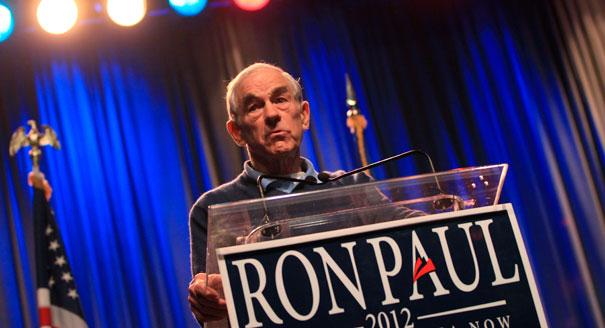
Former US congressman Ron Paul (R-TX) is nothing if not consistent – an admirable and all too rare quality in a politician. But just sometimes, the unflinching adherence to a particular principle or policy can be a bad thing – witness the Tea Party’s stance on taxation, the National Security Cheerleader Caucus’ enthusiasm for government surveillance, or the legislate-by-Bible-verse preference of the religious right.
Ron Paul has now sadly joined this group of ideologues, not because many of the points that he makes have suddenly stopped being timely, persuasive and correct, but because he now makes them in such a way that they no longer inform or educate, but merely generate material to be used by enemies of the United States and the West as ready-made propaganda pieces.
Indeed, some of Paul’s recent pronouncements on the Ukraine crisis and the Russian usurpation of Crimea are so one-sided and so determined to examine only the faults of the West while negating or ignoring the faults of Russia, that one wonders what his motivation could possibly be. Paul seems to be adopting a one-man Fox News Strategy, whereby he single-handedly attempts to redress what he sees as an inherent bias or gross imbalance by coming down incredibly hard on one side of an argument – whilst proclaiming all the while to be fair and balanced.
The latest fodder for Kremlin-apologists came on Sunday, when Paul penned an op-ed for his own Ron Paul Institute website, the subtitle of which could easily have been ‘I told you so.’ In this piece, he lashes out at the monetary and other forms of assistance given to Ukraine over the past ten years by US-funded non-governmental organisations (NGOs):
But what do the US taxpayers get, who were forced to pay for this interventionism? Nothing good. Ukraine is a bankrupt country that will need tens of billions of dollars to survive the year. Already the US-selected prime minister has made a trip to Washington to ask for more money.
And what will the Ukrainians get? Their democracy has been undermined by the US-backed coup in Kiev. In democracies, power is transferred peacefully through elections, not seized by rebels in the streets. At least it used to be.
As with most effective attempts to mislead, there is just enough truth contained in this statement to suggest respectability and provide a stepping stone to reality, but not too much that it might get in the way of the misinformation being delivered.
It is certainly the case that the National Endowment of Democracy, a private and non-profit organisation, is active in Ukraine. But the NED is not secretive about this fact. Indeed, they detail all of their activities and funded initiatives across all of the countries where they work on their own website. Details of their funded work in Ukraine can be read here.
It is certainly possible that organisations such as the Human Rights Training Center or the Ukrainian Catholic University are nothing but shadowy US puppet organisations, greedily taking in American taxpayer money and using it to subvert the will of the Ukrainian people, just as it is possible that Barack Obama became president of the United States for the sole purpose of gathering material to aid in his upcoming romantic comedy about living and working in the White House. Possible, in other words, but eyebrow-raisingly unlikely.
But the narrative sounds very good to anyone predisposed to view any American or Western activity with suspicion, and so by floating unsubstantiated assertions that western-funded NGOs are doing anything other than trying to promote and build the strong institutions required for democracy to flourish, Paul is playing into a harmful narrative which misconstrues the intentions of his own country and those of the West.
In a separate intervention last week, Paul rhetorically asked:
“Why does the US care which flag will be hoisted on a small piece of land thousands of miles away?”
The thought does not seem to occur to Paul that perhaps the United States does not care about the flag – that perhaps it is not the small piece of land that is at stake, but rather the way that it changed hands so rapidly under threat of force that is the problem. And, regrettably, he seems all too willing to recall previous bad actions and mistakes made by the United States to excuse current crimes committed by Russia:
“Where were these people when an election held in an Iraq occupied by US troops was called a ‘triumph of democracy’?”
Iraq was certainly very recent, but to make a blasé statement such as this without giving a thought to the many differences between the invasion of Iraq (non-permanent and not for acquisition of land) – however terrible and wrong it may have been – and the Russian invasion and annexation of Crimea, is propagandist point-scoring at its worst.
No strangers to propagandist point-scoring themselves, the Kremlin-funded Russia Today network predictably seized on Ron Paul’s latest op-ed, and folded it into their continuing efforts to spin the Russian invasion and annexation of Ukraine’s sovereign territory as something entirely consistent with international law, recent precedent and human decency.
RT.com wasted no time putting their own helpful gloss on Ron Paul’s words:
According to Paul, high-funded intervention doesn’t equate to spreading democracy. Instead, he wrote, the US has invested in a country where power has been passed along not by the way of a democratic election, but rather the ousting of the country’s presidents by his opponents.
Of course, the regime of Viktor Yanukovych ousted by the supposedly undemocratic popular uprising in Kiev was itself busily trying to subvert the Ukrainian democracy by cracking down on freedom of speech, silencing dissent and dramatically increasing the powers of the president, which rather muddies the waters and exposing the Ron Paul / Russia Today line as the one-sided propaganda that it is.
Ron Paul accuses President Obama of doing many of the things in America that Viktor Yanukovych did in Ukraine, albeit on a slightly smaller scale – certainly, Obama’s war on whistleblowers and the surveillance state that he has tolerated and expanded can be said to chip away at the foundation of democracy. And yet this outrage at the illiberal policies being enacted in America is nowhere to be found when he looks at the former Yanukovych government, who, for all Paul seems to know or care, were benign arbiters of justice and democracy, unjustly pushed from office by a baying mob of anti-democracy fanatics.
If the recent Edward Snowden / NSA / surveillance debate have taught us nothing else, we have at least been reminded that democracy and its institutions are fragile and never more than one generation away from serious damage, subversion or destruction. When countries such as Britain and America – who have traditionally held aloft the flame of liberty and democracy – now suffer under governments that think nothing of secret surveillance of their own citizens, detain people or subject them to indefinite curtailments on their freedom without trial or allow those who permitted torture to take place to avoid justice, how much more fragile and in need of support must be those nations with a much shorter history of democratic government?
And in this context, is NGO money spent to strengthen democratic institutions in countries around the world not one of the best investments that the West could make?
The suggestion is not that Ron Paul has no right to speak out against past US failings – he has a longstanding and admirable track record of doing so. But the problem comes when his zeal to remind people of past US and Western failings leads him not to condemn those same actions by other countries, but rather almost to praise them as a perverse means of restoring parity within the global order.
In his recent speech to the Russian parliament, Vladimir Putin ranted, raved and gave the world a stark insight into his paranoia, his sense of inadequacy and the huge chip on his shoulder concerning how his country is perceived by the rest of the world. Railing against the West, he said:
Our Western partners, led by the United States of America, prefer not to be guided by international law in their practical policies, but by the rule of the gun. They have come to believe in their exclusivity and exceptionalism, that they can decide the destinies of the world, that only they can ever be right. They act as they please: here and there, they use force against sovereign states, building coalitions based on the principle, “If you are not with us, you are against us.” To make this aggression look legitimate, they force the necessary resolutions from international organisations, and if for some reason this does not work, they simply ignore the UN Security Council and the UN overall.
They did it before, so now we can do it, too.
Ron Paul is in many ways a visionary, and is certainly a real American patriot. Which is why it is concerning that he and the dictator from Russia find themselves singing from the same hymn sheet.
In Texas today, there is apparently no expense too great when it comes to efficiently killing people, and no expense too small to be called unaffordable and cancelled if it preserves or improves quality of existence for the living.
This has nothing to do with the Democratic gubernatorial candidate Wendy Davis, or the ongoing and contentious argument over abortion; those battles are raging on their own elsewhere.
Rather, this is about the eagerness of the state of Texas to go to any expense and any length to continue dispatching prisoners on death row with clockwork efficiency and regularity, under a veil of secrecy and unknown cost, while any other state expenditures are castigated as a sign of ‘big government’ and pared back – even as those who have (rightly or wrongly) come to depend on that government support suffer grievously as a consequence.
The Guardian reports on the extraordinary lengths to which the Texas state government – which takes every opportunity to position itself as staunchly pro-life and legislate based on the ‘sanctity of human life’ – is willing to go in order to continue performing lethal injections once its current supply of lethal injection drugs runs out at the end of March:
Texas has obtained a new batch of the drugs it uses to execute death row inmates, allowing the state to continue carrying out death sentences once its existing supply expires at the end of the month.
But correction officials will not say where they bought the drugs, arguing that information must be kept secret to protect the safety of its new supplier. In interviews with the Associated Press, officials with the Texas Department of Criminal Justice also refused to say whether providing anonymity to its new supplier of the sedative pentobarbital was a condition of its purchase.
It should be noted that Texas is not the only state to go above and beyond in its zeal to continue killing inmates – Ohio also recently switched to a new cocktail of lethal injection drugs after it found itself unable to obtain new supplies of the original formula.
The fact that no international pharmaceutical company is willing any longer to supply drugs to be used for barbaric executions was a mere obstacle to be overcome for Ohio, who found a new drug and a new supplier, and subsequently botched their first execution using the new method. One eyewitness, a priest, reported:
I was aghast. Over those 11 minutes or more he was fighting for breath, and I could see both of his fists were clenched the entire time. His gasps could be heard through the glass wall that separated us. Towards the end, the gasping faded into small puffs of his mouth. It was much like a fish lying along the shore puffing for that one gasp of air that would allow it to breathe. Time dragged on and I was helpless to do anything, sitting helplessly by as he struggled for breath. I desperately wanted out of that room.
For the next four minutes or so a medical tech listened for a heart beat on both sides of his chest. That seemed to drag on too, like some final cruel ritual, preventing us from leaving. Then, at 10.53am, the warden called the time of death, they closed the curtains, and that was it.
I came out of that room feeling that I had witnessed something ghastly. I was relieved to be out in the fresh air. There is no question in my mind that Dennis McGuire suffered greatly over many minutes. I’d been told that a “normal” execution lasted five minutes – this experimental two-drug concoction had taken 26 minutes. I consider that inhumane.
But let us return to Texas, so often the protagonist in these stories. The reason given by Texas state officials for not releasing details of where their shiny new supply of lethal injection drugs came from – in response to an entirely justified request by the AP – sets a new standard for cognitive dissonance and Orwellian doublethink:
The decision to keep details about the drugs and their source secret puts the agency at odds with past rulings of the state attorney general’s office, which has said the state’s open records law requires the agency to disclose specifics about the drugs it uses to carry out lethal injections.
“We are not disclosing the identity of the pharmacy because of previous, specific threats of serious physical harm made against businesses and their employees that have provided drugs used in the lethal injection process,” said Texas Department of Criminal Justice spokesman Jason Clark.
But now it also appears that the state of Texas is acting in this opaque and clearly antidemocratic manner because of fears for the safety of those people who are involved in producing the deadly drugs.
Imagine, for a moment, that the Texas Department of Criminal Justice had instead released their statement with the following revision (amendments in brackets):
“We are not disclosing the identity of the [people and organisations involved] because of previous, specific threats of serious physical harm made against businesses and their employees that have provided [services] used in the [abortion] process.”
Pigs would fly and snow fall in hell before the state of Texas would ever consider withholding the names and details of people involved in providing abortion services out of a desire to protect their safety, even though there are many real, tangible examples of such people being subjected to harassment, intimidation, physical harm and assassination. By contrast, anti-death penalty campaigners have shown no signs of wanting to intimidate or harm those with whom they disagree.
The key difference (and reason for the massive divergence in treatment of the two groups) is that as far as those in power in Texas are concerned, anyone ever involved in facilitating an abortion is inherently evil and deserves whatever comes their way, but anyone who facilitates an execution is doing their God-fearing, patriotic duty.
And this dichotomy exists because the governing majority in Texas, from Rick “Oops” Perry on downwards, do not see the execution of an incarcerated inmate by the all-powerful government as a violation of the commandment Thou Shalt Not Kill.
One of the indispensable functions of government?
At this point, two disclaimers:
1. The purpose of this article is not to elicit sympathy for murderers, or even to debate the merits of the death penalty – though this blog will go on record as being resolutely against the death penalty, viewing it as a barbaric practice from a bygone age best relegated to the past.
2. Nor is the purpose of this article to debate the issue of abortion – though this blog will go on record as believing that life begins at conception, but that there are various times and circumstances (rape, incest, catastrophic developmental anomalies, risk to the life of the mother) when two equally terrible choices must be weighed and the resultant answer may come down on the side of terminating the pregnancy at the earliest opportunity; and that in these terrible, heart-wrenching circumstances, no one is better placed to make the awful decision than the mother, least of all government.
The purpose of this blog is to ask a very simple question of the Texas government: where the hell are your priorities?
Why, when Texas struggles with shameful rates of illiteracy, teen pregnancy, teen births, adults in correctional facilities, adults under probation, citizens without health insurance and food insecure children, is the state government rummaging for spare change and wasting precious time and resources in order to continue funding executions, of all things?
Why, when life is so difficult and wretched for so many Texans, is their state government more interested in preserving its ability to smite the guilty (or not guilty) than help the needy?
When conservative Texans are not threatening to secede from the United States in protest of the Tyrannical Kenyan Socialist Marxist Fascist Community-Organising Gun-Confiscating Traitor unlawfully occupying the White House, they often like to pledge their love and respect for the Constitution. Section 13 of Article 1 (Bill of Rights) of their own Texas State Constitution has this to say on the matter of punishing the guilty:
Sec.13. EXCESSIVE BAIL OR FINES; CRUEL AND UNUSUAL PUNISHMENT; REMEDY BY DUE COURSE OF LAW. Excessive bail shall not be required, nor excessive fines imposed, nor cruel or unusual punishment inflicted. All courts shall be open, and every person for an injury done him, in his lands, goods, person or reputation, shall have remedy by due course of law.
“Nor cruel or unusual punishment inflicted.”
In Texas, it appears that selective reading is not limited to the Bible.
Iain Martin poses an excellent question to restive Conservative ministers and backbenchers currently jostling for position in a 2015 conservative leadership election that may very well never transpire – what would they do for the country if they actually got the job?
A very pertinent question. Watching the unseemly attempts of cabinet member after cabinet member manoeuvre for advantage and brief against perceived rivals provokes unpleasant flashbacks to the time when Gordon Brown finally had his way and muscled Tony Blair out of Number 10 Downing Street, only to become prime minister and realise that he had just fulfilled the extent of his ambition.
With more than a year to go until what will undoubtedly be a closely-fought election campaign, now is really not an appropriate time for self-interested ministers to be promoting their personal prospects at the expense of stable governance. And if they absolutely must indulge in such counterproductive, selfish shenanigans, they could at least give the public some semblance of a reason to believe that they offer a better alternative to David Cameron.
As Iain Martin points out, none of the would-be plotters have yet risen to this challenge:
Some people are positioning ahead of a potential vacancy and talking seriously in private about who the next Tory leader will be. So far it has all been very heavy on personalities and score-settling.
What we hear less of is ideas. What do those who want to succeed Cameron, if he loses, want to do with or for the country? This is, I know, a hopelessly naive question, although I never tire of asking it during a leadership race.
We already have a coalition government that stands for next to nothing. Blaming Labour for the country’s economic predicament and the state of the public finances may be correct, but it doesn’t amount to a platform for governing. And with little more than a year left in the lifetime of this parliament, we can expect precious little more in terms of radical or effective new policies. This mean that the electorate has to make up their minds based on what we can see today. So what is there?
Michael Gove’s education reforms spring to mind as something both tangible and in line with conservative principles, but aside from that, what else can the Tories point to? The period from 2010, when the United Kingdom finally escaped the Gordon Brown terror, has been characterised by retrenchment and burden-sharing and sacrifice-making and painful compromise at every turn. There has been almost nothing positive. Whether it is fiscal policy, defence policy, welfare reform (though credit to Iain Duncan Smith for at least trying), privacy or constitutional reform, it has been an exercise in damage limitation on all fronts.
If the conservatives were (heaven forfend) to elect Boris Johnson as their new leader, or Theresa May, or George Osborne or anyone else, what would they do differently? Why go through the trauma of ditching Cameron and choosing someone else who may be identical, or worse?
Iain Martin proposes a good set of questions, well worth asking, that could help distinguish one candidate from another and maybe tease out some real talent or independent thinking amidst a sea of caution and homogeneity. Making the valid point that voters will not warm to a new leader who only attained his or her position by virtue of being ‘next in line’, he issues the following challenge:
Eventually, the rest of us in the audience – taxpayers, the people who live here, Tories and non-Tories alike – might like to hear what applicants to be Conservative leader and trainee prime minister have in mind, other than stopping each other.
Here are his ten questions:
1) How can the country be more productive?
2) How can we maximise the advantages of globalisation without having to concrete over the whole of southern England to accommodate the millions more who want to be here?
3) Are our banks still too big and how do we get more competition to aid consumers and business?
4) Why is the tax system such a mess of conflicting incentives?
5) Is EU membership really compatible with being a self-governing nation state?
6) Is it even possible to be truly self-governing any longer in the age of the EU, big tech and giant corporates that operate across continents?
7) The Blair/Gove education reforms are up and running – how might they be built on?
8) What is the UK’s foreign policy?
9) What are the threats and how will we defend ourselves?
10) Can the UK be remade to give all its constituent parts, especially England, greater autonomy while still holding together the Union?
While it is absolutely right to challenge those seeking to be David Cameron’s successor to answer these questions, in reality it would be good for all politicians and party leaders to have a stab at addressing them, because these ten questions really form the basis of how we currently see ourselves as a country, and where we want to go from here.
Take the first question on productivity. This could lead to an interesting debate along any number of lines, including trade union reform, European Union membership status, working conditions for interns and apprentices, and more. Already we would see a divide between the mainstream Conservative party MPs who remain deeply eurosceptical, and the more Europhile fringe. Similarly, a contrast would be drawn between the mainstream anti-union position and those such as Robert Halfon MP who have been trying to reintroduce a trade union heritage to the party.
The tax system question is also one that urgently requires answering, not just to help search for the ideal future Tory leader but because the current tax code is such a mess. Some are quite keen to continue incentivising certain ‘good’ behaviours such as marriage through the tax code while others (one dares to hope) might argue for a radical stripping down and simplification of the system. While none of the potential candidates are likely to come out in support of a genuinely interesting idea such as a flat tax, we might see ideas about eliminating the myriad of tax credits in order to lower rates for everyone gain some traction.
Martin’s list is not perfect, and some of the questions are more philosophical than immediately useful. The brace of questions on the EU, for example, are the type of topic that one could imagine being debated at length over canapes at Davos or Bilderberg, but which are of no help in distinguishing future Tory leadership candidates. EU membership is clearly increasingly incompatible with being a self-governing nation state, and will remain that way for as long as the Treaty of Rome’s ‘ever closer union’ call continues to be advanced with no democratic mandate from the European people. And no Tory leader is ever likely to publicly surrender British policymaking to the forces of the EU, multinational business or big tech, no matter what compromises may take place in secret.
The questions on foreign policy and preparing to meet future threats are of extreme importance. While Russia’s annexation of Crimea and continued slide back toward authoritarian despotism is not about to herald a new age of big set-piece land wars in Europe, it will at least hopefully remind UK policymakers that the next unknown threat to the UK will by definition come from out of the blue. Having been chastened by that reminder, Tory leadership candidates might have some refreshing opinions on the size, strength and scope of our armed forces, perhaps with a view toward undoing some of the recent damage done.
The final question on remaking the UK to allow greater (and ideally equal) autonomy for all constituent nations of the United Kingdom, and the need to clearly set out those powers that belong at Westminster, those that belong with the home nations and those that should be devolved to local level is perhaps the most important of all. This blog has long advocated for answering this question by holding a UK constitutional convention to decide these matters once and for all. While this is an extremely unlikely prospect, it would be interesting to know the potential candidates’ thoughts on these matters.
But of course we will hear no opinions on any of these matters, because there are no Tory leadership candidates. And there are no Tory leadership candidates because there is no Tory leadership election on the cards.
The bottom line is this – there are a lot of important questions about the current state of our country and how best to move forward. Iain Martin has done a good service by listing some of these, and any politician who can disengage from the daily grind of politicking and governance for long enough to answer them would be making a valuable contribution to the debate.
But those Conservative ministers and prominent backbenchers inclined to look past the 2015 general election to burnish their leadership prospects while refusing to engage in real debate on the issues are just being opportunistic and cowardly, and do not deserve the air time or our attention.
Those who want to replace David Cameron as leader of the Conservative Party ought to try believing in and standing for something themselves – something other than their own selfish career advancement – before the jostling for position and knife-sharpening gets out of hand.