Can The Conservative Party Change Course While Staying In Power?

Margaret Thatcher election - 10 Downing Street - 1979

If the Conservative Party has a saviour-in-waiting, they are doing a great job of staying hidden from view

Blogger Effie Deans has some good thoughts here on how to revitalise the Conservative Party and give it the kind of purpose and sense of mission that might actually inspire people to vote Tory out of enthusiasm rather than fear of the alternative.

I don’t agree with every last letter of what she says, but we should all be able to stand behind the conclusion:

What we don’t need is someone who thinks the task is to limit the damage from Brexit. We need someone who realises that leaving the EU is a turning point that can improve life in Britain. We therefore above all else need a Brexiteer to lead the Conservative Party. We need someone who actually believes in free markets, lower taxes and smaller government rather than someone who thinks that price controls are a sensible idea because Ed Miliband gained a few percentage points when he suggested them. Don’t let’s try to steal Labour ideas, let’s come up with new Conservative ideas.

We don’t need a new leader yet, but start preparing for the time when we will need one. Find the brightest minds in the Conservative Party, give them the task of coming up with the new ideas that will break us free from the cosy establishment consensus. These must actually address the genuine worries that ordinary British people have about our country. Let no idea be forbidden. But above all else make sure we develop Conservative ideas for a new Conservative Party. When that is done find the best communicator, perhaps someone we’ve never heard of, to present these ideas. Then believing in what we stand for,  with ideas that we believe to be true and important let us take on Labour and win. That just might just give us a new turning point.

This chimes with everything I have been writing about the Conservative Party since 2013. Appeasement of the Left has gotten us absolutely nowhere. By cowering in the face of leftist moralising and making concession after concession to statist thinking, all that David Cameron and Theresa May have succeeded in doing is expanding the Overton Window of British politics further to the left.

The one area where I potentially disagree with Deans is that she believes that a conservative course correction is possible while the Tories are still in government, while I am becoming increasingly pessimistic about the prospect. Mid-term course corrections are hard enough to pull off at the best of times. Doing so in the midst of Brexit (and remember, Brexit is a process, not an event, even if we do formally leave the EU on schedule) and with no standout candidates is inviting failure.

And that’s why a fresh face for conservatism is so important, which Deans also acknowledges, to her credit:

When considering who should be the next Conservative leader it is crucial to think about ideas rather than people. Few people had heard of Tony Blair much before he was elected leader, the same was the case for David Cameron. What matters is not so much the person as what the person believes.

The major problem that the Conservative Party has faced since the election of David Cameron is that it has not had a leader who really believes in anything. Cameron was concerned mostly in how to get the Conservatives into power. He therefore did all he could to occupy the centre ground. He wanted in essence to become Tony Blair. The difference between these two is essentially trivial. Both are in reality social democrats. They believe in capitalism, but they think that its purpose is essentially to fund state spending. Neither views the goal of government is to become smaller and neither wish to lower the amount that the state spends.

Theresa May takes a similar view. Worse still despite the occasional stern face she completely lacks conviction. She just wants to manage Britain as well as possible while spending as much as possible on nice things. She didn’t even really have an opinion on the EU. She campaigned half-heartedly for Remain and then became a Brexiteer. It is because she doesn’t really believe in Conservatism that she comes up with mush and incoherence and thinks the solution to all problems is to drift to the Left and end up in the centre ground.

Yes, a thousand times yes. Nobody currently touted as a plausible immediate successor to Theresa May sets the heart racing with excitement or optimism for the future. Philip Hammond, Amber Rudd, Boris Johnson & co all suffer from exactly the same lack of conviction as Theresa May and David Cameron. Boris Johnson has slightly more charisma than the others (though this is more than outweighed by his other flaws), but none of them have shown any ability to make a clear, bold and positive case for conservatism. Moreover, they are all equally implicated in the unambitious centrism of the present government.

New blood is absolutely required, whether that is from the backbenches or junior ministerial ranks (Priti Patel? Kwasi Kwarteng? James Cleverly? Tom Tugendhat?) or form somebody not yet even in the parliamentary party. The latter is likely possible only if the Tories find themselves in opposition, though – a neophyte as Leader of the Opposition is just about tolerable; an inexperienced prime minister in challenging times is an immediate non-starter.

Despite the bitter complaining of the centrists, there is in fact nothing wrong with the entirely human desire for politicians and leaders to stand for more than the technocratic, managed decline. The challenge for the Conservative Party is to find a new message – and a messenger – to resonate with people who yearn to be inspired and called to a higher purpose than claiming entitlements form the government. And that messenger aspire to be something more than a dreary administrator of austerity, a British Comptroller of Public services.

Unlike Margaret Thatcher’s transformative premiership (cited approvingly by Effie Deans), however, an new incoming Conservative prime minister will have had no time to develop a new philosophy of government away from the heat of battle before assuming office. They will be plunged straight into the thick of things, and almost inevitably become a reactive rather than proactive leader through no fault of their own.

Margaret Thatcher had four years as Leader of the Opposition to think about her approach to government, and eventually entered Downing Street with a blueprint for national renewal in the form of the famous Stepping Stones report. Unless somebody has been doing some equally radical thinking away from the spotlight in our present decade, it is hard to see a new conservative leader coming to power with anything like as transformative an agenda ready to go – particularly as the challenges we face today, while very different to those of 1979, are every bit as serious.

Can this ideological and national renewal be attempted while the Tories are still in government, without giving Jeremy Corbyn’s Labour Party at least a brief (and potentially disastrous) spell in power? I fervently hope so.

But for the life of me, I don’t see how.

 

Theresa May

Support Semi-Partisan Politics with a one-time or recurring donation:

Agree with this article? Violently disagree? Scroll down to leave a comment.

Follow Semi-Partisan Politics on TwitterFacebook and Medium.


An NHS For Housing And Food – What Fresh Hell Is This?

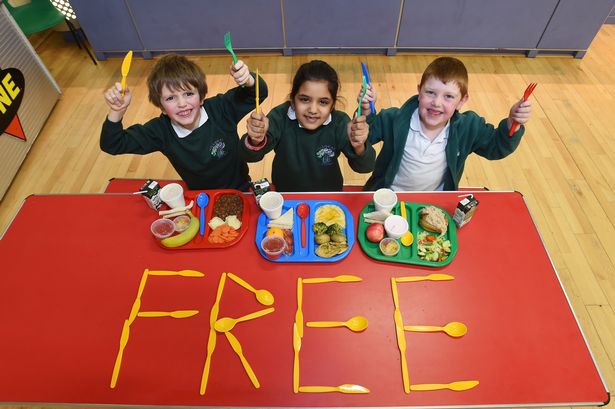
Free school meals

With all the political momentum behind them and the Conservative government in chaos, even more moderate leftists are now pushing for a radical expansion of the size and role of the state

Fresh from advocating for a 100 percent inheritance tax, Guardian columnist Abi Wilkinson takes her desire for all of us to be vassals of the state to the next level by calling for a National Housing Service and National Food Service to rival the wonder that is the NHS. No, seriously.

Wilkinson is responding to a new report published by UCL’s Institute for Global Prosperity, which calls for an ever-expanding range of “universal basic services” to be provided free of charge to all British citizens.

From the report’s summary:

The UK should provide citizens with free housing, food, transport and IT to counter the threat  of worsening inequality and job insecurity posed by technological advances, a report launched by the Insitute for Global Prosperity recommends.

The proposal for ‘Universal Basic Services’ represents an affordable alternative to a so-called ‘citizens’ income’ advocated by some economists, according to the expert authors working for UCL’s Institute for Global Prosperity.

Building on the ethos that saw the establishment of the NHS and public education – that essential services should be free at the point of need – the plan would “raise the floor” of basic services all citizens can expect, providing better protection for workers in the face of rapid advances in technology and automation.

As always, the report’s sponsors and cheerleaders make heavy use of emotional manipulation to press policy solutions which make people feel good and altruistic at the time, but which ultimately do more harm than good as they act as a dead weight on the economy. Andrew Percy, “citizen sponsor” for the report, predictably puts a rather more positive and moral spin on it:

It cannot be sufficient to excuse hungry school children or an uncared-for elderly population with a notion of ‘unaffordability’ in a society that is as rich as any that has ever existed.

Because let’s not blame irresponsible parents for having children they can’t afford or selfish adults for having no interest in caring for their elderly relatives, both groups not just being willing to palm these responsibilities off on the state but expectant of doing so. Let’s not assume that any of these problems require even the slightest change in the way that we ourselves behave. No, let’s just scream about human suffering and point angrily toward the government, demanding a solution.

Cynically using the Grenfell Tower tragedy as a convenient emotional launchpad to push her leftist Utopian vision, Wilkinson picks up the banner and writes:

The horror of Grenfell Tower has also given impetus to those who wish to see a more communal politics. Though a public inquiry into the tragedy is in progress, leftwingers have long argued that programmes for poor people are poor programmes. That is to say, when fewer people are dependent on a service – and when they’re among the most marginalised, disempowered and ignored members of society – there’s a higher chance that standards will fall.

If a larger proportion of people lived in social housing, this sort of treatment would be impossible. Politicians can only neglect a certain percentage of the population without facing consequences: mess with too many of us, and we’ll vote you out. In essence, this is the basic argument for universality. It’s one that even many left-of-centre politicians seem to have forgotten in recent decades. The higher the number of people who have a stake, the better resourced, monitored and defended a public service will be.

Interesting. Abi Wilkinson seems to have forgotten the more important and proven lesson from history – that when everybody is dependent on a service (as in every Communist state yet attempted) standards do not just fall, they crash through the floor, except for those well-connected apparatchiks who are given unofficial permission to bypass state provision and get what they want or need on the black market.

At first glance, Wilkinson’s argument may make sense to many people – because  many of us do not have an immediate, direct stake in social housing or welfare payments, we are naturally less concerned with the service offered to those who are. But even this is not entirely accurate, since the majority of Brits are now net beneficiaries from the state rather than contributors to it. And this is reflected in the dismal Politics of Me Me Me which has utterly taken over, our selfish badgering at every general election not about what we can do for the country, but what the country can do for us.

In other words, half of the population effectively consider themselves (or are considered by government agencies) to be among “the most marginalised, disempowered and ignored members of society”, or at least among the most entitled members of society, and still this has not generated sufficient political pressure to force the socialist gold-plating of these services. But then clearly this is why Abi Wilkinson is pushing for more. Her New Jerusalem can only be achieved when literally everybody relies on the state for housing, food, healthcare, transport, education and probably cultural and leisure services too, for good measure.

And this is precisely what she then calls for:

As the neoliberal order of the past several decades enters its death throes, we should take the opportunity to reconsider our conception of universal rights. Healthcare and under-18 education we already agree on. In a changing economy with a growing need for highly skilled workers, why not university education as well? What about state-provided universal basic services, which is what leading economists and social scientists at UCL propose as a practical, affordable and morally justified response to growing poverty and inequality?

The left has spent years focusing primarily on opposition: resistance to spending cuts, punitive welfare changes and the erosion of employment rights. Now, with Labour tantalisingly close to power, we have, at last, a chance to imagine something better.

Except it’s not better at all. What she proposes has been tried, tested and failed every single time it was implemented. There is already a steady ratchet towards greater state provision underway, both fuelled by and fuelling public clamour for the same. People now expect to be able to procreate and have the state cover the cost of raising their children, and to even question this absurdity is to find oneself excommunicated from polite society. People expect schools to feed their children, and act as though schools expecting parents to provide meals for their own kids is somehow a mark of barbarity.

After a brief retrenchment, more and more people once again are clamouring for the state to be landlord to everybody, and the weak, pathetic incumbent Conservative government is actively cooking up plans to build more council homes while doing almost nothing to increase private provision. At every turn, people look first to the government to solve their problems, and with some justification – they have been falsely led to believe that this is normal and moral their entire adult lives.

Leaving aside universal basic income (for which there may arguably one day be a case if current trends toward automation continue on their present trajectory) the idea of universal state provision of individual services like housing, food, endless tertiary education and more besides is corrosive to the human spirit, as is the idea that it should automatically be the compelled responsibility of productive individuals to pay for the bad choices of another person. A basic welfare safety net is absolutely required, particularly at the present time, when civic society is so eroded after years living under a system where government comes to be seen as an auxiliary parent. But we must recognise the ratchet effect for what it is – increasing state provision leads to decreased personal initiative and increased demand in an endless, self-fulfilling cycle.

And where would it end? Today, food, housing and internet access are seen as essentials for which no human being or head of household should have any responsibility for providing for themselves. Presumably, then, every new invention from here onwards will quickly be decreed by the Left to be so vital to wellbeing and participation in society that it requires nationalisation and state provision to an ever-expanding pool of “vulnerable” people. Where does it end? And what happens when the innovators and high-income people who fund the wretched Ponzi scheme leave Britain in disgust?

The irony of such wicked proposals emanating from an organisation calling itself the Institute for Global Prosperity is almost too much to bear. How does the IGP think that prosperity is generated in the first place? Which is the economic system which has lifted more people out of poverty and want than any other, and which is the system which always begins in a blaze of idealistic optimism and ends with round-the-block queues for government bread?

But this is why it is essential that conservatives wake up, stop their petty infighting over personalities and develop an alternative policy programme to address the issues tackled in the IGP report. At present, the socialists are the only one with ideas and the political courage to speak them out loud. And at a time when dissatisfaction with the status quo is high and populist policies quickly gain traction, these ideas could end up being implemented by a Corbyn government sooner than many people think possible.

Carefully cultivating their reputation as the wooden, uncharismatic, technocratic comptrollers of public services, as the Tories seem determined to cast themselves (witness Theresa May’s most recent awful performance at Prime Minister’s Questions this week), is now a recipe for political suicide. Indeed at this point, given the uselessness of the present Tory party, it may already be inevitable that the political pendulum swings toward the Corbynite Left no matter what is done now. But thinking conservatives of vision and courage need to be ready to step in with an alternative as soon as the opportunity presents itself, whether it be a successful U-turn while still in government or a quick bounce back from Opposition.

And unlike the Left’s beguiling promises of an easy life stripped of any personal responsibility, this new conservative vision must inspire humans at our hardworking, civic-minded best rather than pandering to us at our grasping, self-entitled worst.


UCL - Institute for Global Prosperity - Universal Basic Services report

Support Semi-Partisan Politics with a one-time or recurring donation:

Agree with this article? Violently disagree? Scroll down to leave a comment.

Follow Semi-Partisan Politics on TwitterFacebook and Medium.


The Centrist Persecution Complex

Tony Blair

Discredited centrists, locked out of power and influence for the first time in decades, mount a crisis PR campaign to salvage their reputation

It reached a peak immediately after the surprise victory for Team Brexit in the 2016 EU referendum, with weepy centrists tearfully quoting W. B. Yeats to each other (“Things fall apart; the centre cannot hold; Mere anarchy is loosed upon the world“) and huddling in fear of the oncoming fascist terror, as though Britain had been suddenly stripped of all decency and reason overnight.

But truthfully, the Lamentation of the Centrists began the moment that Jeremy Corbyn’s unlikely bid for the Labour Party leadership started picking up steam in the summer of 2015. It began when a cohort of bland, unremarkable political nothings (to call them technocrats would bestow an undeserved suggestion of expertise and competence) suddenly realised that the comfortable, predictable career progression and access to power they took for granted was in jeopardy, and all because some obscure, dusty old backbencher with these strange things called “principles” and “political convictions” was generating widespread grassroots enthusiasm.

Since these events, any suggestion or development which threatens to marginally expand the narrow Overton Window of British politics has been greeted by the centrists of both parties as a disaster waiting to happen. Back when Ed Miliband proposed energy price to limit consumer utility bill increases, the Tories treated it like a 1970s-style demand for socialist renationalisation of industry, which was made all the more ironic since Jeremy Corbyn’s Labour Party then actually proposed the renationalisation of industry in their 2017 manifesto while Theresa May’s Tories now think that price controls are a wonderful idea.

The window of political possibilities has thus been expanding, but primarily in a leftward direction, since the present-day Conservative Party lacks anybody willing or able to make a robust, inspiring and unapologetic argument for right-wing policies. Jeremy Corbyn’s leadership has single-handedly proved to a sceptical political and media establishment that having a coherent political ideology and policies which naturally flow from it can still be attractive to voters, particularly when communicated clearly and unapologetically.

And this has the centrists scared. What once looked like a temporary, aberrant blip on the horizon and was later nervously dismissed as a brief interruption to their natural right to rule is now starting to look like a permanent, existential threat. And predictably enough, something of a desperate fightback is now underway.

Of course, being centrists, they cannot help but belittle and condescend to the millions of people who grew tired of their self-serving shtick and started looking elsewhere for political inspiration, even as they seek to win back their favour. Thus we are told over and over again that the centrists are the wise adults in the room, the mature grownups who see the world as it is rather than as they wish it were and choose their dismal policies accordingly, while we partisan hotheads on the left and right are being immature and unrealistic by daring to “dream of things that never were, and ask why not”.

The centrists sometimes go on to argue that theirs is also a coherent political ideology, and that their political “beliefs” should not be dismissed simply because they do not hew towards one extreme or another. This is most often brought up in response to my remarking that a leftist sees a river and demands that a bridge be built across it at any cost, the conservative sees the same river and says that a new bridge would be expensive and unnecessary, but a centrist compromises and builds half a bridge halfway across the river and congratulates himself on his pragmatism.

Their defence against this charge is false – true centrism is absolutely not an ideology or worldview of its own, since in a strict sense it merely defines the midpoint between two more polarised political worldviews. When one side manages to push the centre of political gravity left or right, the centre will move with it, maintaining an equidistant position. This is the definition of reactionary opportunism, not principle.

But in another sense, the whining “centrists” are absolutely right. They do indeed have a unique and defined worldview, it just happens to be more of an establishment worldview than a truly centrist one. For a long time, the two terms were interchangeable since Labour and the Conservatives had staked out very predictable and largely static positions since the dawn of the New Labour government. Today’s so-called “centrist” politicians therefore tend to be those people who personally benefit (and/or advocate for those who benefit) from the current status quo, the pathetic tug of war between a not-very-conservative Tory Party and what was until recently a Blairite “sons of Thatcher” Labour Party.

And nobody can say that the United Kingdom as a whole has not prospered, materially at least, under the aegis of the centrists, particularly to look at London or the regeneration of other major British cities. But at the same time, other places have been hollowed out. Regional cities, market towns and suburban commuterville have often become scruffy, more deprived and less pleasant, characterised by vacated high street shop units rather than vegan hipster taco bars.

My own hometown of Harlow, Essex has been very hard hit in recent years, with nearly all the large employers either moving out or significantly downscaling, and the opening of a new retail area only causing businesses to migrate from the other end of the town centre, leaving it a wasteland of charity shops, second hand stores and a few Eastern European mini-marts. Meanwhile, firms which once offered entry-level office work and the possibility of advancement have been replaced by vast distribution centres which offer minimum wage warehouse work and no career progression.

If the centrists even noticed the hollowing out of large parts of the country on their watch, they had over a decade to show that they cared by coming up with new policy prescriptions to make Britain better equipped to face the challenges of globalisation, automation, outsourcing and localised mass immigration. But no sympathy was forthcoming, let alone concrete solutions. And now, with Brexit and the rise of Jeremy Corbyn, the establishment is being forced to pay in a lump for pretending to care about the entire country while looking out only for very specific segments of society.

Naturally, the centrists do not see it this way. In their alternative narrative, they are the victims. The likes of Chuka Umunna, Liz Kendall, Sir Nicholas Soames and Anna Soubry probably imagine themselves as Cicero banished from Rome, stellar public servants unfairly cast from favour by an unreasonable mob whose passions will eventually cool and allow them to resume their rightful position in charge of the nation’s affairs.

A new piece by Helen Lewis in the New Statesman perfectly encapsulates this sense of self-entitled grievance, beginning with the headline “Are you now, or have you ever been, a centrist?”, actually likening their plight to the victims of the communist witch-hunts of the 1950s (modesty and a sense of perspective are not the centrist’s forte).

Lewis writes:

Yes, we’ve been here before. The word “neoliberal” migrated from describing a particular kind of political ideology to a catch-all for anything vaguely capitalist the speaker didn’t like.

[..] “Centrist” is now doing a similar job. In the way it is used by the Labour left, the world is divided into three categories: them, Actual Nazis, and everyone else, who is a centrist.

Boo hoo. How sad that the denizens of centristland, who for years maintained their vice-like grip on power by smearing everybody else as a dangerous extremist, now find themselves being criticised, sometimes unfairly. I can’t possibly imagine what that must feel like.

None of this is to say that there is not a time for more centrist, technocratic leadership. There undoubtedly is. When times are good, threats are few and both society and the economy are in a reasonably satisfactory steady-state then choosing politicians and leaders without much of an ideological compass but the pragmatic ability to get things done can be absolutely the right choice. The problem only comes when the centrists and technocrats outstay their welcome, lingering on with their cautious and unambitious  approach in the face of impending danger or disruption.

One could certainly argue that early New Labour acquitted this “steady state” management job fairly well, inheriting the Thatcher economic transformation and reaping its benefits through studious inaction rather than torpedoing Britain with an immediate return to 90 percent top tax rates. But it is also clear that Blairite and Brownite Labour then went wrong by maintaining their cautious, plodding approach in the face of globalisation, spiking immigration from the new accession EU countries and the 2008 crash and recession.

It should now be clear to all that this is no longer a time for centrist, technocratic leadership. The challenges we face on the domestic, foreign and national security fronts – reviving the economy and ensuring that more Brits are equipped to prosper in it, asserting British influence on the world stage and tackling the evil ideology of Islamist terror – will not be solved by tweaking the dials or turning the tiller half a degree in a particular direction. Far more radical and ambitious government is required to meet these challenges.

Now, I will be the first to admit that I do not have a ready-made answer for what this new governing agenda should be. Conservatives in particular have a real challenge to come up with a policy mix which does not simply ape Labour’s go-to solution of waving a magic wand and creating a new government programme to deal with every single social or economic ill. But just as the need for the Thatcher government’s monetarism and supply-side policies was realised by only a few people in the 1960s and 70s, so the answer to our present difficulties may presently be seen as equally marginal and controversial. As Lincoln once said, the dogmas of the quiet past are inadequate to the stormy present.

I am often gently mocked or criticised by friends and readers for being too negative about contemporary politicians, as though by objecting to the various shades of beige offered by Labour and the Conservatives I am somehow setting my standards unreasonably high. I strenuously disagree. Would somebody in the early 1970s have been unreasonable to be disillusioned with both Labour and the Conservatives? Hardly. The Heath, Wilson and Callaghan governments were all wedded to the same failing post-war consensus which was slowly dragging Britain toward terminal national decline. Rejecting the statist politics of the 1970s was absolutely the right thing to do – the dogmas of the immediate post-war years were inadequate to the stormy seventies. And so it is now, when the dogmas which served some people so well in the nineties and early 21st century are being rejected by a majority of the country.

And this is what the centrists just don’t get. They seem to think that everything was ticking along just fine until this awful populist revolution came and ruined their perfect existence. They hold this belief because from their perspective everything was fine – a continual upward trajectory in terms of wealth, living standards, career and leisure opportunities. Though they furiously deny the charge, many centrists possess the ability to simply forget about the parts of the country and all the people who have been hurting, stagnating and not seeing their concerns reflected in our electoral politics, and having thus exempted themselves from the need to show empathy they view both Corbynism and Brexit as movements based on pure irrationality.

One might have hoped that a brief period in the political wilderness – two years in the case of the Labour centrists and now just over one year in terms of the pro-EU establishment – might have taught the centrists some humility or instilled a modicum of respect for those people who are now finally beginning to make their voices heard. But of course we have seen the exact opposite – disbelief that these people dare to seek to influence the politics of their own country followed by a dismissal of their ideas and often a seething hatred of what they stand for. And still the centrists might have gotten away with this elitism, were it not for the fact that they are incapable of keeping their contempt for the people to themselves. On the contrary, they feel compelled to continually remind the rest of the country just how backward, stupid, communist, racist or evil they consider us to be.

The centrists may win some victories yet. The almighty mess being made of the Brexit negotiations by the UK government may, if things go badly, allow the centrists to prance around screeching “I told you so!” as though flawed execution and lack of planning somehow discredit Brexit as an idea. And Jeremy Corbyn may yet be turfed out of the Labour leadership if the centrists get their act together and rally around a single candidate, particularly if they can find a Emmanuel Macron-type character, an empty suit who can stalk around on stage roaring empty platitudes to get people fired up.

But the centrists have now been exposed. Rather than the wise, measured and pragmatic types who chart an intellectual course between two political extremes that they pretend to be, they have been revealed as unimaginative and thoroughly self-interested defenders of the status quo.

And all their overwrought and exaggerated complaints about evil populists, “things falling apart”, having their opportunity to “live, work and love in Europe” cruelly ripped away or being the supposed victims of a McCarthyite purge will not save them from the judgment of the people.


Tony Blair - Open Britain - centrism

Support Semi-Partisan Politics with a one-time or recurring donation:

Agree with this article? Violently disagree? Scroll down to leave a comment.

Follow Semi-Partisan Politics on TwitterFacebook and Medium.


Leftist Open Borders Zealots Are The True Enemy Of Immigration Reform

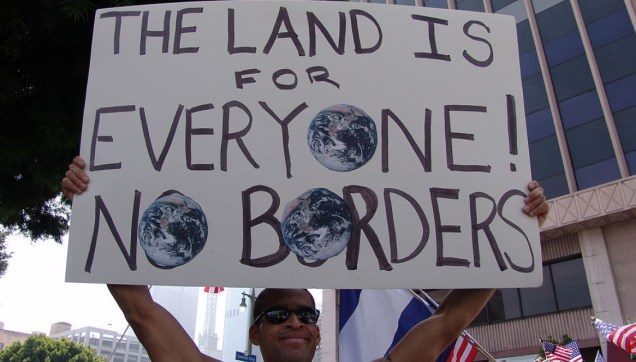
The Land Is For Everyone - No Borders protest

There can be no meaningful compromise on immigration with those on the Left who will settle for nothing less than open borders but lack the moral courage to say so in public

So the Trump administration has now released its proposal for agreeing to grant legal status to the young illegal immigrants brought to the United States by their parents known as the Dreamers, potential beneficiaries under the threatened Deferred Action for Childhood Arrivals (DACA) program.

The list of concessions requested of the Democrats in exchange for normalising the immigration status of nearly one million people includes approving the much talked-about border wall with Mexico, hiring more Customs & Border Patrol agents, cracking down on “chain migration”, toughening asylum laws and the denial of federal grants to so-called “sanctuary cities” which deliberately limit their cooperation with federal agencies on matters relating to immigration enforcement, even when the administrative burden of doing so is minimal.

Aside from the construction of the wall – a silly waste of money given that many illegal immigrants are visa overstayers and not border jumpers, construction would damage a number of conservation areas and require the compulsory purchase of huge tracts of private land while Mexico has no intention of paying for the thing despite rash promises made by President Trump – these proposals fall into a category which might reasonably be called “perfectly sensible measures to protect the border and immigration rules of a modern, sovereign nation state”.

Of course, the Left sees it entirely differently. The New York Times bleats with alarm:

While it is unclear whether Mr. Trump views the demands as absolute requirements or the beginning of a negotiation, the proposals, taken together, amount to a Christmas-in-October wish list for immigration hard-liners inside the White House. Immigration activists have long opposed many of the proposals as draconian or even racist.

The demands were developed by a half-dozen agencies and departments, officials said. But among the officials behind the demands are Stephen Miller, the president’s top policy adviser, and Attorney General Jeff Sessions, both of whom have long advocated extremely aggressive efforts to prevent illegal entry into the country and crack down on undocumented immigrants already here.

The demands represented a concerted effort to broaden the expected congressional debate about the Dreamers to one about overhauling the entire American immigration system — on terms that hard-line conservatives have been pursuing for decades.

In a letter to lawmakers, Mr. Trump said his demands would address “dangerous loopholes, outdated laws and easily exploited vulnerabilities” in the immigration system, asserting that they were “reforms that must be included” in any deal to address the Dreamers.

Democratic leaders in Congress reacted with alarm, saying the demands threaten to undermine the president’s own statements in which he had pledged to work across the aisle to protect the Dreamers through legislation.

The New York times is quick to define the range of views on immigration which can be described as “hard-line conservative”, but they are noticeably silent on what would constitute a hard-line leftist position on immigration reform.

One can only determine something to be hard-line conservative if one has a birds-eye view of the entire spectrum of opinion, so presumably the New York Times knows that the hard-line leftist position on immigration – the stance with which the Trump administration must negotiate – advocates fully open borders and immediate amnesty for almost anyone who manages to set foot on American soil and declare their intention to permanently remain there. Yet the Times never makes this clear to its readers, who know all about the Evil Conservative position but are not even encouraged to think specifically about what the “liberal” alternative should be.

This is entirely deliberate – the leftist worldview knows that its position on immigration, the nation state and other issues would presently be repellent to a majority of Americans if spoken out loud. Therefore, they try to circumvent public opinion and achieve their ends by riding a wave of whipped-up anger and misunderstanding of conservative positions rather than boldly and unambiguously setting out their own wish-list of demands. Thus they hope to push America toward an irreversible, de facto open borders situation without ever having to utter the words or suffer the political consequences. You might call this smart politics and an astute strategy. But it is also rank cowardice, and perpetuates a fraud on the American people.

The true extremism of the Left’s unspoken stance on immigration can be seen in their reaction to the Trump administration’s proposals. When the Trump administration first stirred outrage and condemnation by declaring his intention to end the DACA program, most Democrats and others on the Left immediately started posturing as brave defenders of vulnerable “undocumented” people, the Dreamers’ last line of defence against an evil, racist Republican attack. One would therefore think that given that the Dreamers are supposedly the top priority of the American Left, they would agree to any compromise on immigration which promised to enshrine the permanent legal status of these people.

But you would think wrong. In their response to the Trump administration, House minority leader Nancy Pelosi and Senate minority leader Chuck Schumer’s joint statement read as follows:

The Administration can’t be serious about compromise or helping the Dreamers if they begin with a list that is anathema to the Dreamers, to the immigrant community and to the vast majority of Americans.

We told the President at our meeting that we were open to reasonable border security measures alongside the DREAM Act, but this list goes so far beyond what is reasonable.  This proposal fails to represent any attempt at compromise.

The list includes the wall, which was explicitly ruled out of the negotiations.  If the President was serious about protecting the Dreamers, his staff has not made a good faith effort to do so.

The statement conveniently ignores the fact that the Trump proposal would give the Dreamers exactly what they wanted – a pathway to permanent residency in the United States, and freedom from gnawing, perpetual uncertainty over their futures. The Democrats’ issue is not that the proposal fails to “help the Dreamers”. Their issue is that they do not get any of the many other things on their leftist immigration wishlist along with the bargain.

But that doesn’t sound quite so noble in a statement. In fact, it sounds rather grasping and selfish. So from a PR perspective it is much better to prance around pretending that the proposal is some kind of grave insult or threat to the sympathetic Dreamers, when in fact the proposal would give the Dreamers exactly what they want but leave Chuck Schumer and Nancy Pelosi empty-handed when it comes to their desire to further erode national borders. The public are far more likely to support Dreamers who they have been told are being threatened than they are to come out in defence of the Utopian open-borders fantasies of leftist academics, politicians and donors.

And since when has a policy being “anathema” to non-citizens without the legal right to reside in the United States been considered sufficient cause to reject it out of hand? Will the Democrats cheerfully go to bat for me if I, a British citizen, decide to take offence at US fiscal or education policy? It hardly seems likely. Is it not enough that this immigration compromise (flawed though it may presently be because of the administration’s insistence on an ineffective wall) would ensure the legal status of Dreamers? Apparently not – because even though it would assuage their primary concern about the risk of deportation, increased border security is apparently anathema to Dreamers and the “immigrant community” for whom the Democrats arrogantly claim to speak.

Debate about the merits of the wall aside, the present impasse is being fuelled almost entirely by Democrats and those on the Left, insistent as they are on getting 100 percent of what they want, despite controlling neither the White House or either house of Congress. They claim to care about the Dreamers, but ultimately are willing to throw every last one of them under the bus by walking away from negotiations unless they are able to extract something further from the Republicans to aid in their push for fully open borders.

And if this accusation sounds harsh, let it be refuted in detail by the American Left. Let them publicly state even one restriction that they would be happy to keep or impose in the name of border security or immigration control, instead of prancing around and flaunting their boundless compassion. Even if Donald Trump and the Republicans were negotiating in a genuine spirit of compromise and good faith – which I will concede is unlikely, based on past behaviour – how can agreement possibly be reached with a side which denounces any attempt to enforce the border as “racist” and conspicuously fails to articulate its own preferred outcome?

After having seen conservatives criticised endlessly by the Left for supposedly using young illegal immigrants as political pawns, what is shocking here is that it is Democrats, not just Republicans, who appear willing to hold the fortunes of Dreamers hostage in attempt to get their way on immigration reform.

If the Democrats actually wanted to do the right thing by Dreamers instead of cynically using them as an emotional prop for their argument, they would hammer out a deal with Donald Trump which conceded to all of the administration’s demands with the exception of the wall, and come up with some compromise there involving the strengthening of fencing and electronic border surveillance. But they won’t. The Left would rather screw the Dreamers and hold out for 100 percent of what they want rather than agree to a compromise which enhances future immigration control in any way.

And this is the uncomfortable truth: For some on the Left, the Dreamers are not people to be sincerely sympathised with and helped toward legal status, but merely a convenient resource to be exploited in the service of achieving their ultimate goal of open borders.

This is not smart politics. And it certainly ain’t compassion for the “undocumented”, either.

Trump Immigration Ohio

Support Semi-Partisan Politics with a one-time or recurring donation:

Agree with this article? Violently disagree? Scroll down to leave a comment.

Follow Semi-Partisan Politics on TwitterFacebook and Medium.

Public Service In The Age Of Trump

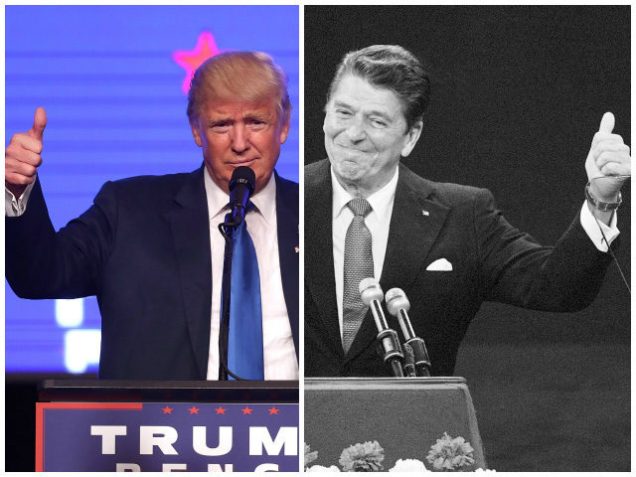
Donald Trump Ronald Reagan comparison photo

Achieving good outcomes is rightly the key barometer of success in government, but it is not everything – selflessly serving the public with honour and dedication matters too

Today I had the pleasure of attending a London Film Festival screening of “The Final Year”, a documentary by Greg Barker focusing on the last year of President Obama’s administration with a specific focus on foreign policy.

Regular readers will know that foreign policy is not my area of expertise, and rarely discussed on this blog. I only know enough to recognise that I am not qualified to pass blanket judgment on diplomatic and foreign policy issues which are fiendishly complex, rely on tremendously detailed knowledge of foreign cultures and regimes, and often require unbearably difficult decisions to be made in fraught circumstances with competing political demands, imperfect information and no crystal ball to see the future.

But it was difficult to watch the documentary and fail to conclude that the main protagonists – former Secretary of State John Kerry, United States ambassador to the United Nations Samantha Power and Deputy National Security Adviser Ben Rhodes – discharged their duties diligently and with honour. One may not have agreed with all that these individuals did or the political outlook which guided their actions while serving in the Obama administration, but if so these were mere policy differences, not alleged deficiencies of character or behaviour.

It was also difficult to view the documentary and not feel a pang of shame at the composition and antics of the present administration, which even at its dubious best never seemed as functional as its predecessor, and which will certainly now struggle to attract talented, conscientious public servants given the scandals and negative publicity constantly roiling the White House.

Human beings have a tendency to impugn motives and presume character defects in people in public life based on our political differences with them. If we disagreed with the policies of Barack Obama then he also conveniently happened to be a dangerous socialist interloper who simply doesn’t love America the way that you or I love America. And if we disagreed with Mitt Romney or John McCain it was because they were heartless, selfish individuals devoid of charity or empathy, not due to the fact that these conservatives simply saw a different pathway to achieving a just and prosperous society.

This is not a new phenomenon. Republicans questioned the motives and character of Democrats in the Clinton administration; Democrats questioned the motives and character of Republicans in the Bush administration; Republicans had a very lucrative turn questioning the motives and character of Democrats in the Obama administration, and now everybody but the most partisan loyalists can be found expressing grave doubts about the motives character of many of those serving in the Trump administration.

And historically speaking, many of these negative judgments have been unfair. Most staffers in any administration serve out of a sense of public duty with real respect for the offices which they hold, and to impugn their motives at a time in their lives when they are trying to do good is churlish, particularly when there is no evidence of malfeasance.

But this time it feels different. Be it known or suspected acts of misconduct in office or the very public and unatoned-for personal failings of senior officials, the things we already know about less than nine months into the Trump administration should give us grave concern about the calibre of leadership in Washington, regardless of whether or not we agree with the general thrust of policy.

A few weeks ago, the masterful Peggy Noonan (speechwriter to President Ronald Reagan and a personal hero of mine) wrote a particularly moving column for the Wall Street Journal. In it, she conjured a moment of pure escapist fantasy, an alternate reality where all of the dreadful things we know to be true about people in the Trump administration – from the president on downwards – turned out to be nothing more than silly misunderstandings.

Noonan wrote:

I saw this: The exhausted woman on the shelter cot was surrounded by stressed children when Melania came over, bent down and asked, “How are you doing?” The woman said “Well—hurricane.” She realized who she was talking to and got flustered. “Those are nice shoes,” she said. They were flat ankle-boots, the kind you wear on the street or the park, only of the finest leather. “Thank you,” said Melania. She saw the woman’s soggy sneakers. “What size do you wear?” she asked, “Oh, 9,” said the woman. “They got bigger with the kids.”

Melania took off her boots and put them on the woman’s feet. She did this in a way that was turned away from the press, so they wouldn’t see. The woman’s daughter said, “Mommy, they’re nice.” Melania took from her bag a pair of white sneakers, put them on, and said, “Oh good, these are so comfortable.” They talked some more and Melania left and the mother looked to her kids and said, softly, “These are the first lady’s shoes.”

[..] This happened just before the Mnuchin story got cleared up. The Treasury secretary had not asked for a government plane to take him on his honeymoon. His request got all bollixed up in transmission, but there was a paper trail. It turned out he was waiting at the airport with his new wife when he saw a guy in Army fatigues comforting a young woman in a white and yellow dress. She was crying. Mr. Mnuchin sent over an aide to find out what’s wrong.

The guy in fatigues had literally just flown in from Kabul. He and the woman had just married, in a chapel down the street. They’d been bumped from their honeymoon flight to Bermuda. Mr. Mnuchin said: “Give them my plane. Louise—we’re flying commercial.” They booked seats on the next flight to France and went to duty free, where they bought the best champagne and placed it in her Hermès bag. They wrote a note: “Every soldier on leave deserves a honeymoon, every bride deserves champagne.” The couple discovered the bag on the plush leather seat just as the pilot was saying: “Please be seated and buckle up, we’ve got special clearance.”

The column continued in the same hopeful vein – Trump was shown to be unexpectedly humble and empathetic beneath his braggadocious facade, and at one point Hillary Clinton’s post-election book “What Happened” turned out not to be a self-indulgent, self-exculpatory exercise in blame-shifting but rather a sincere and thoughtful atonement for the collective sins of the American political establishment.

But of course, none of these positive, hopeful things actually happened. In all cases, the facts as first reported by the media turned out to be the depressing truth. Noonan said of her reverie:

It made me feel proud, like there’s hope for our political class.

That is what I saw this week.

I should note—this part is true—that I saw much of it while anesthetized for a minor surgical procedure. For an hour afterward, even knowing it was either a fantasy or a dream, I felt so . . . hopeful. Cheerful. Proud. I give it to you.

It is impossible to read Peggy Noonan’s column without aching for a time when public service was a calling reserved for people of character and principle, even if that time exists only in our imaginations, false memories or old episodes of The West Wing.

This is not to say that the Obama administration represented some high watermark of moral behaviour in office. Former Attorney General Eric Holder was less than truthful more than once in his testimony to Congress, while the IRS under senior executive Lois Lerner was found to be singling out conservative organisations for additional tax scrutiny and harassment. But even adjusting for anti-conservative bias in the media, the Obama administration comported itself with considerably more dignity than has thus far been shown by the constantly rotating cast of Trump officials. And it would take a significant change of trajectory, bordering on the miraculous, for this assessment to change.

Is it really possible that in four or eight years’ time we will look back on the people who serve in the present administration, who now represent the federal government to its citizens and the United States of America to the world, and think of them as sincere, hardworking and well-intentioned (if sometimes flawed and mistaken) public servants?

Is Rex Tillerson – a man who showed little interest in foreign policy beyond its applicability to the oil industry prior to his nomination as Secretary of State – presently losing sleep at night trying to implement a foreign policy vision that he sincerely believes will make America and the world safer and more prosperous, as John Kerry did? Are Trump’s other cabinet secretaries maintaining the dignity of their offices and the commitment to fiscal rectitude which is supposed to be a fundamental Republican selling point, or are they all behaving like former Health and Human Services Secretary Tom Price and current Treasury Secretary Steve Mnuchin, abusing their offices and the public trust by showering themselves with unnecessary perks on the public dime?

And even if Trump apologists, knowing the administration to be deficient in these areas, are willing to sacrifice these qualities for the greater good of bringing down an establishment which ironically seems to be strangely ascendant within the current White House, are the benefits of this governmental shock therapy really worth the side-effects of employing such a motley group of charlatans and opportunists to follow in the footsteps of better men and women?

Watching “The Final Year” at the Odeon Leicester Square today, I could certainly understand how people might feel sceptical or even angry about some of John Kerry’s priorities as Secretary of State and those of his former boss, or be rubbed up the wrong way by the opinionated Ben Rhodes and Samantha Power. Theirs is a specific worldview with which not everybody agrees. But it is also evident that they are patriots one and all, serving the country that they love to the best of their abilities and in line with the values which they believe were twice vindicated by the election of Barack Obama as president. Based on what we know, it would certainly be very difficult to accuse any of these Obama administration alumni of being self-serving, superficial or corrupt in their duties.

I hope that when the time comes to look back on the current presidency, we will be able to say the same of all those who presently serve in the Trump administration.

I sincerely hope so, but I am not optimistic.


The Final Year will be released in cinemas in the US & UK in January 2018.


Support Semi-Partisan Politics with a one-time or recurring donation:

Agree with this article? Violently disagree? Scroll down to leave a comment.

Follow Semi-Partisan Politics on TwitterFacebook and Medium.