Britain Needs A Parliament Fit For the Twenty-First Century

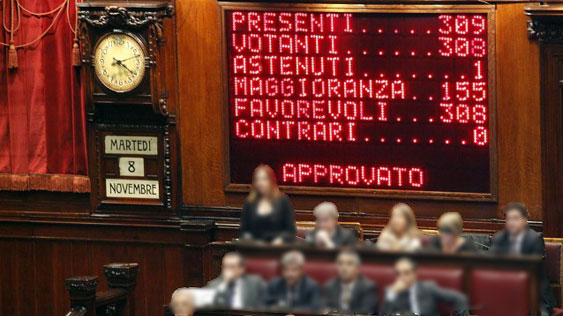
Parliament Electronic Voting 1


Economists and government officials rejoiced this holiday week as new figures revealed that the productivity of British workers, long a cause for concern, finally registered an improvement in the third quarter of the year. In fact, the 0.6 per cent increase in output per hour worked caused a welcome ripple of positive headlines and general satisfaction just as everything prepared to shut down for Christmas. But while the Bank of England takes succour from the fact that British workers are delivering more output per unit of time, can the British people say the same of their elected politicians? And how would we even go about measuring such a thing?

We know that the overall approval rating for Members of Parliament as a group hovers around the low twenties, but the general disdain in which politicians are held does not necessarily have any relation to how productive they are. We could attempt to determine productivity by measuring the number of debates attended and speeches made by MPs over the course of a year or a parliament, but this would fail to take into account the different jobs and roles performed by different MPs – though it would quite rightly expose former prime minister Gordon Brown as the political equivalent of the New York City union boss who spends most of the working day asleep at his desk.

Alternatively, we could try judging MP’s productivity according to the number of bills that they pass – but with fixed term parliaments a very new phenomena, backward comparisons would be almost impossible, not to mention the fact that stopping harmful legislation from reaching the statute books is often a far more valuable service to the country than busily legislating nonsense in pursuit of favourable headlines.


Continue reading

The Christmas View From Your Window

SPS Christmas 2015 View From Your Window Harlow Essex v2


In his Christmas Day column, Dan Hodges invites us to look out of our nearest window and tell him what we see. He isn’t doing this out of voyeuristic curiosity, of course, but rather to make a point:

We see what we choose to see when we look outside. And at the moment, when we look out the window, we are choosing to see a world that scares us. Collectively. As a country. As a people.

This was the year that we become an agoraphobic nation. The year that the trembling upper lip officially replaced the stiff upper lip. The year that fear became our constant companion; paranoia our trusted friend.

Hodges goes on to argue that on a whole range of fronts – terrorism, immigration, Ebola, Evil Corporations, Westminster Elites, paedophile grooming gangs and crazy, swivel-eyed Ukippers – the British people are retreating in the face of difficulty, burying our heads in the sand and failing to confront pressing problems or take positive steps to secure our future. And he is right, up to a certain point – numerous difficult issues have swirled around us during the hectic political year of 2014, and yet we have made precious little progress in dealing with any of them.

Continue reading

Merry Christmas

Brass musicians from the Salvation Army play the Christmas carol “As with gladness, men of old” and raise donations on the concourse at London’s Liverpool Street station during the morning rush hour.

I would like to take this opportunity to thank you all for reading, commenting and encouraging me in my writing and journalism over the course of this year, and to wish you, your families and loved ones a very Merry Christmas and a peaceful 2015.

– Samuel Hooper

Conservatives Should Not Apologise For Wanting To Shrink The State

George Osborne Ed Balls Austerity Big Government debate


“Tories pull into four point lead over Labour” proclaims the headline in today’s Telegraph, citing an Ipsos MORI poll that put the Conservatives on 33 per cent to Labour’s 29. But not so fast: “Labour opens up five point poll lead over Tories” reads a contradictory headline in the Guardian, talking up an ICM poll that put Labour on 33 per cent with the Tories languishing at 28.

Both polls come packaged together with their predictable narratives – Labour have opened a lead because their Road To Wigan Pier attack on the Conservatives is beginning to resonate with voters, according to their supporters, while the Conservatives are gaining ground because of Ed Miliband’s disarray on immigration and the beginning of the inevitable UKIP implosion, according to theirs. But looking past the partisan spin, neither poll makes encouraging reading for Labour or the Tories. In fact, the inability of either of Britain’s two dominant political parties to command the support of more than one third of the electorate is very damning indeed.

The reasons for the Labour Party’s malaise are fairly self evident – residual mistrust and dislike following thirteen recent years in government, a growing alienation between the party elite and their traditional core voters, total incoherence on the topic of immigration and the UKIP threat, and the abysmal personal ratings of their ex-leader in waiting, Ed Miliband. This blog has covered all of these symptoms of Labour decline at one point or another. But far more interesting are the reasons why the Tories are failing to generate any real approval or excitement, even among their supposedly natural voting blocs. These reasons are simple but stark: the Conservative Party has made a hash of delivering against the promises on which it was (kind of) elected, and has spent far too much time apologising for and excusing its policies along the way.

Continue reading

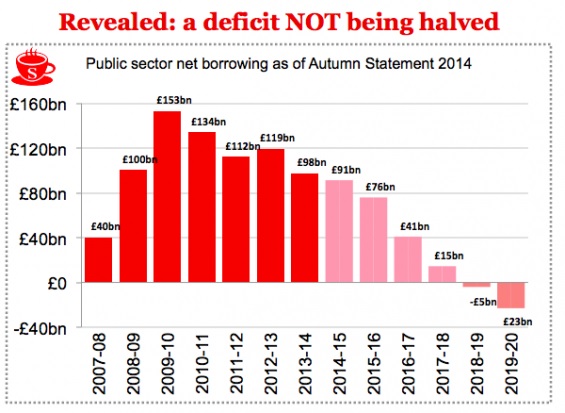
How Will Lying About Immigration And The Deficit Improve Trust In Politics?

Spectator David Cameron Deficit Debt Reduction Lie 2


Somehow, the message still isn’t getting through.

“We just want you to level with us, own up to your past failings and tell us where you really stand on the key issues we care about”, scream Britain’s voters to their increasingly detatched political leaders, in the subtext to every single opinion poll or by-election result of 2014. In response, our political leaders scratch their heads and look confused. “So you want us to pretend as though we understand and respect you?”

Britain’s established political parties have been haemorrhaging support to the new insurgents – UKIP, the Green Party and the fastest growing bloc of all, those who have given up on politics and voting entirely – since the inconclusive 2010 general election and subsequent formation of the coalition government laid bare how vanishingly little difference there really is between the red, blue and yellow team consensus. And as the 2015 general election approaches, each of the establishment parties will come face to face with their own reckoning: David Cameron’s Conservatives face the humiliating prospect of failing to win an outright majority for the second consecutive time, Ed Miliband’s Labour Party behold the implosion of their 35% core vote strategy and Nick Clegg’s LibDems hunker down and wait for the sweet release of electoral oblivion.

In a sane world, the growing revulsion and contempt felt by the British people toward their political class might by now have led to a degree of introspection and a nagging desire among politicians and political parties to cease their endless cycle of cynical, self-destructive behaviour. But we do not live in a sane world. And so the response of Britain’s main parties to the groundswell of public anger at their inability to be honest about their past records and current policies is not to come clean and give honesty a try, but rather to double-down and turn up the brazen deceit to “maximum”.

Continue reading