Sentenced To Death By Drone Strike: Justice In The War On Terror

Reyaad Khan - Ruhul Amin - Drone Strike - Syria - Britain

No one should mourn the deaths of two British ISIS fighters in Syria. But by using RAF drones to kill British citizens abroad, the United Kingdom has effectively re-established the death penalty for certain crimes, this time with no judicial review, no legal framework and no accountability

Did Reyaad Khan and Ruhul Amin, both British citizens, deserve to die in Syria at the hands of an RAF Reaper drone missile?

No right-thinking person is likely to be mourning their deaths, certainly. But while feeling satisfaction that two murderous traitors have been blown off the face of the earth is one thing, it is quite another to approve of the way in which these events came about. And given what we know, we should not approve.

From the Guardian:

David Cameron is facing questions over Britain’s decision to follow the US model of drone strikes after the prime minister confirmed that the government had authorised an unprecedented aerial strike in Syria that killed two Britons fighting alongside Islamic State (Isis).

Speaking to the Commons on its first day back after the summer break, Cameron justified the strikes on the grounds that Reyaad Khan, a 21-year-old from Cardiff, who had featured in a prominent Isis recruiting video last year, represented a “clear and present danger”.

[..] The strikes were authorised by the prime minister at a meeting of senior members of the National Security Council some months ago after intelligence agencies presented evidence to ministers that Khan and Hussain were planning to attack commemorative events in the UK.

You do not have to be a quisling Islamist sympathiser or virtue-signalling civil liberties absolutist to feel uneasy about the fact that the Prime Minister can order the execution of a British citizen on foreign soil with no judicial review, let alone a formalised process approved by Parliament.

Continue reading

Happy And Glorious

“You are part of the fabric of my life. The mother of our country. At age five I remember watching your wedding procession driving past with my family all eagerly leaning out of the window of a family friend’s flat. Of course our big celebration was our street party in West Drayton. I am the same age as Prince Charles and I remember from early on pictures and newsreels of Charles and Anne being shown to me as they grew. Through these I followed your travels around the world. As a 1960’s fashion model I modeled hats outside Buckingham Palace the newspapers imagined Princess Anne would wear. Your travels, events and duties have been threads that have run throughout my life” – Sandra Vigon

This tribute, offered by a Telegraph reader on the occasion of Queen Elizabeth II becoming Britain’s longest reigning monarch, is poignant and undeniably true.

Every British person born over the past six decades has known no other monarch, seen no other figure represented on their currency, celebrated no Christmas without the Queen’s annual message to her people. In hundreds of small ways, the Queen is part of the fabric of both our individual lives and also our shared national life.

Presented with a blank sheet of paper, nobody would design a hereditary monarchy as the preferred mechanism for producing a ceremonial head of state. And yet it has worked tolerably well for Britain, particularly these past couple of centuries.

The head says that a federal system with an elected head of state would make far more sense – fairer, logical, more egalitarian and less of an anachronism than the curiosity which is the British monarchy. The head says that pledging allegiance to a person rather than a flag or a constitution is quaint at best, and downright dangerous at worst. The head clamours for a constitutional convention and the bold re-imagining of the twenty-first century state. But not so the heart.

The heart is glad for what we have, odd though it is by modern standards: the capsuled history of our country represented by a single person of flesh and blood. The heart looks with pride and gratitude on the lifetime of service dutifully performed by Queen Elizabeth II – a role never democratically bestowed, but fulfilled far more faithfully and proficiently than can be said of many an elected official. And the heart shudders to think what would become of Britain if our head of state was drawn from the same pool of glib, superficial careerists as many of our politicians.

The day will come – not, we pray, for some years yet – when we will have to face these issues and reshape our country for a new age, looking the future square in the eye. But not today. Today, we can be thankful for a duty faithfully discharged for 63 years and counting. An anachronism, yes, but still an example to us all.

Congratulations, your Majesty.

God save the Queen.

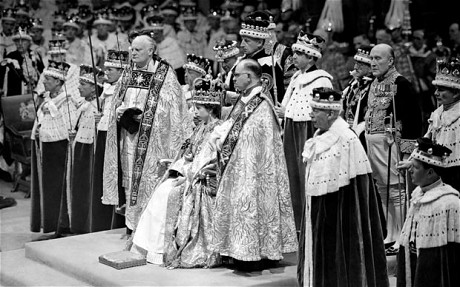
Queen Elizabeth II coronation

Follow Semi-Partisan Politics on Twitter and Facebook.

Why I Am A Conservative

Cambridge University - Conservatives for Liberty - Why Im A Conservative

First published at Conservatives for Liberty

I came from a single parent family and a working class background, got into Oxbridge, worked hard and made something of myself – no thanks to the modern Labour Party or the nurturing support of Big Government

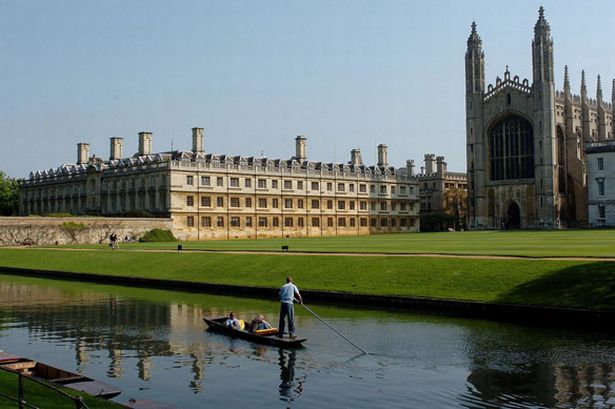
I first realised I was a conservative the day after I heard George Galloway speak at the Cambridge Union Society in 2002. Galloway has a certain way with words when he turns on the charm, and perhaps like many other people that evening I left the debating chamber thinking that maybe there was something to this socialism business after all.

It was only after letting the ideas percolate in my head overnight, trying and failing to match the socialist rhetoric against my own life experience, that I realised that everything George Galloway said that evening was complete hogwash – and that conservatism remains our last, best and only hope for building the just and prosperous society.

If this is all starting to sound a bit Brideshead Revisited – privileged young man goes to Oxbridge, dons a tuxedo and gets in with the Young Conservative set – perhaps I had better start over. I came from a poor, single parent family in Essex. I grew up on benefits, not that it is tremendously relevant. The point is that everything I achieved since that time has been the result of a nurturing family environment and my own hard work. Despite coming of age at the peak of New Labour’s power and popularity, our supposedly benevolent welfare state was at best an irrelevance and at worst was an an outright hindrance to my progress.

Continue reading

How Dare The Labour Party Reject My Application?

Labour Party Application Rejected - 2

As the Labour leadership election draws to a close this week, today I was finally purged from the party, my application summarily rejected because apparently I do not share the “aims and values” of the Labour Party. I defy them to name which of their official “values” we do not hold in common.

I don’t know whether to be flattered or insulted by the fact that it took until today – less than a week before their leadership election result is announced – for the Labour Party to realise that perhaps I did not fit the profile of their ideal new supporter, and finally reject my application.

A quick Google of my name or perusal of this blog should have set alarm bells ringing right away, I fully expected, but it seems that I express myself so poorly on these pages that my antipathy to the Labour Party was not immediately clear to the vetting team at Labour HQ.

But despite taking weeks longer to reject my application than was the case for Telegraph columnist Toby Young or Conservative MP Tim Loughton, I at least had the consolation of receiving not one but two rejection emails, sent within minutes of each other. So when I finally registered on their radar, at least it seems that I made a strongly negative impression.

And so despite having been deluged with correspondence from all of the Labour leadership and London mayoral candidates since stumping up my £3 application fee, this is the terse, boilerplate rejection that I (twice) received from party HQ:

Continue reading

Stop Worshipping ‘Centrist’ Voters – They Are Responsible For Britain’s Woes

Swing Voters - Couch Potato - 2

First published at the Conservatives for Liberty blog

What exactly constitutes the political centre, anyway? Is it even a real thing? And why are we so in thrall to something so vague and ill-defined?

The political centre ground: people talk about it all the time. It is meant to represent the silent majority, that great conclave of wise and sage-like citizens who – unlike us hotheated partisan folk with our strong beliefs and awkward ideals – remain serenely above the political fray, calmly and methodically weighing competing policies against each another before arriving at their pragmatic, irreproachable voting decision on polling day.

Every British political party leader since Thatcher left office has been in hot pursuit of the political centre ground, happily throwing established party orthodoxy and revolutionary thinking alike out the window, preferring to court the good opinion of people who took a good look at Labour’s managed decline of the 1970s and the Tory individualism of the 1980s, and, Goldilocks-like, decided that they prefer something half way between the two, thank you very much.

But who are these political centrists? Do they actually exist, or are they an artificially created demographic, an amorphous and shifting blob of people whom the pollsters have not yet found a better way to categorise?

It’s a relevant question, because you can be assured that British politics for the next five years – or at least, the narrative around politics constructed by the media – will be all about the political centre, and which party is doing the better job of wooing it approaching the 2020 general election.

Continue reading