President Obama’s timely criticism of the Safe Space Generation of students
It may come as a surprise to his conservative critics, but President Obama’s stance on the creeping authoritarianism and Identity Politics culture infecting American college campuses is very much on the side of free speech and robust debate.
Pressed to discuss his views on “politically biased colleges” at a high school town hall event held late last year, Barack Obama said:
Sometimes, y’know, there are folks on college campuses who are liberal and maybe even agree with me on a bunch of issues, who sometimes aren’t listening to the other side. And that’s a problem too. I was just talking to a friend of mine about this, you know, I’ve heard some college campuses where they don’t wanna have a guest speaker who, you know, is too conservative. Or they don’t want to read a book if it has language that is offensive to African Americans, or somehow sends a demeaning signal towards women. And you know, I gotta tell you, I don’t agree with that either.
I don’t agree that you, when you become students at colleges, have to be coddled and protected from different points of view, y’know? I think that you should be able to – anybody who comes to speak to you and you disagree with, you should have an argument with ’em. But you shouldn’t silence them by saying “you can’t come because, y’know my – I’m too sensitive to hear what you have to say”. That’s not the way we learn either.
It is interesting to watch the reaction of the students standing behind Obama while he makes these remarks. Some are clearly bored and not paying close attention, but most clap politely when Obama reaches a natural break in his speech.
However, there is also a significant minority of students in the audience who are giving what can best be described as death stares. Clearly they do not like what they are hearing one bit, because Obama’s pragmatic suggestion that college is place where autonomous adults go to debate sometimes difficult ideas in the pursuit of personal and intellectual growth is contrary to everything that they have been taught is progressive and socially just.
Note in particular the two women on the top right of the screen when Obama says that campus speech restrictions are more suited to the former Soviet Union, approximately 3 minutes and 50 seconds into the video. While the other students seem to have fairly neutral expressions at this point, these two students look angry, sullen and passive-aggressive. The president of the United States has dared to come to their school and blaspheme against the Cult of Identity Politics to which they fully subscribe, and so they sit there, arms crossed and doubtless feeling quite triggered, plotting their revenge.
The point is this: it only takes a few such angry zealots to cow and intimidate an entire student population – and university administrations which should know better – into embracing every corrosive aspect of the Identity Politics culture. Of an entire student body, only a minority will drink deep enough from the well of competitive grievance culture that they turn and become the angry, authoritarian stars of many a YouTube video. But those who do are incapable of leaving everybody else alone. They cannot practice their new secular religion privately; all must share in their beliefs and abide by their behavioural codes, on pain of punishment.
Just seven years ago, the image of an African-American man addressing a group of high school students as President of the United States would have been seen as a powerful display of the social change that is possible when free speech is celebrated, guaranteed and used. Barack Obama, whatever one thinks of his record in office, did not become president by sheltering inside an academic safe space, after all. But Identity Politics does not encourage reflection on progress made; it primarily fosters resentment about the sins and injustices of the past.
There is no longer an Edward Murrow or Walter Cronkite to stand up to Donald Trump
Could mainstream television, radio, print and internet journalism outlets have done more to prevent the rise of Donald Trump? And should they have done more?
Actually, many people are alarmed [by the rise of Trump], but it is difficult to know that by observing media coverage, where little journalistic alarm over Trump is expressed. That’s because the rules of large media outlets — venerating faux objectivity over truth along with every other civic value — prohibit the sounding of any alarms. Under this framework of corporate journalism, to denounce Trump, or even to sound alarms about the dark forces he’s exploiting and unleashing, would not constitute journalism. To the contrary, such behavior is regarded as a violation of journalism. Such denunciations are scorned as opinion, activism, and bias: all the values that large media-owning corporations have posited as the antithesis of journalism in order to defang and neuter it as an adversarial force.
[..] This abdication of the journalistic duty inevitably engendered by corporate “neutrality” rules is not new. We saw it repeatedly during the Bush years, when most large media outlets suppressed journalistic criticism of things like torture and grotesque war crimes carried out by the U.S. as part of the war on terror, and even changed their language by adopting government euphemisms to obscure what was being done. Outlets such as the New York Times, the Washington Post, and NPR refused to use the word “torture” to describe techniques long universally recognized as such — which were always called torture by those same media outlets when used by countries adversarial to the U.S. — because to do so would evince “bias,” lack “neutrality,” and “take sides” in the torture debate.
Contrary to what U.S. media corporations have succeeded in convincing people, these journalistic neutrality rules are not remotely traditional. They are newly invented concepts that coincided with the acquisition of the nation’s most important media outlets by large, controversy-averse corporations for which “media” was just one of many businesses.
I’m not so sure.
While Greenwald is absolutely right to chastise mainstream media outlets for clinging desperately to an “appearance of objectivity at all costs” dogma which routinely sees them humiliate themselves by speaking and writing about the utterly ridiculous as though it were merely an equal and opposing side to an argument, the idea that prestige nightly news anchors could have killed Trump’s candidacy in the crib either by initially declaring it ridiculous and mocking it, or by waging an Edward Murrow or Walter Cronkite crusade against him, seems to be wishful thinking.
It’s wrong because it underestimates the anti-establishment surge now underway in America (and in Britain too, as we saw with the rise of UKIP and the SNP). Suppose that mainstream news outlets like the New York Times, NBC, NPR and others had come out strongly to argue that Donald Trump’s ideas were outside the Overton window of “acceptable” political thought in America, and that he should henceforth be ignored by the media regardless of how many people were attending his rallies or how high he climbed in the opinion polls. What difference would it have made?
Political journalism is scorned by the public as much as Washington politics itself, and often for quite valid reasons – the incestuous, back-scratching relationship between the two is often entirely self serving and actively prevents the holding of government to proper account. Trump’s candidacy is fuelled in significant part by the opposition of those opinion columnists and TV talking heads who have come out to criticise him. If they were joined by everyone else, including news anchors and print journalists whose material does not appear in the opinion section of their television shows or newspapers, it is hard to see it doing anything other than confirming the suspicion of Trump fans that the “establishment” is out to get them, thus driving his poll ratings even higher.
This is important. Trump is riding high partly because of a small group of “let it burn” conservatives who believe that Washington is so corrupt that an authoritarian outsider beholden to no one is as good a choice as any to sweep out the garbage, but mostly because Trump supporters feel ignored and patronised by almost everybody else. And frankly, the opposition to Trump in the media has not helped, tending toward hand-wringing “ooh, isn’t he evil” editorials and one-sided accounts of violence at his campaign rallies rather than granular deconstructions of his policy proposals (such as his policies exist). Increasing the frequency and volume of the existing anti-Trump media coverage will not fix the problem, because it does little to tackle the sentiments and ideas which drive his support.
But more to the point, if we are to set arbitrary limits on our political discourse, beyond which any candidate promoting “unacceptable” ideas is rounded on by the corporate media as it is currently comprised, who gets to set the limits? Who gets to decide which ideas are okay to debate, and which are traps which will bring the entire media establishment crashing down on the person who dares to raise them?
There is almost nothing as infuriating as watching high profile journalists discuss an issue where one side obviously has the moral and intellectual high ground in terms that suggest that it is a finely balanced debate – witness the debates on torture, climate change, Brexit (UK secession from the European Union) and more. But even worse than this would be a collusion between media outlets to freeze out certain ideas or candidates from being mentioned altogether because they are “evil” or contradict prevailing orthodoxies.
I’m sure that this is not what Greenwald has in mind. As a consistent advocate of free speech, I’m sure that he would prefer a brash and lively media landscape of much more fractured ownership, in which a multitude of independent news outlets are free to carry out the kind of unabashedly partisan campaigning journalism that Greenwald (and to some extent this blog) advocates. Greenwald would likely be fine if some outlets produced coverage very supportive of Trump, so long as other outlets were equally free to oppose him.
But we do not have such a media landscape right now, and moving in this direction would be a process taking years, not months – certainly too long of a timescale to have any impact on the rise of Donald Trump. The difficult truth is that given the hysterical, rabble-rousing behaviour of the Republican Party over the course of the Obama presidency – in which they chose hyperbolic, apocalyptic scaremongering over principled opposition to bigger government – there was nothing that could have prevented the monster they created from coming to life, breaking free of its chains and devouring them, as Trump is now doing.
It may feel good to imagine an American media landscape filled with luminaries like Edward Morrow and Walter Cronkite, journalists who would have taken one look at Donald Trump back when he launched his presidential bid, and masterfully snuffed it out in the course of one withering nightly news broadcast or newspaper column. But that is not the world we live in. Any attempt by major media outlets to scrutinise or inveigh against Trump in these anti-establishment times would only have fuelled his campaign even more than his many critics already have.
Far more deserving of blame are the Republican Party establishment, who shamelessly and hypocritically rode the anti-establishment, anti-Obama tiger for seven years before finally it turned on them. And also at fault is an entire remote and self-serving political establishment which in many ways thoroughly deserves the kicking it is now receiving – just not by Donald Trump, the opportunistic and undeserving current beneficiary.
Would it be a cathartic experience to witness more mainstream media types casting objectivity aside and coming out against Trump? Quite possibly. But would it have done anything to stop his rise? Let’s not kid ourselves.
Earlier, the Senator asked, “Upon what meat does this, our Caesar, feed?” Had he looked three lines earlier in Shakespeare’s Caesar, he would have found this line, which is not altogether inappropriate: “The fault, dear Brutus, is not in our stars, but in ourselves.”
No one familiar with the history of this country can deny that congressional committees are useful. It is necessary to investigate before legislating, but the line between investigating and persecuting is a very fine one and the junior Senator from Wisconsin has stepped over it repeatedly. His primary achievement has been in confusing the public mind, as between the internal and the external threats of Communism. We must not confuse dissent with disloyalty. We must remember always that accusation is not proof and that conviction depends upon evidence and due process of law. We will not walk in fear, one of another. We will not be driven by fear into an age of unreason, if we dig deep in our history and our doctrine, and remember that we are not descended from fearful men — not from men who feared to write, to speak, to associate and to defend causes that were, for the moment, unpopular.
This is no time for men who oppose Senator McCarthy’s methods to keep silent, or for those who approve. We can deny our heritage and our history, but we cannot escape responsibility for the result. There is no way for a citizen of a republic to abdicate his responsibilities. As a nation we have come into our full inheritance at a tender age. We proclaim ourselves, as indeed we are, the defenders of freedom, wherever it continues to exist in the world, but we cannot defend freedom abroad by deserting it at home.
The actions of the junior Senator from Wisconsin have caused alarm and dismay amongst our allies abroad, and given considerable comfort to our enemies. And whose fault is that? Not really his. He didn’t create this situation of fear; he merely exploited it — and rather successfully. Cassius was right. “The fault, dear Brutus, is not in our stars, but in ourselves.”
Good night, and good luck.
–
Agree with this article? Violently disagree? Scroll down to leave a comment.
A campaign that Semi-Partisan Politics is proud to support
I have written a lot of uneducated bilge about the European Union in my time.
My natural instincts – supporting democracy, self-determination, the nation state and accountable government – were generally sound, but too often I lapsed into lazy confirmation bias and weak, borrowed rhetoric when arguing for Britain’s independence from Brussels.
I would still be churning out even more bilge today, were it not for the eureferendum.com site and the group of activist bloggers who are coalescing around Dr. Richard North and Flexcit, that rigorous, comprehensive plan for safely extracting Britain from European political union while minimising risk.
If this blog has gone somewhat quiet on the finer policy details of the Brexit question over the past year, sticking to the bigger picture, it is only because through slowly becoming familiar with this body of work, I have come to realise how much I have yet to learn and understand about the workings of the EU and the international regulatory environment – and how much I thought I understood that turned out to be completely wrong.
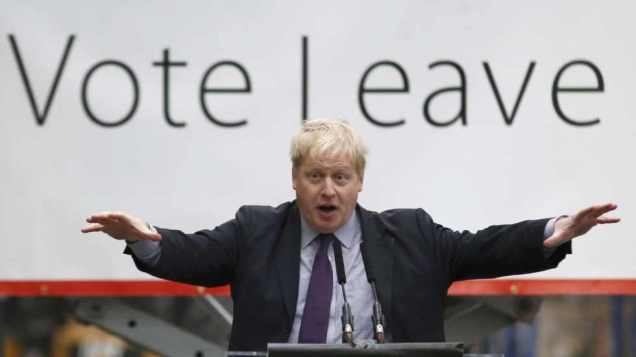
The upshot is this: this referendum should not be about David Cameron’s fraudulent “renegotiation” deal (even though it is yet more evidence of the EU’s inability to reform even under existential threat), any more than it should be about the arbitrary and misleading statistics about jobs saved or threatened, hospitals built or universities closed. All of these alarmist talking points can be fought to a draw on the 24-hour news channels by the SW1 talking head armies of the establishment Leave and Remain campaigns.
This referendum – this rare, great opportunity that we have been given – should be about our democracy. It should be about who governs Britain, how they govern Britain and how we exercise oversight over the people who make the key decisions affecting our lives. And one thing is certain: the more people learn about the true nature of the European Union – and the more they are encouraged to think like engaged citizens rather than fearful consumers – the more they come to realise that Brexit is an essential first step toward reclaiming our democracy.
That’s what The Leave Alliance is about. TLA is an alternative to the dumbed-down, uneducated major campaigns battling it out for lead designation in the referendum campaign, whose dismal and unforgivable failure to embrace a properly worked through plan for Brexit – and then promote it in the media – means that we are now fighting the referendum campaign with our hands tied behind our backs, David Cameron chuckling to himself all the while.
The Leave Alliance launches later today, in Westminster, and it will be a campaign that engaged citizens and thinking eurosceptics and Brexiteers across the country can actually be proud to support. It is a campaign which understands that Brexit is part of a process of much-needed democratic renewal, not a fixed destination in itself. And it is a campaign which will never condescend to the British people by reducing this great question of human governance and statecraft to a disingenuous war of competing statistics.
If you feel let down and embarrassed by the well-funded but utterly amateurish Leave campaigns, then The Leave Alliance offers you a home for this referendum campaign.
And if you read Semi-Partisan Politics and generally find yourself agreeing with what is written here, then I ask you to follow my lead and abandon the mainstream Leave campaigns who are cheerfully leading us to defeat, and instead support The Leave Alliance, whose strong commitment to eurosceptic principles and intellectual rigour will campaign for Brexit – and to keep the flame of genuine democracy alive in Europe – for as long as it takes to achieve our cherished goal.
If you need to know how properly posh you are there’s a very simple test: are you pro- or anti-Brexit?
[..] So there I was at dinner the other evening with a delightful, erudite Old Etonian friend of mine. Let us call him ‘Kevin’ (not his real name). Kevin has an accent so deliciously plummy that if you could somehow tin it and sell it to the Chinese you’d become a billionaire. He is immensely cultured, civilised, wise and sensitive. I agree with him on everything, so naturally, when I asked him his views on Brexit and he launched into his eloquent diatribe on why he believed — and long had done — that the EU was the Abomination of Desolation, I listened in a state of near-ecstasy.
Kevin’s beautifully modulated speech went on for at least ten minutes. (There was hardly a shortage of material.) Then, suddenly, something weird happened. About 30 seconds before the end, Kevin shifted tack, and explained (or actually, hardly explained at all) that for all these reasons the only logical position was for Britain to remain in EU. Something to do with Europe being a lovely place and our having a moral duty to help it set the tone, I think.
And goes on to draw a interesting parallel with the Thatcher era:
What does all this tell us about snobbery and Tory politics? Quite a depressing bit, I’ve begun to realise. You can see much the same sort of thing going on in the Thatcher era. Who were her greatest loyalists, the ones most in tune with her radical programme? Why, they were grammar-school types with slightly suspect accents, such as Robin Harris and Norman Tebbit — not the plummy-voiced grandees such as Heseltine et al, who were the ones who eventually did for her.
This is also true, I think, of the upper social echelons’ attitude towards Nigel Farage. It’s not that they disagree with much of what he says: how could they, when he’s so refreshingly candid and reactionary and un-PC? But they’ve persuaded themselves that, like Ukip, he’s just a bit too spivvy and downmarket to deserve their open affiliation. This enables them to have their cake and eat it: privately enjoying his every home truth but never being tainted by that awkward, embarrassed feeling which tends to accompany frankly expressed views on matters like immigration.
Delingpole sees this as an elitism thing: the closer you are to the establishment or to the top of your field or profession, the more likely to are to have vested in the current order of things and the more likely you are to sense Brexit (sometimes justifiably) as a threat to your current position.
I think that this probably holds true in all manner of fields, from education (How many university Vice Chancellors are brave enough to bite the hand that feeds them recycled British taxpayer money?) to the arts (for the same reason) to the world of business, which understandably cares a lot about economic stability and not so much about democracy.
But this blog maintains that one’s stance on the EU referendum is also determined by whether you consider yourself a citizen or a consumer first and foremost. As Delingpole’s anecdote makes clear, many of the European Union’s biggest advocates within the British establishment freely concede and attack its antidemocratic nature, but still refuse to countenance leaving the club. They are unable take this logical step because they are thinking with their wallets and their social reputation in mind, rather than the good of the country.
By contrast, someone at the sharp end of globalisation – who has experienced the negative aspects of free trade and free movement of people on their employment, living standards and public services far more than the person living in Mayfair – is more likely to vote on the kind of issues that a thinking citizen should vote on, because they are much more likely to be directly touched by those issues.
If you have grown up and prospered under the status quo, with Britain as a vassal state of a larger and ever-more tightly integrating political union, then it takes an extraordinary amount of curiosity, empathy or insight to come to any conclusion other than that the EU has been a resounding success on all counts. By contrast, if you are self-employed or work in a semi-skilled or unskilled job at the sharp end of globalisation, you are more likely to be negatively impacted not just by immigration, but by the inability of your vote to effect any kind of meaningful political change in Britain thanks to the cross-party pro-EU consensus.
[..] It is those who think primarily with their wallets, as consumers first and foremost, who are most likely to be susceptible to the Remain campaign’s Project Fear and scaremongering tactics about the hysterically hyped “costs” of leaving the European Union, while those who think as engaged citizens and global stakeholders who are most likely to question the European project.
That doesn’t mean that the Oik (in Delingpole’s parlance) is not also often voting for his or her self interest. They may well want to see Brexit as part of a broader package of counterproductice protectionist measures, which would inevitably do Britain more harm than good. But regardless of their personal motivation, they are more likely to discuss the issue of Brexit in terms of policy and of democracy. The oiks thus often act like a better, more engaged citizens than the elitists who lazily support the Remain camp to virtue-signal their distaste at UKIP while overlooking the democratic question.
As for myself, I enjoyed the delights of a state education, worked to get myself into Oxbridge, but then left Cambridge University and went to Warwick. I suppose all of that places me firmly in the “Oik” category, a position I shall hold with even more pride now that it is also a marker for principled euroscepticism.
–
Agree with this article? Violently disagree? Scroll down to leave a comment.
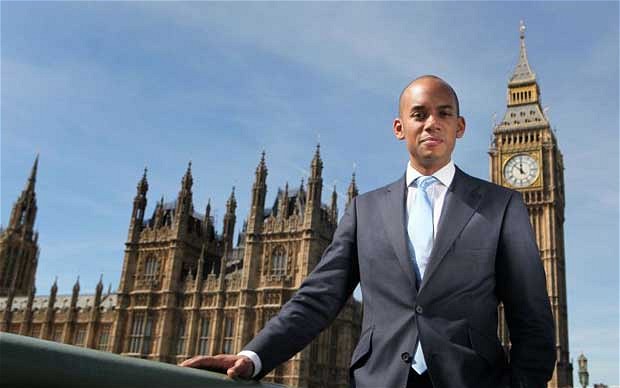
The current Labour Party will not transition seamlessly from Jeremy Corbyn to Chuka Umunna, and any leadership coup proposing an Umunna-like replacement for Corbyn will make the Republican Party presidential primary look like a model of restraint and civility
Clearly the EU referendum and upcoming Budget are not providing enough excitement for Fraser Nelson, because he is also busy agitating for an immediate (and almost certainly ill-fated) coup to depose Jeremy Corbyn from the leadership of the Labour Party and replace him with exactly the kind of person who the Labour grassroots detest with every fibre of their souls.
It’s the Ides of March today, and there are pitifully few signs of a Labour plot. I was on ITV’s The Agenda last night with Chuka Umunna, one of the putative successors to Jeremy Corbyn, who was teased by Tom Bradby about his ambitions. He came out with the usual hedged denials (“there’s not a vacancy.,, I’ve said I would never say never”) but then came out with the rationale for ousting Corbyn.
The problem: most Labour members were not members this time last year. The party has been taken over by Corbynistas and while Labour MPs could technically change the leadership it’s harder to change the membership. Chuka agreed- but then gave the democratic case for deposing Corbyn, in defiance of the wishes of party members.
“Clearly, Jeremy has a very strong support amongst our membership. But then if you look at the parliamentary Labour party they have a direct mandate from 9.3m Labour voters. If you look at the research on things like Trident the parliamentary party would be closer to the views of the voters than the members and there’s that tension.”
So how to resolve the tension? I do hope the Labour moderates come up with a way soon, and bring this sorry pantomime to a close. PS At the end of The Agenda, guests are invited to present a fantasy front page. Mine was intended to give some encouragement to the Labour moderates.
Fraser Nelson’s pitch for a Chuka Umunna leadership bid consisted of this rather unlikely picture:
Just what the Labour Party needs. Another dazed and confused London career politician stumbling shell-shocked and bewildered beyond the M25 in a belated effort to understand why so many working and middle class people – Britain’s strivers – spurned his party at the general election, totally unconvinced by a Labour manifesto and message conceived in Islington but barely embraced even in Hampstead.
At a time when David Cameron is building an inclusive Tory cabinet which conspicuously harnesses the talents of women and MPs from working class backgrounds, for Labour to respond by crowning a well-moneyed, metropolitan, UKIP-hating elitist such as Umunna would only serve to confirm everyone’s worst suspicions about the party.
And those suspicions are that the modern, virtue-signalling, style-over-substance Labour Party would rather dwindle to an angry, self-righteous, ideologically pure talking shop for the London dinner party set than do the hard work of rebuilding in order to actually help the people it claims to represent; that it lacks the wisdom to recall its ideological roots or the humility to reach out to its scorned party base.
The notion that the Labour Party as it is presently constituted could go from being led by Jeremy Corbyn to the stewardship of someone like Chuka Umunna without about three transitional leaders to ease the way is absolute fantasy. While New Labour centrists and wistful media types may wish it were otherwise, the Blairite Labour Party is in a state where it cannot simply be rejuvenated with a click of the fingers and a telegenic new leader.
At this point, even managing to replace Corbyn with somebody like Ed Miliband (himself considered unpalatably left wing by much of the country) would be a major achievement, and even that is highly unlikely. The fact that Dan Hodges – the columnist whose finger is closest to the pulse of Labour Party plots – thinks that the party’s current greatest hope is Angela Eagle, of all people, shows just how far the ground has shifted to the Left under Labour.
Fraser Nelson was hopefully just making a lighthearted joke when he suggested that Chuka Umunna succeed Jeremy Corbyn after a leadership coup which would be sure to enrage over half of the party’s membership. Because to even attempt to go from Jeremy Corbyn to Chuka Umunna in one step would precipitate such a period of rancour and infighting that it would make the Republican Party’s rage at its ongoing takeover by Donald Trump look like the model of civility and restraint.
–
Agree with this article? Violently disagree? Scroll down to leave a comment.