Stephen Fry Commits Egregious Act Of ‘Victim-Blaming’, Torpedoes Own Career

‘Victim-blaming’ the survivors of sexual abuse by daring to suggest that safe spaces and trigger warnings are not the best response? Stephen Fry clearly has a career death wish

Never one to avoid controversy, while giving an interview to American media Stephen Fry decided to share his thoughts on a number of subjects – including the Rhodes Must Fall campaign, the general infantilisation of our culture and (really pushing his luck given the current climate) the demands of some students to slap trigger warnings on works of art and academic materials which include discussion of rape or sexual abuse.

Naturally, this went down tremendously well with Safe Space apologists, who all immediately saw the light and took to Twitter praising Fry for introducing a note of levity into their carefully constructed  culture of victimhood.

The Independent reports:

Stephen Fry has been criticised for suggesting sexual abuse survivors should not “pity” themselves.

Fry made the comments when airing his views on free speech, religion and political correctness while appearing on US show The Rubin Report.

Speaking to host Dave Rubin, he discussed the practice of safe spaces and trigger warnings, including those that are used for plays and books which contain scenes of rape or abuse and can possibly set off traumatic memories and flashbacks for survivors of rape or abuse. They are sometimes used on university campuses.

He said: “There are many great plays which contain rapes, and the word rape is now even considered a rape. […] They’re terrible things and they have to be thought about, clearly but if you say you can’t watch this play […] it might trigger something when you were young that upset you once because uncle touched you in a nasty place.

“Well I’m sorry yes it’s a great shame and we’re all very sorry that uncle touched you in that nasty place. You get some of my sympathy but your self-pity gets none of my sympathy because self-pity is the ugliest emotion in humanity.

“Get rid of it because no one’s going to like you if you feel sorry for yourself. The irony is we’ll feel sorry for you if you stop feeling sorry for yourself. Grow up.”

Stephen Fry can currently be found being roasted alive by the permanently outraged, virtue-signalling Twitterati for daring to promote the sacrilegious concepts of resilience and antifragility, and – if the mob get their way – will be found next year as the “featured guest” presenting a QI knockoff show on a cheap Caribbean cruise.

Well, it was a good career while it lasted.

Grovelling apology and recanting of previous remarks in 10, 9, 8, 7, 6…


Safe Space Notice - 2

Agree with this article? Violently disagree? Scroll down to leave a comment.

Follow Semi-Partisan Politics on TwitterFacebook and Medium.

The Furore Over David Cameron’s Tax Affairs Reveals Britain At Its Worst

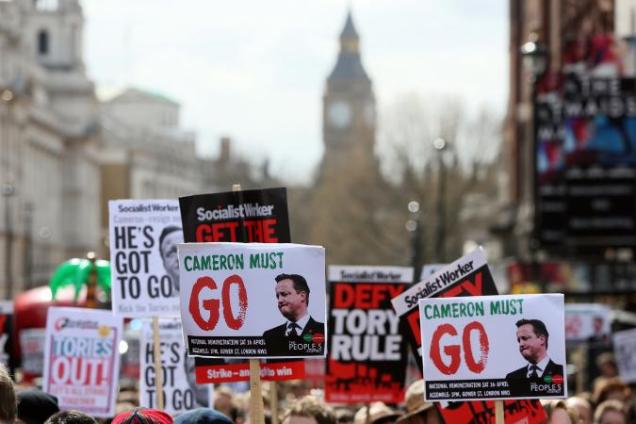
David Cameron Tax Protest - Panama Papers

Responsibly lowering his tax liability through perfectly legal means is one of the few things that David Cameron has accomplished with any real competence. If only his stewardship of British sovereignty and democracy was half as accomplished, his premiership might not be such a letdown

No, I’m not going to write about David Cameron’s tax return, because despite the sound and fury emanating from the Paul Mason, “neo-liberalism” hating Left, it is a complete non-story.

That much is outlined well enough here, here, here and here.

This blog is more than happy to discuss tax reform – preferably of the fundamental and flattening kind – but not through the lens of our national envy and hatred of wealth and success. Because this tawdry intermission in our political conversation serves only to highlight all of the flawed parts of our national psyche – particularly the disdain bordering on hatred many people feel toward wealth and success – while fading out everything that makes us great.

Of course there are privileged people in this country with wealth and resources that the poorest among us can only dream about. But every moment we waste casting envious eyes at those with more than us, bemoaning our own lot in life and viewing ourselves as part of a vast Collective of the Oppressed and Hard Done By is a moment we are not accepting the agency and responsibility we have for our own lives and decisions.

Should we be outraged that the legal, private tax affairs of an elected politician somehow set a bad example? Okay – but only if we are really willing to go down a path that ultimately will lead to witch-hunts of anybody who fails to “voluntarily” donate 90% of their income to Our Blessed NHS (genuflect).

Bear in mind, many of those shouting the loudest themselves are guilty of the same (or worse) behaviour, cynically (and hypocritically) attempting to use this story to advance their political agenda. And in terms of Cameron’s mishandling of the media story, are we really going to focus on this one particular instance and not the many other clangers? I could write a blog post every day for a year about why David Cameron is a lousy conservative and a disappointing prime minister, and still not get around to talking about his family’s mundane tax affairs.

So if you want to read a furious polemic about the Evil Tories and their inherited wealth, look elsewhere – Owen Jones and Paul Mason will take good care of you. Likewise if you want to read a simpering, fawning defence of the prime minister.

Our country faces an existential choice in the coming EU referendum while the liberal, enlightenment values which we supposedly hold dear are under attack everywhere from GCHQ to social media to the university campus.

And so long as that remains the case, this blog will focus on the things that matter, not the shiny distractions which only serve to reveal our petty biases and jealousies.


Panama Papers - Mossack Fonseca - Tax Avoidance Evasion

Top Image: Newsweek

Bottom Image: BBC

Agree with this article? Violently disagree? Scroll down to leave a comment.

Follow Semi-Partisan Politics on TwitterFacebook and Medium.

Cultural Appropriation Hysteria – NPR Earnestly Debates The Merits Of Culinary Segregation

White Girl Asian Food - Cultural Appropriation

Put the chopsticks down and step away from the rice bowl, Timmy!

While our universities become increasingly unrecognisable places where academic freedom is curtailed and human behaviour restricted in the name of identity politics, NPR is fretting about people of one race and culture having the audacity to cook the cuisine of another:

Recently, we started a conversation about food and race. Specifically, we wondered out loud, who gets to cook — and become the face of — a culture’s cuisine?

[..] As with many things involving race and class in America, there are no easy answers — and we’re not expecting to find any clear-cut ones. We’re more interested in starting a conversation.

Here’s some of what we heard from you.

On one hand, many of you pointed out that cooking the cuisine of other cultures is a tangible way to connect. That’s part of what makes America a literal as well as figurative melting pot.

[..] At its heart, food is about identity — about where we came from — which is why the topic of cuisine and who cooks it can be so personal and complicated for some.

[..] Many of you stressed the importance of approaching the cuisine of others with respect. And that means highlighting not just the ingredients, but also the culture behind a dish.

Read the whole thing. The article is littered with numerous examples of narcissistic, self-obsessed, virtue-signalling statements sent in by NPR readers and listeners, each competing with one another to be the most enlightened, compassionate warrior fighting for those poor people whose very identity is being erased by the likes of Panda Express and Chipotle.

The upshot seems to be that a plurality of NPR listeners will very graciously allow us to continue cooking the food of other cultures, as long as we do so with sufficient respect and reverence for the culture from which we are borrowing.

But don’t you dare seek to make a profit on the back of a cuisine which is not identified with your personal ethnic background, because that is clearly a step too far:

Some of you said what’s bothersome isn’t so much whether a person of one race or ethnicity is cooking the food of another culture. That can be done respectfully. The question, then, is more about opportunity — who has a chance to profit from making a cuisine?

The idea that the value of something should be determined by the consumer rather than some prissy Identity Politics oppression-based algorithm seems anathema to Twitter user Chandra Ram and a number of other NPR followers.

How long, then, until some virtue-signalling  Identity Politics cultist proposes a system of “culinary reparations”, whereby restaurants are entitled to serve the modified cuisine of marginalised cultures only if they pay a some kind of tax on their revenue, to be distributed equally among everyone who can prove membership of the “injured” ethnic group?

And if you think something so ludicrous would never happen, just wait until the current crop of students passing through university have graduated, entered the job market and worked their way into our political system.

That’s the hipster food truck industry in London decimated, for a start.


Postscript: One of the best responses to the attempt by Identity Politics cultists to re-segregate our cuisines along ethnic lines comes from this Reddit user:

Cultural Appropriation - Food

Safe Space Notice - 2

Top Image: Vice

Bottom Image: Reddit User

Agree with this article? Violently disagree? Scroll down to leave a comment.

Follow Semi-Partisan Politics on TwitterFacebook and Medium.

Tales From The Safe Space, Part 25 – Student Action Alone Cannot Halt The Growth Of Safe Spaces And Censorship

St Olaf College Protest - Safe Space Policy

Students are leading the fightback against campus illiberalism and the Identity Politics takeover with almost no support from professors and university administrators. No wonder they are having limited success

As this blog noted last week in a worrying development, even some of those students who are now making the news for opposing the most authoritarian clampdowns on free speech on their campuses turn out to support the idea of safe spaces, trigger warnings and No Platforming in principle. In other words, their problem is not with censorship per se, but merely a quibble over its overenthusiastic application.

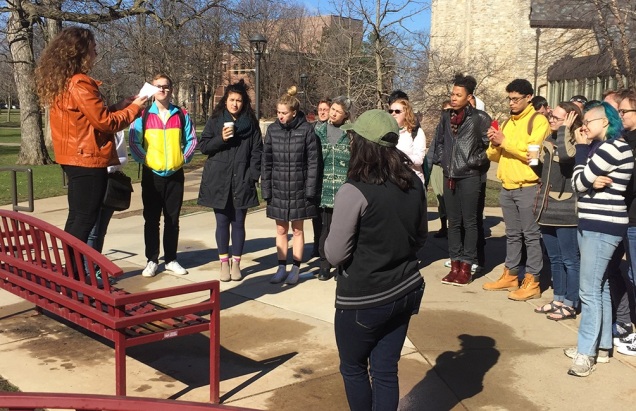
Latest case in point, this student from St. Olaf College in Northfield, Minnesota, who ruined a perfectly good protest about campus speech codes and draconian restrictions on free speech by conceding the broader point about the necessity of Safe Spaces.

From the Manitou Messenger:

On March 29, subscribers to St. Olaf Extra received an email from Anders Wahlberg ’17 in which he expressed his frustrations with St. Olaf ’s “incredibly broad and overreaching” policies regarding speech on campus and “the ridiculous concept of safe spaces.” Wahlberg closed the email with a call to other students who feel similarly to join his student organization, which “will offend people” and “will violate the sanctity of St. Olaf’s safe spaces.”

Within days of the email being sent out, Nikki Lewis ’18, Udeepta Chakravarty ’17 and Cynthia Zapata ’16 organized a rally in response. The rally was held in the quad on April 1 during chapel time and drew many students despite the cold temperatures. Both the organizers and representatives from safe spaces on campus spoke to the crowd.

“It’s always very hard when marginalized students on campus are trying so hard to make it clear that there’s issues at St. Olaf, and then emails like that go out,” Lewis said, “with so little regard to the fact that a lot of students on campus are subjected to hate speech and sometimes even hate crimes on this campus. So just sending out an email like that, what are you thinking?”

[..] Wahlberg’s email indicated that it wasn’t that safe spaces should be attacked, but that the mentality of safe spaces has not been contained in those safe spaces.

“By all means there should be safe spaces on campus. But making the entire campus a safe space is a threat to academic discussion and places people’s feelings above free speech. I don’t think there is a single issue that is ‘above debate.’ Classrooms, above all else, should not be safe spaces,” Wahlberg said.

In other words, limit free speech and infantilise students as much as you like on campus as a whole, just don’t do it within the classroom.

We should, perhaps, see the positive side in this. At least the student, Anders Wahlberg, appears to be motivated out of a strong and genuine concern for academic freedom. But tolerating any kind of exclusionary safe space where speech is restricted is inevitably the thin end of the wedge – conceding the principle of safe spaces means that the fight for free speech will ultimately be fought at the threshold of our own liberty.

Of course, one does not know the full extent to which potentially enormous social pressures force students to moderate or in some instances completely suppress their criticism of draconian speech codes, No Platform policies and other infantilising measures. It could be that Wahlberg would like to do away with Safe Spaces altogether, but knows that he would face total social ostracisation to the extent that speaking out fully is impossible.

And if so, who can really blame him? With very few honourable exceptions, most university administrations are running terrified of their student populations, falling over themselves to apologise and grant perks and concessions for the supposed injustices committed on their watch, almost before the Stepford Students themselves have had time to get into full outrage mode.

If I were a student today I like to think that I would take a vociferous, absolutist stance on free speech – but I would be under no illusion that the university hierarchy would have my back.

Cowardly concession after cowardly concession has shown that in a desperate final attempt at appeasement, many university administrations are happy to throw their allied supporters of academic freedom and free speech under the bus to buy a few more months of peace and quiet from their restive student populations.

It is always heartening to see students push back against attempts to infantilise them and limit their freedoms. But we are kidding ourselves if we believe that years of accumulated authoritarian and censorious policies can be overturned without the active participation of the academic establishment – dragged out kicking and screaming in support of academic freedom, if necessary.


Safe Space Notice - 2

Top Image: Manitou Messenger

Agree with this article? Violently disagree? Scroll down to leave a comment.

Follow Semi-Partisan Politics on TwitterFacebook and Medium.

Tales From The Safe Space, Part 24 – Finally, The Academy Strikes Back

Academic Freedom In An Age Of Conformity - Joanna Williams

When will professors and university administrators realise that they must work together with colleagues and rivals to stand a chance of withstanding and rolling back the current unprecedented threats to academic freedom?

Lest we begin to think it is all doom and gloom, it should be pointed out that some voices within the academy are pushing back on the demands of censorious students and the self-censoring impulse among university faculty to avoid giving offence or courting controversy.

Already in this series we have looked at the inspiring example of Dr. Everett Piper, president of Oklahoma Wesleyan University, whose resistance of “ideological fascism” puts many of his Ivy League peers to shame.

And now, winging its way to an Amazon locker near me is a copy of “Academic Freedom in an Age of Conformity” by Joanna Williams, a book which promises to get into detail as to the specific nature of the problem within our universities. Hopefully it will also provide some more detail – as well as proposed solutions to some of the questions raised – in Mick Hume’s worthwhile polemic “Trigger Warning: Is The Fear Of Being Offensive Killing Free Speech“.

Williams recently gave an interview to Inside Higher Ed to discuss the book, and this section from the Q&A is a breath of fresh air:

Q: Academic Freedom in an Age of Conformity has some choice words for the students who have in recent years sought to ban controversial speakers, discussions, art, etc., from their campuses. But you blame their censorship largely on their instructors, from whom you say they have learned. Is that fair? Some instructors, at least in the U.S., now say they’re afraid of their students, and are self-censoring because of them.

A: I think many academics are looking on in bemusement, or indeed horror, at this generation of censorious students. But I think academics need to engage in a far more honest debate about where such students have got their ideas — and their tactics — from. Of course higher education does not operate in a vacuum — and students do not arrive at university as blank slates. There are lots of different things going on here.

Too often nowadays students arrive at university having led quite sheltered lives and having been protected from discomfort. In many ways I think childhood itself has come to be equated with vulnerability. This carries over into universities. Young adults are treated as if being a student is in and of itself enough to make them vulnerable and in need of special protection. The campus comes to be seen as a safe space with infantilizing therapeutic interventions such as petting zoos. Students do not expect — and ultimately are not able — to deal with things that threaten their fragile sense of self.

These same students are often taught in the classroom that language is all powerful in constructing reality — that words can wound — in a way that goes beyond rhetoric that can upset us, move us and stir our emotions but actually to inflict psychic harm or real violence. When students who have come to see themselves as vulnerable are taught that language and images can threaten their identity, then the desire to ban is understandable.

Academics who are afraid of their students need to enlist the support of their colleagues in creating a university culture that is about learning through intellectual challenge rather than an entitlement to protection from discomfort.

Absolutely. The abysmal position in which even our top universities now find themselves is a confluence of several things going on all at once. There is the notion that some speech is beyond the pale and that bad words can equate to violence, which started with the “No Platform” concept several decades ago, and has grown to result in hate crime legislation which criminalises speech, writing or online activity which is perceived by any third party as likely to cause alarm or distress – a remarkably low bar for censorship.

Then there is our modern therapeutic culture, which as Joanne Williams (and this blog) rightly notes has raised a generation of young adults who believe that they are special, beyond reproach but also uniquely vulnerable and in need of constant protection by watchful authority figures. This sees students equating good mental health with a state of childlike regression, trying to face-paint and colour their way to equanimity.

And finally there is the rise of the Cult of Identity Politics or what Dr. Everett Piper calls “ideological narcissism”, whereby young minds are conditioned to believe that their arbitrary (and sometimes shifting) identity trumps not only the rights of other people to hold and express ideas which criticise those identities, but even trumps physical reality itself. Thus some students openly fret that allowing, say, a speaker who does not hold the mandatory stances on transgender issues to air their opinion will “invalidate the experience” or even the existence of trans students – as though Brendan O’Neill setting foot on their university campus would cause all trans people within a five mile radius to vanish in a puff of smoke.

What has been missing so far is any sign of co-ordination in terms of a fightback by the academy, which is where Joanna Williams’s book comes in. She herself has lamented that one of the problems is that professors and university administrators do not care about academic freedom in the abstract as much as they should, only becoming alarmed when their own campus or lecture theatre is engulfed in protest by self-entitled Identity Politics cultists.

Hopefully this book, “Academic Freedom in an Age of Conformity”, will begin to change that introverted aspect of academic life and prompt more professors and others to realise that the slide toward illiberalism and censorship taking place on one far-away college campus is a direct threat to their own.

Stay tuned for a full review of the book here in the coming weeks.


Safe Space Notice - 2

Agree with this article? Violently disagree? Scroll down to leave a comment.

Follow Semi-Partisan Politics on TwitterFacebook and Medium.