Tales From The Safe Space, Part 54 – Mr. Prager’s Opus

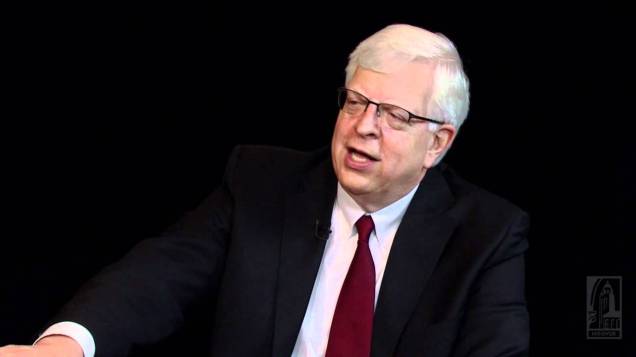
Dennis Prager

When a prominent conservative speaker cannot conduct a symphony orchestra without attracting protest from social justice warriors in the arts world, we should take note; the regressive left will not rest until they have driven all conservative thought criminals from the public square

Conservative author and talk radio host Dennis Prager recounts a disturbing tale in the National Review this week.

Some background: for many years, Dennis Prager – a long time classical music aficionado – has conducted various provincial symphony orchestras in the United States, indulging his passion while raising much-needed funds for those orchestras and introducing new people to the world of classical music. As an amateur, Prager has never accepted a fee for conducting; he purely does so out of love of the music and a desire to introduce classical music to a wider audience.

These events actually look really fun – Prager participates only in the first half of the concerts, conducting a symphony and then doing a Leonard Bernstein-style “Young People’s Concert” format where he breaks down the symphony under discussion, revealing the inner workings of the music and interviewing members of the orchestra to get their insights. The second half is then conducted by the orchestra’s usual music director, a kind of 50/50 split between amateur and professional. In short, what’s not to like?

Anyhow, Prager was recently invited by the music director of the Santa Monica Symphony Orchestra to perform Haydn’s symphony no. 51 with that ensemble at the iconic Walt Disney Concert Hall in Los Angeles. Prager has a particular affinity for the music of Haydn, as Santa Monica Symphony Orchestra music director Guido Lamell notes:

“On his radio program he often talks about the glories of music. His bumper music that introduced his program every day was a Haydn symphony in F major. He has studied this composer more deeply than anyone I have met. We classical musicians saw then in Dennis and continue to see the greatest and most vocal supporter of classical music on earth.”

Therefore this would seem like the perfect fit – a rarely heard Haydn symphony conducted by someone recognised by other musicians as an expert in the field, performed in a true world-class venue. This invitation must have been a dream come true for the amateur conductor, who called it “one of the great honors of my life”.

And that’s when the story took an ominous turn:

About a month ago, however, a few members of the orchestra, supported by some Santa Monica city officials, decided to lead a campaign to have me disinvited.

As I said, this is a new low for the illiberal Left: It is not enough to prevent conservatives from speaking; it is now necessary to prevent conservatives from appearing even when not speaking. Conservatives should not be even be allowed to make music.

To its great credit, the board of directors of the Santa Monica Symphony Orchestra, composed of individuals of all political outlooks, has completely stood by their conductor and his invitation to me.

But the attempt to cancel me continues. It is being organized by three members of the orchestra, each of whom has refused to play that night. Readers will not be surprised to learn that two of the three organizers are college professors. Michael Chwe is a professor of political science at UCLA, and Andrew Apter is a professor of history and director of the African Studies Center at UCLA.

In an open letter to the symphony’s members, the three wrote: “A concert with Dennis Prager would normalize hatred and bigotry. . . . ”

And why?

Examples of my hatred and bigotry include my belief that in giving a child over for adoption, adoption agencies should prefer a married man and woman before singles and before same-sex couples. Another example – my favorite – is my having said that, if there is no God, ethics are subjective, will offend atheist members of the orchestra.

This is insane.

Music is supposed to bring people together, to bridge even bitter differences of opinion. The musicians of Daniel Barenboim’s acclaimed West-Eastern Divan Orchestra – comprised of musicians from countries not always on the best of terms, including Egypt, Jordan, Syria, Lebanon, Iran and Israel – manage to sit down next to one another and perform amazing, transcendental music together. I know – I heard them play Beethoven and Tchaikovsky with great authority at the BBC Proms in London.

And yet three American musicians, including two coddled academics from UCLA, feel unable to perform Haydn with a fellow countryman because of relatively minor political differences, primarily relating to Prager’s social conservatism. Because his presence would allegedly cause them, or various other people for whom they claim to advocate, some grave and irreparable offence.

This reflects so badly on the individuals concerned that there are almost no words to describe it. What wouldn’t the members of the West-Eastern Divan Orchestra give if the only point of issue between their respective countries, between Israel and Palestine, was a debate over adoption laws or a philosophical question about whether or not an objective ethical code can exist without God? The ancient grudges, resentments and enmities which divide the Middle East are far greater than those which divide Red and Blue America, and yet it is in the cloistered halls of American pseudo-liberalism where true intolerance can now be found.

More:

Not to be outdone by these professors, a former mayor of Santa Monica and current councilmember, Kevin McKeown, wrote: “I personally will most certainly not be attending a concert featuring a bigoted hate-monger. The judgement (or lack of) shown in inviting Prager may affect future community support for the Symphony.”

This sounds an awful lot like a threat, and a very thinly-veiled one at that. This is worse even than the heckler’s veto, deployed with such success by Social Justice Warriors, Antifa protesters and others to shut down speech or events which they do not want to proceed for ideological reasons. Such thuggery as we have repeatedly seen on university campuses is bad enough, but now we apparently have a serving city councilmember threatening the funding or “community support” of a local symphony orchestra unless that ensemble bends to her will and disinvites a fellow musician.

I take this story quite personally because like Dennis Prager – albeit in a far, far smaller capacity – I too have attempted to support the arts by giving time and financial support to make the amazingly rewarding heritage of classical music more accessible to people who otherwise might not have had the opportunity, or even the idea, to go to an orchestral concert. The thought that one day I might be banned from doing so because of the political beliefs I hold is as unbearable as it is outrageous.

I have a passing familiarity with Mr. Prager’s biography, work and political positions, some of which I agree with and some of which I do not. But that doesn’t matter – there should be no ideological or political test when it comes to participating in the artistic life of one’s community or country.

I wrote on this same subject over three years ago, when Russian maestro and then principal conductor of the London Symphony Orchestra, Valery Gergiev, was facing calls to resign because of his pro-government stance on Ukraine. Music is one thing that we all have in common, one of the best bridge-building tools that we have. If the New York Philharmonic can go on tour to North Korea then a couple of coddled academics from California can swallow their tremulous objections and make music with Mr. Prager for sixty minutes.

I feel tremendous sympathy for Dennis Prager as he attempts to pursue his hobby and give back to society while under assault by the intolerant regressive left. But let us be under no illusion – stories like this will only become more common, not less, until the Right regroups and finally stands up to the Left’s assault on freedom of thought, expression and speech. Today it may be a high-profile talk radio host and author who finds himself being hounded out of his life’s passion by censorious opponents of his politics; tomorrow it could be any of us.

Whether you have written a blog, attended a march, donated to an election campaign, posted something political on social media or expressed yourself in a thousand other ways and mediums, we all leave a trail of evidence in our wake which can later be used to accuse you of thoughtcrime, declare that your renegade opinions represent a threat to the mental or physical safety of others, and ultimately see you excommunicated from whatever it is that you like to do the most – your dream job, your favourite hobby, your book club, your gym. Even your family.

This is where it’s going unless we begin fighting back – not just making snide jokes about SJWs and liberal tears, but actually going out and forcefully making the case for freedom of expression and diversity of political opinion. We need to win the argument or risk being silenced forever in all the ways that matter most.

For the love of music, for the protection of our freedom of expression and as a means of preventing society from fracturing any further into two Americas divided by mutual incomprehension, Mr. Prager’s Opus must be heard.


Mr Holland's Opus - Richard Dreyfuss - 2

Support Semi-Partisan Politics with a one-time or recurring donation:

Agree with this article? Violently disagree? Scroll down to leave a comment.

Follow Semi-Partisan Politics on TwitterFacebook and Medium.

Carnage

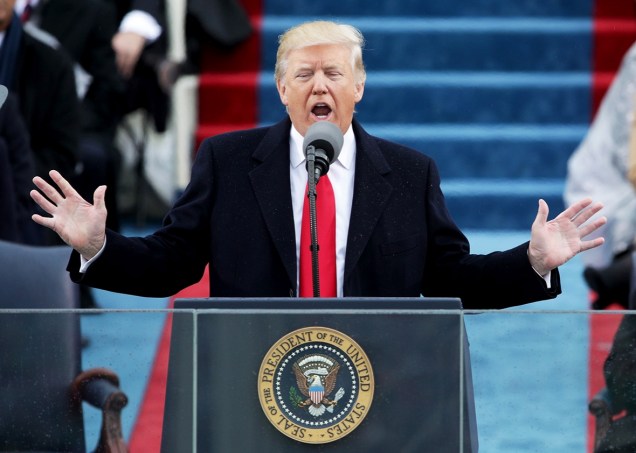
Donald Trump - American Carnage - first inaugural address

Abandon all hope?

Rudyard Kipling once wrote:

“If you can bear to hear the truth you’ve spoken
Twisted by knaves to make a trap for fools
Or watch the things you gave your life to, broken
And stoop and build ’em up with worn out tools…”

Well, I can’t quite say that I have given my life to the causes for which this blog stands – particularly as I only started blogging after the 2010 general election, and my views on some issues have matured and evolved over that time – but I have been doing this for over five years now, sometimes publishing multiple times a day, and I think that I hold my own when it comes to putting my time, money and effort into being an engaged citizen.

And so I think I certainly know what Kipling was driving at when he alluded to the disappointment of seeing a long-cherished and hard-sought goal turn to dust in one’s hand the moment it is finally reached. That feeling pervades politics right now, at least for pro-Brexit, pro-nation state conservatarians such as myself.

2016-2017 has been a period of one step forward, two steps back in many regards. The British people voted for Brexit and freedom from that decaying, antidemocratic political conglomerate known as the European Union, but they did so on the back of a tawdry and deceitful campaign led by proud ignoramuses who wore their lack of a Brexit plan as a badge of honour – and now the hubris of the Westminster Brexit aristocracy threatens to ruin the entire endeavour.

Meanwhile, the Coke Zero Conservative Party managed by a whisper to keep Jeremy Corbyn’s marauding socialists out of office, but only at the expense of turning themselves into a limp, centre-left version of the Labour Party themselves. And now conservatives face the dual indignities of being accused of being heartless haters of the poor and persecutors of the weak despite having ceded most of the intellectual arguments to the Left, and being completely unable to move the needle of British politics in a remotely satisfactorily right-wing direction.

If I’m going to be accused of callously taking a jackhammer to the welfare state I at least want to see a little bit of rubble as my reward. But there is no rubble, only the stench of craven capitulation to the leftist forces of perpetual dependency.

And things are little better across the Atlantic. Whatever pleasure one may have otherwise taken from the humbling of Hillary Clinton in her second presidential campaign – and there were many reasons to want to see a borderline corrupt establishment candidate in hoc to global elites punished at the ballot box – any such joy quickly turned to ashes when faced with the alternative of President Donald J. Trump, who vastly matches and exceeds Clinton’s flaws in every conceivable way.

The real tragedy of the Trump presidency – at least in my view, as I previously discussed on this blog – is that even those few policies and initiatives of the Trump administration which are positive and laudable are actively being rendered toxic and untenable by their association with a man so patently unfit to serve in the highest civilian office.

As with Brexit and the limping British conservative government, I fear that the Trump presidency will shift the Overton window of American politics further and further to the Left the longer it persists – either because Trump himself embraces many protectionist and left-wing ideas, because the Republican Party’s brand is being tarnished through their utter inability to transition from a party of strident protest to a party of responsible government, or because the American Left has been driven to such blind, seething fury at Trump’s personal flaws that any daft socialist or redistributive policy starts to seem appealing to people simply because it is a rebuke to the president.

Almost across the board, applying the normal metrics, this should be a time for celebration. But instead, each victory appears increasingly Pyrrhic. To defend Brexit now is to open oneself to ceaseless mockery and hatred by a cast of bien-pensant know-nothings who think that taking their opinions from the Guardian website makes them high-information voters when in fact they are some of the very, very lowest in the land.

And now even those of us who had nothing to do with the major Brexit campaigns – the increasingly ridiculous Leave.EU or the establishment Vote Leave – are accused of unleashing a tide of hatred and xenophobia, and of “dividing the country”. Of course, our accusers didn’t mind when the country was equally divided prior to the referendum, because the people who disagreed with them were not given a proper voice in power. Only when the machinery of state finally swung into action on behalf of the majority did these pant-wetting histrionics about “divisiveness” begin.

And that is to say nothing of the fact that our political class are mismanaging Brexit to such a jaw-droppingly colossal extent that many Remainers are effectively being proved correct, a fact which they do not hesitate to crow about on television, in the newspapers and in social media. Of course, this is why Brexit needed to happen in the first place – our ability to self-govern has atrophied over decades of relentless integration with a remote and unaccountable supranational government in Brussels.

Bringing power back closer to the people and undoing 40 years of political integration was always going to be an Hurculean, traumatic process (not a singular event), but even if the most dire Brexit predictions come true it is surely better to go through the painful correction rather than simply throw our hands up in the air, admit that we are not able to govern ourselves adequately as a people, and submit permanently to remote technocracy.

But it is increasingly clear that the promise of Brexit will not be realised, at least not by the current crop of politicians, or realistically within at least a couple of decades. Brexit was always going to be a process, not an event. And Brexit itself was never the thing that would deliver the beneficial payload in terms of bringing power and accountability closer to the British people. Brexit merely makes these things remotely possible, by extricating us from treaties and frameworks which give us no opt-out or right of reservation if a particular policy, regulation or initiative is against our national interest.

But our political class are so superficial and intellectually uncurious, and the quality of our political discourse so weak, that this richer conversation has played out only on the independent blogosphere, while prestige news outlets, journalists and politicians present Brexit as a zero-sum game in which – depending on their perspective – either buccaneering Britain defeats the evil continentals, or the Virtuous Europeans give us the “punishment beating” we were so richly warned about during the referendum.

Perhaps we should have seen it coming. Effectively overruling the establishment’s carefully laid out plan for our lives was always going to generate a huge backlash, from powerful and well-connected people with the ability to make traditional grassroots anti-establishment backlashes look like a cake sale at the Women’s Institute. Perhaps we forgot this fact because we Brexiteers and defenders of nation state democracy were so used to being part of a backlash ourselves – the backlash against the establishment – that we didn’t give enough credence to the fact that globalists, disinterested “citizens of the world” and other assorted types are equally as invested in their worldview as we are in ours, and in a far stronger position to defend it from attack.

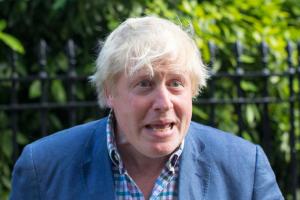
And now that they have experienced repudiation at the ballot box, the establishment’s ability to turn howls of outrage into a full-on filibuster of democratically-made decisions is stronger than many of us planned for. We have Nigel Farage, Boris Johnson and the like jabbering away like idiots, totally unmoored from reality, tarnishing the dream of Brexit with every garbled statement. Meanwhile, they – the pro-EU establishment – still control the bulk of the machinery of state, dominate Parliament, the worlds of art, science and commerce. And they would rather see Britain fail so that they can scream an hysterical “I told you so!” at the 52% than muck in and help to amplify the voices of sane Brexiteers (they happy few) who understand what they are talking about.

Neither is the concept of the nation state faring much better in America, where Donald Trump’s presidency has caused American leftists to increasingly embrace a position in which no illegal immigrant should face deportation, or even the slightest hindrance as they attempt to subvert the law and settle in the United States without permission. Never mind that a nation which cannot control its own borders can hardly still count itself a nation – to even question the idea of mass amnesty, sanctuary cities and a fully open door is to be racist towards “undocumented” people, for whom our hearts should brim over with sympathy, while hardening against America’s native-born huddled masses.

But to support the nation state, or its greatest expression through Western Civilization, is becoming increasingly gauche and passe for many in the political elite. Donald Trump recently visited Warsaw and made what was actually a rather decent speech (obviously not of his own creation) about defending Western values from military, terrorism and cultural threats. But of course Donald Trump was the worst possible person to make such a speech, and so now even more hearts will be turned against the idea of taking pride in liberal Western values. The president of the United States actively sets back the causes which he (or the people in his administration who pull the strings) seek to promote, purely by virtue of his ignorance and inestimably deficient personality.

One Australian news anchor put it rather well, remarking that “there’s a tendency among some hopeful souls to confuse the speeches written for Trump with the thoughts of the man himself”. A dangerous tendency indeed. Even when Trump says something broadly positive – such as about supporting the nation state and defending Western values – one cannot rejoice, first because the man who delivers the words renders them toxic and consequently less likely to happen, but also because there will likely be no attempted follow-through anyway. These are just words put into his mouth by a speechwriter or an administration ideologue like Steve Bannon.

The Trump-Bannon or Trump-Miller partnerships are not remotely like that between John F. Kennedy and his brilliant speechwriter Ted Sorensen, where the wise counsellor Sorensen merely refined JFK’s own fairly sophisticated thoughts and words. No, the incumbent of the Oval Office is a shallow, egotistical and unlettered man who just wants to be seen to be winning, and who can be manipulated into doing pretty much anything so long as it makes for a good TV visual.

That’s why one can’t even rejoice when Trump says something vaguely encouraging in a speech – because at the best of times, Trump is effectively little more than a sock puppet for the cleverer, more manipulative people jostling for influence within his administration.

The future of conservatism also presently hangs in the balance, on both sides of the Atlantic. In America, the Republican Party – having sold their soul to Donald Trump – seems determined to prove that they cannot be trusted as a responsible party of government. If you want angry tri-cornered hatted protests about freedom and liberty, the GOP is probably still just about the party for you. But if you expect mature governance and the diligent application of conservative policies in government then look elsewhere.

Eight years of whining about the evils of ObamaCare and the Republicans have no realistic plan for repeal. All of their proposals get dreadful scores from the Congressional Budget Office because they are forecasted to simultaneously throw people back onto the uninsured scrapheap while simultaneously costing more money. “Repeal and replace” is rapidly becoming the Republican Party’s version of Vote Leave’s “£350 million for the NHS” pledge. And if the GOP cannot deliver some kind of conservative reform that meaningfully benefits people’s lives by the time of the 2018 midterms, they will be punished far worse than Theresa May’s limp Tories.

Speaking of which, British conservatism is in complete and utter crisis. As I have extensively written on this blog over several years now, failing to robustly defend small-government conservative values comes with a price attached. And now we know what that price is – Jeremy Corbyn on the verge of entering 10 Downing Street as prime minister, all because Theresa May’s cowardly and incompetent election campaign failed to make a bold and compelling case for conservative solutions.

But truthfully this is not all Theresa May’s fault. The rot goes deep, even back beyond the Cameron and Osborne years. If you do not defend conservative principles as an inherently good thing rather than a necessary virtue, eventually you will lose. And for years now the British public has been fed a poisonous diet of the idea that the only “good” conservatism is that sop to the Left known as “compassionate conservatism”, while any attempt to preach the virtues of self-reliance, individualism and civil society over the state is seen as somehow evil.

Then look at the remorseless advances made by the Cult of Social Justice and Identity Politics, who have broken free from the university campus and started to inflict their dogmatic regressive illiberalism across whole swathes of society. At one point I attempted to document daily occurrences of overreach and infringement on civil liberties by the social justice brigade – my “Tales from the Safe Space” series – but by about the sixtieth entry it started getting a little bit repetitive basically issuing the same dire warning week after week.

If the warning was heard, it certainly has not been heeded. Political leaders, corporations, media outlets, journalists, commentators and virtue-signalling private citizens have all been falling over themselves to jump on the social justice bandwagon.

Even once-venerable institutions like America’s Southern Poverty Law Centre would rather spend their time hounding brave reformist Muslims and ex-Muslims who speak out against extremism, accusing people like Maajid Nawaz and Ayaan Hirsi Ali of being Islamophobic extremists themselves, than stick to their core mission of shining a spotlight on genuine racism and discrimination, particularly in the Islamic world. The ACLU has additionally given itself over completely to punishing anybody who doesn’t buy into radical new gender theory, while the UK’s Liberty organisation has long favoured leftist agitation over the single-minded defence of true civil liberties.

In short, there is little to celebrate and even less to give cause for hope. Having snatched power, those few forces which could have potentially been an agent for change have instead been stymied by their own incompetence, while the forces of the globalist Left fortify themselves in temporary opposition.

I wish it were otherwise, but at present I do not see how. Compare these two extracts from the Obama second inaugural speech in 2013 and Trump’s first (and hopefully last) inaugural in 2017. First the Obama:

This generation of Americans has been tested by crises that steeled our resolve and proved our resilience. A decade of war is now ending. (Applause.) An economic recovery has begun. (Applause.) America’s possibilities are limitless, for we possess all the qualities that this world without boundaries demands: youth and drive; diversity and openness; an endless capacity for risk and a gift for reinvention. My fellow Americans, we are made for this moment, and we will seize it — so long as we seize it together. (Applause.)

For we, the people, understand that our country cannot succeed when a shrinking few do very well and a growing many barely make it. (Applause.) We believe that America’s prosperity must rest upon the broad shoulders of a rising middle class. We know that America thrives when every person can find independence and pride in their work; when the wages of honest labor liberate families from the brink of hardship. We are true to our creed when a little girl born into the bleakest poverty knows that she has the same chance to succeed as anybody else, because she is an American; she is free, and she is equal, not just in the eyes of God but also in our own. (Applause.)

We understand that outworn programs are inadequate to the needs of our time. So we must harness new ideas and technology to remake our government, revamp our tax code, reform our schools, and empower our citizens with the skills they need to work harder, learn more, reach higher. But while the means will change, our purpose endures: a nation that rewards the effort and determination of every single American. That is what this moment requires. That is what will give real meaning to our creed.

And then the Trump:

The forgotten men and women of our country will be forgotten no longer.

Everyone is listening to you now.

You came by the tens of millions to become part of a historic movement the likes of which the world has never seen before.

At the center of this movement is a crucial conviction: that a nation exists to serve its citizens.

Americans want great schools for their children, safe neighborhoods for their families, and good jobs for themselves.

These are the just and reasonable demands of a righteous public.

But for too many of our citizens, a different reality exists: Mothers and children trapped in poverty in our inner cities; rusted-out factories scattered like tombstones across the landscape of our nation; an education system, flush with cash, but which leaves our young and beautiful students deprived of knowledge; and the crime and gangs and drugs that have stolen too many lives and robbed our country of so much unrealized potential.

This American carnage stops right here and stops right now.

The two speeches are truly not that different, in basic message if not in style. Or at least, the difference lies in what is not said rather than in what is said.

Both make the same essential (and valid) point – that there is an “American Carnage” or Western Carnage in progress. But while former President Obama did little to arrest this trend and is now happy to go off yachting with Tom Hanks and Bruce Springsteen in his retirement, current President Trump would rather rage against his critics at 5AM on Twitter than do anything about it.

And waiting eagerly in the wings, like hungry jackals, are the same cast of incompetent, self-serving clowns who gave us Donald Trump and Theresa May in the first place.

For conservatives and supporters of the nation state as the greatest bulwark against threats to our liberty, optimism is vanishingly hard to find in politics right now. And there it is.


Apologies for the recent lack of blogging, due to health issues. Hopefully normal service will commence soon.
 

Boris Johnson - Brexit - conservatism

Support Semi-Partisan Politics with a one-time or recurring donation:

Agree with this article? Violently disagree? Scroll down to leave a comment.

Follow Semi-Partisan Politics on TwitterFacebook and Medium.

Are We Finally Witnessing The End Of Bland, Centrist Politics?

Jeremy Corbyn - Glastonbury crowds

Donald Trump, Jeremy Corbyn, Brexit… People want meaning in their lives and a purpose in their politics that dry, centrist managerialism cannot hope to provide

This, by Ted Yarbrough, is very perceptive:

Man does not live by bread alone. Though a religious statement by Jesus from the Gospel of Matthew I think that statement has never been more true- especially seen in geopolitics.

We humans have never been materially wealthier.  Yes, some people still live in abject poverty and many people don’t like that others have more money than them, but by historical standards we should be thanking our lucky stars each day for our blessings. We live longer than ever before and can communicate with people throughout the world at an instant. Yet, as especially seen in politics, many people are angry. Populists are rising on both right and left. Those in positions of power ie “establishment” people in the media, government etc are extremely perplexed. How could, for example, the people not want to send that nasty man Trump a message with some bright young man who checks all the boxes like Jon Ossoff? [referring to the Democrats’ failed attempt to take Georgia’s sixth congressional district in the recent special election]

I think the people shocked by the return of ideology miss one big point about humans. We are not animals, we don’t just like to be fed and wag our tail. We believe in justice, we dream dreams, we are not content because, yes often we are spoiled, but we want to believe in something. We want to be something bigger than ourselves- it’s why humans suffer enormously to go to Mt. Everest and the south pole and the moon- we want to do things because they are great. It is why people are constantly searching for the meaning of life and worshipping God (or gods). We want to change the world because we recognize the imperfections in it. We will not be content.

In politics, that means people are growing sick of “centrists” ie technocrats who don’t inspire the people but expect to govern because they are supposedly the best qualified for the job. Centrists are shocked to see the rise of nationalists and free-marketers and socialists and Islamists, but really they shouldn’t be. Those ideologies offer people something to believe in, a better world to dream of and fight for, rather than a shallow world of pop music, materials possessions and politics made occasionally spicy with some virtue signalling identity politics thrown in. People now, like our ancestors of old, want to battle over ideas. To work towards finding truth.

This blog has been screaming for years now that centrist politics is leading us nowhere good, entrenching privileges for those set up to gain from the current system while doing nothing to help those – particularly those at the sharp end of globalisation – who do not benefit from the post-patriotic, post nation state world that the elites are building without meaningful democratic consent.

But even I did not predict the degree to which the establishment’s insistence on clinging on to their bland, centrist model of governance would lead to disruptions to the political order on the level of Donald Trump, Brexit or Jeremy Corbyn’s takeover of the Labour Party (and nearly the country).

Some of these disruptions are welcome – Brexit is a great achievement, even if many of the benefits end up being lost through abysmal execution by the political class, while Jeremy Corbyn’s Jeckyll and Hyde leadership of the Labour Party reminds us both how ideology can reinvigorate a political movement but also just how far the party has drifted from the interests of working people. And others of these disruptions – cough, Donald Trump – are unwelcome and have almost zero upside.

But more such populist disruptions are almost inevitable until the political class realises that people want more from their politics than a ruling class of bland, superficial technocrats who promise nothing more than the smooth administration of the status quo. Jeremy Corbyn, for all of his faults, at least promises a radical reordering of society – one made all the more appealing by the fact that the Conservatives long ago ceased to make a bold, unapologetic case for free markets, individual freedom and a less suffocating state.

Nearly two years ago, this blog asked where is the Conservative Party’s own Jeremy Corbyn? Where is the small-C conservative version of the politician who dares to proclaim an unrepentantly neo-Thatcherite worldview, instead of pretending (a la Cameron, Osborne, Hammond and May) that “austerity” and fiscal restraint are a sad necessity brought about by recession rather than an innately good thing in and of themselves?

Theresa May led the Conservative Party to near-defeat in the general election this month because she never even attempted to take on Jeremy Corbyn in the battle of ideologies. And while conservatives were never likely to walk away with the lion’s share of the youth vote, shamefully allowing Jeremy Corbyn to be the only one to present the emerging generation of new voters with anything like a positive inspirational message made damn certain that the majority of them voted Labour.

Yarbrough’s conclusion is stark:

With that being said, if the centrist parties do not start treating people as humans who dream dreams, and offer a compelling hope for people, the people of the world will continue to be more polarized and radicalized. And if there is no hope more and more false prophets will emerge to fill the vacuum.

One of my favourite television shows is the twelve-part HBO series “From The Earth To The Moon”, executive produced by Tom Hanks, recounting the complete history of NASA’s Apollo Program which culminated in six manned missions to the surface of the moon. I like it because it represents, to me, a time when humanity stood for more than “reducing inequality”, deifying public services and promising to make the trains run on time. A time when our desire for achievement, like our plans for human spaceflight, aspired to something more than low-earth orbit.

The theme music at the start of each episode begins with JFK’s speech at Rice University in which Kennedy says “We choose to go to the moon in this decade and do the other things, not because they are easy, but because they are hard, because that goal will serve to organize and measure the best of our energies and skills, because that challenge is one that we are willing to accept, one we are unwilling to postpone, and one which we intend to win.”

Of course the 1960s and 70s were tumultuous decades with many of their own very real challenges – the very real threat posed by Soviet Communism, for one, and the ongoing struggle for civil rights. But how much worse would this era have been if there were no unifying objectives around which people could come together?

In our increasingly secular age, religion is no longer a unifying force within nations. Art stepped up briefly as a replacement, but our art and culture has become increasingly debased too. And so people, being spiritual beings, increasingly vest their faith in their political worldview, which has had two principle effects – toxifying our political discourse and making people more susceptible to the “false prophets” of which Yarbrough warns.

Professor David Hillel Gelernter once said in an interview:

The readiest replacement nowadays for lost traditional religion is political ideology. But a citizen with faith in a political position, instead of rational belief, is a potential disaster for democracy. A religious believer can rarely be argued out of his faith in any ordinary conversational give-and-take. His personality is more likely to be wrapped up with his religion than with any mere political program. When a person’s religion is attacked, he’s more likely to take it personally and dislike (or even hate) the attacker than he is in the case of mere political attacks or arguments. Thus, the collapse of traditional religion within important parts of the population is one cause of our increasingly poisoned politics.

We see this all the time in our political discourse. This is the Cult of Social Justice and Identity Politics writ large. This is the result of our ridiculous, overwrought obsession with inequality, even as living standards for nearly everybody continue to improve and we all benefit from technologies and inventions which were unthinkable half a century ago.

And if failed centrism really is leading to “radicalisation” by unscrupulous false prophets (and I don’t much like the use of that word outside of its applicability to terrorism, particularly because the Left is now eagerly using it to smear conservatives on any pretext, suggesting that newspapers like the Sun and Daily Mail are somehow “radicalising” the ignorant white working classes) then it becomes all the more important for our main political parties offer visions of their own which amount to more than technocracy and navel-gazing obsession with public services.

For a long time I thought that people actually liked the politics of Me Me Me, and that our craven politicians were simply responding to public demand with their endless manifesto bribes. But perhaps I was wrong. Though Jeremy Corbyn certainly offered a record-breaking basket of electoral bribes in the Labour Party manifesto, people also seem to have responded to him because of what he represents. In other words, Corbyn’s increasing viability amounts to more than the sum of the various bribes in the 2017 manifesto, even the student loans pledge.

The Conservatives, therefore, cannot afford to leave the ideological field open for Jeremy Corbyn to occupy on his own. The Tories need to do much better than mount their usual snivelling defence of fiscal restraint, couched in the craven acceptance of leftist frames of reference, and actually come up with an alternative vision of Britain worth voting for.

Theresa May isn’t going to do that, and neither are any of the dismal individuals tipped by the Westminster media as being most likely to replace her. So, who will come and save the Conservative Party from themselves, and save the country from Corbynism in the process?


Jeremy Corbyn - Glastonbury stage

Support Semi-Partisan Politics with a one-time or recurring donation:

Agree with this article? Violently disagree? Scroll down to leave a comment.

Follow Semi-Partisan Politics on TwitterFacebook and Medium.

Donald Trump’s Radioactive Presidency Kills Reputations And Good Ideas

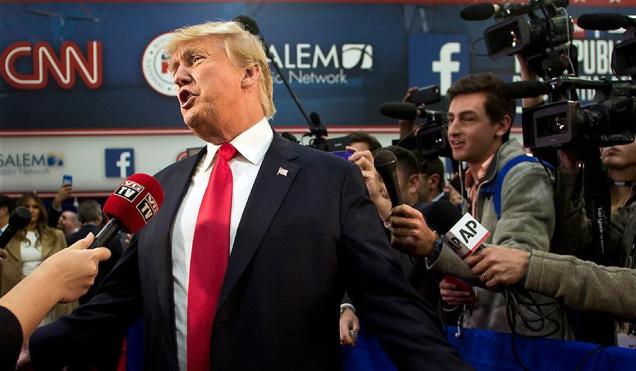
Donald Trump media

The dysfunctional Trump administration can make even good ideas politically toxic, and there is nobody to blame but the president himself

The problem with Donald Trump was never that he is an evil racist bogeyman who is going to whip up the American people into a frenzy of violence targeted at women, gay and trans people or ethnic minorities. This much was always hysterical leftist nonsense.

No, the problem with Donald Trump – as has become increasingly clear with every new day of his administration – is not that he is some kind of evil mastermind but rather that he is a small and superficial man, totally unfit to hold the highest political office in America; an impulsive man-child who is incapable of moderating his behaviour or restraining himself from acting on his first, worst instincts.

Worse still, Trump manages to diminish the stature of everybody close to him. While few people who joined the Trump administration at the beginning can be described as world-class minds, the likes of chief of staff Reince Priebus or press secretary Sean Spicer were once perfectly respectable party functionaries. Now they have made themselves a laughing stock through their contortions, evasions and the feuds they get themselves into while trying to advance Trump’s agenda and defend the garbage that comes out of his mouth.

But the real tragedy is that Donald Trump’s failure will take down a few genuinely good ideas associated with the administration, while through his own ineptitude, the president is succeeding in making some very nasty people in American politics – people whose reputations should rightly be in the gutter – start to look good through their opposition to him.

Take a look at the mainstream media, specifically the Washington DC political media class. These people were rightly distrusted even more than politicians by the public, fuelled in part by their slavish deference to the George W. Bush administration over Iraq and then their fawning, sycophantic coverage of President Barack Obama. These are the people who report and comment on the news with a thin patina of objectivity, but whose intermarriage, socialisation and business relationships with the political class make bias and groupthink all but inevitable.

When President Trump boycotted this year’s White House Correspondents’ Association dinner he made a smart move by eschewing a black tie event with celebrities and DC power players to hold one of his trademark rallies in Pennsylvania. The WHCA responded by transforming the dinner into a gaudy, sanctimonious and cynical celebration of the First Amendment, portraying the establishment journalists assembled as fearless seekers after truth. This might have looked ridiculously self-regarding had Reince Priebus not doubled down on Trump’s idiotic, throwaway pledge to amend the First Amendment to make it easier to sue newspapers for libel – on the very same day.

Nobody seriously believes that the Trump administration will try to alter the First Amendment, or that such a move would be successful even if he did try. Nobody even really believes that such a discussion took place in the White House. But by even raising the subject and having his lackeys back him, Trump has positioned himself as directly antagonistic towards the media. And while this may play well with the base, it makes it almost impossible for principled conservatives to support him.

The same goes with Sean Spicer’s ongoing war with the occupants of the White House press briefing room, which has now escalated to the point where briefings are increasingly being given off camera, in smaller more restricted gaggles or without so much as audio recordings being permitted.

From Politico:

White House Correspondents’ Association President Jeff Mason said they are “not satisfied” with the White House putting a halt on their daily, on-camera briefings.

In an email to members of the association, Mason said he met with White House Press Secretary Sean Spicer and Deputy Press Secretary Sarah Huckabee Sanders to discuss the issues of the briefings. The White House has increasingly changed the daily briefings, either not having them on certain days, making them increasingly short, or hosting off-camera briefings, sometimes even not allowing the use of audio from the briefings.

“The WHCA’s position on this issue is clear: we believe strongly that Americans should be able to watch and listen to senior government officials face questions from an independent news media, in keeping with the principles of the First Amendment and the need for transparency at the highest levels of government,” Mason wrote.

Again, this is needlessly antagonistic, and a direct result of the fact that the president is an impulsive man-child who obsessively watches the daily press briefing and gets angry when his aides fail to deliver as forceful a defence of the presidential exploits than Trump would like.

The consequence is that the White House now has a nervous communications team which is reactive rather than proactive, which cannot rely on their boss not to torpedo his own administration’s efforts with a careless tweet and which is struggling to find a replacement for Sean Spicer, who is apparently being “promoted” out of the press secretary role. But more importantly, the consequence for the country is both the perception and sometimes the reality that the White House is trying to hide something, that they are unwilling to defend their policies in public because they are indefensible.

Even the good measures taken by the White House are executed poorly, in such a way as to discredit once-worthy ideas. The decision to open up White House press briefings to a number of “Skype Seats”, so that regional reporters and bloggers without the backing of large east coast media organisations are able to ask questions on behalf of their readerships, was an excellent idea. It was more than a nod to the Trump base (who tend to despise and distrust mainstream outlets like CNN or the New York Times). It was also a fair and accurate acknowledgement that news from the White House should not be filtered exclusively through the Washington DC-based political media class.

But as with so many other things in the Trump administration, a potentially worthy idea was ruined in the execution. Rather than using the Skype Seats to promote small regional news outlets or promising bloggers of varying political stripes, the White House issued press credentials to InfoWars, the conspiracy-minded site created by Alex Jones.

That’s not to say that absolutely everything emanating from Infowars is “fake news” – and a valid case for giving the organisation press credentials can be made. But having the likes of InfoWars as the de facto poster child for opening up White House press briefings to a wider pool only gives the establishment media every excuse they need to reassert their exclusive closed shop once the Trump administration is gone.

Pointing out the hypocrisy and decadence of the supposedly objective mainstream media, modernising the way that the White House briefs reporters and opening up the White House to smaller and regional news organisations. These are all potentially good actions and ideas, but all of which have been tarnished through their association with the Trump administration. The same goes for real-world policy in a whole host of areas, from immigration reform and border security to mitigating the negative effects of globalisation on workers – all problems which were ignored and festered under previous administrations, but where Trump is often doing more harm than good.

When Donald Trump’s administration reaches its merciful end – barring some kind of foreign policy calamity or self-inflicted political self destruction – we may end up most regretting not those few things which the president actually manages to get done, but the handful of once-promising ideas which fell by the wayside because the administration either couldn’t do them or implemented them in an incompetent way. We will mourn those initiatives which could have benefited the country and won popular support if only their association with Donald Trump had not rendered them toxic.

And conservatives especially will mourn the fact that through his incompetence, Donald Trump has managed to make so many bad people – from unrepentant open borders activists to the mainstream media – look good, and seize the moral high ground.

Even if you agree with Donald Trump on 100% of the issues, one surely now has to admit that the president is his own worst enemy when it comes to implementing his own policies.

And for those of us who oppose Trump, any relief at the fact that his presidency and its worst potential excesses are stuck in the quicksand is tempered by the fact that as a result, America is drifting without proper leadership while the few sensible measures advanced by the Trump administration are now so radioactive that they may never again see the light of day.


Sean Spicer - White House Press Secretary - Donald Trump

Support Semi-Partisan Politics with a one-time or recurring donation:

Agree with this article? Violently disagree? Scroll down to leave a comment.

Follow Semi-Partisan Politics on TwitterFacebook and Medium.

The O.J. Simpson Effect And Donald Trump’s Die-Hard Supporters

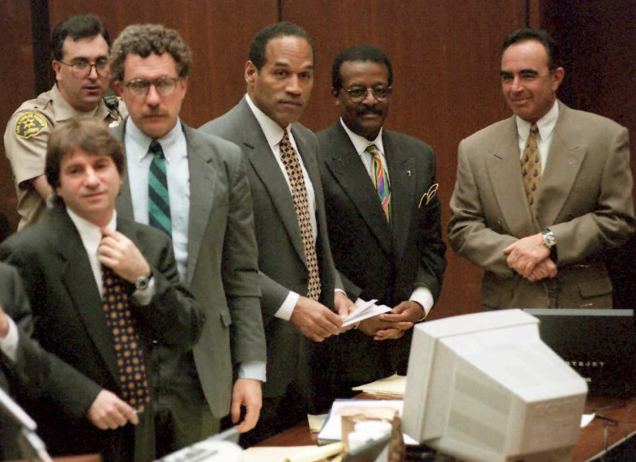
O.J. Simpson (C) and members of his defense team s

Examining the phenomenon of voters who will never reconsider their support for President Trump no matter what he does in office, Andrew Sullivan raises a valid comparison but misses the broader point

I broadly agree with Andrew Sullivan’s assessment of Donald Trump’s presidency thus far (i.e. that it has been a disaster characterised by one self-inflicted crisis after another), while Sullivan’s account of the last week also paints an accurate portrait of a man completely out of his depth:

The White House is barely functioning; legislation is completely stalled; next week’s trip abroad will have everyone watching from behind a couch; the FBI and CIA are reeling; there’s almost no one in the State Department; no presidential due diligence is applied to military actions; the president only reads memos when his name is mentioned in them; a not-too-smart and apparently mute 35-year-old son-in-law is supposed to solve every problem in the country and world; and the press secretary is hiding in the bushes. No one has any confidence that the president couldn’t throw us into a war or a constitutional crisis at a moment’s notice. Nothing this scary has happened in my lifetime.

Sullivan then goes on to ponder why it is that Trump’s devoted base shows no real sign of re-evaluating or revoking their support for the president, and comes up with an interesting analogy:

In some ways, I think the best analogy for Trump is O.J. Simpson. Even if we all know he’s guilty as sin, even if his own supporters see the flimflam behind the claptrap, even if the evidence is staring us in the face, he’ll never lose his core support. For 35 percent of the country, he’ll never be guiltier than the system he’s challenging. The best we can hope for is a Democratic House in 2018 and a grinding, grueling attempt to minimize the already enormous harm Trump has done in the meantime. We can pursue that outcome while hoping our cold civil war doesn’t get hot — because this is beginning to feel like the 1850s.

I was too young (and living in the wrong country) to really understand what was happening or the critical context during the trial of O.J. Simpson in 1995, but I have just finished re-watching the excellent FX television dramatisation “The People vs O.J. Simpson” and the longform ESPN documentary “O.J.: Made in America” – and it seems clear to me that Andrew Sullivan is missing the key lesson from the OJ trial as it pertains to public policy.

Sullivan picks up on the obvious point – that O.J. Simpson was clearly guilty, and that even many of those who proclaimed his innocence actually knew, in their heart of hearts, that the man committed the murders of Nicole Brown and Ron Goldman. So yes, if one wants to keep things superficial then we can join Sullivan in marvelling at the ability of foolish Trump supporters to similarly cast facts and reason aside, motivated by base emotion.

But the real lesson to be learned from the O.J. Simpson case is that no justice system (and by extension, no democracy) can function as it should when there is so much unresolved injustice – real or perceived – within the same system. The OJ murder case took place in the wake of the Rodney King beating and subsequent riots, which themselves took place after years of institutionalised racism within the Los Angeles Police Department. The decision to acquit O.J. Simpson was far more payback for countless previous cases of denied justice than a fair verdict based on the evidence presented at trial. Now, one can rail endlessly against the jury and their decision-making process, but it will do nothing to prevent similar unjust verdicts potentially being reached again in future.

This should be particularly worrying for all of us at the present time, with the Cult of Social Justice and Identity Politics in such ascendancy. With many on the political Left actively seeking to fracture society into competing special interest groups arranged into an intersectional hierarchy of victimhood – a phenomenon which has now escaped the university campus and is beginning to infect the corporate world and other institutions – there has perhaps never been a time when so many have had things so good yet felt so persecuted and oppressed despite their good fortune (just look at any college campus protest).

How will the justice system continue to function in the world of Social Justice, when advancing the interest of one’s own narrowly-defined identity group may increasingly trump the universal need for justice? When even science is forced to bend the knee to progressive gender theory (see Bill Nye the Science Guy’s promotion of Otherkin and forced orgies) what hope can there be for rationality in anything?

Andrew Sullivan is a conservative – or at least he still nominally “identifies” as a conservative. And one characteristic of conservatives is that we generally seek to engage with human beings and the world as they are, rather than as we would like them to be. Unlike the Utopian Left (who have repeatedly flirted with communism, furiously ignoring the fact that such a system inevitably results in tyrannical dictatorship), the Right tend to understand that government and economic policy must work with human nature, not against it. That’s why the Right embraces capitalism – because capitalism harnesses our natural desire for success and monetary reward (the profit motive), and feeds that desire into a system which – to the extent that it is allowed to do its job unimpeded – creates far more prosperity and material abundance for far more people than any other economic system known to man.

With a conservative’s acceptance of human nature, Sullivan should therefore understand that when any given group of people find themselves on the receiving end of perceived injustice for long enough, reason tends to go out the window to a certain degree and people become susceptible to more emotional rather than rational arguments. That’s largely why the O.J. Simpson jury voted to acquit, despite the overwhelming evidence indicating that he was guilty. That’s partly (but not exclusively) why African Americans vote Democrat in such overwhelming numbers, despite the fact that successive Democratic administrations and Congresses have delivered mixed results for them at best. And just to acknowledge that “my own side” are equally vulnerable to this aspect of human nature, it is also partly why a majority of Britons – those with less formal education and those lacking the skills required to prosper in today’s globalised economy – voted against the political elite in favour of Brexit.

You can rail against this human nature all you want – and Andrew Sullivan, having identified that the “O.J. Simpson Factor” is in play appears willing simply to do that – but if you actually want to achieve a different outcome then it is necessary to acknowledge this aspect of human nature and work with it, rather than against it. And in the case of Donald Trump, this will necessarily involve America’s elites actually having to to atone for their manifold failures, which are responsible for giving us President Trump in the first place.

Editor of The American Conservative, Robert Merry, sums it up perfectly:

When a man as uncouth and reckless as Trump becomes president by running against the nation’s elites, it’s a strong signal that the elites are the problem. We’re talking here about the elites of both parties. Think of those who gave the country Hillary Clinton as the Democratic presidential nominee—a woman who sought to avoid accountability as secretary of state by employing a private email server, contrary to propriety and good sense; who attached herself to a vast nonprofit “good works” institution that actually was a corrupt political machine designed to get the Clintons back into the White House while making them rich; who ran for president, and almost won, without addressing the fundamental problems of the nation and while denigrating large numbers of frustrated and beleaguered Americans as “deplorables.” The unseemliness in all this was out in plain sight for everyone to see, and yet Democratic elites blithely went about the task of awarding her the nomination, even to the point of employing underhanded techniques to thwart an upstart challenger who was connecting more effectively with Democratic voters.

At least Republican elites resisted the emergence of Trump for as long as they could. Some even attacked him vociferously. But, unlike in the Democratic Party, the Republican candidate who most effectively captured the underlying sentiment of GOP voters ended up with the nomination. The Republican elites had to give way. Why? Because Republican voters fundamentally favor vulgar, ill-mannered, tawdry politicians? No, because the elite-generated society of America had become so bad in their view that they turned to the man who most clamorously rebelled against it.

These two paragraphs alone do not really do Merry’s piece justice, and I encourage people to read the whole thing, together with Rod Dreher’s follow-up piece.

There seems to exist within the American political and media elite a belief that it will be possible to force Donald Trump from office, either through impeachment, 25th Amendment remedies or coerced resignation, and then simply resume governing in the style to which they are accustomed. This is ludicrous. Donald Trump’s supporters will not take the thwarting of their democratic choice lying down. Trump may be all but guaranteed to fail these people, even if he serves a full two terms as president, but for the Washington elite to effectively engineer a coup against Trump for mere incompetence (smoking gun evidence of direct Russian collusion is another matter, of course) would be to set the social fabric of America, already smouldering, on fire.

In order to put an end to civil unrest and prevent more miscarriages of justice like the O.J. Simpson verdict, the LAPD had to admit to some of their past failings and go through a fairly tortured process to ensure that bad practices and individuals were weeded out of the force. The Christopher Commission (formed in 1991 after the Rodney King beating, but whose effects had not fully taken hold by the time of the OJ murders) was a significant part of this process.

But right now, much of the American elite and political establishment believe that no similar process of atonement and change is necessary. They believe that because Trump is so bad, so unprecedented, that they can agitate for his removal and pick up running the country right where they left off without undergoing any kind of positive reform. And frankly, that notion is absurd.

If one wishes to ensure that the American people never again elect as president somebody with the character, temperament and personal history as Donald Trump, then one must tackle some of the root causes of Trump’s victory. And no, I don’t mean Russian hacking, though Russian influence may have played some as-yet unspecified part.

Rather, the political elite must finally show a degree of empathy for those people whose boats have been submerged rather than lifted by the rising tide of globalisation, and those who hold political, social and religious views which differ from progressive orthodoxy and suddenly find themselves ostracised and labelled “deplorable” as a result. But more than merely paying lip service to these issues, the Washington elite must devise tangible and realistic policies to help these struggling voter constituencies, and demonstrate a plausible commitment to following through with those policies. Only then – if the political elite are willing to take this harsh medicine – can some of the poison finally be drained from American politics.

But Andrew Sullivan doesn’t quite seem to have gotten to this point, still stuck in the phase of scratching his head wondering how Trump’s voter base can possibly be so stupid. This phase is unhelpful, and becomes actively damaging the longer it persists. Nobody behaves entirely rationally all the time, and the phenomenon is by no means restricted to Trump supporters – after all, there is no rationality to be found in that stubborn clique who persist in believing that Hillary Clinton was a wonderful presidential candidate, or those who feel that the European Union is an unquestionably beneficient organisation. We all have our blind spots.

But expecting the country to spurn Trump and accept a return to leadership by the same elites who have presided over such American carnage (yes) in forgotten and unloved parts of the country is to demand that those who have the least make all the accommodations and do all the sacrificing while those who tend to have more are asked to do nothing, give nothing and change nothing.

Donald Trump’s presidency is lurching toward failure, but thus far the dethroned American political elite have done nothing to rehabilitate their standing in the public’s eye; nor have most of them even acknowledged the need to do so.

OJ Simpson had a rock-solid core of support inside the jury room and outside the courtroom for a very clear, identifiable reason which had to be acknowledged and grudgingly tackled by the police and criminal justice system before the racial divide in Los Angeles could even begin to heal. The American political elite are deluding themselves if they believe that they can return to power, normality and stability without going through a similar reckoning of their own.


OJ Simpson verdict acquittal - Daily News headline

Support Semi-Partisan Politics with a one-time or recurring donation:

Agree with this article? Violently disagree? Scroll down to leave a comment.

Follow Semi-Partisan Politics on TwitterFacebook and Medium.