Sentenced To Death By Drone Strike: Justice In The War On Terror

Reyaad Khan - Ruhul Amin - Drone Strike - Syria - Britain

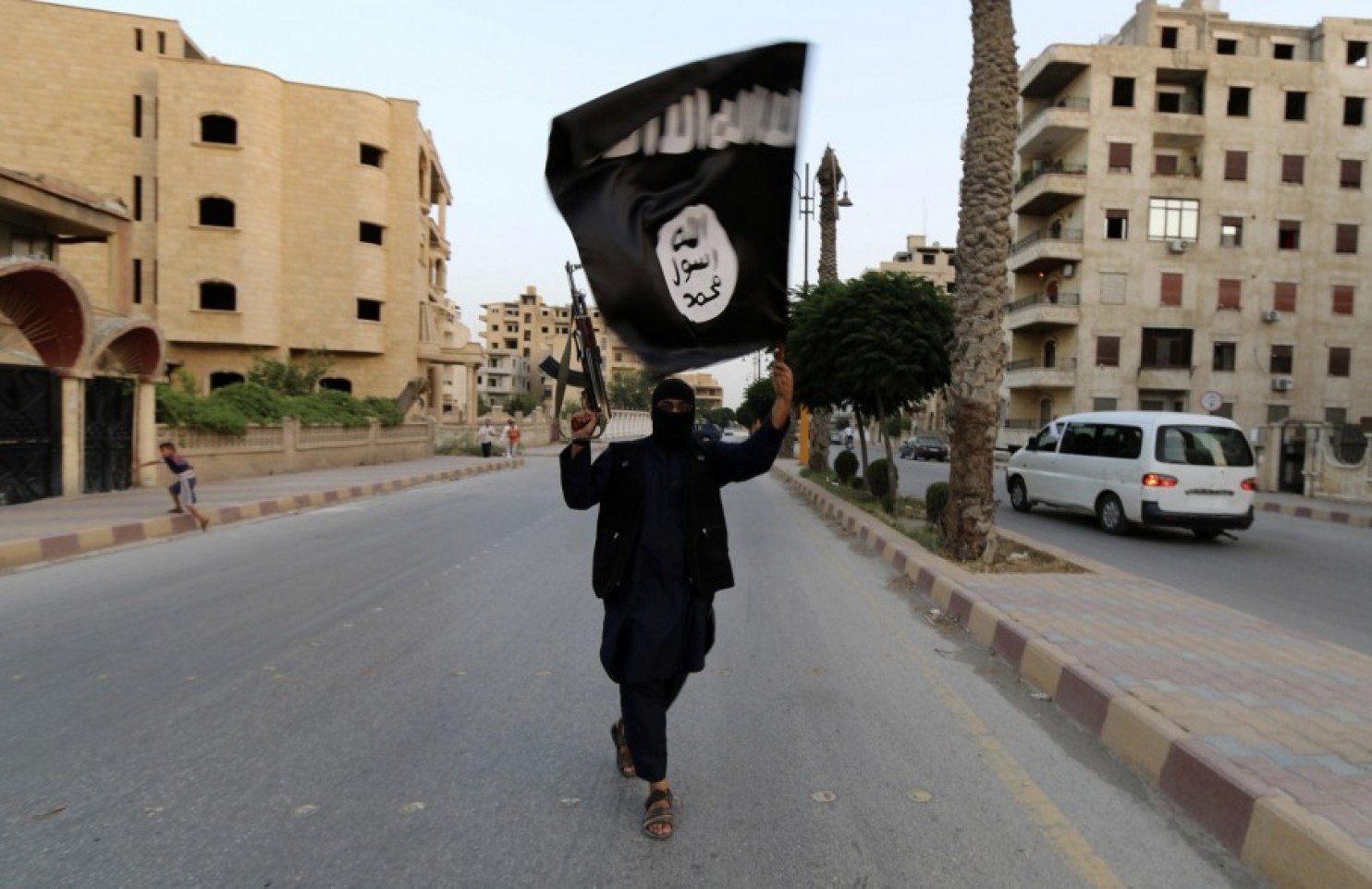
No one should mourn the deaths of two British ISIS fighters in Syria. But by using RAF drones to kill British citizens abroad, the United Kingdom has effectively re-established the death penalty for certain crimes, this time with no judicial review, no legal framework and no accountability

Did Reyaad Khan and Ruhul Amin, both British citizens, deserve to die in Syria at the hands of an RAF Reaper drone missile?

No right-thinking person is likely to be mourning their deaths, certainly. But while feeling satisfaction that two murderous traitors have been blown off the face of the earth is one thing, it is quite another to approve of the way in which these events came about. And given what we know, we should not approve.

From the Guardian:

David Cameron is facing questions over Britain’s decision to follow the US model of drone strikes after the prime minister confirmed that the government had authorised an unprecedented aerial strike in Syria that killed two Britons fighting alongside Islamic State (Isis).

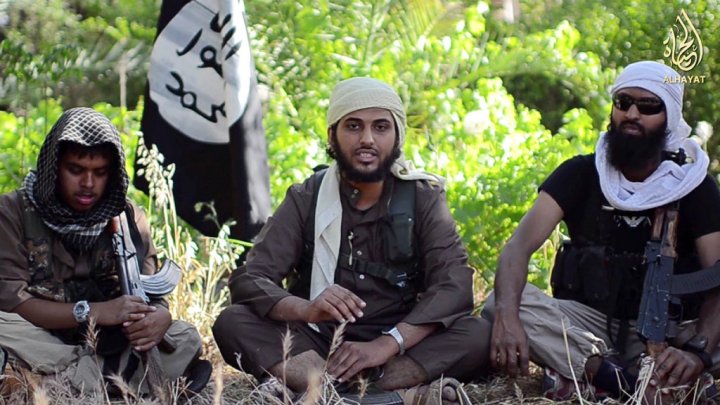
Speaking to the Commons on its first day back after the summer break, Cameron justified the strikes on the grounds that Reyaad Khan, a 21-year-old from Cardiff, who had featured in a prominent Isis recruiting video last year, represented a “clear and present danger”.

[..] The strikes were authorised by the prime minister at a meeting of senior members of the National Security Council some months ago after intelligence agencies presented evidence to ministers that Khan and Hussain were planning to attack commemorative events in the UK.

You do not have to be a quisling Islamist sympathiser or virtue-signalling civil liberties absolutist to feel uneasy about the fact that the Prime Minister can order the execution of a British citizen on foreign soil with no judicial review, let alone a formalised process approved by Parliament.

Continue reading

Ten Years Ago Today, In London

St Pauls Cathedral - London - 7 July Bombing - Memorial Service - Petals


In an age when our politics feels depressingly small and our politicians often seem ineffectual and powerless in the face of events and forces beyond their control, it seems we cannot rely on our elected leaders to grapple with the weighty issues of our time, or to present a clear vision of the country and world we should be striving to build.

This is especially so on the issue of terrorism, the threat from radical Islam and the ongoing crisis of western values. Today is not a day for politics, but this essay by Frank Furedi in Spiked magazine is essential reading in terms of outlining the extent to which we are almost wilfully focused on the wrong issues.

In this context, it is refreshing to hear words of genuine wisdom, comfort and hope, especially coming from a religious figure at a time when religion is sliding toward irrelevance for many, yet held largely responsible for the wave of terrorist mayhem sweeping the world.

The Bishop of London, Richard Chartres, excels in his role preaching sermons on important national occasions – most recently at the memorial service for Margaret Thatcher. Chartres was back in the national spotlight again today, at St. Paul’s Cathedral in London, where he preached the sermon at the memorial service to mark ten years since the July 7 bombings of 2005.

Continue reading

When Is The Islamic State Not The Islamic State?

Islamic State - ISIS - Islam - Daesh

Rather than tackle an intractable issue and mortal enemy, our superficial politicians are quibbling over the language we use in describing it

When is the Islamic State in Syria – ISIS – not the Islamic State in Syria?

Apparently the answer to this question is: since a couple of days ago, when the hive mind of lazy politician groupthink decided that we must bend and warp journalistic practice – and the English language itself – in order to make it clearer that the majority of us do not condone the activities of that brutal, backward-looking group of primitive fundamentalists.

My attention has been elsewhere lately – freshly returned from a relaxing and eventful trip to Greece but otherwise more focused on domestic than foreign affairs. So it was surprising to find my attention drawn back by the furious row between the government and the BBC over exactly how the public service broadcaster should refer to the nascent medieval kingdom seeking to establish itself in the middle east.

The Spectator is – quite rightly – having none of it:

‘Isis’ is an acronym of Islamic State in Syria. ‘Isil’ – an acronym of Islamic State in the Levant. Isil is the better translation of the group’s Arabic name al-Dawla al-Islamiya fil-Iraq wa al-Sham – where ‘Sham’ represents greater Syria or ‘the Levant’ as we would say in English.

As for ‘Daesh’, it has the small propaganda advantage of reminding Arabic speakers of Daes (‘one who crushes something underfoot’) and Dahes (‘one who sows discord’). But beyond that childish word association it is no help at all, for ‘Daesh’ is just the Arabic abbreviation of al-Dawla al-Islamiya fil-Iraq wa al-Sham – or the Islamic State in Iraq and the Levant.

All the euphemisms politicians demand we must use to avoid calling Islamic State ‘Islamic State’ therefore call Islamic State ‘Islamic State’. How can they not, for that is its name? And it is no more up to outsiders to change a group’s name than it is up to you to change the names of your acquaintances. Assuming the politicians know what they are doing, they must believe that many voters will not know what ‘Isil’ and ‘Isis’ stand for, or only Arabic speakers will understand the meaning of ‘Daesh’. In other words, they are relying on ignorance and hoping to foster ignorance too.

Never mind the obvious undesirability of government telling the state-owned broadcaster what to report and how to report it – thus proving the central argument against government ownership of the media. Of far more concern is the fact that politicians – specifically our current generation of uncharismatic, uninspiring, superficial leaders – seem to believe that expending time and energy arguing about what to call the Islamic State is more important than doing anything about ISIS in the real world.

Continue reading

Banning Hate Preachers Will Not Eradicate University Campus Extremism

Islamist Extremism University Campus Britain 1


Prohibiting extremist preachers from speaking on university campuses will not stop the radicalisation of impressionable young minds – and the ongoing coalition row between the Conservatives and Liberal Democrats shows the Tories at their authoritarian worst.

“Should these men be allowed in UK universities?” frets The Times of London, in a report which begins:

Radical and intolerant Islamist leaders preached to crowds of students at almost 200 official events in the past year, according to a study of external speakers at universities including Cambridge, Birmingham and University College London.

Segregated seating for male and female students is understood to have been implemented for at least a quarter of those public meetings held by the Islamic societies at 21 universities.

The issue of university campus extremism has been brought into sharp relief since it emerged that Mohammed Emwazi, or “Jihadi John”, may have been radicalised while studying at Westminster University in London. This revelation has led to renewed scrutiny of various Muslim student organisations, their invited speakers and their practices (such as segregated seating in some instances). And this scrutiny is often welcome.

But the government goes too far when it seeks to make universities responsible for enforcing the censorship of ideas deemed “extremist”, as the BBC reports:

Continue reading

Yes, Terrorism Is A Price Worth Paying For Liberty

Civil Liberties Government Surveillance Terrorism


When determining how society should deal with people who have committed the most heinous crimes, one does not turn to the victims or their surviving family members for advice. And if one were to be so rash as to base Britain’s penal system on the vengeful feelings of grieving parents, spouses and children, there would be gruesome public executions every day in every town up and down the length of Britain, from Land’s End to John O’Groats.

So while we may feel every sorrow in the world for those who have been the victim of dastardly terrorist attacks, why do we give such credence to terror victims when it comes to formulating our approach to national security and civil liberties? While human compassion dictates that we offer our utmost sympathy to those who have suffered, allowing ourselves to be manipulated into making sweeping and draconian decisions based on heart-wrenching personal testimony is no way to run a country – whether we are talking about the NHS or government snooping laws.

Those in the media who report on these subjects for a living should know this best of all. And yet large swathes of the British press have spent today tacitly attacking the campaigning groups who defend our civil liberties, simply because they refuse to display the grovelling, servile fearfulness that begs government to take as many of our freedoms as they want in return for the illusion of greater safety.

The Times print edition, in an article bearing the sub-headline “outcry over campaigners’ attack on state snooping”, reports:

Continue reading