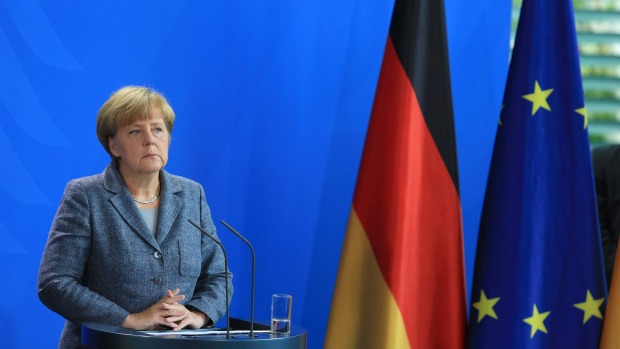
Weekly Terror Attacks Are Europe’s New Normal – For This, You Can Blame Angela Merkel And The Virtue Signallers

Angela Merkel - Migrant Crisis

Terror is the new normal, and Europe’s progressive virtue-signallers must shoulder their share of the blame

Douglas Murray has no time for a craven German government which prioritised the burnishing of its humanitarian credentials over the safety of its own citizens:

The Thursday before last it was Nice.  But already the slaughter of 84 people in France is just so, like, a fortnight ago.  Last Monday an ‘Afghan’ ‘teenager’ called Mohammed Riyad screamed ‘Allahu Akbar’ (‘Allah is greatest’) on a Bavarian train and started chopping people up with an axe.  I put ‘Afghan’ and ‘teenager’ in quotation marks because Mohammed was probably from Pakistan and is no more likely to be a ‘teenager’ than the thousands of other Peter Pans who Chancellor Merkel welcomed into her country last year.  Still, she gets to feel good about herself.  Shame the same can’t be said for the family from Hong Kong who had the misfortune to be sharing a train carriage with Frau Merkel’s latest conscience-cleaning import. Their relatives are still trying to arrange for the less badly injured family members to return home.

On Tuesday last week it was a 37-year old man called Mohamed Boufarkouch who started shouting ‘Allahu Akbar’ near Montpelier and stabbed a French woman and her three daughters (aged 8,12 and 14).  Then yesterday a ‘Syrian asylum seeker’ used a machete to kill a pregnant woman and injure two others in Reutlingen, near Stuttgart. Perhaps it was terrorism. Perhaps it was traditional domestic violence with larger weaponry than has lately been traditional in Germany.

Then yesterday evening another ‘Syrian asylum seeker’ killed himself and injured 12 others in a bomb attack in the German town of Ansbach. At the time of writing there hasn’t been an attack in France or Germany for several hours so I am sure life will be returning to normal.

This constant, low-level Age of Anxiety does indeed seem to be the new normal in Europe. And it is about time that some of the virtue-signalling, Holier And More Compassionate Than Thou brigade began taking their (overwhelmingly large) share of responsibility for facilitating the wave of violence and murder which is now befalling France, Germany and Belgium.

While quick and dirty, fast online radicalisations are becoming an increasingly common remote method for Islamists to strike in Western countries (see Orlando, where many people are furiously talking down the ideological motive even now), there is still nothing as effective as letting vast swathes of unvetted people into Europe to generate an immediate uptick in acts of violence, be it the New Year’s Eve sexual assaults (also in Germany, also denied until they could be denied no longer) or lone wolf terror attacks, or worse.

And that small percentage of refugees and migrants (for many are the latter, not the former) who do intend to do us harm have been greatly aided in their efforts by the German Chancellor and all those who stood with her, using the #RefugeesWelcome hashtag to signal their own virtue while accusing anybody who voiced the slightest reservation of harbouring selfish, xenophobic motivations.

But after what appears to be a suicide bomb attack in Ansbach, following on from a massacre by truck in Nice on Bastille Day, following on from attacks in Brussels and Paris and elsewhere, it is high time for the virtue signallers to accept some responsibility for the entirely self-inflicted lapses in national security for which they so lustily campaigned.

Of course genuine refugees should always be welcome in Europe. But those who encouraged and cheered for the open door now have more than a speck of blood on their hands, just as those who passionately inveighed against turning back migrant boats heading for Europe are somewhat responsible for the lost lives of the hundreds who have drowned in the Mediterranean Sea after being encouraged to make the treacherous crossing.

But more to blame than almost anyone else (save the despots, theocrats, thugs and murderers currently making life impossible in Syria) is Angela Merkel, and what Douglas Murray termed her “conscience-cleaning” attempt to atone for Germany’s past sins, supposedly wiping them out with one single bold statement of humanitarian generosity. For in so doing, Merkel made a decision on behalf of Germans which was not hers alone to make.

There was no way of foreseeing the present dire circumstances when Germans went to the polls at the last federal election in 2013 – transforming Germany into a haven for over a million recent arrivals was not in any party manifesto at that time. And though many Germans have shown incredible generosity of spirit in opening their homes and communities to these migrants and refugees, Merkel deserves to face a fierce political backlash for not having put such a major decision to the people before acting.

All too often, the response of our politicians (and their cheerleaders, particularly on the Left) has been to do the thing which feels good in the moment, or which addresses the immediate crisis, even if it goes on to create far greater problems further down the line. The impulse to let in all of the world’s tired, huddled masses – even those not in immediate physical danger – satisfies the urge to be seen to be doing something. But worse, it encourages a tendency in the political class to make ostentatious displays of generosity when it is largely other people writing the cheques. Angela Merkel, with her protection detail, is thankfully never going to be sexually assaulted on the streets of Cologne. Nor is a suicide bomber likely to penetrate her security bubble, or a machete-wielding attacker corner her on a train. Ordinary Germans cannot say the same.

Likewise, those who painted their child-like “refugees welcome” signs and vaunted themselves as saints on social media got to look kind and virtuous in front of their peers while often remaining insulated from the negative consequences. But those consequences are real. They are manifested in the expectation that European lives will now be lost to terrorist attacks on a weekly basis – probably not in a grandiose 9/11 style attack, but through the constant attrition of mini massacres in second-tier provincial cities.

This is now the new normal – a reality where before much longer on our present trajectory, every day will bring the anniversary of a deadly Islamist terror attack somewhere in Europe, where the news reports blend into one another and the cycle of atrocity followed by vigil followed by hashtag followed by complacency followed by atrocity becomes unremarkable.

Europe’s progressive virtue-signallers took the credit for being enlightened, wonderful humanitarians. Now let them shoulder their fair share of the blame for each life lost to the terrorism which their open door inevitably beckoned.
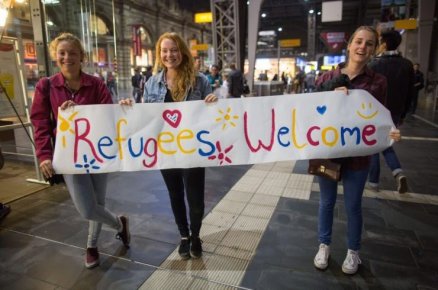
 

Refugees Welcome Banner

Greece - EU - Euro Crisis - Angela Merkel - Germany

Support Semi-Partisan Politics with a one-time or recurring donation:

Agree with this article? Violently disagree? Scroll down to leave a comment.

Follow Semi-Partisan Politics on TwitterFacebook and Medium.

Why MPs Must Vote To Renew Trident

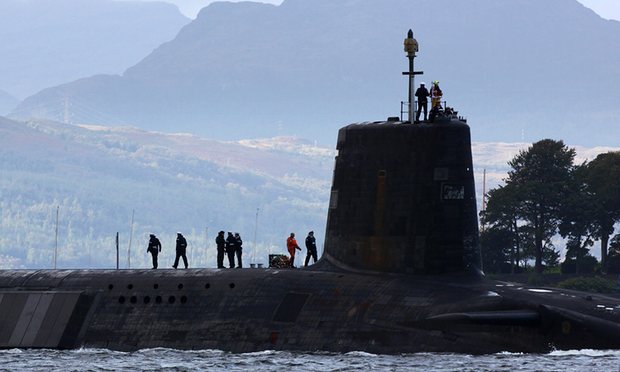
Vanguard class submarine - Royal Navy

This is no time for woolly idealism or virtue-signalling. Britain’s independent nuclear deterrent must be renewed if Britain is to maintain its status as one of the world’s pre-eminent nations

Tulip Siddiq, the MP for the London – Hampstead & Kilburn constituency and my local MP, sent an email last week encouraging appealing for her constituents to send their views on the renewal of Trident, which Parliament is debating today.

And fair credit to Tulip Siddiq for doing so, rather than simply voting based on any prior ideological views she may have held on the subject. This was the email she sent:

As you will be aware, on Monday 18th July next week MPs will be voting on the renewal of Britain’s Trident nuclear missiles system.

I am deeply disappointed that the Government has rushed through this measure without the chance for proper debate. We are set to have just a day’s debate in Parliament over a spending commitment that will cost billions of pounds throughout its lifetime, and I would have hoped for the chance for much better scrutiny. We still do not have the wording of the motion which we are expected to vote upon.

Nevertheless, I am duty-bound to vote on this issue, and in just a matter of days I will have a momentous decision to make as your local representative. As with the vote on Syria last year I am keen to hear the views of all local residents – on both sides of the debate – ahead of this important vote.

As residents who have written to me about this in the past will know, I have consistently queried the cost-effectiveness of the Government’s plans and raised testing questions with Ministers about the options for renewal.

Given the pressure on our public services and the bleak economic outlook ahead, I think it is vital that Labour redoubles its efforts to scrutinise every penny of public spending and balance our security needs with our country’s other priorities.

I think that you – local taxpayers in this constituency – are best-placed to advise me on how you feel this money should be spent. Just as I did with Syria late last year, I will take the time to look through every comment I receive on this issue ahead of the vote, and you can expect me to respond comprehensively setting out my position in due course.

And here is my response to Siddiq:

Dear Tulip,

Parliament must vote to authorise the renewal of our nuclear deterrent as a matter of the utmost importance. Contrary to the claims of those who favour unilateral disarmament that Trident is an expensive white elephant which we never use, in fact we use our nuclear deterrent every single day, at great benefit to our nation.

Trident benefits Britain in the following ways:

1. Planting the sure knowledge in the mind of rulers of hostile regimes that a nuclear or otherwise catastrophic attack on Britain will be met with a full nuclear response – a deterrent which served us through the Cold War and which nobody should vote to scrap at a time when we can barely guess what threats we will face in 5-10 years time, let alone the medium to long terms

2. Our nuclear deterrent gives Britain a seat at the geopolitical “top tables” and underpins our seat on the P5 of the UN Security Council. The priority of every government (and every MP) must surely be to ensure that Britain’s voice and influence is projected as powerfully and clearly as possible in the world. Scrapping or downgrading our nuclear deterrent would put our permanent seat on the Security Council at risk, immediately making Britain less relevant in world affairs. This will directly harm our interests because, frankly, being a consequential player in the UN helps Britain in a myriad of tangible and intangible ways touching diplomacy, trade and military alliances.

3. Unilateral disarmament by Britain will do absolutely nothing to prompt a sudden outburst of peace or a change in the attitude of Russia and China, the non-allied nuclear powers. Vladimir Putin and Xi Jinping would take unilateral disarmament by the UK, put it in the bank and give nothing in return. CND activists and Green campaigners would effectively be virtue signalling their moral purity while Britain’s security and national interest were jeopardised.

4. Britain’s insatiable public services will swallow any money diverted from Trident and then still ask for more, with little money actually reaching the front lines and no great increase in performance metrics over the long term. One could throw billions of pounds more that the NHS and other public services, and newspaper headlines will still talk about how they are perpetually “in crisis”. In fact, throwing more money at public services only serves to paper over the cracks, delaying the eventual reckoning which we need to have regarding the NHS, pensions and other services. Is it really worth killing our nuclear deterrent, deliberately maiming our stature on the world stage just to feed the public services bureaucracy with the extra 0.2% of government spending which the Trident renewal will cost over its lifetime?

I hope that you will consider these points as you consider your approaching vote, and I look forward to your response.

Interestingly, the Conservative candidate defeated by Tulip Siddiq in the 2015 general election was a wishy-washy, vague Coke Zero Conservative who disagreed with the “bedroom tax” and who wanted to scrap Britain’s nuclear deterrent altogether. Shamelessly adopting these left-wing positions did not help him much.

As a “rising star” of the Labour Party and with one eye doubtless fixed on her future political ambitions it will be interesting to see which way Siddiq decides to vote this evening.


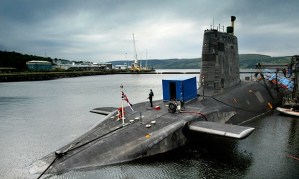
Trident Nuclear Submarine - Faslane Naval Base

Top Image: Guardian

Support Semi-Partisan Politics with a one-time or recurring donation:

Agree with this article? Violently disagree? Scroll down to leave a comment.

Follow Semi-Partisan Politics on TwitterFacebook and Medium.

A Failed Military Coup In Turkey Is The Worst Possible Outcome For Democracy

People react near a military vehicle during an attempted coup in Ankara

This failed military coup has achieved the awful outcome of allowing Turkey’s tin pot dictator in gestation, the despicable President Erdogan and his supporters, to pose as champions of the very democracy they are busy subverting

Nobody in their right mind usually yearns for a military coup – the violence, confusion, civilian casualties, suspension of justice, martial law and human rights abuses which occur in the best of times are nothing to welcome, no matter how odious the status quo.

But once it became clear that a military coup was underway in Turkey, involving at least a subset of the military, it were better for that coup to succeed with as little bloodshed as possible than to have it fail.

Why? Because if you thought President Recep Tayyip Erdoğan was bad before, just wait until paranoid, vengeful President Erdogan 2.0 is unleashed once he has finished putting down the coup and reasserting control over his divided country.

This is a vain and power-hungry little man who was at one desperate point last night reduced to addressing his nation via FaceTime, through an iPhone screen pointed at a television camera. He will not have taken kindly to this humiliation, and his vengeance will be swift and merciless.

President Erdogan was already well on the way to tin-pot dictator status, jailing critical journalists and political opponents, seizing control of independent critical newspapers and turning them into pro-government propaganda outlets, violently suppressing popular protests, subverting the constitution and building himself a palace fit for a king. All of this will now be accelerated.

As Mark Wallace rightly warns in Conservative Home:

If you thought he was a paranoid tyrant before, you ain’t seen nothing yet.  Erdogan was already throwing his weight around – jailing journalists, seizing control of critical newspapers, sending riot police in to fight protests and so on. But now he has a concrete threat which he can use to justify any and all repressive measures. The odds are that we will now see even tougher clampdowns which sadly will extend will beyond those actually responsible and likely sweep up many targets whom the government finds it convenient to be rid of.

Worse still from a secular standpoint, the military’s bluff has now been called. Turkey’s military has historically served as a firewall, a last line of defence against creeping Islamism and theocratic control. While details of this coup attempt have yet to fully emerge – it may be the case that these events were plotted only by one specific subset of the military – it now appears that the military has gambled and lost. It is hard to see them serving their pro-secular role in future, especially once Erdogan has made further personnel changes, replacing the current general staff with his stooges.

This failed coup attempt is also bad news for everyone else who relies on Turkey being a moderately stable presence in the region, and a trustworthy negotiating partner. Erdogan already had the European Union over a barrel with its pants down, extorting huge sums of money from European taxpayers in exchange for taking the smallest of actions to stem the flow of migrants and refugees entering the EU via Turkey. Expect that price to go up (while Turkey’s commitment to abiding by its agreement goes down) now that Erdogan feels the need to shore up his own position.

But the truly depressing thing about this failed military coup is the fact that it allows an utterly despicable and contemptible man and his hardcore supporters to parade around like the champions of democracy when in fact they are its sworn enemies. Erdogan himself once remarked that he views democracy as akin to getting on a bus, and that once the bus reaches its destination he will get off – in other words, he will submit himself to taking part in elections until he has built up a sufficient power base, and then kill Turkish democracy in the crib so that he can never be removed.

Already in the early hours of the morning, when it appeared that the coup attempt was failing, we saw Erdogan’s supporters wrap themselves in the flag of democracy:

Sadly, some in Britain who should know better – including the normally reliable Brendan O’Neill – joined in the same chorus:

The events cited by O’Neill – the establishment’s horror at Brexit, the Islamist terrorist slaughter of innocent people in Nice on Bastille Day and this failed coup in Turkey – are hardly comparable. While the first two do indeed represent the hatred held by some people for popular liberal democracy, President Erdogan is no great believer in liberal democracy, using it as a vehicle when it helps him but quick to suppress it when it represents a threat to his interests.

The danger is that by ennobling Erdogan’s survival by lumping it together with legitimate democratic movements (like Brexit) we help to shore up the power of somebody who is no friend of democracy, and who fully intends to snuff out democracy altogether once he has used it to drag Turkey back to some primitive, theocratic dark age.

This really is the worst of all possible outcomes. Military coups are never something to be celebrated, even when aimed at deposing someone as unpleasant as Erdogan – his defeat should come at the ballot box, not at the barrel of a tank gun. But a failed coup is doubly bad since it weakens the military, hardens Erdogan’s supporters and makes the man himself even more paranoid and authoritarian – there are already talks of Turkey reinstating the death penalty to deal with the plotters.

Whichever side had prevailed in this coup attempt, democracy would have been the nominal loser. But democracy’s defeat will be particularly bitter now that Recep Tayyip Erdoğan stands strengthened and victorious.


Postscript: The failed coup in Turkey also seems to have brought out the worst in several British politicians, notably Labour MP Chris Bryant who thought that turmoil in Turkey provided a perfect opportunity to smear Brexiteers:

In other words, Chris Bryant is literally blaming Brexit and the quest for British independence from ever-closer European political union for causing civil unrest in a country thousands of miles away.

“Sore loser” doesn’t even come close to describing this hysterical, childish behaviour from an elected Labour MP. So out of touch are Labour MPs with the mood of the country (and their own constituents – Chris Bryant’s constituency voted for Brexit, 54-46 per cent) that even now they are sulking and taking part in a tantrum, lashing out at the British people for having the temerity to ignore their doom-laden advice and drag them away from their beloved EU.

The next time you hear it said that the Corbynites are rendering the Labour Party unelectable, remember that it was the centrist Chris Bryant acting like a moronic child on social media while civilians were being killed in Turkey.


Turkish President Erdogan addresses during an attempted coup in Istanbul

Top & Bottom Image: Indian Express

Support Semi-Partisan Politics with a one-time or recurring donation:

Agree with this article? Violently disagree? Scroll down to leave a comment.

Follow Semi-Partisan Politics on TwitterFacebook and Medium.

Bastille Day Terrorist Attack In Nice – The Enemy Which We Refuse To Name Strikes Again

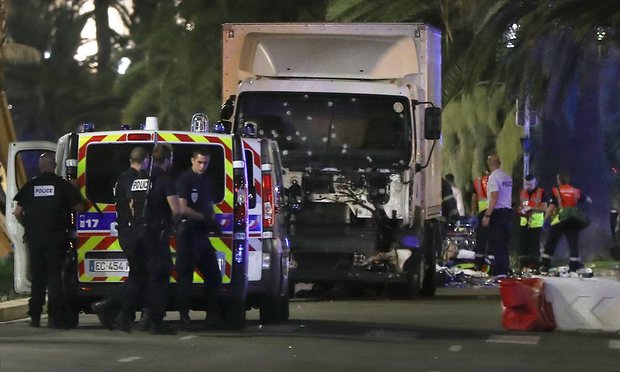
Nice Attack - Truck - Terrorism - France

As #PrayForNice trends on Twitter and another European city is plunged into terror and tragedy, what action have we taken to name, confront and defeat the evil which threatens us?

The news and images coming from the French city of Nice on what should be the most celebratory of days for the French people – Bastille Day – are awful, and heartbreaking, and wearily familiar.

As of this time, 77 people are confirmed dead, mown down on the Promenade des Anglais by a truck driven at high speed and containing an arsenal of weapons and explosives. This is clearly an act of terror – the numerous bullet holes in the windshield of the blood stained truck a testament to the amount of force it took the security services to stop the vehicle. And of course this is the third time in nineteen months that the French have suffered a grievous, high profile terrorist attack on their soil – first Charlie Hebdo, then the Bataclan, both in Paris, and now the Bastille Day celebrations in Nice.

To this we can add the Brussels terrorist attacks in March this year and, looking beyond Europe, numerous deadly attacks in Turkey as well as the terrorist shootings in San Bernadino and Orlando.

This is the future. This is the kind of terrorism which we are now going to face – not truly grand attacks on the level of 9/11, where casualties run into the thousands, but a long, slow grind of relentless medium-sized attacks, often on lower-value targets or in second tier, provincial cities. Often their planning and execution may turn out to be quite crude – this is not the age of the cunning master plan coordinated from a supervillain’s lair, but of “quick and dirty” plots hatched by autonomous cells and all the more unsettling precisely because they do not strike where we expect.

Now, murder comes to the airport entrance before the security checkpoints, or to an unremarkable concert venue, or a nondescript office or the main strip of a seaside town. Places which with the best will in the world are impossible to defend 24/7.

Radical Islamist terror has moved firmly into the age of the lone wolf, or the quasi-autonomous sleeper cell.

Why? Think of it like WiFi. Terrorist networks can no longer safely rely on coordinating large scale attacks in the West from a remote location with a reasonable degree of confidence that they will go undetected. Therefore, if ISIS and other fundamentalist Islamist organisations cannot physically cooordinate logistics and dispatch operatives to conduct attacks in Western cities, they must resort to other, remote means.

When the traditional methods of internet, telephone and even face-to-face communication are at risk of being intercepted by the security services, proponents of fundamentalist Islamist ideology must instead rely on transmitting their ideology and broad objectives through more general means, including YouTube and social media, targeted at the right susceptible population – usually disaffected and alienated young Muslim men who do not feel connected to or fully invested in society. The leaders of this death cult then rely on some of their indoctrinated targets possessing sufficient initiative to become their own mini terrorist masterminds.

We saw this approach in San Bernadino last winter, and again in Orlando last month. As more facts emerge, it may become clear that the Nice attack followed this pattern. Alternatively, it may be that Europe’s porous border and chaotic influx of migrants allowed foreign terrorists to slip through the net and aid in the planning or execution of the attack (press reports currently indicate that ID found on the truck driver suggest that he is a 31-year-old with dual French-Tunisian nationality, but this ID could well be fake or stolen).

But what is already crystal clear is the stark, uncomfortable fact that since Paris and Brussels (or Madrid and London, if you want to cast back a decade) our leaders have done nothing – nothing at all – to meaningfully grapple with this scourge of Islamist terrorism. So terrified are they of being accused of intolerance or racism that all we hear is the furious insistence that these atrocities have “nothing to do with Islam“.

And it’s just false. Of course the barbarity in Nice has absolutely nothing to do with the peaceful, moderate Islam practise by millions of adherents in the West and elsewhere. But it cannot be denied that those who do commit mass murdering acts of terrorism often explicitly reference Islam as their inspiration and justification – and do so from a very literal reading of certain Islamic texts. Moderate Islam does not inspire terrorist attacks, clearly. But fundamentalist, radical Islam often does, and we need to admit as much, for if we cannot even name the threat which we face what chance do we have of overcoming it?

As Douglas Murray rightly pointed out in the wake of the Charlie Hebdo massacre:

Contra the political leaders, the Charlie Hebdo murderers were not lunatics without motive, but highly motivated extremists intent on enforcing Islamic blasphemy laws in 21st-century Europe. If you do not know the ideology — perverted or plausible though it may be — you can neither understand nor prevent such attacks. Nor, without knowing some Islamic history, could you understand why — whether in Mumbai or Paris — the Islamists always target the Jews.

[..] We have spent 15 years pretending things about Islam, a complex religion with competing interpretations. It is true that most Muslims live their lives peacefully. But a sizeable portion (around 15 per cent and more in most surveys) follow a far more radical version. The remainder are sitting on a religion which is, in many of its current forms, a deeply unstable component. That has always been a problem for reformist Muslims. But the results of ongoing mass immigration to the West at the same time as a worldwide return to Islamic literalism means that this is now a problem for all of us. To stand even a chance of dealing with it, we are going to have to wake up to it and acknowledge it for what it is.

The cost of this furious pretence that Islam is totally unconnected to the “so called” Islamic State and the terror attacks committed in its name can now be measured in a growing toll of human lives. And the slickness with which we now mourn these events, with standardised tributes and modes of behaviour, only serves to emphasise our utter lack of coordination in preventing their recurrence.

As this blog commented after the recent Brussels attacks in March, charting the inevitability of the public grieving followed by zero meaningful action:

Impromptu shrines appear in a major square of the afflicted city, with candles, chalk drawings and sometimes a bit of impromptu John Lennon.

And the day closes with Europe and America’s major landmarks illuminated to resemble the national flag of the afflicted nation. They’re getting really good at that part now.

Fast forward a day, and plans are well afoot to grant even more powers to the well-meaning but overstretched security services – who were unable to make use of their current extensive powers to thwart the attack – and generally at the expense of our civil liberties. Particularly our rights to privacy and free speech.

Fast forward a month, and we have all moved on. Domestic political concerns, celebrity scandals and daily life have reasserted themselves.

I think we can all agree that we’ve got the public grief, cathartic expressions of solidarity and stern faced authoritarianism down to a fine art at this point.

When are we going to start acknowledging – and maybe even tackling – the root causes?

Unless our leaders can openly and unequivocally acknowledge that the terrorist scourge which sees murder brought to the streets of Europe on a near-monthly basis has its roots in a fundamentalist, literalist and militant strain of Islam, how are we ever to really get to grips with the issues of radicalisation and non-assimilation?

If the deaths of eighty slain people in Nice have nothing whatsoever to do with Islam then how do we hope to save young and impressionable Muslim schoolgirls in London from stealing away to Syria to join ISIS, or young and impressionable Muslim boys from falling under the seductive spell of jihadist recruiters?

If we cannot openly and comfortably name the enemy which we face – not an entire religion, but certainly a very real and present strain of Islam – then how do we even begin to formulate policies which will meaningfully reduce this threat over time?

The answer is that we cannot. We can clamp down further on our precious civil liberties, bartering away even more of our freedoms in the hope of purchasing additional security (and letting the terrorists win, since they count as a victory anything which diminishes our liberal democratic way of life). We can ramp up the surveillance state and clamp down on freedom of speech to make it look like we are doing something purposeful, even though the costs of such draconian measures far exceed the benefits. But none of these measures will stop two radicalised guys and a truck from repeating the horrors of Nice in Camden Town or Edinburgh.

It is impossible to create the perfectly secure country, and the closer one tries to get to this ideal, greater and greater are the liberties which must be traded away in exchange. Therefore, the only way to stop more Nice attacks from happening is to approach the problem from the other end and seek to tackle the radical, fundamentalist Islamist extremism.

And this is the one thing which our leaders, in their tragic fear of giving offence, shamefully refuse to do.


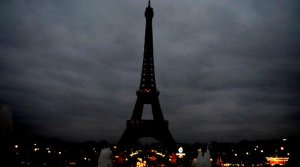
Paris Terror Attacks - Eiffel Tower Dark - 2

Top Image: Guardian

Support Semi-Partisan Politics with a one-time or recurring donation:

Agree with this article? Violently disagree? Scroll down to leave a comment.

Follow Semi-Partisan Politics on TwitterFacebook and Medium.

Brexit Fallout: Fear And Loathing (Of Democracy) In Brussels

The hysterical response of EU officials to Brexit (as opposed to national leaders, who have been more pragmatic and conciliatory) shows why we were right to leave the European Union, and why no lover of democracy should be happy so long as it continues to exist as a supranational government of Europe

Among a number of my fellow liberal-minded Brexit supporters I sense a reticence to attack the European Union now that we have most unexpectedly won the EU referendum. This, I think, stems from the admirable and earnest desire to do the right thing for Britain, ensuring that we negotiate the best possible secession deal with Brussels without needlessly antagonising our European partners. All of this I understand and agree with.

But I cannot retract nor temporarily suppress any of my earlier criticism of the European Union, and nor should any other Brexiteer not intimately involved in the Brexit negotiations feel compelled to pull their punches.

The EU was and remains an aloof, arrogant and insulated escape pod for failed national politicians, dreary bureaucrats and starry-eyed euro-federalists to govern nearly an entire continent without the first shred of democratic legitimacy. The EU is an answer (the eventual common European state) without a question, a solution without a problem and a glaring anachronism from a bygone age.

The EU is a succubus, draining the life and capability for self-governance from its member states (as the British government is now belatedly finding out, facing the prospect of having to think and act independently on the world stage), replacing the potentially positive outcomes of intergovernmental cooperation with the fudged, amateurish, self-inflicted calamities of unstable supranational governance.

It therefore follows that just as I believe EU membership is wrong for Britain, so I believe it is wrong for other EU member states too – and it should be up to the national electorates of each country to validate their continued partnership in this project by voting to leave or remain in their own national referenda. If the European Union had any shame or dignity it would positively welcome such a step in order to finally affirm its existence through popular support, rather than doing what it always does – hiding behind staunchly pro-EU governing elites in each country.

And it is this fear of further referenda in other countries which is now spooking many of the EU’s most senior leaders, though they remain utterly divided as to their reaction, with Donald Tusk and the Council favouring a “steady as she goes” approach and EU Commissioners and Parliamentarians like Jean-Claude Juncker and Martin Schulz wanting a reformed (read: more) Europe.

In a speech to the European Parliament, Guy Verhofstadt declared in a speech directed at Donald Tusk, President of the European Council:

…the reaction of the European Council to this political earthquake, because an earthquake it is, what happened in Britain. The only reaction I have heard of the Council was that we should not change anything, that it’s just a question of implementing the existing European policies. I find this shocking, and I find it all so irresponsible. I don’t think you understand what is happening.

It’s not only a Brexit referendum. Before that there was the referendum in Denmark, negative. There was the referendum on the Ukraine agreement in the Netherlands, negative. Now in the UK. What are you waiting for? For the next referendum in France? The next referendum in Italy, maybe? When will you recognise, when will the council recognise that this type of European Union of today, you can not defend it any more? And that Europe needs to be reformed. And in my opinion that the new vision, the new approach should be presented to the citizens of Europe.

Of course, Verhofstadt then goes wildly off key, claiming that the results of a recent Eurobarometer poll somehow represent a seething public desire for a common European army, intelligence service and indeed a true EU government:

The real problem today [..] is intergovernmentalism. A loose confederation of nation states based on unanimity can not work. That is the reality of today, that you don’t recognise until now.

So More Europe, then. Even now, after the loss of the EU’s second largest economy and strongest diplomatic, cultural and military power, the elites sitting in Brussels and Strasbourg wish to press ahead with implementing their vision. The only reason for its widespread unpopularity and rejection by Britain is, to their minds, the fact that their vision remains incomplete. If only we saw the common European state standing finished in all of its glory we would learn to love it, so those countries which remain must hasten to bring it about.

What dangerous garbage. This is why any lover of democracy and any supporter of the nation state as the last line of defence and supreme guarantor of our freedoms should be implacably opposed to the European Union, now and always.

Out of necessity we must maintain warm, cordial and productive relations with Brussels, especially as we begin the delicate work of unpicking 40 years of incessant political integration by stealth. But if the happy day finally comes when the EU collapses under the weight of its own sanctimony, misconceived sense of destiny and glaring internal contradictions then the world will be a better place, the cause of democracy will be better served and nobody should shed a single tear.

Let’s not lose sight of that.


Brexit - EU - European Union Flag - Missing Star - Britain - UK

Agree with this article? Violently disagree? Scroll down to leave a comment.

Follow Semi-Partisan Politics on TwitterFacebook and Medium.