The British Left Rediscovers Euroscepticism, With Help From Greece


You know there must be a serious disturbance in the Force when left-wing commentators like Owen Jones begin openly flirting with euroscepticism. But this is exactly what we are now witnessing, with formerly staunch eurofanatics up and down the land executing sharp 180-degree U-turns in their general attitude toward Brussels, sometimes with quasi-admissions of former error (see Owen Jones) but usually done quietly in the hope that nobody will notice.

Never mind the fact that just a couple of short months ago, many of these same left-wing talking heads were taking to the airwaves during the general election campaign to argue that the European Union represents enlightened internationalism at its best, and that only the most unlettered and unsavoury characters (read: Ukippers) could possibly believe otherwise.

Never mind the cognitive dissonance required to accuse Nigel Farage of paranoid xenophobia one month and then find fervent common cause with him the next; wherever there is a David vs Goliath struggle raging in the world, the virtue-signalling Left are never slow to exploit it, even if it means resorting to twisted pretzel logic or making themselves look extremely silly in the process. Thus the British Left have decided that plucky little Greece is “good”, while the European Union – for so long a beacon of social democracy in Britain’s ‘capitalist darkness’ – has suddenly become the evil enforcer of a punitive “neo-liberal” agenda.

Of course, this is done with the level of sanctimonious obnoxiousness that you would expect. Those filthy Ukippers hated Europe for all the ‘wrong’ reasons, one can imagine them thinking as they penned their first tentative polemics against once-loved EU institutions. But we changed our opinion of the EU for ‘good’ reasons, reluctantly, after watching Greece being bullied. So you should sit up and take notice when we criticise the EU, because we’re not like the fruitcakes and closet racists who bang on about Europe the rest of the time.

Continue reading

Greece Capitulates, And The Euro Project Claims Its First Victim


Much of what Guy Verhofstadt shouted at Greek prime minister Alexis Tsipras in the European Parliament the other day – captured in the video above, which has since gone viral – is perfectly true.

Yes, Greece has dragged its feet making necessary pro-market economic reforms, not just over the past five years but since that country joined the European Union in 1981. Yes, tax collection is not what it should be in a modern western economy. Yes, there remain too many closed industries, stifling competition with their restrictive practices and deliberately insurmountable barriers to entry. Yes, corruption is still a real problem in some cases. And yes, the Greeks voted in a left-wing Syriza government well endowed with socialist rhetoric but less so with reforming zeal.

And yet when you watch a democratically elected leader – the prime minister of one of the EU’s own member states – being lectured and belittled in view of the whole world by a European parliamentarian, something does not sit right in the stomach. Unlike Britain, Greece is an enthusiastic EU member, viewing their membership of the organisation and the single currency as a marker of national progress and development. But must this be the price of their ongoing membership, their leaders summoned to Brussels for public rebuke and their ministries thrown open to clipboard-wielding EU technocrats?

As was perhaps inevitable, Greece has largely capitulated in the ongoing standoff with their creditors and the European Union. Austerity measures, even more than were demanded before the “Oxi” vote in the Greek referendum – which itself tells you a lot about the real motivations behind the EU’s negotiating strategy, not seeking a sustainable deal but wanting to punish a small member state for not immediately doing what it was told – are now being willingly accepted in the latest Greek proposal.

Continue reading

Ten Years Ago Today, In London

St Pauls Cathedral - London - 7 July Bombing - Memorial Service - Petals


In an age when our politics feels depressingly small and our politicians often seem ineffectual and powerless in the face of events and forces beyond their control, it seems we cannot rely on our elected leaders to grapple with the weighty issues of our time, or to present a clear vision of the country and world we should be striving to build.

This is especially so on the issue of terrorism, the threat from radical Islam and the ongoing crisis of western values. Today is not a day for politics, but this essay by Frank Furedi in Spiked magazine is essential reading in terms of outlining the extent to which we are almost wilfully focused on the wrong issues.

In this context, it is refreshing to hear words of genuine wisdom, comfort and hope, especially coming from a religious figure at a time when religion is sliding toward irrelevance for many, yet held largely responsible for the wave of terrorist mayhem sweeping the world.

The Bishop of London, Richard Chartres, excels in his role preaching sermons on important national occasions – most recently at the memorial service for Margaret Thatcher. Chartres was back in the national spotlight again today, at St. Paul’s Cathedral in London, where he preached the sermon at the memorial service to mark ten years since the July 7 bombings of 2005.

Continue reading

Why Should Britain Help Germany Reform The EU?

David Cameron - Angela Merkel - EU - 2


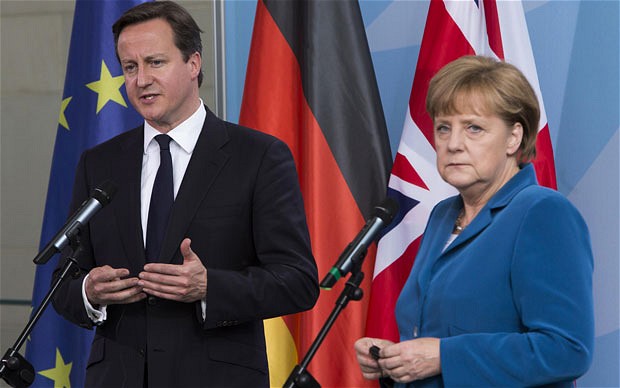
You have to hand it to Michael Fuchs, deputy chairman of Angela Merkel’s CDU party in Germany. If you genuinely want Britain to remain part of the European Union – for intentions noble or otherwise – the best way for other countries to achieve that outcome is by convincing the British people that they too are frustrated by Brussels bureaucracy, that they yearn for real reform, and envisage our humble selves at the heart of this great effort.

And this is exactly what Fuchs has done, presenting the face of German concern about Britain’s place in the EU while his ally Angela Merkel is preoccupied with the far more pressing matter of the Greek crisis.

From the Telegraph:

“I want the UK to stay in the EU, and I cannot even imagine an EU without the UK. I don’t want to imagine it,” [Fuchs] said.

“In particular, for us it’s not good because the UK is a partner promoting a free-market economy, much more than the southern hemisphere in Europe. [Some of these countries] want to have a more state-regulated economy, and the UK is more like us, for instance, like Holland and the northern hemisphere, so we would not be very happy to see it go.”

Mr Fuchs described Brussels as a “huge” bureaucracy that needed to be scaled back. “I fully agree with certain statements of [Prime Minister] David Cameron saying that Brussels need not be such a huge bureaucracy, with so much red tape.

“That’s quite important, I think, and we need Cameron’s help to change it.”

Unfortunately, when someone you normally expect to be an antagonist starts acting very friendly, there is usually an ulterior motive at play. Feigning concern for and agreement with a difficult negotiating partner is straight out of Hostage Negotiation Strategy 101, and just as the man in the FBI jacket doesn’t really care that your wife left you and isn’t really going to arrange that escape airplane filled with cash, so Germany isn’t really about to let awkward old Britain stop the wheels of an EU juggernaut which has been rolling and gaining momentum since the 1950s.

Continue reading

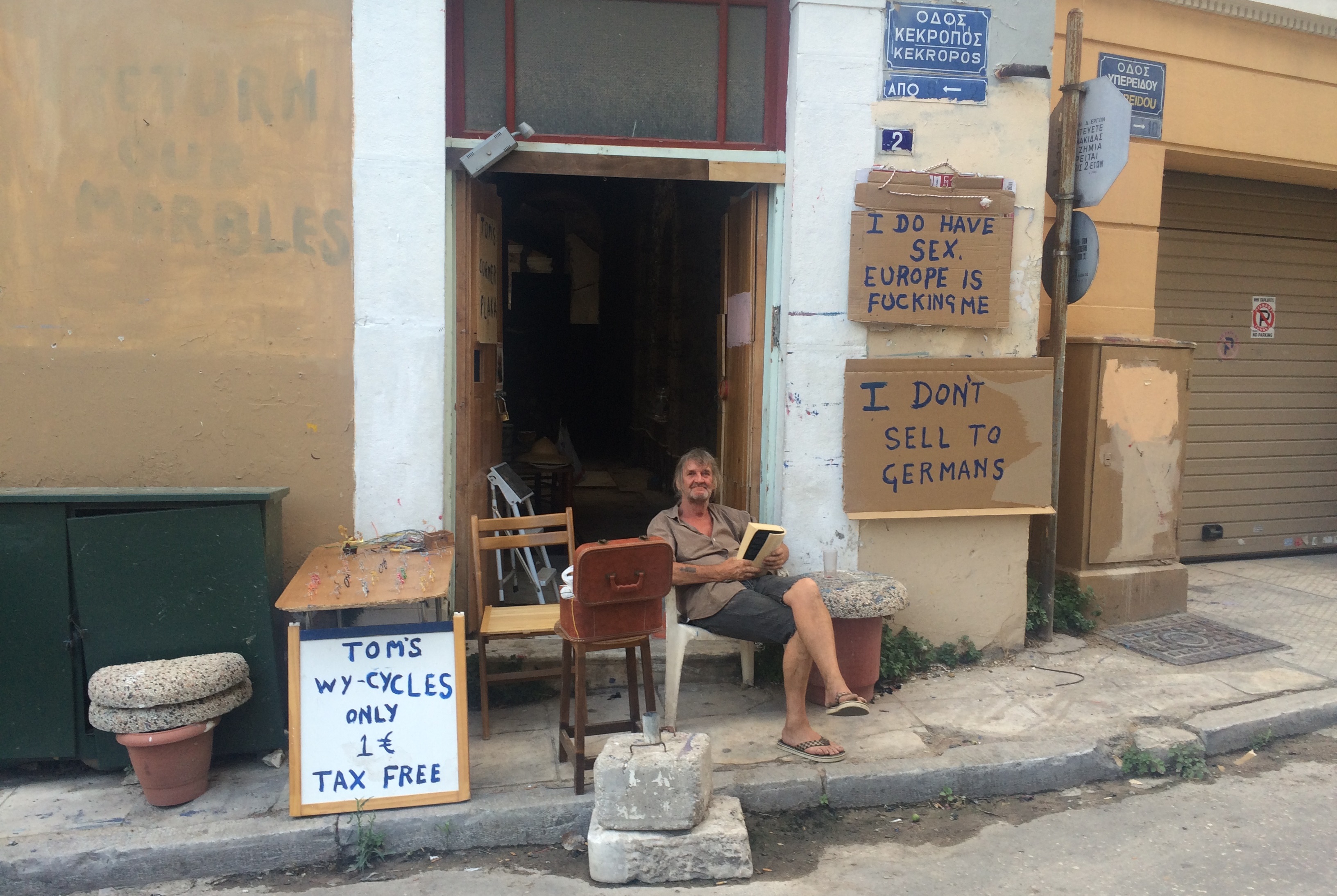
Oxi: Greek Referendum Result Is A Damning Indictment Of EU Imperialism

Bookshop - Greece - EU - Euro Crisis - Germany


Final referendum result: Yes – 38.7%, No – 61.3%

If nothing else happens as a result of the dramatic “Oxi” (no) vote in Greece’s referendum today, can we at least finally disabuse ourselves of the notion that Angela Merkel, Germany’s chancellor, is somehow a formidable and effective world leader?

We hear time and again how Merkel is the most powerful woman in Europe (or sometimes the world), and how she is such a shrewd and canny operator, driving hard bargains in the EU and commanding respect on the world stage. But Margaret Thatcher she ain’t. The European Union may like to think of itself as a warm, fuzzy family of nations, but in reality there is only one country, Germany, which plays the role of parent when it comes to economic matters, particularly within the eurozone. And Angela Merkel’s “bad cop” Pyrrhic victory in keeping the door closed to any form of debt relief for Greece, even in the face of entreaties from President Obama and mounting evidence that some form of debt restructuring is an essential precursor to the return of growth, has just driven Europe off a cliff.

As the eurozone goes into meltdown and the European Union faces what could become an existential crisis, everyone is looking to cover their backs as the recriminations fly. And Lord knows that Greece shoulders some of this blame, having governed itself irresponsibly over many successive decades and governments, as this blog has repeatedly acknowledged. But what excuse do the sharp-suited EU bureaucrats and eurozone politicians have for their collective failure to contain the Greek situation? What excuse does Angela Merkel have?

Continue reading