Brexit: The Flight 93 Secession

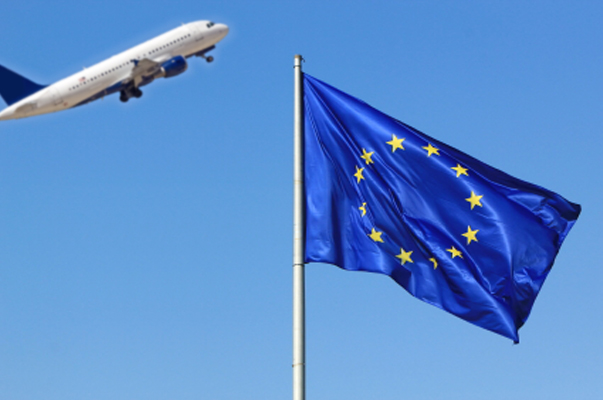
European union flag

Whether you believe that Brexit is a brave and noble endeavour or a rash, ignoble folly probably depends a lot on your perception of short and long-term risk

Imagine that in some surreal scenario you mysteriously found yourself on board a huge passenger aircraft flying a multi-stop, seemingly never-ending transoceanic journey to nowhere.

As the hours and days tick by onboard this strange vessel you begin to question where the plane is taking everybody, and who set the flight plan. There’s an old framed picture of the airline’s founder, Jean Monnet, hanging at the front of the plane above the sealed cockpit door, but the captain and the other passengers refuse to clearly state the destination themselves, even though they all seem very anxious to get there. Rather than being candid, they make only vague allusions to the potential destination and arrival time, and repeatedly emphasise the importance of travelling together in a big, stable aircraft to keep us safe from turbulence.

Then suppose that one day you question whether you want to be on this flight in the first place – your fellow passengers keep getting sick, the pilot stops randomly at tiny airfields in seedy-looking places to let a whole bunch of extra people climb aboard without even checking their boarding passes, and while every seat comes with its own plastic toy steering wheel giving the childish illusion of individual control, it is plainly apparent that the pilot is the sole person in charge.

You also have strong suspicions that a certain Lederhosen-wearing passenger sitting in First Class is the captain’s special favourite, and that this is why they get to control the cabin air conditioning, select the in-flight movie, dictate the meal choices for everyone sitting in Economy and sometimes even persuade the pilot to change speed and altitude. Back in 2015, a little scrawny passenger owed Lederhosen Guy some money and was being evasive about paying it back – now he rides in the unheated, unpressurised cargo hold.

So you finally speak up and ask why we are on this flight at all, this Airbus A380 on steroids, when out the window we can see other happy families zipping along in their Cessnas and small private jets, travelling together in a loose formation to reach their preferred destination but also preserving their individual ability to climb, descend, stop at an airfield for lunch or set a new destination altogether if they so choose.

And in response, some wiseguy across the aisle says that you have no right to complain because a mysterious benefactor bought your ticket armed with perfect information as to the plane’s ultimate destination. The travel agent certainly never lied to them, making the journey seem shorter and the destination more pleasant than the reality now unfolding – no, your benefactor apparently was apparently very firm in their desire for you to embark on this particular journey, and approved of every subsequent course change made by the captain, tacitly if not explicitly.

Many of the other passengers also take turns lecturing you that the era of private aviation is over, that only a fool would put his life in the hands of Westphalia Private Aviation Corp., that one family in one aircraft cannot possibly complete a safe and successful autonomous journey in this day and age, and that only by abandoning our trusty Learjet and boarding the enormous Airbus can we protect ourselves from dangerous pockets of clear air turbulence and other assorted perils of the sky. And if that means eating the same cheap airline food day after day, and giving the airline pilot total authority over us while in the air then so be it.

This is unacceptable, so you pluck up the courage and deliver an ultimatum: either the captain gives up his absolute powers and pays more attention to the demands of individual passengers – even if that means amending the route – or you will disembark, return to your own aircraft to fly on your own terms with your own companions in your own squadron, and with your own destination in mind. The captain laughs in your face. Lederhosen Guy stares at you with a kind of impassive curiosity, but says nothing. The aircraft continues humming along at cruising altitude.

What to do? You figure that storming the cockpit, relieving the captain of his duties and attempting to land the plane yourself is inherently risky, yet it seems preferable to reaching the plane’s ultimate destination and then realising that all of your worst fears and suspicions were correct – and that there is no return service.

If the aircraft will not change course and you are unwilling to accept the destination (or continued vagueness about the intended destination), then indeed storming the cockpit is the only option left. You don’t want to permanently hijack the plane and steer it exclusively according to your own preferences, nor do you want to thwart the captain and harm others by crashing the plane altogether. You just want to disembark peacefully.

Would it be nice if another Airbus A380 with a more amenable pilot was waiting at the next refuelling stop, ready for you and likeminded passengers to hop aboard and continue your journey in a more collegiate style, agreeing the destination and flight plan together rather than stubbornly navigating according to the old captain’s worn-out, anachronistic 1950s map? Yes, of course it would. But that’s not going to happen today. There is no alternative jet on the tarmac, and for all the money you have given the airline the small print on the back of your ticket is clearly marked “non-exchangeable and non-refundable”.

So you gather what support you can from among the other passengers, count to three, and charge the door.

At one point in 2016, some of the more extreme conservative political pundits in America began referring to the presidential campaign between Hillary Clinton and Donald Trump as the “Flight 93 election“, a reference to the United Airlines plane hijacked by terrorists on 9/11 and deliberately crashed into a Pennsylvania field after passengers learned of the attacks on the World Trade Center and mounted a fightback against the Islamist hijackers. This risible, overwrought argument posited that a Hillary Clinton presidency would be so damaging to the United States – effectively the equivalent of another 9/11 attack – that it was the duty of every true patriot to “storm the cockpit” of American government by electing Donald Trump president instead.

Britain’s 2016 EU referendum was not quite a “Flight 93 moment”, not only because unlike the 9/11 attackers, the EU’s motivations and trajectory (though severely misguided) are not deliberately malevolent, but also because the speed of European political integration is slow and incremental, not sudden and rapid. Unlike a hijacking situation, we therefore theoretically had time to think and form a more considered plan of escape. Unfortunately Boris Johnson and Nigel Farage, the ringleaders who nominally led the storming of the cockpit, failed to come up with any kind of coherent plan for what to do when they got their hands on the controls. And now they have handed over command to Theresa May, who sits with white-knuckled grip on the yoke, trying and failing to reassure we the passengers over the intercom by repeating the same worn out banalities. Our position, post storming of the cockpit, is therefore significantly suboptimal.

But ultimately, if the captain will not desist from a reckless and undesirable course of action and an orderly disembarkation is impossible then one is left with little choice other than to forcibly set the plane down, blow the emergency exit, jump down the inflatable slide and walk back to the terminal in search of alternative transportation.

With Brexit, as with all flights, there is an outside chance that the new pilots will crash the plane, resulting in total hull loss and our fiery deaths. There is a slightly higher chance of experiencing a landing so rough that there are multiple injuries, the undercarriage fails and the plane requires lengthy and expensive repairs. Right now there are probably even odds that the landing will be sufficiently bumpy that those who do not have their seatbelts fastened securely will get thrown around the cabin a bit and generally have a bad time. But of course, the corollary to this is that remaining on the aircraft despite not knowing its destination and having no individual control over the plane carries a risk of its own. The next stop may be Warsaw or Bucharest, but eventually the plane might head for Pyongyang, carrying us along with it.

The difference between Remainers and Brexiteers is this: Remainers do not seem to much care where they end up (or at least seem willing to smile and suppress any gnawing doubts that they do have) so long as they can be seen to be travelling happily and in total harmony with all the other passengers on the plane. In support of their position, Remainers can point to all of the aircraft’s previous stopovers – many of which were vaguely pleasant or at least neutral – to suggest that we are participating in a wonderful global excursion and would be mad to spurn the promise of future tropical delights.

By contrast, Brexiteers care deeply about the end destination, strongly disagree with the current direction of travel and are willing to go to extraordinary lengths to alter it. Leave voters can bolster their argument by pointing out the unprecedented scope of control passengers have ceded to the captain over time, and noting that ours is the only part of the world where people seem to have lost faith in private aviation and insist on flying together in a single huge aircraft. If abandoning our autonomy and climbing aboard the Airbus is so great, they argue, why are people in Asia, Africa, North and South America not following Europe’s lead?

Neither viewpoint is inherently evil. Rather, each view is formed by a different perception of reality and a varying sensitivity to short and long-term risk.

Or perhaps all Remainers are just flag-hating, anti-patriotic, virtue-signalling traitors who think that supporting the EU is an easy way to check the “internationalist” box on their checklist of trendy-lefty political opinions, and/or every Brexiteer is a harrumphing, xenophobic retired colonel who fetishises the British Empire, hates foreigners and wants to re-impose the social values and norms of the 1950s.

It’s hard to say.
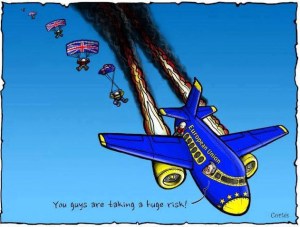
European Union - airplane - Brexit

Support Semi-Partisan Politics with a one-time or recurring donation:

Agree with this article? Violently disagree? Scroll down to leave a comment.

Follow Semi-Partisan Politics on TwitterFacebook and Medium.

Barcelona, Donald Trump And The American Media’s Crisis Of Perspective

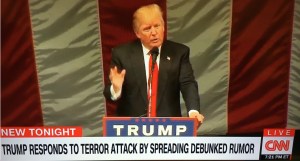
There is more to the horrific Barcelona terror attack than Donald Trump’s garbled response, but you wouldn’t know that if you are watching CNN

To get a good sense of just how debased and insular the American news media has become, one need only flick over to CNN and watch their coverage of the horrific Islamist terror attack which took place only hours ago in Barcelona.

What you will find is not detailed coverage of the Barcelona attack and how it transpired, or even the mindless banalities and speculation that has become the hallmark of cable news, but rather a bunch of talking heads agreeing with each other that Donald Trump’s response to the terror attack was all wrong.

This is the age where men, women and children being mown down in the middle of a European city street by a van-driving Islamist is secondary news to whatever inanities various celebrities have to say about the event on Twitter, or the word choice of an American president whom we already know to be rash, unstable and in loose command of the facts (at the best of times).

What really got CNN riled up on this occasion is this tweet by Donald Trump, promulgating an unfounded rumour about the supposed action taken by US Army General John Pershing in response to a Muslim-planned terrorist attack in the Philippines at the turn of the 20th century:

The urban legend goes that General Pershing rounded up the culprits and suspects, and had them shot with bullets previously dipped in pigs’ blood. In Trump’s own graphic telling, Pershing shot 49 of the culprits and spared the 50th one so that he could go back and warn others in the movement about America’s swaggering zero-tolerance policy for terrorist shenanigans.

To be clear, there is zero proof that this apocryphal story actually took place, and that the President of the United States would make speeches presenting the tale as fact both during the election campaign and again in the immediate aftermath of an Islamist terror attack on an American ally is bad, wrong and depressing in equal measure.

But for most of the past hour on CNN, the chyron across the bottom of the screen hasn’t reported details of the terror attack, but rather Trump’s entirely typical and unsurprising blustering response to it. That’s not to say that Trump’s actions are unworthy of coverage – and we should certainly never allow ourselves to stop reporting on the president’s misdeeds and objecting to them just because they occur so regularly. But good television news is supposed to educate and inform, not simply encourage people to think myopically about global issues exclusively through the narrow lens of their own country’s political process.

Yet rather than presenting Trump’s dodgy urban myth about General Pershing as one tangential element of the story, CNN did what CNN does best – assemble a multitude of talking heads in boxes, all crammed onto the screen at the same time, to denounce Trump and slot an inconvenient story about terrorist murder in Barcelona into their preferred narrative about Trump’s unfitness for office.

Again – the point is entirely valid, and in an ideal world the President of the United States would neither spread unfounded rumours nor seek to get the more distasteful portions of his base excited by telling them yarns about shooting Muslim terrorists with bullets dipped in pigs’ blood. That would be nice. But this is not the main takeaway from the Barcelona terror attack, and yet both Jake Tapper and now Anderson Cooper seem to be leading with it, to the detriment of telling the more important story about the seemingly unstoppable wave of vehicular Islamist terrorism in Europe and the inability (or unwillingness) of political leaders to take any meaningful action to prevent such massacres.

Meanwhile, television news in Britain – itself hardly a fitting successor to the likes of Edward R. Murrow or Walter Cronkite – is at least reporting the facts and broadcasting footage and eyewitness statements as they emerge. Decent analysis remains beyond them (or at least beyond their willingness to pay a knowledgeable panel of experts and commentators to schlep into the studio) but at least they aren’t using the tragedy as a means of bashing Prime Minister Theresa May. Yet.

If American political discourse is to improve, restraint has to happen both ways. Just as conservatives need to come to terms with the fact that the Alt-Right is an issue in our own back yard which we must disown and work to discredit, so those on the Left – including much of the mainstream media – need to bring some balance back to their coverage and accept that important as the office of President of the United States is, Donald Trump’s reactions are not always the most important part of a breaking news story.

This de-escalation should not be so hard to achieve among adults, but sadly there are too many adult children on both sides who would rather have the last word and advance their political agenda at all costs, even if it debases the office of the presidency, diminishes trust in the media and rips the country apart at the seams, all at the same time.

Donald Trump - Barcelona terror attack - General Pershing rumour

Support Semi-Partisan Politics with a one-time or recurring donation:

Agree with this article? Violently disagree? Scroll down to leave a comment.

Follow Semi-Partisan Politics on TwitterFacebook and Medium.

A Few Words On The London Bridge And Borough Market Terror Attack

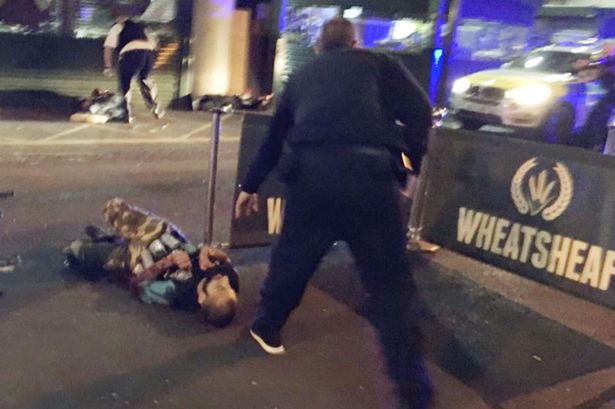
London Bridge terror attack - fake suicide vest

Finally, a step change in our response to Islamist terrorism. But this new authoritarianism is not the answer

This one struck a little close to home. For several years it was my habit to walk across London Bridge from the tube station to the north side, and then on to my office on Fenchurch Street.

Sometimes I would drink after work at the Barrowboy and Banker pub at the foot of the bridge, or go to choral evensong at neighbouring Southwark Cathedral – still regretfully closed some four days after the terrorist attack on London Bridge and Borough Market. My wife now works in the shadow of the Shard tower, and only today was her firm finally allowed to re-enter their office building.

It is quite surreal to see places which are so familiar splashed onto television screens in such a grisly context. One of the smartphone-recorded videos played most often on cable news – showing police ordering stunned bar patrons to the ground – was particularly jarring, as we had celebrated a friend’s birthday at that vaulted beer hall just a few months ago. It is no longer just the bus or the tube – places where we have been conditioned to be wary since the days of the IRA. Now we are to expect violent death anywhere, a car swerving onto the pavement with too little time to react, or being confronted by a knifeman while eating at a downtown restaurant.

But enough of that – it is tempting to make these terror attacks all about us, when really we should focus on those people whose lives were deliberately, callously snuffed out by the onrushing vehicle or the blade wielded by the Islamist fanatic. We rightly praise the heroism of our first responders, the rookie policeman who took on the terrorists alone armed with nothing but his truncheon, and the paramedics and civilians who rushed to help as soon as they were alerted to the carnage.

And yet after the proper acknowledgements and the less-welcome platitudes, the same questions beg to be answered.

Firstly, why did the Metropolitan Police and numerous politicians make such a big show of advertising that it took eight minutes from the first 999 call being received to armed police arriving at the scene to terminate the terrorists? No doubt this was supposed to reassure. But does it not also advertise to every other terror cell currently lurking undetected (or shockingly unmonitored) that in one of the most central and well-protected parts of the country they will have at least an eight-minute window to inflict as much bloodshed as they are able?

Eight minutes sounds remotely laudable because the terrorists were armed only with a vehicle, blades and some preposterously, evidently fake suicide vests. But what if the next terror cell has access to firearms? We rightly applaud the quick-thinking revellers who repelled the attack by throwing chairs and pint glasses, but these projectiles are much less effective against even a single low-calibre gun. What if the next marauding terror attack takes place not in well-protected London, but in a leafy Midlands market town or a provincial city without armed police on 24/7 patrol?

This attack could have been much, much worse. It could have been a Bataclan-level massacre, had the terrorists stormed a pub or restaurant with few exits or escape routes, armed with a semi-automatic weapon. Worse even, because so few British police are armed. Having elite units on constant standby is all well and good, but it is unreasonable to expect a standard unarmed police constable to be the frontline of our response to a mass casualty terror attack.

And no, the medium and long-term solution is not to deploy more armed forces on the streets – though this may be necessary, given the shocking decline in the number of armed police officers. Though the net drop since 2010 (approximately 700) is not that great as a raw number, the idea that the numbers were falling at all given events in mainland Europe is simply staggering. Operation Temperer (or tempura, as I first heard it – like we were going to deep fry the terrorists) may be a necessary stop gap, but we need to look again at whether it is practical to maintain a largely unarmed police force.

We should look too at whether it is reasonable to deny the people the opportunity to defend themselves with legally purchased firearms when the state proves itself time and again to be so unwilling and unable to protect them from lethal harm, either by facing up to the toxic Islamist ideology that fuels the present terror threat or by ensuring that the security services make best use of the vast amounts of data they already collect about all of us. Of course, this discussion will never happen. But it should.

If nothing else, we seem finally to have pivoted from “terror attacks have nothing to do with Islam!” to “something must be done”. And about time, too. Only days before the London Bridge attack, I wrote a piece (piggybacking on Brendan O’Neill) decrying the fact that all of the left-wing party leaders practically wet themselves in shock and outrage when UKIP’s Paul Nuttall dared to talk about the Islamist (not Islamic, Islamist) threat. If nothing else, perhaps we have finally pierced that particular veil of idiocy. The idiots remain, but the general public is no longer in thrall to their denialism.

And yet the undiscovered country of Taking Firm Action may be almost as bad as the state of denial and complacency which is finally being dispelled.

The danger was always that when the government finally roused itself to righteous anger in the face of Islamist terror, the response would be one of jackboot authoritarianism rather than incisive, strategic action. As Home Secretary under David Cameron, Theresa May was quick to take advantage of the various terror attacks in Paris to push for sweeping new powers for the security services, and now elevated (above her competence, it seems) to prime minister she is gunning for civil liberties and pesky human rights laws all over again. But this time, Theresa May is swinging an even bigger emotional cudgel thanks to the immediacy and proximity of the attacks in Manchester and London.

The security services are able to gather vast amounts of metadata on all of our communications with barely a whisper of public dissent, and can begin spying on an individual with no judicial approval required, just a ministerial signature – essentially, the executive overseeing itself. They could not have a more favourable political and operating environment. And yet despite having some of the most draconian surveillance laws in Western Europe, somehow three individuals were able to mount an attack – one known to security services but not considered an active threat, and another flagged as an extremist by the Italians but apparently ignored by British security services.

This is what happens when you expand the haystack too much, when you collect so much data and intelligence on everything that moves that it becomes impossible to sort through the information, make sense of it and hone in on the most serious threats. Yes, there is also an issue of resourcing – as with the armed police, the government has been complacent and refused to spend money where it should be spent – but much of the problem surely comes from trying to cast too wide a net at the expense of watching those already caught in it.

And yet Theresa May now wants to force internet companies to undermine the encryption of their own services so that the security services can gather even more data and make the intelligence haystack even more unwieldy and difficult to search for needles. And the prime minister as a thousand and one other draconian ideas up her sleeve, like the extension of detention without trial from 14 to 28 days – not because such a revised law would have prevented the Manchester and London attacks, but just because she doesn’t want to let this crisis go to waste without extending the power of the state even further.

The only grace is that the prime minister’s desire to control the internet will likely come a cropper as soon as she tries and fails to secure international cooperation. To a bizarre and frightening extent, our civil liberties may now partly depend on the stubbornness of Angela Merkel, Emmanuel Macron and (yes) Donald Trump in resisting Theresa May’s maniacal efforts to regulate the online world.

Concerning too is the fact that we are suddenly talking about the internment of suspected terrorists for whom there is too little evidence to seek prosecution. Even as the news of the London Bridge attacks was coming in, strident calls were made on Twitter for the police to “bring in” everybody currently on the terror watchlist and presumably detain them without trial in perpetuity. Perhaps at a new British Guantanamo Bay on the Isle of Man. Then the omnipresent Katie Hopkins went on Fox News to repeat the call for internment, while Nigel Farage followed, warning that “people” would soon start to call for this step if the government failed to get a grip. Well, they certainly will now that the idea has been so helpfully injected into the political discourse. Thanks, Nigel.

Astonishingly, there seems to be support for such a move from some sober conservative voices in America, which rather makes me question how strong their much-vaunted love for the Constitution can possibly be, when they encourage Britons to enact draconian laws which would rightly never pass muster in the United States.

I had a thoughtful exchange with the National Review’s Jim Geraghty on the related subject of whether merely expressing support for Islamist ideals should be criminalised – Geraghty initially expressed support but walked his stance back somewhat following my interjection, and we more or less came to a meeting of minds.

Sadly, the conversation elsewhere has not been nearly as civil, on either side. Of course anger is entirely appropriate when our fellow citizens are killed in cold blood by a religiously-inspired terrorist – young girls enjoy a pop concert in Manchester or Londoners of all backgrounds enjoying a Saturday night in town. But this anger has to be meaningfully directed, otherwise it will either achieve nothing or give known authoritarians like Theresa May the pretext they need to expand the state’s power.

But is this really who we are, as a people? Is this really who we want to be? A nation comprised of either self-abnegating terror apologists whose first reaction on hearing of an Islamist attack is to jump on social media to declare “nothing to do with Islam!” and patrol for “Islamophobic” comments, or jumpy authoritarians who want to do away with even the most basic civil rights in pursuit of the chimera of perfect safety?

We have certainly been called to action and shocked out of our complacency by the hideous events in Manchester and London, at long last. But at present there is precious little to suggest that we will start to move in the right direction now that we are finally awake.


London Bridge terror attack

Support Semi-Partisan Politics with a one-time or recurring donation:

Agree with this article? Violently disagree? Scroll down to leave a comment.

Follow Semi-Partisan Politics on TwitterFacebook and Medium.

George Orwell’s “1984” Will Receive A Public Reading In London – But Have We Forgotten The Message?

Senate House London - 3

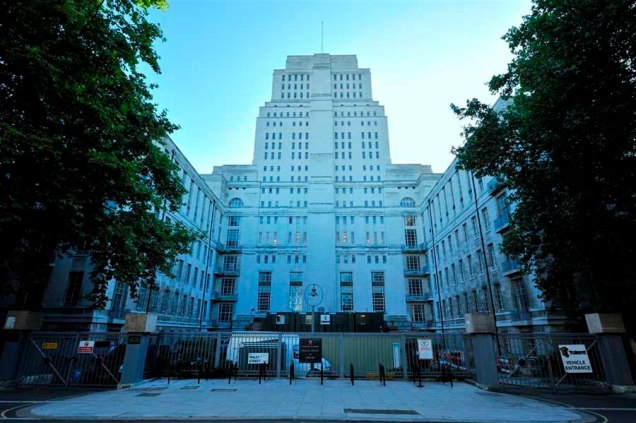
On June 6, hundreds of people will gather at London’s Senate House as a parade of actors, politicians and other notables read George Orwell’s dystopian novel “Nineteen Eighty-Four” in its entirety. But how many of us actually understand Orwell’s message?

Besides a few posts on Twitter, I haven’t written anything about the heinous Manchester terrorist attack. What more is there to say? The locations change, as do the names and backgrounds of the victims, but the rote mourning processes, the denialism and the furious virtue-signalling always remains the same. Why jump into that toxic mêlée all over again?

But I did watch the BBC general election leaders’ debate on television earlier this week, when naturally the subject of terrorism and Britain’s proper response came up, and I was depressed as ever by the paucity of the “discussion” that took place.

Brendan O’Neill picked up on the section of the debate which also caught my attention, writing in Spiked:

Consider BBC TV’s General Election debate this week, which brought together leading figures from the main parties to talk about the problems facing Britain. There was an extraordinary moment during the debate. A member of the audience asked a question about security post-Manchester and the leaders talked about the need for better policing and intelligence and also for rethinking British foreign policy. It is possible, said Labour leader Jeremy Corbyn and SNP deputy leader Angus Robertson, that our meddling overseas has exacerbated the terror problem.

Then UKIP leader Paul Nuttall chimed in, and he said this: ‘Politicians need to have the courage to name [the problem]: it’s Islamist extremism.’ The reaction was swift and pretty scary. Nuttall was jeered at by the other panellists. ‘NO!’, one said. ‘Paul, Paul, Paul, Paul’, interjected Lib Dem leader Tim Farron. Nuttall has gone ‘straight for Muslims’, said a furious Robertson. Green leader Caroline Lucas said Nuttall was being ‘completely outrageous’ with this suggestion that ‘the violence in Manchester was somehow representative of Islam’.

Nuttall tried to explain himself. ‘Islamism, Islamism, Islamism’, he said over the din that his comments provoked. His point was that he had not said the word ‘Islam’. He hadn’t even used the phrase Islamic terrorism; he had said Islamist extremism. But his protests went unheard. The other leaders and some in the audience continued to shout over him and drown him out; to accuse him of being outrageous and prejudiced for using the phrase ‘Islamist extremism’.

This is an almost Orwellian level of linguistic denialism. For ‘Islamist’ is a perfectly legitimate and apt word for the terrorism that is impacting on cities in Western Europe. The Oxford dictionary’s definition of ‘Islamist’ is an ‘advocate or supporter of Islamic militancy or fundamentalism’. Is this not the right name for those in Paris, Brussels, Nice, Manchester and elsewhere who have carried out extreme acts of violence in the name of the Islamic State or radical Islamist ideology? To boo and demonise Nuttall for using the word ‘Islamist’ to describe those who blow themselves up in the name of ISIS is as nuts as it would be to boo and demonise someone for saying Oswald Moseley was a fascist: these are simply the correct words.

The response proved Nuttall’s point, which was that few politicians have the nerve even to say the word ‘Islamist’, even though it’s a political term in the actual dictionary. This live-TV pummelling of Nuttall for saying ‘Islamist’ really confirmed what the accusation of Islamophobia is all about today: it isn’t about protecting Muslims from genuine prejudice or abuse but rather has become a means for suppressing difficult political and moral questions about our society, its values and the divisions that exist either between communities or within them. That someone can be called ‘outrageous’ and anti-Muslim for using the phrase ‘Islamist extremism’ shows how deep and worrying our instinct to silence discussion about terrorism has become.

There isn’t much I would add to Brendan O’Neill’s warning, except for this: on 6 June, there will be a live public  reading of the entirety of George Orwell’s “Nineteen Eighty-Four”, given at London’s Senate House. There has of course been a significant spike in interest in reading 1984, driven predominantly by people who believe that Brexit and the rise of Donald Trump herald the end to what was apparently a Utopian liberal era, and the start of an unprecedentedly authoritarian dystopian future.

The new converts to George Orwell seem to believe either that the architects of these particular geopolitical events used 1984 as some kind of How To guide, or that they themselves might find some clues within the novel to aid their survival during the coming apocalypse.

But here’s the thing. I’ll wager all the money in my pocket that many of the people who show up to this public reading of 1984, or who watch the live stream, will be the same people who never really had much to say about civil liberties violations in the War on Terror (at least when Democratic presidents and Labour prime ministers were in charge), or about the extra-judicial killing of American citizens by drone strike under Barack Obama.

I’ll wager that many of them will have said nothing when their fellow citizens have been tried and imprisoned for singing songs, writing offensive signs, asking impertinent or stupid questions, posting “offensive” tweets or expressing conservative religious views in the town square.

But I’ll also wager that a fair number of them will have reported posts that they found “offensive” on social media in an attempt to get the offending statements removed and the posters banned. I’ll wager that many of the younger student types will have called for The Sun and The Daily Mail to be banned from their university campuses, and for their Students Unions to stop playing certain songs with “problematic” lyrics. I’ll wager that they were the first to demand that boxer Tyson Fury be banned from boxing for holding the wrong views on family values, and to call for attention-seeking ex-LBC radio host/troll Katie Hopkins to lose her job last week.

And I’ll wager that a good number of these 1984 listeners, fearless young defenders of society against creeping authoritarianism that they are, will have cheered along when Tim Farron, Angus Robertson, Caroline Lucas and the rest of the lefty nodding head brigade ripped into Paul Nuttall for the high crime of correctly identifying the deadly ideology which killed 22 young people at an Ariana Grande concert, maiming 116 more.

I’m sure their hearts just swelled with pride and warm affirmation as their left-wing political heroes put that nasty, evil brute Paul Nuttall in his place and shouted down his vile, dangerous hate speech. I bet they sincerely believed that doing so was a great victory for Hope over Hate, that this was how society should best respond to terror attacks. By furiously avoiding looking at the source, assigning the blame to unidentifiable random “evil”, singing some John Lennon and angrily vilifying anybody who dared to react in a different way (such as by looking to identify and name the real problem so that it might be tackled and reduced).

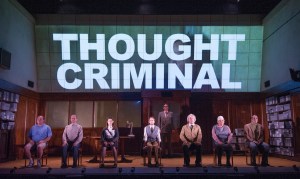
And hearts aglow with courage and moral righteousness, many of these same people will assemble at the foot of London’s Senate House on June 6 and fortify themselves by listening to George Orwell’s stern literary warning about the dangers of groupthink, thoughtcrime, Newspeak and censorship, utterly oblivious to the fact that they are actively serving as advance guard to the Ministry of Truth.


George Orwell - 1984 - Thought Criminal - Almeida Theatre

Support Semi-Partisan Politics with a one-time or recurring donation:

Agree with this article? Violently disagree? Scroll down to leave a comment.

Follow Semi-Partisan Politics on TwitterFacebook and Medium.

The Abnormalization Of President Trump

Abnormalization of Donald Trump

Donald Trump is not the first US president to ride roughshod over the Constitution or flout the checks and balances on executive power – and an honest media with any credibility would acknowledge as much

In highlighting the latest craven example of oversensitive American university students and administrations rescinding invitations to prominent conservative-leaning speakers, the Washington Post reports:

Once reserved for cheesy senior photos at campus landmarks, college commencement exercises have graduated into something different six months after Donald Trump was elected president: a battleground for protesting conservative policies and the people who promote them.

This is incredibly disingenuous. The trend of academic institutions and strident students refusing to tolerate the presence of anybody whose opinions diverge from the current leftist, social justice orthodoxy has been on the ascendance for well over a decade now, has accelerated rapidly in the last five years and has been widely commented on, written about and discussed – not least on this blog.

And yet here the Washington Post seeks to present the “student snowflake” syndrome as a new development which only now is rearing its head “six months after Donald Trump was elected president”. This comes perilously close to excusing the rising tide of illiberalism as merely a symptom or reaction against Trump’s unexpected victory, when in actual fact anybody with a functioning brain knows that Donald Trump’s victory was largely the symptom or reaction against the illiberal, intolerant Control Left.

But we are now witnessing a trend of articles and Op-Eds such as this, all seeking to portray every last one of Donald Trump’s actions as US president as being extreme and unprecedented in recent history. On foreign policy, domestic policy, constitutional matters and social issues, critics of Donald Trump (including the prestige Washington media) often seek to portray Trump as far more extreme than he has thus far shown himself to be, at least as far as policy initiatives and executive actions are concerned.

None of this is to support Donald Trump or excuse the atrocious start he has made to his presidency, which has been characterised by one largely self-inflicted political wound after another. Rather, the point is that by falsely pretending that every time Donald Trump breathes he is gravely wounding the Republic in ways unmatched by any previous president, Trump’s critics and the media inadvertently excuse serious failings in US policy and of past US administrations which deserve to be studied, criticised and rectified rather than merely glossed over.

Nicole Hemmer picked up on some of these areas as part of an article in Politico Magazine:

Many journalists covering the White House have lapsed into a practice of “Trump exceptionalism,” a tendency to assume each move the administration makes is new and nefarious. This assumption comes from a well-meaning place—a worry that they will be complicit in normalizing dangerous behavior in an American leader. But there are real risks, too.

First, it leads to quick-trigger panic over events that are normal. Take the reaction to the administration’s dismissal of 46 U.S. attorneys. Journalists framed it as a purge, and the panic escalated when one of those attorneys, Preet Bharara, refused to resign and was subsequently fired. But the dismissal of U.S. attorneys has been standard practice since the 1990s. The novel behavior here was Bharara’s. There’s a cost to getting this wrong: Cry wolf too many times, and readers are less likely to listen when the real dangers appear.

But perhaps the more important consequence of Trump exceptionalism is that it encourages journalists to overlook continuities. Trump is an abnormal president, unprecedented in many ways. But he is not sui generis. His anti-Muslim policies, hard-line anti-immigration stance, even his economic populism and free-trade skepticism all have long histories—even within mainstream conservatism. His nomination of Neil Gorsuch to the Supreme Court was as straightforwardly Republican as it gets.

One can quibble over the wording and focus of Hemmer’s argument – hysterically and disingenuously talking about Trump being “anti-immigration” when he has expressed no clear reservations whatsoever about legal immigration, for example. But her basic point is correct – inexperienced and superficial DC journalists have been too eager to cram every piece of news into their “Trump is unprecedented” narrative, whether each individual action happens to fit the mould or not.

When it comes to the Trump administration’s recent overtures to more authoritarian regimes (including Saudi Arabia and Turkey’s dictator-in-gestation Recep Tayyip Erdoğan), Glenn Greenwald does a far better job counting the ways that US support for morally questionable allies is far from unprecedented:

Since at least the end of World War II, supporting the world’s worst despots has been a central plank of U.S. foreign policy, arguably its defining attribute. The list of U.S.-supported tyrants is too long to count, but the strategic rationale has been consistent: In a world where anti-American sentiment is prevalent, democracy often produces leaders who impede rather than serve U.S. interests.

Imposing or propping up dictators subservient to the U.S. has long been, and continues to be, the preferred means for U.S. policymakers to ensure that those inconvenient popular beliefs are suppressed. None of this is remotely controversial or even debatable. U.S. support for tyrants has largely been conducted out in the open, and has been expressly defended and affirmed for decades by the most mainstream and influential U.S. policy experts and media outlets.

The foreign policy guru most beloved and respected in Washington, Henry Kissinger, built his career on embracing and propping up the most savage tyrants because of their obeisance to U.S. objectives. Among the statesman’s highlights, as Greg Grandin documented, he “pumped up Pakistan’s ISI, and encouraged it to use political Islam to destabilize Afghanistan”; “began the U.S.’s arms-for-petrodollars dependency with Saudi Arabia and pre-revolutionary Iran”; and “supported coups and death squads throughout Latin America.” Kissinger congratulated Argentina’s military junta for its mass killings and aggressively enabled the genocide carried out by one of the 20th century’s worst monsters, the Indonesian dictator and close U.S. ally Suharto.

Nor is Trump’s foreign policy behaviour a particular departure from more recent US administrations:

U.S. devotion to the world’s worst dictators did not end, or even recede, upon the end of the Cold War. Both the Bush and Obama administrations continually armed, funded, supported, and praised the world’s worst dictators.

In 2009, then-Secretary of State Hillary Clinton actually said of the murderous Egyptian dictator supported by the U.S.: “I really consider President and Mrs. Mubarak to be friends of my family.” When Egypt’s defense minister, Gen. Abdel-Fattah el-Sisi, overthrew that country’s first elected government, Clinton’s successor, John Kerry, hailed him for “restoring democracy,” and as Sisi became more brutal and repressive, the Obama administration lavished him with more weapons and money. The U.S. government did the same for the human-rights abusing dictators in Bahrain.

And of course this is to say nothing of Saudi Arabia.

It is bad enough having a US president who seems to suffer from self-delusions. That the Washington media and commentariat are engaging in fantastical delusions of their own is doubly dangerous for American democracy and policy.

To read the combined output of the American media, one would be forgiven for thinking that the George W. Bush administration never sanctioned the illegal torture of prisoners through dubious legal memos, and that the Obama administration never once decided to blast American citizens off the face of the earth with drone strikes, maintaining a “kill list” of US citizens who could be zapped without any due process.

No, apparently all of these sins are now forgiven – to the extent that the servile, sycophantic Washington media bothered to hold past administrations or senior officials accountable for their actions in the first place, generally preferring to party and intermarry with the political elite rather than be remotely adversarial.

In fact, the harsh truth is this: the only reason that Trump administration officials are being dragged over the coals for their own skirting of the Constitution and departures from US diplomatic and international norms are that Donald Trump has refused to cozy up to the Washington media class in the manner typical to all previous presidents, and so has failed to build up the traditional reserves of goodwill which would otherwise lead to effective immunity from scrutiny or criticism of himself and his administration.

This is a real and pressing problem, because every instance when the mainstream US media freaks out and acts as though Donald Trump is breaking new ground in authoritarianism by simply behaving in the same way as his predecessors only serves to drive a wedge between those media outlets and Trump-sympathising voters who already widely distrust the mainstream media – often with good reason.

Trump supporters need to be legitimately informed of occasions when the US president is acting in an unprecedentedly negative way, and examples of such behaviour – like the firing of FBI director James Comey for an ever-changing kaleidoscope of official reasons – are already rapidly mounting up. But their impact is massively diluted when Trump supporters have legitimate reason to believe that the media, angry at their rude treatment by the White House, is deliberately whipping every story into a major scandal, regardless of individual merit.

And the same goes for the rest of us, too. It does dissenting Republicans, Democrats and independents no favours when their every prejudice about Donald Trump is endlessly reconfirmed by an hysterical media which was only too happy to overlook some of the same faults, vices and mistakes in his predecessors of both parties. This behaviour by the media is not new, but the partisan debasement of political journalism has certainly sunk to new lows since Donald Trump took office.

A strong, almost irrefutable argument can be made that Donald Trump has brought the US presidency to an historical nadir through his personal coarseness, egotism, vengefulness and sheer inability to get to grips with public policy. The degree to which Trump’s political radar – so astute in helping him triumph over the establishment in the Republican primaries and general election – has now deserted him as he seeks to manipulate the levers of power in Washington D.C. is remarkable, if somewhat predictable.

Last week, a journalist was arrested in Washington D.C. for questioning Donald Trump’s Health & Human Services secretary, Tom Price, supposedly too aggressively. The alarming story was widely covered in American media at the time, but it has not driven the news cycle to nearly the same extent as other events which have ultimately proved to be little more than Donald Trump following the precedent set by previous administrations.

Why? Because too many in the media are ready and eager to go to DEFCON 1 every time that Trump opens his mouth, rather than cross-checking to see whether the latest presidential pronouncement or action is genuinely unprecedented or merely a more coarsely-worded rehash of something which would have gone unreported during the Clinton, Bush or Obama years.

Those of us with an active interest in the US media repairing and retaining its credibility in the wake of Donald Trump’s presidency should demand better from journalists, pundits and TV talking heads who currently paint every decision made by the Trump White House as an unprecedented step down the road to dictatorship.

The prestige media pretending to its audience that Donald Trump’s upcoming meetings with authoritarian dictators like Turkey’s Recep Tayyip Erdoğan are somehow unprecedented in American history is every bit as “fake news” as the ludicrous stories on the fringe Right about President Obama operating a paedophile ring out of the White House – only the prestige media’s lies and distortions are ultimately far more damaging, being read and believed by people with real power and influence in American society.

In short, Donald Trump is providing enough fresh new worrying material for us all. There is no need for the media to add to the drama by inventing more.


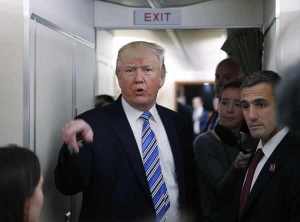
Donald Trump speaks to reporters

Support Semi-Partisan Politics with a one-time or recurring donation:

Agree with this article? Violently disagree? Scroll down to leave a comment.

Follow Semi-Partisan Politics on TwitterFacebook and Medium.