Nothing Positive To Say About The EU? Just Bash The Leave Campaign

Owen Jones, unable to think of one positive thing to say in support of the European Union, focuses his attention on mocking the Leave campaigns

Owen Jones can’t make a full throated defence of the European Union and Britain’s place in it, because in his heart of hearts he knows the EU to be a bad, terminally unreformable institution in which we should play no further part. Of that I am absolutely convinced, no matter how deep in his subconscious Jones may have buried his natural euroscepticism.

But to avoid alienating his virtue-signalling left-wing readership who instinctively support the EU (either out of simplistic internationalism or the cynical knowledge that being in the EU imposes stricter employment and social laws on the UK than British voters would likely tolerate themselves), Jones has walked back nearly all his earlier principled criticism of Brussels, and now bleats the usual fantastical nonsense about staying in the EU to transform it into some kind of socialist utopia.

Thus, unable to make a passionate argument in favour of the European Union, Jones must content himself with making snide observations about the Leave campaigns (who regretfully seem to provide him with near endless material). He cannot make an honest intellectual or moral case for Remain, so he deflects by snarking at those who want to reclaim British democracy by leaving.

And so we get stuff like this, in which Jones wastes an entire YouTube video smugly pointing out that pro-Brexit Conservatives are moaning about the Remain campaign waging “Project Fear” when many of them adopted similar arguments against Scottish independence during the 2014 referendum, and against Labour and the SNP in the general election last year. Because, according to this bizarre logic, two wrongs (the Evil Tories doing it before, and the Remain camp doing it now) cancel each other out.

Jones scoffs:

Project Fear. That is how Chris Grayling, who is a Tory cabinet minister who supports Brexit – Britain leaving the European Union – that’s how he is describing the campaign led by the government to stay within the European Union. As soon as I heard him describe the campaign to stay in in those terms, all I could think was “you cheeky git!” It reminds me of the Yiddish expression, chutzpah.

[..] Then there’s Michael Fallon, the Defence Secretary, who in the weeks before the general election said “Ed Miliband stabbed his own brother in the back to become Labour leader. Now he is willing to stab the United Kingdom in the back to become prime minister”. Again, you had co-ordinated attacks by big businesses warning of economic calamity were Labour to enter Number 10. Project Fear on speed, quite frankly. The whole campaign was waged on the basis of fear.

Now, the people complicit with that included, obviously, the likes of Chris Grayling and his colleagues in the Conservative cabinet, and the Conservative backbenches who now support Brexit and who are angry at those tactics, as they see it, being employed against them.

We can expect to see a lot more of this finger-wagging nonsense over the next few months from those who are determined to keep Britain inside the European Union.

Some of them refuse to make positive arguments for the European Union because they actually rather dislike it, but hold Britain in such low regard that they believe that despite being many times the size of independent countries like Australia and New Zealand, Britain is uniquely incapable of functioning independently outside of a regional political union.

Others shy away from talking up the European Union because they genuinely love the institution, want us to integrate even more deeply and therefore worry that they might get too carried away praising Brussels and so harm their own side.

Others still dislike the European Union and know full well that Britain could prosper outside this anachronistic mid-century supra-national political union, but persuade themselves to support Remain for fear of the social stigma that comes with declaring oneself a eurosceptic in certain circles.

But in no case will they be honest with the British people, because they have all come to the conclusion that telling what they see as difficult truths – in their case, that the European Union is a good thing for a, b and c reasons, and Britain should continue to participate because of x, y and z – will not win the referendum, but that Fear, Uncertainty and Doubt (FUD) will do the job quite nicely.

Owen Jones rightly bristles at the way that the “No” campaign wielded this tactic in the Scottish independence campaign, which would make you think that he opposes it being used by any group and in any context. But apparently not so. Because Conservative Leave supporters “brought it on themselves” by utilising FUD tactics in the past, the Remain camp should not be criticised for doing so now.

It is a shame to see Owen Jones – at his best an intelligent and articulate voice on the Left – frittering away his time on the EU referendum campaign by pointing out the foibles and tactical hypocrisies of the Leave campaign. But what other choice does he have? Despite knowing full well that the EU is unreformable, Jones has committed to supporting Britain’s continued membership.

I think that this is a betrayal of the democratic accountability and local control that Jones spends much of his time promoting. And I suspect that he does, too. Which is why we can all expect to see lots more “gotcha” videos on YouTube criticising individual members of the Leave campaign, but not a damn thing praising the European Union or explaining how this magical socialist “reform” of the EU is to be achieved.

After all, nothing distracts from a guilty conscience like pointing out the flaws, failings and inconsistencies of other people.

 

European Union - United Kingdom - Britain - Flags

Agree with this article? Violently disagree? Scroll down to leave a comment.

Follow Semi-Partisan Politics on TwitterFacebook and Medium.

John McCain, The Man Who Gave Us Sarah Palin, Criticises Brexit

The man who wanted to put Sarah Palin a heartbeat away from the American presidency has something to tell us about Brexit

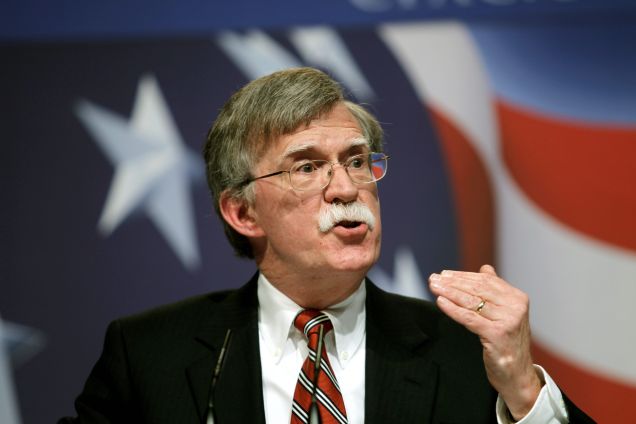
Following swift on the heels of former US ambassador to the United Nations John Bolton’s welcome words of support for Brexit and the campaign for Britain to reclaim our democracy, Senator John McCain comes charging in to defend the status quo.

From the Times (+):

It is a few weeks before we get Barack Obama’s intervention in the EU referendum debate, but today we get a foretaste of America’s view of Brexit.

John McCain, the US senator defeated by Obama in 2008, has issued a blunt warning after meeting MPs on the Commons defence select committee that the “need for a strong and united Europe is greater than ever”.

Warning that Britain and the US are “confronting the most diverse and complex array of crises since the end of World War II”, McCain claims that “British membership in the EU is a vital contributor to the security and prosperity of Europe and the United States”.

He insists it is a decision for the British people, but notes that “whatever the outcome of the referendum on EU membership, it will send a strong message to Vladimir Putin”.

At least McCain does little to disguise that his view of Brexit is coloured almost entirely by his view of the American national interest, rather than what might be best for America’s strongest and closest ally, or for democracy in general – so in that regard he is slightly better than President Obama, who presumes to lecture the British people on what is best for them.

The Times – which seems to have deliberately ignored Ambassador Bolton’s contradictory intervention in the debate yesterday – goes on to suggest that Brexit supporters might have a difficult time dismissing a decorated war veteran like John McCain, as though a person’s military exploits from close to half a century ago have a direct bearing on their judgement about another country’s internal affairs.

Nonsense. If John McCain’s judgement is a factor at all here, then the failed presidential candidate who selected Sarah Palin to be his vice presidential running mate hasn’t a leg to stand on.

Let’s recall Senator John McCain’s finest hour:

The person I’m about to introduce to you was a union member and is married to a union member, and understands the problems, the hopes and the values of working people; knows what it’s like to worry about mortgage payments and health care, the cost of gasoline and groceries. A standout high school point guard; a concerned citizen who became a member of the PTA; then a city council member, and then a mayor; and now a governor who beat the long odds to win a tough election on a message of reform and public integrity. And, I am especially proud to say in the week we celebrate the anniversary of women’s suffrage, a devoted wife and a mother of five.

She’s not — she’s not from these parts and she’s not from Washington. But when you get to know her, you’re going to be as impressed as I am. She’s got the grit, integrity, good sense and fierce devotion to the common good that is exactly what we need in Washington today. She knows where she comes from and she knows who she works for. She stands up for what’s right, and she doesn’t let anyone tell her to sit down. She’s fought oil companies and party bosses and do-nothing bureaucrats, and anyone who puts their interests before the interests of the people she swore an oath to serve.

She’s exactly who I need, she’s exactly who this country needs, to help me fight — to help me fight the same old Washington politics of me-first and country second.

My friends and fellow Americans, I am very pleased and very privileged to introduce to you the next vice president of the United States — Gov. Sarah Palin of the great state of Alaska.

And this is the person whose advice we should be fawning over when it comes to global security, the future of our democracy and our right to self-determination here in Britain?

We have enough politicians and high profile public figures with calamitous judgement and weak powers of prognostication here in Britain, without importing any more uninformed voices from overseas.

I think you can sit out this round, Senator.


European Union - United Kingdom - Britain - Flags

Agree with this article? Violently disagree? Scroll down to leave a comment.

Follow Semi-Partisan Politics on TwitterFacebook and Medium.

John Bolton’s Alternative American Position On Brexit

John Bolton - Brexit

Former United States UN ambassador John Bolton provides a refreshingly different – and much more authentically American – position on Brexit to that of the sitting president

In marked contrast to President Obama – who treats his country’s closest ally with utter contempt by urging the British people to accept a continued loss of sovereignty and self-governance which America would never tolerate for herself – there are a number of other, more respectful American public figures who treat British democracy with the respect it deserves.

Some of these individuals not only recognise that the EU referendum is a sovereign decision for the British people alone to make without unwelcome hectoring from the Oval Office, but also appreciate that Brexit is the far better outcome for Britain, America and the world.

One such person is former US ambassador to the United Nations, John Bolton, who writes in the Telegraph:

President Barack Obama embodies the conventional wisdom, unabashedly supporting continued construction of a European superstate. Obama’s fascination with Brussels, however, reflects his own statist inclinations. His lack of international leadership perfectly mirrors the EU’s timid, ineffective defence of its own interests and values. Of course Obama loves the EU.

Arguing that today’s EU is collectively stronger than a continent of free nation-states misreads history, distorting it through a quasi-theological lens. The EU is less than the sum of its parts. Its politico-military “unity” is purest symbolism. Flags and anthems not only do not embody unity, but instead mask a poisonous, paralysing disarray.

Nor is unity reflected in incessant affirmations of Europe’s economic size, as if it were truly integrated. Indeed, if Europe had single-mindedly pursued a single market, abjuring political abstractions, it could have achieved more economic integration and broader political consensus together, rather than getting wrapped around the axle of “ever closer union”. And just as symbolic gestures do not ensure unity, reversing those symbolic gestures does not forestall Britain’s ongoing descent from representative government into Europe’s bureaucratic oligarchy. David Cameron’s proposed changes to London’s relationship with Brussels in no way addresses, let alone cures, the systemic failures inherent in EU decision-making structures.

Brilliant, stirring stuff. This blog does not often  share common cause with prominent neoconservatives in the model of John Bolton, but in this case he is absolutely correct. The point about Europe being less than the sum of its parts is particularly astute and counters the lazy (and never supported) trope that the EU amplifies our economic, military and diplomatic output, when in fact the European Union does no such thing.

The EU is far from a single, integrated economy – as John Bolton goes on to argue, the single-minded obsession with forging a political union has in many ways actually detracted from the creation of a true single market, such as could ever exist in a continent with such diverse cultures and no common language. Therefore, if we vote for Brexit, Britain will not be leaving some dynamic and prosperous unified economy – we will be leaving a political bloc dominated by an ill-fated currency union which imposes utter economic misery on the south and imposes financial obligations in the form of necessary transfer payments with the northern countries are unwilling to meet.

Bolton is also absolutely correct when he turns his analysis to the military and diplomatic angle:

America is partially at fault for the EU mirage because Nato, largely a US creation, has been so successful. For decades, sheltering under Washington’s military umbrella, Europe, including Britain, has recklessly shrivelled defence budgets and increased social-welfare expenditures. The results are not pretty. The EU has not only retreated from the world stage, it is becoming incompetent in ensuring security within its own “borders”. Europe’s loss of defence capabilities, as well as will and resolve, are deeply inimical to defending the West against today’s increasing global threats.

[..] If advocates of Britain remaining in the EU haven’t noticed, America’s international commitments are under attack from several populist directions in our ongoing presidential campaign. Some, especially among Democrats, simply do not value national security, preferring to focus on domestic issues, hoping – God forbid – to make America look more like social-democratic Europe. Others, especially among Republicans, think America’s allies have got a free ride, don’t appreciate US efforts, and should be made to fend for themselves. If Britain votes to stay In, this view may prevail across Washington. So be careful what you wish for.

These criticisms are entirely justified. Though Britain does best of the European powers in terms of maintaining any form of credible military, our armed forces have been pared back relentlessly while money is funnelled in an unearned peace dividend toward vote-winning social programmes.

And appallingly, many of the worst cutbacks have taken place under the current supposedly conservative administration of David Cameron, whose government’s disastrous stewardship of defence matters has left Britain with no maritime patrol capability and (far more crucially), no aircraft capability until the two (or possibly just one) new carriers currently being built come into service.

America has traditionally regarded Britain as her most stalwart ally because we have maintained moderate expeditionary capabilities together with the political will to use them where necessary. The political will has clearly ebbed away, as evidenced by the recent debacle with Parliament’s response to the Syrian crisis, and the expeditionary capabilities are gravely imperilled too. The Pentagon has always operated on the assumption that Britain could be relied upon to field an entire division operating independently of American forces in any joint action, but this is now being re-evaluated.

Part of the EU’s problem is that it has pretensions of significance on the world stage which are simply not matched by its willingness to divert money from generous social programmes to pay for them. Our defence is literally being guaranteed by the American working poor, who go without the kind of welfare perks (like working tax credits) and government-provided universal healthcare that we take for granted, in order to fund the American military machine.

Then there is also the issue of duplication. As well as spending far less on defence spending in real terms, the stubborn refusal of EU member states to give up the last vestige of sovereignty by abolishing national armies and contributing to joint European armed services means that there is massive duplication of HQ and some core infrastructure, while not nearly enough of everything else. There are probably enough European generals and admirals to fully man a Nimitz-class aircraft carrier, and yet Europe does not possess even one comparable ship (to America’s ten).

In all of these ways, the European Union fails to pull its weight, let alone punch above its own weight, and actively contributes to making Europe far less than the sum of its parts.

As Bolton rightly notes, flags and anthems do not embody unity. And in the European Union’s case, these ostentatious pretensions of statehood only mark the desperation of certain political elites to escape the irritant of accountability to their own electorates and instead dissolve themselves into the unaccountable anonymity of Brussels supranational governance. Or – to see the project in the kindest possible light – they reflect a desperate effort to create a single European demos through sheer force of will, the geopolitical equivalent of “if you build it, they will come”.

But no European demos came, and none is coming. The entire European Union is built on an imaginary foundation and cannot hope to succeed, let alone win the respect and devotion of an informed citizenry.

Ambassador John Bolton gets it. Tragically, Barack Obama does not.


European Union - United Kingdom - Britain - Flags

Agree with this article? Violently disagree? Scroll down to leave a comment.

Follow Semi-Partisan Politics on TwitterFacebook and Medium.

Announcing The Leave Alliance

The Leave Alliance Launch

A campaign that Semi-Partisan Politics is proud to support

I have written a lot of uneducated bilge about the European Union in my time.

My natural instincts – supporting democracy, self-determination, the nation state and accountable government – were generally sound, but too often I lapsed into lazy confirmation bias and weak, borrowed rhetoric when arguing for Britain’s independence from Brussels.

I would still be churning out even more bilge today, were it not for the eureferendum.com site and the group of activist bloggers who are coalescing around Dr. Richard North and Flexcit, that rigorous, comprehensive plan for safely extracting Britain from European political union while minimising risk.

If this blog has gone somewhat quiet on the finer policy details of the Brexit question over the past year, sticking to the bigger picture, it is only because through slowly becoming familiar with this body of work, I have come to realise how much I have yet to learn and understand about the workings of the EU and the international regulatory environment – and how much I thought I understood that turned out to be completely wrong.

The upshot is this: this referendum should not be about David Cameron’s fraudulent “renegotiation” deal (even though it is yet more evidence of the EU’s inability to reform even under existential threat), any more than it should be about the arbitrary and misleading statistics about jobs saved or threatened, hospitals built or universities closed. All of these alarmist talking points can be fought to a draw on the 24-hour news channels by the SW1 talking head armies of the establishment Leave and Remain campaigns.

This referendum – this rare, great opportunity that we have been given – should be about our democracy. It should be about who governs Britain, how they govern Britain and how we exercise oversight over the people who make the key decisions affecting our lives. And one thing is certain: the more people learn about the true nature of the European Union – and the more they are encouraged to think like engaged citizens rather than fearful consumers – the more they come to realise that Brexit is an essential first step toward reclaiming our democracy.

That’s what The Leave Alliance is about. TLA is an alternative to the dumbed-down, uneducated major campaigns battling it out for lead designation in the referendum campaign, whose dismal and unforgivable failure to embrace a properly worked through plan for Brexit – and then promote it in the media – means that we are now fighting the referendum campaign with our hands tied behind our backs, David Cameron chuckling to himself all the while.

The Leave Alliance launches later today, in Westminster, and it will be a campaign that engaged citizens and thinking eurosceptics and Brexiteers across the country can actually be proud to support. It is a campaign which understands that Brexit is part of a process of much-needed democratic renewal, not a fixed destination in itself. And it is a campaign which will never condescend to the British people by reducing this great question of human governance and statecraft to a disingenuous war of competing statistics.

If you feel let down and embarrassed by the well-funded but utterly amateurish Leave campaigns, then The Leave Alliance offers you a home for this referendum campaign.

If you get angry when bumbling Johnny-Come-Latelys like Boris Johnson blunder onto the Brexit scene, stealing the limelight while making a complete hash of arguments which more intelligent eurosceptic voices have been making for years and even decades, then The Leave Alliance is for you.

And if you read Semi-Partisan Politics and generally find yourself agreeing with what is written here, then I ask you to follow my lead and abandon the mainstream Leave campaigns who are cheerfully leading us to defeat, and instead support The Leave Alliance, whose strong commitment to eurosceptic principles and intellectual rigour will campaign for Brexit – and to keep the flame of genuine democracy alive in Europe – for as long as it takes to achieve our cherished goal.

The Leave Alliance

Wednesday 16th March, 2.30PM

The Council Room

One Great George Street

London, SW1P 3AA

Donate here.


European Union - United Kingdom - Britain - Flags

Agree with this article? Violently disagree? Scroll down to leave a comment.

Follow Semi-Partisan Politics on TwitterFacebook and Medium.

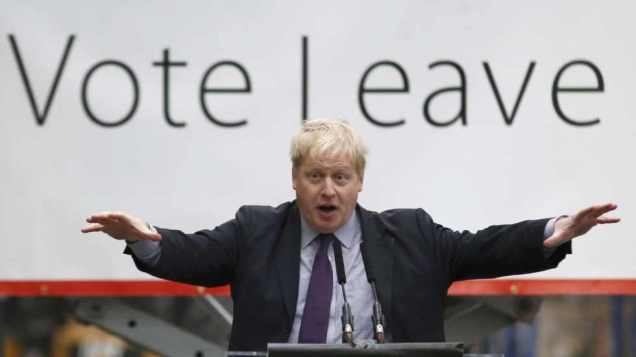
Why The Real Elites Consistently Support Britain’s EU Membership

Boris Johnson - Vote Leave - European Union - EU Referendum

Professional and social elites are more likely to oppose Brexit for narrow personal reasons – which makes them bad citizens

James Delingpole writes in the Spectator that the real dividing line when predicting someone’s position on Brexit is where they fall on the posh / oik spectrum:

If you need to know how properly posh you are there’s a very simple test: are you pro- or anti-Brexit?

[..] So there I was at dinner the other evening with a delightful, erudite Old Etonian friend of mine. Let us call him ‘Kevin’ (not his real name). Kevin has an accent so deliciously plummy that if you could somehow tin it and sell it to the Chinese you’d become a billionaire. He is immensely cultured, civilised, wise and sensitive. I agree with him on everything, so naturally, when I asked him his views on Brexit and he launched into his eloquent diatribe on why he believed — and long had done — that the EU was the Abomination of Desolation, I listened in a state of near-ecstasy.

Kevin’s beautifully modulated speech went on for at least ten minutes. (There was hardly a shortage of material.) Then, suddenly, something weird happened. About 30 seconds before the end, Kevin shifted tack, and explained (or actually, hardly explained at all) that for all these reasons the only logical position was for Britain to remain in EU. Something to do with Europe being a lovely place and our having a moral duty to help it set the tone, I think.

And goes on to draw a interesting parallel with the Thatcher era:

What does all this tell us about snobbery and Tory politics? Quite a depressing bit, I’ve begun to realise. You can see much the same sort of thing going on in the Thatcher era. Who were her greatest loyalists, the ones most in tune with her radical programme? Why, they were grammar-school types with slightly suspect accents, such as Robin Harris and Norman Tebbit — not the plummy-voiced grandees such as Heseltine et al, who were the ones who eventually did for her.

This is also true, I think, of the upper social echelons’ attitude towards Nigel Farage. It’s not that they disagree with much of what he says: how could they, when he’s so refreshingly candid and reactionary and un-PC? But they’ve persuaded themselves that, like Ukip, he’s just a bit too spivvy and downmarket to deserve their open affiliation. This enables them to have their cake and eat it: privately enjoying his every home truth but never being tainted by that awkward, embarrassed feeling which tends to accompany frankly expressed views on matters like immigration.

Delingpole sees this as an elitism thing: the closer you are to the establishment or to the top of your field or profession, the more likely to are to have vested in the current  order of things and the more likely you are to sense Brexit (sometimes justifiably) as a threat to your current position.

I think that this probably holds true in all manner of fields, from education (How many university Vice Chancellors are brave enough to bite the hand that feeds them recycled British taxpayer money?) to the arts (for the same reason) to the world of business, which understandably cares a lot about economic stability and not so much about democracy.

But this blog maintains that one’s stance on the EU referendum is also determined by whether you consider yourself a citizen or a consumer first and foremost. As Delingpole’s anecdote makes clear, many of the European Union’s biggest advocates within the British establishment freely concede and attack its antidemocratic nature, but still refuse to countenance leaving the club. They are unable take this logical step because they are thinking with their wallets and their social reputation in mind, rather than the good of the country.

By contrast, someone at the sharp end of globalisation – who has experienced the negative aspects of free trade and free movement of people on their employment, living standards and public services far more than the person living in Mayfair – is more likely to vote on the kind of issues that a thinking citizen should vote on, because they are much more likely to be directly touched by those issues.

As this blog recently noted:

If you have grown up and prospered under the status quo, with Britain as a vassal state of a larger and ever-more tightly integrating political union, then it takes an extraordinary amount of curiosity, empathy or insight to come to any conclusion other than that the EU has been a resounding success on all counts. By contrast, if you are self-employed or work in a semi-skilled or unskilled job at the sharp end of globalisation, you are more likely to be negatively impacted not just by immigration, but by the inability of your vote to effect any kind of meaningful political change in Britain thanks to the cross-party pro-EU consensus.

[..] It is those who think primarily with their wallets, as consumers first and foremost, who are most likely to be susceptible to the Remain campaign’s Project Fear and scaremongering tactics about the hysterically hyped “costs” of leaving the European Union, while those who think as engaged citizens and global stakeholders who are most likely to question the European project.

That doesn’t mean that the Oik (in Delingpole’s parlance) is not also often voting for his or her self interest. They may well want to see Brexit as part of a broader package of counterproductice protectionist measures, which would inevitably do Britain more harm than good. But regardless of their personal motivation, they are more likely to discuss the issue of Brexit in terms of policy and of democracy. The oiks thus often act like a better, more engaged citizens than the elitists who lazily support the Remain camp to virtue-signal their distaste at UKIP while overlooking the democratic question.

As for myself, I enjoyed the delights of a state education, worked to get myself into Oxbridge, but then left Cambridge University and went to Warwick. I suppose all of that places me firmly in the “Oik” category, a position I shall hold with even more pride now that it is also a marker for principled euroscepticism.


European Union - United Kingdom - Britain - Flags

Agree with this article? Violently disagree? Scroll down to leave a comment.

Follow Semi-Partisan Politics on TwitterFacebook and Medium.