No, Stuart Rose: To Leave The EU Is Not To Withdraw From The World

Stuart Rose - Britain Stronger in Europe - EU Referendum - Brexit

The continued efforts by pro-Europeans to distort and misrepresent eurosceptic ideas betrays a lack of confidence – and intellectual depth – in their own

The first of the pro-EU campaign groups, snappily named “Britain Stronger in Europe”, is due to launch later today, and will be headed by ex-Marks & Spencer celebrity CEO Stuart Rose.

The Guardian reports:

At the launch on Monday, Rose will say: “Those of you who know me will know that I am not an uncritical fan of the European Union. Far from it. That’s why I signed a letter arranged by Business for Britain calling for reform of the EU. Wanting reform, however, is not the same as wanting to leave.

“To claim that the patriotic course for Britain is to retreat, withdraw and become inward-looking is to misunderstand who we are as a nation. In this ever-changing and very uncertain world we need to engage with strength.

“I will not allow anyone to tell me I’m any less British because I believe in the strongest possible Britain for business, for our security and our society.”

It seems as though accusations of a failure of patriotism and belief in Britain are finally hitting a nerve. Good – these accusations are entirely valid, and the pro-EU crowd should regularly be made to feel uncomfortable by being confronted with their lack of faith in their own country to survive like nearly every other major country outside of the European Union.

It is continually amazing to witness the extent to which the pro-European forces do Britain down in order to make their flimsy case. The United Kingdom is the sixth largest economy in the world, a cultural powerhouse, a liberal democracy and a declared nuclear power. If a country of our size and influence cannot negotiate satisfactory trading relationships with the rest of the world, then no country can. And of course far lesser countries than Britain do negotiate bilateral and mutual trade deals every year without difficulty, rendering this scaremongering line of argument absurd – not that we have seen the last of it, by any means.

Continue reading

‘Vote Leave’ Hammer Home The Message: “Brexit Is The Safe Option”

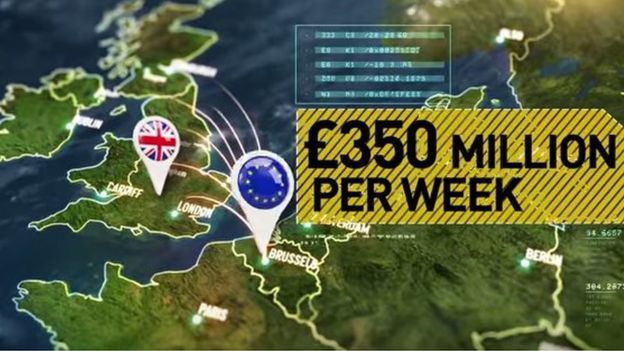
Vote Leave - EU Map

Early signs indicate that the “Safe option = Leave EU” message will be hammered home relentlessly with every single eurosceptic talking point, whether it necessarily fits or not

Today’s campaign email from Vote Leave hammers home the “safety first” option of voting for Brexit even more strongly than before.

As well as having a subtle dig at the rival pro-European campaign group Britain Safer in Europe (which launches today) by referring to them by their unfortunate initials “BSE”, today Vote Leave have this to say on sticking with the status quo of full EU membership:

Which is safer – to vote ‘remain’ and keep giving more power and more money every year to a Brussels bureaucracy that cannot cope with the problems of the modern world, or to take back control and negotiate a new, friendlier UK-EU relationship based on free trade and stronger international cooperation, often at a global (not regional) level?
 
Which is safer – to keep going with the 1950s vision of ever more centralisation of power in the Brussels bureaucracy or to build new institutions that allow faster, more agile cooperation on global challenges?  
 
Which is safer – to accept the permanent supremacy of EU law or to trade and cooperate with the EU without accepting the supremacy of EU law, as many other countries in Europe and around the world do?
 
Which is safer – to keep Brussels in charge of negotiating trade deals that affect millions of British jobs or to take back control and negotiate these deals ourselves?
 
Which is safer – to trust big multinational businesses and their lobbyists to make laws over dinner in Brussels, or to take back control?
 
Which is safer – to keep going with the Foreign Office’s hope that eventually Brussels will listen to us, which has failed for 40 years, or take back control and invest in science so we can create and build new industries?  
 
A vote to ‘remain’ is not a vote for the status quo. It means handing over even more power and money to Brussels. We need a new UK-EU relationship. The only way to take back control and get a new UK-EU deal is to Vote Leave.

As I pointed out over the weekend, not all of these “which is safer?” questions work very well. In fact, some of them have very little to do with safety or even stability one way or another.

But today’s campaign email is a real marker of intent. It shows that Vote Leave intend to continue pushing this point and throwing up “safety first” scenarios until a couple of them stick. I’m sure they will be conducting polling and focus groups to further test responses to these messages before discarding the ones that do not work, and refining those that do until they become more deadly rhetorical weapons.

At this early stage, the arguments put forward for Brexit lack any real depth or sophistication – not that the pro-EU arguments are any better. Campaigners realised that the “No” vote in the Scottish independence referendum was won party because the Better Together campaign went relentlessly negative, portraying separation from the UK as a leap into the great unknown. And now they want to seize the tool which is most likely to be used against them (arguing that Brexit represents a leap in the dark) before the pro-EU crowd get a chance.

Mission accomplished, so far. But at some point, the effect of both sides yelling “safety!” at the electorate is likely to cancel itself out. And the question then becomes: what does each side have to offer that will speak to the hopes and aspirations of the British people, not just their desire for safety and stability?

This is where the eurosceptic side could (and hopefully will) run away with the show. Those who want to yoke Britain to the EU come what may can offer nothing but a continuation of what we already have – life as part of an antidemocratic federation, where uniformity and harmonisation are relentlessly encouraged just for the sake of it. The eurosceptics can offer so much more, provided that they avoid reciting an endless list of euro grievances and focus strongly on the opportunities and benefits of re-engaging with the world.

This “which is safer?” rhetoric is all very well, but it is the arguments that come next which will win or lose this referendum.
EU Renegotiation - Brexit - European Union

Follow Semi-Partisan Politics on TwitterFacebook and Medium.

The Glib And Oily Art Of David Cameron’s Superficial EU Renegotiation

David Cameron’s EU renegotiation is less a firm-handed assertion of Britain’s national interest, and more a collusion with fellow EU leaders to dupe the electorate into believing that real reform is possible

The fact that David Cameron’s key demands and red lines for the EU renegotiation now underway are wilfully vague and almost comically detached from the concerns of British voters is hardly news. But this depressing truth is hammered home even more forcefully today with the leaking of the prime minister’s four-point plan to win concessions from Brussels.

From the Telegraph:

Cabinet sources have told the Telegraph they are confident they can find a way to keep Britain inside the EU with better terms of membership. Their plan involves:

  • Forcing Brussels to make “an explicit statement” that Britain will be kept out of any move towards a European superstate. This will require an exemption for the UK from the EU’s founding principle of “ever closer union”.
  • An “explicit statement” that the euro is not the official currency of the EU, making clear that Europe is a “multi-currency” union. Ministers want this declaration in order to protect the status of the pound sterling as a legitimate currency that will always exist.
  • A new “red card” system to bring power back from Brussels to Britain. This would give groups of national parliaments the power to stop unwanted directives being handed down and to scrap existing EU laws.
  • A new structure for the EU itself. The block of 28 nations must be reorganised to prevent the nine countries that are not in the eurozone being dominated by the 19 member states that are, with particular protections for the City of London.

Of these, only one point (the final one) comes anywhere close to defending Britain’s national interest and reflecting the concerns of the electorate. Of the others, the first two points are completely irrelevant, while the third is guaranteed to meet stiff resistance from other EU leaders and will likely require so many other concessions from the government that securing it would be the ultimate Pyrrhic victory.

Continue reading

How Should The “Leave” Campaign Use Nigel Farage?

Nigel Farage - European Parliament

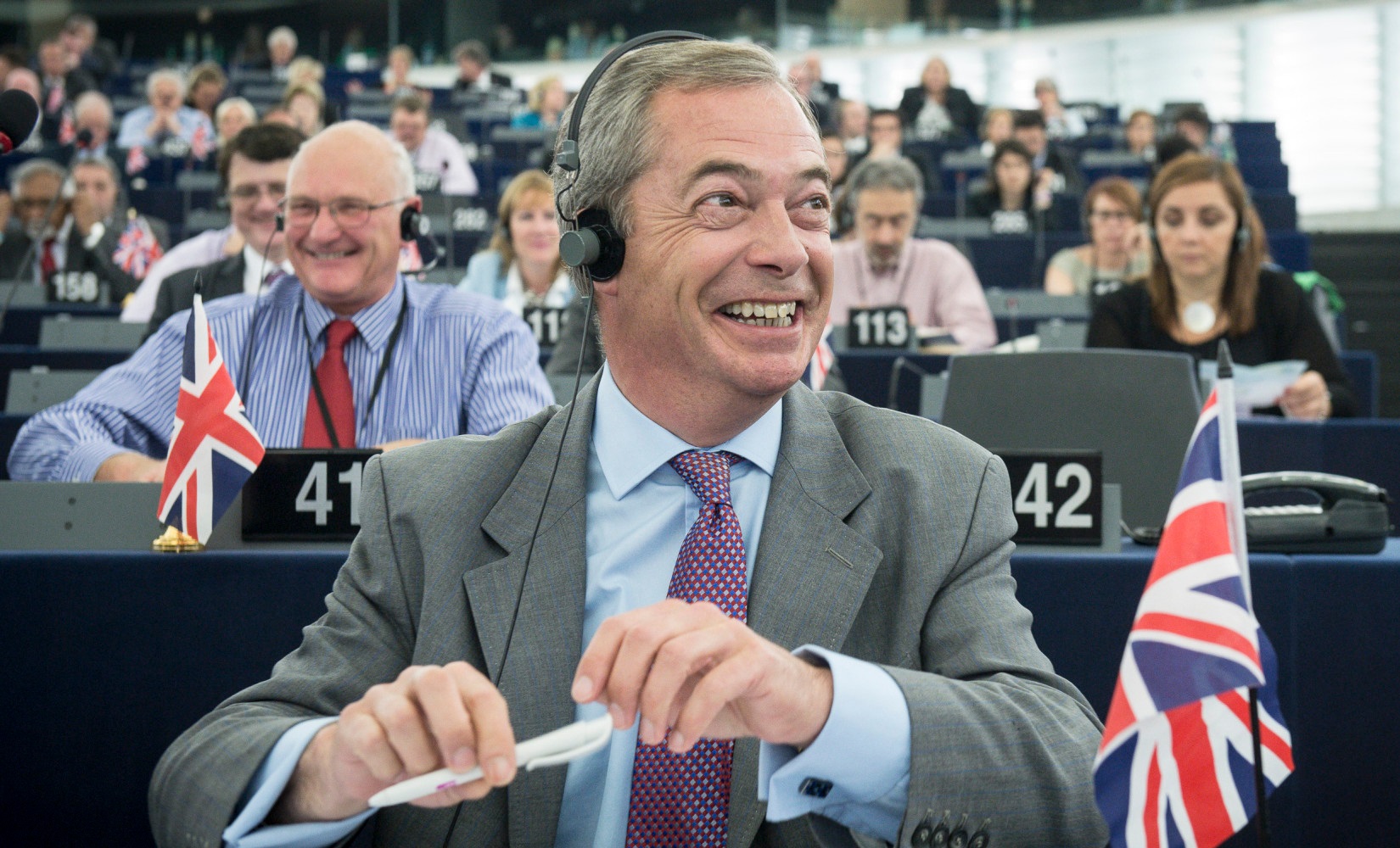
A small squabble in the European Parliament this week may have solved the quandary of how best to use Nigel Farage in the coming Brexit campaign

The biggest impact on Britain made by French president Francois Hollande thus far has been the steady exodus of financially successful French workers and their families to London, fleeing the sclerotic economy and punitively high taxes across the English Channel.

But now Hollande has surpassed himself. This week, France’s president inadvertently revealed a potential answer to the question that has been dogging the various rival “Leave” campaigns of those fighting for British secession from the European Union. That question: how best to utilise Nigel Farage, the man without whom this referendum would not be taking place at all, in a way which does not drive away swathes of other voters for whom the Farage and UKIP brands are toxic?

In Brussels on Wednesday to make a joint address to the European Parliament with Angela Merkel, Hollande allowed himself to become riled up by Nigel Farage’s questioning and posturing, and in doing so the French president let slip something which every other European leader knows, but none will say directly.

From the Telegraph:

Continue reading

Should Eurosceptics Just “Get A Life” And Learn To Love The EU?

Euroscepticism - EU

Conservative cabinet members are now openly insulting eurosceptics, as the Tory rift widens

Who cares about the European Union? What’s all the fuss about? Eurosceptics should stop making fools of themselves, get with the times, and stop embarrassing themselves by articulating their pesky concerns about democracy and national sovereignty.

Or at least so says the Conservative Minister for Small Business, Anna Soubry. While speaking at a Conservative Party Conference fringe event organised by European Movement, Soubry had some choice words for seemingly anyone who does not faithfully adhere to the “in at all costs” mindset.

The Telegraph reports:

Speaking at a conference event hosted by European Movement and other pro-EU bodies, Ms Soubry told campaigners they must not “underestimate” the emotion of “those who want us to leave”.

“That is a very difficult thing to begin to debate with, to engage with, and it’s difficult often to beat because they do have this passion that is an obsession. They live it, eat it, drink it, sleep it,” she said.

“I don’t just mean a few people in our own party but obviously all those other people who’s name we’re not going to mention”.

Ms Soubry went on: “It means that they have this obsession that they will do almost everything and anything, they will devote all their time in a way that really is not healthy for them in this run-up to the referendum.”

“Because as I say, they live it, they eat it, they drink it. You want to say to them: For God’s sake, get a life. But they’ve gone beyond that. That makes it very difficult for us.”

Yes, that’s us: swivel-eyed, obsessive cranks who are unreasonably fixated on a single issue to the exclusion of supposedly more important matters. Ideologically blinkered and impervious to facts, that’s us, unlike the enlightened pro-Europeans who are so famously open to dissenting ideas.

Continue reading