Can I Get A Prescription For My Chronic Europhobia On The NHS?

Europhobia - Euroscepticism - EU Referendum - European Union - Leave Campaign - Stereotypes

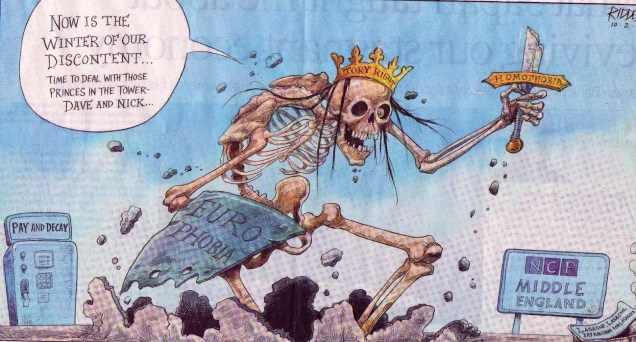
When will they invent a cure for euroscepticism?

Well, it’s official. Caring about democracy, taking an interest in how we choose to govern ourselves and thinking like an engaged citizen rather than a terrified consumer are symptoms of madness, or a highly contagious disease of some kind.

Dan Hodges laments:

Boris Johnson is mayor of the world’s greatest capital city. He is currently the bookies favourite to be next prime minister of the United Kingdom. And yet the madness has claimed him too.

As it must claim anyone who signs up to the Out campaign’s cause. Because insanity is not a by-product of the Out campaign. It is at the core of its offer.

For Out to win they know they must first destroy reason. They must convince a majority of mature, rational British adults that we should withdraw from our largest, most profitable trading block just at the very moment the world is teetering on the brink of another global recession. They know they must convince them of the wisdom of turning our back on our most important diplomatic partnerships just as Vladimir Putin is casting his malign eye westwards. They know they must convince them the Britain should attempt to face – in isolation – the most significant refugee crisis and terror threat since the war.

And so to do that, they are trying to spread the contagion. Not though rational argument. No[t], actually, through fear. But simply by trying to drag an entire nation through the looking glass. To convince us all to see the same upside down world they see whenever the hear the name “Europe”.

And concludes, hopefully:

This is what this debate is doing to otherwise sane, intelligent people. It is literally making them incapable of confronting the realities of the world we face in 2016. They are being forced to flee through time, back to the windswept beaches of France, or the dusty hilltop forts of the Raj.

And there, huddled round their camp fires, belting out another lusty rendition the Eton Boating song, they will lose. The voters are hardly enamoured of Europe. They are concerned by immigration, and creeping ECHR restrictions. They have a healthy lack of respect for Euro officialdom. A few still hanker for a prawn cocktail crisp.

But they look at the Out campaign, and they know. They look at those advocating withdrawal, and they can sense it. An inflection in the voice. A glint in the eye. They can see they are afflicted with The Fever.

Soon it will be over. Britain will vote. Britain will vote to remain In the European Union. And then, hopefully, our friends will be returned to us.

I’m going to do something I almost never do, and let this one pass without comment. Because although I profoundly disagree with Dan’s view of Brexit, when it comes to the way the major Leave campaigns jostling for official designation are conducting themselves, there is absolutely nothing I can say in their defence.

It is hard to fight back against the trope that dissenting from European political union by stealth is equivalent to the pathology of “Europhobia” when some people – either losing sight of the grand prize or never having understood it in the first place – are determined to live up to their own worst stereotypes.

One quick suggestion, though. If we are indeed to remain “friends” once this bitterly contested referendum is over, it might be wise for those on the Remain side to stop pathologising their opponents.

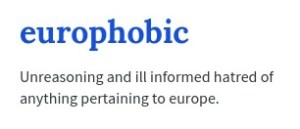
Europhobic - Europhobia - Brexit - European Union - EU Referendum

Euro - European Union Flag

Agree with this article? Violently disagree? Scroll down to leave a comment.

Follow Semi-Partisan Politics on TwitterFacebook and Medium.

Will The EU Referendum Be Decided By The “Shy Eurosceptic” Vote?

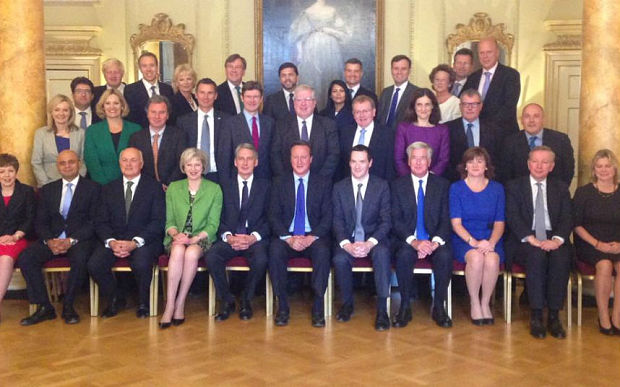
David Cameron - Conservatives - Cabinet

Is there a shy eurosceptic factor at play in the EU referendum?

What happened to all of the supposedly staunchly eurosceptic Conservative cabinet ministers – people like Sajid Javid and Rob Halfon – when it came time to nail their colours to the mast and declare their desire to leave the European Union?

Charles Moore has a theory:

Obviously one factor is that Tory MPs have found it convenient in recent years to adopt Eurosceptic protective colouring in their constituencies. But I think there is something deeper. The fear factor which may well win the referendum for Mr Cameron actually operates even more strongly on the elites than on the mass of the population. People who hold important jobs are much more worried than normal citizens about being considered ‘off the wall’. If they opt for ‘leave’, they will be interrogated fiercely by their peers about their decision. If they declare for ‘remain’, they will be left in peace. The EU is the biggest elite orthodoxy of the western world since we gave up our belief in imperialism. Most people within elites find it too tiring and dangerous to question the orthodoxy under which they have risen to the top.

Now, I have no time at all for those craven Conservative MPs who built their precious reputations and careers on a foundation of what turns out to be utterly fake euroscepticism. But neither can I deny the very real, socially oppressive aura that surrounds euroscepticism in some quarters, whereby it becomes very difficult for people to publicly express their eurosceptic opinions in certain context and company. And if one cannot excuse the shameless U-turning when it is committed by our elected representatives, we should perhaps be more understanding when ordinary members of the public falter.

So what are we dealing with here? It’s the same factor which makes otherwise confident, extroverted people drop their voices to a hushed and conspiratorial whisper when discussing their conservative political leanings in an elite (or creative/artistic) workplace, or makes a school teacher think twice before openly contradicting the biased, anti-Tory ranting of their colleagues.

But it is more than simply avoiding hassle. For many people, not only the elites, it is also a case of seeking to avoid very tangible real-world consequences of being known to hold unfashionable opinions – the threat of public ridicule, professional censure or even job loss, simply for committing thought-crime.

Maybe nobody will care if you fail to join in the joking with your colleagues when they laugh about Nigel Farage or mock those knuckle-dragging Little Englanders who want to pull up the drawbridge on Fortress Britain. But maybe they will notice, and maybe it might lead to an awkward question: “Wait a minute, you can’t seriously support those racists, can you? You’re having a laugh, right?” Far easier to just go along with the crowd. Why risk antagonising the boss, or the people you sit next to every day? Why risk that upcoming promotion? Better just stay silent.

And of course, this is exactly what happened last May. Ed Miliband and the Labour Party convinced themselves that they were heading for victory in the general election. They really, sincerely believed it (read Dan Hodges’ book “One Minute To Ten” to get a sense of just how fervently they believed it). But it was all nonsense, a great exercise in self-deception made possible by the fact that Labour activists had created such a stultifying aura of sanctimonious left-wingery and screeching Tory-hatred that anyone with a remotely conservative political leaning simply dropped out of the conversation and went silent. Silent, that is, until May 7 – at which time they marched to their polling station and delivered David Cameron back to 10 Downing Street.

Is there a chance that history might repeat itself now it comes to the EU referendum? It is certainly a possibility. There are many social settings – mostly where the social, academic or artistic elites live and work – where expressing a eurosceptic opinion or declaring one’s support for Brexit is tantamount to reading aloud from Mein Kampf in the town square. But conversely, there are no equivalent places or scenarios where one might reasonably expect to be actively persecuted for expressing pro-EU sentiments.

That alone speaks volumes. And while it may not excuse the despicable behaviour of some Conservative cabinet ministers who chose career advancement over eurosceptic principle, it would explain the reluctance of many people from certain professions or social groups to openly declare their euroscepticism.

As to how much of a chilling effect the establishment’s instinctive pro-EU instincts have on the polling and the wider referendum debate, we will likely not know until the votes are counted.


Scientists for EU

Universities for Europe - 2

Agree with this article? Violently disagree? Scroll down to leave a comment.

Follow Semi-Partisan Politics on TwitterFacebook and Medium.

Philip Hammond’s Weak Diplomacy And Our Friends In The European Union

Philip Hammond - European Union - Remain - EU Referendum - 2

If the Foreign Secretary sincerely believes that other member states would punish us for leaving the European Union, he hasn’t been doing his job cultivating strong diplomatic relationships and standing up for Britain

Alan Johnson and Philip Hammond both clearly attend the same branch meeting of the Dewy-Eyed European Union Cheerleaders Association, because both politicians – one Labour and one Conservative – are both now peddling the same pathetic line to the media, namely the suggestion that Britain amicably leaving the European Union would be like “sticking two fingers up” at our allies and inviting some form of deserved retribution in return.

Alan Johnson writes in MailOnline:

In terms of our own borders, Britain is actually in the best possible position – in the EU, signed up to the Dublin Accord but outside Schengen.

Thus economic migrants have to register in the EU country where they first arrive (thousands have been deported from Britain in the past 20 years for breaching this requirement), and a visa is still required for anyone outside the EU to enter this country.

Furthermore, it was because Britain was part of the EU that David Blunkett was able to persuade Nicolas Sarkozy to, in effect, move Britain’s border from Dover to Calais.

If Britain put two fingers up to the 27 other nations in the EU the first reaction of the French would undoubtedly be to end that arrangement, thereby ending the security barrier that that arrangement offers us.

This was tremulous, scaremongering nonsense when the same idea was advanced by Conservative MP Mark Field, and it is tremulous, scaremongering nonsense when it comes out of the mouth of Alan Johnson, too, having been comprehensively refuted and debunked by many people, not least on this very blog.

Meanwhile, Philip Hammond – who one might have expected to know and conduct himself better, given the fact that he currently serves as Foreign Secretary – echoed the same cheap catchphrase to MPs in Parliament.

The Telegraph reports:

The Foreign Secretary has told MPs a leave vote the EU would be seen as “two fingers to European leaders and we can expect the same in return.”

He says that if Britain votes to leave the EU “the mood of goodwill towards Britain will evaporate in an instant”.

This is essentially an admission of incompetence by the Foreign Secretary. What Hammond is suggesting to us with this cheap attempt at scaremongering is that he has so mismanaged our relationships with key European allies, and so misled them as to the nature of British public sentiment toward the EU and the consequent possibility of Brexit, that our perfectly amicable and controlled departure would come as a complete shock to them.

Furthermore, if Hammond’s words are to be taken seriously, it means that he has presided over the worst diplomatic failure in recent British history – namely the failure of a declared nuclear power, as well as a leading military, economic and cultural power, to command such respect on the world stage as might survive us leaving a supranational arrangement which we no longer believe works in our favour. Is that really what the Foreign Secretary wants to tell the British people?

Europhiles and Remainers can’t decide whether Brussels is friend or frenemy; whether the other EU member states are dear friends who would be sorry to see us go, or bitter rivals who would seek to punish Britain for rejecting their vision of a politically unified Europe. And it is about time they made up their minds.

As this blog recently pointed out:

Of course, the cynical pro-EU “Remain” campaign tries to have it both ways. When it suits them in their campaigning, the EU is a happy-go-lucky club of like-minded countries who frolic and trade with one another. But when that hopelessly naive, childlike view of Brussels is questioned by eurosceptics and Brexiteers, out comes the other portrait of a snarling, vicious EU which will ruthlessly destroy Britain if we continue to drag our feet or think about leaving.

Good cop, bad cop. Europhiles will normally try the “good cop” routine first when engaging with undecided voters. But this tends to come unstuck as soon as eurosceptics and Brexiteers counter with their own positive vision of Britain restored as a sovereign democracy playing a full and engaged role in global trade and world affairs.

Since the pro-EU crowd are unable to share their own repugnant vision of a politically integrated Europe for fear of scaring people away, they are instead forced to go negative, hence the rapid and disconcerting pivot from “See how nice the European Union is, and all the wonderful things it does for us” to “If we try to leave the EU, they’ll rough us up”. Truly, their position is less a serious argument about governance and diplomacy, and more the tortured thought process of a battered spouse trying to rationalise staying in an abusive relationship.

In many ways, it is unsurprising that there is so much confusion over what would likely happen in the event that Britain declared our intention to leave the EU following a “Leave” vote in the referendum. Few journalists have taken the time to assimilate the information and share it with their readers, which then positively begs unscrupulous Remainers like Philip Hammond and Alan Johnson to exploit the public’s fear and ignorance.

The excellent Brexit blogger Ben Kelly lays the groundwork – and demolishes a lot of misconceptions on both sides of the debate – in this piece at Conservatives for Liberty, well worth quoting at length:

Negotiations undertaken after citation of the withdrawal clause of the Lisbon Treaty will be a matter of practical politics. Although the application of EU and international law is not a settled issue, especially in this as yet untested area, the notion that the EU would refuse to cooperate, or even seek to “punish” the UK in the event of secession – thereby clearly violating EU law as well as failing to comply with international law – is beyond the realm of realistic politics.

Although Article 50 negotiations conducted under a framework of treaty law will be first and foremost a political matter, it is clear that lawyers will be consulted regarding the laws application. What we can be certain of is that – as Sir David Edward, the first British Judge of the European Court, has said – EU law requires all parties to negotiate in good faith and in a spirit of cooperation.

Article 50 requires the EU to conclude an agreement with the seceding state, “taking account of the framework for its future relationship with the Union“. Notably, Articles 3,4 8 and 21 of the Treaty on European Union require the EU to “contribute to … free and fair trade” and to “work for a high degree of cooperation in all fields of international relations, in order to … encourage the integration of all countries into the world economy, including through the progressive abolition of restrictions on international trade” and to adhere to the “principle of sincere cooperation […] in full mutual respect” and “assist each other in carrying out tasks which flow from the Treaties.”

Moreover, the Vienna Convention of the Law of Treaties obligates negotiators to act in “good faith” and “good faith” itself is an underlying principle of international law, and certainly a principle of WTO law.

The EU negotiators must therefore endeavour to reduce trade restrictions in accordance with treaty provisions and, crucially, their actions are justiciable. If EU negotiators were to veer away from treaty provisions, or indeed if any other EU member sought to impose sanctions or restrict trade, the UK could opt to lodge a formal complaint with the European Court of Justice (ECJ), and block the discriminatory action.

It must be remembered that during the Article 50 negotiations the UK remains a member of the EU and enjoys the full rights and privileges of membership. The Commission itself may be legally obliged to step in and begin infringement proceedings against the offending member state.

It may amuse lazy political commentators to paint the hypothetical future Brexit negotiations as some kind of zero-sum game, trial of strength or fiendishly complex case study in Game Theory, but this would simply not be the case. The truth would be altogether more boring and pragmatic than the europhile naysayers would have us believe, with both sides obligated to negotiate with one another in good faith.

Kelly is right to eschew the tub-thumping “they need us more than we need them!” kind of language as he builds his case, but nonetheless it is worth pointing out that in the event of Brexit negotiations being initiated, all national governments would come under huge and sustained pressure by their local business leaders and lobbyists to avoid taking any retaliatory or counter-retaliatory action which might lead to the throwing up of onerous new barriers to trade.

Given the amount of money and reputational capital that many multinational companies are willing to spend lobbying and campaigning for a “Remain” vote, it is not unreasonable that they would make equally strong representations to the British and EU member state governments to ensure a smooth and orderly Brexit – one which this blog firmly believes is best accomplished by following a fully worked-through plan like Flexcit, in which we would minimise economic disruption from leaving the EU’s political union by maintaining our EFTA and EEA membership.

Those people on the Remain side who seek to dumb down the argument and reduce the nuanced situation of Article 50 Brexit negotiations to a cartoonish “sticking two fingers up at Europe” / “get punished by France and Germany in response” are being deliberately misleading in attempt to distract from the paucity of their case. But worse than that, they are also subscribing to the fatalistic, anti-British mindset which states that our country – the fifth largest economy and one of the most consequential actors on the world stage – is actually nothing more than a minor, third-rate country, easily bullied by its peers.

But remember: by peddling this nonsense, EU apologists like Philip Hammond and Alan Johnson are not merely demonstrating their lack of faith in Britain (particularly concerning coming from a Foreign Secretary). They also reveal their lack of respect for the intelligence of their fellow citizens, whom they lazily assume can be swayed and manipulated by their base scaremongering and dark warnings of EU reprisals.


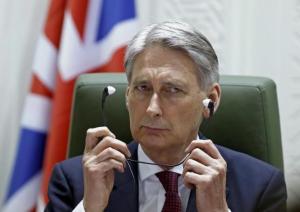
British Foreign Secretary Hammond attends a news conference in Riyadh

Agree with this article? Violently disagree? Scroll down to leave a comment.

Follow Semi-Partisan Politics on TwitterFacebook and Medium.

Sajid Javid’s Perplexing Case For Britain To Remain In The EU

Sajid Javid - EU Referendum

Sajid Javid’s bizarre, fatalistic justification for backing Remain

When it comes to picking a side in the coming EU referendum, it is possible to categorise the many betrayals and disappointments dished up so far by the Conservative Party.

Some, like William Hague’s, are infuriating because of their misplaced priorities and fawning deference to power. Others, like that of Harlow MP Robert Halfon, are depressing because they fly in the face of long-avowed, ostentatious euroscepticism. But none are so perplexing as the screeching U-turn executed by Business Secretary Sajid Javid.

A barely coherent Javid took to the pages of the Daily Mail today with the most bizarre case for staying in Europe yet offered by a turncoat Tory – arguing that Britain would be much better off had we never joined the EU in the first place, but that now we are in the clutches of Brussels we have no choice but to allow ourselves to be slowly consumed and digested, like an unlucky insect caught in a Venus fly trap.

Javid begins by painting a rosy picture of the Britain we might now inhabit had we never joined the European Community back in 1973:

It’s clear now that the United Kingdom should never have joined the European Union. In many ways, it’s a failing project, an overblown bureaucracy in need of wide-ranging and urgent reform.

Had we never taken the fateful decision to sign up, the UK would still, of course, be a successful country with a strong economy.

We would be an independent trading nation like the US, Japan, or Canada.

Over the years, we would have developed trade agreements with the EU and with others, all without surrendering control over immigration or our economic independence.

You might think that this would lead quite naturally to a stirring call for Britain to reclaim all of these squandered benefits of independence. But Sajid Javid proceeds to wrong-foot us by continuing:

If this year’s referendum were a vote on whether to join in the first place, I wouldn’t hesitate to stand up and say Britain would be better off staying out.

But the question we’re faced with is not about what we should have done 43 years ago. It’s about what we should do now, in 2016.

That’s why, with a heavy heart and no enthusiasm, I shall be voting for the UK to remain a member of the European Union.

And so unfolds the most depressing, fatalistic argument in favour of staying in the European Union that you will likely hear this entire campaign. Apparently, had we made the right choice forty years ago we could now be living in the land of milk and honey, with endless prosperity and contentment for all. But we missed the boat, and because of that one supposedly irredeemable mistake, we are condemned to dwell forever in the arid desert of unwanted European political union.

Why? Because Sajid Javid is afraid of the potential short-term cost. Or rather, because he values democracy, sovereignty and national self-determination so little that the mere possibility of short term economic disadvantage is enough to make him turn a blind eye to the very real failings and even more anti-democratic future direction of the EU:

As I’ve said before, a vote to leave the EU is not something I’m afraid of. I’d embrace the opportunities such a move would create and I have no doubt that, after leaving, Britain would be able to secure trade agreements not just with the EU, but with many others too.

The great unanswerable question is how long that would all take – and at what short-term cost?

Take this logic and flip it around. Suppose it were possible that by becoming a fascist dictatorship for decade or so it would be possible for Britain to increase GDP by three per cent over and above current annual forecasts – by forcing the unemployed to build houses and weapons in exchange for benefits, riding roughshod over pesky planning regulations, and generally doing all of the autocratic things which democracy rightly prevents us from doing.

According to Sajid Javid’s logic, we should toss democracy aside and eagerly embrace strong-fisted dictatorship, just to reap the potential economic gain. Nothing else would matter – or at least, everything else would be secondary to the GDP question.

Javid continues:

The negotiations would end well for Britain, but we have no idea what the economic cost would be in the meantime – how much foreign investment would go elsewhere, how much domestic investment would be deferred or cancelled.

Even the most committed members of the ‘leave’ camp accept that there will inevitably be a short-term cost to leaving.

The question is whether it is balanced out by the long-term gains. It’s a very reasonable question – and I came incredibly close to answering ‘Yes, yes it is.’

Javid even admits here that “the negotiations would end well for Britain”. Ignoring the fact that a plausible plan for Brexit exists, which de-risks the entire process and eliminates much of the uncertainty, Javid is willing to throw away an eternity of democratic self-governance in exchange for what he himself believes to be just a couple of years of potentially increased economic security. This is an almost pathological level of risk-aversion.

Javid’s half-hearted apologia concludes:

My heart says we are better off out. My head says it’s too risky right now. For the past six years, I’ve been doing everything I can to repair the damage Labour did to our national economy.

I’m no europhile, but nor am I prepared to risk undoing all that work and casting aside all the sacrifices we asked of this country while the post-Brexit talks drag on and investor confidence wavers. Staying in the EU for now doesn’t have to mean accepting the status quo.

[..] For me, this referendum does not have to be a once-in-a-generation event. The fight for reform is not over and if Brussels fails to recognise that, I can see a time when walking away may be the right thing to do – but in a more benign global economic environment and under a UK Government that makes a credible case for leaving.

And so ends the most bizarre case for remaining in the EU you are ever likely to hear. Apparently we are now to make existential decisions about the future of our governance and democracy solely according to where we happen to be in the economic cycle. Want to restore sovereignty while the economy is booming? Go for it! But want to make a bid for freedom during a downturn – or even just a potential downturn? Sorry, GDP projections say no.

This atrocious argument for Remain encapsulates everything that this referendum should not be about. We are talking about the future governance and sovereignty of our country. If there was ever a time for us to think as fully engaged citizens with an eye on the future – and the ability of our children to exercise control over their destinies – then this is it. Now is certainly not the time to think and act like fearful, petty consumers, concerned only with the fatness of our wallets today while sparing no thought for the future of our democracy.

Yet this is exactly what Sajid Javid asks us to do. I agree with you, the EU is totally undemocratic and resistant to reform, he essentially tells us. But the pound might briefly dip against the euro if we leave, so screw securing democracy for tomorrow, vote for the status quo to guarantee an uninterrupted supply of cheap flat-screen TVs today!

What a pathetic, insular, insulting argument to make. How disgusting that the supposed rising star of the Conservative Party would thus attempt to appeal to the scared and avaricious consumer within us, rather than the enlightened and noble citizen.

Make a passionate case for a federal European state and I will respect you, even though I profoundly disagree.

Make a wobbly-lipped, pant-wetting case for clinging to the EU’s skirts out of sheer terror at the Big Bad World and I will roll my eyes at you and move on.

But if you dare treat me like some kind of mindless automaton who thinks only with tomorrow’s bank balance in mind – if you tell me that the EU sucks, but that I should vote to remain because to leave would cause a brief macroeconomic blip – then I will tell you to go direct to hell. And I will hold you in seething contempt for a very, very long time.

When the Continental Congress met in Philadelphia to discuss the portentous issue of separation from Britain in 1776, the committee chosen to draft the famous declaration was – astonishingly – not myopically obsessed with the impact of independence on GDP.

Thomas Jefferson understood, when he wrote “We hold these truths to be self-evident, that all men are created equal, that they are endowed by their Creator with certain unalienable Rights, that among these are Life, Liberty and the pursuit of Happiness”, that something far greater than 1777’s economic forecasts was at stake. That democracy itself was at stake.

Sadly, this democratic ideal – or indeed the concept of anything being more important than minimising the risk of disruption tomorrow, even when the status quo is crying out for disruption – is totally anathema to many of those who argue against Brexit today, including many supposed eurosceptics who should know better.

The Conservative Party has served up its share of gut-wrenching disappointments and betrayals in the build-up to this EU referendum. But none of them are proving quite so difficult to stomach as this steaming pile of nonsense from Sajid Javid.


Sajid Javid - EU Referendum - 2

Agree with this article? Violently disagree? Scroll down to leave a comment.

Follow Semi-Partisan Politics on TwitterFacebook and Medium.

The Media’s Unhealthy Boris Fixation

Boris Johnson - Vote Leave

We all know that Boris Johnson’s decision to “Vote Leave” is gratuitously unprincipled and self-serving. So let’s just stop talking about him – otherwise, we merely give his publicity machine the fuel it craves

Fraser Nelson gets to the heart of what really matters in the Brexit debate – how long it will take David Cameron to forgive Boris Johnson for his treachery:

Until now, David Cameron had been very lucky in his enemies: David Davis, Gordon Brown, Ed Miliband and then Jeremy Corbyn. But last night, the quality of his opposition in the EU referendum campaign rose rather substantially. He now finds himself arguing against not only against Michael Gove, the person he turns to when he’s short of killer lines, but against Boris Johnson, perhaps the single most popular figure in the Conservative Party.

[..] This is a gamble that could either leave Boris in the wilderness, or writing the next set of No 10 Christmas cards. Should David Cameron lose the referendum, he will probably have to resign as Prime Minister given how much of his personal authority is on the line. And who would succeed him? Not George Osborne, who urged the Prime Minister to hold an early vote. The leadership race will be decided by Conservative Party members, who are expected to back “out” by a margin of three-to-one.

[..] Already, there are signs of the Cameron operation closing ranks against Boris. No 10 has a semi-official vengeance policy: ministers with a long-standing opposition to the EU will be forgiven for backing “out”. The implication is that there will be no forgiveness for Boris, who has waited until now to declare his support for Brexit. “The last thing I wanted was to go against David Cameron,” said Boris yesterday. Quite true: what he wants is to come after him – and he is, as of last night, the bookmakers’ favourite to do just that.

This kind of breathless court gossip sometimes makes me despair of the Westminster media. There is a real, existential question before us right now – whether Britain should remain in the EU and follow its winding road toward political integration, or take a bold step toward independence and sovereignty. And a media class that did its job properly – speaking to the people rather than excitedly talking amongst themselves – would focus on the policy, not the personalities.

Does the Conservative Party leadership succession matter? Absolutely. Along with Tim Montgomerie, I have a significant ideological interest in who takes over from David Cameron and (hopefully) restores some radical conservative vision to the party of Margaret Thatcher. But there’s a time and a place.

Fraser Nelson at his best is a thoughtful and questioning conservative commentator – particularly when he focuses on social issues like welfare dependency. Were Nelson to fully engage his engine, we would likely all benefit from his considered addition to the EU referendum coverage. But as of Monday evening, everything Fraser Nelson has written thus far has focused on the tedious subject of Boris Johnson’s career.

I don’t need a poll to tell me that right now, people care more about the arguments for and against Brexit than they do the many fierce little psychodramas playing out between the Conservative Party leadership and Brexit-supporting Tory backbenchers, or between David Cameron and Alexander Boris de Pfeffel Johnson. But survey the mainstream media and you will find a lot more breathless leadership speculation than deep, forensic analysis of David Cameron’s fraudulent renegotiation, or the arguments for and against Brexit.

I’m sure that better stuff will follow. I hope it follows soon.


Boris Johnson - EU referendum

Agree with this article? Violently disagree? Scroll down to leave a comment.

Follow Semi-Partisan Politics on TwitterFacebook and Medium.