“Open The Doors!” (And The Closets?)

An excellent analysis of the progress made so far under Pope Francis, and the challenges still to come, as viewed by Andrew Sullivan.

Andrew Sullivan's avatarThe Dish

VATICAN-POPE-AUDIENCE

If you want to understand just how vastly different this Pope is from his predecessor, read the full and best translation of his recent impromptu remarks to the Latin American and Caribbean Confederation of Religious Men and Women. They blew me away. Can you ever imagine the anal-retentive doctrine cop, Ratzinger, ever saying this about the body that dictates doctrine that he once headed, the Congregation For The Doctrine Of The Faith:

They will make mistakes, they will make a blunder [meter la pata], this will pass! Perhaps even a letter of the Congregation for the Doctrine (of the Faith) will arrive for you, telling you that you said such or such thing… But do not worry. Explain whatever you have to explain, but move forward… Open the doors, do something there where life calls for it. I would rather have a Church that makes mistakes for doing…

View original post 703 more words

The Spirituality of the European Union

EU church religion


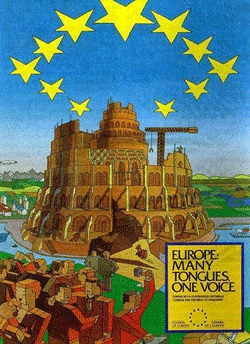
St George’s Day brings yet another wildly misguided and inappropriate intervention from a Church of England bishop, this time the Rt Rev Michael Langrish, Bishop of Exeter.

While back-handedly praising Prime Minister David Cameron for the zeal of some of his reforming efforts, he goes on to expound at length on the question of whether Cameron might be – wittingly or unwittingly – undermining the “deep spiritual roots” of the European Union.

From The Telegraph:

The Rt Rev Michael Langrish, who sits in the House of Lords, told Peers that he was concerned that Mr Cameron’s policies could contribute to the “loss of the European soul”.

He told how the European project has “deep spiritual roots” and said the Church of England “engages with the EU itself through its own representation and structures”.

The Bishop of Exeter is, of course, a Lord Spiritual, one of those Church of England bishops given the right and authority – unique among leaders of all other religions and denominations in this country – to sit in the upper house of the British parliament and meddle in our lawmaking. The Telegraph continues:

Speaking in the House of Lords this week the Rt Rev Langrish insisted that the Church of England has a “European perspective”.

“It may be thought that the Church of England does not have a particularly European perspective, but that is far from being the case,” he said. “Through its diocese in Europe it is present in all the member states of the EU. It has effective links with other churches throughout Europe and is active in the Conference of European Churches. Together with our partner churches, we are also deeply aware of some of the roots of the EU and the vision of its founders in Catholic social teaching.”

First of all – deep spiritual roots? Really? I am not wholly ignorant of Catholic social teaching, and I am probably better informed than most about the history and development of the European project from its humble beginnings as the European Coal & Steel Community. In my misguided undergraduate days I curated a half-hearted, rightly neglected website called the Pro-European Alliance which aimed to explain some of this history and spin it in a way that case favourable light on the modern-day European Union.

Bishop Langrish’s attempt to describe the institutions, mechanisms and workings of the EU as having any spiritual dimension to them whatsoever seem to be a rhetorical step too far. That is not to say that there was or is nothing noble in the idea and reality of the EU. Binding the fractious nations of Europe together through increased trade, some common institutions and a mechanism to resolve local disputes was undoubtedly a good thing. So potentially a tenuous argument could be made that the existence of an organisation such as the EU served or serves some spiritual goal.

But the European Parliament? The Council of Ministers? The Commission, which hasn’t produced an audit-worthy budget and financial statements for years beyond counting? The European Courts? How do any of these inefficient, undemocratic, self-serving institutions, created by bureaucrats to serve the interests of bureaucrats, nourish the roots of spirituality? In any way?

The only way that one can see any spiritual element to any of this is if one subscribes to the view that the nation state and international institutions are the most suitable – or only acceptable – forums for key aspects of the modern welfare state such as regulation, income redistribution and the like to be administered. That people are inherently selfish, thoroughly unaltruistic, and that only through government coercion (either at a national or European level) can we make ourselves administer fair justice and look after the weak and vulnerable in our societies.

And of course this is exactly what large swathes (though not all) of the Church of England does believe today – see “Christ would not privatise our NHS” as just another recent, damning example. Build and maintain a big state sector to do all of the things that humans are too selfish or wicked to do of their own volition for the good of their fellow men, and criticise anyone who holds opposing views from the pulpit every Sunday.

The Bishop concludes:

“I hope that the failure of successive British Governments to articulate a coherent and constructive policy towards our European partners and to manage to take public opinion along with this will not contribute to that loss of the European soul.”

When the Bishop of Exeter defends the spiritual roots of the European Union and attacks David Cameron for seeking to repatriate powers from the EU and return them to the nation state or to the individual, not only is he wrong, but in so doing he is no less than abdicating his own Church’s spiritual roots and its responsibility to empower and enlighten the individual.

The Compassion Monopoly


Today saw the installation of Justin Welby as 105th Archbishop of Canterbury.

The service was moving, with many elements incorporated to reflect the international diversity of the worldwide Anglican communion. Although myself a Roman Catholic, I wish the new Archbishop of Canterbury the best and pray for him as he seeks to tackle the many challenges facing his church.

I was, however, momentarily distracted from the beauty of the service by this image of a protester in Canterbury, shown on the BBC News website here.

We’ll let the misspelling of the word “privatise” go.

But both Pope Francis and Archbishop Welby can hang up their hats and go home, because this lady clearly has such a direct line to the Lord that she is able to tell us God’s political stance on any issue of the day. With such an ability we should probably make her a Lord Spiritual so she can sit in the House of Lords and meddle in British lawmaking with the others.

Christ would “NOT” privatise the NHS? Really? What does He think about Clinical Commissioning Groups? Is it okay with Him if private firms perform non-clinical work for NHS hospitals (such as cleaning or catering), or must this be owned and managed by the state too? And I have a feeling I know her answer, but does our Lord support the renationalisation of the railways in Britain?

Why does the left have such a monopoly, a stranglehold on the idea of compassion in our country?

Why is it that to speak out against the state taking such a large, meddling role in all of our lives marks one out as a mean-spirited and cruel person, indifferent to the needs of others?

And why do we all buy in to the idea that in order to be charitable and compassionate, we must funnel our efforts to help our neighbours, the less fortunate and the downtrodden through an inefficient state bureaucracy?

If the counterargument is that people would be selfish and insufficiently generous without the heavy hand of government coercion and taxation to take wealth and redistribute to those in need, what does this say about the leftist’s view of human nature?

Did it ever occur to this protester that perhaps it is directly because the state plays such a large part in everything that we do, from cradle to grave, that the church to which she belongs is withering and shrinking by the year?

To a great extent, aside from the divine aspect, has the British welfare state not done away with the purpose of church, of knowing your neighbour, of being part of a community, altogether?

I ask these questions because the answers to these issues of how best to act charitably, to help your neighbour and provide for those in need seem to be self-evident to so many on the left. Of course, they say, we must give more to the government so that they can give back to us according to our need. Certainly the newly-installed Archbishop of Canterbury, Justin Welby, seems to subscribe to this mindset, from what we know of his recent remarks.

I could not disagree more vehemently.

Want To Change Religion? Get Permission From A Judge First

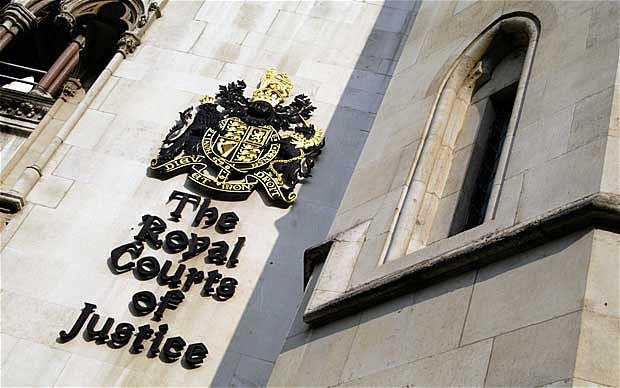
Royal Courts of Justice

Want to change religion? Then you’d better get permission from a judge first, if you happen to be under the age of eighteen and your parents can’t don’t give you their blessing.

That is apparently the law of the land in Britain today, or at least the precedent set by a recent ruling in which a a County Court judge ruled that a ten-year-old girl would be allowed to follow her wish to convert from Judaism to Christianity and be baptised, denying a request from the girl’s mother to grant an injunction forbidding the father from allowing her to proceed.

The Telegraph reports:

The court heard that the girl, who cannot be named for legal reasons, was born in late 2001 to Jewish parents and grandparents. But her mother and father divorced in 2010 and she, and her younger brother, now live for a week at a time with each under a shared parenting agreement.

Her father converted to Christianity after the breakdown of his marriage.

In November the girl’s mother, without telling anyone, applied for a court order forbidding the father from baptising or confirming her into the Christian faith. The judge heard evidence before deciding how to respond to the application.

I happen to think that the judge in this case ruled very wisely and sensitively on the case – you can read the full decision here. He also wrote and made public a letter to the girl in question, explaining his decision. I believe that he did a good job in a difficult situation.

But to my mind, this isn’t the type of matter that should ever come up for judicial review at all, or be subject to the whims of a random judge. Family law is a complicated area in which I have absolutely no expertise, but the crucial principle at hand in this case is liberty. There mere fact that the mother and father of this girl were arguing in court about the worthiness of an injunction preventing a person from changing their religion is highly inappropriate.

Religion and faith are matters of personal conviction and are private to that individual. No conceivable harm could befall this girl as a result of converting from one religion to another, and therefore this matter should be well beyond the remit of what a court injunction can be used for. The girl, and she alone, should be free to believe whatever she wants to believe, and to be received into the faith of her choosing in a manner consistent with their customary rites and practices. There is no welfare issue at stake for the child – indeed, the only conceivable harm that could occur would be to the hurt feelings of one or other parent.

In this case, the girl’s freedom of thought and speech were ultimately protected by an empathetic and restrained judge. However, a future court might rule differently, and issue an edict forbidding the person concerned from following their own will and their beliefs. In order to preserve freedom for the individual, and religious liberty, it must be made clear to the courts that they have no business arbitrating parental disputes such as this, or making religious choices for any British citizen.

Whether this is done through bespoke legislation, or my preferred route of a full-scale UK constitutional convention to once and for all settle the limits of crown, government and judicial power, rests – depressingly – in the hands of those who hold power today.

I would hope that they will see this case as a warning sign, and take meaningful action in defence of liberty.

When No One Takes A Stand

Islamophobia


This morning I came across a thought-provoking piece by Mehdi Hassan, now of Huffington Post but writing here in The Guardian, about the rising tide of Islamophobia in British political commentary, and what he considers to be the insidious attempt to smear or question the pro-western credentials of all moderate Muslims in public life so as to create the impression that there are no moderate Muslims to be found.

Hasan speaks in candid terms about the effect that the ignorant, baseless abuse which he has received in response to his work at the New Statesman magazine has had, both on himself and his family:

To say that I find the relentlessly hostile coverage of Islam, coupled with the personal abuse that I receive online, depressing is an understatement. There have been times – for instance, when I found my wife curled up on our couch, in tears, after having discovered some of the more monstrous and threatening comments on my New Statesman blog – when I’ve wondered whether it’s all worth it. Perhaps, a voice at the back of my head suggests, I should throw in the towel and go find a less threatening, more civilised line of work. But that’s what the trolls want. To silence Muslims; to deny a voice to a voiceless community.

And the money passage, summing up the aggregate effect of this abuse, and the fact that too few commentators in the mainstream media are willing to take a stand and denounce it when they witness sloppy or prejudicial reporting of Muslim life or the rise of radical Islam written in their own publications:

The truth is that the fear-mongering and negative stereotyping is out of control. I’ve lost count of the number of websites that try to “out” every Muslim in public life as an extremist or Islamist of some shape or form. The promotion of Sayeeda Warsi to the Conservative frontbench in 2007 provoked the influential ConservativeHome website to describe her appointment as “the wrong signal at a time when Britain is fighting a global war against Islamic terrorism and extremism”. Labour’s Sadiq Khan, the shadow justice secretary, was accused of holding “extremist” views after he called for a “more independent foreign policy” and was spuriously linked to Hizb ut-Tahrir. In April, Labour peer Lord Ahmed was suspended from the party after he was falsely accused of having put a £10m bounty on Barack Obama’s head (the suspension has since been lifted).

If Muslims such as Warsi, Khan, Ahmed and me are all secret extremists, who are the moderates? That, of course, seems to be the implicit, insidious message: there aren’t any. But if those of us who try to participate in public life and contribute to political debate are constantly painted with a broad brush of suspicion and distrust, then what hope is there for the thousands of young British Muslims who feel alienated and marginalised from the political process? I used to encourage Muslim students to get involved in the media or in politics, but I now find it much harder to do so. Why would I want anyone else to go through what I’ve gone through? Believe me, Muslims aren’t endowed thicker skins than non-Muslims.

The targeting of ConservativeHome here is a little unfair; I followed the link and the quote about the “wrong signal” refers to a press statement by the pathetically-named “Margaret Thatcher Center [sic – yes, American] for Freedom” at the Heritage Foundation, not the most intellectually robust of groups these days and certainly not representative of ConservativeHome editorial positions or the views of their readership (though I concede that there is likely to be a degree of overlap in this case).

But Hasan’s broader point is valid – if even those Muslims in British public life who have impeccable records of patriotism and public service have their motives and allegiances called into question, this most certainly does feed the perception that there is no such thing as moderation within the Muslim community, a situation that no one interested in reasoned, free debate should allow to stand.

The only area where I would take issue with Hasan is where he states:

I’m a fan of robust debate and I’m not averse to engaging in the odd ad hominem attack myself. This isn’t a case of special pleading, on behalf of Britain’s Muslims, nor do I think my Islamic beliefs should be exempt from public criticism. But the fact is that you can now say things about Muslims, in polite society and even among card-carrying liberal lefties, that you cannot say about any other group or minority. Am I expected to shrug this off?

Are Muslims getting a rough deal at the moment, and is it shameful and wrong and concerning? Absolutely. But are they the only group? Hardly. Has no one reading this moaned about gypsies lately, or perhaps laughed at a “pikey” joke?

Let’s take a stand when we hear untruths being spoken about moderate Islam, Muslim public servants or commentators. But let us also apply this same standard to every community; trying to silence people with threats, or drumming them out public office based on false evidence or highly selective interpretation of their past statements is not a route that we should be going down.