Britain’s Religious Leaders Squander Their Moral Authority By Supporting The EU And Forsaking Democracy

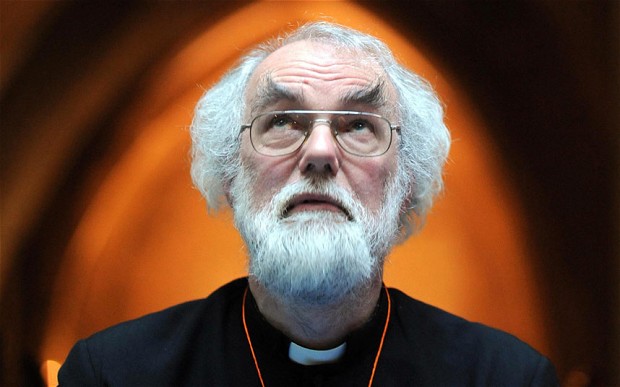
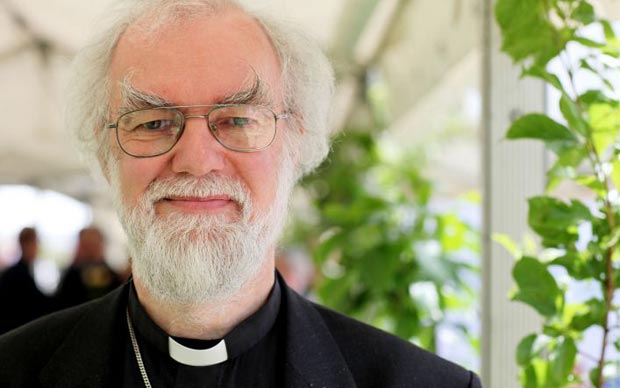
Rowan Williams - Brexit - EU Referendum

Another day, another insidious, arrogant attempt by religious leaders to suggest that God is a paid-up member of the Remain campaign

Read this portentous intervention in the EU referendum debate and tell me it isn’t the most fatuous, ignorant, sanctimonious bilge to be uttered by religious community leaders and supposed people of God in recent memory:

Faith is about integration and building bridges, not about isolation and erecting barriers. As leaders and senior figures of faith communities, we urge our co-religionists and others to think about the implications of a Leave vote for the things about which we are most passionate.

The past 70 years have been the longest period of peace in Europe’s history. Institutions that enable us to work together and understand both our differences and what we share in common contribute to our increased security and sense of collective endeavour.

What’s more, so many of the challenges we face today can only be addressed in a European, and indeed a global, context: combating poverty in the developing world, confronting climate change and providing the stability that is essential to tackling the migration crisis.

We hope that when voting on 23 June, people will reflect on whether undermining the international institutions charged with delivering these goals could conceivably contribute to a fairer, cleaner and safer world.

The letter is naturally signed by all of the usual suspects:

Rt Rev Rowan Williams, former archbishop of Canterbury; Rabbi Laura Janner-Klausner, Movement for Reform Judaism; Miqdaad Versi, assistant secretary general, Muslim Council of Britain; Jasvir Singh, chair, City Sikhs Network

Rt Rev Dr Ian Bradley, Church of Scotland & Reader in Church History and Practical Theology, University of St Andrews

Baroness Butler-Sloss, Chair, Commission on Religion and Belief in Public Life

The Rt Rev Professor Lord Harries of Pentregarth, Emeritus Professor of Divinity, Gresham College, Honorary Professor of theology, King’s College London & Former Bishop of Oxford

The Rt Rev Paul Bayes, Bishop of Liverpool

The list goes on. Sadly, from a personal perspective, it includes Bishop Thomas McMahon of the Diocese of Brentwood, who confirmed me into the Catholic church as a young, eighteen year old convert.

But if this ignorant waffle is the best thinking that modern Christianity can bring to bear on the EU referendum debate, then Christianity deserves to be in decline for it has ceased to be any kind of intellectual (let alone moral) force in this country.

If these learned people – many from the higher echelons of the establishment, some of them with theological doctorates to their name  – genuinely can’t discern the difference between leaving one supranational political institution one the one hand and disengaging North Korea-like from the entire world on the other, then they deserve neither our respect nor the media’s airtime. And if they do discern the difference but choose to pretend to their congregations that Brexit means automatic isolationism, then they need to go back and consult their respective holy books to remind themselves what is written about bearing false witness.

Putting political preferences aside for a moment, anybody of faith in this country – Brexiteer or Remainer – should be appalled by this clumsy and ignorant intervention. For if religion is to continue to play a meaningful role in public life (as it should), the representatives of our faith surely have a duty to understand the issues on which they choose to intervene.

One has to earn the right to be listened to and taken seriously in the public square, and the surest way to forfeit that right is to talk loudly from a position of ignorance. And if this letter in the Observer reveals anything, it is a wellspring of ignorance. Ignorance about what the European Union is, why it was created and the direction in which it is plainly, openly heading. Ignorance about the true foundations of peace in Europe – liberal democracy, post-war economic growth and NATO. Ignorance about the future of global trade and regulation. And a profound ignorance (or at least a tendency to conveniently shut out the example) of the rest of the world, which has conspicuously avoided grouping itself into the type of regional supranational political bloc which the bishops bizarrely claim is essential to freedom and prosperity.

Where is the thought here? Where is the serious introspection, the good faith effort to actually listen to the opposing side (the importance of which religious leaders often lecture us) rather than go charging in to battle against a dishonestly constructed straw man? How, in short, is any Brexit-supporting Christian (or follower of any other faith represented in this car crash of an intervention) supposed to respect or feel respected by their spiritual leaders, after no less a figure than a former Archbishop of Canterbury made it quite plain in the pages of the observer that he believes that Brexiteers are literally seeking to undermine peace in Europe for no good reason?

Can the bishops point to a chapter and verse direction in the Bible that nations should seek to merge their political institutions together slowly and by stealth, while claiming that it is somehow necessary in order to underpin free trade? Of course not. Can the bishops highlight a specific injunction from the Lord clarifying that “building bridges” with neighbours means seeking some kind of continent-wide homogeneity? No. Tumbleweeds. The theological case for European political union is nothing more than a wheedling, hand-wringing, simpering assertion that because Jesus commanded us to love one another as He loved us, we should nod our heads and go along with one specific plan for European integration dreamed up by old men scarred from the memory of two world wars.

(In case you protest that a short OpEd in a newspaper is no place to set out complex arguments in full, I refer you to my pieces hereherehere and here, where I extensively discuss the fact that a solid Christian case in favour of the European Union has yet to be made by any religious leader in the course of this sorry EU referendum debate).
Christianity - Europe - EU - Brexit - 3

If the story of religious intervention in the EU referendum thus far teaches us anything, it is that those who claim to lead our faith groups and communities are profoundly ignorant both about the country in which they live, and the world with which they seek to engage.

But worse than that, the bishops are often ignorant about their own flocks and congregations, many of whom have solidly moral and intellectual reasons for wanting Britain to leave the European Union, and who deserve better than to be effectively labelled as harbingers of the apocalypse by virtue-signalling prelates who are either too lazy to learn or too disingenuous to admit that the EU is not the alpha and the omega of democracy, trade and international cooperation.

At some point – maybe not on June 23, but probably in years rather than decades – the European Union will face a true crisis of democracy and legitimacy, as the passions of the narrow-minded European political elites diverge ever further from the interests of the people they lead. Whether this leads to civil unrest, antidemocratic coups d’etat or the breakup of the EU itself remains to be seen. But those bishops and other faith leaders who so airly signed their names to this letter proclaiming that anything other than a vote to Remain in the EU essentially means cheering on climate change, war and pestilence will find themselves dangerously exposed (which is perhaps why they have done so in their own names, but their organisations have held back).

For when the EU’s final crisis of democracy comes, the names of these faith leaders who today encouraged us to remain in the European Union will be mud. And deservedly so, for they have betrayed democracy either through their ignorance or their invidious EUphilia.

And if the bishops think that they and their values are being squeezed out of the public square now, they should wait until they are permanently associated in the public mind with actively working to keep Britain chained inside this failing, antidemocratic, euro-federalist experiment.

When the EU’s day of reckoning finally comes, the signatories to this letter may well yearn for that happy time when the public was merely indifferent about religion.


Christianity - Europe - EU - Brexit

Top Image: Telegraph

Support Semi-Partisan Politics with a one-time or recurring donation:

Agree with this article? Violently disagree? Scroll down to leave a comment.

Follow Semi-Partisan Politics on TwitterFacebook and Medium.

This EU Referendum Is Of Existential Importance. So Why Is The Campaign Rhetoric So Unequal To The Occasion?

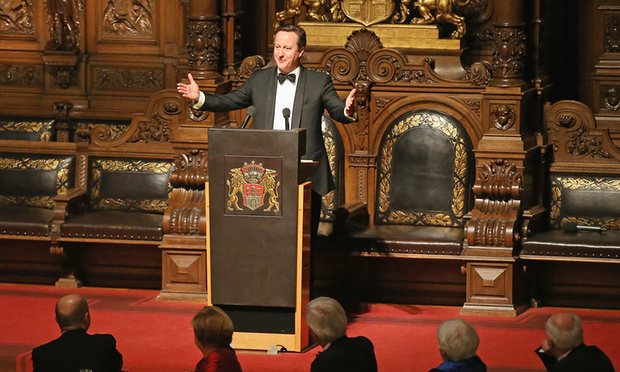
David Cameron - EU Referendum - European Union - Brexit - Speech - Rhetoric

The age of glib soundbites and dumbed-down, instantly shareable viral social media memes is perfectly suited to the Remain campaign’s strategy of sowing fear, uncertainty and doubt as widely as possible. But if we still lived in the age of great political speeches, the Brexiteers would be winning this EU referendum by a landslide

Because I’m an oddball, sometimes I like to spend time reading or listening to great political speeches from the past – particularly those from American politics.

Two of the more obvious such speeches – JFK’s “We Choose To Go To The Moon” and Theodore Roosevelt’s “Dare Mighty Things” – have been forcing themselves repeatedly to the forefront of my mind lately, though until tonight I was unsure why.

Then this evening I stumbled on this 2011 article by Peggy Noonan, Wall Street Journal columnist and former speechwriter for President Ronald Reagan. Though the article’s discussion of social media shows its age, it makes for an interesting read today:

One way to change minds about the current crisis is through information. We all know this, and we all know about the marvellous changes in technology that allow for the spreading of messages that are not necessarily popular with gatekeepers and establishments. But there’s something new happening in the realm of political communication that must be noted. Speeches are back. They have been rescued and restored as a political force by the Internet.

In the past quarter-century or so, the speech as a vehicle of sustained political argument was killed by television and radio. Rhetoric was reduced to the TV producer’s 10-second soundbite, the correspondent’s eight-second insert. The makers of speeches (even the ones capable of sustained argument) saw what was happening and promptly gave up. Why give your brain and soul to a serious, substantive statement when it will all be reduced to a snip of sound? They turned their speeches into soundbite after soundbite, applause line after applause line, and a great political tradition was traduced.

But the Internet is changing all that. It is restoring rhetoric as a force. When Gov. Mitch Daniels made his big speech – a serious, substantive one – two weeks ago, Drudge had the transcript and video up in a few hours. Gov. Chris Christie’s big speech was quickly on the net in its entirety. All the CPAC speeches were up. TED conference speeches are all over the net, as are people making speeches at town-hall meetings. I get links to full speeches every day in my inbox and you probably do too.

People in politics think it’s all Facebook and Twitter now, but it’s not. Not everything is fractured and in pieces, some things are becoming more whole. People hunger for serious, fleshed-out ideas about what is happening in our country. We all know it’s a pivotal time.

Look what happened a year ago to a Wisconsin businessman named Ron Johnson. He was thinking of running for the Senate against an incumbent, Democratic heavy-hitter Russ Feingold. He started making speeches talking about his conception of freedom. They were serious, sober, and not sound-bitey at all. A conservative radio host named Charlie Sykes got hold of a speech Mr. Johnson gave at a Lincoln Day dinner in Oshkosh. He liked it and read it aloud on his show for 20 minutes. A speech! The audience listened and loved it. A man called in and said, “Yes, yes, yes!” Another said, “I have to agree with everything that guy said.” Mr. Johnson decided to run because of that reaction, and in November he won. This week he said, “The reason I’m a U.S. senator is because Charlie Sykes did that.” But the reason Mr. Sykes did it is that Mr. Johnson made a serious speech.

A funny thing about politicians is that they’re all obsessed with “messaging” and “breaking through” and “getting people to listen.” They’re convinced that some special kind of cleverness is needed, that some magical communications formula exists and can be harnessed if only discovered. They should settle down, survey the technological field and get serious. They should give pertinent, truthful, sophisticated and sober-minded speeches. Everyone will listen. They’ll be all over the interwebs.

What a strange idea: the internet restoring rhetoric as an important part of our political debate. While this positive trend may have flared briefly in America for a time as Noonan indicates, we have certainly seen no comparable renaissance of political speechwriting here in Britain. Sure, Nigel Farage can deliver a withering put-down in the European Parliament and the SNP’s Mhairi Black can make sentimental lefties go all misty-eyed, but as a rule, for at least the past thirty years, political speeches in Britain have been pedestrian and utterly forgettable.

This is rather odd. Britain is currently engaged in an existential debate over whether we leave or remain in the European Union, the seriousness of this one issue dwarfing any mere general election, as the prime minister himself has opined. Surely the speeches made by our politicians should therefore reflect the gravity of the decision before us. But does our rhetoric meet the level and tone required of such a debate? Hardly.

As an ardent Brexiteer, one of the main problems I encounter when debating the issue with people – particularly online – is that abstract concepts such as democracy and self-determination are much harder to put into words or summarise with a glib but memorable phrase, while the fearmongering rhetoric of the Remain campaign naturally lends itself to viral sharing. It is much easier to (falsely and hysterically) declare that pensioners will be £32,000 worse off or that 100,000 marriages in London will fail because of Brexit than to explain the intangible importance of living in a properly free society – and almost inevitably the person attempting to argue the side of self-governance ends up sounding ponderous and vague in contrast with the swivel-eyed certainties uttered by Remainers.

And when eurosceptics try to dial up the rhetorical heat, too often it comes off badly. While UKIP-ish phrases like “we want our country back” are certainly memorable, they also have a distinctly nativist twang which alienates a good many people even as it fires up true believers. It is the same story with these key phrases, repeated over and over again by the official Vote Leave campaign, from their daily emails to the phrases of key surrogates:

We send £350 million a week to the EU – enough to build a new hospital every week

250,000 EU migrants a year come to the UK and five new countries are in the queue to join – including Albania, Serbia, and Turkey – it’s out of control and damages the NHS

It’s safer to take back control and spend our money on our priorities

This is apparently the best that the cream of Britain’s eurosceptic talent can do – an utterly unbelievable pledge about diverting 100% of our current EU contributions, including the rebate, to building new hospitals, and an unconnected pivot from the NHS to it being “safer” to spend money on our priorities. One can just about see what Vote Leave is trying to do, but it is an amateurish, almost childlike attempt at political messaging.

Meanwhile, here is the slicker effort from Britain Stronger in Europe:

Britain is stronger, safer and better off in Europe than we would be out on our own.

Join the campaign to remain in Europe – and let’s secure a stronger Britain that delivers opportunity now and for future generations

Never mind that it is based on a lie. A lie repeated identically and often enough can be incredibly effective, as it is with Vote Leave’s misrepresentation that leaving the political organisation known as the EU means leaving the continent of Europe. There is also more of a positive message here – where Vote Leave talk about Brexit being “safer”, suggesting danger and a defensive attitude, Stronger In talk about “deliver[ing] opportunity now and for future generations”, exuding positivity for today and for tomorrow as well.

Only when the message delivery window is longer than a quick email or a short social media meme does the Brexit side begin to redress the balance. Put aside their dubious and counterproductive tactics for a moment, but Vote Leave spokespeople like Michael Gove and Daniel Hannan (even Nigel Farage) can paint an extremely attractive picture of Britain outside the European Union in a speech, particularly when they aren’t butchering the idea of how to go about achieving their goal.

Even more pertinently, look at the Flexcit plan for leaving the European Union, which is increasingly being seized upon by key influencers who despair of Vote Leave’s amateurism and lack of a clear, risk-minimising Brexit plan. Flexcit itself is a 400 page document, while the summary pamphlet clocks in at a still substantial 40+ pages. At a recent TED-style talk in central London, Dr. Richard North (Flexcit’s primary author) took an hour to lay out the ideas and reasoning behind it. Though the Leave Alliance network of committed bloggers (full disclosure: I am one of them) do a sterling job of breaking down and simplifying the concepts so as to sell them more effectively to key influencers and the public, Flexcit will never be an easily-shared, one page meme on Facebook. Nor should it be. Serious and weighty issues require serious responses.

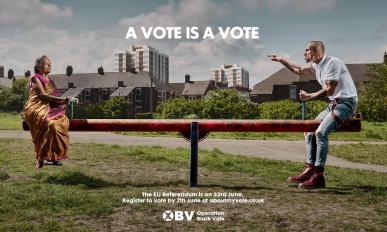
But increasingly it appears that the Leave camp will be punished at the ballot box for the fact that its core argument about democracy and self-determination cannot be boiled down to a single positive phrase or graphic in the same way as the establishment-backed Remain campaign can churn out endless content, together with slick but abhorrent messages from professional agencies:

Operation Black Vote - OBV - A vote is a vote - EU Referendum - European Union

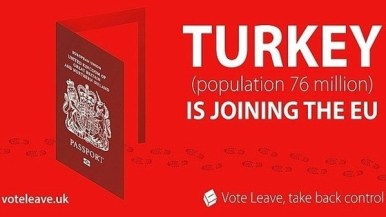
Of course Vote Leave are guilty of shameless fearmongering too, never more so than with this dreadful fearmongering ad about Turkey joining the EU:

Vote Leave - Turkey Joining EU

But whether it is raising fears of knuckle-dragging, Brexit supporting skinheads or the armies of Turkish immigrants who will apparently all decamp to Britain en masse at the first opportunity, both are seen as highly effective tools by their respective campaigns, and both rely on communicating a primitive, fear-based message not with rich rhetoric but with a short, sharp visual, the better to hold our limited attention spans.

In many ways, it is a tragedy for the Brexit cause that this opportunity to extricate ourselves from an unwanted supranational government of Europe has come about when the internet has taken off and the average person’s idea of profound political engagement is liking and sharing the latest snide Huffington Post article with their friends on Facebook. When the debate over whether or not Britain should join Europe raged in the late 1960s and early 70s, the art of making serious (if not quite great) speeches was still just about alive – Hugh Gaitskell’s famous address to the Labour Party conference warning against joining the EEC stands as one such example of memorable oratory, culminating in the famous “thousand years of history” quote:

We must be clear about this; it does mean, if this is the idea, the end of Britain as an independent European state. I make no apology for repeating it. It means the end of a thousand years of history. You may say: “Let it end.” But, my goodness, it is a decision that needs a little care and thought.

But when the history of Britain’s 2016 EU referendum comes to be written, what will we remember? Of all the particularly dramatic moments in the campaign to date, none of them have been speeches. Sure, sometimes the fact of a speech has been newsworthy, such as when an unexpected establishment figure has been wheeled out to say that Brexit will usher in the apocalypse, but the content – the oratory itself – has rarely raised hairs or stiffened spines.

In fact, proving Eleanor Roosevelt’s famous assertion that great minds discuss ideas, average minds discuss events and small minds discuss people, the media has determinedly reported almost exclusively on the latter two. Of course that is always the temptation for journalists, but our politicians have hardly given the media much to work with on the ideas front, even if they were minded to cover them.

This is a depressing state of affairs. This most important debate should be bringing out the best in our politicians and our media. We should be witnessing a straight-up fight between advocates of the democratic, independent nation state and those who ardently believe in the euro-federalist dream, adjudicated by a press corps  beholden to neither side and always willing to challenge baseless assertions rather than merely provide a “fair and balanced” platform for two partisan idiots to yell at each other for an equal amount of time.

In this debate, our elected leaders should be role models in setting the tone of the debate. Of course they are not, because our professional political class are very much part of the problem – the main reason why Brexit should only be the first step in a broader process of constitutional reform and democratic renewal in Britain.

But here we are, a country administered by followers rather than leaders, watched over by a childish and corrupted press who would rather giggle about the referendum’s personal dramas than fulfil their democratic function. And too little time before the referendum to hope that anything much will change.

All of which is bad for Brexiteers. After all, this is an age when scaremongering claims and assertions about the supposed cost of Brexit can be “quantified”, slapped on a smug little infographic and shared ten thousand times before breakfast, while the importance of self-determination an democracy – the ability of the people to influence the decisions which affect them and dismiss those with power – is almost impossible to boil down to a single eye-catching number, despite being the most precious benefit of all.

Without honest political leaders to establish a narrative and bigger picture – and without a robust media to report – it is effectively left to well-intentioned citizens to hold the grown-up debate amongst themselves, citizens who (for all their pluck) often struggle to cut through the noise of the vapid official campaign.

What’s most galling about all of this is the fact that there are many people alive today who have living memory of hearing great political rhetoric deployed in service of consequential issues – if not in Britain, at least in America:

The Only Thing We Have To Fear Is Fear Itself.

We Choose To Go To The Moon.

The Great Society.

I Have A Dream.

Ask Not What Your Country Can Do For You.

Robert Kennedy’s speech on the assassination of Martin Luther King.

Tear Down This Wall.

And even Britain has managed to offer worthy efforts, including:

We Shall Fight On The Beaches.

The Few.

The Winds Of Change.

The Lady’s Not For Turning.

The Grotesque Chaos Of A Labour Council.

What words uttered by our contemporary politicians during this EU referendum will be long remembered or quoted fifty years from now?

My prediction: not a damn one. But at least there will be a great treasure trove of vapid tweets and misleading infographics for historians to pick through as they wonder why Britain signed away her freedom.


European Union - United Kingdom - Britain - Flags

Top Image: Guardian

Support Semi-Partisan Politics with a one-time or recurring donation:

Agree with this article? Violently disagree? Scroll down to leave a comment.

Follow Semi-Partisan Politics on TwitterFacebook and Medium.

Rowan Williams: Thinking Naively, Rigidly And Uncreatively About Europe

Rowan Williams - Archbishop of Canterbury - EU Referendum - European Union - Brexit

Et tu, Archiepiscopus?

Another day brings more disingenuous, pseudo-Christian piffle over at Reimagining Europe, this time from the former Archbishop of Canterbury, Dr. Rowan Williams (and his ghost/speechwriter Philip Waters).

Waters/Williams write, in a transcribed lecture humorously entitled “Thinking Creatively About Europe”:

Europe also has its Muslim and Jewish legacies. Christianity, Islam and Judaism are a family quarrel rather than a clash of civilisations. We need to remember that Medieval Catholic theology was crucially informed by influx from the Muslim and Jewish peripheries.

The mix of legacies means that Europe has had a history of at best conversation and at worst confrontation about authority: who should we listen to, who should we obey? In debate over the rights of state and church the insight persists that there are two schemes of reference, the political and the spiritual: they overlap but they are not the same. It is not necessary to go into detail about the differences between Eastern and Western Europe, or between Catholic and Protestant: the  above generalisations hold equally for all of them. To take one example, John Calvin’s ideas on the  relationship between realms of power are more like those of Thomas Aquinas than they are like those of Martin Luther.

One of the problems we face today is the idea of the clash of civilisations, and the suggestion that one of those civilisations is Western democracy. This idea forgets the ineractions throughout history which have created that very Western democracy. Without an understanding of history, the idea of the superiority of Western democracy seems to be self-evident.

‘Over There’ dwell peoples who do not know the self-evident benefits of democracy; and the reason usually given is that they are religious. One of the effects of modernity is strangely enough to drive people to radicalism. ISIS is an example of how the introduction of Western values in the form of confrontation leads to simplification of a heritage, in this case Islamic. There is no place for approaching any modern problems from a standpoint of triumphalism. What we can say is that a series of providential insights have been given within Europe which are to be shared with other parts of the world.

Wait for it…

All this is relevant for a consideration of Britain and Europe. There is no way we can talk about British values which are opposed to European or indeed wider values. My fear is that if Britain steps back from Europe it will be stepping back from its own heritage. In Britain we have not done too badly in sharing with and learning from others. In talking in isolationist terms we run the risk of nailing our colours to a myth.

In other words: religion, religion, religion, religion…political union!, with absolutely no attempt to draw any link of necessity between the two.

Whoever said anything about “step[ping] back from Europe”, as Williams disingenuously attempts to characterise the anti-EU stance? On the contrary, Brexit is an opportunity for Britain to re-engage with a world which has moved on since the post-war days of giant regional blocs facing off against one another, as any thinking Brexiteer will tell you. And yet the former Archbishop of Canterbury seems intent on defeating a straw man argument, that of the stereotypical isolationist little Englander who wants to pull up the drawbridge, cease all cooperation with our neighbours and turn the clock back to 1955.

This says a lot about Rowan Williams, but nothing good. It shows that on this most existential of questions he is fundamentally intellectually uncurious. Rather than seeking to understand why so many of his countrymen want to leave a dysfunctional and failing political union, he retreats into the comfort zone occupied by so many of his brethren in the centre-left, middle class clerisy, in which pro-EU types are enlightened and progressive while eurosceptics are somehow backward and reactionary.

We see it again when Williams claims that “we have not done too badly in sharing with and learning from others”. Well, who in blazes ever suggested otherwise? Our quarrel with the European Union is not that it encourages sharing and learning. Our quarrel is that the EU is a One Size Doesn’t Fit All embryonic supra-national government of Europe, unreplicated in any other corner of the globe, which seeks to gradually usurp the traditional powers and competencies of its member states in order to form an ever-closer union whose ultimate destination can only be a United States of Europe.

I don’t like to speak of a former Archbishop of Canterbury in uncharitable terms, but at this point it is genuinely difficult to tell whether he is being ignorant or deliberately deceptive – whether he genuinely doesn’t understand that the EU is not just about friendship and biscuits and apple pie, or whether he knows full well but is pretending that the EU is just “sharing and learning” in order to hoodwink others.

It is particularly concerning that Rowan Williams – an accomplished man with a fine mind – succumbs to the same woolly misconception as many of his peers. The misconception is not only that the explicitly political, integrationist construct known as the EU is a humble and unambitious organisation set up merely to foster “sharing and learning”, but that sharing, learning and close neighbourly cooperation are somehow impossible outside the auspices of an ever-tightening political union. Never mind that countries outside of Europe cooperate closely on all manner of issues every single day without feeling the need to dissolve themselves into a single political entity – Rowan Williams, like so many of his peers, is absolutely determined to project his false, naive vision of the humble old EU onto an organisation with altogether more far-reaching ambitions.

Yet when it comes to the history and future trajectory of the EU, there is no excuse for ignorance, especially not from one as well-connected to the establishment as a former Archbishop of Canterbury. Assuming he is operating through ignorance rather than malevolence, Rowan Williams has still had every opportunity to learn and comprehend the history of the movement for political union in Europe which has led to the contemporary EU. Magdalene College Oxford, where Williams now serves as Master, probably has quite a decent library. He might consider checking out a few books on the subject if the facts still elude him.

With less than a month to go, it is truly concerning that so many prominent Christian leaders are openly agitating for a Remain vote in the EU referendum when there is yet to be produced a clear, intellectually grounded Christian case for Remain – in other words, anything based on something more than warm leftist feelings and fuzzy ecumenism.

With recent high-profile interventions on austerity and social policy, the church has a record of unapologetic political activism – rather too naive and left-wing for this blog’s taste, but generally coming from a place of good intentions. Even when it has been wrong, the church has been able to plausibly claim to have the best interests of the poor and the voiceless in mind. Not so now, not with the EU question.

By failing to take a stand against remote and unwanted supranational government, the bishops – whether they declare it openly or not – are coming down firmly on the side of Europe’s elites, and not the people. They are complicit in supporting the continued imposition, largely by stealth, of a 1950s model of unaccountable, supranational government leading inexorably to ever-closer political union – a model which has already brought untold economic suffering to southern Europe and a migration crisis across the entire continent, and which promises only further unrest as the decisions taken by unelected European leaders diverge ever more widely from the interests of ordinary people.

The pro-EU bishops are certainly entitled to their position. But it is a very strange choice, coming down so fervently against the side of democracy. And a choice which many of them may struggle to explain in the near future.


Christianity - Europe - EU - Brexit

Top Image: Telegraph

Support Semi-Partisan Politics with a one-time or recurring donation:

Agree with this article? Violently disagree? Scroll down to leave a comment.

Follow Semi-Partisan Politics on TwitterFacebook and Medium.

The Snarling, Vengeful Cult Of The NHS

Mid Staffs Hospital Scandal 2

Anger the priests and priestesses of our modern day NHS cult at your peril…

It takes some degree of courage to publicly speak out against the National Health Service, the unceasing praise and glorification of which has become the closest thing secular Britain has to a national religion.

In fact, one of the only things capable of jogging people out of their NHS-worshipping trance is bitter personal experience. And few experiences can be more bitter and heart-wrenching than that experienced by Martin Bailey, a fellow contributor to Conservatives for Liberty.

Martin Bailey’s grandmother died an awful and unnecessary death in November 2007, one of the victims of the death house that was Mid Staffs Hospital. His mother, moved to action by what happened, became a vocal and active campaigner for patient safety and NHS transparency, eventually being awarded a CBE for her efforts.

Sadly, drawing attention to the flaws and shortcomings of the NHS exacts fearsome retribution. But unlike whistleblowers drawing attention to failings in other industries or sectors, the retribution meted out to NHS critics comes not only from the formal hierarchy within the NHS, but also from medical professionals and members of the public who have been hypnotised into a state of blind devotion to our nationalised health service.

Bailey writes:

From the very beginning she has faced denial, disbelief and open hostility – such is the lot of anyone who dares to question the eternal virtue of ‘Mother NHS’. She has been hounded in the street, trolled viciously and incessantly online by both the general public and medical professionals, suffered hundreds of nuisance callers and been spat at in the supermarket. This November it will be nine years since my Nan’s death and my mother still has to clean faeces and graffiti off her gravestone.

Such is the level of devotion to the NHS, such is the illogical loyalty that both staff and public feel towards it that any criticism is brutally suppressed. This defence mechanism is ingrained into its very nature. Every story in the press that is anything but a paean of praise is immediately written off as right wing propaganda, part of the mainstream media conspiracy rather than the general public’s right to a transparent and reflective service.

When the Healthcare Commission published its initial report into Mid Staffs the trust’s first response was not to rectify the problems but to spend £1,000,000 commissioning Birmingham University to compile a rebuttal.

One million pounds! One million pounds that could have been spent on doctors and nurses, crutches and casts, Scalpels and forceps. Even a new coffee machine in the canteen would have been a better deal for the public than a study that refuted the claims of another Taxpayer-funded body, in turn making it even more difficult to highlight poor care through the haze of institutional ambivalence.

This is what some of the kind, virtuous people who Love Our NHS do – they “protect” the institution they love by defacing the grave of an innocent woman with graffiti and faeces. Many more will just happily imply that you are a heartless monster lacking in compassion, simply for daring to criticise one particular (and unreplicated anywhere else in the world) healthcare delivery model.

We should not be surprised. The British public is fed a constant diet of pro-NHS propaganda, from politicians, campaign groups and the health service itself. Like any large organisation – and the NHS is the fifth largest employer on the planet – the NHS has an independent life of its own, and moves to protect and defend what it considers to be its own interests (which are not always one and the same with the interests of patients). And it very much suits the purposes of the NHS to have millions of people childishly painting its logo on their faces, wearing it on t-shirts, proclaiming its glory on social media, buying schmaltzy NHS-themed Christmas songs and otherwise providing the kind of public lobbying which would cost any other organisation millions of pounds.

Martin Bailey picks up on this point about how we place the NHS, rather than then needs of the patient, at the centre of our healthcare debate:

Healthcare should be about the patient… and nothing more. While we have a venerated NHS this is impossible. The institution always comes first. It is too monolithic, too omnipotent for its identity ever to be subordinated to the needs of those it serves. In its current guise there will always be fanatics who will never admit to shortcomings no matter what evidence is put in front of them, ‘NHS Daesh’ who will never allow the truth to censure their ideology. In this culture true patient-centred care might as well be a pot of gold at the end of the rainbow.

Countries with systems based on universal health insurance do not experience the same problems. In France, Germany, The Netherlands, Belgium, Australia and Japan healthcare is not politicised and treatment is widely regarded as superior. An insurance based system healthcare costs as much as it needs to and is not constrained by the political tennis match that sees budgets ebb and flow, forcing the NHS into a permanent state of inadequacy, struggling to deliver 21st century services through a process of rationing that has changed little since the 1950s.

And makes this call to conservatives:

Conservatives have traditionally been coy on the topic for fear of reprisals at the ballot box, only daring to mention the dreaded ‘P’ word amongst close friends behind firmly closed doors.  But our reticence plays into Labour’s hands, easily construed as a hidden agenda. The left has owned the narrative on healthcare for far too long and it is time we had the courage of our convictions to speak freely and openly about the benefits of privatised healthcare.

So the next time a colleague starts talking about how wonderful the NHS is, don’t stare at your shoes, mumble and change the subject. Speak up, speak out and fly the flag proudly for the death of the NHS.

A noble aspiration, but for as long as the Conservative Party is in the hands of David Cameron and George Osborne, nothing much will change. Both men are carbon copies of Tony Blair, only with blue ties rather than red, and so the mealy-mouthed praise of the NHS will continue – not that this will stop Labour from screaming hysterically about the dismantling of Our NHS.

But Bailey is absolutely right – anybody who cares about the future of healthcare in Britain must immediately disenthral themselves from the Cult of the NHS and encourage others to do the same. This has nothing to do with being a hardcore libertarian or hating doctors and nurses. This is about applying the same unsentimental standards of objectivity to our analysis of healthcare as we do to any other industry or government service. It is about having the humility to learn from others, the courage to confront mistakes and the clarity of mind to focus at all times on the patient rather than the organisation.

In other words, it is not going to happen for at least another generation. And how many more Mid Staffs type scandals will have occurred by the time necessity finally forces us to confront reality and act?


NHS Logo - Cross - National Religion - Worship - Idolatry

Agree with this article? Violently disagree? Scroll down to leave a comment.

Follow Semi-Partisan Politics on TwitterFacebook and Medium.

Social Justice Commandments: Being A Good Parent Perpetuates Unfair Privilege

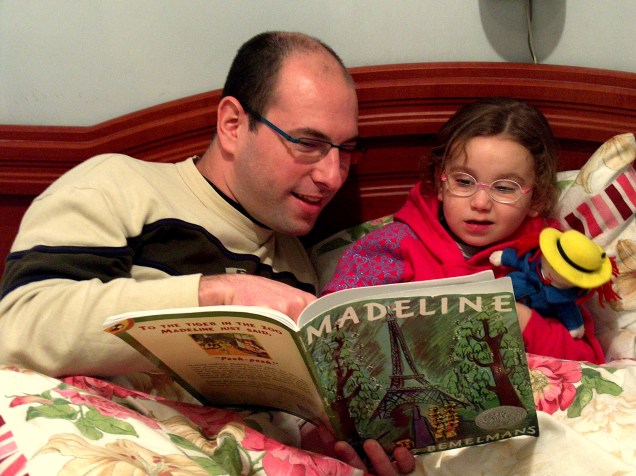
Bedtime Story

The warped philosophy of social justice decrees that good parents are part of the problem, not the solution

For more evidence of the sickness at the heart of our universities, I present the professor from Warwick University – my alma mater – who thinks that parents who read to their children are gifting them with unfair privilege over other kids whose parents are too busy watching Britain’s Celebrity Animals Bake-Off On Ice to lavish their own children with similar attention.

From the ABC summary of the segment on Australian radio:

[Professor Adam] Swift in particular has been conflicted for some time over the curious situation that arises when a parent wants to do the best for her child but in the process makes the playing field for others even more lopsided.

‘I got interested in this question because I was interested in equality of opportunity,’ he says.

‘I had done some work on social mobility and the evidence is overwhelmingly that the reason why children born to different families have very different chances in life is because of what happens in those families.’

Once he got thinking, Swift could see that the issue stretches well beyond the fact that some families can afford private schooling, nannies, tutors, and houses in good suburbs. Functional family interactions—from going to the cricket to reading bedtime stories—form a largely unseen but palpable fault line between families. The consequence is a gap in social mobility and equality that can last for generations.

Already this sounds ominous. And though Swift gets his mention of “equality of opportunity” in nice and early, the draconian means by which he wants to achieve this equality are quite something to behold:

‘What we realised we needed was a way of thinking about what it was we wanted to allow parents to do for their children, and what it was that we didn’t need to allow parents to do for their children, if allowing those activities would create unfairnesses for other people’s children’.

The test they devised was based on what they term ‘familial relationship goods’; those unique and identifiable things that arise within the family unit and contribute to the flourishing of family members.

For Swift, there’s one particular choice that fails the test.

‘Private schooling cannot be justified by appeal to these familial relationship goods,’ he says. ‘It’s just not the case that in order for a family to realise these intimate, loving, authoritative, affectionate, love-based relationships you need to be able to send your child to an elite private school.’

Note what Swift has done here. First of all, he posits a dystopian world where “we” have any right to “allow” parents to do certain things or raise their children in certain ways, the corollary to which is that these mystical external authority figures also have the power to prohibit parents from engaging in certain everyday activities.

But worse, he has made an arbitrary judgement with relationship to these “familial relationship goods”. You might think that it is up to individual parents and families to decide what is good for their young ones, or what is most needed to ensure that they thrive and become well-rounded, successful people. But you would be wrong. Because Adam Swift has a definitive list of all the things needed to create a well-behaved, social justice loving adult, and private schooling ain’t on the list.

And that’s when it gets really crazy:

In contrast, reading stories at bedtime, argues Swift, gives rise to acceptable familial relationship goods, even though this also bestows advantage.

‘The evidence shows that the difference between those who get bedtime stories and those who don’t—the difference in their life chances—is bigger than the difference between those who get elite private schooling and those that don’t,’ he says.

This devilish twist of evidence surely leads to a further conclusion—that perhaps in the interests of levelling the playing field, bedtime stories should also be restricted. In Swift’s mind this is where the evaluation of familial relationship goods goes up a notch.

‘You have to allow parents to engage in bedtime stories activities, in fact we encourage them because those are the kinds of interactions between parents and children that do indeed foster and produce these [desired] familial relationship goods.’

How gracious of Swift, allowing parents to continue to read to their children at bedtime, even though the unfair privilege they bestow by doing so eats away at his enlightened, equality-loving soul.

Swift continues:

‘We could prevent elite private schooling without any real hit to healthy family relationships, whereas if we say that you can’t read bedtime stories to your kids because it’s not fair that some kids get them and others don’t, then that would be too big a hit at the core of family life.’

So should parents snuggling up for one last story before lights out be even a little concerned about the advantage they might be conferring?

‘I don’t think parents reading their children bedtime stories should constantly have in their minds the way that they are unfairly disadvantaging other people’s children, but I think they should have that thought occasionally,’ quips Swift.

So by all means continue to read to your children, if you must. But you should feel very guilty while you do so, and chastise yourself once little Timmy has fallen asleep, while meditating on the various ways he will grow up to oppress those unfortunate children whose parents did not read to them.

Which, of course, is the one thing missing from Adam Swift’s “analysis” – any thought or mention of the parents who do not read to their children. As with everything else in the victimhood-soaked world of social justice, where everything must be viewed through a lens of privilege and oppression, only those who work hard and do the right thing are subject to criticism. Those who do the wrong thing, by contrast, are continually excused and stripped of any agency for their own actions – a condescending behaviour which actually does more to dehumanise them than any “harm” they incur from the privileged.

In the entire segment, Swift has no words of reproach for those parents who do not read to their children at bedtime. He neither suggests that this might be through their own fault, or that they need to anything to rectify the situation. It is simply taken as a given that they will continue to be bad parents, helpless to modify their behaviour, and that the only thing society can do in response is to worsen the overall standard of parenting in order to prevent the worst parents from feeling bad or experiencing the consequences of their own actions.

And this, right here, is at the root of our society’s decay. We now simply accept and nod our heads while academics airily consider how best to bring everyone down to the same, lower level of attainment rather than striving to confer as many of the benefits currently enjoyed by the rich (or those with good parents) on all. The insidious Cult of Social Justice and Identity Politics has done its work well, because many of us now look at inequality and feel the instinct to tear the successful down (or at least actively thwart their rise) rather than building others up.

Fortunately, Adam Swift is not about to be given wide-ranging power over how people raise their children. But it is worth noting the type of outcomes which one might get when beady-eyed authoritarianism (where external authority figures “allow” graciously parents to do things) meets the warped Social Justice view of inequality.

For so long as these ideas remain abstract discussions between philosophers, there is limited real-world harm. But when more young people who have percolated in this environment all through university start entering the job market and getting themselves elected to local and national government, we will have a real problem on our hands.

In Britain, the Labour Party is already very hostile to the idea of private schools, while many in the Conservative Party are themselves quite paternalistic and keen for the state to regulate behaviour. And while neither party has not yet succeeded in shoehorning government fully into the parent-child relationship (except for Scotland, where the SNP is making a game attempt at taking over from parents), it may well be only a matter of time.


Bedtime Stories

Safe Space Notice - 2

Top Image: Wikipedia

Bottom Image: Guardian

Agree with this article? Violently disagree? Scroll down to leave a comment.

Follow Semi-Partisan Politics on TwitterFacebook and Medium.