Constitutional Originalists Are Right To Oppose Donald Trump And Fear Him More Than Hillary Clinton

american-us-constitution

For some Constitutional Originalists, there are worse things than a potential Hillary Clinton presidency

The Weekly Standard has an interesting article by Terry Eastland, recounting a conversation with Stephen Sachs of Duke Law School, in which Sachs made the Constitutional Originalist case against Donald Trump.

Originalists – typified by the late Supreme Court Justice Antonin Scalia – are those who believe that when deciding cases or evaluating potential laws, the Constitution should be interpreted in the context of how the text was commonly understood by society at the time of writing. They are the opposite of Living Constitution advocates, who believe that the US Constitution is a “living and breathing” document which should be continually reinterpreted in line with changing moral values and societal views.

Eastland writes:

Originalists Against observes that the Constitution vests in a single person the executive power of the United States but contends that “we would not vest that power in Donald Trump,” in light of his “character, judgment, and temperament.”

Originalists Against also doubts that Trump would do as the president’s oath of office (itself in the Constitution) requires, and protect the Constitution. Trump has “shown [himself to be] indifferent or hostile to the Constitution’s basic features—including a government of limited powers, an independent judiciary, religious liberty, freedom of speech, and due process of law.”

The statement identifies several instances of this constitutionally indifferent and hostile Trump. The president must take care that the laws be faithfully executed, but Trump admires dictators as above the law. The president must hold a public trust on behalf of all Americans, but Trump courts those who would deny to others the equal protection of the laws. The president must preserve, protect, and defend the Constitution, but Trump has treated the legal system as a tool for arbitrary and discriminatory ends, especially against those who criticize him or his policies.

And Eastland summarises:

“Originalists Against also does not trust Trump to respect constitutional limits in the rest of his conduct in office, of which judicial nominations are only one part.” Here the signatories recognize that because a constitutional government is necessarily a limited government, political actors may not simply do as they wish.

Of course, none of this means that Hillary Clinton is anything like a principled Originalist herself – quite the opposite. Only at the last presidential debate against Donald Trump, when the subject of nominating Supreme Court justices was raised, Hillary Clinton immediately started waxing lyrical about the importance of selecting judges who would be partners in achieving progressive change. She sees the judiciary as wielding an explicitly political role which of course is the absolute last thing that a good Supreme Court nominee should do.

As this blog summarised the exchange at the time:

Chris Wallace’s first question is about the Supreme Court, and where both candidates “want to see the court take the country”. He follows on to ask whether they believe the Constitution is a living document or set in stone.

[..] Hillary Clinton immediately politicises the Supreme Court, saying that it should stand on the side of “the people” (meaning her leftist policies). I’m sorry, but no. The Supreme Court should stand on the side of the Constitution, not on the side of whatever basket of special interests Clinton decides to label “the people”.

Clinton sees the Supreme Court as an essential vehicle for continual, aggressive social change, far beyond anything that can be reasonably inferred from the text of the document and the original intent of the Founders. Not good.

But it is encouraging to see the Originalists Against Trump movement place fidelity to America’s fundamental governing document over narrow political interest. One cannot imagine that many of the Originalists are enthusiastic Hillary Clinton supporters, yet they seem principled enough to declare that some things matter more than the outcome of a single presidential election:

Trump says he will pick individuals with views of judging like Scalia’s to the Supreme Court and the lower courts. Advised by the Federalist Society and the Heritage Foundation, he has compiled a list of 21 prospects for the Supreme Court among whom he could choose in filling vacancies, starting with Scalia’s seat.

[..] The problem would not appear to be with any of the 21 on his list—the originalists have not doubted them—but with Trump himself, whom they do not trust to do what he says. Here again character is the concern.

Originalists Against thus are willing to accept a Clinton presidency even if that means a Clinton Court. Says the statement: “Our country’s commitment to our Constitution is not so fragile that it can be undone by a single administration or a single court. Originalism has faced setbacks before; it has recovered. Whoever wins in November, it will do so again.”

This chimes with my own thinking. I’ve been clear all along that I find this US election an unpalatable but obvious choice. In many ways Hillary Clinton represents a continuation of everything that is bland, uninspiring and statist about American politics – but she is the kind of bad that America as endured before and can endure again if necessary. Or as PJ O’Rourke recently put it, “she’s wrong within the normal parameters of wrong”.

With Donald Trump, by contrast, you just don’t know. What we do know of his policies and instincts suggest a frighteningly authoritarian mindset which doesn’t sit any more comfortably with American liberty than Hillary Clinton’s reflexive statism and faith in Big Government. And there is much that we still don’t know about Trump, like when his miraculous Damascene conversion from being a Clinton-admiring Democrat to a strident nationalist actually happened, and if it is even for real. Never mind whether Donald Trump’s policies are good or bad – at this point we don’t even know whether or not they are just a cynical act.

Ultimately, my thinking comes down to this: one should not take risks with the US Constitution. Of course it is likely that Hillary Clinton would do her best to pack the Supreme Court with as many “Living Constitution” acolytes as new vacancies permit over her four or eight years in office, which would be a mostly bad thing in terms of policy outcomes and a comprehensively bad thing in terms of the law. But I have no faith that Donald Trump remotely respects the Constitution either; in fact, I think it is far more likely that Trump would seek to override or subvert the Constitution in a fit of pique than would a machine politician like Hillary Clinton.

Originalists Against Trump seem to recognise this danger too, and no matter how much some of them may prefer the policies and attitudes currently being expressed by Donald Trump, they know better than to trade their support for the Constitution for any potential short-term political gain.

Which makes Originalists Against Trump one of the most principled and selfless actors in this entire tawdry presidential election season.


us-constitution-convention-signing

Top Image: Pixabay

Support Semi-Partisan Politics with a one-time or recurring donation:

Agree with this article? Violently disagree? Scroll down to leave a comment.

Follow Semi-Partisan Politics on TwitterFacebook and Medium.

NHS Heresy, Part 3

NHS Worship - London Olympic Games 3

The latest depressing news about Britain’s slide down the healthcare outcome rankings will only lead to more uncritical NHS-worship instead of the frank, rational and dispassionate conversation we need to have about end-of-life care for the ageing, failing National Health Service

The Times’ Tim Shipman reports some awkward facts in Sunday’s “Red Box” briefing:

As many as 46,000 people die each year because NHS treatments for a range of conditions, including cancer, trail behind the best in the world, a new report has found.

The UK ranks near the bottom of a list of developed nations in terms of survival rates for common cancers such as breast, lung, prostate and bowel cancers.

More than 9,000 people who die each year in the UK from lung cancer would survive if they lived in Japan, which has the best survival rate for the disease among the 32 countries studied. The UK ranks 30th.

BUT THE NHS IS THE ENVY OF THE WORLD!

The NHS was perfect until the Evil Tor-ees got their grubby hands on it six years ago!

We just need a new NHS Tax to fund our beloved healthcare system – I for one would be happy to pay five pence more on the pound to show my support for Our NHS!

Cue a million and one leftist responses to these awkward, sobering facts and statistics. Everything other than a measure of introspection, or questioning whether a centralised, statist bureaucracy designed in 1948 – and which perversely ranks as the fifth largest employer on the face of the Earth, bigger than the Indian railways and only just smaller than McDonald’s – is really the best way to deliver healthcare to Britons in 2016.

That healthcare stat about lung cancer survival rates in Japan looks rather good, doesn’t it? And how exactly is it achieved? Well:

The health care [system] in Japan provides healthcare services, including screening examinations, prenatal care and infectious disease control, with the patient accepting responsibility for 30% of these costs while the government pays the remaining 70%. Payment for personal medical services is offered by a universal health care insurance system that provides relative equality of access, with fees set by a government committee.

All residents of Japan are required by the law to have health insurance coverage. People without insurance from employers can participate in a national health insurance programme, administered by local governments. Patients are free to select physicians or facilities of their choice and cannot be denied coverage. Hospitals, by law, must be run as non-profit and be managed by physicians. For-profit corporations are not allowed to own or operate hospitals. Clinics must be owned and operated by physicians.

So in Japan there is some sense that healthcare is an individual’s responsibility – the requirement to cover 30% of costs ensures that this is the case, acting as an incentive to live healthier lifestyles and take personal responsibility for decisions. But universally mandated insurance and a decree that patients cannot be denied coverage ensures that nobody slips through the net.

In other words, this is hardly a libertarian dystopia. Prices are capped by a government committee, while state law dictates that individuals purchase insurance. Hospitals are non-profit, meaning the big, “evil” American corporations don’t get a look-in.

And yet even to suggest that the UK looks to Japan for inspiration in reforming healthcare would be to mark oneself out as a heretic, as a blasphemer against St. Aneurin Bevan of Tredegar and the Perfect System he bequeathed to us. Ordinary citizens would be shunned by their friends while any politician would quickly find themselves labelled an “extremist” and excommunicated from public life.

How much further down the international rankings must we slip before Britain’s army of NHS worshippers (and the NHS Industrial Complex, whose bidding they unwittingly do) finally stop singing hymns of praise to a failing government bureaucracy and demand that we finally do something bold, something different?

On second thoughts, don’t answer that question.

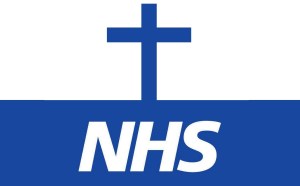
NHS Logo - Cross - National Religion - Worship - Idolatry

Support Semi-Partisan Politics with a one-time or recurring donation:

Agree with this article? Violently disagree? Scroll down to leave a comment.

Follow Semi-Partisan Politics on TwitterFacebook and Medium.

Music For The Day

Concerto for keyboard and orchestra no. 7, by Johann Sebastian Bach.

Here, the second movement is performed by Glenn Gould with the Toronto Symphony Orchestra under Vladimir Golschmann.

Full performance here.


Glenn Gould

Follow Semi-Partisan Politics on TwitterFacebook and Medium.

Should Journalists Have To Declare Their Political Biases And Donations?

NXT-TRIVIA KRT

Belief that the media is biased is one thing that unites conservatives and leftists in America and Britain. So why not demand that journalists reveal any political affiliations upfront, to give us better context for their reporting and commentary?

Should online, print and television journalists declare their political leanings (and donations) upfront, in the name of transparency? Jonah Goldberg thinks so, and makes a persuasive case.

Goldberg writes in the National Review:

One of the reasons I like good opinion journalism, particularly in long-form magazine articles, is that it doesn’t hide from the fact it is making an argument. You know where the author is coming from, and you can take that into account as he or she marshals facts and evidence for his or her case. We know opposing lawyers in a courtroom are biased, but if they don’t make strong arguments, they lose.

I understand bans on reporters giving to campaigns, but we should understand what those bans are: a means of hiding the political leanings of reporters from readers and viewers.

This has become a particularly hot topic after a report issued by the Center for Public Integrity confirmed the unsurprising fact that American journalists and media personalities give vastly more in campaign contributions to Hillary Clinton and the Democratic Party than to Donald Trump and the Republicans.

And given this vast discrepancy – with $382,000 given by hundreds of media personalities to Clinton and just $14,000 by a handful of people to Trump – Goldberg points out that hiding behind the fig leaf of impartiality or being a political “independent” is no longer fooling anyone:

Anyone who has spent a moment around elite reporters or studied their output knows that they tend to be left of center. In 1981, S. Robert Lichter and Stanley Rothman surveyed 240 leading journalists and found that 94 percent of them voted for Lyndon Johnson in 1964, 81 percent voted for George McGovern in 1972, and 81 percent voted for Jimmy Carter in 1976. Only 19 percent placed themselves on the right side of the political spectrum. Does anyone think the media have become less liberal since then?

None of this means liberals — or conservatives — can’t be good reporters, but the idea that media bias is nonexistent is ludicrous. Judges have far greater incentives to be neutral and objective, yet we know that Democrat-appointed judges tend to issue liberal decisions, and Republican-appointed judges tend to issue conservative decisions.

The Obama administration and campaigns have hired dozens of prominent, supposedly nonpartisan journalists, including former White House press secretary and Time magazine reporter Jay Carney, former Time managing editor Rick Stengel, the Washington Post’s Shailagh Murray, and ABC’s Linda Douglass.

Was it just a coincidence that they were all ideologically simpatico with the Obama agenda? How did the Obama team even figure out they were liberals in the first place?

Of course, exactly the same revolving door between the media and political worlds can be found in Britain, with well-known television journalists from BBC and ITV news suddenly shedding the white robes of virtuous objectivity to mysteriously shack up in Downing Street in a political communications role. This transcends party politics, and the Conservatives are by no means the only ones at fault – in the case of Jeremy Corbyn’s ideological henchman Seumas Milne, we have seen a Guardian polemicist not even leaving his job but merely take a leave of absence to become head of communications for the opposition Labour Party.

You can’t stop this from happening, and nor should anyone necessarily try. But the public do have a moral right to know the political leanings and affiliations of those who report and interpret the news. We expect MPs and Lords to declare their financial interests so that we can monitor their behaviour and ensure that they are not unduly influenced by their commercial connections. But a well-functioning press is every bit as vital to our democracy, so why should we not understand the motivations of reporters, commentators and editors.

Consider the case of Jasmine Lawrence, editor of the BBC’s 24-hour news channel. Lawrence was caught posting virulently hostile (and ignorant) thoughts about UKIP on social media prior to the 2014 European Parliament elections, and received only the mildest of cautions from her bosses.

As this blog noted at the time:

What the BBC fail to address in their response is the fact that the remainder of the BBC’s election coverage is not the problem. The problem is the fact that Jasmine Lawrence will remain the editor of the BBC News Channel, presumably resuming full duties as soon as the election coverage is completed on Sunday.

Yes, it is certainly likely that she caused editorial harm and biased coverage in the weeks leading up to the election before her ill-advised tweet saw her stripped of her duties, but how much more damage can she now do in the coming year leading up to the general election?

We all have political preferences, and that’s fine. But the Jasmine Lawrence tweet doesn’t just reveal a tendency to lean one way or the other along the political spectrum. The editor of the BBC News Channel clearly has a deeply ingrained, long held antipathy toward UKIP and the people who support that party or agree with its policies.

Are we really supposed to believe that when she walks into the BBC offices in the morning, Jasmine Lawrence takes off her scornful, UKIP-denigrating hat and puts on her cap of unblemished impartiality, and that the decisions she makes regarding story selection, focusing of time and resources, determining which guests to interview, lines of questioning and other matters will not be influenced by the same sentiments that prompted her to call UKIP supporters white, middle aged sexists and racists?

At present, we are deluding ourselves that the people who report the news – and worse still, the people who get to decide what even counts as news in the first place – are uniformly honest and committed to impartiality, and that the possibility of subconscious bias simply doesn’t exist. And this is holding human beings to a standard of behaviour which cannot possibly be met.

Far better that we more fully embrace the free market in our journalism, and equip news consumers (i.e. ordinary voters) with more perfect information – not just about our politicians, but also about the people who report on them. That way, television and print journalists can continue to strive for objectivity where appropriate, but we will have the backup of knowing about any political memberships, donations or affiliations that may influence their reporting, either consciously or subconsciously.

This doesn’t need to be an official thing. Indeed, nothing would be worse or more totalitarian than keeping a centralised state register of journalists’ political affiliations – that would be Orwellian in the extreme. Rather, the culture should be changed so that declaring one’s political allegiances upfront comes to be seen as a matter of honour and journalistic best practice.

Only earlier this week, a BBC television journalist named Danny Carpenter was suspended from his job for describing Theresa May’s new Conservative government as “the new Nazis” on his personal Facebook page.

The Daily Mail reports:

A BBC news presenter has been suspended for allegedly calling the Tory government ‘the new Nazis’ in an online social media rant.

BBC Look North’s Danny Carpenter reportedly accused the government of being ‘cynical, vicious, racist and xenophobic’ in a Facebook rant and has now been suspended by the corporation as they carry out an investigation.

Mr Carpenter is also said to have called for the Brexit to be ‘voted out’ by Parliament because of a ‘combination of dishonest fear-mongering and lies about the economy’.

This is clearly a partisan zealot of the highest order, someone with political beliefs even more pungent than those of this blog – and clearly very ideologically different. But just as I would never expect to be allowed to stand in front of a television camera reporting the news with a straight face, so Danny Carpenter should never have been allowed within 5 miles of a BBC studio except as a paid opinion contributor (like my star turn on the BBC Daily Politics earlier this year).

Jonah Goldberg is quite right to point out that the pretence of journalistic impartiality is a fraud which we all perpetrate on ourselves. Pretending that we are being served a conscientiously-curated stream of objective, unbiased reporting at all times lulls those of us credulous enough to believe it into a false sense of security, meaning that people do not apply their own scepticism or challenge what they are told.

And the rest of us, fully aware that what is being sold to us as objective coverage is in fact ideologically skewed, are increasingly spurning the mainstream media. More and more of us are taking refuge in new independent media sources, curated for us by algorithms and presented through social media, some of which are diligent and honourable but many of which can trap us in an ideological bubble of bias confirmation.

Goldberg concludes:

This lack of transparency benefits news organizations, but it really doesn’t fool anybody — except maybe the reporters themselves.

I agree. And playing along with the deception by furiously pretending that we have an impartial media only fuels the atmosphere of distrust and resentment in our politics. Having prominent journalists declare any strong political allegiances upfront would not solve all of our problems by magic. But it certainly wouldn’t do any harm.


newspaper

Support Semi-Partisan Politics with a one-time or recurring donation:

Agree with this article? Violently disagree? Scroll down to leave a comment.

Follow Semi-Partisan Politics on TwitterFacebook and Medium.

Tales From The Safe Space, Part 43 – DePaul University Censors Pro-Life Conservatives To Placate Black Lives Matter

depaul-university-college-republicans-unborn-lives-matter-blm

Appeasing the gods of social justice and identity politics now overrides a Catholic university’s commitment to Catholicism itself

It is now indisputable: Black Lives Matter are rapidly becoming the one absolutely holy and inviolable interest group on American college campuses, a favoured priesthood of living saints who must be protected from blasphemy and offence at all costs.

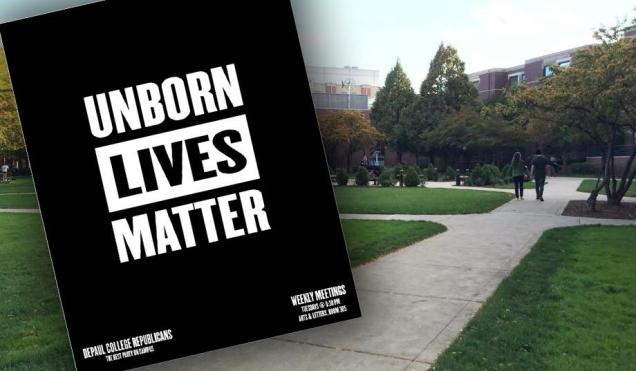
There really is no other way to describe the privilege enjoyed by this organisation following the news that DePaul University in Chicago – a Catholic institution – recently banned a poster produced by the DePaul College Republicans because their catchphrase “Unborn Lives Matter” is supposedly deliberately provocative and hurtful to the delicate Black Lives Matter snowflakes.

I repeat: the president of a Catholic university actively suppressed the free speech of his own students because they dared to publicly support traditional Catholic teaching on the sanctity of life and the rights of unborn children – which might have offended a group of people who are supposedly concerned about racial justice, not abortion rights.

Campus Reform reports:

The DePaul College Republicans chapter has been censored yet again, this time over promotional flyers proclaiming that “Unborn Lives Matter.”

According to University President Rev. Dennis H. Holtschneider, the club was forbidden from using the flyers because they were “bigotry…under the cover of free speech,” meant to “provoke” members of the Black Lives Matter movement.

DePaul College Republicans Vice President John Minster told Campus Reform that his group wanted to use the “Unborn Lives Matter” flyers to draw members to their club meetings, but had to submit the design to the Office of Student Involvement for approval.

OSI Director Amy Mynaugh was out of town during the approval process, however, and the design proposal made it all the way to President Holtschneider.

Holtschneider not only declined to approve the flyers, but sent a letter to the entire university body explaining that the pro-life posters constituted “bigotry” and were not considered free speech.

The letter from President Holtschneider reads in part:

DePaul is a private Catholic institution, and we also are part of the academy.  By our nature, we are committed to developing arguments and exploring important issues that can be steeped in controversy and, oftentimes, emotion.  Yet there will be times when some forms of speech challenge our grounding in Catholic and Vincentian values.  When that happens, you will see us refuse to allow members of our community to be subjected to bigotry that occurs under the cover of free speech.  In fact, you have seen this in past months, as we have declined to host a proposed speaker and asked students to redesign a banner that provokes the Black Lives Matter movement.

Some people will say that DePaul’s stance unfairly silences speech to appease a crowd.  Nothing can be further from the truth.  As we experienced last spring, it’s not difficult to agree that there is a difference between a thoughtful discussion about immigration and a profane remark about Mexicans scrawled in the Quad; or between a panel on racial climate and a noose — a powerful symbol of violence and hatred — outside a residence hall.  In both recent cases, the first, we encourage; the second, we abhor.

Because co-opting a topical phrase to express support for the Church’s pro-life stance is apparently “provocative” – the “provocation” outweighing the moral question at stake in the eyes of DePaul University.

And putting up a poster declaring that “Unborn Lives Matter” – the clearly stated and strongly affirmed position of the Catholic Church, the institution with which DePaul is inseparably affiliated – is not a statement of moral purpose, but is instead deemed the equivalent of a “profane remark about Mexicans scrawled in the Quad”.

The letter continues:

If you read DePaul’s Guiding Principles on Speech and Expression, you will see that our Vincentian values were in the forefront six years ago when these guidelines were developed.  Though a group of your own DePaul colleagues are giving them a fresh look for updates, the current guiding principles still apply.  I encourage you to read the entire document to gain a better understanding of the balance between our values and speech.  In particular, I ask you to reflect on these sentences: “We accept that there is a distinction between being provocative and being hurtful.  Speech whose primary purpose is to wound is inconsistent with our Vincentian and Catholic values.”

More:

Disagreements will happen on important issues—many that are personal to members of our community for whom race, immigration, gender disparities, religious beliefs and economic privilege are more than conversation topics; they are part of an inescapable lived experience.  Students and others will almost certainly continue to explore and seek the exact limits of our tolerance for free expression when that expression is meant to cause distress.  Certainly, everyone is allowed to have their opinions on these topics.  I simply ask when you are expressing your opinion that you respect the difference between a reasoned discussion and words whose primary purpose is to wound.  I also ask that the university community refuse to “rise to the bait” in those moments when speech may become uncomfortable or even exasperating, but falls within the bounds of the academy’s commitment to full and robust debate.

Because hurt feelings are far more important than abortion. And the omniscient president and administrators of DePaul university can look clearly inside the human heart and discern whether a given student intends to provoke, offend or hurt when determining their right to speak.

This is ludicrous. Holtschneider made no attempt to speak with the DePaul College Republicans before censoring their poster and banning it from campus – he high handedly presumed to know what motivated them to speak out in favour of the rights of the unborn, and then publicly find them to be morally deficient and their motives cynical. That is effectively the judgment on their character that Holtschneider passed by revoking their right to express themselves – that they are Evil Racists more interested in “provoking” certain members of the black community than witnessing to their faith and speaking their consciences.

The National Review rages:

As a private, Catholic university, DePaul is not explicitly obliged to respect students’ free-speech rights like a public university would be. But it is disturbing that the university would choose not to do so, and even more disturbing that DePaul’s administration justified their decision by invoking the university’s “Catholic values.” It is hard to believe that the phrase “Unborn Lives Matter” is in violation of a Catholic university’s values when, in fact, this phrase ought to embody them.

This is not the first time that DePaul’s administration has been confused about the proper application of its Catholic guidelines. For instance, one of the university’s 2016 commencement speakers was Martin Castro, chairman of the U.S. Commission on Civil Rights, who in his professional capacity has advocated same-sex marriage and radical gender theory, and opposed religious-freedom legislation that would have enabled Catholic institutions to uphold their values. DePaul was also found to have referred students to jobs and internships at Planned Parenthood, and to have promoted social-media posts celebrating the Supreme Court decision recognizing same-sex marriage nationwide.

While it is the university administration’s prerogative to take these actions — even though they openly conflict with established Church doctrine — it is appalling that the same administration would invoke its Catholic principles to ban pro-life flyers from campus. It is evident that Holtschneider and his staff are intent upon silencing conservative student voices, even if they must wield their Catholic identity as a cudgel to do so.

It is particularly depressing that the SJW snowflakes of DePaul have their grubby hands on the university’s Guiding Principles on Speech and Expression – we can safely assume that the next version of this document will be even more restrictive, and prioritise the feelings and “identities” of coddled students even more strongly over the imperative for debate and the quest for truth. Which will be some achievement, considering the current version already draws a specious “distinction between being provocative and being hurtful.

But one can only be so angry at the students themselves. As this blog has explored repeatedly, these thin-skinned students are very much a product of their environment and their upbringing. They are the result of Everyone Wins A Prize schooling, parental paranoia about a child abductor lurking on every corner and the endless, nauseating praise for the most pedestrian of accomplishments and the corrosive idea, inculcated at every stage of their academic lives, that “sticks and stones may break my bones but words will kill me stone dead”.

Far more to blame are the adults – the liberal college professors now struggling to stay ahead of their students in the race to be ever more strident, intolerant and authoritarian in response to ideas they dislike, and the spineless university administrators who would sooner collaborate with the new regime and stab academic freedom in the back than push back against their millennial masters.

But special criticism has to be levied at the leader of a Catholic educational institution – somebody with Reverend in their title – who prioritises the prickly feelings of Black Lives Matter (and their proprietary sense of ownership over the phrase “[insert interest group] lives matter”) over and above the Church’s teaching on a core social issue.

I happen to be Catholic myself. Personally, I do believe that All Lives Matter. I believe that life begins at conception, and that therefore abortion inherently means the taking of a life. But I also believe that this is also sometimes the lesser of two evils, or an understandable choice in an impossibly difficult situation. As well as the commonly given exceptions – rape, incest, the life of the mother – I believe that abortion should be a legal, safe and much, much rarer. And part of making abortion much rarer must surely involve easier access to (and education about) contraception. One of the best ways to stop new lives being discarded before they begin is to prevent the hideous situation from arising in the first place.

I recognise that all of the above places me in conflict with the church’s teaching, and that is something which I have to wrestle with. I’m reasonably sure that I am right, and that my viewpoint will be vindicated and adopted by the Church in the fullness of time, but that doesn’t lessen the sense of unease at being out of communion with my religion on such an emotive issue.

But here’s the difference: I don’t expect external authority figures to step in, suppressing the free speech of others to prevent my guilty conscience from being pricked. Nor do I expect them to do so because the language they choose to use in affirming traditional Church teaching “appropriates” the name of another cause I happen to care about, or which impacts me. I can think and write what I want – I have no business limiting the freedom of others to do the same.

And students at a Catholic university, of all places, should be free to affirm Catholic teaching through articles, peaceful protest and harmless posters without fear of censorship by craven university authorities – spineless, degenerate cowards who would sooner suppress freedom of speech and publicly reject their own religion’s teaching than risk the slightest offence to their new deity: the Cult of Social Justice and Identity Politics.

Bigotry “under the cover of free speech”? That is to be DePaul University’s sneering, dismissive and hostile attitude toward young conservative Catholics who dare to affirm the teachings of their faith?

People of faith should pray for the censored College Republicans (whether or not you agree with their cause), and for DePaul University. Because religion counts for nothing if it has to disregard doctrine and bend the knee to social fads and new secular shibboleths.

And I don’t know how much longer the academy can plausibly survive the continued ruthless letting of its most vital lifeblood – the right to free speech.


Safe Space Notice - 2

Top Image: National Review

Support Semi-Partisan Politics with a one-time or recurring donation:

Agree with this article? Violently disagree? Scroll down to leave a comment.

Follow Semi-Partisan Politics on TwitterFacebook and Medium.