The Daily Mash’s Unhealthy, Obsessive Brexit Complex

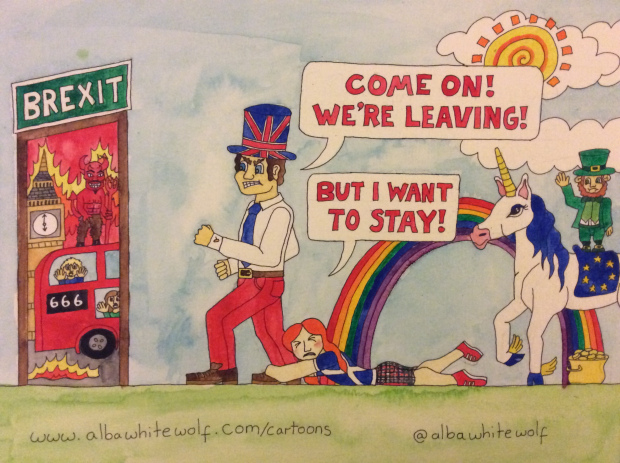
Brexit Apocalypse 2 - albawhitewolf

The Daily Mash should spend less time going for cheap laughs about supposedly racist, nostalgic Brexiteers and more time using satire to hold real power and privilege to account

Along with countless other non-racist, non-xenophobic Brexiteers who enjoy a good bit of political comedy and satire, I have been waiting patiently for the current virulent outbreak of Brexit fever to abate over at The Daily Mash, a satirical news website which at one time could be relied upon to provoke laughs no matter which party or ideology was in the cross-hairs.

Sadly, judging by today’s latest effort, there is still no sign of remission:

EVERY country in the former British Empire has demanded Britain resume full political control now it has proven it is great again.

Australia, India, Canada, Egypt and South Africa, among a host of others, have all dissolved their governments in a show of awestruck admiration for the British lion’s newfound mighty roar.

Kenya’s president Uluru Kenyatta said: “We never wanted Britain to stop ruling us in the first place – why ever would we? – but you just needed to grab hold of your mojo again.

“Don’t worry about giving us voting rights or any of that nonsense. Now you are once again a proud, resurgent nation unafraid of political correctness, we have absolute trust you will act in our best interest. And the world’s.

“I step down this afternoon. Oh man, I hope we get Michael Gove as governor. That guy is the best.”

The UK now commands a fifth of the world’s population and one-quarter of its total habitable land, which is as it should be.

Retired headmistress Margaret Gerving, from Guildford, said: “I don’t know why America is insisting on being independent. I’m sure they’ll stop being silly eventually.”

Of course, this is just the tip of the iceberg. Since a clear majority of Britons voted to leave the European in the June 2016 referendum, the Mash has covered the topic of Brexit and our changing relationship with the European Union with the spittle-flecked fury and haughty, casual moral superiority of an earnest but ill-informed sixth-former.

Thus we have been treated to headlines such as these:

Uniting behind Brexit a bit hard if you think it’s shit – which includes quotes such as “I’ve always believed that Europeans are our friends with whom we no longer want to have wars. So it’s hard to change to seeing them as potentially hostile weirdos whose food is poisonous”. Because of course voting to leave a supranational political union could be motivated by nothing else.

All man wants for Christmas is Brexit – which tells the story of Roy Hobbs, who “d[oes] not care about presents underneath the Christmas tree, and he just wants Britain to stand alone, stronger than it had ever known”.

Relieved Britain no longer biggest f*ck-up of 2016 – in which a character declares: “For months we’ve been the world’s dumbest dickheads, and now we’re actually if anything a useful marker on the road to the total collapse of liberal democracy”.

May confirms Brexit is now a religious cult – in which the Mash’s version of Theresa May declares: “We will form small, inward-looking communities where anyone who criticises Brexit will be subjected to weeks of brainwashing or human sacrifice. I am the one true prophet of Brexit, which means everything I say is a fact, such as ‘Liam Fox is good at whatever it is he is supposed to be doing’. I call it ‘going the full David Koresh’.” That last line is a snide reference to the Waco siege, in which four federal agents and 76 cultists died.

Brexit optimism highest among people who love setting fire to things – in which one demonic Brexiteer exclaims: “All I want from life is to instill fear while cackling like a maniac, so I’m delighted that the government is finally listening to people like me”.

These are but a few examples, chosen more or less at random.

Does Brexit deserve to be made fun of? Absolutely – nothing should be off the table when it comes to political humour. But the Mash’s lazy bias does its satire-loving readers a disservice by nearly completely exempting the Remain side – who, after all, make up most of the establishment that satirical publications normally exist to mock – from any scrutiny of their own.

Imagine the EU referendum result had gone the other way, and Britain had narrowly voted to remain. We Brexiteers (myself included) would not have taken the result well, would be making our displeasure widely known and probably vowing to hold another referendum as soon as possible. But rather than skewering the victorious Remain side for their wide-eyed europhilia and naive trust in the Magical EU Reform Unicorn (or “punching up”, as we apparently now call the intersection between humour and power dynamics) the Mash would instead be quick to laugh at the angry, disappointed Leavers. No matter which way the result went, the Mash would be laughing at Brexiteers right now. And that is both biased and lazy.

Of course, many Brexiteers are vaguely ridiculous and lend themselves to humour, just as many Remainers are glib, shallow, sanctimonious and uninformed. But good satire would poke fun at the real faults of Brexiteers – our sometimes room-emptying obsession with matters of sovereignty, democracy and regulatory matters, for example. There’s lots of comic material in there, even if extracting it takes slightly more effort. Going for the “oh, they’re just hankering for the days of empire” gag (as per the article quoted at the top of this post) is a cheap laugh, and a lazy one.

What’s more, it is wrong. If you actually take the time to talk to Brexiteers, even much of the UKIP brigade, you won’t hear a hankering for empire or a desire to “turn the clock back”. These are rationalisations dreamed up by London-dwelling media types who never socialise with anyone who lives north of Watford and so cannot imagine what might really motivate a person to vote for Brexit.

What you will hear if you do talk to Brexiteers in any number is a strong distrust of political institutions, a sense of personal insecurity or economic precariousness and a sense that time, technology and political machinations have wrought huge changes on Britain with almost no proper discussion or debate. A sense that while we must keep moving forward, government for once needs to prioritise the interests of those who can’t or who don’t want to be citizens of the world rather than those who are able to use the world as their playground.

And if that seems difficult or unwise to mock, then perhaps it is worth questioning whether the Mash and the London-centric elite are spending too much time “punching down” at people they consider inferior rather than holding power (and what they might call “privilege”) to proper account.

Consider this old Daily Mash article from the dying days of the last Labour government, skewering prime minister Gordon Brown’s assertion that a cut in National Insurance tax would somehow be “taking money out of the economy”:

GORDON Brown will once again focus Labour’s election campaign on national insurance after being deafened by the collapse of his own argument.

Mr Brown’s advisers had urged him not to return to the issue, but the prime minister just nodded and smiled and said their voices had gone all dull and fuzzy.

The argument has been collapsing in stages since last week with the final section crashing to the ground in a massive cloud of dust and bits during the Today programme, just after eight o’clock this morning.

Radio Four listener Tom Logan said: “I was spooning some mephedrone into my tea and listening to John Humphrys being a shit, when all of sudden there was this huge, violent noise.

“It was so loud I thought it must be coming from outside, but then I realised it was the last part of the prime minister’s argument on national insurance smashing into the ground like it had been kicked over by a giant toddler.

“I do hope no-one was hurt apart from John Humphrys.”

Within minutes of the argument toppling over, Guardian editor Peter Mandelson was seen scrabbling over the smoking rubble and attempting to rebuild it while mumbling, ’employers know nothing about employing people’ over and over again.

Now, this is funny because it pokes fun at an actual trait of New Labour politicians – that rather paternalistic view that government really does know more about employing people than the employers themselves.

By contrast, the worn-out old stereotype of Brexiteers as scarlet-faced, tweed-bedecked retired colonels hankering after a bygone age is self-evidently false. It fails the common sense test – more than half of voters opted for Brexit, and there just aren’t enough retired colonels out there to deliver that kind of result.

But rather than actually take the time to understand Brexiteers and work out what makes them tick so as to better lampoon them (humour, after all, is always better when it is closely observational), publications like The Daily Mash sit back smugly and fall back on the familiar narrative of grumpy old men hankering for empire.

And that, of course, is their right. Nobody has to read The Daily Mash, and despite Britain’s increasingly tenuous commitment to free speech they can mock and lampoon whoever they like, as should be the case.

But how much better would their comedy be – how much wryer and punchier their humour – if the Mash writers actually took the time to really get to know a few more Brexiteers (so as to at least make fun of them for the right reasons), or even (heaven forfend) turn that caustic wit back on their own side once in a while?
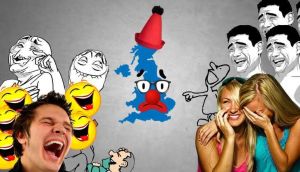
 

Brexit Jokes

Top image: Alba White Wolf

Bottom image: catchnews.com

Support Semi-Partisan Politics with a one-time or recurring donation:

Agree with this article? Violently disagree? Scroll down to leave a comment.

Follow Semi-Partisan Politics on TwitterFacebook and Medium.

Quote For The Day

From Conor Friedersdorf’s excellent interview of writer and professor David Hillel Gelernter:

Everyone knows that we live in politically superheated times; partisanship feels more bitter and more personal than it ever has in my lifetime.

There are many reasons, but here is one: we all know that faith in the Judeo-Christian religions is dramatically weaker than it used to be. But human beings are religious animals, and most will find an alternative if the conventional choices are gone.

The readiest replacement nowadays for lost traditional religion is political ideology. But a citizen with faith in a political position, instead of rational belief, is a potential disaster for democracy. A religious believer can rarely be argued out of his faith in any ordinary conversational give-and-take. His personality is more likely to be wrapped up with his religion than with any mere political program. When a person’s religion is attacked, he’s more likely to take it personally and dislike (or even hate) the attacker than he is in the case of mere political attacks or arguments. Thus, the collapse of traditional religion within important parts of the population is one cause of our increasingly poisoned politics. Yet it doesn’t have to be this way.

Turn back to the generation after the Second World War. The collapse of religion is well underway, but there is another alternate religion at hand: art.

Think of the extraordinary blaze-up of art in America in the postwar years, especially the 1950s and first half of the ‘60s: painting above all; choreography in New York (Balanchine, Robbins, the American Ballet Theater, the Joffrey and other regional companies); serious music, led by Bernstein’s Young Peoples Concerts broadcast  nationwide by CBS; intense interest in new American novelists; Frost; the Americanized Auden, Eliot and Delmore Schwartz; the great quartet of European masters as seen from the US: Picasso and Matisse, Giacometti and Chagall; the European film as an art form (Swedish, Italian and French––Hitchcock’s Birds, for that matter, opened in the early ‘60s at MOMA); in the architecture of the Americans Wright and Kahn and Eero Saarinen, and the Europeans Mies and Corbu and Gropius; in the design of the Eames studio, in the museum show as an event, in drama and the Actor’s Studio; art-books, magazines, posters, high-fidelity audio, Lincoln Center, the Dick van Dyke show; a situation comedy with frequent episodes about the theater, galleries, art films–and on and on.

An astonishing era.

Among much else, it helped politics go down easier. (Only a little easier; but every bit helped.)  Other things did too, of course; and art, as always, was its own reward. But we miss something if we don’t see how the religion of art took pressure off politics.

Nowadays it’s mostly gone. But it doesn’t have to be. Art itself is the reason to bring art back to center stage. But some of the merely incidental benefits might be enormous.

My emphasis in bold.

There is a bucketload of truth in this statement. As anyone who has tried to engage your average pro or anti-Trump or Brexit activist in conversation or debate about politics will attest, reasoned discussion is hard to come by, precisely because faith is now vested in political tribes rather than God. In fact, the politically neutral (or those who refuse to see Donald Trump as either Saint Ronald Reagan 2.0 or Hitler Reborn, Brexit as an unadulterated good or an unprecedented disaster) tend to have the hardest time of all – the new atheists and agnostics.

Partisans on either side are increasingly being defriended, blocked or ignored in the real world by those incapable of making the leap of empathy required to understand or forgive a vote for the opposing side. But agnostics and those in the middle face the ire of both sides, incredulous that they can neither see the self-evident worth of the “right” side or the existential danger of the “wrong” side.

It is worse now than it was a decade ago under the George W. Bush administration, and by all accounts it was worse then than it was before under Clinton, Bush senior or Reagan.

Most analysis of this phenomenon of polarisation and mutual incomprehension had focused on the impact that the internet and social media have had on our political discourse, and many of these discussions are valid. But Gelernter takes a different approach and reveals another, more sociological explanation for the current toxic atmosphere – one made all the more profound because of what it says about humanity rather than the technology we now use.

And who can deny Gelernter’s point? As religion and faith have receded, something has indeed taken its place. But it is no longer art, or that wonderful flourishing of high culture that the West saw in the 1950s and 60s. Now it is often decidedly low culture and politics which we elevate above all else – and particularly, for many people, the divisive and grievance-laden politics of identity and victimhood.

But I would add that science also helped to cushion what Gelernter calls the “collapse of religion”. Humanity was inspired by the space race and the Apollo Program – “we choose to go to the moon in this decade and do the other things, not because they are easy, but because they are hard” – and great shared human endeavours such as these. But humanity has not lifted its gaze above low earth orbit since 1972, and while other technological breakthroughs such as the mobile computing and the internet have revolutionised our lives, they have on balance tended to fuel the individualist and consumerist aspects of our society rather than the collective and the communal, let alone the spiritual.*

What is becoming manifestly clear is that we need something – be it a new flourishing of art (as Gelernter desires) or a great scientific or technological challenge – to help us once again lift our eyes above our own selves, circumstances and identity groups. More than a few political activists together in a room tend to quickly become insufferable. A whole society comprised entirely of such activists would be so much worse, as we are now starting to discover.

We need a common challenge or faith – whether it is a rekindling of the gentle patriotism spoken of by Andrew Sullivan or a tangible project of some kind – to remind us that we are more than the sum of our political opinions. And this means we need political leaders who dare to demand something of us rather than flatter us and promise us bountiful riches for no effort.

And so this blog asks again: set us a challenge.


*In Britain, mindless worship of the National Health Service – as exhibited today by more than 200,000 people who marched through central London in support of the NHS, demanding that more taxpayer money be shovelled into a healthcare system they venerate and claim to be the “envy of the world” despite the awkward fact that no other country has tried to replicate the NHS and many succeed in delivering better healthcare outcomes – has become the closest we have to a national religion. And while this might certainly count as blind faith or religious fervour, it does nothing meaningful to bring us together as a society.


apollo-program-nasa

Support Semi-Partisan Politics with a one-time or recurring donation:

Agree with this article? Violently disagree? Scroll down to leave a comment.

Follow Semi-Partisan Politics on TwitterFacebook and Medium.

The Reviled American Media, Part 2

Jonah Goldberg gets it:

One need not paint with an overly broad brush or accuse the entire press corps of being part of a knowing conspiracy to manipulate the public. Many mainstream journalists sincerely believe they are operating in good faith and doing their job to the best of their abilities. At the same time, it seems patently obvious that the “objective” press is in the business of subjectively shaping attitudes rather than simply reporting facts.

Consider the hot topic of the moment: illegal immigration. The syndicate that distributes the column you are reading follows the AP stylebook, which says that I am not allowed to refer to “illegal immigrants” (i.e., people who migrate illegally), but I can refer to illegal immigration (i.e., the act of migrating illegally). Kathleen Carroll, then the senior vice president and executive editor of the Associated Press, explained that the change was part of the AP’s policy against “labeling people.”

Many news outlets followed suit, using such terms as “unauthorized” or “undocumented” to describe immigrants formerly known as illegal.

The move was hailed by left-wing immigration activists as a great leap forward. And for good reason: It is part of their agenda to blur the distinctions between legal and illegal immigration, and to make it sound as if objecting to the former is morally equivalent to objecting to the latter. But as a matter of fact and logic, the difference between an “unauthorized immigrant” and an “illegal immigrant” is nonexistent.

The media play these kinds of linguistic games all the time. Economics professor Tim Groseclose walks readers through countless examples in his book Left Turn: How Liberal Media Bias Distorts the American Mind. Partial-birth abortion virtually never appears without a “so-called” before it, and the procedure is virtually never described clearly. The word “kill” is almost never used to describe any abortion, despite the fact that this is what happens. Whenever some great sweeping piece of liberal social legislation is passed by Democrats, it’s a “step forward.” Whenever a law is repealed, Republicans are “turning back the clock.”

The language games are part of a larger tendency of journalists to follow certain scripts that conform to how coastal elites see the country.

The very same point that this blog has been making again and again and again and again and again.

Jonah Goldberg’s criticism of the mainstream media is all self-evidently justified, but as America’s premier news outlets rend their garments and weep about being unfairly demonised it is worth noting that hardly any of them have shown the slightest bit of introspection as to their role in becoming so widely despised and distrusted by a large segment of the American population, let alone contrition or a desire to do better, to reflect the objective truth or the concerns of the other half of the country.

Beltway journalists will neither acknowledge to their readers that their deliberate manipulation of language and skewed story selection might possibly have played a part in fuelling conservative distrust of prestige newspapers and television networks, nor promise to stop doing so in the future. Now, is this as bad as creating a brand new fake news website and churning out sensationalist nonsense about Barack Obama raising an army to take back Washington D.C. in a military coup? No, of course not. But the fact that the mainstream media’s crimes are of a lesser severity does not excuse their dereliction of journalistic duty.

As I wrote the other day, we must keep two competing thoughts in our minds as we navigate the Age of Trump: yes, the president is often worryingly unstable and his administration troubling across a whole host of areas, but the people tasked with reporting on Trump, holding his administration to account and keeping the American people informed are no angels, either.

And part of me would rather deal with Trump’s lies, which at least tend to be huge emblazened whoppers which are obviously false and easily disproven, over the media’s deliberate and cynical attempts to slowly reshape public opinion in a leftward direction under the false flag of objectivity.


new-york-would-never-dream-of-building-a-wall-new-york-magazine-immigration-propaganda

Support Semi-Partisan Politics with a one-time or recurring donation:

Agree with this article? Violently disagree? Scroll down to leave a comment.

Follow Semi-Partisan Politics on TwitterFacebook and Medium.

The Enemy

donald-trump-swastika-sign

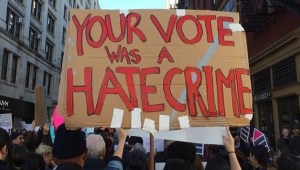
When will key influencers on the American Left learn that they can criticise Donald Trump all they want, but that continually punching down and demonising everybody who voted for him is hugely counterproductive?

Does Nicholas Kristof’s latest New York Times column reveal an early glimmer of realisation among the elite left-leaning commentariat that demonising the 46% of voters who voted for Donald Trump – and effectively accusing them of complicity with a fascist regime – is no way to win back local, statewide and national power for Democrats?

Perhaps so:

I understand the vehemence. Trump is a demagogue who vilifies and scapegoats refugees, Muslims, undocumented immigrants, racial minorities, who strikes me as a danger to our national security. By all means stand up to him, and point out his lies and incompetence. But let’s be careful about blanket judgments.

My hometown, Yamhill, Ore., a farming community, is Trump country, and I have many friends who voted for Trump. I think they’re profoundly wrong, but please don’t dismiss them as hateful bigots.

The glove factory closed down. The timber business slimmed. Union jobs disappeared. Good folks found themselves struggling and sometimes self-medicated with methamphetamine or heroin. Too many of my schoolmates died early; one, Stacy Lasslett, died of hypothermia while she was homeless.

This is part of a national trend: Mortality rates for white middle-aged Americans have risen, reflecting working-class “deaths of despair.” Liberals purport to champion these people, but don’t always understand them.

In Yamhill, plenty of well-meaning people were frustrated enough that they took a gamble on a silver-tongued provocateur. It wasn’t because they were “bigoted unthinking lizard brains,” but because they didn’t know where to turn and Trump spoke to their fears.

Trump tries to “otherize” Muslims, refugees, unauthorized immigrants and other large groups. It sometimes works when people don’t actually know a Muslim or a refugee, and liberals likewise seem more willing to otherize Trump voters when they don’t know any.

More:

There are three reasons I think it’s shortsighted to direct liberal fury at the entire mass of Trump voters, a complicated (and, yes, diverse) group of 63 million people.

First, stereotyping a huge slice of America as misogynist bigots is unfair and impairs understanding. Hundreds of thousands of those Trump supporters had voted for Barack Obama. Many are themselves black, Latino or Muslim. Are they all bigots?

Second, demonizing Trump voters feeds the dysfunction of our political system. One can be passionate about one’s cause, and fight for it, without contributing to political paralysis that risks making our country ungovernable.

[..] The third reason is tactical: It’s hard to win over voters whom you’re insulting.

Many liberals argue that Hillary Clinton won the popular vote and that the focus should be on rallying the base and fighting voter suppression efforts. Yes, but Democrats flopped in Congress, governor races and state legislatures. Republicans now control 68 percent of partisan legislative chambers in the U.S.

If Democrats want to battle voter suppression, it’s crucial to win local races — including in white working-class districts in Ohio, Wisconsin and elsewhere.

Yes, a majority of Trump voters are probably unattainable for Democrats, but millions may be winnable. So don’t blithely give up on 63 million people; instead, make arguments directed at them. Fight for their votes not with race-baiting but with economic pitches for the working and middle classes.

Clinton’s calling half of Trump voters “deplorables” achieved nothing and probably cost her critical votes. Why would Democrats repeat that mistake?

Kristof is inevitably taking a lot of heat from many of his readers, whose blood is still up following the election and who think that falling back on the 2008-2016 Republican Party model of total opposition and demonisation (with an extra dose of left-wing moral sanctimony) is a winning, beneficial strategy for the country.

One angry reader concluded her comment by saying “I am scared and they are the enemy. Plain and simple.” Is this really helpful language to be using at a time of national division, and is the mindset behind it a healthy one? Surely not. Of course much of the fault lies with Trump, his bellicose rhetoric and his entitled, backward attitude towards women. But Nicholas Kristof and other commentators on the Left also bear some responsibility for having created such fear among their own readerships, by frequently hyping and exaggerating the troubling aspects of Trump’s administration for political reasons (playing with language to imply with virtually no basis in fact that the president has a deep antipathy to all immigrants or to people with brown skin, for example).

Many Trump supporters and residents of Trumpland are good, caring, conscientious people. Kristof’s reader only came to the conclusion that they are all “the enemy” because she has been told so, repeatedly, by people in the media whose partisan cunning and residual bitterness outweighs any sense of professional responsibility they ought to possess. And the concerning aspects of Donald Trump’s presidency are bad enough without the leftist spin machine, working through the imprimatur of prestige titles such as the New York Times, convincing their audience that half the country (apparently including millions of “self-hating women”) is somehow out to get them when this is usually not the case.

Nicholas Kristof warned of the dangers of demonising Trump supporters as a cohesive bloc back in November, when the wounds of the election were still very raw indeed. Unfortunately, he did so in the very same column where he suggested that the pain felt by American liberals in the Age of Trump would be akin to that of an addict in recovery, a grotesquely self-indulgent and self-pitying assertion  which made light of the struggles of those suffering from mental illness. As so often with the Left and their struggle against reality it was one step forward, two steps back.

Hopefully with this new plea to his readers, Nicholas Kristof will at last hold on to some of the moral high ground he has occupied.


donald-trump-election-victory-protest-your-vote-was-a-hate-crime-banner

Support Semi-Partisan Politics with a one-time or recurring donation:

Agree with this article? Violently disagree? Scroll down to leave a comment.

Follow Semi-Partisan Politics on TwitterFacebook and Medium.

The Reviled American Media, Part 1

wolf-blitzer-anderson-cooper

Donald Trump versus the media: bad cop, bad cop

A throwaway line in a Washington Post article goes some way to revealing exactly why the American media is so widely despised and mistrusted.

Musing about why many Trump supporters stubbornly insist on viewing his presidency as a success thus far (rather than the cataclysmic failure portrayed by mainstream narratives), the Post reports:

Several people said they would have liked to see more coverage of a measure that Trump signed Thursday that rolled back a last-minute Obama regulation that would have restricted coal mines from dumping debris in nearby streams. At the signing, Trump was joined by coal miners in hard hats.

“If he hadn’t gotten into office, 70,000 miners would have been put out of work,” Patricia Nana, a 42-year-old naturalized citizen from Cameroon. “I saw the ceremony where he signed that bill, giving them their jobs back, and he had miners with their hard hats and everything — you could see how happy they were.”

The regulation actually would have cost relatively few mining jobs and would have created nearly as many new jobs on the regulatory side, according to a government report — an example of the frequent distance between Trump’s rhetoric, which many of his supporters wholeheartedly believe, and verifiable facts.

My emphasis in bold.

Now, this is not about the merits and disadvantages of expanding coal mining. This is about the blasé arrogance of the Washington Post, suggesting to its readers that the creation of government regulatory jobs in any way makes up for the loss of manual jobs in coal mining.

How many ex-coal miners with high school-level educations will be eligible for these new regulatory jobs? Probably very few. But these jobs will enormously benefit the college-educated, Washington D.C.-dwelling professional class who are eligible for attractive jobs in the Department of Energy or the Environmental Protection Agency.

It is difficult to know whether the Post’s dismissal of concerns about coal mining job losses because they will be “offset” by new regulatory jobs is merely ignorant or deliberately callous towards the working classes. But either way, it reveals a huge gulf between the perspective of the Washington Post and its readership on the one hand, and Trump-supporting people from coal country on the other.

Maybe those coal mining jobs should be killed anyway. Ultimately, of course, they certainly should be phased out as part of a move away from fossil fuel dependence. But for the Post to speak haughtily about Trump supporters’ aversion to “verifiable facts” while misleading its own readership by pretending that the Obama-era environmental regulations (whatever their core merits) were anything other than a transfer of wealth and opportunity away from coal country manual workers towards the DC professional class is morally dubious and a dereliction of their professional duty as a supposedly objective national news outlet.

Essentially, the Post is suggesting that Trump supporters are somehow being irrational to cheer the overturning of anti-coal regulations that will restore some coal mining jobs, because they should instead be rejoicing at the creation of other, office-based jobs for which they are almost certainly ineligible. How terribly unenlightened of them to not cheer as their small-town jobs are sacrificed to create other jobs for city-dwelling public sector bureaucrats.

Assuming the best of intentions rather than the worst, this represents a vast gulf of understanding between the Washington media class and a large segment of the country on which they report. The frequent complaint of Trump supporters is that their interests have long been ignored by a political and economic elite who have time and compassion for everyone and everything save the rural and suburban squeezed white lower middle and working classes, with politicians and the media colluding to keep their struggles, concerns and aspirations off the political agenda. And now the media, which seems to be relishing its oppositional role to President Trump, seems determined to live up to that stereotype.

Accusations that the mainstream media is “fake news” go too far – the Washington Post or New York Times will never publish a breathless story about Michelle Obama being arrested for treason or Hillary Clinton participating in witchcraft rituals, the kind of ludicrous and obviously false clickbait which pollutes the internet and is sadly shared by too many a credulous conservative. The mainstream media’s form of bias is subtler and much more insidious. There are few outright falsehoods in the prestige media, but one can often achieve just as much through deliberately one-sided story selection and a deliberately skewed angle of coverage, made all the more effective because unlike fake news sites, respected outlets like the Washington Post and the New York Times actually influence the worldviews and opinions of key decision makers in Washington D.C. and beyond.

In other words, too many respectable, prestige mainstream media outlets have squandered any trust and goodwill they one held with the public by subtly but repeatedly pushing a political agenda (the largely bipartisan agenda of the DC political elite). This climate of distrust is a problem of the media’s own making. And it all begins with having newsrooms full of reporters and editors with so few (if any) roots in the kind of community which came out strongly for Donald Trump in the 2016 election that they are utterly incapable of reporting on them with any real understanding, subtlety or empathy.

If the goal is to avoid events like the election of Donald Trump as President of the United States, surely our first step must be one of introspection – not furiously shouting insults at people who often voted for Trump through despair or resignation, not misrepresenting their political views to the point of slander, but rather understanding how the political mainstream managed to consistently fail these people so badly that they felt they were left with little alternative. The Washington Post, for all the good reporting they often do, is light years away from recognising this fact, let alone showing such introspection in their coverage.

Indeed, if anything, the American media is moving in the opposite direction. Spurred by President Trump’s reprehensible attacks on the media as a whole, the Washington press corps is doing what they love to do best – talking about themselves and wallowing in a sense of victimhood and persecution, laughably painting themselves as noble and selfless heroes and seekers of truth in this new authoritarian age.

I’m sorry, but that is nonsense. Many of these reporters are the same ones who in the 2000s used to leap smartly to their feet, offering obsequious respect and nary a searching question whenever president George W Bush strolled into the White House press briefing room to announce the erosion of core civil liberties, exaggerate the threat posed by Iraq and then downplay his administration’s calamitous handling of the war. This is the same press corps that often treated every utterance from President Obama as sacred, unquestionable unicorn song, hyping his candidacy and forgiving his administration’s missteps.

This is the same press corps which gathers every year for the White House Correspondents Dinner, in which journalists and politicians slap each other on the back and toady up to power in one of the most sickening modern day political rituals known to man. Oh yes, and they are the ratings whores who gave blanket, uncritical rolling news coverage of Donald Trump’s every garbled word back when he was still just a laughable Republican Party presidential primary candidate, acting as oxygen to the the flames of the Trump campaign in the first place.

A healthy democracy needs a free press. But it sure as hell doesn’t need the craven, self-satisfied press we are stuck with at the moment. You can probably count the number of Washington or New York-based political journalists with a record of consistently principled, inquisitive and objective work on two hands. None of them work in television news. The rest are every bit as much a part of the fetid, corrupt political class as the politicians on whom they report. And now they take the angry anti-media rantings of President Trump and use them as an excuse to prance around playing the noble, heroic victim. We should not fall for their tawdry act.

Increasingly, the presidency of Donald Trump will require us to hold two competing thoughts in our head simultaneously: that yes, the Trump administration is troubling in a whole host of ways, but also that many of the people opposing Trump (from the sanctimonious, rootless, unreformed Democrats to the lazy and morally compromised Washington media) are also grievously at fault. And the sins of Donald Trump do not excuse the failings of those forces ranged against him, just as the spineless, uncurious, self-aggrandising behaviour of the Washington media does not excuse the authoritarian, impulsive excesses of the new president.

It is sheer lunacy to believe that the forces which gave us President Trump will be placated and put back in their box by a coordinated campaign of opposition from a Democratic Party and Washington political media class who have spent precisely zero hours pondering their own role in this period of “American carnage”, and who have shown zero willingness to change their own behaviour and policy preferences. Indeed, as newspaper subscriptions and cable news show ratings rise in step with the turmoil emanating from the White House, many in the Washington media are probably deluding themselves into thinking that they are actually doing a good job.

This could not be further from the truth.

As things stand, both sides will continue to antagonise one another; an out-of-touch Washington media class will continue to report on the residents of Trumpland as though they are some kind of fascinating but dangerous medical specimen best kept behind the safety glass in a lab, and Trump supporters, feeling patronised and wilfully misunderstood, will continue to distrust everything that the mainstream media says (including the 90% which is reasonably accurate, if sometimes politically skewed).

One side will have to blink first. You would hope that it might be the DC chattering class – through some instinctive self-preservation reflex, if nothing else.


donald-trump-press-conference-white-house

Support Semi-Partisan Politics with a one-time or recurring donation:

Agree with this article? Violently disagree? Scroll down to leave a comment.

Follow Semi-Partisan Politics on TwitterFacebook and Medium.