Ian McEwan On Identity Politics

Ian McEwan

Only this immensely privileged generation of students can afford the luxury of being Social Justice Warriors

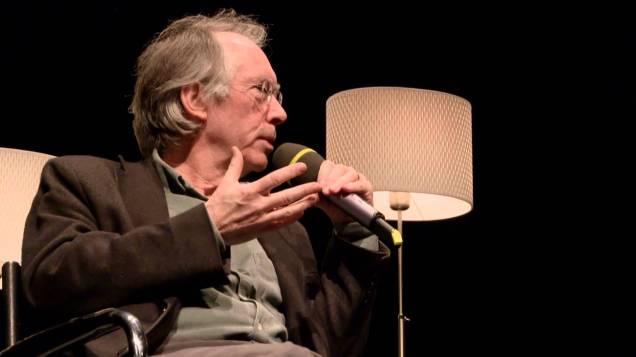
In the course of an interesting interview with the Guardian’s Decca Aitkenhead promoting his new novel “Nutshell”, author Ian McEwan digresses on the subject of identity politics.

From the feature article:

“Where I get a little critical of it is where selfhood becomes all of your politics, in a world in which we are more troubled than at any point I can remember in my adult life.”

Do identity politics look like decadent narcissism to him? “It feels like that, coming to the university aspect of it. These children have grown up in an era of peace and plenty, and nothing much to worry about, so into that space comes this sort of resurgence that the campus politics is all about you, not about income inequality, nuclear weapons, climate change, all the other things you think students might address, the fate of your fellow humans, migrants drowning at sea. All of those things that might concern the young are lost to a wish for authority to bless them,” he says, “rather than to challenge authority.”

My emphasis in bold.

Doesn’t that just perfectly sum up the Cult of Social Justice and Identity Politics? A generation of students raised at a time of great material abundance, peace and prosperity arrive at university to find most of the great injustices of the past already slain by previous generations of campaigners. Bereft of purpose but still feeling the strong student urge to embrace a cause, they crank up their sensitivity settings to perceive any slight or inequity, however small or unintentional, to be evidence of the systematic oppression of one or more classes of prescribed victim groups.

McEwan’s last sentence is particularly profound – the idea that today’s young people no longer rail against authority in the way that student activists of old did, but rather make tear-stained appeals to authority figures to intercede on their behalf. This is the victimhood culture, clearly distinct from an honour culture (which would encourage the individual to stand up to minor sleights or “microaggressions” and confront the issue themselves) or a dignity culture (which would only sanction involving authorities in case of grave injury).

In contrast with honour cultures and dignity cultures, victimhood culture encourages the individual to exaggerate their own vulnerability and the “harm” which other have inflicted in them through careless words or gestures, and to seek redress from external authority figures not as a last resort but as the first and default option.

Sadly, our generation is primed for this culture. We millennials have often been raised from birth to believe that we are unique, precious and perfect snowflakes worthy of praise and validation from dawn til dusk, that sticks and stones may break our bones but mere words can kill us stone dead, and that there is no greater goal in life than self-actualisation – living life according to our every passing whim, based on an “identity” we create for ourselves which is declared by Social Justice Warriors to be above any questioning, reproach or criticism.

In fact, I’m certain I made the very same point as Ian McEwan on this blog not long ago:

This is an attempted coup by an utterly coddled and spoiled generation of students who know almost nothing of hardship, deprivation or prejudice compared to their predecessors even just a few decades ago.

These tinpot student dictators arrive on campus at the age of eighteen to find most of the really hard battles already won for them – ironically, by genuinely brave radicals like Germaine Greer and Peter Tatchell. But these students must find some outlet for their youthful “idealism”, and so they latch on to the growing Politics of Identity, assimilating its intricacies and genuinely persuading themselves of its core message – that what matters is not the content of one’s character, but rather one’s arbitrary lived experience as a member of a defined and segregated subgroup.

And so rather than simply accepting that they have it rather good, even compared to their parents and grandparents, these student snowflakes go on the march. They find ever-smaller slights or “microaggressions” and protest them ever-more loudly and hysterically in an attempt to assert power over university administrations – many of which meekly submit without so much as putting up a fight.

Throw in the fact that their social hierarchy is based on a purist adherence to the Politics of Identity – with members gaining social currency for flaunting their own tolerant nature or identifying and persecuting anyone whose behaviour happens to violate one of the many invisible lines restricting our speech and behaviour – and you have a potent and deadly combination.

I have always been a fan of Ian McEwan‘s novels. Saturday was edgy, evocative and incredibly well researched, Solar was inventive and at times hilarious, On Chesil Beach made a four-hour flight from Cyprus to London so exquisitely awkward that I wanted to blow the emergency exit and jump out of the aircraft while The Children Act remains shamefully unread on my bookshelf, part of an ever-growing backlog.

But I also admire McEwan’s forthrightness and willingness to speak his mind rather than toe the establishment line on all social matters. McEwan recently caused a ripple of scandalised headlines when he questioned whether people should be free to choose their gender identity:

In a speech to the Royal Institution, the Booker prize-winning writer asked whether factors such as biology and social norms limited our ability to adopt a different gender.

“The self, like a consumer desirable, may be plucked from the shelves of a personal identity supermarket, a ready-to-wear little black number,” McEwan said. “For example, some men in full possession of a penis are now identifying as women and demanding entry to women-only colleges, and the right to change in women’s dressing rooms.”

In a Q&A after his speech, one woman asked McEwan, 67, to clarify what she called his offensive remarks, the Times reported. “Call me old-fashioned, but I tend to think of people with penises as men,” he said. “But I know they enter a difficult world when they become transsexuals and they tell us they are women, they become women, but it’s interesting when you hear the conflict between feminists now and people in this group.

“It’s quite a bitter conflict. Spaces are put aside, women are wanting to put spaces aside like colleges or changing rooms, and find from another side a radical discussion coming their way saying men who want to feel like it can come in there too. I think it’s really difficult. And I think there is sweeping through American [university] campuses a kind of strange sense of victimhood and a sense of purposeful identities that we can’t actually all of us agree with. Of course sex and race are different, but they also have a biological basis. It makes a difference whether you have an X or Y chromosome.”

Cue the kind of response one has come to expect when anybody dares to give voice to such thoughtcrime.

His new novel, Nutshell, is narrated from the perspective of a foetus still in the womb, and is likely to raise all kinds of hackles from staunch free right campaigners and militant free choice protesters alike.

But on the Cult of Social Justice and Identity Politics, McEwan hits the nail on the head. How different the university campus must seem to him now than it was when he was a student. One wonders whether McEwan would even be allowed to set foot on the campus of the University of East Anglia in Norwich, where he received his Masters in creative writing – the university has received a “red” rating in Spiked’s annual university free speech rankings.

Certainly McEwan, one of UEA’s most distinguished alumni, would never be welcome at the Students’ Union with its blanked restriction on “imagery or language which reinforces a gender binary”. Having expressed his own personal views on the subject of transgender issues, McEwan’s presence would clearly create an oppressive and highly unsafe space for the delicate flowers now following in his footsteps.

What’s really concerning is this: Ian McEwan is now something of a grandee in Britain’s cultural scene, yet even he was ultimately forced to apologise for airing his own personal views on transgenderism, effectively reversing his earlier statement under duress and confessing “biology is not always destiny” and that a person’s decision to change their gender must be “celebrated”.

If one of Britain’s most successful and respected authors cannot hold a contrary or agnostic position on hot-button social justice issues where conformity without exception is demanded and expected, what hope is there for new, up-and-coming artists or academics to question the new orthodoxy or admit to holding an unpopular opinion? Who will be rash enough to dynamite their own career before it has gotten off the ground  by admitting their heresy or reflecting it in their work?

And what future for the rich and vibrant British artistic and cultural scene when the Social Justice Warriors finally get their way and browbeat everybody in the land into thinking, saying and “celebrating” the same things?

 

Ian McEwan - Transgender comments

Bottom Image: Guardian

Support Semi-Partisan Politics with a one-time or recurring donation:

Agree with this article? Violently disagree? Scroll down to leave a comment.

Follow Semi-Partisan Politics on TwitterFacebook and Medium.

Tales From The Safe Space, Part 12 – Harry Potter Edition

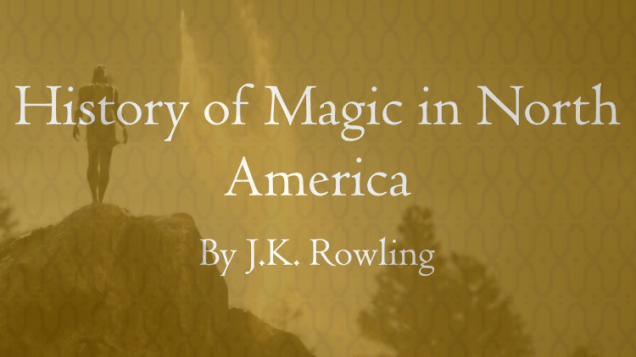
History of Magic in North America - JK Rowling

Is it always wrong to misrepresent other cultures in art, or only when the culture in question is condescendingly considered to be “marginalised” and therefore insufficiently robust to withstand inaccurate portrayal in a book or movie?

The latest public figure to unintentionally step on a hidden Identity Politics landmine and self-detonate in an explosion of outraged Twitter condemnation is none other than Harry Potter creator JK Rowling.

The Guardian picks through the shrapnel for us:

JK Rowling has been accused of appropriating the “living tradition of a marginalised people” by writing about the Navajo legend of the skinwalker in a new story.

The Harry Potter author posted the first part of a four-part series, the History of Magic in North America on her website Pottermore, on Tuesday. Subsequent episodes are being published each day at 2pm until Friday. Tying in to the release in November of the film Fantastic Beasts and Where to Find Them, the short piece of writing deals with the magical New World in the 14th to 17th centuries.

Although the new insights into the universe of Harry Potter were welcomed by many, the author was strongly criticised online by a number of voices from Native American communities, particularly over her writing about skinwalkers, which in Navajo legend are said to be evil witches or wizards who can take on the form of animals.

Needless to say, JK Rowling has been summarily tried on Twitter and found guilty of the high crime of cultural appropriation and misrepresentation for taking Native American legends which were not her own (and God forbid that cultures ever intermix or borrow from one another) and using them for her own grubby commercial purposes. For shame.

And public shaming is exactly what was swiftly visited upon Rowling by the Twitter mob:

But campaigner Dr Adrienne Keene told Rowling on Twitter that “it’s not ‘your’ world. It’s our (real) Native world. And skinwalker stories have context, roots, and reality … You can’t just claim and take a living tradition of a marginalised people. That’s straight up colonialism/appropriation.”

The academic also took issue with Rowling’s use of the phrase “the Native American community”, saying that “one of the largest fights in the world of representations is to recognise Native peoples and communities and cultures are diverse, complex, and vastly different from one another.”

[..] Navajo writer Brian Young wrote on Twitter that he was “broken hearted” about the new piece of writing. “JK Rowling, my beliefs are not fantasy. If ever there was a need for diversity in YA lit it is bullsh!t like this,” said Young. “My ancestors didn’t survive colonisation so you could use our culture as a convenient prop.”

Well, when you put it like that, let’s waste no time No-Platforming JK Rowling, emptying library bookshelves of Harry Potter volumes and throwing them on the fire we have already set ablaze to dispose of our unwanted Cecil Rhodes memorabilia. Because the difference between the sins of these two “colonialists” is only one of severity, not of kind, at least according to the Identity Politics police who act as judge, jury and executioner in these cases.

One such typical virtue-signalling, outraged response to Rowling’s creation comes courtesy of Katherine Trendacosta, writing in Gizmodo:

Rowling reveals a lack of knowledge of American history that makes this an extremely hard read. She also either doesn’t realize the sensitive nature of some areas she’s treading on or does not care.

Who could have predicted that a white lady from the UK would have problems with appropriating Native American culture? Oh, wait, that should have been completely obvious to anyone even thinking of doing what J.K. Rowling did. When you’re combining a history of magic with Native Americans, you’re falling into an already prevalent trope of making them “mystical.” And Rowling not only didn’t avoid that trap, she leaned into it.

[..] Associating Native Americans with “animal and plant magic”—with, it should be noted, no more detail than that—is leaning so hard on a stereotype it’s hard not to find it offensive. It’s also not great that she says that wands originated in Europe, which reads very much as a Europe being the center of innovation and building in the magic world. You know, Native Americans and their “Earth magic” while European wizards were the ones smart enough to make wands.

Rowling may say that great things can be done without a wand, but it doesn’t offset the implications—that Native Americans may have raw power, but it’s refinement that only comes from Europe. Implications that she, with her background, was completely blind to.

You get the idea.

This level of wand-obsession is more commonly associated with the likes of Donald Trump than Social Justice Warriors, but when it comes to the Identity Politics brigade clearly no literary or descriptive detail is too small to be pecked over and analysed to death in the search for smoking-gun evidence of cultural insensitivity.

Note also the constant references to JK Rowling’s ethnic background. It almost seems as though Trendacosta’s anger is not so much that somebody misrepresented Native American culture, but rather that a “white lady” did so. It is almost as though there is some latent anger and rage against whiteness bubbling away under the surface, and that this whole cultural appropriation furore is just a convenient device with which to bash “white privilege”.

And this is the key question (to which we already really know the answer). Is the failure to represent every culture in a painstakingly accurate way always such a terrible crime, or is it only truly offensive when somebody from a majority (i.e. white) culture do it to a supposedly marginalised culture?

I’m British, and constantly see my culture represented less than wholly accurately in all manner of ways, particularly in American movies and television shows. A character might be studying at Oxford University and yet inexplicably live in London (because of course England is just one small, uniform place), or everyone might speak like Hugh Grant in one movie and like a soot-smeared Cockney in another. More galling still, Hollywood seems to go through phases where every villain in every movie has to be a suave, upper-class British guy, speaking in an accent not unlike my own. Sure, it’s irritating, but am I incurring “harm” when this happens?

Or is any harm that I might have suffered because of the misrepresentation of my country and people in the popular culture negated by the fact that as a British citizen, I hail from an Evil Colonial Power, responsible for so much that is terrible in the world? The sun may have set on the British Empire, but has it set on my apparent share of our collective guilt for the actions of kings and queens and statesmen who lived and died centuries before I was born?

The fundamental question is this: are JK Rowling’s critics angry because Navajo culture was misrepresented or because Navajo culture was misrepresented? Was the offence to commit an apparently heinous act of cultural appropriation against Native Americans specifically, or to have misrepresented any culture in the first place?

It hardly needs pointing out that it is the latter. Because the whole Identity Politics culture is based on the neo-colonial and racist assumption that certain cultures are “weaker” than others, and that the people belonging to those cultures are childlike victims with less agency than those from white, Western backgrounds.

Without a steady supply of “victims” to protect – and unwitting “villains” to blunder into their cultural booby traps – Identity Politics practitioners would have nothing to do, and so have no means of asserting their power over our language and discourse (which is the ultimate goal).

Of course, this dogma presupposes that those from minority cultures can actually be physically or mentally harmed by the mere act of having their culture, customs or history either accidentally misunderstood or deliberately misrepresented, even if they are not necessarily aware that it is happening at the time – a hugely condescending attitude to hold toward racial and cultural minorities in the present day.

At every stage it is taken for granted that even today, those from minority cultures totally lack any agency to seize control of the narrative for themselves and disseminate more truthful and accurate perceptions of their culture if they wish to do so – and if how they are perceived by complete strangers really matters that much to them.

And as always, it is the Identity Politics practitioners and those who believe that individuals can be harmed by non-malicious misrepresentations of their culture in the media who display the real contempt for these “marginalised” groups, even though that contempt is dressed up in the language of care and concern.


Safe Space Notice - 2

Agree with this article? Violently disagree? Scroll down to leave a comment.

Follow Semi-Partisan Politics on TwitterFacebook and Medium.

And Let Thy Feet Millenniums Hence

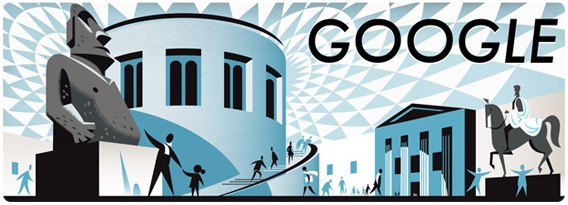
googlebritishmuseum


Google’s superb doodle of the day depicts the Great Court of the British Museum, a wonderful institution and national gem that I always love to visit.

Today I am reminded of the inscription on the floor of that great court, opened in the year 2000, taken from Tennyson’s poem “The Two Voices”:

britishmuseumcourt

The stanza in full:

Forerun thy peers, thy time, and let
  Thy feet, millenniums hence, be set
  In midst of knowledge, dream'd not yet.


The full text of the excellent, autobiographical poem (begun as far back as 1833 though not published until 1842) is available here.

dreams of drowning

The single best piece of writing that I have read this week, penned by an old friend of mine from my Cambridge days. Her blog, “From The Edges”, is well worth following.

angharadlois's avatarfrom the edges

When I last lived in Spain, there was nothing between me and the sea.  Our street, Calle Virgen del Socorro, clung to the bare rock of Mount Benacantíl at the edges of the city.  From the windows of our 8th floor flat, the view was of infinity.

I dreamed of tsunamis over and over.

Everything was clear – I would be sitting at our table chatting, or hanging out the washing on the balcony, when the water struck.  There was no time to get away.  I felt it hit me, cold and brutal, before I woke up gasping.  Over and over.  I have no idea why; I have never been afraid of drowning – at least, no more than I have ever been afraid of death.  But the sea that filled my senses through the waking day overwhelmed me as I slept.

So much of that year seems like a dream to…

View original post 183 more words