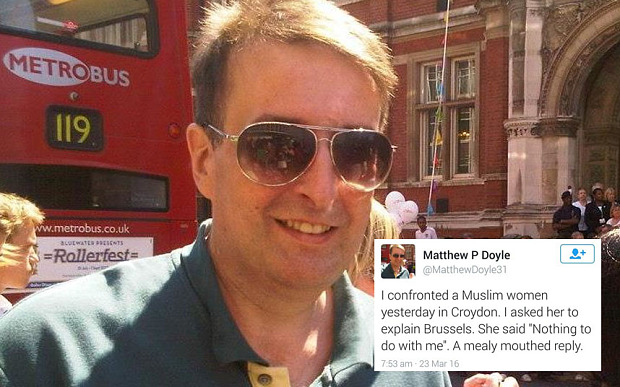
Arrested For Thoughtcrime In Britain Following The Brussels Terror Attacks

Matthew Doyle - Facebook - Twitter - Brussels Attacks - Muslim Woman - Arrest - Free Speech - Police

Britain has become an authoritarian dystopia where the police prefer to waste scare resources scouring Twitter for instances of supposed thoughtcrime, rather than tackling real-world crime

Matthew Doyle of Croydon, south London, was not the first person to say something stupid in the aftermath of the Islamist terror attacks in Brussels yesterday, and he will certainly not be the last. But Doyle does hold the dubious honour of being the first person in Britain to be arrested for thinking and saying – or in this case, tweeting – the wrong thing about the Brussels attacks, the latest victim of Britain’s dystopian hate speech laws.

As with most people whose free speech most urgently needs defending, Matthew Doyle does not come across as a remotely sympathetic character.

The Telegraph explains:

A man who tweeted about stopping a Muslim woman in the street yesterday, challenging her to “explain Brussels”, and lambasted on Twitter for his comments, has responded to the criticism today, insisting he is not some ‘far right merchant’.

Matthew Doyle, partner at a south London-based talent & PR agency, posted a tweet on Wednesday morning saying: “I confronted a Muslim woman in Croydon yesterday. I asked her to explain Brussels. She said ‘nothing to do with me’. A mealy mouthed reply.”

He was later arrested.

His tweet referred to yesterday’s bomb attacks on the Belgian capital’s main airport and Metro system that left at least 34 people dead and 198 injured. His comment went viral, being retweeted hundreds of times before he eventually deleted it.

Mr Doyle told the Telegraph he had no idea his tweet would be the “hand grenade” it has proven to be – and that Twitter’s 140 character limit made the encounter sound vastly different to how he thought it went.

Now there is a good case to be made that Matthew Doyle is something of an idiot – in a follow up tweet, he later exclaimed “The outrage I felt was real. I cannot understand why I decided to ask the nearest Muslim I ran into”, which certainly suggests that perhaps we are not dealing with a world class mind here.
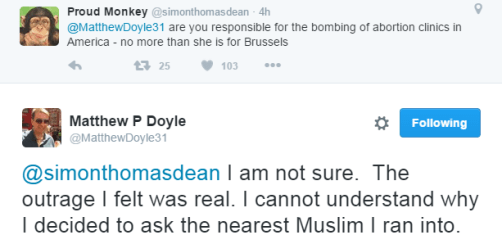
Matthew Doyle tweet

And his subsequent tweets veered firmly toward the knuckle-dragging bigot end of the spectrum, when he retorted “Who cares if I insulted some towelhead??”
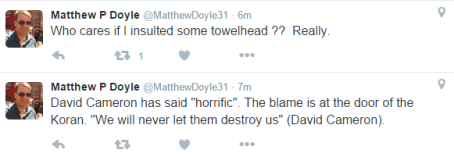
Matthew Doyle tweet - 2

But let’s be clear – even if we apply the most unforgiving interpretation of Matthew Doyle’s tweet, and his subsequent account of the conversation, it should not be enough to land a citizen of a supposedly free democracy in trouble with the law.

Even if Doyle literally sought out the first Muslim-looking person he could see on the high street, approached them unbidden and asked them to account for the terrorist actions in Brussels yesterday, no country calling itself free should drag that man through the criminal justice system.

It may be incredibly ignorant and offensive to suggest that all Muslims share responsibility for the terrorist attacks in Brussels this week. It may be astonishingly stupid. But stupidity and lack of manners should not be enough to earn someone a knock on the door from the police.

In this case, the initial response of the Twitterverse was (for once) exactly what should happen – society’s self-righting mechanism kicking in against the actions of a conspicuous idiot. Doyle said something irretrievably stupid which was then widely retweeted, and he found himself on the end of thorough, fully deserved mockery from complete strangers online. Many of the subsequent parody tweets effectively (and wittily) exposed the total lack of logic behind Doyle’s sentiments and actions.

https://twitter.com/ThaKingSlayer/status/712613539366748160

So why is confrontation, rebuttal and mockery not enough in twenty first century Britain? Why can we not simply go to bed content that a self-declared idiot has had his idiocy widely exposed, refuted and mocked, without wanting to twist the knife further? Why is it now also necessary to compound his punishment by heaping an arrest, a trial and a possible criminal conviction on top of the self-inflicted public shaming?

As Alex Massie recently lamented when looking at the public’s response to Donald Trump’s comments about Britain, cases like these only prove his how snarlingly authoritarian and illiberal a place modern Britain can be once the sunny, progressive façade is peeled back:

It is always depressing to discover that there are vastly fewer liberals in this country than you might wish there to be. But that discovery should no longer surprise us.

This is the true attack on British and European values, and it comes from within. I am far less worried about the slim possibility that I will find myself standing next to a suicide bomber on my morning commute, and far more concerned that every single day I am apparently rubbing shoulders with people who smile and appear friendly at first glance, but who would not hesitate to bring the full weight of the criminal justice system crashing down upon my head if I happen to one day say the wrong thing (defined by British law as anything which gives them offence).

As a political blogger with sometimes forceful and controversial views, I am less worried that my writings may earn me a punch in the face from a stranger (I couldn’t be less famous, and my reflexes are quick – though I am probably playing with fire when I criticise our national religion, the NHS) and far more worried that someone will read something that I write, take massively overinflated exception to it, and – with a few clicks of a mouse or a quick telephone call – report me to the police, who would then be obliged to investigate me under Britain’s oppressive hate speech laws.

In the age of Islamo-fascist terror, my liberty and wellbeing is far more under threat from the Public Order Act 1986, the Communications Act 2003 and the Racial and Religious Hatred Act 2006 than it is from the terrorist’s bomb or the bullet. Not because I ever incite racial or religious hatred – indeed, I abhor those who do so – but because under the same laws that put Matthew Doyle in a jail cell, my “guilt” would depend entirely on the perception of the supposed “victim”. Anybody at any time can read anything that I write, claim to be alarmed and distressed by the ideas that I express, and have me carted off to prison.

They can do this to idiots like Matthew Doyle. They can do it to political bloggers like me. And they can do it to you. Sitting at your computer right now, you can get yourself arrested and cautioned, convicted and even sent to prison just by typing fewer than 140 characters on your keyboard. In Britain. In the year 2016.

In case the government actually cares, this is how the terrorists really win. They’ll never make Britain part of a radical Islamic Caliphate, but they can certainly help to ensure that we become such a snarlingly authoritarian, freedom-hating society that our country is changed irrevocably for the worse.

And as the freedoms and liberties which distinguish Britain from more benighted parts of the world – including primitive quasi-medieval regimes like the Islamic State – are shot to pieces, it is our own hand on the trigger. No one else’s. We do this to ourselves.


Postscript: What remains unclear at this time is whether Matthew Doyle was arrested for the content of his original tweet, his subsequent tweets (some of which were actually far more offensive) or the real-world act that his initial tweet described.

It may seem an arcane detail, but it will be interesting to discover whether the woman accosted by Doyle made the complaint, or whether it was a foot soldier in Britain’s growing army of professional online offence-seekers who took offence on her behalf. I would bet a very large sum of money that it is the latter, and that while the “victim” herself probably shrugged off the incident, Doyle’s prosecution is being urged most strongly by other people who are completely unconnected with the incident and who were not adversely affected in the slightest by his tweet.
 

CCTV - Police State

Agree with this article? Violently disagree? Scroll down to leave a comment.

Follow Semi-Partisan Politics on TwitterFacebook and Medium.

The Left Wing Case Against Mass Surveillance And The Investigatory Powers Bill

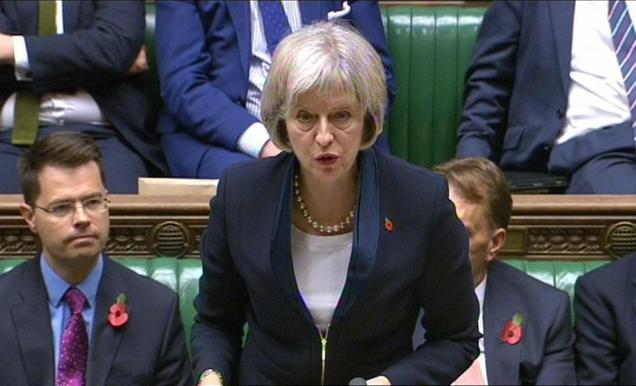
Theresa May - Investigatory Powers Bill - Mass Surveillance

The draft Investigatory Powers Bill will neither increase security nor effectively tackle extremism

Laura Westwood argues in Left Foot Forward that existing mass surveillance techniques have proved ineffective at stopping terror attacks, and that the new measures outlined in the government’s draft Investigatory Powers Bill would further undermine civil liberties with no commensurate reward:

Perhaps most unsettling is the potential harm caused by intruding on the lives of innocent people. Whatever the rationale, mass surveillance practices imperil our rights to privacy and freedom of expression. The UK’s Independent Reviewer of Terrorism Legislation himself warned that taking missteps could sow divisions in society and incubate the problem of ‘home-grown’ terrorists.

Why? Because extremists thrive on exploiting disenfranchisement and grievance. We are told so by former members of Islamist extremist groups. Taking blanket surveillance even further than it already goes is a calculated risk at best, and right now, the sums aren’t adding up.

Already, people languish in British prisons not for committing or inciting terrorist acts, but merely accessing articles and propaganda which praises terrorist acts, or expressing support for them on social media. Such actions may be reprehensible, but bringing the full weight of criminal law crashing down on people with odious foreign policy views and sharp tongues on social media is punishing thought, not words, and is incompatible with a free society.

Furthermore, locking up people like Runa Khan – imprisoned for “disseminating terrorist material”, which basically meant sharing pro-ISIS propaganda articles on Facebook – does nothing to confront and kill the noxious ideas in question, but rather elevates them to an unearned position of nobility, and makes a martyr of their speaker.

As Mick Hume argues in his book “Trigger Warning: Is The Fear Of Being Offensive Killing Free Speech?”:

If she had dressed her young children in suicide vests and sent them out to die in a bomb attack, that would be terrorism. But going online to argue that Muslim mothers should try to raise their sons to grow up as jihadis is something else entirely, more like perverse parenting advice than a military command. Words are not physical weapons and viewpoints are not violence, however ‘radical and extreme’ they might appear to most of us. The opinions expressed by the likes of Runa Khan need to be openly challenged. Trying to bury them instead in prison, on the ground that they are too dangerous to be let loose on Facebook, can only lend their radical message more credence.

At a time when almost all the serious business of governing has ground to a halt for the duration of the EU referendum campaign, mass surveillance is the one area where David Cameron’s ideologically rootless, authoritarian government seems determined to make progress. All other reforms and legislative activity have effectively been placed on hold, yet this most un-conservative government is formalising and expanding the powers of the state to indiscriminately collect and hold data on the private activity of citizens, with the kind of weak and unenforceable safeguards that you would expect from a country with no written constitution.

Why? Because while everything else is allowed to drift as David Cameron seeks to bully and scare the British people into fearfully voting to remain in the European Union, expanding the power and influence of the state over our lives knows no rest.

Those on the Left who oppose this are right to do so – not in pursuit of a political victory over the Evil Tories, but because the Investigatory Powers Bill is bad law and bad policy. And because it will be the poorest, most disadvantaged and least well-connected citizens who first fall prey to the surveillance state, as it always is.

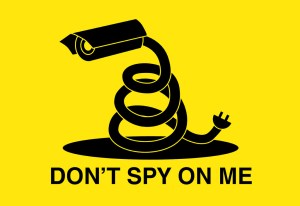
Don't Spy On Me - Mass Surveillance

Agree with this article? Violently disagree? Scroll down to leave a comment.

Follow Semi-Partisan Politics on TwitterFacebook and Medium.

We Know More About Antonin Scalia And The US Supreme Court Than Our Own Legal System

Supreme Court - Gay Marriage - 3

If you have ever read a John Grisham novel or watched Law & Order, you probably know more about the American legal system than the average British citizen knows about our own

When the firebrand US Supreme Court associate justice Antonin Scalia died last weekend, the news made headlines around the world, and the story was covered extensively on the television and print media here in the UK.

Legal experts and part-time America watchers (like me) all came crawling out of the woodwork to offer their analysis of what impact the Supreme Court vacancy will have on the remainder (and legacy) of President Obama’s second term, the likelihood of any Obama nominee being successfully confirmed by the Senate, and the impact of a rebalanced court on American social policy.

All of this earnest discussion and analysis, over a vacancy on a court which sits thousand of miles away, and has absolutely no jurisdiction over anyone in Britain! And yet people were interested – partly because many of us likely have a greater understanding of the American legal system and its personalities than our own.

Today, conservative American publication The National Review bemoaned the fact that a third of Americans don’t know who Justice Scalia was, according to the latest opinion polling. They seize on this fact to (rightly) condemn the disengagement of those who fail to educate themselves on important civic matters:

Strangely, the percentage of people who said they had “never heard of” Antonin Scalia increased from 29 percent in 2001 to 39 percent in 2005. Was that the Greatest Generation, who read newspapers, dying off and the Millennials, who never look up from their cell phones, entering the polling sample?

This is a free country, and you’re free to not care, and free to not pay any attention to, say, one-third and arguably our most powerful branch of government. I understand the sense that it would be a better world if we could spend more time thinking less about what government is doing about more pleasant things — food, sports, movies, home furnishings, how awesome the finale of Gravity Falls was, etc.

But if you choose to pay no attention to these things, and refuse to read anything about them, watch anything about them, or learn anything about them . . . then I’d rather you left the voting to those of us who do care.

The National Review would be shocked, then, to learn just how few citizens of America’s closest ally understand the basic tenets of their own legal system. Because although I don’t have an opinion poll to back me up, I would be surprised if one third of British citizens knew that we even had a Supreme Court, let alone the names of a single one of its justices.

(The PC Left and rabid practitioners of Identity Politics are also missing a trick – eleven of the twelve current justices of the UK Supreme Court are old white men, with the remaining justice an old white woman. Are these people really the most qualified for the job, or did they get their positions through the chumocracy and establishment connections? Why is there no public confirmation process, to give democratic oversight to the selection of new justices? And yet how many times has the UK Supreme Court been picketed by angry Social Justice Warriors demanding ethnic balance on the court?)

I will be honest and start by admitting that before writing this piece, I could only name one justice of the UK Supreme Court – Lord Neuberger, the court’s president. And that’s awful. I write about politics and UK current affairs every day and consume several hours of news on television, the internet and social media besides, but I could only name one person on the bench of the UK Supreme Court. And if I can’t rattle off a handful of names together with a brief commentary on their respective legal and ideological outlooks, how many people are actually able to do so?

How many laymen – people without a direct professional or personal interest in the workings or judgements of the court – actually do know who sits on our own version of the Supreme Court? How many could explain at a high level how the legal system works, with the division between civil and criminal court, the work done by solicitors and barristers, and the hierarchy of trial and appellate courts? Or the difference between the Scottish system and that of England and Wales? All that I currently know, I learned from an Introduction to Business Law course while studying at university – there were no civics lessons in the 1990s National Curriculum. And most others will not have even received this basic primer.

But how are we to fulfil our potential as informed and engaged citizens when we fail to understand how one of the three major branches of government works? Most people have a passable grasp of the executive and the legislature, even if they don’t recognise the Government and the Houses of Parliament using those terms. But I very much doubt that one adult in fifty could explain the fundamentals of our legal system, let alone the many layered intricacies.

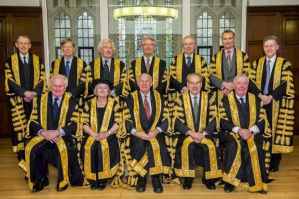
UK Legal System - Judges Procession

But flip it around. Why would we know how our legal system works, or recognise the major personalities in the British legal scene? And why should we bother to take the time to educate ourselves?

People in America know the names and ideological leanings of the justices on their Supreme Court for a number of reasons. For a start, they take their civics a little bit more seriously on that side of the Atlantic – something that we could learn from.

But more than that, the American legal system is far more responsive to the citizenry than the British system is to us. One major difference is that many local judges are elected. Now, this may or may not be a good idea – and having watched a number of local races for positions on the bench, I have my grave doubts as to the wisdom of elected judges. But you can’t deny that you are likely to feel much closer to the legal system if you have a direct say in who gets to don the black robes.

Even more important is the fact that unlike we Brits, Americans have a written constitution to act as a common frame of reference when talking about legal matters. Even half-educated Americans will talk about whether something is “constitutional” or not, and apply this test to all manner of public policy debates, from government surveillance to gay marriage. This is important, because it gets people thinking beyond the mere fact of whether they agree or disagree with a particular law, and toward the broader question of exactly why the law in question is good or bad. That’s not to say the ensuing debate cannot still be ignorant and intemperate – it often is – but at least everyone is able to take part in the debate along the same parameters.

Consider the Edward Snowden leaks, when one whistleblower’s actions laid bare the extent of secret government surveillance in Britain, America and the other “Five Eyes” countries. In America, the people – outraged at this secret, systemic violation of their privacy – were able to haul officials in front of congressional committees and debate the legality of the government’s actions with reference to the Fourth Amendment, which prohibits unreasonable searches and seizures. And in due course, the American government had to make a number of concessions and restrict its surveillance activity. In Britain, by contrast, we had David Cameron pompously telling us that he respects the “tradition of liberty” but is basically going to do whatever he wants. And what recourse have we to stop him? None.

Then there is the central role which the US Supreme Court often plays in matters of great social importance in America. In Britain, Parliament’s “elected dictatorship” is the Alpha and the Omega for nearly all significant decisions made in this country – the government can pass or repeal any law almost at will and with no reference to any higher text or law, so long as it can muster the votes in the House of Commons. The courts then simply apply what has been handed down by Parliament, which is sovereign. Refreshingly, this is not so in the United States.

Consider just some of the most famous cases – household names, even to those of us living in Britain. Dred ScottCitizens United. Roe vs Wade. Brown vs Board of Education. We may know next to nothing about American current affairs, but we know that these relate to slavery, campaign finance, abortion and racial segregation. Because in America, the president is not the only person who matters. Nor are the leaders of Congress. The third branch of government matters equally, and how the Supreme Court chooses which cases to hear and applies their interpretation of the Constitution to those cases constitutes a vital check and balance in the American system.

Can you name a comparably important British case? They do exist – the Al Rawi case, for example, with its implications for the legality of secret hearings, or Nicklinson vs Ministry of Justice, which confirmed the current illegality of voluntary euthanasia, or the “right to die”. But few people know about these cases or why they are important, because the British legal system is so much more remote and unaccountable to the people.

St Louis Old Courthouse - Dred Scott Case - 2

Finally, there is the question of sovereignty. The United States Supreme Court is the final arbiter of what is and is not constitutional, and therefore applicable to American citizens. It cannot be shunted aside by an impatient government if it holds up or overturns key legislation, and nor can it be undermined from the outside – the court determines for itself which cases it will hear, and a majority decision made by five out of nine Supreme Court justices will then bind the government and lower courts. This goes against everything that the current British establishment – who are only too happy to wreck every institution and overturn any tradition in pursuit of their short term goals – stand for.

But crucially, the US Supreme Court is also not subordinate to any external or foreign body. By contrast, the UK Supreme Court is treaty-bound to defer to the decisions of the Court of Justice of the European Union (CJEU), and must interpret all UK legislation not through the lens of compatibility with a British constitution, but rather to ensure its compliance with the European Convention of Human Rights. That might sound all well and good until one realises just how broadly “human rights” have come to be defined.

And one must also ask why we as a country do not trust ourselves enough to be the final arbiter of important cases. Are we naturally more barbarous than our European neighbours, and in need of constant judicial restraint by our moral betters on the continent? Whatever the answer, the inescapable truth is that legal subjugation to an external, supranational body is the antithesis of national democracy.

So to recap, there exist a number of deficits between the American and UK legal systems in terms of ensuring citizen understanding and engagement with the judicial branch of government, namely:

1. A weaker sense of civic duty and engagement in Britain

2. Greater democratic distance between the people and the legal system in Britain, compared to America

3. Lack of a written British constitution as a common frame of reference when discussing legal matters

4. A much clearer link between decisions made in the US Supreme Court with American social policy

5. Lack of sovereignty: the American legal system is sovereign and subordinate to no external body, unlike the British legal system which is subordinate to EU law

US Supreme Court

There is no good argument for continuing to abide such a remote, elitist and unaccountable legal system as we suffer in Britain. None. And anybody tempted to sniff haughtily at the American system, with their elected lower court judges and Scopes Monkey Trial culture wars should remember that however passionate and unseemly the public discourse can sometimes be across the Atlantic, this is only because more American people are actually engaged citizens with a moderate grasp of how their country actually works. We should be so lucky to have a system as simple, accessible and easy to explain as they have in the United States.

And it should be a source of great shame to us that our journalists, politicians and private citizens often know more about another country’s legal system through watching Hollywood movies or Law & Order than they do about our own.

The American public is rightly fixated on the issue of who President Obama will nominate to fill the Supreme Court seat left vacant by the late Antonin Scalia – incidentally a first rate mind and writer of opinions and dissents which are accessible and entertaining even to laymen like myself. They care about who takes up the ninth seat on their Supreme Court, because unlike Britain, their legal system is more than a rubber stamp for the government of the day.

The ninth justice of the US Supreme Court may well end up casting crucial swing votes in important matters of human governance in the next decades, such as the right to bear arms in self defence, the right to privacy and the right to free speech. And these decisions could well have tangible, real-world consequences for the 330 million people who live under the court’s jurisdiction, as well as anybody else to whom the Constitution applies – like your First Amendment right to free speech when you go to holiday or work in America as a British citizen.

Elevating the people and the institutions into the public consciousness is not crass sensationalism, as some may charge. On the contrary, focusing on the personalities helps to elevate the issues to a place of prominence in our public discourse, which is exactly what we should be doing here if our own elites were not so busy trying to hide from public accountability anywhere they can scurry – be it behind the black veil of EU lawmaking in Brussels or the bewigged, dusty obscurity of the British legal system.

It would be ironic if it took the death of a supreme court judge in another country to force Britain to finally take a proper, critical look at our own impenetrable legal system. But public interest in legal matters peaks only very rarely, and so those of us who want to see real legal and constitutional reform have a slim opportunity – but also an obligation – to make our case.

For as things stand, a constitution and legal system in force over 3,000 miles and an ocean apart often feels more familiar – and less remote – than our own.


Supreme Court Justices - United States

Supreme Court Justices - United Kingdom

Agree with this article? Violently disagree? Scroll down to leave a comment.

Follow Semi-Partisan Politics on TwitterFacebook and Medium.

The Hysterical Left Don’t Know The Meaning Of Human Rights

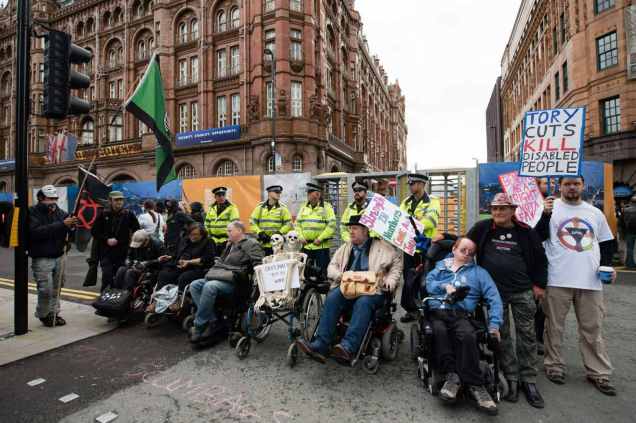
Human Rights - Disabled Protest 2

In their rage against the Evil Tories, activists are in danger of expanding the definition of “human rights” so far that the term loses all meaning

Last month, a ruling was handed down by a High Court judge. It barely received a ripple of attention in the media at the time, but it has potentially profound implications for our country and the ability of our elected governments to make policy.

In a stunning act of judicial activism masquerading as enlightened compassion, Justice Collins held that by implementing the welfare cap pledged in their manifesto, the Conservative government is actively discriminating against disabled people who might rely on the help of carers – other people – hit by the benefit cap.

The Guardian reports:

The welfare secretary, Iain Duncan Smith, unlawfully discriminated against disabled people by failing to exempt their carers from the benefit cap, a high court judge has ruled.

Mr Justice Collins said the government’s decision to apply the cap to full-time carers for adult relatives had created serious financial hardship for them, forced many to give up caring for loved ones, and loaded extra costs on to the NHS and care services.

The benefit cap, which limits working-age unemployed people to £500 a week in benefits, was introduced by the government on the basis that it sent a strong message to so-called workless families that they had to try harder to get a job.

The court ruled that the two carers who brought the case – and who were caring for upwards of 35 hours a week – were effectively in work even though they were in receipt of benefits, and therefore should be exempt from the cap.

Clearly the government should not have used the word “workless” and referred instead to “families without employment”. Of course caring for someone with illness or disability is work, though not employment. But a failure of semantics is hardly sufficient reason to overturn a flagship government policy, as Justice Collins seems to advocate:

Collins ruled that by applying the cap to unpaid family carers the secretary of state had unlawfully discriminated against seriously disabled people, because it meant they would no longer receive care from a trusted family member or relation.

He said: “For many it matters deeply that they are cared for by a family member. Thus there is adverse treatment since, although care can be provided by others, the loss of a trusted carer can be devastating”.

This ruling is but one small part of a wider programme of judicial activism which has seen the government found by our own Supreme Court to be in breach of international human rights obligations, has seen Britain investigated by the United Nations on the ludicrous suspicion of institutional domestic human rights abuses, and which establishes a truly terrible precedent in law. With this ruling, the government can theoretically be held liable for violating the human rights of Person A simply by enacting a policy that adversely impacts Person B.

Thus our so-called human rights now extend to the people around us, and a harm inflicted on any one of them is a harm inflicted on us. Not only is every citizen already surrounded by an ever-expanding protective bubble of their own “human rights” (including such imaginary leaps as the right of foreign criminals to a “family life” while serving a prison sentence), now that bubble theoretically extends to anybody associated with them in a caring capacity.

Let’s be clear – making somebody worse off financially is not a breach of their human rights, let alone the human rights of somebody else for whom they act as carer. It may be bad policy. It may be mean spirited. It may be short sighted or have any number of other flaws as a piece of social policy. But to call it a breach of a person’s human rights is an extraordinary over-stepping of the mark. Discrimination means treating somebody differently because of an inherent characteristic, but activists are now crying “discrimination!” when the government fails to treat people sufficiently differently.

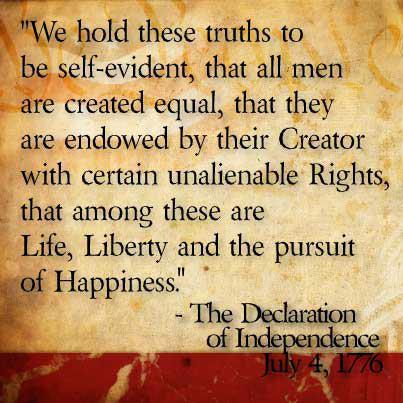
These attempts by the Left to weaponise the issue of human rights must be fiercely resisted. If human rights are to mean anything, they must be primal, sacrosanct and indivisible. It is hard to express those universal rights any better than the signatories of the US Declaration of Independence, who referred to “life, liberty and the pursuit of happiness”. Life and liberty in particular are crystal clear, and the state should have no power to infringe upon these rights except in the gravest of circumstances (usually as punishment after being found guilty of committing a crime).

Human Rights - Life Liberty Pursuit of Happiness - 2

But the American founding fathers were also quite clear that there is no human right to be happy, or to live a carefree, comfortable life. There is only the right to pursue happiness. This properly reflects the fact that one person’s idea of happiness may be quite different to another’s, and that proper government becomes impossible when the state is continually forced to adjudicate between competing claims of infringement on happiness.

Indeed, the difficulty comes when activists and pandering politicians try to drill down from these lofty principles in a control-freakish attempt to ensure equality of outcome for all. We are all different, and require different social and environmental factors in order to be happy and free.

For some people, their inability to express certain outdated or bigoted views for fear of police harassment or prosecution is a gross infringement on their liberty to hold and express personal thoughts and beliefs. But for other sensitive souls, the mere possibility that they might encounter such unpalatable opinions in the real world – and the belief that unpleasant words heard are somehow comparable to physical harm inflicted – infringes on their own happiness and liberty.

This puts the government in the impossible situation of having to pick winners. Does one person’s human right to live life offence-free trump another’s right to freely express their own thoughts? Does the right of some people to enjoy new public infrastructure trump another’s right to peaceably enjoy their own property without having it seized, built over or spoiled? Does the right of a foreign criminal to maintain links with their UK-based family trump society’s right to deport foreign nationals convicted of a crime on the grounds of cost and public safety?

We live in an imperfect world and so long as we maintain our current expansionist view of human rights, such tough calls will always exist, regardless of who holds power. The best that any government can do – to avoid becoming bogged down in endless competing claims for favouritism – is to remain as neutral as possible and stick to enforcing only the most core human rights.

And let us remember that it is quite possible to establish various additional rights and principles to protect the vulnerable – enshrined either in law or through codes of practice – without elevating every single claim to the level of an “human right”.

For example, as a society, we may well want to establish a duty on large businesses or government departments to spare no expense in accommodating the accessibility requirements of the severely disabled. But if an organisation happens to fall short of the required standards, is it really right that they are sued according to the same laws that govern torture, detention without charge or war crimes?

Consider the London Underground, the world’s oldest underground metro system. Because of its age, the vast majority of the Tube network does not conform to modern accessibility standards, and could not quickly be brought up to standard without exorbitant, prohibitive cost. Of course this is hugely unfair to those with mobility impairments, as they are unable to avail themselves of the full range of London transport options. But to call it an infringement of their human rights is wildly excessive, and something of an insult to the millions of people living in more benighted parts of the world whose fundamental rights to life, liberty and the pursuit of happiness are routinely trampled.

In the information age, and with the growth of social media, it is easier than ever to identify businesses, organisations and government agencies which fall short of their responsibility to provide accessible services for all, and to apply pressure on them to raise their performance. One trending Twitter hashtag, coined in outrage at the insensitivity of an organisation, now has the potential to achieve more far-reaching change than any judgement handed down in Strasbourg.

Human Rights - Disability 2

But we absolutely can not continue to abide the corrosive idea that government policies should be struck down if they impact differently on different citizens. Because nearly every government policy will, by definition, impact different groups in different ways.

Spending more money on roads penalises those who walk or use public transport. Spending more money on pensions penalises those people of working age who will inevitably receive a less generous settlement when they retire. Spending more money on education penalises those currently in retirement. Enacting tougher prison sentences for criminals penalises people from disadvantaged socioeconomic backgrounds who are more likely to end up in court. Government funding of research into cures for disease A penalises sufferers of disease B.

Where does it end? By clinging to the notion that individual government policies must never be disadvantageous to anybody, ever, we render ourselves ungovernable. We descend from being a cohesive society into a splintered and warring coalition of special interest groups, each jealously guarding their own perks and privileges at the expense of all others.

Government spending disproportionately benefits those who are not economically self sufficient. That much is obvious and unavoidable – rich people either do not or cannot claim the benefits on which poor people rely. And the fact that wealthier citizens support their less fortunate compatriots with their taxes is part of the social compact we make in order to maintain our inclusive society.

But to suggest that cutting government spending infringes on the “human rights” of the recipients is utterly abhorrent, even immoral, because it effectively enshrines a formal, limitless claim on the labour and earnings of the economically productive by the non-productive. It says that by refusing to fund government services with ever increasing taxes until the wishes of every welfare recipient are fully satisfied is to violate their human rights, to effectively inhabit the same low category as torturers and dictators.

Human Rights - North Korea - Kim Jong Un

It’s hard to know who comes out of this whole sorry affair looking worse – the disability rights activists, who have somehow managed to turn what should be a principled and laudable campaign into a grubby and petulant sulk, or the United Nations, which once again debases and undermines itself by treating the United Kingdom – of all countries – like some kind of rogue state.

It is perfectly possible to disagree with this Conservative government calmly and rationally. It is perfectly possible to advance the case that government spending restraint, the “bedroom tax” and welfare reforms are bad policy. But to claim that they infringe anyone’s human rights is a grotesque exaggeration that should be laughed out of town, not treated seriously and earnestly investigated by the UN.

Life, liberty and the pursuit of happiness: these inalienable, indivisible rights have served us well for centuries – and not only in the United States of America. Generations of campaigners before us were able to argue for (and win) the abolition of slavery, universal suffrage and civil rights protection with reference to these noble aims. And they would be appalled at the modern-day assertion that we should obsess over whether each and every government spending decision has been carefully calibrated to benefit us personally, rightly viewing this as a condescending attack on our liberty and autonomy as free citizens.

If human rights are to mean anything at all, we must stop trying to invoke them every time the government does something with which we disagree, or whenever we have a less than wholly successful interaction with a business or government agency. Human rights violations are real. Even today, while puffed up social justice warriors in the UK write furious screeds accusing Iain Duncan Smith of human rights abuses, people in other countries are being imprisoned, tortured, spied upon, maimed and executed. Babies with entirely survivable conditions and disabilities are being killed, or aborted before they are even born.

If we really cannot find a way to discuss the human consequences of shrinking the state without resorting to shrieking about supposed human rights abuses then truly, we are suffering from a grievous failure of empathy and imagination as a country.

And that’s the real crime.

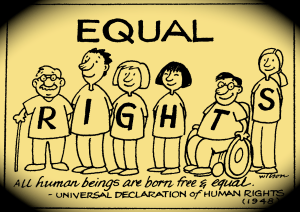
UN Declaration of Human Rights - United Nations

Agree with this article? Violently disagree? Scroll down to leave a comment.

Follow Semi-Partisan Politics on TwitterFacebook and Medium.

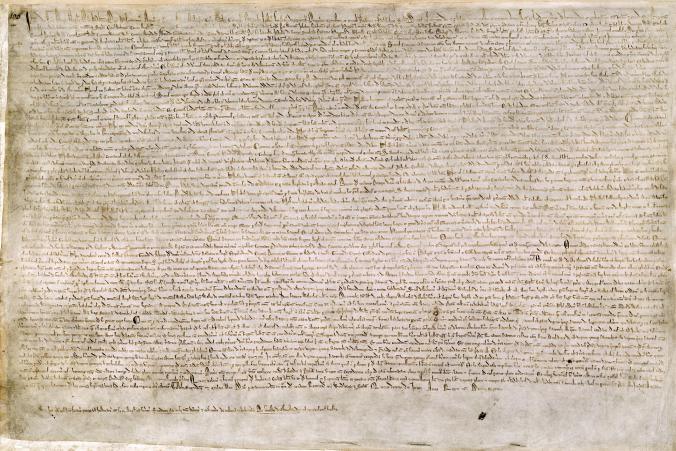
800 Years Of Magna Carta: Still Worth Celebrating, After All These Years

Magna Carta - 800 Years Anniversary - Human Rights - Freedom - Liberty - Britain - England


By Ben Kelly, blogger and editor of The Sceptic Isle.

15 June 2015 marks 800 years since a rather famous charter was agreed by the unpopular King John at Runnymede, under pressure from a group of rebellious barons who had backed his failed war against the French and now sought to constrain him.

The severely weakened king had no choice but to bear witness to the sealing of what many now perceive as one of the world’s most important documents. It has become iconic, but it has its detractors. It is a favourite pastime of dry historians and politically motivated lawyers to pick the myth apart and express their disdain for the reverence shown to the old document.

It is quite true that we tend now to view it through rose tinted glasses after much historical revisionism and the creation of a national myth around the event.

The details of the actual event and the passage of the charter into law are often oversimplified or caricatured. The date which we will this year mark, and the document we celebrate, is revered in part because of the manner in which it has been used by those with a political agenda.

Continue reading