Brexit Catastrophisation Watch, Part 6 – Stay In The EU Or Kittens Will Die

kitten

Hysterical Remainiacs are now warning that Brexit will endanger the lives of the nation’s pets and farm animals

For the past four months, the British people have been subjected to some ridiculously childish hissy fits and the incessant catastrophisation of Brexit by self-regarding EU apologists in the media. But this latest tantrum by Ian Dunt, editor of politics.co.uk, is on another level.

Ian Dunt already has great form in portraying the slightest move to limit the growth of the state or safeguard national sovereignty as being part of a plot by the Evil Tor-ees to kill the poor and chuck out every last foreigner, but his increasingly bitter and alarmist Brexit coverage is starting to make him look particularly ridiculous. Because Dunt is now claiming that among the many other evils of Brexit, spurning the EU and demanding self-government will also put “people and animals at risk”.

Yes. Going ahead with Brexit means that kittens will die.

Dunt explains:

Look at any part of British society and you’ll see the damage Brexit is doing.

Take veterinary services. Yesterday afternoon, the Royal College of Veterinary Surgeons (RCVS) and the British Veterinary Association (BVA) wrote a letter to the prime minister. These are not radical organisations. They never really put out political statements of this sort. They stay in the background, concerning themselves mostly with relatively dry questions of policy detail. But they’ve been forced to issue a warning that Brexit – and Theresa May’s descent into anti-foreigner rhetoric – are putting people and animals at risk.

“Anti-foreigner”? Really? One can argue endlessly about the economic merits of Theresa May’s seeming determination to reduce net migration, but I challenge Ian Dunt to produce one example where the prime minister has actively sought to whip up anti-foreigner feeling in the population.

Wanting controls on immigration is not an extremist or unpalatable political viewpoint – many countries in the world (like Australia and the United States) don’t automatically accept anybody from their region or continent who wants to live and work. And at some point the British Left are going to have to take their collective finger off the nuclear button and stop screeching “racism” at anybody who dares to suggest that government should have control of who is allowed to come and settle in the country.

Regardless, Dunt continues:

Around half the veterinary surgeons registering to practise in the UK each year are from overseas – mostly the EU. Europeans are particularly prevalent in public health roles like the Government Veterinary Services. In the meat hygiene sector, some estimates put the number of veterinary surgeons who graduate overseas at 95%. And these people – the people who look after our pets, who check our food – are feeling increasingly uncomfortable in this country.

And this supposedly matters because:

The veterinary profession doesn’t just look after pets. It monitors and controls the spread of disease and assures the quality of the food we eat. If it goes into decline, the animals we love and share our homes with are in more danger. But there is also a very significant public health risk to go alongside the emotional one.

[..] while anti-immigrant newspapers and politicians whinged, immigrants were there: Treating your cat. Picking your fruit. Treating your condition. They are crucial to the running of this country and unless we start recognising that, it’ll be this country which suffers the consequences of their absence.

[..] The policy implications of Brexit are even more serious. In the future, the two organisations warn, “changes to the mutual recognition system or immigration restrictions could have a profound impact upon the veterinary workforce”. That means Britain may face a shortage of vets as it loses half its annual intake. It means a potentially catastrophic impact on TB testing and meat hygiene. It means abattoirs may be unable to export their products because the UK veterinary requirements are not recognised by European authorities.

So in other words, wanting to leave a deeply unpopular and dysfunctional continental supranational government is so terrible that it will kill our pets, causing us immense emotional harm, and also ensure that agricultural and food safety standards immediately fall off a cliff, leading to the immediate return of BSE and foot and mouth disease. Our democracy is hostage to the presumed fortunes of our household pets.

See? We warned you! Why didn’t you listen! Now Fluffy the Kitten is going to die, and it’s all your fault, you ignorant, hateful, xenophobic Brexiteer!

Will these histrionics from bitter, intellectually bankrupt Remainers never end?

The one valid point in this screaming tantrum of an article is that changes to (or severance of) the mutual recognition agreements governing veterinary standards or food safety – much of the latter of which actually falls under the purview of Codex Alimentarius – could cause real disruptions to trade. Too much of the political debate over Brexit has focused on buccaneering assumptions by government ministers and journalists that the avoidance of tariffs is the sole issue, when this is not at all true. The potential erection of non-tariff trade barriers by failing to extend mutual recognition of standards would have immensely more impact on British industry in terms of cost and complexity of doing business, and it is this which politicians need to wrap their heads around.

Dunt (inadvertently) raises an important issue here, and a timely warning. But his incessant, hysterical scaremongering (and pretence that there are no solutions or workarounds to the practical issue he flags) overshadows his argument. This is the polar opposite of constructive criticism – it is the kind of sulky fault-picking more worthy of a toddler than a grown man with a political website.

And yet I am coming to suspect that this is how it will always be. Never expecting victory in the EU referendum, I naturally didn’t devote much time to thinking about what it would actually feel like to be on the winning side, to finally overturn the 40-year pro-EU consensus. Now I’m starting to get an idea. And it is not pleasant.

Brexiteers had better get used to endless “won’t somebody please think of the kittens?!” caterwauling from aggrieved pro-Europeans, because it will probably last the rest of our lives. Even if Brexit ushers in the kind of democratic renewal that some of us hoped for – and even if we achieve secession from the EU on the most favourable terms possible – they will still criticise us and act as though we have ushered in an unprecedented calamity. And in the absence of counterfactuals, who can disprove Ian Dunt when in five years he whines that we would be enjoying hover cars and 200 year lifespans if only we had done the sensible thing, listened to him and voted to remain in the EU?

Brexiteers should settle in for the long haul. Yesterday it was Marmite, today it’s kittens and tomorrow it will be something else. And why? All because Ian Dunt and other pro-European can’t just bring themselves to say “I hate patriotism, I’m ashamed of my country, I feel more European than British and more than anything I hate the 52 percent of my fellow citizens for  defying my will and causing me not to get my own way for once in my life”?

Maybe therapy would help some of the Remainiacs-in-denial towards a necessary moment of catharsis. One can only hope so. Their endless hysterics and catastrophisation of Brexit makes them look far more stupid than it makes Brexit seem reckless.

European Union - United Kingdom - Britain - Flags

Top Image: Nanto, Pixabay

Support Semi-Partisan Politics with a one-time or recurring donation:

Agree with this article? Violently disagree? Scroll down to leave a comment.

Follow Semi-Partisan Politics on TwitterFacebook and Medium.

Donald Trump’s Second Presidential Debate Performance Was Red Meat To The Alt Right

Who is Donald Trump trying to impress? And why?

If you were wondering exactly what audience Donald Trump was playing to with his combative debate performance in last night’s second presidential debate, here’s a clue.

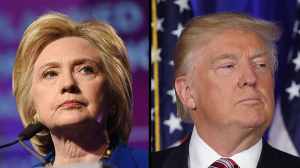
Donald Trump’s “braggadocious” threats to prosecute Hillary Clinton if he wins the presidential election will do nothing to temper the fears of undecided voters who have no love for Hillary Clinton but harbour reservations about throwing their support behind an authoritarian wannabe strongman.

But this kind of language is absolutely lapped up by Trump’s strongest source of support – the conspiracy-tinged alt-right, who see Hillary Clinton not merely as an ethically challenged creature of Washington D.C., but as evil incarnate – the “wicked witch of Benghazi, cackling over her cauldron” as one pro-Trump social media user put it.

And the conspiratorial InfoWars site certainly lapped up Trump’s second debate performance, as seen in the instant reaction video shown above, and again at far greater length in that site’s six-hour coverage of the debate at Washington University in St. Louis.

But in the midst of the pro-Trump cheerleading, InfoWars reporter Owen Shroyer actually makes a very pertinent observation:

You know, it is an amazing dynamic where it seems like if you like Donald Trump, no matter what, he wins, if you like Hillary Clinton, no matter what, she wins. How do we break any ground on that? How do we break through that paradigm where only your candidate can win the debate? I think that that illustrates the polarisation that we’re seeing in this country in this election cycle.

Indeed, different sites and journalistic outlets have called the debate in line with their partisan leanings or the supposed proclivities of their readers, preferring to pander than to challenge or upset. The Guardian declared a victory for Clinton, while the Spectator and numerous American conservatives (even those opposed to Trump) declared him the victor.

As this blog commented following the debate:

My initial assessment: if you disregard actual facts (as we now seem to do), Donald Trump probably had the better of this debate. He went on the (nuclear) attack, hit Hillary Clinton hard, gave his supporter base something to cheer about and managed to do enough incendiary things to bump the Trump Tapes story fallout down the news agenda. Hillary Clinton didn’t commit any significant gaffes and was more poised, but again there was nothing tremendously inspiring about her sales pitch for the presidency.

And it seems that we do now disregard facts and adherence to them when judging a candidate’s debate performance. While Hillary Clinton certainly was not consistently truthful during the debate, Donald Trump made significantly more blatant falsehoods. But can he still be said to have “won”, by virtue of having been more combative in tone and unapologetic about his deceits? Apparently so.

What is clear is that more than ever – even more than four years ago, when Republicans trapped in an ideological echo chamber of their own making were convinced that Mitt Romney was going to lead them to victory – is that both sides have retreated to their respective ideological bubbles, hermetically sealed safe spaces of bias confirmation in which awkward facts or revelations are diminished or entirely ignored in order to avoid the slightest cognitive dissonance in the minds of their supporters.

Donald Trump’s combative performance and willingness to step into unprecedented territory in his attacks on Hillary Clinton will have been red meat to those of his supporters already firmly ensconced in the bubble. Threatening to send “crooked Hillary” to jail is red meat to the ascendant alt-right movement.

But will it have done anything at all to convince wavering voters that Donald Trump is capable of carrying out the duties of the presidency in a calm and measured way, or that he represents a safe choice for those unwilling to vote for Hillary Clinton? Almost certainly not.

And with less than a month to go until the election, Donald Trump still has all of his work ahead of him to reach that low but mysteriously elusive bar of acceptability.


donald-trump-hillary-clinton-first-presidential-debate-1

Support Semi-Partisan Politics with a one-time or recurring donation:

Agree with this article? Violently disagree? Scroll down to leave a comment.

Follow Semi-Partisan Politics on TwitterFacebook and Medium.

Remainers Are Trying To Rewrite History, Claiming Media Coverage Favoured The Leave Campaign

eu-referendum-media-coverage-television-news-bias-2

Yes, the BBC let the public down with their spineless, uninquisitive EU referendum coverage. But this only benefited the Remain campaign, not the Brexiteers, and to suggest otherwise is absurd

Disappointed Remain activist Hugo Dixon takes to the pages of InFacts with with a sullen litany of the many ways in which the (ahem) notoriously eurosceptic television news media supposedly hindered the pro-EU camp’s chances and aided the fact-free Brexiteers at every turn.

Dixon writes:

The BBC has rightly been criticised for its weak referendum coverage. If the broadcaster had done a better job of challenging interviewees, informing the public and making room for a variety of viewpoints, voters would have had a better chance of sifting fact from fiction. The BBC, after all, dominates our news coverage: 77% of the public use it as a news source, according to Ofcom.

The most common criticism aired against the BBC is one of phoney balance – namely that it gave equal airtime to experts and their opponents’ unsubstantiated bluster. But this is probably not the most serious charge. After all, it would not have been fair to deny the two sides of the referendum equal airtime or to keep off the air campaigners who were telling fibs or spinning fantasy.

However, what the BBC could and should have done was grill its guests more vigorously – and make more space for coverage that didn’t fit into the tired Punch-and-Judy style battle between spokespeople put up by the two official campaigns.

There is a kernel of a sensible point in here. This blog has written numerous times that sensationalist or craven news coverage which merely allows two opposing talking heads to scream at each other without any effort to arbitrate or discern truth is a pox on our journalism – whether it is infecting the US presidential election or the EU referendum in Britain.

Dixon is also admirably on-point when he criticises the media’s reliance on the sanitised, focus-group approved  media grids of the two opposing lead campaign groups, effectively suggesting to their viewers that these incompetents and nepotism beneficiaries represented the full spectrum of eurosceptic and pro-European thought:

This wasn’t the BBC’s only failing. It also allowed too much of its coverage to become a Punch-and-Judy style battle between the official campaigns. The broadcaster, of course, had to give a lot of airtime to Vote Leave and Stronger In. But it allowed its coverage to be virtually dictated by their agendas.

I know the Remain side of the story better. Stronger In had a “grid”, on which it set out what stories it wanted to push on particular days and which people it wanted to push those messages. It coordinated this grid closely with Craig Oliver, David Cameron’s director of communications. Indeed, Stronger In was effectively in Number 10’s pocket. It rarely put forward people who weren’t on message with its Project Fear strategy.

The BBC should not have allowed itself to be manipulated in this way, particularly since it was aware of the potential problem. Its guidelines said: “Where there is a range of views or perspectives, that should be reflected appropriately during the campaign.” They went on to say: “The designated Campaign Groups – whilst offering spokespeople to programme-makers and other content producers – cannot dictate who should or who should not appear on BBC output.”

But the broadcaster didn’t do enough to resist the pressure. As a result, Downing Street and its puppets dominated the Remain camp’s share of airtime, and people who wanted to make a positive case for Britain’s involvement were edged out. Even Gordon Brown – who was trying to argue that we should lead Europe, not leave Europe – found it hard to be heard.

While Hugo Dixon’s heart wells over with sympathy for Gordon Brown’s inability to claim his fair share of the limelight, this blog would point to the many independent and non-aligned voices on the Brexit side who struggled to get a hearing of any kind, despite (in some cases) holding media events in the heart of Westminster under the very nose of the establishment.

So on both of these complaints, Dixon is on solid ground. But to go on and suggest that intellectually lazy journalism which impacted the Leave side every bit as much as the Remain campaign somehow decisively swung the outcome of the referendum is to venture into the realm of fantasy.

Dixon concludes:

For every such example, the BBC could presumably come up with a counter-example. But when its senior figures search their souls, do they really think they fulfilled their mission of informing and educating the public well during the referendum? And, if not, what are they going to do about it? How about an independent, public audit of how the BBC fared during the referendum backed up by recommendations on how to do better in future?

The world is not getting any simpler. Hard, honest thinking about how to cover often very complicated questions could stand the BBC in good stead. Audiences and license fee payers definitely deserve it.

The underlying assertion, carefully left unsaid, is that these various journalistic failures added up to a succession of “microbiases” which somehow cumulatively tipped the referendum result, and that if only BBC and other television news presenters had challenged guests and demanded more “facts” then the British people would have come to their senses and realised just how star-spangled awesome the European Union really is.

And maybe in an alternative universe that was the case – that there simply weren’t enough highly credentialed experts, both hysterical and sober, using abundant media platforms to lecture the British people that seeking freedom from the EU would be an unmitigated disaster.

Why oh why were these noble voices, these latter-day Cassandras so cruelly shut out of the national debate, swamped by a relentlessly pro-Brexit television media amplifying the Leave campaign’s monopoly on falsehoods and scaremongering?

But that’s not how I remember the EU referendum campaign.

Hugo Dixon inhabits an interesting parallel universe, and no doubt a comforting one for disappointed Remain campaigners so deeply invested in their failed euro-federalist dream. But it bears no resemblance to the real world, where the plucky, haphazard, incoherent and almost terminally disorganised Leave campaign triumphed against the arrayed forces of the establishment and a television news media which only amplified rather than diminished their influence in support of the status quo.


European Union - United Kingdom - Britain - Flags

Support Semi-Partisan Politics with a one-time or recurring donation:

Agree with this article? Violently disagree? Scroll down to leave a comment.

Follow Semi-Partisan Politics on TwitterFacebook and Medium.

Politicians Aren’t Entitled To Their Own Facts, But Neither Is The Media

An independent political press corps with the knowledge and authority to call the shots and confidently call out lies when politicians tell them – rather than giving equal credence to two diametrically opposed crazy positions – is a great idea. If only our media was sufficiently trustworthy and capable of performing such a nuanced, sensitive role

Something funny seems to have happened to the New York Times.

For the past week or so, the newspaper which once twisted itself into a risible-looking pretzel trying to justify calling the practice of waterboarding “torture” when inflicted by America’s enemies but “enhanced interrogation” when conducted by American forces has discovered a new passion for clarity and bold truth-telling.

Peter Beinart explains, over at The Atlantic:

Last Saturday, The New York Times published an extraordinary story. What made the story extraordinary wasn’t the event the Times covered. What made it extraordinary was the way the Times covered it.

On its front page, top right—the most precious space in American print journalism—the Times wrote about Friday’s press conference in which Donald Trump declared that a) he now believed Barack Obama was a US citizen, b) he deserved credit for having established that fact despite rumors to the contrary and c) Hillary Clinton was to blame for the rumors. Traditionally, when a political candidate assembles facts so as to aggrandize himself and belittle his opponent, “objective” journalists like those at the Times respond with a “he said, she said” story.

Such stories, according to the NYU journalism professor Jay Rosen, follow this formula: “There’s a public dispute. The dispute makes news. No real attempt is made to assess clashing truth claims in the story … The symmetry of two sides making opposite claims puts the reporter in the middle between polarized extremes.”

[..] But the Times, once a champion practitioner of the “he said, she said” campaign story, discarded it with astonishing bluntness. The Times responded to Trump’s press conference by running a “News Analysis,” a genre that gives reporters more freedom to explain a story’s significance. But “News Analysis” pieces generally supplement traditional news stories. On Saturday, by contrast, the Times ran its “News Analysis” atop Page One while relegating its news story on Trump’s press conference to page A10. Moreover, “News Analysis” stories generally offer context. They don’t offer thundering condemnation.

Yet thundering condemnation is exactly what the Times story provided. Its headline read, “Trump Gives Up a Lie But Refuses to Repent.” Not “falsehood,” which leaves open the possibility that Trump was merely mistaken, but “lie,” which suggests, accurately, that Trump had every reason to know that what he was saying about Obama’s citizenship was false.

In other words, the New York Times has sporadically started to report objective facts and truth, rather than doing what has long been traditional among the political press corps – walking a neutral tightrope between two partisan positions of staggeringly obvious falsehood or stupidity.

Despite his protestations and evasions, Donald Trump has been one of the key players in the birther movement from the beginning – picking up from the memorably loopy Orly Taitz – and has certainly been the conspiracy movement’s most public face. I remember blogging about it over four years ago, back in 2012.

Given the context of a presidential election and the extra scrutiny on media bias, it is surprising and rather heartening to see the Times displaying the courage to report fact rather than controversy; the same headline a month ago might easily have read “Trump Withdraws Birther Allegation”, with no reference to the established facts and outcome of the story.

Jon Stewart (formerly of The Daily Show) must be smiling. Since 2004 and even earlier, Stewart railed against political coverage which ginned up conflict in pursuit of ratings and incessantly reported issues through the prism of Left vs Right, Democrat vs Republican without ever seeking to either restrict coverage to facts or move beyond partisan talking points to get to the truth. The video at the top of this article shows Stewart’s memorable appearance on CNN’s Crossfire show, in which he castigated the hosts for “hurting America” by injecting partisanship and sucking nuance out of the political discourse.

Obviously the New York Times does not inhabit quite the same infotainment space as Crossfire, but the basic operating principle has been very much the same of late – present two or more strongly opposing partisan viewpoints, let the talking heads (or journalistic sources) slug it out in defence of their respective positions, and then move on without ever really applying any kind of judgment as to the respective merits of the contrasting positions.

Nowhere is this approach better summed up than the slogan of the Fox News Channel – “we report, you decide”. It is a relativist worldview which suggests there is no truth in even quite straightforward binary debates, and that we are free to pick our own facts and construct our own reality in accordance with our personal biases and interests.

Now, there is yet more evidence that the New York Times is moving away from this risk-averse and rather cowardly stance – yesterday the newspaper described as “false” Donald Trump’s claims that Hillary Clinton has sinister plan to destroy the Second Amendment:

In justifying his remarks, Mr. Trump falsely claimed that Mrs. Clinton wants to “destroy your Second Amendment,” apparently a reference to her gun control policies.

My emphasis in bold.

At face value this is a good development – the “he said she said” approach to political coverage is what has enabled so much of the spineless print journalism and sensationalist, conflict-stoking television news reporting in Britain and America. Seeing a “respectable” institution finally buck that trend and push back against the toxic idea that reality is malleable and truth exists only in the eye of the super-partisan beholder is, in theory, a very good thing.

Peter Beinart certainly seems to think so:

A certain etiquette has long governed the relationship between presidential candidates and the elite media. Candidates stretch the truth, but try not to be too blatant about it. Candidates appeal to bigotry, but subtly. In turn, journalists respond with a delicacy of their own. They quote partisans rather than saying things in their own words. They use euphemisms like “polarizing” and “incendiary,” instead of “racist” and “demagogic.”

Previous politicians have exploited this system. But Trump has done something unprecedented. He has so brazenly lied, so nakedly appealed to bigotry, and so frontally challenged the rule of law that he has made the elite media’s decorum absurd. He’s turned highbrow journalists into referees in a World Wrestling Entertainment match.

Last Saturday, the Times answered Trump’s challenge. He’s changed the rules, so it did, too.

But this analysis only holds if one has reasonable grounds to trust the journalistic institution or media outlet doing the reporting; will they reserve their merciless news analysis features for instances when there really is a right and wrong binary perspective, or will editorial judgment and personal bias cloud the picture?

Remember, the New York Times was happy to characterise the EU referendum and the Brexit campaign as being motivated not out of concerns for democracy and sovereignty but primarily by xenophobia and anti-immigrant prejudice. And while there were highly visible elements of the latter, under the “News Analysis” model what would prevent the Times deciding that the entire Leave campaign was based on racism and then reporting this skewed perspective to their readers as simple, self-evident “truth”?

While the “he said, she said” ra-ra approach may be divisive and unseemly, it at least offers a right of reply to those whose views are misinterpreted or deliberately slandered by shameless opponents. And while conventional wisdom might hold that it is more often conservative voices who live in a sealed bubble of their own facts, in reality we would all be vulnerable to a style of news reporting in which reporters and editors are given sweeping new authority to pass what often amount to value judgments on behalf of readers. At some point in the future, any one of us could find our unpopular, minority opinion almost entirely  frozen out of the public discourse.

So this blog will cautiously cheer along with Peter Beinart at the New York Times’ sudden willingness to call out lies – provided that this is to be genuinely bipartisan new scrutiny rather than merely a one-sided club with which to bash the Trump campaign.

But we should be aware that we are at the top of a slippery slope here. Smacking down candidates and their statements is a positively good thing when we are dealing with easily proven questions of who said what, and when. But the temptation to apply this swashbucklingly assertive style of journalism to more subjective debates (like economic policy, immigration or foreign affairs) may prove to be irresistible for journalists with human biases and editorial boards with agendas.

In case they hadn’t noticed, the mainstream media doesn’t presently enjoy a particularly enviable trustworthiness rating among the general public. Abuse “news analysis” by using it as a blatantly partisan cudgel and they will drive that rock-bottom rating still lower.


donald-trump-fox-news

Support Semi-Partisan Politics with a one-time or recurring donation:

Agree with this article? Violently disagree? Scroll down to leave a comment.

Follow Semi-Partisan Politics on TwitterFacebook and Medium.

No, Donald Trump Did Not Call For Hillary Clinton’s Assassination (This Time…)

Donald Trump already provides ample evidence that he is temperamentally unsuitable to be US president without the biased, pro-Hillary American media putting words in his mouth

There is a particularly pernicious story making the rounds at the moment that Donald Trump supposedly called for the assassination of Hillary Clinton (again).

From the New York Times:

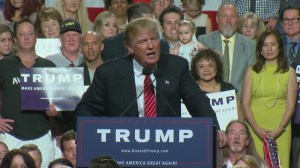
Donald J. Trump once again raised the specter of violence against Hillary Clinton, suggesting Friday that the Secret Service agents who guard her voluntarily disarm to “see what happens to her” without their protection.

“I think that her bodyguards should drop all weapons,” Mr. Trump said at a rally in Miami, to loud applause. “I think they should disarm. Immediately.”

He went on: “Let’s see what happens to her. Take their guns away, O.K. It’ll be very dangerous.”

In justifying his remarks, Mr. Trump falsely claimed that Mrs. Clinton wants to “destroy your Second Amendment,” apparently a reference to her gun control policies.

[..] On Friday night, breaking from his prepared remarks and turning his gaze from the teleprompters, Mr. Trump looked straight into the crowd as he made the insinuation about Mrs. Clinton’s safety. He gestured emphatically with his hands as he spoke, at one time pointing to a member in the crowd to find agreement.

And the US Guardian:

In a sometimes bizarre 45-minute speech on Friday night, which opened with the unfurling of a new “Les Deplorables” battlefield flag backdrop, the Republican nominee went off-script to call for his opponent’s bodyguards to “disarm immediately” – adding, “Let’s see what happens to her.”

“Take their guns away!” Trump demanded to loud cheers during a section of the speech in which he said his rival wanted to “destroy your second amendment” and he accused Clinton of “arrogance and entitlement”.

In a statement, Clinton campaign manager Robby Mook denounced Trump’s comments: “Donald Trump, the Republican nominee for President, has a pattern of inciting people to violence. Whether this is done to provoke protesters at a rally or casually or even as a joke, it is an unacceptable quality in anyone seeking the job of Commander in Chief.”

“But we’ve seen again and again that no amount of failed resets can change who Donald Trump is.”

The call to leave the Democratic nominee protected by unarmed secret service agents, first made by Trump in May, raised eyebrows as a reversion to the undisciplined candidate of the primaries rather than the more scripted one of recent weeks. Trump also suggested in August that if Clinton was elected president, “the second amendment people” might be able to stop her from appointing judges. That statement was widely interpreted as a veiled assassination threat as well at the time.

The tone and inference of both of these articles are shockingly misleading.

The point that Donald Trump was making was that it is rather hypocritical of Hillary Clinton to advocate for stronger gun control laws which potentially limit the ability of the citizenry to defend itself when she herself is surrounded by the best trained and equipped armed guards in the world, and does not have to worry for her own safety. Trump was suggesting that were Clinton’s Secret Service protection revoked, forcing her to provide for her own personal security, she might not be so keen to limit the types of weapons available to private citizens.

Now, one can disagree with the premise of Trump’s point and poke all kinds of holes in the logic (though this blog considers the basic thrust of the argument to be quite sound), but by no stretch of the imagination does this amount to a snide assassination threat. It does not even amount to a charge of inciting his supporters to imagine the horrific scenario of an assassination. It is merely a reductio ad absurdum argument intended to make the point that well-protected senior members of the US government should perhaps refrain from dictating to ordinary Americans the manner in which they can defend themselves.

John Hinderaker of the Powerline blog makes the same point:

Trump obviously was making the point that he and countless others have made many times before: liberals like Hillary Clinton, who are protected 24/7 by armed guards, are deeply hypocritical when they try to disarm millions of Americans who don’t have taxpayer-funded protection and rely on their own firearms for self-defense. The point is a powerful one, which is why liberal reporters don’t want to acknowledge it. Instead, they absurdly pretend that Trump was hinting that Hillary should be assassinated.

This kind of thing fools no one. Millions of Americans are quietly fuming over the press’s overreach, going over the top, day after day, to defeat Donald Trump. The blowback is building, and will continue building until election day.

At one point, when I was opposing Trump during the GOP primaries, I said to the press: Stop attacking Trump! Liberal reporters often began with a valid point, but their hysterical hatred for Trump caused them to go too far, making arguments that were patently unfair and unsustainable. Therefore, the more they attacked Trump the more his support grew. The same thing is happening now: most Americans have a pretty good sense of fair play, and they know that Trump is being treated badly by the establishment–a group for whom most Americans have no great affection.

But the media, always on the lookout for the next Trumpian outrage, refused to see reality in these terms. Rather than reporting Trump’s rather simplistic but sound argument – one which was worthy of discussion and a response – many media outlets instead chose to claim, with no evidence, that Trump had done something far worse.

This blog has no problem calling out Donald Trump’s extreme and unacceptable language when he actually says something bad – the infamous “second amendment remedies” comment in August being of another order altogether. But on this occasion, Trump was not making an extremist or reckless point, though the media chose to report the two stories with the same level of outrage.

And it is this behaviour, right here, which erodes public trust in the mainstream media. It is tawdry, opportunistic media overreaches like this, so clearly betraying a seething partisan agenda, which drive decent but concerned citizens into the arms of the extremist fringe and the conspiracy theorists.

Sometimes, to watch the American media openly campaign for Hillary Clinton, one wonders if everybody else inhabits a slightly different universe. We all witnessed disturbing footage of Clinton’s lifeless body being dragged into the back of her waiting secret service van on the occasion of the 9/11 memorial in New York City, yet the chirpy presenter on MSNBC that afternoon casually announced that she merely “stumbled” a little – the definition of “stumbled” having been temporarily extended to include loss of motor control and even consciousness. What we see with our own eyes and what the media choose to report are increasingly two very different things.

And while Donald Trump has a treasure trove of past incendiary statements positively bulging with potential scandal, that is apparently not enough for the media – they must also twist Trump’s words and breathlessly and falsely report to the public that the Republican presidential nominee just called for the assassination of his rival.

You don’t need to admire or support Donald Trump to be outraged at the lazy, biased journalism on display here. This blog is certainly no Trump fan. But if someone does happen to support Trump then these unnecessary extra efforts by the media to demonise the candidate and his supporters will only harden their support and erode what little trust is left in the media.

Those perpetually outraged American liberals in the media, on the hunt for their next anti-Trump scandal, should bear in mind that hysterical and obviously-inflated charges will not have the effect of somehow “bringing Trump supporters to their senses”. On the contrary, it will simply drive Trump loyalists and even wavering voters to alternative, less scrupulous sources which echo rather than castigate their beliefs.

Lying to the American public and pretending that Donald Trump’s remarks were a de facto call for Hillary Clinton’s assassination will not cause a single person to flip from supporting Trump to supporting Clinton. But it will ensure that a number of readers wave goodbye to the New York Times and the Guardian, instead placing their trust in pro-Trump outlets like InfoWars or Mike Cernovich.

Now, is the catharsis of manufactured outrage and liberal media grandstanding really worth the potential risk of shoring up Trump’s base?


Donald Trump Rally

Support Semi-Partisan Politics with a one-time or recurring donation:

Agree with this article? Violently disagree? Scroll down to leave a comment.

Follow Semi-Partisan Politics on TwitterFacebook and Medium.