Brexit Catastrophisation Watch, Part 4 – Project Fear Begins To Unravel

edvard-munch-the-scream

By arguing that the British people “didn’t vote for recession” as part of their advocacy for soft Brexit, Remainers inadvertently reveal that there is nothing intrinsically economically damaging about leaving the EU’s political union. Whoops.

With the post-EU referendum debate having moved on from the establishment’s sheer incomprehension of the result to an arbitrary and rather redundant battle over whether the British people voted for “hard” or “soft” Brexit (answer: read the bloody ballot paper), a curious chink in Remainer logic has been exposed.

Here is politics.co.uk’s Adam Bienkov, writing about the challenges facing Theresa May:

The first point to understand is that this is almost certainly the high water mark for her government. With Brexit negotiations not yet even underway, May is able to dismiss all questions about what exit from the EU will actually look like as being unpatriotic attempts to ignore the will of the British people.

As she told Corbyn repeatedly today: “Unlike the right honourable gentleman we think that we should deliver on what the people want.”

But while this approach may chime with the kind of attacks on ‘Remoaners’ we saw on the front page of today’s Daily Mail, it is a trick that can only be deployed for a limited amount of time. Yes the British people did vote to leave the EU, but they certainly did not vote to plunge the UK into a period of recession and international decline. And as the continuing collapse of sterling has shown this week, the sharks are already circling the UK economy. And pretty soon the prime minister is going to have to find a serviceable life raft.

My emphasis in bold.

Slavishly europhile politicians like Labour MP David Lammy are also now taking up the same “nobody voted for recession” refrain:

Funny. It’s almost as though Bienkov and Lammy are suggesting that leaving the EU needn’t necessarily mean “plung[ing] the UK into a period of recession and international decline”, and that Britain’s economic and diplomatic health is actually contingent on the kind of choices that Britain makes once we are free of the supranational political union.

Claiming that a mismanaged, uncontrolled or “hard” Brexit might cause serious economic harm is a perfectly respectable position. More than that, it is basic common sense. But that isn’t the argument that Remainers were making during the EU referendum campaign. No, they were claiming that any form of Brexit would be disastrous, that Britain leaving the European Union would be economically calamitous in and of itself, regardless of how Brexit unfolded or the model of our future trading relationship with the EU.

Here’s Adam Bienkov back in June, failing to draw that very distinction and blithely claiming that Brexit would automatically be damaging, no matter its ultimate shape or form:

Remain’s strongest arguments in this campaign are its warnings that Brexit would cause an economic shock that could cost jobs, increase prices and even push the UK into recession. These are warnings which have been endorsed by an overwhelming majority of economists, politicians, trade unions and international organisations.

One could chalk all of this up to normal political posturing were it not for the fact that Remainers are currently engaged in an insidious exercise to place themselves on the side of truth and reason while casting Brexiteers as bigoted and stupid enemies of truth and deniers of what should be indisputable facts.

Immediately prior to the EU referendum, Adam Bienkov fretted about “the growing disdain in the UK for the very concept of facts themselves”, as though voting for Brexit was somehow an irrational act of self harm:

But with the British public apparently so resistant to facts and the people whose job it is to deal in those facts so mistrusted, there does not seem to be overwhelming cause for optimism.

Even if Remain do somehow scrape a narrow win on Thursday, there should be little cause for joy on the left. Whatever the result next week, this referendum campaign should strike real terror into the hearts of all those on the progressive side of British politics.

If the UK does indeed vote for Brexit then it will open the door to a dark new political era. And it will do so at the same time as the left’s favourite weapons of facts, evidence and reason are less powerful than they have ever been before.

But of course this is a comforting leftist, pro-European lie. The British people did not suddenly become immune to facts. They simply cared about other, more important facts than the ones obsessed over by the Remain campaign – facts, hopes and fears which EU cheerleaders like Bienkov refused to even acknowledge.

Sudden geopolitical change inherently involves economic risk, and so Remainers gravitated toward the economic risk argument like flies to you-know-what, thinking that they could browbeat the public into voting Remain without ever having to do the thankless task of trying to make a positive case for the hated European Union. But it wasn’t enough, because even if Remainers were 100% right about the short to medium term economic risks of Brexit (and they certainly weren’t), the British people cared about other, more important facts.

The public cared about the continued self-governance of our nation and the self-determination of the British people. Even the lowest of low information voters could glance at the history of the EU, all of those furiously denied ratchets towards greater political integration, and see that much more was going on than the “friendship ‘n cooperation” tripe served by the Remain campaign.

The British people didn’t see why their country should remain part of an integrationist, 20th century euro-federalist experiment when every other advanced country in the world outside Europe manages just fine without a continental parliament, supreme court and unaccountable government. They didn’t see how a European Union made up of 28 countries could possibly fight Britain’s corner better than an elected government of the British people, by the British people and for the British people. And they were quite right to question all of these things.

But the leftists and the pro-Europeans had nothing to say to the British people about their legitimate concerns. Zip. Nada. Zilch. Tumbleweeds. They slobbered to stay in the European Union like rabid dogs, but they never gave a good reason why. Instead, they shouted louder and louder about the economic risk, wheeling out one politically compromised “expert” after another to warn us of the impending apocalypse, while pretending that arguments about democracy, sovereignty and national identity were silly, or somehow fringe concerns.

And having been so wrong about the facts which the people considered to be most important, now it also turns out that the key Remainer “fact” – that Brexit would inherently harm the economy, no matter its form – was a steaming pile of nonsense.

Adam Bienkov is free to go on making the argument that a “soft Brexit” in which the current single market access is maintained would be by far the best way to approach our secession from the EU. As it happens, this blog agrees with him – considering that Britain must rebuild atrophied political and diplomatic trade competencies from almost zero, and that the default secession period set out in Article 50 is nowhere near long enough to negotiate a comprehensive replacement, risking additional short term economic obstacles by forgoing the single market without a new framework in place seems ludicrous.

But in making a distinction between hard and soft Brexit, Bienkov is also effectively admitting that Brexit needn’t be economically harmful at all, if done the right way. And if that is now his position, as an advocate of soft Brexit, then he should do the decent thing and apologise to his readers for the thousands of words of pre-referendum doomsaying and post-referendum hysteria to fly from his keyboard.

 

European Union - United Kingdom - Britain - Flags

Support Semi-Partisan Politics with a one-time or recurring donation:

Agree with this article? Violently disagree? Scroll down to leave a comment.

Follow Semi-Partisan Politics on TwitterFacebook and Medium.

Brexit Catastrophisation Watch, Part 3 – The Cultural Elite’s Ongoing Anti-Brexit Tantrum Is Pointless And Childish

girl-tantrum-eu-brexit-catastrophisation

Hell hath no fury like a self-involved, virtue-signalling, pig ignorant artist forcibly separated from his beloved European identity

Anyone who has ever had the misfortune to be in close proximity to a young child having a screaming meltdown in a supermarket, church or (worst of all) on a long aeroplane journey will immediately recognise the tenor and tone of the Guardian’s latest offering in their ongoing “But The Evil Tor-ees Took My European Identity From Me” series.

And this week’s whinnying public tantrum comes courtesy of writer Tom McCarthy, who can’t wait to tell us how he spurned the opportunity to attend a festival of British arts because daring to celebrate British artistic creativity post-Brexit is clearly akin to having attended the Nuremberg Rallies in 1930s Germany.

McCarthy pompously declares:

In our society, the artist may have no executive power whatsoever, but their ace-card lies in the fact that they command a means – perhaps the primal one – of putting value in the world: a means of making meaning. They can use this status to subvert, or to shore up, power – sometimes both at the same time – and they can do this well, badly or indifferently; but one thing they can never do is be politically neutral.

A few weeks ago I received an invitation to a special reception to be held at the Royal Academy for “British artists” to celebrate “British creativity”. In normal times such a gesture might have seemed a little jingoistic, but essentially innocuous. But these are not normal times. Given the extraordinary far-right takeover the country seems to be undergoing, current talk of “British” X or Y or Z (“values” or “decency” or “culture”) usually marks one end of a chain, at the other end of which someone is being shunned in a playground, spat at in a supermarket, or worse. The invitation mentioned designers and businesses who “shape our culture”, and outlined the security procedures that would surround the event. It wasn’t hard to read between the lines: while Martin Roth at the V&A had made it clear his institution would have no truck with such nonsense, the RA was helping to assemble a roll-call of figures from the arts to pose arm-in-arm with ministers, royalty and innovators of the James Dyson variety, for a soft-power, post-Brexit rebrand of “British” culture.

How terribly brave of McCarthy to make such a principled stand, which will have cost him absolutely nothing and cemented his status as a hero among other pig-ignorant europhiles in the cultural scene. No, really. How terribly subversive, taking a public action which panders to the existing groupthink and prejudices of the political and cultural elite, nearly all of whom remain horrified by Brexit. The idea that Tom McCarthy is in any way being countercultural or subversive is as hilarious as it is pitiful.

McCarthy continues:

The fact is, I’m not an example of “British creativity”. Like all English-language writers, I’m thoroughly European. To read Shakespeare is to read a rich remix of Ovid, Petrarch and Lucretius; to read Joyce (a British passport-holder) is to read Mallarmé, Laforgue, Goethe. The wellspring of our shared archive is Greek – and since the Hellenic world was in fact spread all around the Mediterranean basin, this means that to be European is already to be African and Asian.

Millennia of trade and empire, of diaspora and endlessly crisscrossing migration, have produced a culture that is and always will be cross-pollinated. If London and other British cities have become cultural hubs, this is because they stand at intersections within larger, international flows and networks. To credit an intersection with creating (“innovating”) the currents from which it merely feeds, though, is like calling a lightbulb a generator.

The number of idiotic sentences about Brexit and democracy uttered by self-proclaimed artists probably now registers in the tens of millions, but still McCarthy’s claim that all English-speaking writers are “thoroughly European” is particularly fatuous.

If “all English-language writers” are European, why do we not hail F. Scott Fitzgerald as a great European author? And even if we did consider Fitzgerald to be European, using McCarthy’s tortured logic, isn’t this yet more damning evidence that one does not need to be part of a supranational political union to derive a sense of regional or continental identity? Fitzgerald’s European-ness is innate and inalienable, according to McCarthy, and utterly uncontingent on belonging to a power-hungry, relentlessly integrating Cold War-era club like the EU. So what exactly in the problem with Brexit?

Is Switzerland, outside the European Union, not “European”? Is Norway somehow severed from the continent, its artists unable to “cross-pollinate” ideas with their French or Spanish peers? And if the likes of John Steinbeck and F. Scott Fitzgerald are great European writers despite both of whom having perished before the sainted European Union came into being, isn’t this proof that sharing an undemocratic set of supranational institutions is entirely unnecessary in forging a common heritage and identity?

Weepy British artists still in floods of tears at the thought of Britain leaving the EU should in fact take heart from Tom McCarthy’s rant. Since “all English-language writers” are “thoroughly European”, even those who lived their entire lives on a different continent decades before the institutions of the European Union even came into existence, why get so upset simply because Britain will shortly cease to send MEPs to Brussels and Strasbourg?

The culmination of McCarthy’s virtue-signalling extravaganza:

About the same time, I received another invitation, this time to read from my work at an anti-Brexit art festival in Hackney’s gallery-filled Vyner Street. Beneath bunting designed by Fiona Banner, Bob and Roberta Smith and Jessica Voorsanger played a gig, Katrin Plavcak and Ulrika Segerberg did an electronic sewing machine-enhanced performance, Lucy Reynolds conducted a “choir” who chanted in 20 languages at once, and a large crowd who could trace their heritage to every corner of the Earth ate, drank and generally had fun celebrating internationalism and renouncing tribalist bigotry, while children darted round their legs.

It’s quite possible that several of the Vyner Street participants, being high-profile culture-shaping innovators, were invited to the RA too. I doubt they’ll go, though, any more than I will.

And there it is. That’s what this is really all about. Tom McCarthy hasn’t had his European identity ripped away from him, as by his own admission his sense of European-ness transcends any one political institution and seemingly includes African and Asian culture, too (perhaps someone needs to have a quiet word with him about his imperialist, oppressive cultural appropriation).

No, this is members of the British artistic and cultural scene, left-wing almost to the last man, doing what they do best: spurning patriotism at every turn (embracing “all centuries but this and every country but their own”, as W.S. Gilbert might have put it), revealing their exquisite discomfort with anything British and promoting a rootless form of virtue-signalling internationalism instead. It is self-evident that Tom McCarthy would have no qualms about attending a celebration of French or Italian culture, were he invited to one. No, it is only his own culture which he detests and sees fit to associate with the “far right”.

“Look at me, look at me! I’m a citizen of the world! I’m not beholden to your base, quasi-fascistic preoccupations with national identity and community”, screams Tom McCarthy’s insufferable hissy fit in the Guardian. Well, good for him. Thankfully, a majority of Britons (even those cowed by Project Fear into voting Remain) disagree with this toxic notion.

Castigating the inventor James Dyson for having “[thrown] his lot in with Nigel Farage” in supporting Brexit, McCarthy declares “I don’t even dry my hands in public toilets” any more following the EU referendum, a riveting declaration that this brave, Super Virtuous Man will have absolutely nothing to do with those who dared to defy the pro-EU orthodoxy.

If Tom McCarthy chooses to forego washing his hands after using the lavatory as part of some pinch-faced middle class anti-Brexit rebellion, that is his own business. This blog would be quite content if he simply took pity on the rest of us and ceased to sculpt prissy, virtue-signalling little articles in the Guardian out of his own faeces.


Thousands Of People Take Part In The March For Europe

Top Image: Pixabay

Support Semi-Partisan Politics with a one-time or recurring donation:

Agree with this article? Violently disagree? Scroll down to leave a comment.

Follow Semi-Partisan Politics on TwitterFacebook and Medium.

The Virtue-Signalling Left Find Their Ideal Spokesman: A Five Year Old Girl

This five-year-old girl actually makes a better case for Corbynism than many writers at the Guardian, Left Foot Forward or LabourList. Someone give her a weekly column and a podcast!

A few years ago, US comedian Bill Maher brought to our attention a 14-year-old wannabe conservative talk radio host called Caiden Cowger, who had so thoroughly absorbed Republican talking points and mastered the Rush Limbaugh speaking style that to watch him at work was both hilarious and unnervingly realistic.

At the time, Bill Maher made this rather potent observation:

If a fourteen year old can deliver your message, it’s not because he’s gifted, it’s because intellectually you are a child.

[..] When fourteen year old boys sound exactly like you do, and can produce radio shows and books and speeches that sound exactly like yours, maybe you should rethink the shit that’s coming out of your mouth.

Remember the Republican debates we had this year? They applauded for the idea of letting a sick man without insurance die. Herman Cain got cheers for saying he’d electrify the border fence. They booed a gay man serving his country in the military. No wonder fourteen year old boys can do your act, you act exactly like fourteen year old boys. There’s no ideology here. It’s just about being a dick.

Well, now it is the turn of the British Left to produce a young child capable of ventriloquising their entire political philosophy.

Meet Brooke Blair, a five-year-old girl who has been trained by her (undoubtedly) sanctimonious, Corbynite parents to screech about inequality, use the poor as ideological weapons and advocate for ever-more government spending funded through the munificence of the Magic Money Tree.

It’s worth reproducing Brooke Blair’s diatribe in full:

Look. My name is Brooke Blair and I’m five years old. I’ve got something to say to you Theresa May.

Yesterday night I was out on the streets and I saw hundreds and millions of homeless people. I saw one with floppy ears, I saw loads.

You should be out there, Theresa May. You should be [giving] biscuits, hot chocolate, sandwiches and building houses.

Look. I’m only five years old, there’s nothing I can do about it. I’m saving up money, and there’ll never be enough. You’ve got the pot of money – spend some and help people. Yes, that’s what you’ve got to do.

Because we’ve had lots of wars in this country and I do not like that Theresa May. I’m very angry!

So yesterday night a middle class, five year old girl was out on the streets (dodging the bombs and sniper fire from our many ongoing wars), keeping the company of “millions” of homeless people? Righty-ho. And we know that this is a true story because of the rich detail Blair provides, like the fact that one of them had “floppy ears” – are we sure she isn’t confusing the homeless with rabbits?

Naturally, the video has gone viral, borne aloft on a cloud of smug, self-satisfied leftist clicks and shares, all delighting in the fact that this “brave” five-year-old has apparently socked it to our cruel and inhumane prime minister. And what’s not to like, from a leftist standpoint? If you believe that the state should be involved in everything and meddle in all our lives, why shouldn’t the prime minister herself be tasked with roaming the streets at night, handing out cash, biscuits and building materials to homeless people?

Throughout the one-minute video you can just hear the pinch-faced, hectoring, virtue signalling, metro-left parents articulating their own political views through their daughter. Perhaps the only honest part is when Brooke Blair declares “and I do not like Theresa May!” That much I believe. And why would she? This girl is clearly being raised by her parents to blindly and unthinkingly hate the Evil Tor-ees and look to government as the answer to every single problem, rather than one day judging for herself which political philosophy best addresses the opportunities and challenges faced by society.

Of course, Brooke Blair’s parents are free to raise her however they want. And if they want to produce a little Owen Jones Mark II then that is entirely their business. But I would be careful, if I were them. Children have a tendency to rebel against the dogmas and beliefs imposed on them at a young age, so in a decade’s time we could quite possibly be welcoming Brooke Blair into the conservative movement, where there will always be a “safe space” for people who have renounced their former socialist ways.

But for now, the British Left should rejoice. The Labour Party may be imploding, its MPs more interested in stabbing their leader in the back than actually opposing a government which is becoming pretty left-wing anyway, but at least there are five-year olds on YouTube and seven-year-olds with handmade signs who are making the case for socialism every bit as eloquently as the adults ever could.

Jeremy Corbyn can sit out the next few rounds and complete the ongoing shadow cabinet reshuffle at his leisure. Brooke Blair will take it from here.


Postscript: Those actually interested in alleviating the problem of homelessness rather than simply broadcasting their trendy lefty compassion credentials to the world may consider donating to Shelter or the excellent Big Issue Foundation.


Labour - Save Our NHS

Support Semi-Partisan Politics with a one-time or recurring donation:

Agree with this article? Violently disagree? Scroll down to leave a comment.

Follow Semi-Partisan Politics on TwitterFacebook and Medium.


Mark Serwotka’s Emotional Blackmail On Behalf Of The NHS Industrial Complex

In a piece for Left Foot Forward, Mark Serwotka plays the “I’m on the waiting list for a heart transplant” card to heap even more uncritical praise on the NHS:

This is something I honestly think Jeremy Hunt and the Tories will never fully grasp, or don’t want to. They don’t have a genuine sense of how the whole NHS is run. Or our other public services, for that matter. They see them as bureaucracies, first to be vilified, the better then to be cut down to size.

I don’t know how long I’m going to be in here before my transplant, but my stay so far really has hardened my resolve to ensuring we defend our NHS with everything we’ve got.

That means defending the services from budget cuts and privatisation. And it means defending the health workers who have been treated appallingly, with their pay and pensions slashed, their contracts ripped up and even hints now that foreign doctors won’t be welcome in the UK in the future.

This last point makes me particularly angry because from day one, when I first started having problems in 2010, I’ve been looked after by fantastic and dedicated doctors and other professionals from all over the world.

We really can’t say it often or loud enough — our NHS is very special. The greatest achievement of a time of political optimism, when national pride meant public investment. Our health service is the envy of the world, and we can’t afford to let the Tories grind it down.

Really, we can’t say it often or loud enough? It certainly seems as though uncritically praising the NHS from dawn to dusk is all that some of us ever do, whether we are childishly painting the NHS logo on our faces, propelling a mediocre song to #1 in the Christmas charts or flaunting our virtuous NHS-love on social media.

The envy of the world? Tell that to the thousands of people whose cancer wasn’t spotted until it was too late or who could not benefit from the latest treatments, the people who died of hospital superbugs or the families of those left to starve in dysfunctional hospital wards run by psychopaths.

Mark Serwotka’s hymn of praise to the NHS mirrors every other piece of leftist propaganda designed to aid the NHS Industrial Complex. The template goes something like this:

  1. Talk about current or past grave illness to elicit sympathy
  2. Praise the “amazing care” received, as though heart transplants or chemotherapy are uniquely British
  3. Wax lyrical about how the unending bureaucracy of state healthcare and the fact that the NHS is the world’s fifth largest employer is actually a good thing, somehow
  4. Historical amnesia, where every other significant or inspiring British contribution to the world is forgotten or diminished while government-run hospitals are put on a pedestal and worshipped
  5. Attack the Evil Tor-ees for being insufficiently devout in their observance of Britain’s new national religion

One certainly wishes Mark Serwotka the very best, that a suitable new donor is available soon and that his upcoming transplant is a success. But as a people, we really need to stop being so gullible and open to emotional manipulation that we allow ourselves to be swept along by these “but the NHS set my broken arm / cured my case of Ebola / saved my premature baby” testimonials.

No, the NHS did not save your life. Doctors, nurses and modern technology saved your life. And guess what? In other countries, the systems that they wrap around those doctors, nurses and technologies often deliver better healthcare outcomes for their people than Our Blessed NHS (genuflect) is able to produce.

But what really damns Mark Serwotka and his NHS-loving amen chorus is the fact that they will not even allow the British people to look at the benefits of other healthcare delivery models. The NHS Industrial Complex has the British Left (and whole swathes of the Right) so wrapped around its fat little finger that to even question whether the NHS model should remain the One True Faith of these islands is to invite potential excommunication from political life.

And all it takes to perpetuate this nauseating Divine Office of praise for the National Health Service is for occasional feel-good stories like this one to make us wipe away a tear, lean back with a smile and know that we benefit from the Best Healthcare System In The World. So good, in fact, that it is replicated by jealous rivals in precisely zero other countries.

A reading from the book of St. Mark Serwotka.

Thanks be to Bevan.


NHS Logo - Cross - National Religion - Worship - Idolatry

Support Semi-Partisan Politics with a one-time or recurring donation:

Agree with this article? Violently disagree? Scroll down to leave a comment.

Follow Semi-Partisan Politics on TwitterFacebook and Medium.

What Conservative Government? – Part 8, Theresa May Is Wrong To Embrace Socialism In Defence Of The Nation State

theresa-may-conservative-party-conference-2016-birmingham-2

By openly declaring war on the libertarian wing of the Conservative Party, Theresa May reveals that she cannot tell the difference between defending the nation state (good) and shoehorning the state into every aspect of citizens’ lives (bad)

Why does British politics suffer from the scourge of unambitious, technocratic centrism which does more than anything else to drive voter apathy and disengagement?

Largely because of the enthusiastic and approving reception that such acts of ideological cross-dressing as we saw from Theresa May at Conservative Party Conference yesterday receive from Tory-friendly Westminster journalists who seem to care far more about whether the Conservative Party gains and keeps power than what they actually do with that power while in office.

From Matt Chorley’s Times Red Box morning briefing email today:

Theresa May used her impressive speech closing the Tory party conference yesterday to make a direct appeal to the Labour voters which Ed Miliband used to think he could count on.

Perhaps she just forgot but it was quite something from someone who had been in the cabinet for six years to suddenly declare herself the agent of change. (She used the word 29 times).

The PM promised to go after rogue bosses, tax dodgers, rigged markets and powerful companies giving people a bad deal. “I’m putting you on warning. This can’t go on any more.”

She boasted that the Tories were now the party of workers, the NHS and public servants, claims which would have had Labour HQ spluttering on their lattes. The call for state intervention where government can “do good” will have brought some Tory traditionalists up short too.

The high-wire act was all the more impressive because it also had Ukip fuming about her stealing all of their ideas too. Much of the language might have been to the left but the policy, including grammar schools and tackling immigration, was lifted from the right. May ranged across the political spectrum. Because she can.

While Times columnist Philip Collins notes:

This is a clearer endorsement of state activity than David Cameron would ever make. Throughout the speech there are paeans to the power of government to make the world better which makes for a paradox. “The elite” politicians have featured early on as the problem yet here, ten minutes later, they turn up as the solution.

Typically, political journalist types are impressed with – and subsequently choose to focus on – what they see as clever political manoeuvring rather than matters of substance. They are interested in the game of politics, not its higher purpose.

So never mind that Theresa May’s rhetoric and wholehearted embrace of the state effectively puts the final nails in the coffin of Thatcherism, the ideology which saved this country from previous national decline – instead we are to fawn over the new prime minister for spotting a wide open political goal in the absence of an effective Labour opposition and deciding to shoot left instead of right.

And “semi-socialist Tory” Tim Stanley immediately proceeds to do so:

May understands what Corbyn understands, that people want to be a part of something. Oh the capitalist gifts of a Starbucks mug and a cheap flight to Ibiza are nice, but what about identity? Community? The most appealing parts of Labour’s programme reach back into folk memories of Attlee and the world of unionised factories.

[..] But her sympathies do lie with a Britain that is more suburban or rural than metropolitan, more ancient than contemporary. What is wrong with this? Often I’ve heard Remainers – who will be as irrelevant in a few years’ time as Corn Law advocates or the NUM – saying that Britain risks becoming smaller in outlook. Good! There have been too many wars. Too much hypercapitalism. Too little of the local, of the familiar, of building the kinds of bonds that you get when people know each other and take responsibility for each other. Far too little Christian socialism – which, in the British context, was always more Christian than socialist.

How utterly depressing. It is entirely possible to promote that sense of community and belonging for which people yearn by doing a better job promoting British values and the cultural integration of thousands if not millions of people who have made their homes here yet have no intention of regarding themselves as “British”. Wouldn’t this be a good place to start, rather than responding to the Brexit vote by co-opting Labour’s collectivism and elevation of the state?

As my Conservatives for Liberty colleague Chris Manby laments in his new blog:

Mrs May wants the Tories to be the party of “ordinary working-class people”. That is an admirable ambition, one best delivered through a strong economy.

Libertarians hate poverty too. But we know it is not government that creates economic growth, jobs, and prosperity. It is the actions of millions of individuals living in a free society under the rule of law. Want to eliminate poverty? Free up markets, cut taxes and enforce the damned rule of law.

We’ve been down this road before. The social-democratic consensus of the postwar years left British industry stagnant; British democracy under siege from militant trade unionism; and the British economy a high inflation, high unemployment laughing stock. It took Margaret Thatcher’s hard-fought revolution in the 1980s to restore national confidence. That revolution was left half finished.

The government already does far too much. We pay nearly half our income in taxes. Britain’s tax code is so long and complicated it rewards big business who can afford to pay shrewd accountants and lawyers. Planning restrictions and cheap money drive up the cost of housing and penalise saving. State investment in renewables drives up energy bills. Government borrowing is still out of control.

The problem with staking out the “centre ground” of politics is that you allow your opponent to control the terms of debate. There can be no compromise between good ideas and bad ones. The last female Tory Prime Minister grasped this point. I fear that Mrs May does not.

While Allister Heath warns:

Thirty years [after Thatcher and Reagan] free-market ideas are in retreat. The drift began well before the financial crisis, and was at first camouflaged by the ongoing march of globalisation, technology and consumerism. New Labour increased spending and intervention; likewise George W Bush, who also subsidised sub-prime mortgages; central bankers injected moral hazard into everything; and David Cameron introduced new workers’ rights, property levies and environmental rules. He increased far more taxes than he cut and bashed bankers. Sir John Major’s government was the last to make, if falteringly, the case for markets, competition and choice; and Michael Howard was the last Tory leader to advocate capitalism.

It is in this context that Theresa May’s speech needs to be understood. It was as emphatic a repudiation of the Thatcher-Reagan economic world-view as it was possible to get without actually naming them: time and again, she said that government was the solution, not the problem. She took explicit aim at small-state libertarians: the subtext was that collectivist, paternalistic Christian Democrats, not individualistic classical liberals, are back in charge of the party. She believes in a large, powerful, aggressively interventionist state that can, she feels, regenerate the country and protect ordinary workers. It will have helped Lord Heseltine get over Brexit; ironically, her vision of conservatism is very continental.

And makes an important and welcome rebuttal to Theresa May’s declaration of war on the libertarian wing of her party:

Yet the speech went further than toughening language or extension of policies. Cameron’s Big Society was based on the correct notion that society is separate from the state; May blurs those concepts. Classical liberals and libertarians believe in voluntary action; they believe in the family and communities, in charities and helping those who cannot help themselves. It is a basic error to confuse their philosophy with atomism or extreme selfishness.

Peter Oborne, though, sees Theresa May’s speech in an altogether more positive light:

Here is another, crucial difference between Mrs May and her predecessor. David Cameron was, in essence, a liberal prime minister. Mrs May marks a reversion to traditional conservatism.

She intends her premiership to challenge the liberal internationalism of Cameron and Blair. They assumed that nation states — including Britain — count for less and less in the modern world.

They accepted the liberal dogma that nations are essentially powerless against huge international corporations, mass immigration, the relentless advance of communications, and untrammelled free movement of international capital — the cumulative process often known as globalisation.

But now Mrs May has rejected this consensus, and in doing so she is attempting to define what it means to be British. Her speech amounted to a passionate statement that she believed in the nation state, and she spelt out her reason: that it has a fundamental role in supporting the weak and vulnerable.

I’m not unsympathetic to a lot of what Oborne says. This blog has been banging on about the need to defend the nation state as the primary guarantor of our fundamental rights and freedoms for years now, and I’ll take no lectures in that regard. But supporting the nation state and acknowledging the negative effects of globalisation does not inherently require adopting more left-wing, interventionist policies. Supporting the nation state should not mean advocating for its involvement in every aspect of our lives, especially when small government conservative policies have been proven time and again to be a much better generator of wealth and better for working people.

Furthermore, a full-throated embrace of capitalism needn’t be at odds with the politics of community and national identity. Just look at the United States, that exemplar of capitalism, where small government is celebrated (in theory if not always in practice) yet there is open pride in the flag, the national anthem, the military and shared national holidays and traditions which transcend ethnic or religious lines.

Americans embrace capitalism and have an inherent cultural distrust of an overbearing centralised state, yet they also stand and pledge allegiance to the flag at school, stand for the national anthem before even school sports events and celebrate Independence Day together whether they are white, black, Hispanic, Asian, Christian, Jewish, Muslim, Buddhist, Sikh or atheist. And one of the reasons that the American national identity is strong is because the state does not insert itself into every aspect of life, meaning that there is then more respect and appreciation for the state where it is visible.

What a devastating pity that Theresa May seems (from her hugely concerning conference speech) unable or unwilling to reconcile support for markets and capitalism with support for community and identity. She is turning British politics into a zero sum game, forcing conservatives to choose which core principle – economic freedom or a strong and cohesive sense of nationhood – they wish to preserve. And many voices in the conservative-friendly media seem more than willing to enable the prime minister in her destructive, short-termist scheming.

No good can come of forcing conservatives (or the wider country) into making the arbitrary and entirely unnecessary choice between a strong nation state and freedom from the state in our personal lives – and Theresa May is making a grave mistake by interpreting the Brexit vote as a call for bigger government.


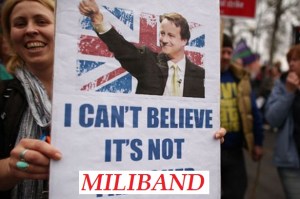
david-cameron-coke-zero-conservative-i-cant-believe-its-not-miliband

Top Image: Carl Court / Getty Images, International Business Times

Support Semi-Partisan Politics with a one-time or recurring donation:

Agree with this article? Violently disagree? Scroll down to leave a comment.

Follow Semi-Partisan Politics on TwitterFacebook and Medium.