Nick Clegg, Defiler Of Liberalism, Has Something To Say About Populism

Populism is bad, mmkaaay?

“I think it’s important to remember populism can be a very positive, can be – I mean, Gandhi was a kind of populist. If populism is about challenging a complacent elite, challenging an established order, speaking for people who are not spoken for, populism is a really really important antidote for complacency in politics” – Nick Clegg

The only way that one can hold this seemingly benign attitude toward populism while deploring Brexit and the vote to leave the European Union is either to misunderstand the true nature and purpose of the EU, or to be engaging in deliberate deception.

Nick Clegg is not an uneducated man. With his career, he knows better than most precisely what the EU is, how it operates and where it is heading. He knows that the European Union is more than the “friendship ‘n co-operation”, humble free trade club portrayed by deceitful Remainers during the referendum campaign. In other words, the ignorance excuse is not available to Nick Clegg.

That leaves only the conclusion that Nick Clegg is a liar. A very affable and eloquent liar, certainly, but a liar all the same, and a particularly dangerous one for his gifts.

Nick Clegg would seriously have us believe that the European Union has nothing to do with a “complacent elite”, an “established order” or “complacency in politics”, and that therefore Britain voting to liberate ourselves from the EU is therefore the “bad kind” of populism as opposed to the virtuous kind, which he happily supports. How anybody could sit and listen to him advance this view without either laughing or heckling is completely beyond me.

What nonsense; Nick Clegg has no time for populism of any kind, because it inevitably threatens the rule and routines of the elite in which he is so personally ensconced. Besides the archetypal High Tory, it is hard to imagine a senior British politician with less affinity for anyone who supports any populism movement. At his core, Nick Clegg believes that politics is something to be done to the people by enlightened, “liberal” elites like himself, not something for the masses to influence, with their base prejudices and uncomfortable opinions.

We know this because immediately prior to praising populism, Nick Clegg also said this:

“Populism is redolent with kind of uncontrollable rages and angers and passions, whereas liberalism – at least the liberalism I believe in – is about reason, rationality and evidence, and so on and so forth.”

No. The “liberalism” that Nick Clegg believes in consists of insulating oneself inside an hermetically sealed, epistemically closed information loop, listening only to those “experts” or paying heed to those “facts” which are conveniently in line with one’s own globalist, anti-nation state worldview to the complete exclusion of all other parameters, angles and viewpoints, before applying “reason” to that desperately narrow window on reality and pronouncing verdicts which always comfort and never challenge the metropolitan Regressive Left mindset.

Nick Clegg is perfectly entitled to hold and profess those seethingly anti-democratic, elitist positions. But he should not be allowed to get away with calling himself a liberal while he does so.

Watch this fascinating Intelligence Squared debate/discussion between the excellent social psychologist Jonathan Haidt and the sneering, unrepentantly euro-elitist Nick Clegg, on the subject of populism.


nick-clegg

Bottom Image: Chatham House / Wikimedia Commons

Support Semi-Partisan Politics with a one-time or recurring donation:

Agree with this article? Violently disagree? Scroll down to leave a comment.

Follow Semi-Partisan Politics on TwitterFacebook and Medium.

Labour Strives To Make Itself Even More Unpopular In Scotland

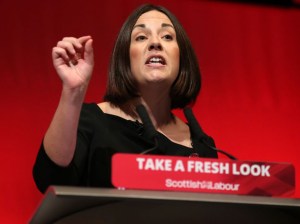
Kezia Dugdale, the forgettable leader of Scottish Labour, is furious that the SNP allied with the Evil Tor-ees to block a plan to raise the top rate of income tax back up to Gordon Brown’s eye-watering 50% rate.

LabourList reports:

The leader of Scottish Labour spoke out in anger after nationalists joined forces with the Tories to block plans to raise the tax rate for top earners.

Last night, the SNP voted with the Tories against a Scottish Labour amendment which would have raised the top rate of tax to 50p in the £1 for those earning over £150,000. Scottish Labour propose this as an alternative to austerity, urging the extra funds be spent on public services like the NHS and schools.

Prior to the 2015 general election, the SNP appeared to commit to raising the highest rate of tax for the very wealthiest, as Kezia Dugdale posted on her Facebook page. Ed Miliband included the taxation pledge in Labour’s 2015 manifesto.

Commenting after the vote, Dugdale said “People will be appalled to learn that SNP ministers who campaigned against austerity have now voted with the Tories to block the introduction of a 50p top rate of tax for the richest few earning more than £150,000 a year.”

“When Nationalist ministers present the budget tomorrow they must not simply pass on Tory cuts to local services like schools and social care.”

Scottish finance secretary Derek Mackay of the SNP will be presenting his draft budget at 2.30 this afternoon.

Speaking ahead of the publication of the draft budget, Dugdale said: “The Nationalists claim to be a progressive party. If that is the case, they will use Holyrood’s historic powers to ask those with the broadest shoulders to pay more tax to raise money to tackle Scotland’s schools crisis.”

“If Derek Mackay fails to do that, he is no better than a Tory Chancellor – and he will singlehandedly destroy any claim the SNP has to be a party of the progressive Left.”

Nice try, Kezia. But while the SNP are pretty dumb, they are not that dumb. Even through their own prodigious economic illiteracy, the Scottish nationalists have worked out that there is little to be gained from choking off economic growth with a snarling, punitive tax designed to hurt upper middle class salary-earners (not the “very wealthiest in society” as they deceitfully claim) while bringing in little if any additional revenue. No, the SNP are all about hurting people in the middle, the striving middle class, instead.

Scottish Labour, meanwhile, seem to think that prancing around accusing the SNP of being just like the Evil Tor-ees will see their recently defected voters wake up, realise the error of their ways and come crawling back with gratitude to their shrivelled, dying husk of a political party. I have my doubts. Aside from the sheer immorality of ever proposing to confiscate more than 50 per cent of anybody’s income at any income threshold, Labour have been shouting about evil Tory ideologues for years at the national level, with little effect. Voters want to see evidence of basic economic and governing competence, not virtue-signalling histrionics accusing the SNP of being “no better than a Tory”.

Scottish Labour would be better off holding the SNP to account for shamefully refusing to take powers over welfare from the UK government in Westminster, preferring to carp and moan from the sidelines despite being a supposed party of government.

But seemingly determined to make themselves as unpopular among as many segments of the population as possible (save those who really do want to live by the fruits of other people’s labour), Kezia Dugdale’s grand plan for a Scottish Labour renaissance involves wrapping her arms tight around the bloated corpse of Gordon Brown’s political career and coming at the SNP from the far left.

Good luck with that.


kezia-dugdale-scottish-labour-party

Support Semi-Partisan Politics with a one-time or recurring donation:

Agree with this article? Violently disagree? Scroll down to leave a comment.

Follow Semi-Partisan Politics on TwitterFacebook and Medium.

The Elites Are Fuelling A Backlash They Do Not Comprehend And May Not Withstand

david-cameron-resignation-statement

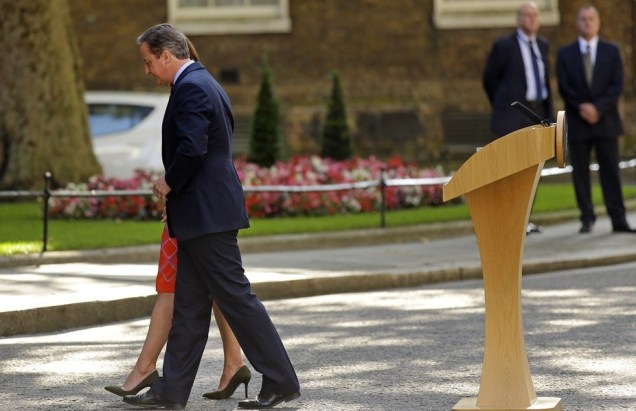
Accustomed to getting their own way and furious at being thwarted by mere democracy, the political elite are responding to recent setbacks by doubling down on behaviours which could soon see them swept away completely

One would be hard pressed to find a better charge sheet against the British political elite – and explanation for the populist backlash currently being felt by every well-manicured and over-rehearsed politician in the country – than the one recently laid out by Charles Moore in The Spectator.

Moore writes, in explaining why he is now “cheering for the populist right”:

It may sound Marxist to say this, but I do think the elites have constructed a world order which serves their interests, not those of their subject populations. You see it in little things, like the fact that European commissioners, when they leave their posts, receive enormous ‘transition’ payments (it was reported that Peter Mandelson got £1 million) on top of their salaries and pensions. You see it in big things, like the fact that nearly half the young people of Spain, Italy and Greece have to go without jobs in order to enforce Germanic theories about central banking and Brussels doctrines about European integration.

In the second half of the 20th century, the huge projects to which the western world bent its mind more or less worked — the Marshall Plan, Nato, the United Nations Security Council, even the European Community, when it had only six members. What are the equivalent achievements in the 21st century? A pseudo-virtuous climate change agreement reached only because its members know it won’t be observed. A banking crisis resolved in the interests of bankers. A threat from Islamist terrorism which the outgoing President of the most powerful nation on earth still cannot admit even exists.

It does sound a little Marxist to talk about the elites in this way, as Charles Moore fears, until one remembers that with our decaying institutions and system of crony capitalism, the best and most able to serve the marketplace of goods, services and ideas are no longer the ones rising to the top. Therefore, to criticise them is not to criticise capitalism or the free market, because if you were to strip away the privilege of those at the top of the political, legal and commercial worlds and force the inhabitants to fight their way back up to the top from a level playing field, most of them would be living on the streets within a year. This is the dismal calibre of people we now allow to rise to the top of our society; to criticise them is not Marxist, it is to yearn for some semblance of a meritocracy.

Moore continues:

The response of elites to their failures is too often to stigmatise the people who complain. Those who protest at immigration levels ten times higher than 30 years ago are treated as racists. Even the ballot box itself is seen as ‘populist’. Remainers argue that the referendum issues were ‘too complicated’ for voters. They seem actively to dislike the idea that our nation should once more be governed by its elected representatives. Having failed electorally, they turn to ‘lawfare’ — preferring a case before the Supreme Court to the direct implementation of what Parliament handed to the people to decide. Voters now believe that their rulers really do not like them very much, so the feeling becomes mutual.

Yes, a thousand times yes. And it is hilarious watching tone deaf politicians openly disparage the same parts of the electorate that they will be sucking up to in futility when the next general election rolls around. Most people possess a base level of social awareness. They know when they are being looked down upon, or worse, mocked. The experience shuts ears and hardens hearts against future persuasion. That so many MPs and commentators still do not realise this is a testament to the low calibre of people we have allowed to rise to the top of the political and journalism worlds.

Consider: Ed Miliband fought the 2015 general election on the premise that David Cameron and the Conservative Party were evil, far-right ideologues. Many respectable people who voted Tory in 2010 did not take kindly to the Labour Party suggesting that they were aiding and abetting evil, and now you can find Ed Miliband on the backbenches, giving forgettable speeches to a half empty Commons chamber. And yet the lesson has not been learned – many politicians now calling Brexit a calamity and deriding Brexiteers as either malevolent racists or useful idiots will be asking those same people for their vote in 2020 (or sooner). You don’t need to be Nostradamus to figure out how the electorate is likely to respond.

More from Moore:

In this respect, the culture war matters. You cannot go on saying that white straight males are brutes without eventually annoying them (and even a significant proportion of what John Prescott used to call their ‘womenfolk’). The cultural signals from the powerful are almost unthinkingly hostile to majority populations. This month, to take a minor example, a report into ‘diversity’ in the theatre commissioned by Andrew Lloyd Webber reported (reusing a phrase from Greg Dyke years ago) that it is ‘hideously white’. Why should the dominant racial characteristic of all western societies be considered ‘hideous’? If you said that anything was ‘hideously black’ you would (rightly) be shunned by polite society. Such asymmetry inspires revolt. The rise of Trumpery shows that the right has learnt a tactic of the left, which is to play up grievance to get power, money and attention. Grievance politics is extremely unattractive, but if western societies no longer deliver rising general prosperity and disrespect the people whom they are failing to serve, what do you expect?

And yet the Left continues to push aggressive multiculturalism and identity politics, even seeking to thwart Brexit so as to continue working towards their goal of undermining of the nation state.

This is dangerous. As Michael Lind once remarked, “the loyalties that succeed national solidarity are likely to be narrower, not broader”. Focus on individual racial identities, undermine the nation state, undermine Britain and any healthy sense of national identity and purpose we might otherwise have, and we very quickly descend into a jealously competing confederation of special interest groups, each one claiming some special victim status and viewing itself as oppressed by the others.

The Labour Party, which has long served the elites rather than the working man or woman, is currently in the process of falling down a chasm of their own making, between people who recognise and oppose this danger (their rapidly diminishing working class vote) and those who choose to remain blithely ignorant because they are not presently feeling many negative consequences (the virtue-signalling middle class clerisy). Both groups are coming to hate and scorn one another, yet Labour needs both to turn out in sufficient numbers if they are ever to win a general election again.

But indulge the populist side and the elitist side becomes enraged, and vice versa. Try to fudge the issue by making half-hearted gestures to each side (like Labour’s immigration coffee mug) and it alienates one side while failing to persuade the other.

In fact, populism vs elitism is rapidly becoming the new axis of our politics, which is a shame. There should be no question that when the interests and attitudes of the elite turn stridently against those of ordinary people, we should side with the ordinary people against the elites. That does not mean adopting every daft populist idea that comes along, but by actually taking into account the hopes, concerns and aspirations of ordinary people in regular policymaking we might hope to avoid finding ourselves in another situation where so many people see the likes of Donald Trump or Nigel Farage as their only salvation.

In other words, a certain amount of populism should be hardwired into our politics, so that it does not fester unseen and then break free to dominate proceedings and create destabilising uncertainty. The left vs right, authoritarian vs libertarian arguments remain far more interesting than the populism vs elitism shouting match, but it is currently being overshadowed as we debate idiotic questions like whether or not the wisdom of a powerful elite ought to cancel out the result of a national referendum. When we disagree about such fundamentals, worrying about what the government does and does not do for its citizens inevitably rather takes a back seat.

Moore concludes that “if, in a parliamentary democracy, the elites and the voters markedly diverge, one must surely bet that the elites are likelier to be wrong”. And the elites certainly have been short-sighted, self-serving and often outright wrong on a parade of key issues.

The political elite have perhaps one last chance to check their arrogant and selfish behaviour before they trigger an even bigger backlash, and things start to get really bad.


globalism-versus-culture

Support Semi-Partisan Politics with a one-time or recurring donation:

Agree with this article? Violently disagree? Scroll down to leave a comment.

Follow Semi-Partisan Politics on TwitterFacebook and Medium.

How To Use Social Justice And Identity Politics To Ruin Your Unborn Child

everyday-feminism-3-things-my-husband-needs-to-know-about-the-black-baby-were-going-to-have

No, your child’s life does not depend on you teaching them to be an insufferable social justice activist or an artificially frail victim-in-waiting

Imagine being married to the kind of spouse who writes an open letter to her husband and publishes it in Everyday Feminism, insisting that she take the lead in all parenting decisions as you raise a mixed race child together because she is black while you are white.

Imagine being publicly instructed that it is your solemn duty to raise a social justice warrior child, the newest member of the Cult of Social Justice and Identity Politics, whether they want to follow down that dismal path or not.

Well, the poor husband of Adiba Nelson doesn’t have to imagine, for he is living the nightmare. For a start, Nelson addresses him as though she were an android, which cannot be pleasant (unless he happens to be one, too):

Husband, for the last few years, we’ve been very firm in our decision to not have a child of our own.

You have two sons from your previous marriage, I have my daughter, and that has seemed like plenty. I’ve been so firm in this decision that I’ve gone as far as telling friends that they’re wise to only have one, or none at all.

Then about two months ago, we had a change of heart, and lo and behold, we’re taking steps to prepare for pregnancy.

And so the scene is set.

However, there is no blood test you can take or vaginal swab I can provide that can prepare you, White husband, to raise our Black child.

Yes, our Black child. Because even though our child will technically be biracial, having a biracial child who is half Black means you have a black child (by social, legal, and sometimes medical standards), and that comes with a whole new set of rules.

While your oldest White child may be targeted for his mental illness, statistically speaking, our Black daughter is 2.5 times more likely to be killed by police. So yes, there are some things you need to know before we embark on this journey.

Because in the words of Aladdin, you are about to enter a whole new world.

A whole new world, yes. A whole new world of pained continual racial awareness at all times and a laser-like focus on what divides rather than unites us; a whole new world of corrosive victimhood culture, combined with an infantilising trend among adults to affirm one another (and their children) well in excess of their merits, setting them up for future failure.

And then comes the agenda:

1. We’re Raising a Social Justice Activist

Today, more than ever in our lifetime, this is crucial. Not just to the world that our child will grow up in, but also, to our child’s survival.

The world at large will see our child as Black when it comes to crime, academia, housing, and everything else, but it will question their loyalty to their Jewish heritage when they stand up for the rights of people that look like me.

It’s crucial that we remind our child that one identity and experience does not negate the other, but that as a Black individual living in this country, it’s our collective responsibility to ensure that everyone is entitled to (and receives) fair and just treatment.

By that same token, we also need to teach them how to leverage their access to Whiteness and all of the privileges that come with it to help achieve this goal.

We need to gird them with the confidence, wherewithal, and history of both our heritages so that they can not only speak out against all the -isms with knowledge, but also with empathy.

It’s critical to our child that they understand that while they are in fact, Jewish, Puerto Rican, Panamanian, and African American, the beautiful bouncy curls and caramel colored skin that earned them oohs and aahs as children can also earn them an all expenses paid trip to Rikers Island, or worse, the morgue.

We are raising a social justice activist. Their life depends on it.

Their life really does not depend on becoming a Social Justice Warrior; this cannot be emphasised enough. Using this kind of overwrought language may help to imbue the Cult of Social Justice and Identity Politics with a nobility that it would otherwise lack, but it does not make the statement true. In fact, while nobody should discourage political activism, it is probably true that becoming a social justice activist and involving oneself in various conflicts with an often militarised police force actually increases rather than lowers mortal risk.

More:

2. I Need You to Follow My Parenting Lead in Public

Black people are exonerated at an exponentially higher rate than other races (four times more than Latinx folks and 1.2 times more than White folks), which means that our child is more likely to be arrested, tried, and convicted for something they didn’t do – simply because of the color of their skin and the kink in their hair.

So if we’re out and about and I scold our child for touching things, or I preface every outing with “when we go in the store, you stay right by my side, and you don’t touch anything,” it’s not me being mean.

It’s me educating our child (as subtly as possible) in the ways of the world, so that we aren’t one day paying for court appeal after court appeal.

Adiba Nelson might call it “educating our child in the ways of the world”. Others might view it as constricting their curiosity and imbuing them with a paranoia and vulnerability which they ought never to possess, certainly not at such a formative age.

More:

3. If We Have a Daughter, Fill Up Her Cup of Self-Worth on the Daily

Yes, to the point of obnoxiously overflowing. I really mean that. Obnoxiously. Overflowing.

As Black women, our styles, beauty regimen, body shape, and facial features have historically been mocked, shunned, and in the case of Sarah Baartman, even put on display in a traveling circus.

When we’ve been nothing but ourselves, we’ve been told it is not good enough, not pretty enough, not right enough – simply not enough.

However, when these same looks, regimens, and shapes are worn, relished and co-opted by other races, it becomes socially acceptable, the hot new fad, and all the rage. But you know this. This is nothing new to you. What you may not know is how to counter this.

Well, I’ll tell you.

To proactively counter this, from minute one of her girlhood, she needs to hear the words “hello beautiful girl,” and every day from that day forward (unless she tells us otherwise).

From the moment we teach her her first anything – rolling over, holding her head up, tracking with her eyes – she needs to be told how fiercely intelligent and unstoppable she is.

Because what could go wrong with filling a child with so much unearned positive affirmation that entering adulthood (or, god forbid, the corporate workplace) is set up to become a traumatic event due to lack of continual praise?

What if Adiba Nelson’s daughter isn’t “fiercely intelligent and unstoppable”? That is not to speculate that she will be ugly and dim (though both are a possibility). But she may be dreamy and artistic, have street smarts rather than book smarts or be known for her empathy and sensitivity rather than as an indefatigable warrior queen. All parents probably project something of themselves onto their young or unborn children, but Nelson seems to have predetermined that her child must become SJW 2.0 or else consider her life a failure.

And what’s all this about the husband having to defer to the wife when it comes to parenting techniques? As the social justice warriors would say: Um, doesn’t that, like, totally reinforce existing harmful gender role stereotypes?

Nelson then leaves her husband with this motivating pep talk:

Husband, being the father of a Black child will not be easy, because by nature (and history), it forces us to confront the fact that the world we thought we knew is not the world we know at all.

There will be times you will feel a rage you didn’t know existed because of someone’s “innocent” microaggression towards our child. However, those moments will be countered with earth-shattering bliss as you watch our child break through every ceiling with ease.

And when those moments come, I’ll turn to you, give you some dap and whisper in your ear, “Congratulations, husband. We did that.”

But today, as we prepare ourselves to bring a beautiful Black child into this world, I only have one thing to say to you.

You got this.

How incredibly condescending. How arrogant, to assume that a fully grown man and existing parent of two children (not to mention somebody Nelson presumably loves and respects enough to have willingly married) requires public guidance and cajoling in the art of raising their new daughter, simply because she will emerge into the world with slightly darker skin than his own.

What chance does this child stand if it isn’t merely exposed to infantilising victimhood culture through the education system but is marinated in that culture from birth at home? How much harm stands to be done to this child as she is raised to view the world entirely through the intersectional prisms (or should that be prisons?) of race and gender theory?

Thank heavens that I didn’t have to put up with any of this nonsense growing up as a biracial child myself. Thanks heavens that I was raised to relate to people as fellow humans rather than members of separately siloed racial identity groups, and not to see colour (I know, I know, how triggering to hear such a thought expressed today).

I fear for the child that Adiba Nelson and “husband” are about to raise together. But then I remember that children do love to rebel against the faith and values of their parents, and that gives me hope. May Adiba Jr. grow up to be a huge ideological frustration to her mother and a thorn in the side of the social justice and identity politics movement.


identity-politics-us-presidential-election-donald-trump-white-working-class

Support Semi-Partisan Politics with a one-time or recurring donation:

Agree with this article? Violently disagree? Scroll down to leave a comment.

Follow Semi-Partisan Politics on TwitterFacebook and Medium.

When Will Open Borders Zealots Just Admit That They Want To Abolish America?

new-york-would-never-dream-of-building-a-wall-new-york-magazine-immigration-propaganda

Talking about “undocumented immigrants” in the same breath as refugees, permanent residents and citizens has only one purpose – to imbue illegal immigration with a nobility it does not deserve, deliberately undermining the beleaguered nation state. And the time has come for open borders zealots to be honest about what they are trying to do.

Under the guise of discussing the sanctuary city phenomenon, New York magazine has a propagandistic but otherwise pointless article profiling 44 “New Yorkers” of varying and sometimes dubious immigration status, whose sole purpose seems to be to deliberately blur the lines between various types of immigration, thus giving political cover to the illegal kind.

Why 44 immigrants? Presumably this is an allusion to the fact that Barack Obama is the 44th president of the United States, and because he supported the DREAM Act and implemented the DACA policy (even though only four of 44 people profiled in the piece are themselves beneficiaries). Yes, that is the kind of pseudo-analytical, emotional codswallop that we are going to be dealing with here.

The piece begins with suitable pomposity:

That ours is a sanctuary city — arguably, the sanctuary city — shouldn’t be surprising. After all, for 130 years we’ve displayed, in the New York Harbor, the most iconic symbol of welcome in the world. In the weeks after an election season defined in part by an ugly debate over who should be allowed to live here, New York photographed dozens of immigrants and new citizens, ranging in age from 1 month to 91 years, to suggest the breadth of the New York–immigrant experience.

Of course, capturing the full breadth would be impossible — there are 3 million New Yorkers who were born somewhere else, more than a third of the city’s population. All of which is a good reminder that even the city’s hoariest come-hithers — make it here, make it anywhere, etc. — contain an implicit promise: Our city is open to anyone who’s willing to give it a shot. Give us your poor, your tired, your huddled masses, yes, but also your ambitious, your artsy, your queer, your shunned, your misfits, and anyone else who can’t, for some reason, feel at home where they are. Whatever it is you’re a refugee from, this city can be your refuge. We may have a fabled reputation for crossed-arm toughness, but in reality, New York is the city whose arms have always been open the widest.

We then delve into the profiles, many of whom are of babies who clearly cannot speak for themselves but who are nonetheless selected because of their emotional resonance (using babies to build emotional support for a political argument is fine when it concerns immigration, apparently, but try to do so in connection with a …different subject, and many on the Left will immediately lose their minds).

Some examples:

Prioska Galicia
Age: 19
From: Mexico
Undocumented

“I remember the sound of helicopters, and running, and the cold breeze, and my mom trying to cover me up,” Prioska Galicia says about the night she crossed the border into Arizona in 2004.

She was 6 years old. A recent high-school graduate, Galicia aspires to go to college, but that hope is tempered by the uncertainty of Deferred Action for Childhood Arrivals under Trump. “We want to work. We want to succeed. Other people don’t see it like that. They see it as us wanting to take other people’s jobs.”

Okay, so here we have what might be a seemingly typical case of an illegal immigrant smuggled into the United States by her family – and a very sympathetic case, at that. Galicia is, I am sure, a model petitioner for citizenship in every way.

But then we see Galicia’s case placed alongside examples like this:

Tristan Kelvin Bosc
Age: 1 month
From: United States
Citizen

Bosc was born in November to German and French fathers who met in 2005, two years after moving to the United States.

“For us, it was a choice to move here,” says Benoit Bosc, one of Tristan’s fathers. “You don’t want to over-romanticize it, but you know, the land of dreams where things are possible. We hope that it stays this way because for him, that’s the future.”

Presumably Tristan’s German and French fathers both emigrated to America via one of the legal routes open to them. So why even include such people in an article about sanctuary cities, unless for the deliberate reason of muddying the waters that separate those who follow the process and those who circumvent the process? Maybe there is a word slightly less harsh than “propaganda” to explain what the New Yorker is doing here, but if so, I struggle to think of it.

More:

Pepper Tsue
Age: 2
From: South Korea
Citizen

Tsue and her family moved to New York in 2015. Her mother is Korean and her father is Taiwanese-American.

At home, her mother, Seyun Kim, speaks to her only in Korean. When Pepper started preschool in September, Kim packed a translation sheet for the teacher. It included words and phrases like water, mommy and daddy, and I want a hug. “She’ll learn English,” says Kim. “But it’s important for her to know Korean, too.”

What a marvellous case study in good integration – a mother who deliberately refuses to help her own daughter to assimilate into their new country by conversing with her in the dominant language, and who then has the temerity to pack her daughter off to school with a translation sheet for the teacher, so that those already living here can do all of the hard work. Yes, this is exactly the kind of example that we should be promoting.

One doesn’t like to think ill of people. But what is one supposed to think of the New Yorker when it cherry-picks cases such as this, and celebrates them precisely because they go against the grain of integration and assimilation? Seriously, what is the excusing factor here? I fail to see it.

More:

Indigo Van Eijck
Age: 11
From: The Netherlands
Lawful permanent resident

Indigo Van Eijck is in sixth grade. His family started commuting back and forth from Rotterdam when he was 5 for his father’s work in landscape architecture.

“I had to learn a whole new language,” he recalls. “You do learn English in the Netherlands, but only very little. You say things like, ‘Hi, how are you?’ but in a very Dutch accent.” The family became legal permanent residents in 2011 but still goes back to the Netherlands for a month every summer. “The people are different here,” Indigo says. “Nobody really cares if you go to the store in your pajamas in the morning. At home, most of the strangers you meet on the street are nicer ― probably because the population is so much smaller.” He misses his native cuisine when he’s here, and he made Indonesian dumplings (which are prevalent in Holland) for Thanksgiving. But the sushi in the Netherlands, he says, “is awful.”

So now we have the son of a clearly wealthy landscape architect and a lawful permanent resident. What place do these people have in an article purportedly about sanctuary cities? What do Indigo Van Eijck and his family need to take sanctuary from, precisely?

More:

Fayza Gareb
Age: 22
From: Syria
Refugee

Fayza Gareb’s family fled Syria for Turkey in 2013 when the Assad regime began bombing her family’s village near Aleppo.

“I worked as a waitress in Turkey,” she says. “The first time I heard a plane’s voice over the restaurant, I went under the table because I was scared it would drop bombs like in Syria.” Her father longed to make it to the United States but died of cancer before the family was admitted last August. Gareb and her mother, sister, and brother were among the 15,000 Syrian refugees President Obama pledged to accept in 2016.

And now we have refugees thrown into the mix! Refugees who have been lawfully admitted into the United States and who therefore are at no risk of deportation or particular persecution by federal authorities. Why does New York Magazine see fit to include these cases side-by-side with undocumented child migrants from Mexico, lawful permanent resident children of successful landscape architects and natural born citizens?

Then we have that rarest of cases, a South Korean undocumented SJW, banging on about her relative “privilege”:

Stephanie Ji Won Park
Age: 24
From: South Korea
Undocumented

Stephanie’s family came to New York in 1998 when she was five and overstayed their tourist visas.

She first became aware of being undocumented in middle school, at Horace Mann. “I was thinking about the high-school-senior Bahamas trip, and my mom was like, ‘Hopefully in a couple of years something will happen,’” she says. “Whenever I introduce myself as undocumented I do a whole spiel where I say I think I’m one of the most privileged undocumented people out there. “Like, ‘Oh, I found out because I couldn’t go on a senior trip to the Bahamas.’” As she started applying for colleges, the realities of her status became more clear; still she considers herself lucky. “If I were to be deported, I’d be deported back to South Korea. Yeah, that’ll be tough, but it’s not the same as going back to a country where the chances of being murdered are very high. Maybe it’s a state of denial, but I’m just trying to focus my energy on people that are in a worse position.”

The heart bleeds. Thank goodness there are sanctuary cities like New York which provide a safe space for South Korean tourist visa abusers and their families to skip the queue, spurn the lawful routes of entry into the United States and avoid being sent back to the terrible, dangerous and backward country of South Korea.

More:

Kathleen Bomani
Age: 31
From: Tanzania
Lawful Permanent Resident

Bomani’s Tanzanian parents met while studying at Howard University. Her sister was born here, then her parents moved back home and had her and her brother.

“We spent most of our summers here in the U.S. So then I came for college — at Drexel University in Philadelphia. I studied corporate communications,” she says. She came to New York to live permanently in 2009. “In New York, no one asks you where you’re from because you have an accent. Everyone’s from somewhere. It has a completely different feeling from the rest of the United States. The possibilities of what one can be — there’s just something in the air here.”

Quite why that atmosphere of possibility cannot be maintained while observing federal immigration law is never quite explained, either by Bomani herself or by New York Magazine, who casually use her life story as part of their insidious propaganda.

And finally:

Lourdes
Age: 47
From: Mexico
Undocumented

“I wish for her the same thing I wish for them, the best of life,” Lourdes, 47, says about her granddaughter Kamilla and her children, Ricardo Aca and Montserrat Aca, who are both Dreamers.

Lourdes crossed the border in 2004 and worked as a housekeeper and factory worker before sending for her children. “For me the most important thing is for them to study so that they have a better future, and hopefully stay in this country that we’ve learned to love. Because, in reality, we consider this country now like our country. There was a moment when I felt exasperated, that perhaps I had made a mistake in having brought them over,” says Lourdes. “But looking at it now, I feel like it was worth it. Everything that we went through was worth it.”

It is great that Lourdes and her family have “learned to love” America. Of the various kinds of illegal immigration this is the best kind – people who have or are assimilating, and feel gratitude toward their new host country. Perhaps this kind of illegal immigration is even the most typical, as leftist zealots loudly insist. Perhaps. And certainly we should have sympathy for people like Lourdes and her family – though they retain agency and responsibility for their actions, they were also victims of the strong “pull factor” of illegal immigration, the blind eye turned toward illegal immigration by American business and government.

Many such people are already now American in spirit, and there is nothing to be gained by deporting them. But neither is there anything to be gained from placing them on a pedestal and attempting to endow their actions with some kind of undeserved nobility. Immigration laws exist for a reason. And as with all laws, either support them or argue for their repeal, don’t equivocate while openly celebrating lawbreakers.

As one reads the New York Magazine piece, one is struck by the fact that the vast, vast majority (40 out of 44) of those profiled are either full citizens, lawful permanent residents or approved refugees, none of whom need the shelter of a so-called sanctuary city to live in the United States without fear of deportation. There is absolutely no good reason for these people to be included at all. But there is one very bad reason.

Because the goal here is not really to celebrate sanctuary cities specifically. Despite the title and preamble to the New York Magazine piece, this is nothing more than a convenient hook, a ruse. The real goal is nothing other than the perpetuation of this omnipresent, simplistic, holding-hands-beneath-a-rainbow leftist vision of a borderless world where more than sharing a common humanity (which of course we do), we also share the automatic right to live wherever we want in the world, regardless of whether we choose to move there legally or illegally.

It is part of an insidious attempt to undermine the idea of borders, of nationality, of the nation state itself, and to smear anybody who objects to this radical and untested vision as being a backward-looking reactionary at best and a dangerous racist at worst.

The only reason one might be motivated to publish an article praising sanctuary cities and then profiling the wealthy children of notable Dutch landscape architects is if one is actively pushing this absolutist open borders agenda, a worldview in which there is zero moral or bureaucratic distinction between somebody who obeys immigration law and somebody who proudly flouts those laws.

And if one takes this position, if one tacitly argues that current illegal immigrants living in America should all be praised and lauded and conferred with immediate citizenship, then surely the same goes for anybody around the world who wants to pick up and move to America tomorrow? And then you have no nation states anymore. And no America.

The people at New York Magazine are not stupid. Many of them are blessed with the ability to spin a fine turn of phrase and argue convincingly for the things in which they believe. So when can we stop fighting this tiresome shadow war and get down to the meat of the matter? When will they come out and honestly admit that they want to abolish America?

_

Postscript: If “abolish America” sounds harsh, what else should one call a suite of policies and actions which actively seek to reward lawbreaking and encourage vastly more illegal immigration while demanding absolutely nothing in return by way of bureaucratic compliance, respect for the law or intent to assimilate?

open-borders

Support Semi-Partisan Politics with a one-time or recurring donation:

Agree with this article? Violently disagree? Scroll down to leave a comment.

Follow Semi-Partisan Politics on TwitterFacebook and Medium.