Budget And Autumn Statement Theatre Is No Way To Run Modern Britain

Homer Simpson - George Osborne - Budget - Annual Statement

The way British governments set budgets and tweak spending plans is a recipe for bad, short-termist decision making

Forget tax credits for a moment. Forget Right-To-Buy, stamp duty, beer duty and the tampon tax. MPs may still be debating George Osborne’s 2015 Autumn Statement, but step back for a moment and look at the broader picture.

Twice a year – once in the annual Budget and once in the Autumn Statement – the Chancellor of the Exchequer gets to his feet and delivers a refreshed set of economic policies in a big, set piece speech where he is essentially forced to favour tomorrow’s headlines over optimal long or even medium term decision making.

Nationally significant policies from every government ministry live or die by the concessions that their ministers are able to wrangle from a Chancellor who is forced by political reality to be more concerned with tomorrow’s Daily Mail headline than the state of our public finances in a year’s time.

Spending decisions are made based on economic forecasts which are sunnier than a warm day on Venus. Questionable political decisions are defended to the hilt, because to question them in light of new data would be to commit the gravest of self-inflicted political wounds, the U-turn. The government of the day rolls out a “smoke and mirrors” act worthy of David Blaine, and all to glam up the fact that they have slightly re-arranged the deckchairs on the Titanic.

And for what? To draw the public in to the political process? To high-mindedly arbitrate complex questions of economic policy? To astutely position Britain  vis-à-vis our global competitors, ensuring that our tax code, infrastructure and labour market are the most attractive in the world?

No. We do it just so that the government of the day – or a nimble opposition (remember those?) – can score political points. And, of course, because it is traditional.

Some traditions – like MPs not clapping in the Commons chamber – are antiquated and affected, but do little real damage. Others – like MPs having to leave the Commons chamber through a specific door in order to vote, rather than availing themselves of fast electronic voting technology – are an irritant, a brake on the smooth running of our legislature.

But some traditions belong in another category – things that do real, actual harm, not just to the running of our Parliament but to the political outcomes which we then have to live with every day. Some traditions actively harm our democracy.

I would submit that the Budget and Autumn State set-piece theatre events fall into this latter category. Politically astute chancellors (like George Osborne on a good day) may relish them because they provide an unparalleled opportunity to draw red lines and create traps for the opposition. The Westminster media may like the status quo, because if nothing else, these events can be moments of real political drama.
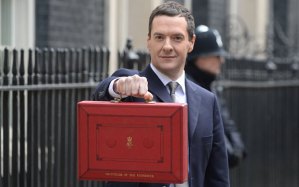
George Osborne - Chancellor of the Exchequer - Budget

But besides savvy chancellors and the established media, it is hard to tell who else benefits from the current system other than the cause of Big Government.

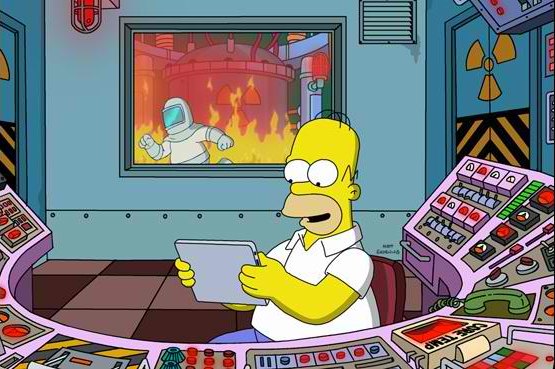
Having two occasions each year when an already-powerful chancellor like George Osborne in an already-centralised country like the United Kingdom gets to play with nearly all of the controls and levers which influence our economy – as though he were Homer Simpson at the controls of Springfield Nuclear Plant – only encourages meddling and tweaking of things that should properly be left to local government and individuals.

When you have direct, ultimate control over which families deserve help buying a house, which people should keep or lose their benefits or how much a person pays in sin taxes for their guilty pleasure, the temptation to use those powers is irresistible. And because of the ratchet effect, it is the easiest thing in the world to give away new perks to favoured interest groups, but nearly impossible to ever claw them back without being exposed to political attack. Even under this nominally conservative government, budgets and autumn statements have often been a one-way ticket to bigger government – or at least more activist state.

No system is perfect. One needs only look across the Atlantic ocean at the United States, with their unseemly debt ceiling fights and government shutdowns (oh, to have one here) to realise that you do not need a Westminster parliamentary-style system to sow budget chaos. But the flaws in our current system are obvious, and have been staring us in the face for years – yet nobody has proposed the slightest alteration, choosing instead to cheer when their side “wins” and whine when the other side is in power and sets a budget with which we disagree.

People did not elect a Conservative government only to have George Osborne sit at the control console of their lives, Homer Simpson-like, flicking switches and adjusting dials here and there in order to manipulate our mood so that we vote Tory again in 2020. If conservatism still means anything, it should mean a healthy scepticism of the state and its power to influence or police human behaviour.

Surely at some point our desire for smaller government and a smarter state has to outweigh our devotion to the dusty tradition of a man standing on the doorstep of his house, waving a red box around.
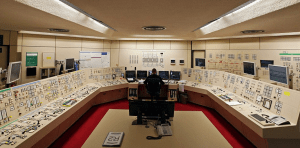
Autumn Statement - George Osborne - Conservative Government - Man at Control Panel

Agree with this article? Violently disagree? Scroll down to leave a comment.

Follow Semi-Partisan Politics on TwitterFacebook and Medium.

In Defence Of Andrew Neil’s Anti-ISIS Rant – Political Journalism At Its Best

No, Andrew Neil’s magnificent anti-Islamist rant was not a violation of the BBC’s commitment to impartiality

It’s a strange world where I find myself writing in support of Andrew Neil twice in the same week, but then these are very strange political times.

Nick Cohen sings Andrew Neil’s praises in The Spectator this week, before going on to condemn Neil’s rousing anti-ISIS monologue at the start of his This Week programme – a speech which this blog strongly supported – on the puzzling grounds that it broke the rules on journalistic impartiality.

Cohen writes well as always, but there are so many mistaken premises and inaccurate comparisons in this piece that a proper rebuttal is needed.

His criticism of Neil begins:

Everywhere you look you can see broadcasters following Neil and Snow and pushing against the fuddy-duddy rule that they must show ‘due impartiality’. The Church of England is joining in, and pushing against equally antiquated restrictions on political and religious advertising.

They must be stopped. However admirable Neil and Snow’s sentiments are, and however inoffensive the Anglican’s celebration of the Lord’s Prayer was, we have to shut them up. The BBC and Channel 4 should never have broadcast their interviewers’ opinion. The cinema chains were right to tell the Church of England it was not welcome on their screens.

Britain is a country with rules to prevent wealthy politicians buying votes and wealthy televangelists buying converts. We are also a country that has fought to maintain the principle that broadcasters must be politically neutral – not always successfully, I grant you.

Three points here. First, the requirement for broadcasters to show ‘due impartiality’ applies to news programmes, and not to commentary – least of all when we are nowhere near a general or local election, the time when the rules governing broadcaster impartiality are at their strictest. The BBC’s This Week is a political magazine show, not a straight-laced news bulletin. Of course one would not expect Evan Davis, Kirsty Wark or Huw Edwards to pepper their delivery of the news with caustic criticisms or sarcastic asides – that would be highly improper. But a political magazine show is by definition an opinion-based show, relying for its content on a parade of partisan guests from different political parties and the media.

Cohen attempts to lump Andrew Neil’s tirade against ISIS along with Jon Snow’s coverage of the Israeli siege of Gaza, but this is comparing apples and oranges – one is a daily news bulletin required to be impartial, and one is a weekly talk show where opinions and partisan debate are essential ingredients.

Second, this is Andrew Neil we are talking about – a seasoned veteran journalist and businessman with a vast political Rolodex and a personal “brand” all of his own. Neil was also editor of the right-leaning Sunday Times for over a decade, is chairman of the company which owns the reliably Tory-friendly Spectator, and in previous life was a researcher for the Conservative Party. Neil was never supposed to be an anonymous newsreader, nor is he marketed as one – people watch This Week because Andrew Neil presents the show, and they know exactly what they are getting when they do so. The BBC are fine with that, and there is nothing to suggest that either the letter or the spirit of the rules are not being followed.

And thirdly, while Cohen’s assertion that Britain is “a country with rules to prevent … wealthy televangelists buying converts” might plausibly be true, we are also a nation with an established state Church – one whose grasping tentacles reach into nearly aspect of our politics and our national life. The ongoing row about the Church of England’s cinema advert is a separate issue, but we should not pretend that our United Kingdom is a nation where we even pay proper lip service to the concept of separation of powers.

When meddlesome bishops speak out in parliamentary debates without a shred of a democratic mandate, and when there are still scenarios whereby the Queen might conceivably end up picking the next government, we should not act as though there is some ancient and grave constitutional requirement for television stations to broadcast opinionless, equivocating platitudes 24/7.

BBC Values - Impartiality

Cohen continues:

Broadcasters themselves know a dirty secret newspaper editors understand too well: extreme opinions sell. They confirm the partisan in their beliefs and draw in outraged opponents.

[..] Broadcasters want a piece of that action. Opinion is cheap. News is expensive. The public watched Andrew Neil and Jon Snow’s polemics in their millions. What possible justification is there for insisting on balance, accuracy and impartiality?

It may be the case that news is expensive while opinion is cheap, but without the forceful expression of political opinions there could be no This Week in the first place – indeed, there could be no Question Time or Newsnight interviews either, let alone the crucible that is Radio Four’s Today Programme. And if Cohen is saying that the host should always be impartial even on political magazine shows then he sets a standard which can simply never be met, since every raised eyebrow, incredulous glance, rude interruption or “gotcha moment” will be seized on as evidence of deepest bias. Far better that we have good presenters with transparent histories like Neil, and then allow the public to adjust their perceptions accordingly.

Besides, this is not a question of political neutrality, at least as we traditionally understand the matter. Britain is not at war with a sovereign nation, however much ISIS may try to strut and pose as such. We are in conflict with a nihilistic, totalitarian death cult which seeks to spill the blood of everyone who does not adhere to their harsh, warped interpretation of Islam. They stand for nothing save creating hell on Earth to please their petty, jealous and vindictive god. Why shouldn’t the presenter of a serious political talk show be able to say that which we all know to be true?

And since when did expressing an opinion prevent something from being “real journalism”? Is Cohen himself not a journalist because his Spectator piece failed to strike an impartial position between Andrew Neil and himself? Whenever a broadcast news presenter reports on a “horrifying murder” or a “tragic death” they are making a value judgement and presuming to speak on behalf of the 99.5 percent of people who will agree with them. There is no moral or statutory requirement for the newsreader to treat criminal and victim alike in their tone and description, nor should there be. Similarly, ISIS are torturers, rapists and murderers. They break the law every moment of every day in their campaign to spread hatred and ignorance around the world. What’s wrong with saying so?

If ISIS were a legitimate, functioning state or political party and Andrew Neil went on a two minute tirade about their fiscal policy or industrial strategy then there might be grounds to accuse him of political bias. But that is absolutely not the case. Andrew Neil saw ISIS (or Islamist Scum, as he now calls them) take their patented formula of death and suffering, and smear it across the bright lights of Paris one unsuspecting Friday night, and he called it what it was – an act of savage murder that history suggests is doomed to fail in its stated goals.

If ISIS supporters were greatly offended by Neil’s words and lack of objectivity then by all means they can submit a complaint via OFCOM or the BBC Trust. I rather hope that they try.

But they do not need Nick Cohen – or anyone else – to help them out.

BBC - British Broadcasting Corporation

Agree with this article? Violently disagree? Scroll down to leave a comment.

Follow Semi-Partisan Politics on TwitterFacebook and Medium.

The Daily Smackdown: Jeremy Corbyn’s Anti-Americanism

Instead of calling for a more “independent” foreign policy, Jeremy Corbyn should simply admit that he hates America and wants Britain to sever links with our closest ally

Jeremy Corbyn took to Facebook over the weekend to demand that Britain chart a new, more “independent” foreign policy.

This came off the back of a speech that Corbyn had wanted to deliver last week blasting Britain’s close alliance with America, but was forced to postpone because of the Paris terror attacks.

Corbyn finally gave the speech he was itching to give at the Labour Party’s South West Region conference in Bristol, where he said:

The third pillar of our vision for Britain is a different kind of foreign policy – based on a new and more independent relationship with the rest of the world. A relationship where war is a last resort.

For the past 14 years, Britain has been at the centre of a succession of disastrous wars that have brought devastation to large parts of the wider Middle East. They have increased, not diminished, the threats to our own national security.

Few would now seriously argue that Western interventions in Iraq and Libya did anything other than deplete our resources and further inflame the region. But Corbyn’s professed desire for a “more independent relationship with the rest of the world” is pure nonsense.

Jeremy Corbyn does not want Britain to pursue a more “independent” foreign policy. He is simply unhappy with our existing foreign policy and allegiances – where Britain recognises the many shared mutual interests we have with the Anglosphere and other Western powers, and seeks to build on those natural alliances which inevitably form where there is such a close fit of culture, history and legal systems.

If Jeremy Corbyn really wanted Britain to pursue a truly independent foreign policy, his first act as Labour leader would not have been to cravenly roll over and submit to the rabid europhiles within his party, who insisted that he follow their lead and slavishly promise to campaign for Britain to stay in the European Union come what may.

This decision is all the more surprising given Corbyn’s subsequent willingness to enrage his own backbenchers – and even his shadow cabinet – on almost every other question, from air strikes on Syria to hiring controversial and divisive staff and flip-flopping on George Osborne’s fiscal charter. Clearly Jeremy Corbyn is happy walk his own path on nearly every policy other than the pressing question of Britain’s future sovereignty.

How can Corbyn claim to want Britain to pursue an “independent” foreign policy when he has committed Britain to remaining in the EU and being part of the Common Foreign and Security Policy? How can Britain claim to be an independent diplomatic force when the EU’s High Representative for Foreign Affairs, Federica Mogherini, is more active and visible on the world stage than our own Foreign Secretary?

You can argue the rights and wrongs of whether Britain should pool so much of our diplomatic clout into a single European voice – over which we exert only 1/28th of the influence. But the one thing you absolutely cannot do with a straight face is to call the resulting foreign policy an independent one.

But of course Corbyn does not really want Britain to pursue a truly independent foreign policy. What he really means by this dog-whistle to Stop the War types and extremism sympathisers is that he wants Britain to specifically forsake the United States of America, and cease our friendship and co-operation with our closest ally in the world.

Jeremy Corbyn doesn’t look at the special relationship between Britain and America and see an unparalleled alliance which spilled blood and treasure in defence of democracy twice in the last century, and whose embrace of the free market has pointed the way for other nations around the world to achieve prosperity.

No, Jeremy Corbyn looks at the special relationship and sees Britain yoked against her will to the Great Satan – an awful, dystopian, capitalist war machine, economically and militarily subjugating the countries which Corbyn would much rather call his friends. He sees no good in the United States because his “friends” in Hamas, Stop the War and the far Left in general spend every waking hour ranting about just how evil and immoral America is.

Yet on Europe, Corbyn is firm: Britain should remain a member of this relentlessly tightening political union come what may – regardless of David Cameron’s cosmetic renegotiation, and regardless of the direction the EU is heading in the future. The Labour leader succumbs to the same negative, pessimistic view of Britain’s capabilities and international stature as the other europhiles, believing that Britain is too pathetic and ineffectual to do what Australia and Canada manage to do every day – engage with the world as an independent nation.

Jeremy Corbyn’s foreign policy simultaneously views Britain as being so weak and pathetic that our only pathway to influence on the world stage is to have the same sliver of influence over a common European Union foreign policy as tiny Malta or Slovenia, but also so potentially dangerous to the world that we must terminate the one alliance which has been the bedrock of our foreign policy since the second world war.

It is a risible, childlike worldview – one which would be funny if only a Corbyn premiership would not see Britain giving moral and tangible succour to some of the most odious regimes in the world.

Corbyn is right to point out our own moral failures in foreign policy, such as our close partnership with the brutal Saudi regime, working closely with that dictatorship in exchange for scraps of intelligence about the various terror plots that they are themselves funding and encouraging. But he undermines his own point by letting his actions and statements imply that there is any moral equivalence between regimes like Saudi Arabia and the United States.

Or as Nick Cohen put it in this week’s Spectator:

Corbyn, along with too much of ‘progressive opinion’, has a mistrust bordering on hatred for western powers. They do not just condemn the West for its crimes, which are frequent enough. They are ‘Occidentalists’, to use the jargon: people who see the West as the ‘root cause’ of all evil.

Their ideology is in turn genuinely rootless. They have no feeling for the best traditions of their country, and their commitments to the victims of foreign oppression are shallow and insincere. They rightly condemn western support for Saudi Arabia. But if the Saudis were to become the West’s enemy tomorrow, their opposition would vanish like dew in the morning sun.

Before concluding:

Jeremy Corbyn and the left he comes from cannot campaign for office by saying what they really think or they would horrify the bulk of the population. They say enough to keep their ‘base’ happy, and then dodge and twist when they speak to the rest of us. Far from being authentic, Jeremy Corbyn is one of the most dishonest politicians you will see in your lifetime.

If Jeremy Corbyn wants to be taken seriously as a straight-talking, honest politician he should admit that he has absolutely no desire for Britain to pursue an independent foreign policy – or an independent anything else, for that matter – and that all of this posturing is just his way of signalling to a certain audience that he disapproves of one country in particular.

Jeremy Corbyn: Anti-Austerity, Anti-America.

That’s a campaign slogan people might actually believe.

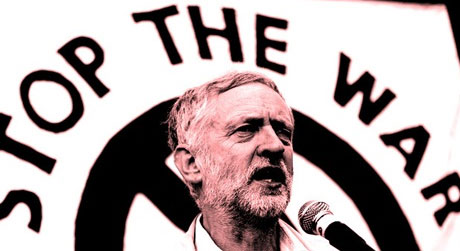
Jeremy Corbyn - Stop the War - Anti American

Further reading:

The anti man

The threat of Jeremy Corbyn’s radically anti-American agenda

Jeremy Corbyn isn’t anti-war. He’s just anti-West

Agree with this article? Violently disagree? Scroll down to leave a comment.

Follow Semi-Partisan Politics on TwitterFacebook and Medium.

Imagine Britain Without The NHS

NHS Worship - London Olympic Games 1

It’s easy if you try

Imagine a Britain without the NHS.

A Britain where the state did not directly employ or contract nearly every doctor and nurse in the entire country.

A Britain where the government did not decide which cutting edge treatments would be offered to the public, and which ones were simply too expensive.

A Britain where citizens were not reliant on the state for the physical delivery of nearly all their healthcare needs.

A Britain where healthcare was unconstrained by politically influenced national targets.

A Britain where angry, jealous talk of “postcode lotteries” did not act as a brake on excellence or a requirement for dull, uniform mediocrity.

A Britain where every hospital superbug or missed A&E waiting target did not automatically become the prime minister’s overriding personal concern, freeing them up to actually be a world leader.

A Britain where we are able to have a rational, level-headed discussion about healthcare, and what kind of system would achieve the best outcomes for the most people at an acceptable cost.

A Britain where we understood that healthcare need not be a choice between the NHS and the infamous US system.

A Britain where we were able to take inspiration from the best aspects of different healthcare systems around the world in reforming our own.

A Britain where criticism of the NHS was not treated like blasphemy, with the offenders shamed on social media and their political careers curtailed.

A Britain where we gave nearly as much respect, honour and resources to our armed forces and veterans as we do to the NHS.

A Britain where we did not reflexively worship a giant, mid-century bureaucracy as our secular national religion.

A Britain which thought enough of itself to realise that there is far more that marks us out as a powerful, great and indispensable nation than our anachronistic 1940s healthcare system.

A Britain where lean, efficient public services existed to serve the people, rather than we the people existing only to serve our insatiable, rapacious public services.

A Britain where saying “the NHS served us ably for many decades after the war, but now it is time to look again at how we provide healthcare to our fellow citizens” was not a shocking, unacceptable statement.

Imagine a Britain where the link between politics and healthcare was broken and the NHS monopoly split up, meaning that things like the coming national strike of junior doctors could never happen.

Just imagine what could happen – all that we could accomplish – if only we were able to have a calm, rational conversation about healthcare in modern Britain.


National Health Service - NHS Leaflet - 1948

Further reading:

Our deadly obsession with the NHS

A Haidtian take on ‘NHS worship’

Worshipping the NHS costs lives

Britain’s cult-like worshop of the NHS must end

To save the NHS, let’s stop worshipping it like a god

Support Semi-Partisan Politics with a one-time or recurring donation:

Agree with this article? Violently disagree? Scroll down to leave a comment.

Follow Semi-Partisan Politics on TwitterFacebook and Medium.

The Daily Toast: Ken Livingstone, Mental Health And The New Politics

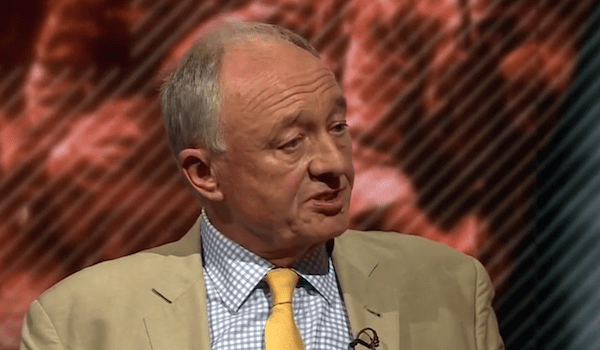
Ken Livingstone.png

Ken Livingstone’s attack on Kevan Jones’ depression is typical of the hard activist Left. They are happy to use the poor, the sick and other minorities as cynical campaign props, but hate it when they dare to speak for themselves

Today’s Daily Toast goes to James Kirkup for his furious, relentless evisceration of Ken Livingstone in the Telegraph.

Some context: When Red Ken was unexpectedly appointed to co-lead the Labour Party’s upcoming defence policy review (bringing his open minded attitude toward vital questions like Trident renewal), the Labour MP Kevan Jones – who had previously spoken out in a parliamentary debate, attempting to reduce the stigma of mental illness by revealing his own struggles – raised political concerns about whether Livingstone was the right person for the job.

And in response to Kevan Jones airing his political concerns, Livingstone responded with an extraordinarily personal attack:

Mr Livingstone told the Mirror: “I think he might need some psychiatric help. He’s obviously very depressed and disturbed.

“He should pop off and see his GP before he makes these offensive comments.”

So this is the New Politics that we were promised with the Jeremy Corbyn era – more of the same coarse, unbecoming personal insults that we have always had.

It’s no surprise. Because many on the Left see themselves as the only virtuous people in town – the sole custodians of the nation’s morals – they think that somehow it “doesn’t count” when they say rude, aggressive, condescending, racist or sexist things. They believe are allowed to get away with it because they spend their careers policing the debate and controlling the language, casting out anyone else who says or thinks the wrong thing. Just like a corrupt cop might consider themselves above the law, so the egotistical leftist believes that they have carte blanche to cross any of the lines that they draw to constrain the rest of us.

All of which makes Kirkup’s takedown of Livingstone so satisfying – and worthy of the Daily Toast:

I believe in civilised debate and generally try to avoid throwing around personal abuse when writing about politics. But there’s no way of being polite or restrained about this. Ken Livingstone’s words are vile, a poisonous act that would leave him consumed by shame if he had a shred of decency.

Yet he’s standing by those comments. He told the London Evening Standard: “It doesn’t matter what disorders he’s got, he doesn’t have the right to be rude … to be constantly undermining Jeremy Corbyn.”

This is utterly hateful. Mr Livingstone he hasn’t just grotesquely insulted Mr Jones, denigrating his suffering and his bravery, he has sent a brutal message to anyone else who suffers mental illness: stay quiet or you’re fair game.

Even if he wasn’t part of a leadership team that had so piously promised a nicer, kinder politics and to embrace open political debate, Mr Livingstone’s behaviour would be disgusting. The staggering hypocrisy involved just compounds his disgrace.

And if Mr Corbyn does not act quickly and firmly, by dropping Ken Livingstone into the deep dark hole of political obscurity where cockroaches like him belong, he deserves to share every bit of that disgrace.

Ken Livingstone was eventually forced to apologise for his behaviour, but was unable to stay contrite and was soon walking back his apology with justifications and angry asides to journalists.

The Labour Party – and the British Left in general – can’t have it both ways. They can’t spend half the time prancing around pretending to be high-minded emissaries of the New Politics, holding hands and singing Kumbaya, and then spend the other half acting like vicious thugs, smearing people because of their mental health conditions or whipping their activists up into a Tory-hating, phlegm-lobbing rage. It’s time to pick a side.

And yet Ken Livingstone is perfectly entitled to say mean or ignorant things about his fellow MPs in public if he chooses. That much is a fundamental free speech issue, so let’s see no talk about Parliament needing to be a “safe space” where coddled MPs need to be praised and affirmed at all times.

However, the question here is not one of free speech, but one of hypocrisy. Ken Livingstone and much of the virtue-signalling Left love to use the mentally ill, the poor and other groups as cynical campaign props, showering them with ostentatious sympathy in order to make themselves look good and pick up votes. But as soon as one of those same people becomes a threat – whether it’s a former welfare recipient questioning the welfare state or a fellow MP simply raising a political objection – suddenly the tribal thuggishness comes out and the Left’s feigned concern for the disadvantaged is revealed as the sham that it is.

That’s the real story here. Yes, Ken Livingstone’s behaviour was boorish and inexcusable, but he’s a left wing bruiser and unlikely to change his ways any time soon. But this incident was just the most high profile recent example of behaviour that is not uncommon on the Left: behind the friendly faces, the talk of inclusivity and a new, kinder politics, too often there lurks a hardened, egotistical ideologue who always responds to criticism by lashing out.

So by all means let’s haul Red Ken over the coals – certainly Corbyn should publicly condemn Livingstone if the Labour Party’s newfound passion for mental health is to be taken seriously – but let’s not pretend that this incident is anything other than standard behaviour from a certain segment of the activist Left.

Agree with this article? Violently disagree? Scroll down to leave a comment.

Follow Semi-Partisan Politics on TwitterFacebook and Medium.