Women-Only Train Carriages: Identity Politics Leads To Calls For Segregation, Once Again

Women only train carriages

Is there any contemporary problem that the identity politics Left will not propose solving through the introduction of segregation?

I see that the recurring debate about whether or not to introduce female-only train carriages has bubbled up again from the swamp of leftist thinking.

Charlotte England tries to make the best case she can for theocratic-style gender segregation over at Left Foot Forward:

There is a pragmatic argument for women-only carriages as an interim measure, which is being largely buried by simplistic rhetoric and a disingenous framing of the original proposal. Arguing against the policy on ideological grounds ignores the experience of many women and young girls who are assaulted and become afraid of travelling alone on public transport. It ignores the fact that they feel forced to alter their behaviour already.

When he first proposed the policy two years ago Corbyn made it clear the aim was to give women more freedom than they currently have, not less.

“It is unacceptable that many women and girls adapt their daily lives in order to avoid being harassed on the street, public transport, and in other public places from the park to the supermarket,” he said. “This could include taking longer routes to work, having self-imposed curfews or avoiding certain means of transport.”

He also did not suggest the measure in isolation, floating the idea of a 24-hour hotline for women to report harassment, along with broader measures to tackle assault in society such as tougher rules for licence holders on reporting incidents on their premises and cabinet members for women’s safety on local councils.

A 24-hour hotline for women to report harassment? Perhaps somebody should inform Charlotte England that such a line already exists, and that you can reach it 24/7 by dialling 999.

At some point the Left will have to confront the fact that they have devalued terms such as racism, white supremacy, sexual assault and “rape culture” to such a degree that if we are now to take them literally, the police would have to be called to millions of incidents which qualify as crimes every single day. Blurring the line between socially inappropriate behaviour (including microaggressions) and criminal behaviour has helped the Left to point to rapidly rising reported statistics and claim that an epidemic is underway – of racism, Islamophobia, other generic hate crime, you name it. But it is also creating undue alarm and making it harder to focus resources and policy on the most pressing issues.

If sexual harassment on trains is a serious and growing issue – and I’m not arguing otherwise – then the correct response by train companies (and the Office of Rail and Road) to their customers frequently being bothered and assaulted onboard rail services is to dramatically improve security. That means ensuring that CCTV is installed and functional on all trains, placing more passenger alarms in carriages and hiring more guards. Or perhaps the train companies could deploy the private militias they have hired to zealously crack down on fare-dodging to also protect passengers from unprovoked attack. And when ticket fares rise by 20% or 30% to cover the additional cost, we can all pay the extra money knowing that we are helping to clamp down on sexual harassment.

Alternatively, perhaps the citizenry should be legally permitted the means to defend themselves, if not with firearms then at least with tasers and pepper spray, rather than being forced by government to remain at the mercy of thugs, hooligans, sexual harassers and terrorists.

But the Left don’t want to do any of this. They don’t like it when people are given the right to defend themselves, and they certainly don’t like it when private companies take independent action to tackle issues. They want government to step in with a heavy-handed, one-size-fits-all mandate instead, because then leftist politicians (rather than the private sector) can claim credit for the results. And if those policies ride roughshod over civil liberties or equality then who cares?

In no way do I mean to diminish the experiences and suffering of those who have experienced sexual harassment. But when the Left defines the term downward so far that it now includes clumsy flirtation, it does a disservice to those who are verbally threatened or physically groped, stalked, flashed or assaulted – and counter-intuitively makes it harder to focus on eradicating criminal behaviour rather than behaviour which merely causes social offence.

But this is only one of the ways that the leftist identity politics argument for segregated train carriages comes unstuck. To use the language of the Left, there is apparently a growing problem of sexually aggressive behaviour in the male population of this country – behaviour which makes some female citizens feel concerned for their safety. And the Left’s answer to this problem is to offer gender-segregated seating on public transport for those who feel unsafe sitting in unrestricted areas because of the heinous actions of a small subgroup of the male population.

Now try applying the same logic to – oh, I don’t know – let’s say the British Muslim population. The vast majority of British Muslims are upstanding, patriotic citizens whose behaviour is generally above reproach, yet there is a small minority within this population who plot and carry out heinous terrorist attacks for religiously motivated reasons. And this spike in Islamist terror attacks has arguably caused some people to “adapt their daily lives” (as Charlotte England puts it) to reduce their exposure to risk, or at least to constantly be thinking and worrying about the possibility of a terror attack as they go about their day.

Is it reasonable, then, given that Islamist terrorists have historically targeted public transport, that train companies offer segregated carriages for non-Muslims in order that other travellers might feel safer? Of course not. Is it more unreasonable for someone to feel nervous standing next to a Muslim on the tube than it is for a woman to feel nervous sitting in the same train carriage as a man? I would argue that both are equally unreasonable.

But the Left do love to pick and choose their favoured victim groups, and “people who are legitimately afraid of Islamist terror” generally don’t get much sympathy from the identity politics brigade, while women in fear of sexual harassment are deemed worthy of protection by extraordinary means.

Segregating men from women and Muslims from non-Muslims would infringe on the natural rights of both groups, reduce them to second class citizens, provide them with a lesser service (fewer available seats per train) and stigmatise both groups as being inherently dangerous. And yet while the Left would be up in arms if such a proposal were targeted at Muslims – and rightly so – they advance exactly the same argument for male/female segregation without seeing the contradiction.

But assuming that the Left were able to implement their scheme (over what I’m sure would be the strenuous objection of train companies, who would have to fund and enforce the policy) how long would this gender segregation last? Jeremy Corbyn, Charlotte England and other fellow travellers of the hard Left may claim that they only propose female-only train carriages as a stop-gap measure while other actions are taken to tackle the supposed sexual assault epidemic. But this only begs the question of what actions they propose. Mandatory anti-rape classes for boys at school? Re-education of adult males?

If you are going to propose introducing segregation into British society in the 21st century – to place Britain in the happy company of theocratic states such as Saudi Arabia, who similarly keep their females locked away lest they arouse the lust of helpless men – I think you have a duty to be straightforward and explain why the same identical logic does not apply when it comes to protecting people who don’t make the cut for inclusion in the Left’s hierarchy of victimhood. And given that temporary laws have a pesky habit of becoming permanent, anyone proposing such a draconian, authoritarian policy should also clearly outline how it will be time-limited, and how the underlying root issue will be addressed by other means.

Jeremy Corbyn, Charlotte England and others on the Left promoting this divisive and discriminatory policy have no answers to any these questions and have no intention of providing such answers, because this isn’t actually about making women safer at all. It is about gaining political support by being seen to be on the side of minorities, oppressed peoples or perceived victimhood groups, gaining their support and then failing to meaningfully help said groups once in office.

Just as affirmative action hasn’t done a damn thing to increase representation of black and Hispanic students at American universities (because it papers over the cracks rather than tackling the deep underlying issues), so forcibly segregating men from women on public transport will neither tackle the root causes of male sexual harassment nor protect women from danger for the vast majority of the time when they are not travelling on trains. (After all, why stop at trains? Why not introduce gender segregated cinemas, swimming pools, workplaces, nightclubs, stadiums, universities?). Proposing gender segregated train carriages may not be effective, but it sure will make certain leftist politicians and commentators look good to their base.

This isn’t compassion. This isn’t applying creative thinking to an entrenched social problem. This is cheap virtue-signalling at the expense of threatening fundamental civil liberties and rights, while promising to place Britain in the unfortunate company of some of the most backward and oppressive theocratic regimes in the world.

Slow hand clap, leftists (or should that be slow jazz hands?). You’ve really outdone yourselves this time.

 

200178589-001

Support Semi-Partisan Politics with a one-time or recurring donation:

Agree with this article? Violently disagree? Scroll down to leave a comment.

Follow Semi-Partisan Politics on TwitterFacebook and Medium.

Stephen Hawking vs Jeremy Hunt: The Insidious Cult Of The NHS

BRITAIN-POLITICS-HEALTH-DEMO

Stephen Hawking vs Jeremy Hunt, a beloved national treasure going up against somebody who actually knows a thing or two about healthcare systems – in NHS-worshipping Britain, this could only end one way

If your car breaks down in the middle of the desert, who would you rather have come to your aid – the world’s most famous and accomplished concert pianist, or a fully equipped mechanic with a bit of a bad reputation?

Unless you particularly want to die of dehydration amid the sand dunes you pick the dodgy mechanic every time. At least he has some experience with the subject matter at hand, after all. And would you listen to angry protestations from other people who said that the concert pianist was equally entitled to tinker with your car, just because he has been driven around in many cars throughout his career? Of course not. Making use of the functions of an automobile is not the same as understanding how a vehicle works or being able to diagnose technical faults with the engine.

And yet as soon as the national conversation turns toward Our Blessed NHS, this kind of common sense goes out the window. So desperate are many British people to receive confirmation bias-affirming propaganda about “Our NHS” that when theoretical physicist Stephen Hawking got into a debate with Health Secretary Jeremy Hunt on the subject of healthcare, people essentially chose the concert pianist over the mechanic. Proudly and unequivocally.

This is the mental poison spread by the Cult of the NHS. It warps thinking, is impervious to reason and transforms what should be a measured, rational and unemotional debate about how best to provide healthcare services to a country of 70 million people into a frenzied orgy of emotionalism and unconditional praise for government bureaucracy, combined with a seething intolerance of anybody who dares to question the status quo.

Most unbecoming for a scientist, Stephen Hawking leaned heavily on emotional rather than empirical arguments to make his case, writing in the Guardian:

Like many people, I have personal experience of the NHS. In my case, medical care, personal life and scientific life are all intertwined. I have received a large amount of high-quality NHS treatment and would not be here today if it were not for the service.

The care I have received since being diagnosed with motor neurone disease as a student in 1962 has enabled me to live my life as I want, and to contribute to major advances in our understanding of the universe. In July I celebrated my 75th birthday with an international science conference in Cambridge. I still have a full-time job as director of research at the Centre for Theoretical Cosmology and, with two colleagues, am soon to publish another scientific paper on quantum black holes.

Whereas in France, Germany, Australia, Canada or Japan he would have been left to die in the street? This is misleading, emotionally manipulative balderdash of the first order. Newsflash, Stephen Hawking – the NHS did not save your life. Doctors and nurses and technicians and administrators did. And all of these professions can be found outside of our own creaking nationalised healthcare system.

Universal healthcare and treatment free at the point of use are not innovations unique to the United Kingdom. Other countries manage to do it too, using a variety of different delivery models – many of which achieve better healthcare outcomes (ultimately the only thing that matters to patients) than Our Blessed NHS.

And Stephen Hawking knows this full well. Yet he is happy to take advantage of the British public’s sentimentality for the NHS and lack of awareness of healthcare in other countries to create a false impression that motor neurone disease patients such as himself – indeed, people suffering from any disease or injury – are somehow left to die on the street in other countries, and that it is only in socialist Britain that people enjoy modern healthcare. This is the kind of dishonesty and low skulduggery that belongs in the field of politics, not science. Hawking should be ashamed of himself.

But he isn’t done yet. He continues:

Last year my personal experience of the NHS and my scientific life came together when I co-signed a letter calling for healthcare policy to be based on peer-reviewed research and proper evidence. The specific issue addressed in the letter was the “weekend effect”. Jeremy Hunt, the health secretary, had claimed that thousands of patients died unnecessarily because of poor hospital care at the weekend, and used this to argue that we needed to implement a seven-day NHS. I had mixed feelings about the issue. Having spent a lot of time in hospital, I would like there to be more services available at weekends. Also, it seems possible that some patients spend more time in hospital than is necessary because certain diagnostic tests can only be done on weekdays.

However, as we showed in the letter, Hunt had cherry-picked research to justify his argument. For a scientist, cherry-picking evidence is unacceptable. When public figures abuse scientific argument, citing some studies but suppressing others to justify policies they want to implement for other reasons, it debases scientific culture. One consequence of this sort of behaviour is that it leads ordinary people to not trust science at a time when scientific research and progress are more important than ever.

Yes, we wouldn’t want to cherry pick evidence now, would we Stephen? Like resolutely pretending that the only alternative to the NHS is “a US-style insurance system”, conveniently ignoring the wealth of other examples out there?

But even more asinine than this is Hawking’s assertion that healthcare policy should be based on “peer-reviewed research and proper evidence”. This is all well and good as far as it goes, but we are talking about designing complex human organisations here, not conducting a controlled physics experiment.

The only peer-reviewed research and evidence that can possibly be brought to bear on the question of how to design an optimal healthcare system for a medium-sized advanced economy will come from the social sciences, which are inexact and often unquantifiable by their very nature. What’s more, in academia the social sciences are populated almost exclusively by leftists and are effectively locked into a self-perpetuating purity spiral. When there is no diversity of perspective or political thought in the field, how can one have the slightest confidence in the outcome of the resulting studies?

Do you really think that scientists check their political opinions at the door of the library or laboratory? If so, where were all the economists during the EU referendum declaring in TV interviews that Brexit might be bad for the economy but still worthwhile overall? They were nonexistent. Why? Because they all started from a place of liking the European Union and wanting Britain to remain a member. Facts and evidence which contradicted this desired outcome were determinedly pushed aside, again and again.

Oliver Norgrove gets it right on this point:

The other issue I have with Professor Hawking’s comments is that they essentially capture the nauseating emotional connection that Brits have with healthcare provision. It is odd because healthcare needs are, by their very nature, private and oughtn’t represent bargaining chips for politicians at election time. ‘Groupthink’ surrounding the NHS is rife and poisonous. I particularly loathe the term ‘our NHS’. In using it we promote unhealthy tribalism, which blockades against meaningful debate about how we improve a stagnant system of healthcare. Diluting this poisonous emotional attachment is perhaps the first step to achieving a market-based system, similar to those seen all around the continent.

Notice also the reliance upon using the American healthcare system as some kind of stick with which to beat free marketeers in Britain. It is as if there are only two structures globally, and we must protect one from becoming the other. Professor Hawking, a clever man, knows full well that by instigating comparison with the United States he can more aptly generate support for the maintenance of the NHS. Which I believe, given changes to demographics, life-expectancy and population-induced strains, is bad for our healthcare outlook.

Increasingly, academics believe that, almost by right, they are entitled to transfer their authority in a particular field to other fields, often for the sake of making noise and boosting their own public profile. This became especially apparent during Britain’s referendum on European Union membership. Of course, I am not saying that academics should not have the right to speak and be heard. Nobody values the importance of free speech more than I do. The issue is that by association alone they are afforded disproportionate exposure and their words a special (and often unwarranted) significance. This is damaging to debate as it promotes laziness and useless conventional wisdom.

And besides, Stephen Hawking doesn’t really want to design an optimal healthcare system. No, he is attached to the present system for emotional reasons, and is busy corralling facts and figures which confirm his own biases and preferences. A rational scientist would start with a blank sheet of paper, not a crayon drawing of the NHS logo with girlish hearts scribbled all around it, à la Hawking.

Yet Hawking preposterously claims to be a dispassionate observer in all this:

A physicist like me analyses a system in terms of levels of approximation. To a first approximation, one can see the situation facing healthcare in this country in terms of forces with different interests.

Quite. So let’s talk about the NHS Industrial Complex, that byzantine and interconnected web of special interests from pharma companies to suppliers to logistics providers to medical schools to clinical staff on the taxpayer dollar, to the army of administrators and bureaucrats required to run what is – astonishingly – the fifth largest employer on the face of the Earth. All of these actors have a vested interest in the current system perpetuating itself – it’s how they get their pay cheques and make their profits. Disruption to steady-state operations is therefore unwelcome and to be resisted at all costs, even if there are potential windfalls for patients.

But these are not the malevolent forces that Stephen Hawking wishes to discuss. He wants to go on a generic leftist rant about the “multinational corporations, driven by their profit motive” – forgetting that the profit motive he so despises helped to spur the development of many drugs and healthcare technologies which save lives every day. He also takes the economically illiterate view that there is a fixed amount of money in the economy and healthcare system, and that shareholder profit necessarily means less funding available on the front line. This is nonsense, as any sixth-form economics student could have explained.

Hawking ends his cri de coeur with this rousing message:

If that all sounds political, that is because the NHS has always been political. It was set up in the face of political opposition. It is Britain’s finest public service and a cornerstone of our society, something that binds us together. People value the NHS, and are proud that we treat everyone equally when they are sick. The NHS brings out the best in us. We cannot lose it.

Isn’t it funny that if you want to make an establishment leftist sound like a frothing-at-the-mouth Ukipper all you have to do is whisper the letters “NHS”, at which point they will immediately start ranting about British culture and values, the importance of our unique island history and our unquestioned superiority over every other country.

And yet we see smug, superior headlines from the likes of the Independent, sardonically declaring “It’s brave of Hawking to take on an intellect like Hunt“, as though Stephen Hawking’s brilliance when it comes to physics somehow automatically translates to the complex political and organisational considerations involved in healthcare reform. This is basic, superficial thinking of the first order – and yet nearly every newspaper clapped along like trained seals, without stopping to think whether Hawking really has any credentials to be pontificating on the future of the NHS. He doesn’t.

Stephen Hawking is little more than an NHS Ukipper, with no more right to meddle in British healthcare reform than your garden variety Ukipper should be allowed to go up against Michel Barnier in the Brexit negotiations. But his ignorance and emotional manipulation are given cover by a bovine public raised to worship the NHS unquestioningly, and by a sycophantic media who prefer to make smartass headlines about Jeremy Hunt’s intellectual deficit rather than stopping to question who makes the better argument.

And as it happens, both men are wrong. Stephen Hawking is busy trying to reanimate the mortal remains of Aneurin Bevan, while Jeremy Hunt is tinkering around the edges of a failing system which needs redesigning from the ground up.

This is what passes for a debate about healthcare reform in this country, and the cost of all the virtue-signalling, NHS-worship and half-hearted reforms can be counted in human lives.


Stephen Hawking - Jeremy Hunt - NHS debate

Support Semi-Partisan Politics with a one-time or recurring donation:

Agree with this article? Violently disagree? Scroll down to leave a comment.

Follow Semi-Partisan Politics on TwitterFacebook and Medium.

The Left’s Self-Serving Hypocrisy On Immigration And Free Movement

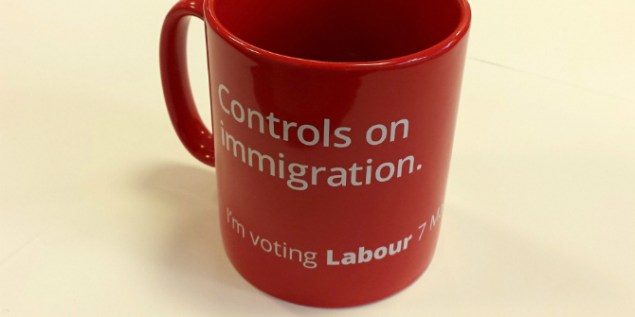
Labour - controls on immigration mug - general election 2015

The Left’s extreme attachment to the principle of free movement of people speaks volumes about whose interests they really serve

This, by trade unionist and Blue Labour activist Paul Embery, really gets to the heart of the modern metro-Left’s extremist stance on immigration and free movement of people within the EU, so divorced from the fears, priorities and aspirations of the Labour Party’s traditional working class base:

“Access to the single market and freedom of movement are inextricably linked, and it would be wrong… to put the economy anything other than first,’ Diane Abbott told The Andrew Marr Show on Sunday.

Leaving aside that there is, in fact, no inextricable link between access to the single market and free movement (she may be confusing access with membership), what is most striking is that Abbott’s argument here – that everything must be subordinated to economic imperatives, that policies must ultimately be judged not by their impact on society or quality of life but according to whether they boost GDP or make someone somewhere a fast buck – is the very embodiment of market-obsessed Thatcherism.

Abbott isn’t a Thatcherite, of course. Anything but. She is, on virtually all things, on the side of the angels in a head-to-head with Thatcher. Yet it is weird how, when it comes to the subject of immigration, she and so many others on the Left are willing to suddenly embrace the philosophy of a woman they have spent their lives opposing.

When did it become the norm for the Left to put the demands of the market above what was right for wider society? To allow the dictates of the balance sheet to trump all? To know the cost of everything but the value of nothing?

When Thatcher closed the mines and destroyed whole communities, didn’t she do so because she wasn’t prepared to ‘put the economy anything other than first’?

We can argue until the cows come home about whether particular policies or strategies do indeed bring economic advantages. But, for the Left especially, that should never be the sole consideration – and certainly not when those policies or strategies give rise to profound consequences for society.

It is certainly very telling when the Left pivots from disparaging corporations and viewing business as evil (their standard M.O.) to fawning over multinational corporations and anxiously tending to the every care and concern of their CEOs.

I noted this point over two years ago:

Isn’t it funny how the voice of big business – usually the object of scorn and hatred from the left – suddenly becomes wise and sagacious when the short term interests of the large corporations happen to coincide with those of the Labour Party?

Labour have been hammering “the corporations” relentlessly since losing power in 2010, accusing them of immoral (if not illegal) behaviour for such transgressions such as not paying enough tax, not paying employees enough money, paying employees too much money and a host of other sins. In Labour’s eyes, the words of a bank executive were valued beneath junk bond status – until now, when suddenly they have become far-sighted and wise AAA-rated pronouncements, just because they have come out in support of Britain remaining in the EU.

(In fact, I wonder whether the Left’s eagerness to talk about the economics of immigration is actually a classic piece of misdirection designed to sway conservative or swing voters; that in actual fact, they don’t give a hoot about the economy but rather want to ensure maximum immigration levels for cultural and political reasons that they dare not speak out loud. Why else would Diane Abbott of all people, hardly the sort of person who you would picture fretting about a multinational corporation’s labour costs and investment decisions, be speaking about economics, well outside her comfort zone?)

Embery is quite correct, though – the Labour Party did indeed once value additional metrics beyond raw GDP when evaluating public policy. This formed a large basis of their objection to Thatcherism, bordering on hatred. (While this blog remains convinced that the Thatcher reforms were entirely necessary and hugely beneficial on the balance, it must be acknowledged that too little was done to ameliorate the harsh impact of deindustrialisation on many Northern, Welsh and Scottish communities – the Left actually has a valid critique here, and a reasonably strong moral point).

Yet large elements of the Left, driven mad by Brexit, now seem willing to squander any moral high ground they may once have held by openly contradicting their former principled critique of the Thatcher government. According to the new post-Brexit leftist playbook, Thatcher was completely correct to sacrifice close-knit industrial communities in order to save the overall British economy. The needs of the many outweigh the needs of the few, after all, and if a few livelihoods have to be crushed in order that the City of London continues to prosper then so be it. These are strange sentiments indeed to hear emanating from people who usually won’t shut up about how kind and compassionate they are.

It continually astonishes me that so many leftists – the type of urban, metro-left progressive who wear their political opinions like this season’s latest fashion and consider themselves to be super woke and compassionate – can be so callously disregarding and downright heartless when it comes to acknowledging legitimate concerns about immigration from an important segment of their collective movement.

And yet it should not be so surprising. Britain’s membership of the European Union, and free movement of people specifically, has greatly benefited this class of people – the young creative professionals working in the city and the Labour MPs who share the same outlook. These people have an extremely consumerist outlook on politics, always asking what their country or government can do for them rather than dwelling on their own responsibilities and obligations as citizens.

They are sworn adherents to the politics of Me Me Me. And a super-streamlined process for moving to another European country for work is to their great benefit, while the fact that many of the people for whom they claim to speak probably do not have glittering international careers in their future barely seems to register. This isn’t compassion – it is pure selfishness.

Embery goes on to make this very point:

How depressing it has been to witness so many on the Left fall into the trap of defending free movement almost unconditionally, presenting it as some kind of advancement for working people. One wonders whether they have ever stopped to ask themselves why the multinationals are so enthusiastic about it. In this case, they are guilty of defending a system which, in the quest for greater profits, commodifies humanity, uproots families and fragments communities. When that happens, the bonds of solidarity, mutuality and community are weakened, and instead we get loneliness, alienation and atomisation. ‘Migrants are not to blame,’ the free movement defenders will often retort. Well, of course they aren’t. But that was never the argument. It’s as meaningless as saying ‘The unemployed are not to blame’ as a response to opposition to unemployment.

A few other brave souls, such as Richard Johnson, have dared to tentatively make the same criticism of the Left:

People’s concerns about immigration haven’t been invented out of thin air. The real experience of immigration in Britain since the EU expanded into Central and Eastern Europe has been one of rapid change, over which people have felt little control. As Geoff Evans and Jon Mellon have shown, the salience of people’s concerns about immigration has closely tracked actual levels of net migration since 2004. Areas which saw the fastest increases in migrant populations were more likely to vote Leave. In areas where the migrant population increased by 200 percent or more between 2001 and 2014, there was a 94 percent chance of voting Leave.

[..] To oppose new controls on immigration is to speak for, at best, the 4 percent who want higher immigration and the 17 percent who are satisfied with current levels. It is not a 48 percent strategy; it is a 21 percent strategy. Too many in Labour seem to want the party to become the Lib Dems of c2005 – one which appeals to liberal, university-educated, cosmopolitans in big cities and university towns. It’s a fine strategy, but only if you want to win 60 seats in Parliament.

All too often, working class people only now exist in the eyes of the Labour Party to be used as convenient props when a political attack on conservatives needs to be made. The progressive left will happily get all weepy about the impact of gentrification and “social cleansing” on working class people, but then treat those same people like lepers if they dare to offer any political ideas or opinions of their own – especially those relating to Brexit and immigration. And almost nobody calls them out for this rank hypocrisy.

Thanks to Paul Embery for having the courage to do so. We may come from opposing sides of the political spectrum, but Embery clearly believes strongly in self-determination and the idea that British democracy should be accountable first and foremost to British people, not transnational elites or Labour’s progressive clerisy.


Labour 2015 General Election Mug Control Immigration - Immigration Policy

Support Semi-Partisan Politics with a one-time or recurring donation:

Agree with this article? Violently disagree? Scroll down to leave a comment.

Follow Semi-Partisan Politics on TwitterFacebook and Medium.

The Left’s New Cunning Plan: Pretend To Support Brexit, Then Sabotage It Later

Brexit Saboteur - Remain - Establishment

Someone needs to tell the pro-EU centrist establishment that plotting an establishment usurpation of democracy in public isn’t the smartest strategy

You have to admire the chutzpah of the establishment centre-left right now. Last week they publicly advanced their super clever idea for Remainers to pretend to make peace with Brexit in order to regain credibility with the public (but only in order to sneakily backstab the whole enterprise a few years down the line).

No, seriously:

An increasing number of Remainers are attracted to an alternative strategy. After a lengthy transition, they argue, voters should be offered a choice between a new EU trade deal and re-entry under Article 49 of the Lisbon Treaty. By the mid-2020s, Remainers calculate, the risks of Brexit will be clearer and the original referendum will be a distant memory. The proviso, they add, is that the EU would have to allow the UK re-entry on its existing membership terms (rather than ending its opt-outs from the euro and the border-free Schengen Area).

Rather than publicly proposing this plan, MPs are wisely keeping their counsel. As they know, those who hope to overturn the Brexit result must first be seen to respect it.

Interesting. So let me get this straight:

Step 1: Pretend to accept the EU referendum result.

Step 2: Work furiously behind the scenes to overturn it in a few years’ time.

Step 3: Keep the whole dastardly plot a secret, so that nobody finds — oh, too late.

And today we see another confession from the Left, this time that they plan on pretending to be on board with the outdated and embarrassing ideas of patriotism and pride in Britain – because their stupid, backward working class base insist on clinging on to those foolish notions. Again, this was done in public.

Alessio Colonnelli over at LabourList begins by stating exactly what he thinks of the backward and dangerous concept of patriotism:

Brexit is a bout of extreme patriotism; an angry Pamplona bull you can’t really grab by the horns. You run away from it, then hide and watch it thunder past. Overwhelmed by it all, gasping for air, the only question left is: how to make the best out of this situation?

This is a promising start – not merely suggesting that the patriotism felt by a majority of Brits is irrational or a hankering for lost empire (the familiar trope from Remainers), but that it resembles an angry charging bull.

Colonnelli continues:

Having lost millions of voters in northern England, Wales and Scotland in between 2010 and 2016, the red party has started doing “patriotism” a bit more. It would be very worrying if it were not so. It’s a card one has to play, given the circumstances. Make no mistake: Machiavelli would pat you on the back for doing that. Whatever it takes, so his lesson goes. Besides, it’s not as if a dash of mild jingoism was ever alien to Labour throughout its history – Hugh Gaitskell was never enamoured with Europe either, after all.

The thing about Machiavelli, though, is that he didn’t advocate that politicians announce their dastardly plans in public before executing them, or make it painfully obvious that they are only pretending to get along with the target of their deception. He assumed that geopolitical actors would have a sufficient baseline of intelligence that pointing this out wasn’t necessary.

Not so for Alessio Colonnelli though, who tells us exactly what he thinks about patriotism, declares that he sees it as a form of “mild jingoism” in which the metro-left should nonetheless pretend to partake for the sole purpose of tricking Brexiteers, and then titters to himself that he is somehow pulling one over on those of us who campaigned and voted for Brexit on the grounds of democracy, sovereignty and patriotism.

He continues:

Occasionally, as we all know, the centre of politics shifts, and momentarily weaker outfits are forced to follow the changes – the zeitgeist. It happens everywhere. In Britain, the centre has moved towards the right over the past seven years (with Ukip’s crucial help), and you would expect social democratic organisations to do something to counter this while playing along to the new tune for a bit and sneakily carving out a new space.

How brave. How principled, to pretend to agree with a current political trend that you find objectionable rather than standing up to it with courage and conviction. First I am astonished that Colonnelli believes that the political centre of gravity has shifted to the right lately, given the fact that Theresa May completely blew the general election, Jeremy Corbyn surpassed expectations and the public seem to be signalling that they are getting tired of this whole austerity thing. But presumably he is talking exclusively about Brexit, which in his two-dimensional mind he sees as being a right-wing phenomenon rather than a democratic one.

In all seriousness, though, there is an interesting contrast between the way that the Left is responding to populist setbacks on either side of the Atlantic. In Britain, we do see the stirrings of this attempt to reach out to Brexiteers and others for whom patriotism is not an embarrassment (the Somewheres, to use David Goodhart’s terminology) – even if it is only a transparent ruse designed to trick them.

This almost certainly would not be the choice of most of the Parliamentary Labour Party, who hold Brexiteers in barely disguised contempt and who wear their fawning, unconditional love for the EU like a badge of honour. But Labour’s centrist MPs are constrained in what they can do because Jeremy Corbyn, their leader, is a eurosceptic at heart and set the tone in the 2017 manifesto that Labour would support Brexit.

In the United States, however, the Democratic Party – despite having thrown away the White House, a minority in Congress and severely weakened in state government – shows no signs of being ready for a rapprochement with the voters that their standard bearer Hillary Clinton once called “deplorable” and “irredeemable”. If anything, the American Left seems increasingly determined to publicly double down on the divisive identity politics messaging which alienates middle America and saw the Democrats lose the Rust Belt (with the exception of a few brave voices in the wilderness, like Mark Lilla).

Two different approaches – on one hand an attempt to understand voters and meet them where they are (even if only as part of an elaborate and cynical deception), and on the other hand a perplexing decision to furiously lash out at the electorate and double down on the same old failed identity politics strategy.

Neither populist insurgency is going tremendously well right now – in Britain, the Conservative government seems determined to enact the most ruinous and disorderly version of Brexit possible, while in America Donald Trump is simply being Donald Trump. This might represent fertile territory for a left-wing party which actually knew what it was doing, a movement which wasn’t consumed by blind fury at being ignored by the electorate and cast unexpectedly from power.

The question is, when will the Left cease their temper tantrum, grow up, regain their senses and try being effective opposition again? Because surely it will happen eventually, and that will be a bad day for the populists.


Remainer paints EU flag on her face - European Union - Brexit

Support Semi-Partisan Politics with a one-time or recurring donation:

Agree with this article? Violently disagree? Scroll down to leave a comment.

Follow Semi-Partisan Politics on TwitterFacebook and Medium.

Winter Is Coming For Conservatives Unless We Wake Up To The Socialist Threat

Momentum - socialist - online campaigning - videos social media

The hard Left is on the march, and all the anti-Corbyn negative ads in the world will not save an ideologically bankrupt Conservative Party which cannot clearly articulate an appealing and realistic vision for Britain

Look at this email, which pinged into the inboxes of Momentum members and supporters today.

The socialists are on manoeuvres. They haven’t wasted their summer sipping limoncello on the Amalfi Coast or plotting Oxford Union-style leadership coups with their Cabinet chums. No, having drawn blood from the Conservative Party and reduced the British prime minister to a laughing stock in the June general election, Momentum and other hard-left elements of the Labour Party sense that their long-awaited victory is nearly at hand. And they are training for the battle to come.

I wrote the other day about how the Conservative Party is fiddling while the country burns and Momentum creeps up behind them. This isn’t a laughing matter. Momentum are organising, deploying the latest in voter outreach strategies imported from the Bernie Sanders presidential campaign in America, and – shock, horror – daring to have conversations with traditionally Tory voters rather than engaging in fruitless navel-gazing introspection as the Conservative Party is currently doing.

Much was written during the election campaign about how much slicker and better financed the Tory online campaign was than its Labour counterpart. The Conservatives spent over £1 million on negative ads on Facebook alone. But it was not an effective campaign. It was soulless, clinical and relentlessly negative. All of which might have been forgivable if it had been properly targeted. But it wasn’t. Instead, CCHQ-produced messages designed to energise the existing Tory base were thrown relentlessly in the faces of swing voters, who did not respond to shrill warnings about Corbyn’s impending socialist takeover.

As with literally everything else about the Conservative Party, the online and voter outreach campaigns were hideously overcentralised and clearly managed by some of the same gormless nepotism beneficiaries who infested Theresa May’s pre-election Cabinet.

And still this might have been survivable if the Labour Party was as terminally dysfunctional as nearly every Westminster-based journalist was confidently reporting prior to the release of the exit poll. But it wasn’t, and still isn’t. Centrist doubters sat on much of their criticism for the duration of the campaign, and following the stronger-than-expected result came crawling meekly back to the leader they once openly undermined.

A vindicated Jeremy Corbyn is bolstered in his position. And the socialist hard-left of the Labour Party has benefited from this injection of confidence, immediately pivoting toward the next general election, where they believe they can dislodge this tired and pointless Tory government and turn the clock back to 1979.

I wrote the other day about how Momentum, Jeremy Corbyn’s praetorian guard, are holding group training sessions to teach their activists the latest in voter engagement techniques, with even doddery old folk less familiar with the latest technology being inducted into the organisation’s Slack group so that they can communicate in real-time on their smartphones. And now, today’s Momentum bulletin shows that the organisation also intends to revolutionise its social media campaign activities, potentially turning each of their members into a YouTuber capable of creating viral internet videos in support of the Labour Party.

Bear in mind: while the Tories vastly outspent Labour in the online campaign war, their dismal content failed to articulate any positive vision of conservatism and probably alienated half the people who viewed it. Meanwhile, Momentum’s videos were viewed 50 million times, and by a third of all the Facebook users in Britain. That level of penetration and engagement, on a shoestring budget, is incredible.

But you can’t just put it down to a superior grasp of online campaigning by the hard Left. People watched Momentum videos and kept coming back for more because they liked what they were seeing and hearing, or were at least open to the message. They did not respond warmly to the Conservatives, who engaged nearly exclusively in fearmongering and robotic negative messaging about their opponents, but many of them did respond to the side who took enough pride in their political values and had sufficient confidence and faith in those values to make a bold public case for More Socialism. And still Momentum is not satisfied. Still they seek to improve their messaging and hone their campaigning ability.

Meanwhile, what are we conservatives doing to retool ourselves to better fight the next general election? We are creating juvenile Jacob Rees-Mogg fanclubs on Facebook, engaging in pointless speculation about a cast of future leadership contenders all alike in blandness, and spending more time trying to ingratiate ourselves with the Tory party machine in constituency and at conference than figuring out what we should actually stand for, and how we can persuade others to stand with us.

Fellow conservatives, you need to wake up and hear this message while there is still time:

The hard, Corbynite Left are gunning for us. Hard.

Unlike conservatives, they have worked out exactly what their values are.

They are not ashamed of those values, and do not apologise for them.

They are hard at work translating those values into policy.

They are proud to proclaim those values and policies in messaging which appeals to the electorate, while we sound defensive and almost ashamed of our own policies and record.

They are convinced that they are on the right side of history, while we seem to have lost faith in the principles of free market capitalism and individual liberty.

They make an unashamedly moral case for their worldview while we seem content to sit at the back and pick holes in their sums, looking like soulless technocratic bean-counters.

They have a thriving youth movement. Ours was disbanded because of a bullying scandal, and because it was basically a giant Ponzi scheme with risible promises of future candidacies dangled in front of naive young activists.

Their activists dominate university campuses, their leftist dogma reigning supreme in the lecture hall and students’ union alike, while conservatives are an endangered minority who often face ostracisation or even official censure for speaking out.

They have a national party with strong and growing constituency branches, while we have a decaying national party with withering constituency branches, ruled from Westminster by proven mediocrities.

They have a party leader who can pack a 3000-seat theatre with excited and motivated activists, while we have a party leader who was too cowardly to even debate during the election campaign, and who is so robotic that she short-circuits if she goes out in the rain without an umbrella.

But here’s the good news – this is a fight that we can win.

Regressive leftist policies of redistribution and nationalisation have brought poverty and misery in their wake everywhere that they have been tried, while the free market that we support has lifted more people out of poverty, subsistence and despair than any other economic system devised by man. There is a reason that the Left has gone very quiet about Venezuela, once their favourite case study of socialism in action.

The traditional Left/Right political divide is being augmented (if not replaced) by the Anywheres vs Somewheres dichotomy (or “open vs closed”, to use the more patronising terms). The Labour Party is marching away from its working class base of Somewheres because their self-serving parliamentary caucus is in thrall to the self-entitled demands of other Anywheres like themselves. This gives us conservatives a huge opportunity to steal their votes – after all, we stand for country, community and patriotism, the very values that the metro-left openly despises.

But we will only win this fight if we get our heads out of the sand, stop manoeuvring for status or creating stupid memes on Facebook and learn instead to boldly and unapologetically articulate conservative principles in the public sphere, without apology. Not the craven, Labour-copying principles of Theresa May’s authoritarian government. Not the paternalistic statism of Nick Timothy and the Joseph Chamberlain afficionados. Rather, we need to re-embrace the timeless principles of individual liberty, patriotism, respect for institutions, strong national defence and flourishing civic society over paternalist statism, which always come through for us when we actually have the confidence to articulate them.

And we don’t have much time. In this unpredictable age, with no majority and a number of difficult things to push through Parliament, Theresa May’s government could conceivably be toppled at any moment. Momentum and the hard Left is ready for the fight. We are not.

To use a topical Game of Thrones analogy, when the White Walkers are massing and threatening to breach the wall, it’s no good squabbling over which lacklustre, uncharismatic Cabinet minister should next occupy the Iron Throne. Now is the time to find some ideological dragonglass and fashion it into a viable electoral weapon before we are swept away by the Army of the Socialist Undead and Britain succumbs to another long winter of discontent.

Momentum have given us fair warning. They are not being secretive about their strategy and tactics. So we conservatives will have only ourselves to blame if we find ourselves undone by them.


White Walkers - Game of Thrones

Support Semi-Partisan Politics with a one-time or recurring donation:

Agree with this article? Violently disagree? Scroll down to leave a comment.

Follow Semi-Partisan Politics on TwitterFacebook and Medium.