‘Tory Brexit’ Hysteria: Leftist Remainers Double Down Against Democracy

John McDonnell Tory Brexit

“Maybe Brexit one day, but not under a Tory government” – the Left’s stunning disregard for democracy makes a mockery of Jeremy Corbyn’s New Politics

The refrain is already familiar to us: But if we leave the EU, the current Conservative government might do the kind of things that they pledge in their manifestos! The only way to stop the democratically elected Conservative government from actually governing conservatively is to stay in the European Union, where it doesn’t matter which party holds power in Westminster!

One assumes that the Remain campaign have done some focus group testing on this sentiment and found it to be effective, but to many people this will sound like a chilling and cavalier disregard for democracy rather than an expression of the supposed best traditions and instincts of the Left.

And yet leftist Remainers are doubling down on this line of attack, trying to paint Brexit not simply as a matter of whether or not to leave the European Union, but as a purely Tory initiative, no doubt part of the Evil Tory government’s heartless, genocidal campaign against the sick and disabled.

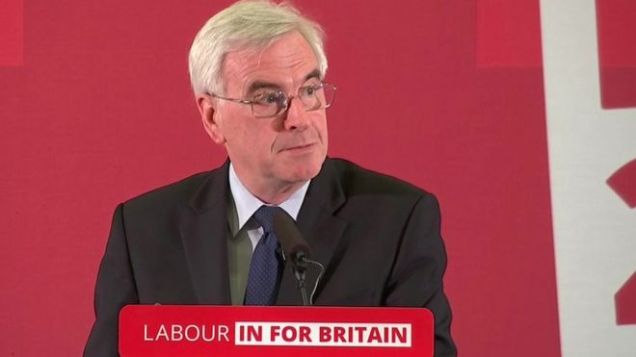
This attempt to sully the Brexiteers’ campaign to reclaim democracy as a purely partisan Conservative Party initiative is summed up in a new phrase being trialled by Labour’s John McDonnell: “Tory Brexit”.

Stephen Bush reports in the New Statesman:

John McDonnell has a new catchphrase: “Tory Brexit”.

It may sound uncomfortably close to the name of a new character in Star Wars but it’s what McDonnell and his team believe is the best route to turn Labour voters out for a Remain vote in the coming referendum.

Shadow ministers and Labour MPs are increasingly worried that Labour voters don’t know what the party’s stance on the referendum is – and even more troublingly, they don’t much care. That much of the media has covered the contest largely through the prism of the Conservative succession has only made matters worse. The government’s message about the dangers of Brexit, too, are calibrated towards the concerns of Tory voters: house prices, security, and the economy.

Tony Benn must be turning in his grave. For Benn was a Labour politician of principle and patriotism, one who realised that the gnawing short-term fear that the opposing party might get to implement some of their own policies when in government is not sufficient reason to neuter Westminster altogether by making it subordinate to supranational EU institutions.

By contrast, the leading lights in today’s Labour Party – including the Corbynites, who in many cases have been so sanctimonious about how the are the sole custodians of political principle, unlike those sellout New Labour types – couldn’t give a damn about democracy. They really couldn’t. And like John McDonnell, they openly boast about a Remain vote being key to thwarting the supposed actions of a democratically elected British government.

Bush continues:

It also has the added bonus of keeping open the idea that Brexit under a leftwing government mightn’t always be the worst thing in the world, which, depending on your perspective, either defangs the minority of Labour politicians who are pro-Brexit, or allows McDonnell and Jeremy Corbyn  to keep the party united while not closing the door on supporting a Leave vote at a later date. Either way, it’s canny politics.

Stephen Bush might call it canny politics. Anybody who really cares about democracy would call it appalling, craven political posturing bordering on constitutional vandalism – being willing to “switch sides” on an existential question like Britain’s future in the EU based purely on which party is currently enjoying a five year term in government.

It is also base scaremongering of the worst sort. In the event of a Brexit vote, the Conservative government which enters into secession negotiations with the EU will – regardless of who leads it – be comprised of many Remainers, if not a majority. And in order to get the terms of that renegotiation through Parliament, the deal must also attract a sufficient number of Remainers, including some in the Labour Party for the figures to add up. Immediately this means that all of the most apocalyptic Brexit scenarios being bandied about the media by disingenuous Remainers are out the window. And what remain will be a much more easily negotiated “off the shelf” interim solution which maintains political and economic stability – in other words, exit to EFTA in order to continue access to the EEA, also known as the Norway Option.

The trouble for Remainers is that this form of Brexit is incredibly benign. It ensures Britain’s continued unimpeded access to the Single Market, preserves freedom of movement (with a better “emergency brake” on immigration than is available to Britain as an EU member) and ensures maximum stability in every area, while removing us entirely from the antidemocratic, authoritarian political union of which most Britons want no part.

If this most likely form of Brexit was properly understood by the public (and Vote Leave shoulder the blame for failing to grasp the importance of adopting such a plan upfront), the Remainers’ case would be utterly blown apart. All of their apocalyptic doomsday scenarios would be invalidated, and they would be forced to fall back on their “real” arguments for wanting to remain in the EU – because they do not believe that Britain, the fifth largest economy and second most powerful nation on Earth, can prosper outside of a political union with our neighbours. Or because they genuinely feel more European than British, and are terrified of being torn away from what they have come to see as their true country.

But fighting a campaign purely based on hatred and pessimism about Britain and/or wanting everyone to be European citizens first and foremost would be toxic to many voters, and so is hardly a very solid path to 50%+1 of the vote in the EU referendum. Thus Remain have engaged in a constant campaign of fear, uncertainty and doubt (FUD) from the beginning, always assuming the most unlikely and traumatic of Brexit modes in their “analysis”, and now by trying to portray supporting Brexit as essentially voting for a turbo-charged Tory government.

These are the lies and evasions of a side which has lost the core argument on democracy and self-determination, which cannot state its real reasons for wanting to stay in the EU for fear of alienating the voters, and which has consequently decided to pummel the electorate into acquiescence by subjecting them to wall-to-wall scaremongering.

The “Tory Brexit” line may gain some traction, particularly among the credulous and those with a particularly flimsy grasp of how democracy is supposed to work. But those who claimed to represent the New Politics, the kinder and more honest way of conducting oneself in public life, will have their halos irrevocably tarnished by their participation in this grubby pro-EU campaign of fear, distortion and deceit.


European Union - United Kingdom - Britain - Flags

Top Image: BBC

Agree with this article? Violently disagree? Scroll down to leave a comment.

Follow Semi-Partisan Politics on TwitterFacebook and Medium.

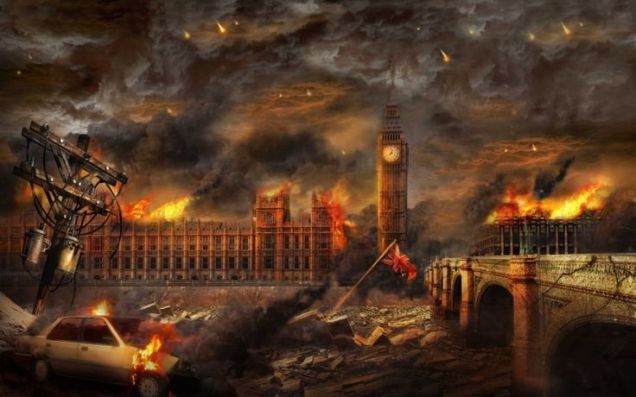
Vote Remain, Or London Gets It

London - Brexit - Apocalypse - EU Referendum - European Union

Fiona Twycross AM is an idiot

The latest piece of silly, hysterical scaremongering to emerge from the positive vision-challenged Remain campaign is the idea that London will somehow wither up and become a ghost town if we leave the European Union.

Normally such idiocy wouldn’t merit a response, but it is now being advanced by some fairly serious people, including elected London Assembly members, such as Fiona Twycross AM, writing in Left Foot Forward:

Londoners are also renowned for their openness, and it’s the welcome that visitors receive that draws so many people in.

It’s that latter point that is so important to consider when we discuss the ramifications of Brexit. If Britain choses to leave the EU next month it would effectively signal that we are pulling up the drawbridge and that London is closed for business.

Not only would this diminish our great city, it would discourage the tourists who contribute so much to our economy.

Yes. Because choosing to no longer be part of an ever-tightening political union of European countries is exactly the same thing as “pulling up the drawbridge” and turning our back on the world.

When we consider the major cities of other countries which foolishly failed to dissolve themselves into political union with their neighbours, naturally they are all complete fortresses, utterly hostile to would-be visitors. The reason that Canberra and Wellington are not top of the list of tourism cities is of course entirely because Australia and New Zealand stubbornly cling to the idea of being separate, independent countries. New York City, Toronto, Chicago and Los Angeles are all ghost towns because the governments of America and Canada failed to get together and realise that the only way to attract tourists is to form a political Union of the Americas.

But Fiona Twycross has expert testimony to back up her assertion, from the mouth of London First Tourism Director Matt Hill who says:

Cutting ourselves off from Europe is not in the interests of the tourism industry.

Any new barriers which add complexity and expense to holidaying or doing business in London will put at risk investment in the capital’s attractions, flagship stores and hospitality venues.

Because in the event of a Brexit vote, the government’s first actions will be to blockade the Channel Tunnel and blow up the runways at all of Britain’s major airports in order to most effectively sever our ties with other countries. Because that’s what Brexiteers want. Sure.

Twycross then has the nerve to say “this is not about scaremongering”. No, of course not, Fiona. You’re not trying to worry anybody. You’re just saying that if we don’t want supranational EU institutions to have primacy over our own parliament and supreme court, the world will end.

She continues:

According to the capital’s promotion agency, London and Partners, in 2014 the capital’s tourism industry saw 17.4 million visitors. Their contribution to London’s economy stood at a huge £11.8 billion.

But perhaps most significantly, of these visitors 11.5 million (66 per cent of all tourists) originated in Europe, which shows just how important continental tourists are to London’s tourist economy.

Brexit could therefore mean a devastating loss of billions of pounds and put at risk thousands of jobs.

But why? Twycross doesn’t explain. Quite why any tourist would give a damn whether Britain remains inside a political union with 27 other countries or acts as an independent country like the United States, Canada or Australia is never explained. It is just disingenuously presented as received wisdom in the hope that nobody will notice how stupid it sounds.

If Remain supporters are going to continue claiming that leaving a political union is the same as “pulling up the drawbridge” and liable to result in billions of lost tourism revenue, then let’s see some figures to back it up. Not cooked up HM Treasury statistics which only look at apocalyptic scenarios while ignoring the most likely Brexit option (a controlled, safe exit to EFTA/EEA membership, retaining free movement of people and single market access), but a genuine, unbiased analysis.

Of course there will be none. Because Fiona Twycross, like too many others on the Remain side, is too scared to admit why she really wants Britain to stay in the European Union (because to do so would be politically toxic). And when the Remain campaign cannot be honest about why they love the EU so much, they instead resort to evasions, distractions and scaremongering to achieve their desired result without ever making the passionate case for Britain surrendering what remains of our independence and allowing ourselves to be fully dissolved into the common European state.

It’s a shame that Fiona Twycross and others in the Remain campaign lack the political courage to tell the truth about why they are so desperate for Britain to remain in the European Union. Not least because all of the fake reasons they are scrambling to come up with make them look really, really stupid.


Postscript: But full marks to Twycross for her sneaky, disingenous attempt to portray worrying about London’s status as the world’s top tourism destination as the “patriotic” thing, but worrying about Britain’s independence as a sovereign country as reckless and irresponsible. That takes some nerve.


European Union - United Kingdom - Britain - Flags

Agree with this article? Violently disagree? Scroll down to leave a comment.

Follow Semi-Partisan Politics on TwitterFacebook and Medium.

The Moral And Intellectual Cowardice Of The Pro-EU Left

Ken Loach - Another Europe Is Possible - EU Referendum

The modern Left loves the EU because having lost the public argument for socialist policies, they see in Brussels their last and best hope of imposing their left-wing ideology on an unwilling population

Tom Slater has an excellent piece in Spiked, in which he takes to task all of the big name lefties – some of whom previously toyed with supporting Brexit as they watched the EU’s antidemocratic behaviour with growing horror – who are now supporting the Remain campaign, and thus betraying democracy when it truly matters.

Slater writes:

The last few prominent Eurosceptics on the left have started to peel away. They’ve been confronted with a once-in-a-generation opportunity to smash power, to strike out for democracy and to put the future of European politics firmly in the hands of the people, rather than a faceless, byzantine bureaucracy. And they’ve bottled it.

First there’s Yanis Varoufakis, the flash stepdad of European leftism and the former finance minister of ailing Greece. This is a man who has experienced the tyranny of the Brussels set firsthand. His modest proposals for rescuing debt-laden Greece from EU-enforced austerity were ignored. ‘Elections’, he was told by German finance minister Wolfgang Schäuble, ‘change nothing’. He quit government in protest as his Syriza comrade Alexis Tsipras signed an agreement that would once again shackle Greece to Troika diktat. What is the self-styled ‘erratic Marxist’ up to now? He’s touring the UK, telling Brits to say ‘Oxi’ to Brexit so that we can ‘reform the EU from within’.

Then there’s Owen Jones, the Corbyn choir boy who has followed the Labour leader’s transformation from Bennite Eurosceptic to apologetic Remainer. Last summer Jones called for the left to campaign for Brexit. After the horrors of Greece, he wrote, it’s time to ‘reclaim the Eurosceptic cause’. Now, just 10 months on, he’s joining Varoufakis on the campaign trail. His flirtation with principle over, he wants to ‘unite with people across the continent to build a democratic, workers’ Europe’. How propping up a democracy-thwarting institution puts you in line with the little guy is beyond me. Not least when said institution has effectively abolished workers’ rights in austerity-battered countries like Greece.

But perhaps the most glaring retreat of them all has come from Paul Mason. The former Channel 4 economics editor and ‘radical social democrat’ actually had the brass to pen an article titled ‘The left-wing case for Brexit (one day)’. One day. Those two, trembly words sum up the sentiment of these fair-weather Eurosceptics. Yes, yes, democracy – one day. Not now. Especially when, as Mason sees it, a Brexit would allow Michael Gove and Boris Johnson to ‘turn Britain into a neoliberal fantasy island’. He’s in favour of democracy, you see, just not when the pesky demos elects a government he doesn’t like. This is hypocrisy dressed up as strategic nous.

Tom Slater is absolutely correct to denounce each and every one of these reversals as a shameful failure of courage. His piece is entitled “The Progressives Afraid Of Change”, and regrettably that is exactly what we see from the supposedly ideologically pure Corbynite Left. Yet after having grown in prominence and power primarily by denouncing the compromises and betrayals of the centre-left, these virtue-signalling true believers are now selling out British democracy in exactly the same way, proving that they are no better than the Blairite New Labour government which they so despise.

This blog has also taken each of the prominent leftists identified by Tom Slater to task for their utter failure of courage and vision. My critiques of Owen Jones are here, herehere and here, Yanis Varoufakis here and Paul Mason here.

Slater continues:

In fact, it’s worse than that. It’s often said that the shift in left-wing attitudes towards the EU over the past few decades has been the result of pure political contingency. When, in the 1970s and 80s, the EU was seen as an avowedly capitalist project, Labourites and trade unionists took arms against it. Now that it’s been given a social-democratic lick of paint, replete with talk of workers’ rights and free movement, it gets the nod. But there’s something even more sickening going on here. These turncoat Remainers, these radicals for the status quo, don’t just bristle at the turn of public opinion, on economics or migration – they’re scared of it. Their Brexit-phobia is really a fear of the demos itself.

You see this in their panic-stricken talk of the furies Brexit might unleash. ‘We don’t know… how the plebeian end of the Leave campaign will react if they lose. My instinct says: badly’, writes Mason. Varoufakis, meanwhile, is even more pessimistic. Only fascists and racists, he says, will profit from the demise of the EU. A Brexit now would mean ‘anti-migrant racism, pandered to by the political establishment for decades’, writes a commentator in the New Statesman. There is constant talk of chaos. Democracy is seen not only as disagreeable, but as dangerous. The left, once intent on stirring the passions of the people, now wants to keep a lid on them at all costs.

This is why you shouldn’t take the left appeals to ‘reforming the EU from within’ seriously. Not only because Cameron’s paltry renegotiation revealed an EU incapable of making even minor concessions. Not only because the only salient proposal Varoufakis’s Democracy In Europe Movement has managed to come up with is livestreaming council meetings. But because the cowardice of the left in the face of Brexit is bred of the very same fear of an unshackled demos that forged the European Union in the first place.

Devastating, and utterly correct. For the European Union itself was deliberately designed to muffle and constraint the voices of national electorates, replacing them with the cool, cerebral and detached government of a supranational European elite, which is exactly what the pro-EU Left now want – a tool to suppress what they see as the “dangerous” authentic voices of the people.

Slater concludes:

The modern left’s detachment from the masses, its sneering distaste for our habits and desires, has fostered a profound fear of change itself. Their paranoia about where unleashed public passions might flow has led them to cling to the status quo for dear life. These are progressives terrified of change – and terrified of us. Faced with the opportunity to demolish an anti-democratic order, they are standing athwart, yelling Stop. History will not be kind to them.

But it is worse than a mere lack of vision and fear of change. Most offensive of all is the grubby desire of the pro-EU left to bypass democracy altogether, to give up on trying to persuade national electorates of the value of left wing policies and simply impose them from the EU’s unaccountable, supranational higher level of government.

As this blog recently put it:

The Left look around and see free markets accepted and delivering prosperity in nearly every country, including those who have sworn eternal opposition to capitalism. And despite the Corbynite takeover of the Labour Party in Britain, there is still no evidence of a groundswell of public longing for 1970s style statist economic policies to be brought out of mothballs. What chance, then, does the Left have to bring more of the economy under state control other than the extreme long shot of seizing control of Europe’s supranational layer of government on the back of the supposed European left-wing popular movement (DiEM25) talked up by Varoufakis and Jones?

As Varoufakis admits, “the retreat to the nation state is never going to benefit the Left”. The Left can only advance their cause by sidestepping nation states altogether, which means taking control of the EU, where national legislatures are bypassed and unpopular and even hated policies can be imposed on the peoples of Europe with very limited opportunity for effective resistance (see Greece). This may seem laughably unrealistic – and it is. But it is the Left’s only remaining hope, and so they cling stubbornly to their delusion even if it means betraying democracy and supporting the EU in its current form (and with its current policies) until the time comes for their popular revolution.

And that, to my mind at least, is the most disappointing thing of all. Even pugnacious, articulate left-wingers like Owen Jones and Paul Mason are unwilling to achieve their desired ends by first winning the public debate and then winning a national election. Their commitment to democracy is so feeble that they would rather see their preferred policies foisted on an unwilling British people from above by the European Union rather than do the hard work of winning support for those policies among the British electorate.

Of course, they don’t explain it this way themselves. Talk to Owen Jones and Paul Mason and you’ll get an earful about their deep concern for workers’ rights or some other emotive issue. But when push comes to shove, they would rather live in a country where their minority opinions were forced on the majority by Brussels than do the hard work of convincing voters of the necessity for left-wing policies.

And the Left are perfectly entitled to that opinion. They are entitled to advocate for Britain to remain in the European Union because they do not trust the British electorate to support what they see as essential policies at the ballot box. They can do all that. But they cannot any longer call themselves supporters of democracy.


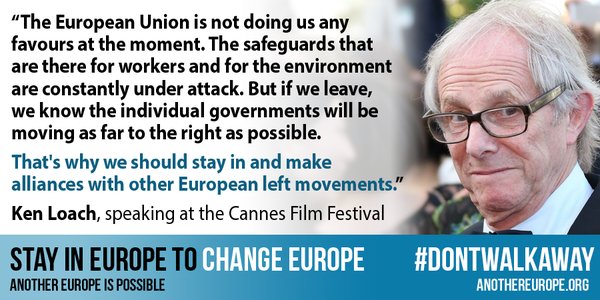
Postscript: Look at the image at the top of this article, showing a quote by filmmaker Ken Loach, in which he openly boasts that the chief advantage of the European Union is that it thwarts the will of democratically elected national governments. This is the toxic, antidemocratic position which left wing favourites like Owen Jones and Paul Mason have decided to embrace. Shame on them.


European Union - United Kingdom - Britain - Flags

Agree with this article? Violently disagree? Scroll down to leave a comment.

Follow Semi-Partisan Politics on TwitterFacebook and Medium.

Rowan Williams: Thinking Naively, Rigidly And Uncreatively About Europe

Rowan Williams - Archbishop of Canterbury - EU Referendum - European Union - Brexit

Et tu, Archiepiscopus?

Another day brings more disingenuous, pseudo-Christian piffle over at Reimagining Europe, this time from the former Archbishop of Canterbury, Dr. Rowan Williams (and his ghost/speechwriter Philip Waters).

Waters/Williams write, in a transcribed lecture humorously entitled “Thinking Creatively About Europe”:

Europe also has its Muslim and Jewish legacies. Christianity, Islam and Judaism are a family quarrel rather than a clash of civilisations. We need to remember that Medieval Catholic theology was crucially informed by influx from the Muslim and Jewish peripheries.

The mix of legacies means that Europe has had a history of at best conversation and at worst confrontation about authority: who should we listen to, who should we obey? In debate over the rights of state and church the insight persists that there are two schemes of reference, the political and the spiritual: they overlap but they are not the same. It is not necessary to go into detail about the differences between Eastern and Western Europe, or between Catholic and Protestant: the  above generalisations hold equally for all of them. To take one example, John Calvin’s ideas on the  relationship between realms of power are more like those of Thomas Aquinas than they are like those of Martin Luther.

One of the problems we face today is the idea of the clash of civilisations, and the suggestion that one of those civilisations is Western democracy. This idea forgets the ineractions throughout history which have created that very Western democracy. Without an understanding of history, the idea of the superiority of Western democracy seems to be self-evident.

‘Over There’ dwell peoples who do not know the self-evident benefits of democracy; and the reason usually given is that they are religious. One of the effects of modernity is strangely enough to drive people to radicalism. ISIS is an example of how the introduction of Western values in the form of confrontation leads to simplification of a heritage, in this case Islamic. There is no place for approaching any modern problems from a standpoint of triumphalism. What we can say is that a series of providential insights have been given within Europe which are to be shared with other parts of the world.

Wait for it…

All this is relevant for a consideration of Britain and Europe. There is no way we can talk about British values which are opposed to European or indeed wider values. My fear is that if Britain steps back from Europe it will be stepping back from its own heritage. In Britain we have not done too badly in sharing with and learning from others. In talking in isolationist terms we run the risk of nailing our colours to a myth.

In other words: religion, religion, religion, religion…political union!, with absolutely no attempt to draw any link of necessity between the two.

Whoever said anything about “step[ping] back from Europe”, as Williams disingenuously attempts to characterise the anti-EU stance? On the contrary, Brexit is an opportunity for Britain to re-engage with a world which has moved on since the post-war days of giant regional blocs facing off against one another, as any thinking Brexiteer will tell you. And yet the former Archbishop of Canterbury seems intent on defeating a straw man argument, that of the stereotypical isolationist little Englander who wants to pull up the drawbridge, cease all cooperation with our neighbours and turn the clock back to 1955.

This says a lot about Rowan Williams, but nothing good. It shows that on this most existential of questions he is fundamentally intellectually uncurious. Rather than seeking to understand why so many of his countrymen want to leave a dysfunctional and failing political union, he retreats into the comfort zone occupied by so many of his brethren in the centre-left, middle class clerisy, in which pro-EU types are enlightened and progressive while eurosceptics are somehow backward and reactionary.

We see it again when Williams claims that “we have not done too badly in sharing with and learning from others”. Well, who in blazes ever suggested otherwise? Our quarrel with the European Union is not that it encourages sharing and learning. Our quarrel is that the EU is a One Size Doesn’t Fit All embryonic supra-national government of Europe, unreplicated in any other corner of the globe, which seeks to gradually usurp the traditional powers and competencies of its member states in order to form an ever-closer union whose ultimate destination can only be a United States of Europe.

I don’t like to speak of a former Archbishop of Canterbury in uncharitable terms, but at this point it is genuinely difficult to tell whether he is being ignorant or deliberately deceptive – whether he genuinely doesn’t understand that the EU is not just about friendship and biscuits and apple pie, or whether he knows full well but is pretending that the EU is just “sharing and learning” in order to hoodwink others.

It is particularly concerning that Rowan Williams – an accomplished man with a fine mind – succumbs to the same woolly misconception as many of his peers. The misconception is not only that the explicitly political, integrationist construct known as the EU is a humble and unambitious organisation set up merely to foster “sharing and learning”, but that sharing, learning and close neighbourly cooperation are somehow impossible outside the auspices of an ever-tightening political union. Never mind that countries outside of Europe cooperate closely on all manner of issues every single day without feeling the need to dissolve themselves into a single political entity – Rowan Williams, like so many of his peers, is absolutely determined to project his false, naive vision of the humble old EU onto an organisation with altogether more far-reaching ambitions.

Yet when it comes to the history and future trajectory of the EU, there is no excuse for ignorance, especially not from one as well-connected to the establishment as a former Archbishop of Canterbury. Assuming he is operating through ignorance rather than malevolence, Rowan Williams has still had every opportunity to learn and comprehend the history of the movement for political union in Europe which has led to the contemporary EU. Magdalene College Oxford, where Williams now serves as Master, probably has quite a decent library. He might consider checking out a few books on the subject if the facts still elude him.

With less than a month to go, it is truly concerning that so many prominent Christian leaders are openly agitating for a Remain vote in the EU referendum when there is yet to be produced a clear, intellectually grounded Christian case for Remain – in other words, anything based on something more than warm leftist feelings and fuzzy ecumenism.

With recent high-profile interventions on austerity and social policy, the church has a record of unapologetic political activism – rather too naive and left-wing for this blog’s taste, but generally coming from a place of good intentions. Even when it has been wrong, the church has been able to plausibly claim to have the best interests of the poor and the voiceless in mind. Not so now, not with the EU question.

By failing to take a stand against remote and unwanted supranational government, the bishops – whether they declare it openly or not – are coming down firmly on the side of Europe’s elites, and not the people. They are complicit in supporting the continued imposition, largely by stealth, of a 1950s model of unaccountable, supranational government leading inexorably to ever-closer political union – a model which has already brought untold economic suffering to southern Europe and a migration crisis across the entire continent, and which promises only further unrest as the decisions taken by unelected European leaders diverge ever more widely from the interests of ordinary people.

The pro-EU bishops are certainly entitled to their position. But it is a very strange choice, coming down so fervently against the side of democracy. And a choice which many of them may struggle to explain in the near future.


Christianity - Europe - EU - Brexit

Top Image: Telegraph

Support Semi-Partisan Politics with a one-time or recurring donation:

Agree with this article? Violently disagree? Scroll down to leave a comment.

Follow Semi-Partisan Politics on TwitterFacebook and Medium.

The British Media’s Shameful Coverage Of The EU Referendum

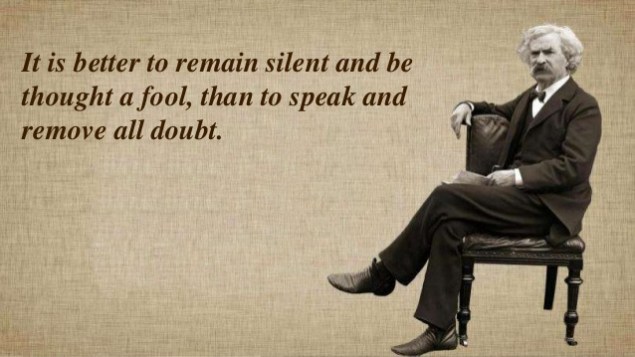
Mark Twain - It is better to remain silent and be thought a fool, than to speak and remove all doubt

Of the many disappointments in this EU referendum campaign, the utter failure of the British press to discharge its basic professional duty stings worst of all

A well-functioning, free press is essential to the health of a democracy.

Rigorous journalism, conducted with integrity, is the lifeblood of a vigilant, engaged citizenry – without it, the people cannot make informed decisions and corruption, incompetence and decay quickly begin to corrode good government.

The current EU referendum should therefore be a great test for our nation’s media elite, and reveal whether or not the British press are fulfilling their essential function. After all, here is an absolutely existential question facing the nation – do we stay in the European Union or do we leave? There are many interweaving areas to consider – trade, foreign policy, defence, national security, trade, immigration, the economy. And there is the temporal aspect – what is awkward or uncertain in the short term may have huge benefits in the long run, and vice versa. In every respect, this is a big, meaty issue for Britain’s finest journalistic minds to wrap their heads around.

Of course, no one journalist or publication can perfectly embody all of the great journalistic characteristics of fearlessness, impartiality, scepticism and rational enquiry all the time. That much is not possible, nor expected. We are all human beings and we all have motivations and core beliefs which give us blind spots or encourage us to take mental shortcuts. That’s normal. But at the macro level, if our democracy were in good shape, by now we should see an accumulation of evidence of rigorous enquiry by the media class. Even in a media market where newspapers and websites make no claim of impartiality we should still see evidence of lies being exposed, truth being searched out and upheld, and assertions constantly questioned.

This holds true even when the quality of the discourse itself – in this case driven by the two official campaigns on each side of the EU referendum – is poor, as is very much the case with the fearmongering establishment Remain campaign and the unhinged, loose cannon Vote Leave. Bad ideas are bad ideas and false statements are false statements, whether they come from the shouty man on Twitter or an oleaginous SW1 spokesperson. Therefore, bearing the imprimatur of establishment authority should make one more open to questioning, not less, and there should always be a healthy scepticism of authority and social status.

So are we currently passing the test? On this most important of issues, has the British media been doing its job properly?

It hardly needs stating that the answer is a resounding “no”. In fact, the quality of coverage has fallen incredibly short of the standard we should expect from a healthy democracy – but then, our democracy is hardly healthy. Or particularly democratic. Tthis is not a criticism of any one journalist or publication – though there are several whose deserve full and individual criticism for their groupthink, confirmation bias and craven deference to power. But for the purposes of this blog post we will focus our attention on the overall national media output.

And the best way to see how the media have fallen short in their EU referendum coverage is through their utter lack of curiosity about a plan for Brexit. This is particularly odd given the fact that the SNP government’s weighty tome outlining a plan for Scottish independence provided such rich pickings for journalists during the 2014 referendum. As time dragged on and on, one might have reasonably expected calls in the press for the release of a Brexit plan to have reached a loud crescendo, eventually forcing the hand of the official campaign.

But no – when it was high handedly decided that having an actual plan for what to do after the referendum would be stupid because it would (shock horror) invite scrutiny, there was barely a peep from the media. Vote Leave were allowed to get away with fighting this most rare and consequential campaign without so much as a list of bullet points scribbled on the back of a napkin. Yet you will struggle to find one television or newspaper interview where senior Vote Leave figures (or Leave.EU figures prior to the designation decision) were put on the spot about their lack of an agreed plan.

And yet a Brexit plan exists, and has done for several years. It’s called Flexcit and is hosted at the eureferendum.com blog authored by Dr. Richard North, one of Britain’s foremost authorities on the history and workings of the European Union. Now, it may not bear the stamp of the Westminster bubble, but it was at one point being considered for adoption by Leave.EU (who shamefully decided not to do so because it detracted from the simplistic anti-immigration, economically illiterate message which is working such wonders for the Leave campaign at the moment).

And yet does this warrant the slightest attention from the Westminster media? Apparently not. Besides a vaguely disparaging article in the Herald Scotland, you won’t find a single mention of it by name in a major UK newspaper, let alone on television. Those columnists and pundits who know of Flexcit (and thanks to many ordinary supporters and a large web footprint it is hard to miss in a Google search) and support the plan are forced to make murky allusions to it, because openly mentioning the one citizen-authored plan for leaving the European Union would mean the torpedoing of that article before it ever saw the light of day.

This is a plan which was originally drawn up as an entry to an official competition organised by the IEA, and which has now been downloaded nearly 100,000 times. It isn’t some child’s finger-painting stuck lovingly to the fridge door with a magnet – it is a serious piece of work. And yet even as Britain debates the merits of leaving or staying in the EU and the process by which Brexit might occur, apparently no “household name” Westminster journalist has considered it worthwhile to write about the only comprehensive Brexit plan in existence.

Why the media blackout of Flexcit? One can only speculate – but none of those speculations lead to a very pleasing conclusion. Some journalists and publications overlooking Flexcit might be accepted as a very odd act of omission. The entire Westminster media stubbornly refusing to to mention Flexcit while hanging on every word uttered by Boris Johnson begins to look like a conspiracy of silence. Particularly since The Leave Alliance – the network of Brexit campaigners united under the Flexcit banner (this blog is a member) – has twice met right under their noses in prestigious central London locations.
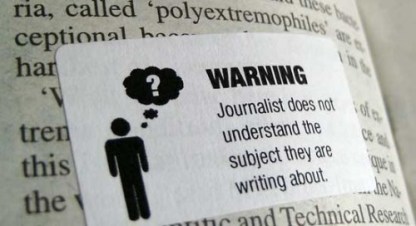
Warning - Journalist does not understand the subject they are writing about

In fact, if you want to see a serious mention of Flexcit and the staged withdrawal from the EU advocated by the Flexcit plan, one has to look in the American media – Andrew Stuttaford has twice written about Flexcit while covering the EU referendum for the prestigious conservative journal National Review, meaning that American readers are perversely better informed about the most comprehensive (and likely to be adopted) plan for leaving the European Union than most British people.

Take a moment to let that sink in. Britain is having a great national debate about whether and how to leave the European Union. There exists a comprehensive plan for doing so, which is particularly relevant now because one of the Remain campaign’s chief attack lines is that Leave supporters don’t know what Brexit looks like. But if you want to read about this plan, you will have to rely either on the American media or the small but dedicated army of citizen journalists and bloggers who promote it, because nobody in the British media cares to report on something of material significance to the campaign.

You don’t need to be a fully paid-up Brexiteer to realise that there is something profoundly wrong with this picture. Surely, if there exists a properly thought-out plan for how Brexit might work, it would be in the public interest to mention this plan? Maybe a couple of SW1’s finest journalists might take a few hours out of their busy day to skim the 400 pages and form an opinion, heck, even contact the author with a few questions. But apparently not. If it wasn’t dribbled into a microphone by Boris Johnson – a man who had not even decided that he wanted Britain to leave the European Union a few short months ago – the British media don’t seem to think it is worth covering.

Stuttaford’s latest National Review piece says what the British media will not:

David Cameron’s predictably dishonest ‘Project Fear’ is working predictably well.

The best way to counter it is to show that Brexit is, economically speaking, manageable, and the best way to manage it (there are alternatives) is by joining the European Economic Area—doing a Norway, to use the shorthand. It’s dull, and that’s the point: Dull is reassuring. Signing up for the EEA also recognizes the reality that, after decades of British entanglement with Brussels, leaving the EU is a process, not one bold break, however much romantics might wish otherwise.

Over at EU Referendum, Richard North has, as I have mentioned before in this Corner, been making this point for years (his EEA-based ‘Flexcit’ plan remains—for anyone who wants to get into the details—an essential read).

Before concluding:

I have always thought that Brexiteers would be the underdogs in this referendum. That’s how it has turned out to be, but if those who want out of the EU want to have a shot of winning this thing, they have to show that they have come to grips with the ‘how’ as well as the ‘why’ of Brexit. Their version of ‘how’ will not necessarily be definitive, but the fact that it is being articulated will go quite some way to reassuring an understandably nervous electorate that its concerns are being thought through.

[..] Like it or not, Johnson is the most prominent ‘face’ in the Leave camp.  He needs to start talking about a Brexit route with enough substance to it to reassure the anxious. Arguing that the UK has the economic and political clout to cut a good economic deal with its future former EU partners is not crazy, but it is not enough to convince nervous voters to take the Brexit ramp.  It looks too much like wishful thinking.  And what voters want to hear is evidence of serious thinking.

We can talk until we are blue in the face about the many failings of Vote Leave. And when the history of this campaign is written, they will rightly come in for much criticism for failing to embrace a comprehensive, risk-minimising Brexit plan like Flexcit. But a rigorous press should and would have discovered Flexcit without needing it to be trumpeted by Boris Johnson or slapped onto the side of Nigel Farage’s battle bus. Professional rigour should have seen to that much, or even (one would have hoped) natural curiosity.

The fact that the one rigorous Brexit plan in existence has played almost no role in the national referendum discussion to date is damning evidence of the British media’s lack of interest in rigorous reporting, and strong preference for covering the personality-based, tit-for-tat human drama. And one can understand the temptation. Reading through a 400-word tome about how to withdraw from the European Union while maintaining economic stability is soooo boring, especially when one could be writing breathless gossip pieces about how Michael Gove’s wife and Samantha Cameron have fallen out over their husbands’ divergent views on Brexit. Why do the serious research and analysis when it’s far easier – and generates far more precious web traffic – to report on the latest incendiary nugget to fall from the… mouth of Boris Johnson?

Here, Pete North says it best:

As present, we are only superficially aware that we don’t have democracy because we are missing an essential component of a healthy democracy – a free and inquisitive press. It is not that the state censors our media, rather it censors itself largely to appease advertisers and corporate cronies. In that regard the government does not need to censor the British press.

But as much as anything it has lost its essential inquisitiveness. It is concerned only with the entertainment aspect of politics rather than the dreary business of policy. It is for that reason I look forward to the day when our newspapers go the way of the dinosaur. A fate well deserved.

But in having such a dismally inept media, decisions that affect our lives go unnoticed. We are often taken by the idea that government takes sweeping decisions behind closed doors but the ultimate joke is that they are held in the open, transcribed and published on the web. These days the best way to ensure nobody will read something is to put it on the EU website.

Regardless of which side they happen to occupy in this referendum, most thinking people agree that the level of debate has been shockingly bad. Whether it is David Cameron suggesting that it is “immoral” to vote for Brexit (despite having “ruled nothing out” himself during the renegotiation) or Vote Leave insisting that Brexit would free up £350 million every week which they would prefer to spend building a brand new NHS hospital on every street corner, both sides are spewing out misinformation and hysteria, and talking down to the general public in an immensely grating fashion.

If the Westminster media were doing their job, they would not only fact-check the obvious untruths and misrepresentations emanating from both sides, they would also search out and report on the best of Brexit and Remain thinking from outside of the SW1 bubble. Yet it does not seem to occur to them that people who are not currently MPs, journalists, celebrities or the spouses of MPs, journalists and celebrities also have ideas and opinions about the EU referendum. Sometimes, those ideas and opinions are actually quite good. Sometimes – gasp – they are a lot better than what the professional politicians and pundits are saying.

As things stand, Britain is probably on course to vote to Remain in the European Union, based on a campaign in which both sides were reduced to screaming “but the NHS!” at each other until exasperated voters stopped paying attention. Very few of us will go into the polling booth with an understanding of the EU’s history, its strategic impetus and its future direction of travel. Very few of us will cast our vote with so much as a basic understanding of the global regulatory environment and the EU’s (diminishing) role in setting standards. And as the results start to come in, few of us will have voted purely according to the specific question on the ballot paper, which merely asks us whether we want to leave or remain in the European Union.

And to some extent that’s normal. Not everybody can be an expert. Most people have lives, and do not live and breathe this stuff 24/7. But conversely, just as not everybody can be an expert, nobody has to be totally ignorant, either. There is no reason why the British people, at this late stage in the campaign, could not have a better base level of knowledge than we do. There is no good reason why (for example) important terms like the EEA, Single Market and Schengen Area are routinely confused or conflated with one another. There is no good reason why, in a referendum about deciding whether or not to leave the European Union, so few people know about the one comprehensive plan to deliver precisely that outcome. No good reason at all. Yet here we are.

And for this dismal state of affairs you can thank the Great British Media.

You’re doing a heckuva job, Fleet Street.
 

If you actually put faith in modern journalism youre gonna have a bad time

European Union - United Kingdom - Britain - Flags

Agree with this article? Violently disagree? Scroll down to leave a comment.

Follow Semi-Partisan Politics on TwitterFacebook and Medium.