American Conservatives For Brexit, Part 2

Kumbaya - South Park - Brexit - European Union - EU Referendum

While we are on the subject of Americans arguing eloquently in favour of Brexit, here is Doug Bandow, Senior Fellow at the Cato Institute and former special assistant to President Reagan, writing in Forbes:

Some folks, generally more leftish in orientation, like being able to appeal to Europe to override the stodgy British parliament at home. But the majority of Britons are not so happy.

After all, there’s an inchoate sense of sovereignty and self-government. It doesn’t matter who people are. Most everyone prefers to control their own lives. The British don’t care if someone else, whether in Brussels or elsewhere, is theoretically more qualified to govern Britain. (Not likely, but that was the theory of British colonialism for others.) Most Britons want to do the job themselves. Yet the UK government figures about half of economically significant laws originate in EU legislation.

That’s a major transfer of authority and sovereignty to a body which suffers from a “democratic deficit.” The EU has a top-heavy but fragmented—and unelected—executive, with three different “presidents.” The European Parliament is elected, but only rarely do voters choose representatives based on European issues. People usually use their EP votes to punish or reward national parties based on national issues. Moreover, the Brussels elite, a gaggle of bureaucrats, politicians, journalists, academics, businessmen, and more, is determined to impose its views irrespective of the opinions of normal folks. Indeed, the Eurocrats routinely avoid public input and block votes on EU issues. So it’s not surprising that many Britons, as well as citizens of most other European countries, feel alienated from Brussels.

All fair criticism of the EU – my only correction would be that Bandow actually underestimates the number of Presidents of the European Union. Bandow says three, but the real count puts it at five.

In his piece, Bandow asks semi-rhetorically whether Americans should follow Britain’s lead and throw off the yoke of federal government from Washington D.C.:

The British will soon vote on leaving the European Union. There are many reasons people want to quit. Perhaps the most important is self-government. Britons are tired of being bossed around by nameless and faceless bureaucrats in Brussels. Americans should follow the British in reconsidering the wisdom of living under a centralized Leviathan in a distant capital, that is, Washington.

Indeed, the Brexit cause is one which should find sympathy among any people who currently chafe at their present aloof, unrepresentative governments. Obviously America is a single demos – having lived in the United States, I know just how strongly people “feel” American – and so it is right that government sits at that level. One assumes that Bandow is suggesting a renewed emphasis on federalism and states’ rights rather than mass secession from the United States.

Europe, of course, has no such demos – no matter how strongly the EU’s most ardent cheerleaders and apologists try to wish it into existence. In fact, any effort to impose a new identity where none exists before – especially when done at the expense of national identity – is likely to breed far more resistance and resentment than it will create unity. And those who deny the EU’s aspirations to statehood are frankly burying their heads in the sand – the evidence is abundant, and out in the open.

But what’s really good about this piece is that it touches on the fact that the EU is deliberately designed to remove awkward public opinion from the decision making process – that “the Brussels elite [..] is determined to impose its views irrespective of the opinions of normal folks”. And that, of course, is the entire point of supranational government. Aside from being the favoured mechanism for ratcheting the countries of Europe toward their “destiny” of common statehood, it also ensures that decisions are made so remotely, and by people so lacking in democratic legitimacy, that EU leaders are largely free to go about their business unscrutinised.

This is no way to run any kind of organisation, let alone a nascent country. Yet many, particularly those Stockholm Syndrome sufferers on the Left, persist in believing that the EU can be changed and transformed into a European socialist Utopia, if only leftists from across the continent join hands and sing Kumbaya loudly enough.

This is sheer folly. And it is good to see conservatives in America as well as Britain recognise it as such, and see the European Union for what it really is.


European Union - United Kingdom - Britain - Flags

Agree with this article? Violently disagree? Scroll down to leave a comment.

Follow Semi-Partisan Politics on TwitterFacebook and Medium.

American Conservatives For Brexit

Union Jack - Stars and Stripes - Britain and America - Special Relationship

Daniel Larison joins the ranks:

Personally, I am hoping that the Remain campaign loses. The EU is famously lacking in democratic accountability. If the only way to hold its institutions and leaders in check is by the threat of leaving, at some point one or more of its members has to make good on the threat to leave. Whatever the short-term economic disruption of withdrawing from the EU may be (and I assume there will be some), the case for leaving has always been a political one concerned with the ability of the governed to hold their government to account for what it does. British voters can’t fully do that right now as part of the EU. The Remain campaign has had to resort to constant fear-mongering because it cannot make a positive case for staying a part of a dysfunctional transnational organization for which almost no one feels any real loyalty or affection, and so it has to conjure up nightmare scenarios to frighten voters to their side.

Whatever the result is on June 23, the U.S. should aim to maintain good relations with the U.K. If Britain votes to leave, the U.S. should do what it can within reason to help make the transition easier, and we should do so in recognition that our relationship with the U.K. is a long, well-established, and close one that long predates the EU.

As fair and eloquent a case as you will hear. Though Larison’s expectation of some short-term economic disruption needn’t come true – particularly if we follow the Flexcit model and leave to an interim EFTA/EEA position, maintaining our access to the single market – he is right that the real argument is a democratic one. The crux of the matter is that British voters have no practical way of holding EU leaders to account that is not at least twenty steps removed, relying on other people doing other things. That is no democracy – despite the desperate attempts of some EU apologists to claim that the various elections to EU institutions make the EU a beacon of good governance.

Larison is right too that the United States should and will maintain good relations with Britain after Brexit. For while regained British independence from the EU may thwart the State Department’s dream of having just one telephone number to dial when they want to call Europe, in every important respect – military power, willingness to commit military forces, foreign direct investment, defence cooperation, security cooperation, academic and trade cooperation, cultural affinity – Britain is America’s closest and strongest ally, and in ways which have absolutely nothing to do with our membership of the European Union.

Remainers and EU apologists love to paint Britain as a puny and insignificant nation whose clout only comes about through our membership of international bodies (most of which have existed for little more than half a century, rather undermining the claim), but the special relationship between Britain and the United States is a partnership between two consequential countries which have and will continue to shape world events well into the future – at least if both countries can finally rediscover their national confidence.

And in this fight to make Britain a consequential player in the world again rather than a timid vassal of euro-parochialism, it is good to have the support of Daniel Larison and The American Conservative.


European Union - United Kingdom - Britain - Flags

Top Image: City AM

Agree with this article? Violently disagree? Scroll down to leave a comment.

Follow Semi-Partisan Politics on TwitterFacebook and Medium.

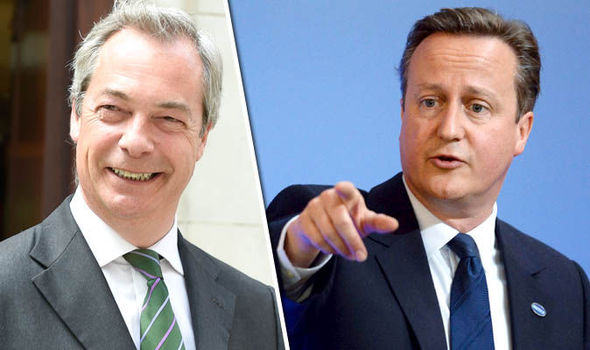
EU Referendum Live-Blog: Cameron v Farage, But Not Really

David Cameron - Nigel Farage - Debate - ITV - EU Referendum - Brexit - Remain

Semi-Partisan Politics: EU Referendum Live Blog – Cameron vs Farage (but not really)

#ITVEUref

21:57

And that’s it. Cameron off the hook, with no major hits landed on him.

Combative and effective as usual from Nigel Farage, but nothing new to suggest a recalibration to reach the essential 50%+1 on Referendum Day. Once again Farage will have pleased his supporters and disgusted his detractors.

What an utterly pointless “debate”, and what a useless format. I sincerely doubt that anybody in the country learned a single new thing from watching that “showdown”. Generally weak audience questions served little purpose other than to tee up the usual soundbites we are tired of hearing from Vote Leave and Stronger In.

Weak moderation too – Julie Etchingham seemed to be imposing rules and time limits which existed solely in her head, and which often ended up cutting through some of the more eloquent and discursive points on each side.

All in all, this was yet another example of the media’s shameful, shallow coverage of the EU referendum – and the glibness and alarming lack of depth of those who lead us.

21:56

Polished, passionate and utterly vacuous.

21:54

David Cameron, directly asked by an audience member whether he is “finished” regardless of the result of the EU referendum, waffles and talks about anything and everything else.

But it is very hard to see Cameron continuing. This is a supposedly conservative prime minister who gladly, joyfully shares a platform with Labour and Green Party politicians campaigning for an outcome which most party members detest. There is no love for Cameron, who will go down in history as a second-rate version of Ted Heath.

21:53

More scepticism about David Cameron’s assertion that Brexit means “quitting”:

21:49

Good point by audience member. Hardly anyone can name their MEP. Because the European Parliament is a chamber representing a demos which does not exist. There is no European demos. Hardly anybody feels European first and foremost, above their national or regional identity. And yet the EU seeks to acquire all of the trappings and powers of statehood. Shouldn’t that be setting off alarm bells?

21:48

Contra Cameron, “quitting” is staying in the EU and giving up on the ability of the fifth largest economy and second (by some rankings) military power to influence world events.

21:47

True democracy is about whether you can fire the people in charge if they start to do a bad job or if the people want a change.

The British people can’t fire the people who run the EU. There is no democracy.

21:44

No, Cameron. We will not be like a country with our faced pressed against the glass while the EU makes key decisions on trade. On the contrary, by leaving the EU we will regain our voice, our seat and our vote at the true global top tables which set key regulations and standards – organisations like UNECE, the IMO, ILO, Codex Alimentarius and many others.

These are the true originators of much regulation today, and for as long as we are in the EU with the Commission acting as middleman, we have a limited voice and a diluted influence in shaping these regulations – even ones which could obliterate entire British industries at the stroke of a pen.

Here’s why the EU is no longer the “top table” for trade – and why David Cameron was just deceiving the audience.

21:41

Ooh, it’s NHS time. Everybody genuflect to our National Religion.

If you are basing your decision on whether Britain should leave or remain in the European union solely or primarily on the NHS, then you are doing it wrong.

21:40

I’m glad someone brought up Little England. Because it is the Remainers – with their declinist, pessimistic view of Britain – who have low horizons. Those who want Britain to be an independent country, fully participating in the true global top tables for trade (hint: not the EU) are the ones with bold, global aspirations.

21:38

Yes, David Cameron is doing his creepy “passion” thing again, in place of actually standing for things and leading:

https://twitter.com/elashton/status/740280699270365184

21:35

Audience member takes David Cameron to task for his fraudulent renegotiation. Everything Cameron is saying now is false – the “agreement” he reached was negotiated with EU leaders acting in their capacity as heads of state and government. Many of them will soon no longer be in power. The EU is in no way obligated to honour the pitiful commitments in that agreement.

21:32

Immediately David Cameron pivots to talking about the single market, not the EU.

But leaving the single market is not on the ballot paper – we can (and almost certainly would, in the event of a Leave vote) leave the political institution of the EU while maintaining access to the single market – the so called interim EFTA/EEA or Norway Option. Adopting this plan immediately negates every single pessimistic, fearmongering argument put forward by the Remain campaign, which is why they are so desperate to slander or dismiss it.

21:31

David Cameron’s turn.

Good first question from the audience. 6 months ago Cameron was saying that Britain could thrive outside the EU, yet now he says it would mean economic Armageddon.

Was the prime minister lying then, or is he lying now?

21:27

Well, that was Farage. A typically assured performance. Ukippers will be happy. Liberal leavers like this blog and members of The Leave Alliance less so, for obvious reasons – Farage doubled down on all of the illiberal and protectionist arguments while doing nothing to reach those not already convinced that Brexit is the way to go.

In terms of moving the needle of public opinion, Nigel Farage certainly hasn’t done himself any harm. But it has made it harder for those of us arguing for a more progressive case for Brexit to do our work.

21:25

Moderator of this referendum is worse than useless so far. Staying silent when she should guide the debate, cutting across when actual interesting points are being made.

21:24

Audience member rightly notes that there are many separate means of cooperation between EU countries independent of the EU. Brexit doesn’t mean severing ourselves from the continent of Europe or from schemes like Europol. By freeing ourselves from the EU’s political union we restore our democracy and are able to choose the areas and nature of our cooperation.

21:23

Waving a passport around is not going to get us from 40-45% of the vote to the 50%+1 the Leave side needs to win the referendum. People who get misty eyed about blue passports are already going to turn out and vote to leave. We need to reach undecideds with a comprehensive, safe offering, showing them that it is possible to leave the EU while minimising economic risks.

21:21

I’m not the only one to note the markedly poor quality of questions coming from the audience so far. Roland Smith (author of the Liberal Case for Leave) sees it too:

21:19

Farage is a natural performer. One can only wonder what an asset he could have been to the Leave campaign had he only updated his 1990s-era euroscepticism and embraced a more progressive (or small-L liberal) case for Brexit.

21:16

Audience member with an utterly fatuous question about the Leave campaign supposedly whipping up anti-black fervour. As a mixed race person (not that it should matter), this is complete hogwash. Disagree with UKIP all you want (and I disagree with them on plenty), but disagree with their stance on immigration all you want, but fatuous, blanket assertions that their immigration stance is racist or “legitimises racism” is flat out false. And in fact it is this effort to slander euroscepticism and worries about immigration with the charge of racism that creates further resentment.

21:15

Oh, Justin Welby accuses Nigel Farage of legitimising racism, eh? The Archbishop of Canterbury might do better to look at the gaping hole in the public discourse where a rational, intellectual and moral Christian case for the European Union should be.

Shockingly, it doesn’t exist.

21:13

The good thing about Nigel Farage is that he doesn’t feel the need to flatter audience members, agree with them and accept their assumptions and premises. I think that some people do admire that, even if they disagree with him. Contrast it with David Cameron’s doubtless oleaginous performance once he takes the stage.

21:10

Every moment Nigel Farage spends talking about tariffs is time he could be spending reassuring wavering Brits that we can leave the EU’s political union while maintaining our access to the single market.

21:09

Tremulous audience member worried about Britain being “punished” if we vote to leave the EU. This takes us back nicely to the Remain side’s cognitive dissonance about whether the EU is a friendly club of countries who get together to knit and braid each other’s hair, or an abusive relationship where we will be beaten up if we try to leave. The Remain camp really do need to make up their minds…

21:08

Oh dear – the first appearance of “they need us more than we need them”. Farage is rightly being taken to task by an audience member for this point.

Far too much talking over one another going on already – Farage, audience members, the moderator.

21:06

Fair point from Farage – there is a marked difference between people in current positions of power in government and NGOs who tend to side with Remain, and those now out of power, who are more likely to back Leave. Something about the freedom of being able to speak one’s true mind seems to make people more likely to support Britain’s independence from the EU. Funny, that…

21:03

Okay, here’s Nigel Farage. The man who arguably did more than anyone else to secure this referendum, but failed to produce a plan for actually leaving the EU.

21:00

Well, here it is. The debate that is not a debate, because David Cameron doesn’t dare actually engage anyone in debate these days.

I’m far from certain that this event will be worth live-blogging, but it will be practice for the Semi-Partisan Politics live-blog of the referendum count and results on 23/24 June.


More about The Leave Alliance here.

More about Flexcit here.

The EU Referendum blog here.

 

European Union - United Kingdom - Britain - Flags

Top Image: ITV

Agree with this article? Violently disagree? Scroll down to leave a comment.

Follow Semi-Partisan Politics on TwitterFacebook and Medium.

Labour Blames Its Own Supporters For Failing To Enthusiastically Back Remain

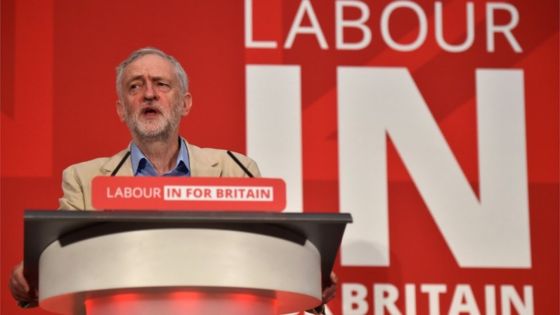
Jeremy Corbyn - Labour In for Britain

Don’t blame Jeremy Corbyn for the ambivalence verging on hostility toward the European Union seen in Labour Party strongholds

Hilariously, the Labour Party is finally waking up to the fact that their leader’s (at best) ambivalence about the Remain campaign might be harming their slavish desire to remain in the European Union at all costs.

This vignette from the BBC provides a telling insight into the hive mind of pro-EU Establishment Labour (my emphasis in bold):

Comparatively unnoticed, cast into shadow by the pyrotechnic light-show in the Tory party, the Labour Party has come to realise it is losing the argument, and may be in real danger of losing the referendum for the Remain campaign.

This morning, Labour’s shadow cabinet agreed the party needed to “up its game” and to do so urgently. Alarmed backbench MPs have been excusing themselves from parliamentary duties to kick-start what they describe as the near-torpid campaigning in their constituencies.

MP after MP has returned to Westminster with depressing tales from their home turf; of door-knocking in staunchly Labour areas where apathy towards the EU question has given way to rank hostility. One former minister contacted dozens of local Labour councillors urging them to mobilise behind the Remain campaign. To the MP’s fury, the appeal elicited one single reply.

To be clear: the Labour former minister’s response, upon realising that none of their local councillors were interested in helping the Remain campaign, was one of fury. Not surprise, or shame, or introspection – wondering why so many people in the Labour Party have no interest in spending the next couple of weeks singing hymns of praise to the European Union. No. Just fury.

This is the arrogance and entitlement of the Labour Party establishment. To be sure, many Corbynites – at least the virtue signalling middle class clerisy brigade – are little better. But it would take a considerable effort to surpass this former Labour minister quoted by the BBC, who believes that he/she and the Remain campaign deserve and are somehow entitled to the support of grass roots Labour supporters.

This is the arrogance of a class of Labour politicians who have forgotten that it is still their job to make the case, and to persuade people. And thus far, the Remain campaign has been an endless parade of miserabilist, declinist, pessimistic drivel, simultaneously talking down the prospects of the country of which many Labour supporters are justifiably proud while simultaneously painting a childishly naive picture of the European Union (puppies and unicorns) which almost nobody believes to be true.

In this context, the anonymous Labour former minister should be grateful to have received even one positive response from a Labour councillor – they were lucky to avoid a torrent of justified verbal abuse.

Once again, the Labour Party has absolutely nothing to say to those working class communities utterly unmoved by the woolly Fabianism of Ed Miliband or the edgy, student-friendly activism of Jeremy Corbyn. With no real debate over whether or not it was the right move, the party swung unthinkingly behind the Remain campaign because doing so is the instinctive response of many Labour elected representatives and donors. Too few Labour MPs – Kate Hoey, Graham Stringer, Frank Field, Gisela Stuart, Kelvin Hopkins, Khalid Mahmood and Roger Godsiff for a total of seven – have been willing to challenge the groupthink and articulate a different position.

And even now, with polls tightening and the discovery of a vast sea of apathy toward the EU throughout the Labour heartland, all that the party bigwigs can do is rage against their own supporters for failing to unquestioningly support the party’s Remain position, handed down to them from on high with no consultation and no fresh analysis since Labour became staunchly pro-EU in the late 1980s.

So if Labour bigwigs are casting around for someone or something to blame for their party’s weak contribution to the Remain campaign, they shouldn’t blame Jeremy Corbyn and they certainly shouldn’t blame their own supporters. The fault lies with their own arrogance and often disconnection from their communities.


European Union - United Kingdom - Britain - Flags

Top Image: BBC

Agree with this article? Violently disagree? Scroll down to leave a comment.

Follow Semi-Partisan Politics on TwitterFacebook and Medium.

Worried Remainers Are Now Desperately Attacking The Norway Option For A Reason

European Union - EEA - EFTA

By openly slandering the EFTA/EEA “Norway Option” for achieving Brexit in the event of a Leave vote, the Remain campaign and their allies in the media show that they are terrified of this sensible approach

The Guardian is, of course, desperate for Britain to remain in the European Union. The vast majority of those who read or write for the paper simply cannot conceive why tiny, pathetic, insignificant Britain would want to walk away from an EU which is basically all about puppies, daisies, hand-holding, Saving The Earth and “co-operation”.

As such, the Guardian is desperate to trash any and all Brexit plans which have a whiff of viability and sense about them – and now they are gunning for the interim EFTA/EEA or “Norway” option, just as it starts to be seized upon by an increasing number of influencers and ordinary people tired by the amateur, haphazard campaigning of Vote Leave.

The Guardian’s strategy – to slander the interim EFTA/EEA option as some kind of betrayal of democracy, and to lump it together with other parliamentary tricks MPs might choose to spitefully play in the event of a Leave vote.

The article begins portentously:

Pro-European MPs and some government sources believe it may be possible to use the Commons to mount a guerilla campaign to minimise the impact of a referendum vote to quit the European Union – or even to reverse the decision if the negotiations with the EU on the UK’s exit terms produce a disastrous deal.

The government is not willing to discuss its reaction in the event of a vote to leave since its sole goal at this stage in the campaign is to emphasise the risk of such a vote by saying that the decision would be irreversible and would likely be met with a brutal response from Britain’s European partners, primarily the French.

But privately ministers have pointed out there is a large cross-party Commons majority for the UK’s continued membership of the EU, and it could be deployed once the hugely complex, detailed and contentious legislation necessary to leave the EU started to pass through parliament.

All of which would be shocking if the Guardian had actually uncovered evidence of a plot by MPs to nullify or ignore the result of the referendum. But this isn’t what they mean at all. What they mean is the following:

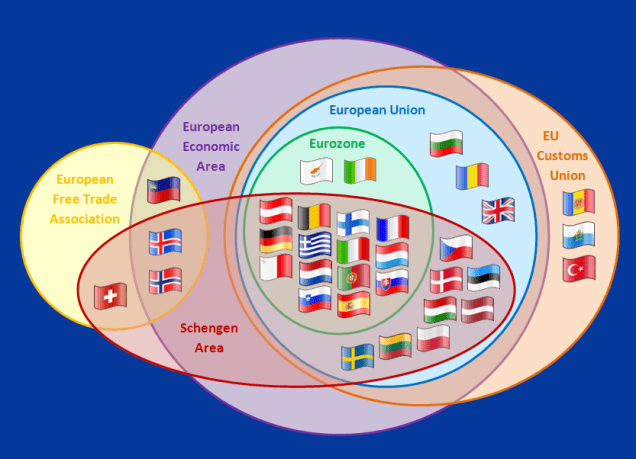
The first target is likely to be whether the UK could remain in the single market, while leaving the EU – so joining the European Economic Area, of which the non-EU countries Norway, Lichtenstein and Iceland are currently members. The single market guarantees the free movement of people, goods and services inside the EU.

The Guardian is trying to portray an eminently sensible – in fact, by far the most sensible – plan to leave the political construct called the European Union as some kind of grotesque subversion of the people’s will – which is pretty rich in itself, considering the contempt bordering on hatred felt by most Guardianistas toward those sympathetic to Brexit.

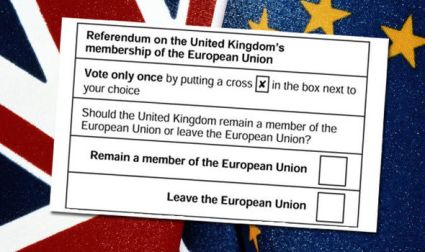
But let’s remind ourselves of the actual question on the ballot paper on 23 June:

EU Referendum Ballot Paper

That’s right – there is nothing on the paper whatsoever about the European Economic Area or “single market”. A vote to leave the EU is a vote for Britain to do exactly that – to leave an explicitly political, ever-tightening union of European countries all embarked on a journey to one day become a common state (as the EU’s founders and current leaders happily admit).

Many people are rightly now coming to the conclusion that the best way to achieve Brexit with the minimum of political and economic disruption is to exit to an “off the shelf” interim solution which already exists in the form of the EFTA/EEA membership enjoyed by Norway. This is why David Cameron has suddenly started talking about “a vote to leave the single market” over the past few days – it is a tacit admission that if we vote to leave the EU but remain in the EEA, every single one of the Remain campaign’s arguments are instantly negated.

Hence the ardently Remain-supporting Guardian’s desire to do everything possible to slander the interim EFTA/EEA option, painting it as some kind of unconscionable scam when in fact it is an utterly pragmatic and realistic way of leaving the European Union while completely avoiding all of the apocalyptic economic scenarios which the Remain camp love to throw around.

And now, other newspapers are joining in. From the Times’ daily Red Box email briefing:

The Times splashes on warnings that pro-Europe MPs will fight a rearguard battle to stop Britain leaving the single market even after a Brexit vote. With fewer than 200 of the 650 MPs in parliament in favour of leaving the EU, a series of votes could be staged to put pressure on the government to keep Britain inside the single market.

Undemocratic? Of course. Plausible? Absolutely.

Except, as we have seen, it is not “undemocratic” at all. The British people are being asked whether or not they wish to leave the European Union. By gosh, we spent long enough obsessing over the wording of the question. And Brexit to a position where we continue to maintain our access to the single market in the short to medium term while planning more beneficial arrangements for the future is well within the scope of a Leave vote.

It is a surprise to see the Times engaged in the same grubby dark arts as the Guardian in this case. And even more surprising to see the Daily Mail follow suit:

Pro-Remain MPs are plotting to ignore the will of the people by voting to keep Britain in the single market – even if the referendum results in a Brexit victory.

This would mean continued freedom of movement and would ignore public concern about mass migration.

Anti-Brexit MPs on all benches – Tory, Labour, Lib Dem and SNP – could use their overwhelming majority in the Commons to force a Norway-style relationship with the EU.

Out campaigners warned last night that such a move would spark a ‘constitutional crisis’ as it would counter the spirit of a pro-Brexit referendum.

But MPs on the Remain side said such a move – dubbed guerrilla tactics by one source – would be justified because the Leave side have not set out the nature of Britain’s trading relationship with the EU if we left.

Again, we see this short-termist, Brexit-as-an-event rather than the more realistic Brexit-as-a-process viewpoint needlessly closing the mind of the Daily Mail to an eminently pragmatic option.

Certainly immigration is a key issue in the debate – and indeed as a non-EU EEA country, Britain would have a more effective emergency brake than that secured by David Cameron in his pathetic renegotiation. But more importantly, once safely and securely outside of the EU’s political union, Britain could begin planning, negotiating and building support for a better longer-term solution. And we would have our democracy back, to boot.

The “out campaigners” mentioned by the Daily Mail as calling the Norway Option the catalyst for a constitutional crisis are no doubt the same Vote Leave luvvies and insiders who made the calamitous, strategic error of going into the referendum campaign without a Brexit plan of their own, drawing a huge amount of damaging fire from the Remain campaign in the process. They are clearly desperate to slander and diminish any plan which is not cooked up in their own laboratory, perhaps under the auspices of their resident mad scientist Patrick Minford.

The Guardian article continues, quoting Sam Bowman of the ASI:

Sam Bowman, the executive director of the rightwing thinktank the Adam Smith Institute, which has advocated the UK leaving the EU in stages, welcomed the possible intervention in the Commons.. He said: “This is a referendum on EU membership, not the single market, and MPs would be right to keep us in the single market if we vote to leave the EU. Keeping Britain in the single market would take the main economic risks out of leaving the EU, avoiding the doomsday scenarios outlined by the Treasury and others.

“The EEA option outlined in a recent Adam Smith Institute report would give the UK economic security while allowing it to leave the EU. In many respects it gives us the best of both worlds – indeed the remain side has emphasised little else of value about the EU during the campaign apart from the single market.

“The EU is not a prison, but the remain camp risks portraying it as such. It is possible to leave without risking serious economic harm, and staying in the single market as a step towards a long-term settlement would give the UK that safe route out.”

While it is heartening to see the Guardian suddenly discover Roland Smith’s paper “The Liberal Case for Leave” (and the comprehensive Flexcit plan on which it is based), it is entirely unsurprising that they choose to portray it in a negative light, choosing to lump it together with what they accuse of being undemocratic ways of de facto remaining in the EU.

Some of the other acts of democratic and national self-sabotage mentioned by the Guardian as being mooted by government and MPs are indeed more concerning:

David Cameron has said in the event of a vote to leave, he would immediately and formally notify the EU of its intention to quit under article 50 of the Lisbon treaty, kickstarting a two-year negotiation that could only be extended beyond the two years by a unanimous vote of the EU member states.

But lawyers advising the expert UK parliamentary committees dealing with Europe say there is no legal obligation to notify the EU immediately.

Michael Gove, the justice secretary and prominent leave campaigner, said: “Logically, in the days after a vote to leave, the prime minister would discuss the way ahead with the cabinet and consult parliament before taking any significant step.”

He added: “It would not be in any nation’s interest artificially to accelerate the process and no responsible government would hit the start button on a two-year legal process without preparing appropriately. Nor would it be in anyone’s interest to hurry parliamentary processes. We can set the pace.”

There is no need to push the button on Article 50 the day after the referendum in the event of a Leave vote. In fact, such a decision would be a spiteful and churlish act committed by an irresponsible government willing to damage the long-term interest of the country as “pay back” to the people for having disregarded their advice to vote Remain.

Similarly with the idea of a counter-offer from the EU followed by a second referendum in the event of a Leave vote, raising the possibility that Britain might end up in a kind of democratic limbo, having voted to leave the EU but rejected the subsequent terms of departure.

Messing around with either the invocation of Article 50 or the sneaky addition of a second referendum would indeed be undemocratic, or at least a wild act of constitutional vandalism. Adopting the only comprehensive Brexit plan in existence – and as we learned on Newsnight yesterday evening, the plan being actively considered by civil servants, who must obey the laws of reality, not partisan allegiance – does not fall into this category.

Failing to give the UKIP-element of the Leave campaign everything they want wrapped up with a pretty bow on 24 June is not evidence of some sinister plot or an attempt to subvert a democratically made decision to leave the EU. On the contrary, pursuing the Norway Option is the responsible way forward, the best means of securing precisely what the British people voted for – independence from the Brussels political union, and the freedom to make all subsequent decisions democratically for ourselves, including on immigration (within the constraints of realpolitik).

(And for newspapers which usually treat Brexit supporters with dripping contempt verging on hatred to suddenly care whether the Norway Option goes against the “spirit” of a Brexit vote – it doesn’t – is disingenuous at best. A child could see through their attempt at emotional manipulation.)

So we should beware the motivations of those campaigners and newspapers who suggest otherwise. In seeking to tarnish the only comprehensive Brexit plan in existence (Flexcit / the Norway Option) such people clearly have an agenda – once which brings together unlikely allies like the Times and the Guardian, and which sees the Daily Mail also taking up arms for different reasons.

Thinking Brexiteers whose first priority is extricating Britain from the common European state being slowly but relentlessly assembled in Brussels should ask themselves why so many people – from the prime minister on downwards – are suddenly so desperate to conflate the single market with the European Union, and to trash the Norway Option.

Hint: it is because without being able to threaten all manner of apocalyptic scenarios in the event of Britain leaving the single market, the entire Remain campaign – in all its negative, pessimistic, fearmongering glory – utterly falls apart.

These people are desperate to halt the growing public awareness that it is possible to disengage from political and judicial union in a manner that is reasonable, non-hostile, pragmatic and politically feasible without the risk of economic disruption.

Because that might mean actually leaving the EU!


European Union - United Kingdom - Britain - Flags

Agree with this article? Violently disagree? Scroll down to leave a comment.

Follow Semi-Partisan Politics on TwitterFacebook and Medium.