Nick Clegg, Defiler Of Liberalism, Has Something To Say About Populism

Populism is bad, mmkaaay?

“I think it’s important to remember populism can be a very positive, can be – I mean, Gandhi was a kind of populist. If populism is about challenging a complacent elite, challenging an established order, speaking for people who are not spoken for, populism is a really really important antidote for complacency in politics” – Nick Clegg

The only way that one can hold this seemingly benign attitude toward populism while deploring Brexit and the vote to leave the European Union is either to misunderstand the true nature and purpose of the EU, or to be engaging in deliberate deception.

Nick Clegg is not an uneducated man. With his career, he knows better than most precisely what the EU is, how it operates and where it is heading. He knows that the European Union is more than the “friendship ‘n co-operation”, humble free trade club portrayed by deceitful Remainers during the referendum campaign. In other words, the ignorance excuse is not available to Nick Clegg.

That leaves only the conclusion that Nick Clegg is a liar. A very affable and eloquent liar, certainly, but a liar all the same, and a particularly dangerous one for his gifts.

Nick Clegg would seriously have us believe that the European Union has nothing to do with a “complacent elite”, an “established order” or “complacency in politics”, and that therefore Britain voting to liberate ourselves from the EU is therefore the “bad kind” of populism as opposed to the virtuous kind, which he happily supports. How anybody could sit and listen to him advance this view without either laughing or heckling is completely beyond me.

What nonsense; Nick Clegg has no time for populism of any kind, because it inevitably threatens the rule and routines of the elite in which he is so personally ensconced. Besides the archetypal High Tory, it is hard to imagine a senior British politician with less affinity for anyone who supports any populism movement. At his core, Nick Clegg believes that politics is something to be done to the people by enlightened, “liberal” elites like himself, not something for the masses to influence, with their base prejudices and uncomfortable opinions.

We know this because immediately prior to praising populism, Nick Clegg also said this:

“Populism is redolent with kind of uncontrollable rages and angers and passions, whereas liberalism – at least the liberalism I believe in – is about reason, rationality and evidence, and so on and so forth.”

No. The “liberalism” that Nick Clegg believes in consists of insulating oneself inside an hermetically sealed, epistemically closed information loop, listening only to those “experts” or paying heed to those “facts” which are conveniently in line with one’s own globalist, anti-nation state worldview to the complete exclusion of all other parameters, angles and viewpoints, before applying “reason” to that desperately narrow window on reality and pronouncing verdicts which always comfort and never challenge the metropolitan Regressive Left mindset.

Nick Clegg is perfectly entitled to hold and profess those seethingly anti-democratic, elitist positions. But he should not be allowed to get away with calling himself a liberal while he does so.

Watch this fascinating Intelligence Squared debate/discussion between the excellent social psychologist Jonathan Haidt and the sneering, unrepentantly euro-elitist Nick Clegg, on the subject of populism.


nick-clegg

Bottom Image: Chatham House / Wikimedia Commons

Support Semi-Partisan Politics with a one-time or recurring donation:

Agree with this article? Violently disagree? Scroll down to leave a comment.

Follow Semi-Partisan Politics on TwitterFacebook and Medium.

Labour Strives To Make Itself Even More Unpopular In Scotland

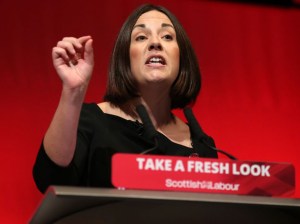
Kezia Dugdale, the forgettable leader of Scottish Labour, is furious that the SNP allied with the Evil Tor-ees to block a plan to raise the top rate of income tax back up to Gordon Brown’s eye-watering 50% rate.

LabourList reports:

The leader of Scottish Labour spoke out in anger after nationalists joined forces with the Tories to block plans to raise the tax rate for top earners.

Last night, the SNP voted with the Tories against a Scottish Labour amendment which would have raised the top rate of tax to 50p in the £1 for those earning over £150,000. Scottish Labour propose this as an alternative to austerity, urging the extra funds be spent on public services like the NHS and schools.

Prior to the 2015 general election, the SNP appeared to commit to raising the highest rate of tax for the very wealthiest, as Kezia Dugdale posted on her Facebook page. Ed Miliband included the taxation pledge in Labour’s 2015 manifesto.

Commenting after the vote, Dugdale said “People will be appalled to learn that SNP ministers who campaigned against austerity have now voted with the Tories to block the introduction of a 50p top rate of tax for the richest few earning more than £150,000 a year.”

“When Nationalist ministers present the budget tomorrow they must not simply pass on Tory cuts to local services like schools and social care.”

Scottish finance secretary Derek Mackay of the SNP will be presenting his draft budget at 2.30 this afternoon.

Speaking ahead of the publication of the draft budget, Dugdale said: “The Nationalists claim to be a progressive party. If that is the case, they will use Holyrood’s historic powers to ask those with the broadest shoulders to pay more tax to raise money to tackle Scotland’s schools crisis.”

“If Derek Mackay fails to do that, he is no better than a Tory Chancellor – and he will singlehandedly destroy any claim the SNP has to be a party of the progressive Left.”

Nice try, Kezia. But while the SNP are pretty dumb, they are not that dumb. Even through their own prodigious economic illiteracy, the Scottish nationalists have worked out that there is little to be gained from choking off economic growth with a snarling, punitive tax designed to hurt upper middle class salary-earners (not the “very wealthiest in society” as they deceitfully claim) while bringing in little if any additional revenue. No, the SNP are all about hurting people in the middle, the striving middle class, instead.

Scottish Labour, meanwhile, seem to think that prancing around accusing the SNP of being just like the Evil Tor-ees will see their recently defected voters wake up, realise the error of their ways and come crawling back with gratitude to their shrivelled, dying husk of a political party. I have my doubts. Aside from the sheer immorality of ever proposing to confiscate more than 50 per cent of anybody’s income at any income threshold, Labour have been shouting about evil Tory ideologues for years at the national level, with little effect. Voters want to see evidence of basic economic and governing competence, not virtue-signalling histrionics accusing the SNP of being “no better than a Tory”.

Scottish Labour would be better off holding the SNP to account for shamefully refusing to take powers over welfare from the UK government in Westminster, preferring to carp and moan from the sidelines despite being a supposed party of government.

But seemingly determined to make themselves as unpopular among as many segments of the population as possible (save those who really do want to live by the fruits of other people’s labour), Kezia Dugdale’s grand plan for a Scottish Labour renaissance involves wrapping her arms tight around the bloated corpse of Gordon Brown’s political career and coming at the SNP from the far left.

Good luck with that.


kezia-dugdale-scottish-labour-party

Support Semi-Partisan Politics with a one-time or recurring donation:

Agree with this article? Violently disagree? Scroll down to leave a comment.

Follow Semi-Partisan Politics on TwitterFacebook and Medium.

The Elites Are Fuelling A Backlash They Do Not Comprehend And May Not Withstand

david-cameron-resignation-statement

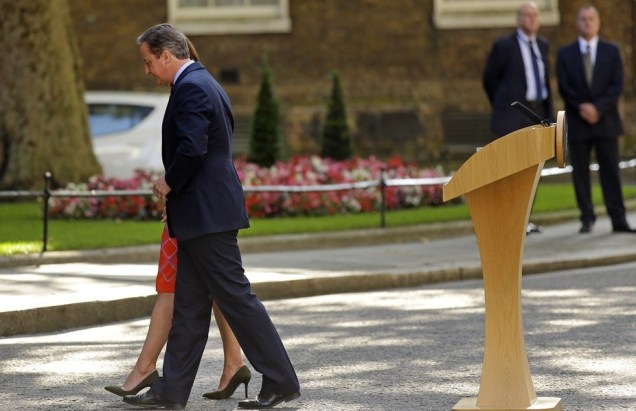
Accustomed to getting their own way and furious at being thwarted by mere democracy, the political elite are responding to recent setbacks by doubling down on behaviours which could soon see them swept away completely

One would be hard pressed to find a better charge sheet against the British political elite – and explanation for the populist backlash currently being felt by every well-manicured and over-rehearsed politician in the country – than the one recently laid out by Charles Moore in The Spectator.

Moore writes, in explaining why he is now “cheering for the populist right”:

It may sound Marxist to say this, but I do think the elites have constructed a world order which serves their interests, not those of their subject populations. You see it in little things, like the fact that European commissioners, when they leave their posts, receive enormous ‘transition’ payments (it was reported that Peter Mandelson got £1 million) on top of their salaries and pensions. You see it in big things, like the fact that nearly half the young people of Spain, Italy and Greece have to go without jobs in order to enforce Germanic theories about central banking and Brussels doctrines about European integration.

In the second half of the 20th century, the huge projects to which the western world bent its mind more or less worked — the Marshall Plan, Nato, the United Nations Security Council, even the European Community, when it had only six members. What are the equivalent achievements in the 21st century? A pseudo-virtuous climate change agreement reached only because its members know it won’t be observed. A banking crisis resolved in the interests of bankers. A threat from Islamist terrorism which the outgoing President of the most powerful nation on earth still cannot admit even exists.

It does sound a little Marxist to talk about the elites in this way, as Charles Moore fears, until one remembers that with our decaying institutions and system of crony capitalism, the best and most able to serve the marketplace of goods, services and ideas are no longer the ones rising to the top. Therefore, to criticise them is not to criticise capitalism or the free market, because if you were to strip away the privilege of those at the top of the political, legal and commercial worlds and force the inhabitants to fight their way back up to the top from a level playing field, most of them would be living on the streets within a year. This is the dismal calibre of people we now allow to rise to the top of our society; to criticise them is not Marxist, it is to yearn for some semblance of a meritocracy.

Moore continues:

The response of elites to their failures is too often to stigmatise the people who complain. Those who protest at immigration levels ten times higher than 30 years ago are treated as racists. Even the ballot box itself is seen as ‘populist’. Remainers argue that the referendum issues were ‘too complicated’ for voters. They seem actively to dislike the idea that our nation should once more be governed by its elected representatives. Having failed electorally, they turn to ‘lawfare’ — preferring a case before the Supreme Court to the direct implementation of what Parliament handed to the people to decide. Voters now believe that their rulers really do not like them very much, so the feeling becomes mutual.

Yes, a thousand times yes. And it is hilarious watching tone deaf politicians openly disparage the same parts of the electorate that they will be sucking up to in futility when the next general election rolls around. Most people possess a base level of social awareness. They know when they are being looked down upon, or worse, mocked. The experience shuts ears and hardens hearts against future persuasion. That so many MPs and commentators still do not realise this is a testament to the low calibre of people we have allowed to rise to the top of the political and journalism worlds.

Consider: Ed Miliband fought the 2015 general election on the premise that David Cameron and the Conservative Party were evil, far-right ideologues. Many respectable people who voted Tory in 2010 did not take kindly to the Labour Party suggesting that they were aiding and abetting evil, and now you can find Ed Miliband on the backbenches, giving forgettable speeches to a half empty Commons chamber. And yet the lesson has not been learned – many politicians now calling Brexit a calamity and deriding Brexiteers as either malevolent racists or useful idiots will be asking those same people for their vote in 2020 (or sooner). You don’t need to be Nostradamus to figure out how the electorate is likely to respond.

More from Moore:

In this respect, the culture war matters. You cannot go on saying that white straight males are brutes without eventually annoying them (and even a significant proportion of what John Prescott used to call their ‘womenfolk’). The cultural signals from the powerful are almost unthinkingly hostile to majority populations. This month, to take a minor example, a report into ‘diversity’ in the theatre commissioned by Andrew Lloyd Webber reported (reusing a phrase from Greg Dyke years ago) that it is ‘hideously white’. Why should the dominant racial characteristic of all western societies be considered ‘hideous’? If you said that anything was ‘hideously black’ you would (rightly) be shunned by polite society. Such asymmetry inspires revolt. The rise of Trumpery shows that the right has learnt a tactic of the left, which is to play up grievance to get power, money and attention. Grievance politics is extremely unattractive, but if western societies no longer deliver rising general prosperity and disrespect the people whom they are failing to serve, what do you expect?

And yet the Left continues to push aggressive multiculturalism and identity politics, even seeking to thwart Brexit so as to continue working towards their goal of undermining of the nation state.

This is dangerous. As Michael Lind once remarked, “the loyalties that succeed national solidarity are likely to be narrower, not broader”. Focus on individual racial identities, undermine the nation state, undermine Britain and any healthy sense of national identity and purpose we might otherwise have, and we very quickly descend into a jealously competing confederation of special interest groups, each one claiming some special victim status and viewing itself as oppressed by the others.

The Labour Party, which has long served the elites rather than the working man or woman, is currently in the process of falling down a chasm of their own making, between people who recognise and oppose this danger (their rapidly diminishing working class vote) and those who choose to remain blithely ignorant because they are not presently feeling many negative consequences (the virtue-signalling middle class clerisy). Both groups are coming to hate and scorn one another, yet Labour needs both to turn out in sufficient numbers if they are ever to win a general election again.

But indulge the populist side and the elitist side becomes enraged, and vice versa. Try to fudge the issue by making half-hearted gestures to each side (like Labour’s immigration coffee mug) and it alienates one side while failing to persuade the other.

In fact, populism vs elitism is rapidly becoming the new axis of our politics, which is a shame. There should be no question that when the interests and attitudes of the elite turn stridently against those of ordinary people, we should side with the ordinary people against the elites. That does not mean adopting every daft populist idea that comes along, but by actually taking into account the hopes, concerns and aspirations of ordinary people in regular policymaking we might hope to avoid finding ourselves in another situation where so many people see the likes of Donald Trump or Nigel Farage as their only salvation.

In other words, a certain amount of populism should be hardwired into our politics, so that it does not fester unseen and then break free to dominate proceedings and create destabilising uncertainty. The left vs right, authoritarian vs libertarian arguments remain far more interesting than the populism vs elitism shouting match, but it is currently being overshadowed as we debate idiotic questions like whether or not the wisdom of a powerful elite ought to cancel out the result of a national referendum. When we disagree about such fundamentals, worrying about what the government does and does not do for its citizens inevitably rather takes a back seat.

Moore concludes that “if, in a parliamentary democracy, the elites and the voters markedly diverge, one must surely bet that the elites are likelier to be wrong”. And the elites certainly have been short-sighted, self-serving and often outright wrong on a parade of key issues.

The political elite have perhaps one last chance to check their arrogant and selfish behaviour before they trigger an even bigger backlash, and things start to get really bad.


globalism-versus-culture

Support Semi-Partisan Politics with a one-time or recurring donation:

Agree with this article? Violently disagree? Scroll down to leave a comment.

Follow Semi-Partisan Politics on TwitterFacebook and Medium.

Ann Widdecombe Is Right To Encourage Rebellion Against Political Correctness

18-year-old Sam would be horrified to hear 33-year-old Sam admit it*, but Ann Widdecombe is actually right more often than she is wrong – and never more right than when she recently gave an interview to BBC Parliament and veered onto the topic of political correctness.

(* As a 19-year-old lefty student at Cambridge, full of self-righteous assurance and moral superiority, I once accosted Ann Widdecombe in the bar of the Cambridge Union after the annual “This House Has No Confidence In Her Majesty’s Government” debate and no doubt made a complete idiot of myself in the process, though for some time afterwards it pleased me to brag about having supposedly confounded Widdecombe with my impeccable logic and well-rehearsed diatribe against the Evil Tor-ees.)

The BBC reports:

Political correctness is “silencing a great body of thought”, the 69-year old says, to the point where she wonders if we can still claim to live in a free society.

She worries that almost everyone is under pressure to keep their views to themselves, not just those with strongly-held political or ethical convictions

“You actually get bright, intelligent people that could hold their own anyway, saying to you: ‘Well, of course you can’t say that these days’. And I think: ‘Yes you can’.

“This is not the Soviet Union. You should not be constrained by state orthodoxy.

“You should be able to say what you individually think and if it is unpopular, you should stand your ground.”

And continues:

In such a climate, she says it is doubly important that politicians speak out.

“The only people who don’t have to (keep quiet) are the parliamentarians. We can say what we like. We can be against gay marriage, we can be against abortion, we can want to limit immigration – we can say what we like.

“The ordinary citizen is much less blessed these days. I’ve always said if you hold a view what is the point of holding it if you don’t stick by it.”

Widdecombe is absolutely right to emphasise the special responsibility which falls upon those with unpopular or minority views to actually air their beliefs so that unpopular ideas can be tested and either be found wanting and discarded or be acclaimed and more widely adopted based on their merits.

I have just come back from a friend’s Christmas party in a very fashionable part of London, a lovely evening, but one in which I was (for the second time this month) presented with the situation in which a fellow party-goer and friend-of-a-friend casually disparaged Brexit and Brexiteers to my face, automatically assuming that I would agree with their stance.

As happened last time, a virtual decision tree flickered to life in my mind. Do I do what the political blogger and ardent Brexiteer in me wants most, and dramatically out myself as a Leave voter before going on to deliver some barbed and witty put-downs of smug London-dwelling Remainers? If I do so, will it escalate into an argument which might be embarrassing for the hosts? Will it embarrass my wife? Is there a genuine opportunity to change minds, or is this just an opportunity to invite social ostracisation with no realistic potential upside?

On different days and in different scenarios and moods, I opt to go down different branches of the decision tree. On this occasion, knowing my audience, I deemed that there was no realistic opportunity to change minds or even plant the seeds of doubt, and so I changed the subject and ended up having a very pleasant conversation with the chap about other matters.

It is important to note that this friend-of-a-friend is a good guy in every respect – he is just lost to reason on one particular, highly important topic. And while I may not have been afforded the same courtesy had the situation been reversed, I think it is important for Brexiteers to hold themselves to higher standards of behaviour than some Remainers seem to be displaying in their sneering contempt of those who dared to vote their principles rather than their wallets.

On other occasions, I have taken the opposite approach and confronted idiotic EU-worship and criticism of Brexit with the immediate revelation that I am a eurosceptic Brexiteer and that anybody intending to insult Brexiteers in my presence had better be packing something more powerful than smug, idiotic, failed talking points from Stronger In. The last time I took this approach, a couple of weeks ago, the person concerned physically moved her seat a couple of inches further away from me, and frosty silence reigned throughout dinner.

Aside from casual interactions with friends (who no doubt feel duty-bound not to dismiss me out of hand because of our shared history) I have had zero success talking to Remainers in social settings with any degree of success, regardless of the approach I choose. But I am increasingly coming to the opinion that on this subject, as Ann Widdecombe says, “you should be able to say what you individually think and if it is unpopular, you should stand your ground”.

Of course there will always be times when getting into a heated political debate at somebody’s wedding reception is not the right course of action. But having now witnessed how a fairly representative sample of professional young Londoners feel about Brexit and Brexiteers, I think that these people urgently need to hear dissenting voices – if not to change their minds (for such a feat seems impossible) then at least to make the point that there are intelligent young professional Londoners out there who do support Brexit and whose political philosophy consists of something more than vacuous, superficial internationalism and a readiness to believe pro-EU propaganda and apologetics.

And whether the subject is Brexit or any of the issues falling under the suffocating blanket of social justice and identity politics, now is not the time for Brexiteers, conservatives, free speech supporters or other modern day heretics to stay hidden in the closet. Not with so much at stake.

Some of the most illiberal movements in society right now – the establishment’s rearguard fight against Brexit, the trampling of free speech under the jackboots of the Cult of Social Justice and Identity Politics – are fuelled by ignorance of and antipathy toward those who dissent from the leftist orthodoxy. Those dissenters such as myself, living deep behind enemy lines in places like central London, almost have a duty to show that Brexiteers, anti-SJWs and other latter-day thought criminals are more than the two-dimensional caricatures painted by screeching left-wing propaganda outlets like the Guardian and Independent.

95 percent of the time, this may be a lost cause. But once in awhile it may lead to a conversation, and even to a changed mind. Was swallowing my tongue and changing the subject in the face of lazy Brexit criticism the right decision this evening, given that the payoff for me was an hour of pleasant small talk and the knowledge that I helped perpetuate ignorance on such an important subject? Probably not.

Next time I am confronted with the Brexit/Social Justice-in-a-social-situation decision tree, I shall hold my ground unapologetically. Henceforth, the price of airily expressing half-baked political opinions in my presence, in the arrogant expectation that everyone present will concur, will be a thundering response from me which might make even Ann Widdecombe proud. Not only when I am feeling particularly up for a debate, but every single time, even when I would rather have a quiet, conflict-free evening.

That much is the least that I can do – that we all should be doing – for the causes in which we believe.

 

brexit-pixabay

Brexit - EU Referendum - European Union - Apocalypse

Support Semi-Partisan Politics with a one-time or recurring donation:

Agree with this article? Violently disagree? Scroll down to leave a comment.

Follow Semi-Partisan Politics on TwitterFacebook and Medium.

NHS Heresy, Part 4 – Junior Doctors Would Sell Out The NHS In A Heartbeat, If The Price Was Right

aneurin-bevan-national-health-service-nhs-1948

Brave and principled defenders of Our NHS? The junior doctors would knife Aneurin Bevan’s vision in the back and happily serve an Evil Tory privatised healthcare system (how awful) if the price was right

Few people have been pronounced more saintly in 2016 than the holy NHS Junior Doctors, whose brave, principled and not-at-all-about-money industrial dispute with Jeremy Hunt and the Evil Tor-ee government has seen these humble, altruistic folks fight bravely and against the odds to safeguard the future of Our Blessed NHS.

Oh, wait. Nope. Turns out that most of those cherub-faced stethoscope swingers would throw the NHS under the bus and see the National Health Service privatised if it meant more money flowing into their pockets.

Kristian Niemietz of the IEA reports:

While I never believed for a second that the junior doctors’ strike was a People’s Struggle against the demonic forces of neoliberalism, I did believe that most junior doctors had convinced themselves of it. I was under the impression that they sincerely believed that that they were fighting The Just Cause on behalf of The People. Slogans like “Save our NHS” were everywhere, after all, and we always find it easy to convince ourselves that what is good for us also happens to be good for everybody, even if in roundabout ways.

And yet, in a recent survey of almost 10,000 junior doctors, 93% said they would accept “complete privatisation” of the NHS if it resulted in “substantially” increased salaries. Surely, some will dismiss these figures as a vicious smear, while others will accuse junior doctors of hypocrisy and opportunism. I think neither response is appropriate.

In practice, many doctors already act in accordance with the preferences expressed in this survey. Last year, about 8,600 UK-trained doctors went to work abroad, with Australia being a particularly popular destination. Australia has a universal public insurance system, in which the government commissions and pays for most healthcare, but in which the delivery is largely private and market-based. They are not doing anything immoral, because there is nothing immoral about private, market-based healthcare; in fact, the Australian system produces some of the best outcomes in the world. Come to think of it, even in the UK, most GPs are self-employed, not NHS employees. This means that technically, they are part of the dreaded – whisper it – private sector.

It would, however, suit junior doctors to quit the populist, anti-capitalist posturing. And the rest of us should try to keep our anti-capitalist knee-jerk responses in check. Even when it comes to healthcare.

My emphasis in bold. And you read that correctly – 93% of all those doctors who love to paint the NHS logo on their faces and protest Jeremy Hunt would happily live in an Evil Tory dystopia of privatised healthcare if it meant they were paid a market wage.

Niemietz is kinder and more understanding in his piece than I am inclined to be. Personally, I think that the junior doctors’ strike was just another example of the NHS Industrial Complex – that vast connected web of connected special interests who have a direct stake in the world’s fifth largest employer continuing to operate along broadly the same lines as it does at present – flexing its muscles and throwing the entire country under the bus for their own economic gain. But that’s just cynical old me.

There is no disputing, however, that nearly every tawdry public (and private) sector dispute in modern history has been justified by the protagonists on the supposed grounds of “public safety”, whether it is London Tube drivers suddenly becoming concerned about safety on the Underground in time to tack an extra day onto their Christmas holidays, Southern Rail train drivers convinced that taking over responsibility for opening and closing their train doors will lead to regular platform bloodbaths, or the sainted junior doctors.

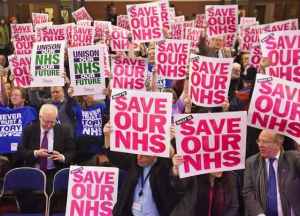
We have known since May that pay was the only real red line for junior doctors, though surprisingly none of their placards made reference to the desire for more cash – they chose instead to go with their “Save Our NHS” angle instead, to elicit maximum public sympathy (by whipping up maximum public fear). We have also known, thanks to the steady stream of junior doctors moving abroad to work for other, better healthcare systems than our own anachronistic NHS, that their supposed high-minded commitment to socialised, government-provided healthcare is often outmatched by the desire for a bigger pay cheque and a larger slice of finite taxpayer funds.

But now we find out that not only would many junior doctors consider abandoning the NHS and selling their services to hospitals in other countries, but that they would actively support the tearing down of Our Blessed NHS and its replacement with a privatised system here in Britain. The commitment to socialised public healthcare is literally tissue paper thin with these people, even more flimsy than the home-made banners on which they proclaim themselves to be tireless warriors fighting to defend the Best Healthcare System in the World.

Will the revelation of this hypocrisy change anything? Probably not. The Guardian and other sycophantic leftist outlets will no doubt continue to gush over the various vested interests within the NHS Industrial Complex, as instructed by High Priests like Owen Jones:

Ask a striking junior doctor why they’re taking this action, and you won’t simply hear an eloquent spiel about their contracts. It’s the very future of the NHS – which they have committed their lives to – which they fear is at stake. There are the government’s policies of marketisation and fragmentation – yes, accelerating what previous administrations did – stripping the “national” from NHS.

“Committed their lives to”? Heavens, you would think that these people had pledged themselves as members of the Swiss Guard, the Night’s Watch or the Order of the Phoenix, the way that Owen Jones talks about them, rather than simply signing up as employees of the fifth largest bureaucracy on the face of the planet.

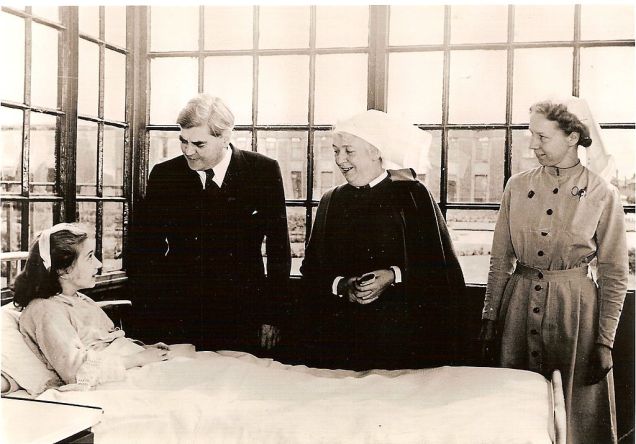
But it is sneaky what Owen Jones does here, suggesting that people become doctors out of a desire to work in a large government bureaucracy rather than feeling the call of a vocation to heal. Other countries seem to manage to recruit and train doctors without danging the carrot of getting to work for a massive state-owned bureaucracy in front of them, but Jones would have us believe that we only have doctors and nurses because people are so dreadfully inspired by Aneurin Bevan’s rusting 1948 vision. Nonsense, of course, but very effective propaganda from the NHS Industrial Complex.

The NHS Industrial Complex is made up of many different actors, all with their own motivations. One has the ideological leftists like Owen Jones, whose entire worldview relies on supporting a monolithic state healthcare provider churning out a precisely equally dismal service to every postcode in the UK. Then one has the worker bees within the organisation itself, whose medical or bureaucratic expertise rarely qualifies them to pass judgment on the optimal healthcare system for a country of 65 million people. And then one has the vast supply chain serving the beast, which is motivated primarily by a desire to preserve and expand existing revenue streams and avoiding risky disruption.

How fortunate that this cast of villains and useful idiots is able to hide behind the junior doctors – most of whom are eminently decent people supporting a superficially worthy cause – as they press for the preservation of the status quo, the scuttling of reform and a wider pipeline direct from the bank account of every UK taxpayer direct to the fifth largest organisation in the world.

But perhaps now that we know that the NHS Industrial Complex’s most photogenic spokespeople are actually more than happy to upend the whole system, spit on Britain’s national religion and see the NHS fully privatised so long as the pay rise outweighs the public vilification, the junior doctors’ collective halo might tarnish a bit.

Still, there are always the nurses. Everyone trusts a good nurse.


NHS Logo - Cross - National Religion - Worship - Idolatry

Save Our NHS

Top Image: University of Liverpool Faculty of Health & Life Sciences / Wikimedia Commons

Support Semi-Partisan Politics with a one-time or recurring donation:

Agree with this article? Violently disagree? Scroll down to leave a comment.

Follow Semi-Partisan Politics on TwitterFacebook and Medium.