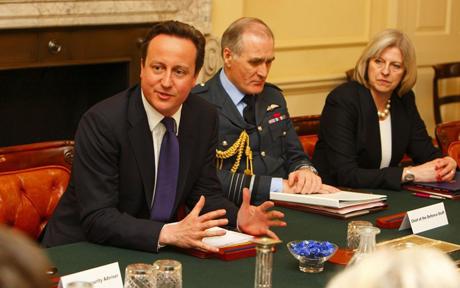
Finally, Rejecting The Mediocre In Education Policy

On the right track.


It is quotes such as this, from Education Secretary Michael Gove, which remind me why I pounded the pavements in support of my local Conservative parliamentary candidate back in the 2010 general election:

“My ambition for our education system is simple – when you visit a school in England standards are so high all round that you should not be able to tell whether it’s in the state sector or a fee paying independent.

“We know England’s private schools are the best independent schools in the world. Why shouldn’t state schools be the best state schools in the world?

“I want to see state schools where the vast majority of pupils have the grades and skills to apply for university, if they want to, where a pupil being accepted to Oxbridge is not a cause for celebration, but a matter of course.

“Where it is the norm for state pupils to enjoy brilliant extra-curricular activities like sports, orchestras, cadets, choir, drama, debating, the Duke of Edinburgh scheme, and more.”

There have been many disappointments from the Conservative-led government since they came to power and ejected Gordon Brown from office. Only last week in Prime Minister’s Questions, David Cameron could not bring himself to say that taxes should ideally be cut for all citizens across all income levels – instead trying to outflank Ed Miliband and appease his supporters by claiming that the rich and successful were paying more under the Conservatives despite the abolition of the 50% top rate of income tax. But while David Cameron and Theresa May equivocate on civil liberties, and while George Osborne neither delights nor grossly offends at the Treasury, Michael Gove continues to quietly get the job done over at Education.

The Telegraph reports on Gove’s upcoming keynote speech at the London Academy of Excellence:

State schools will test children using private school exams for the first time under plans to make them the “best in the world”, the education secretary will say in a speech on Monday.

Michael Gove will say that schools must set their standards “so high” that they are indistinguishable from the best fee-paying schools like Eton and Harrow.

He will say he wants to end the perception that state education is “bog standard” by emulating independent schools with tougher tests, longer school days, more extra-curricular activities and better discipline.

There are some indisputably good ideas in the meat of the speech – ideas such as setting state school children some of the same exams used to measure ability in private schools, and using international tests to better benchmark performance against schools in other countries. It is similarly hard to argue against the renewed emphasis on extracurricular activities and discipline.

Of course, reciting a shopping list of common sense ideas doesn’t mean that the British educational system will improve overnight, or even that dramatic improvements will come about in the very short term. Neither does it acknowledge the reality that all of these changes will be of zero benefit if parents remain disengaged from their children’s education, either unable or unwilling to nurture and help them, or if poverty and the varied symptoms of socioeconomic disadvantage continue to suppress the educational attainment of poorer children. And too often, the Labour Party have more to say on mitigating these real problems than do the Conservatives.

But there is no reason why we should not hold these high aspirations for our public schools, and use this aspirational language as Michael Gove does. Indeed, there is something refreshing about it, and this is what makes Gove so appealing to many people of a libertarian-Conservative persuasion. Gone is the talk about sharing burdens, paying “fair shares”, postcode lotteries and equality of outcome, and in its place we have talk of benchmarking, experimentation, variation and unbounded possibility. It is quite hard to not get excited, even in the absence of any of the finer detail as to how we get there.

The Telegraph’s editorial mirrors this optimism and sense of a refreshing change:

This is why his agenda for state schools so terrifies the Left. It represents a much-awaited rejection of bog-standard equality in favour of the excellence that typifies the independent ethos.

We shall observe with interest the reaction from the rest of the news media as it comes in. And as always, the devil will be in the details. But with precious little by way of new policy announcements or radical ideas as the coalition government trudges toward lame duck status and general election 2015, at least one government minister is still doing his job.

Edward Snowden speaks: US blackout of interview

Highly worth reading and watching, reporting about Edward Snowden’s recent interview for German television, courtesy of Jonathan Turley’s blog. This interview has received little coverage in the UK or US media.

jonathanturley's avatarJONATHAN TURLEY

By Charlton Stanley, Weekend Contributor

NSA logo smallLast Sunday, former NSA contractor and whistleblower Edward Snowden was interviewed for the German television network ARD.  The interview was big news in Germany and much of the world in both print and broadcast media. However, the interview appears to have been blocked intentionally by US government authorities. In fact, the media in the US appears to have gone to ‘radio silence’ about it. It has been posted on YouTube several times, but is taken down almost immediately.  The video site Vimeo has it embedded, but as I write this, Vimeo is under a DDoS attack.  LiveLeak also has it, and that video is embedded in this report by Jay Syrmopoulos for  Ben Swann’s news page.

Mr. Snowden spoke candidly in a thirty-minute English language interview with the reporter from ARD.

View original post 186 more words

Press Intimidation Must Not Go Unanswered In Britain

guardiancomputers


There are currently two fronts to the assault on journalism, free speech and a free press in this country. One is the slow chipping away at media autonomy and the ratcheting up of regulation, ostensibly to protect the privacy of the ordinary citizen but really (and quite transparently) all about protecting the interests and the secrets of the wealthy or celebrity elites. The charge on this front is currently led by the likes of Lord Leveson and his report on press regulation.

But the other is much more daring and ambitious. It has nothing to do with tying the press up with legal obstacles to publishing the news, and everything to do with making a very public show of bullying and shaming newspapers who dare to expose illegal or secretive government activity into cowed silence as a warning to others. We now know precisely the extent to which this took place when The Guardian newspaper was forced – in the presence of observers from GCHQ – to destroy the computer equipment in its possession which held the leaked information from the American whistleblower Edward Snowden.

The Guardian reveals:

In two tense meetings last June and July the cabinet secretary, Jeremy Heywood, explicitly warned the Guardian’s editor, Alan Rusbridger, to return the Snowden documents.

Heywood, sent personally by David Cameron, told the editor to stop publishing articles based on leaked material from American’s National Security Agency and GCHQ. At one point Heywood said: “We can do this nicely or we can go to law”. He added: “A lot of people in government think you should be closed down.”

This is the Prime Minister of our country dispatching the top civil servant in the land to personally threaten the editor of a major national newspaper with the forced closure of his publication unless they stop reporting and printing stories and revelations which might be embarrassing to the government.

And intimidation is the only remotely plausible reason for Jeremy Heywood’s visit, because the government was well aware that copies of all the leaked data was held by other news organisations and individuals in other geographic locations, and that destroying only one copy of the files would not prevent the damaging disclosures and news stories:

The government’s response to the leak was initially slow – then increasingly strident. Rusbridger told government officials that destruction of the Snowden files would not stop the flow of intelligence-related stories since the documents existed in several jurisdictions. He explained that Glenn Greenwald, the Guardian US columnist who met Snowden in Hong Kong, had leaked material in Rio de Janeiro. There were further copies in America, he said.

Days later Oliver Robbins, the prime minister’s deputy national security adviser, renewed the threat of legal action. “If you won’t return it [the Snowden material] we will have to talk to ‘other people’ this evening.” Asked if Downing Street really intended to close down the Guardian if it did not comply, Robbins confirmed: “I’m saying this.” He told the deputy editor, Paul Johnson, the government wanted the material in order to conduct “forensics”. This would establish how Snowden had carried out his leak, strengthening the legal case against the Guardian’s source. It would also reveal which reporters had examined which files.

Whether you agree with the actions of Edward Snowden or not, and whether you believe that the British government is justified in allowing the security services to access so much of our personal data at will or that doing so is a gross invasion of privacy and breach of the public trust, I would hope we can all agree that the way in which the Prime Minister’s deputy national security adviser and Cabinet Secretary spoke to a newspaper editor in this country, and the chilling message that they carried, is simply unacceptable in a modern liberal democracy.

In a further brazen move by the government, a hard-to-spot clause in the Deregulation Bill currently before Parliament would allow police to request the seizure and review of journalists’ files and documents in closed, secret court rather than in view of the public (where public disapproval currently stays the hand of any overzealous police chief):

The seizure of journalists’ notebooks, photographs and digital files could be conducted in secret hearings, owing to a little-publicised clause in a government bill aimed at cutting red tape, media organisations have warned.

Requests for notebooks, computer disks, photographs or videos must currently be made in open court and representatives of news groups can be present.

But the clause – in the deregulation bill, which comes before the Commons on Monday – significantly alters the way courts consider so-called “production orders”, stripping out current safeguards.

Although the notebooks and records of journalists can already be seized by police under current law, an application to do so currently has to be made in open court, where the media can be present:

The underlying rules governing whether police can have access to material will remain the same but without media organisations being present it is feared that judges will be more easily persuaded to authorise police seizures of journalistic material. One of the less prominent recommendations of the Leveson inquiry into media standards was that it should be easier for police to obtain journalists’ information. Media organisations already face being charged with contempt of court if they do not comply.

This legislative move proves quite conclusively that the government’s PR / intimidation stunt of forcing The Guardian newspaper to destroy their laptop computers containing files leaked by Edward Snowden was not an isolated incident. Dispatching the Cabinet Secretary to threaten a major news outlet with summary closure unless they comply with government demands may have been the most high profile recent assault on a free press, but the battle is also being waged in more insidious, less headline-grabbing ways. And it must be resisted at all levels.

The government of a free society has no business making it easier for authorities to seize the notes and documents of journalists out of the glare of public scrutiny, just as they should not barge in to a newspaper’s editorial office and issue thinly-veiled ultimatums to comply-or-else.

David Cameron may laugh it off and Oliver Letwin may make some token gestures to soothe the ruffled feathers of those in the journalistic class over the course of the next few days, but this is a deadly serious business. The institutions of democracy, even in an ancient and historical country such as Britain, are ultimately very fragile and liable to being undermined by authoritarians, both well-intentioned and not. And it is deeply concerning when the government can so brazenly and egregiously step over the line delineating protecting the national interest and protecting its own interest, and receive so little censure for doing so.

I hope to see media outlets of all types and political leanings publicly rally to condemn the government and support The Guardian following these latest revelations of state bullying and intimidation. Because there but for the grace of God go us all.


Note – Complete footage of Guardian editor Alan Rusbridger’s recent testimony to a Parliamentary committee is here:


And footage of the Guardian’s editors destroying their computer equipment under the supervision of GCHQ staff is viewable here.


Are Labour At War With Poverty Or With Success?


Well, now we have it conclusively. It has nothing to do with making the rich in our society pay their “fair share”, no matter how loosely you define (or indeed blatantly misuse) the word “fair”. Nothing to do with ensuring that essential public services are funded, either. No, Ed Ball’s announcement of the Labour Party’s intention to reinstate their punitive 50% top marginal rate of income tax has everything to do with punishing people for daring to still be rich, for having the temerity to succeed.

Daniel Hannan MEP, writing in the Telegraph, ponders the cognitive dissonance behind a proposal to raise taxes without realistic hope of increasing revenues, and wonders if Labour are right to stake their electoral hopes on the British people being motivated primarily by envy and a desire for vengeance:

Labour doesn’t actually think the 50p tax rate will make Britain more prosperous. We know this because, for all but the last few weeks of its 13 years in office, it kept the top rate at 40p. Yet it now brazenly calls a 45p rate “writing a cheque to millionaires”. On one level, this is too silly for words: even if  everyone earning £150,000 were a millionaire, on no conceivable definition does demanding less money from someone constitute “writing a cheque”. But Ed Balls has presumably calculated, as Iain Martin adroitly observes, that there are enough votes in envy to cobble together a majority under the uneven constituency boundaries.

In another column he also reflects on the results of a YouGov poll showing that an overwhelming majority of Labour supporters believe that a 50p tax band should be brought back even if it was conclusively demonstrated that doing so raised no additional revenues. The telling visual is here:

YouGovTaxpoll


Hannan goes on in this second piece to explain the motivations that may cause people to vote as they did in the poll, and has the humility to accept that he (and others on the opposing side of the argument, myself included) probably suffer from similar confirmation biases and reverse rationalisation on this and other matters.

But the inescapable fact is that the motivation for supporting a revenue-neutral or revenue-negative tax increase comes largely down to envy, and that ugly part in the minds of some in the Labour Party (fully accepting that the Conservative Party has other ugly parts of its own) that would rather everyone in the country be worse off and more equal than better off and more unequal:

Envy is an ugly and debilitating condition, but it seems to have an evolutionary-biological basis. The dosage varies enormously from individual to individual, but even toddlers often display a sense that, if they can’t have something, no one else should either. If they had the vocabulary, they would doubtless, like the 69 per cent of Labour supporters, explain that emotion “on moral grounds”. Few toddlers, and few Labour voters, openly admit to being actuated by vindictiveness.

Most policy positions are an expression of some ingrained tendency. For example, we have an instinct to care for the vulnerable, and also an instinct to value reciprocity, and our welfare system results from an interplay between the two. Similarly, the current row about deporting foreign criminals has less to do with their numbers or the nature of their crimes than with our instinct – again, a human universal – about hospitality and its abuse. We shouldn’t be surprised when people who suffer from envy elevate it into a political precept and call it “fairness”.

The concept of fairness has been much abused by politicians (generally those on the left of the political spectrum), particularly since the start of the Great Recession. The worthy desire of Labour politicians to ease the crippling, painful effects of poverty on those less fortunate in our society is not in question, but it is disconcerting when they cling to the idea that punitively high, revenue-neutral tax increases will do anything at all to help the poor other than to cheer them up with the knowledge that wealthy people are also feeling the pinch.

And while we are quibbling about wording, Ed Balls needs to be taken to task in the media for characterising George Osborne’s decision to reverse half of Gordon Brown’s 50p tax hike to a slightly more palatable 45% top rate as a “massive tax cut”. If a five-point reduction in tax rates constitutes a massive tax cut, surely the ten-point increase in income tax instituted in the dying days of the Labour government of which he was a part could only be described, using the same dramatic language, as a gargantuan, devastating, apocalyptic tax increase? And yet, come general election season 2015, it is certain that we will not see Ed Miliband or Ed Balls’ faces smiling down at us from billboards promising “massive tax increases”.

But let us return once more to the YouGov poll results. No other mainstream British political party – not even the Liberal Democrats or the supposedly crazy UKIP – has a majority of their supporters who believe in raising taxes for the rich just to teach them the lesson that hard work does not and should not pay. That distinction is reserved for the Labour Party, a party whose leadership and supporters are now – quite cheerfully, openly and stridently – acting in a dangerously irrational way.

Irrational, that is, if we take them at their word that they have the best interests of all the British people at heart.

Britain’s Surveillance State Expands, Unnoticed

Yesterday, David Cameron told the House of Commons Select Committee on National Security Strategy that he accepted that he and his government had thus far failed to make the case for the extraordinarily invasive government surveillance practices which have been secretly going on beyond the view of the public and our elected MPs, and that he and his ministers needed to do a better job selling the benefits of an intrusive, omniscient government to the British public.

So busy protecting us, he forgot to tell us precisely what he was doing in our name.
So busy protecting us that he forgot to mention precisely what he was doing in the name of our security.

The Guardian reported at the time:

Discussing the communications legislation, Cameron said: “Over time we are going to have to modernise the legislative framework and practice when it comes to dealing with communications data. It is a politically contentious topic. I am not sure we are going to make progress on it in the coming months in terms of legislation, but there may be things short of legislation that we could do.

“I do think politicians, police chiefs, the intelligence services have got a role in explaining what this is all about. Snowden inevitably raises questions about ‘who has access to my data and why’.

“But I am absolutely convinced that proper rules for communication data collection are essential. I do not think we have got across to people yet the absolute basis of this.

“In most of the serious crimes, such as child abduction, comms data – who called who when and where was the phone at the time, not the content of the call – the comms data is absolutely vital.”

It may well be the case that the majority of the most serious crimes are indeed solved by the analysis of telephony metadata by law enforcement agencies. But David Cameron is making an entirely separate argument here. No one is proposing that the police and other law enforcement agencies should be denied access to telephone and other digital records (which are already maintained by the telecoms companies for the purposes of billing) when investigating these crimes, because in these scenarios there will almost always be a suspect in custody or at large who has created reasonable suspicion and is then the target of the search.

What GCHQ and the NSA have been doing, on the other hand, is nothing to do with this standard law enforcement practice of searching the possessions and digital footprints of an active suspect. Rather, they have been collecting reams of metadata (and more) on people who are under no suspicion of doing anything at all, in secret and without permission, to dip in and out of at their leisure. By equating these two entirely different practices, Cameron is trying to make it sound as though people who value and speak out in defence of civil liberties are somehow extremists or absolutists who want to deny basic crimefighting tools to the police. This is clearly not so.

The false equivalence is made fully apparent in this next quote from Cameron:

He continued: “I love watching crime drama on the television, as I should probably stop telling people. There is hardly a crime drama that is not solved without using the data of a mobile communications device. If we don’t modernise the practice and the law over time we will have the communications data to solve these horrible crimes on a shrinking proportion of the total use of the devices.

The Prime Minister is basically saying that because telecoms companies and devices themselves only hold the most recent usage data, it is only through exercising powers of unlimited and total surveillance that the government can maintain a complete picture of a person’s communications, for use should they ever happen to become a suspect in a crime.

Note also that we are no longer even talking about terrorism, but just “horrible crimes”, among which the Prime Minister includes child abduction and a mysterious category of offence called “comms data”. It was bad enough when a government minister could mumble something inane involving the word “terrorism” to justify gaining complete access to a person’s communications and digital life, but through a couple of seemingly-innocuous turns of phrase it seems that David Cameron now wants to broaden the use of pre-emptive digital searches to stop any and all illegal activity. And since the government has no idea who may or may not be harbouring whims of child abduction or committing a ghastly act of “comms data”, the logical inference is that he believes that the security services are perfectly entitled to collect and monitor all of our telecommunications metadata now and forevermore, on the offchance that we do decide to commit one of these crimes.

Park your outrage for a moment, because the most incredible thing of all is not that all of this has apparently been occurring with regularity – that is, collection and use of the telephony metadata of British citizens, not just for counterterrorism and national security purposes but, in Cameron’s own words, also ostensibly to prevent child abduction and any number of other nominated crimes – but that in examining the actions and conduct of his government and himself, the only thing he can find to beat himself up about is the fact that he did not do a sufficiently vigorous job selling this flagrant intrusion of government into personal privacy to the British public.

Where is the oversight? Where is the outrage?