On Christian Persecution

Christians actively NOT being persecuted.
Christians actively NOT being persecuted in Britain.


The Telegraph’s resident Moraliser-in-Chief, Cristina Odone, has done it again.

In a short column, clearly phoned in and devoted more to promoting her “new ebook” than advancing an intellectual idea of any kind, Odone decides to directly compare the persecution of Christians in other lands – persecution often marked by violent killing – to what she sees as persecution of Christians at home here in Britain. No really, she does:

Being a Christian, in some parts of the world, carries a death sentence. It carries little weight — and attracts a lot of opprobrium — in this part of the world. Having done their best to erase God from public life, secular authorities have stealthily loosened our identity as Christians. As I have written in my ebook, “No God Zone”, traditional ceremonies, rituals and even pledges have been suppressed because of their “religiosity”. Thus, when we witness the sufferings of our “brothers and sisters in Christ”, we feel only a twinge, where once we would have felt a shock.

One poorly written ebook about how Cristina Odone is prohibited from practising her religion in that terrible place, the United Kingdom, available now on your Kindle or iPad. Check for yourself.

And let me paraphrase. Cristina Odone feels so persecuted and reviled for her faith here in Britain that when she sees fellow Christians hacked to death in the middle east it is now all she can do to give them a wry, knowing nod of the head, empathising with their pain? And she thinks that other similarly “afflicted” British Christians feel the same way?

There follow a couple more uninspired paragraph where Odone waffles and fails to express an idea, and then we end with this:

Tragedies like the ones in Nairobi and Peshawar do not make me think all Muslims want to kill Christians; the al-Shabaab guerrillas are no more representative of Islam than the suicide bombers in Pakistan are. But these atrocities do bring home, as a Spectator blog quotes the former Chief Rabbi saying, the dangerous “silence of our friends”. Sadly that silence is rooted in hostility to our faith.

Where to begin? Let’s start with the notion that nefarious “secular authorities” have “stealthily loosened our identity as Christians”.

Odone would do well to find out how many readers of her column attended a church service last Sunday. Or this year. Or in their recent memory. I suspect that when she talks of “our [shared] identity”, she is actually speaking to a minority, even if they call themselves Christian (let’s call them CINOs, people who erroneously use the word Christian interchangeably with “British” or “white”).

While we’re at it, we should also send Odone back to Citizenship 101 class, so that she can learn about our hereditary monarchy pledged to “defend the faith”, the Lords Spiritual who meddle in our laws and seek to impose their particular brand of Christianity on the nation, the fact that public holidays in Britain coincide with Christian festivals and that Christian hymns are sung in state school assemblies up and down the land. How dreadfully secular.
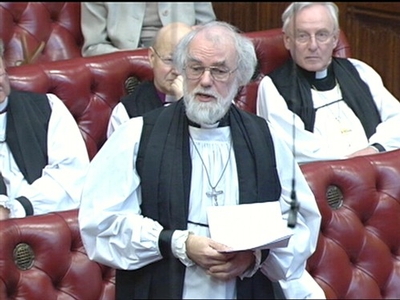
A walking, talking advertisement for the benefits of separation between church and state


How huge must Odone’s white persecution complex really be, to behold these manifold examples of the Christian faith woven into the fabric of our society, and still come away feeling slighted, aggrieved and persecuted? Newsflash, Odone – denying civil rights to gay people and imposing your morality on others is not part of expressing your faith. Expressing your faith is all about what you yourself choose to say, read, write, eat or wear – not what you want other people to do.

Odone also chooses to bemoan what she perceives as a weak-willed response by western nations to [real] persecution of Christians abroad:

Why should the Foreign Office move heaven and earth to protect Christian minorities in the Middle East when this Coalition allows Christians  to lose their livelihood on account of their religious beliefs? Why should the EU get heavy with governments in the Middle East when its member states have signed up to 41 laws that discriminate against Christians?

Here we actually have the semblance of a lucid thought, but of course Odone stops at the feeling aggrieved part rather than proposing any potential solutions to this problem. The EU does not seek to use any of its economic leverage to stop persecution of Christians in the middle east – okay, so what form should this leverage take? Cristina Odone is silent on the matter.

Actual persecution of Christians.
Actual persecution of Christians might look like this.


As for the recent suicide bombings and mass shootings at churches in Pakistan and Kenya, Odone is similarly silent when it comes to a plan of action. Does she favour a military intervention, economic sanctions, or just harsher diplomatic words? We don’t know, because she doesn’t say. And she doesn’t say because she hasn’t given it a moment’s thought.

Because of course, to Cristina Odone, this isn’t really about those long-suffering Christians tucked away in the far corners of the world. It is all about her, the Cristina Odone show, railing against the fact that centuries of engrained bias in favour of her own religion (my religion too, incidentally) are starting to be rolled back in favour of something more slightly resembling equality before the law.

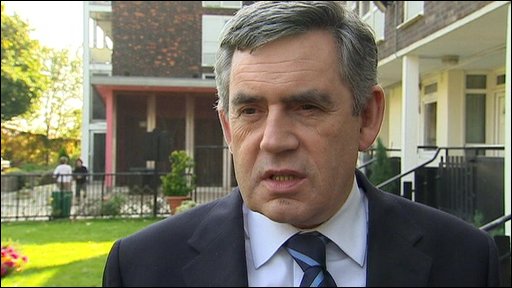
Another Reason To Dislike Gordon Brown

I am only allowed by my wife to rant about Gordon Brown and his toxic impact on British life and politics a maximum of three times per week. Yes, she keeps track, and yes, even I will acknowledge that this has sometimes been necessary. No such restriction applies to this blog, however, which is just as well given recent revelations made by former Labour spin-doctor Damian McBride.

Apparently, Brown’s first instinct upon realising the gravity of the situation brought about by the global economic crisis and Britain’s unique unpreparedness to deal with it (thanks to eleven years of big spending Labour government) was not to issue a heartfelt mea culpa and apology to the British people for the upcoming lost decade that he was unleashing, but instead to start plotting the implementation of martial law on the streets of Britain.

Help to engineer a global financial calamity and then propose banning people from protesting about it - that's the Gordon Brown way.
Help to engineer a global financial calamity and then propose banning people from protesting about it – that’s the Gordon Brown way.

The BBC reports:

Gordon Brown discussed deploying troops on Britain’s streets as news of the 2008 financial crisis became clear, an ex-Labour spin doctor has claimed. In extracts of a book published in the Daily Mail, Damian McBride said the former prime minister feared “anarchy” once the scale of the crisis was known. According to the book, Mr Brown said: “We’d have to think: do we have curfews, do we put the Army on the streets, how do we get order back?”

I am continually accused of being too hard on Gordon Brown. He was a good person, interlocutors on his behalf insist. His heart was in the right place, they plead. He was a simple humble methodist man who just wanted to do good for his country, they tell me. Blah, blah, blah.

This man, uniquely responsible for ensuring that Britain entered the great recession as the least well prepared of all of the major world economies, thought that the best way to deal with the potential fallout would be to deploy troops on the streets to stop us from looting and pillaging our country back to the stone age.

The article continues:

Mr Brown is quoted as saying: “If the banks are shutting their doors, and the cash points aren’t working, and people go to Tesco and their cards aren’t being accepted, the whole thing will just explode.

“If you can’t buy food or petrol or medicine for your kids, people will just start breaking the windows and helping themselves.

“And as soon as people see that on TV, that’s the end, because everyone will think that’s OK now, that’s just what we all have to do. It’ll be anarchy. That’s what could happen tomorrow.”

According to Mr McBride’s book, Power Trip, Mr Brown feared panic from other countries could spread to the UK.

I am genuinely unsure which is worse – the fact that the man brought our nation to a place where such draconian, apocalyptic scenarios even had to be considered, the fact that he thought they might be the best way of tackling the problem, or the fact that his current proteges are this very day standing giving speeches at the Labour party conference in Brighton where they are denying any responsibility for or complicity in Britain’s continuing economic malaise. There are no words or phrases critical enough of the premiership of Gordon Brown.

The book’s author, Damian McBride, does not do himself any great favours as he relates the tale. Grateful as we must be to him for shedding this additional light on the Brown terror, of course McBride was personally supportive of everything that Brown did:

“It was extraordinary to see Gordon so totally gripped by the danger of what he was about to do, but equally convinced that decisive action had to be taken immediately,” Mr McBride wrote.

He claimed the then prime minister understood the situation better than other world leaders, his UK opponents and senior bankers.

And the former spin doctor rated Mr Brown’s actions as “up with those of President Kennedy and his advisers during the Cuban Missile Crisis”.

John F. Kennedy and Gordon Brown – historical equals and political peers. Aside from the fact that they both ghost-wrote books about the meaning of courage, I’m not really feeling the similarity right now.

Labour Party Conference 2013 – Reflections

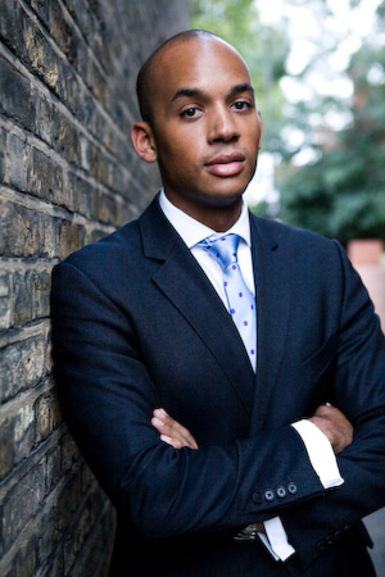
The economy was fine and everything was splendid until 2010 when the Tories came into power, according to Chuka Umunna, Labour's point person on Business


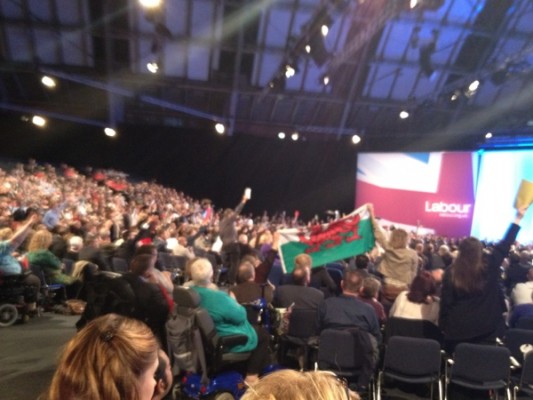
After listening to the various speeches at the 2013 Labour Party Conference this morning, I believe I have detected a theme running through almost all of them.

I don’t mean the usual Labour tunnel-vision and denial of their role in wrecking the British economy and increasing the size of the British state to freedom-crushing, unsustainable levels – that has already been well documented, on this blog and elsewhere.

Nor do I mean the incessant moralising, the endless strictures about how anyone who holds conservative views must be rich, heartless and hold the “common man” in contempt, or the assertions that skepticism about pooling national sovereignty and submitting to an ever-increasing burden of regulations emanating from the European Union somehow equates to a longing for isolationism and a desire to cut off trade and ties with with the world.

I refer instead to the mindset that for every problem, there is a government solution waiting to be proposed, seconded and carried at a Labour conference.

The smug cloud has already enveloped Brighton and is rapidly encroaching on the rest of the country.


There has been an increase on the number of workers on zero-hour contracts in these tough economic times. Gasp! Outrage! Zero hour contracts must be inherently terrible, a product of evil British businesspeople who want to make money on the backs of the poor, and must be outlawed immediately.

A British soldier was violently beheaded in a terrorist attack on the streets of London. Outrage! We need new laws making it a specific offense to attack military personnel, because if only the general laws against beheading people had been supplemented by additional laws prohibiting the beheading of service members, this heinous crime would not have been committed.

Watching the Labour party assemble for their yearly conference is like observing a group of weary, jaded old codgers assemble in a meeting hall to bemoan the state of humanity, how far it has fallen, and what they must do to forcibly drag the rest of us back up to their lofty levels of enlightened tolerance and progressivism.

How thoroughly depressing it must be to perpetually think so little of the human capacity to do good that the only solutions you can ever imagine are found in new regulations preventing people from being themselves, and transferring agency from the free individual to the faceless, bureaucratic state.

And of course, the answer to the societal problems that Labour bemoan can never be found in reducing the power and scope of the state, or empowering individuals to take more responsibility for themselves. It is as though the Labour party is incapable of taking the laissez-faire, hands-off approach to the people that they rightly champion in the social realm and applying it to the economic realm.

And that’s a great shame, because I feel sure that increasingly, the real divide in British politics will not be between the traditional left vs right paradigm, but between people who see government as the answer to everything, and people who are heartily sick of not being able to live their lives freely without continual badgering and preachy interference. Right now, neither party is ideally positioned to capitalise on this shift, but if today’s conference speeches are anything to go by, Labour has much more ground to make up.

On Political Silly Season

At least it isn't every year.
At least it isn’t every year.


It is party conference season in the UK, with the Labour Party currently enjoying their moment in the spotlight. It is times like these that I envy the Americans, who only have to endure the spectacle of their preferred political party’s most gung-ho, swivel-eyed or greasily ambitious apparatchiks getting together to engage in collective groupthink once every four years, unlike us Brits who are treated to these traveling roadshows each year.

And as usual, we have had our fair share of silliness.

The Liberal Democrat party conference was largely dominated by the news that Sarah Teather, the current government children’s minister (because apparently that is a separate role that we need?) is throwing her toys out of the pram and standing down as an MP at the 2015 general election because the LibDems are not sufficiently like the Labour party for her liking. In a similar vein, much of the remaining press coverage was driven by continual speculation about Nick Clegg’s leadership, and Tim Farron’s (the Liberal Democrat’s party president) evident desire to serve in coalition with Labour rather than the Conservatives, and quite possibly to shack up with Ed Miliband and take romantic mini-breaks together as well.

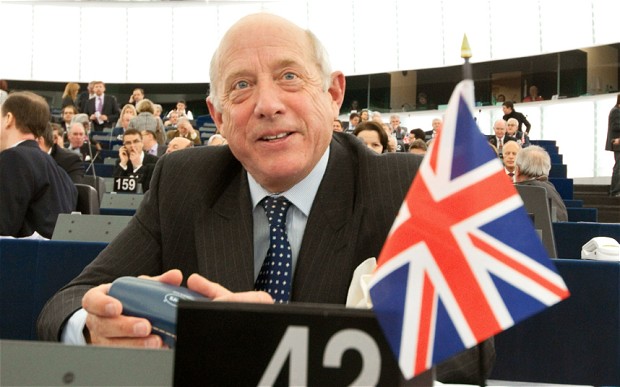
UKIP were hoping for a successful conference to build favourable press in the long run-up to the European Parliamentary elections, where they are expected to do very well and challenge for first place. However, they came a cropper when one of their MEPs hit a journalist and made an inappropriate “slut” joke, all in view of television cameras and witnesses. This is a typical example of the pointless distraction – the actions of a silly activist then overshadow anything substantive that may have been discussed or decided at conference. UKIP’s leader, Nigel Farage, did his frank and inimitable best to salvage some small gain from the smoking wreck and lift the morale of his troops, but the damage was already done.

This man can make positive press conference disappear faster than I can finish this capt---
This man can make positive press coverage disappear faster than I can finish this capt—


Now we are enduring the Labour party conference, another exercise in denial as to the reasons for their 2010 general election loss and their persistent unpopularity throughout the country. Of course, no Labour conference is complete without the proposal for several new and entirely redundant laws. This time, in the wake of the horrific terrorist murder of British soldier Drummer Lee Rigby, Labour are proposing making it a specific crime to attack a member of the armed forces. Because, of course, at the moment anyone could do that and walk away entirely untouched by the criminal justice system. So we have the typical frenetic, pointless legislating that we have come to know and love from the Labour party.

Something to look forward to.


As of press time we can only speculate as to the joys that await us at the Conservative party conference, but as a conservative voter I am filled with my usual apprehension that we will see more moves to make the Tories indistinguishable from Labour, and the unceasing need to try to “outnice” their main electoral rivals by embracing universal benefits for rich and poor alike whilst continuing to clobber the rich with onerous tax rates. If Osborne and Cameron manage to articulate even one original policy that stands a snowball’s chance in hell of shrinking the state and increasing personal freedom, I will not only be delighted but I will eat my hat.

So, in conference season 2013 we have a party in denial about why they were booted out of government and remain widely distrusted, a party in the midst of severe post-wedding remorse pining for the other woman that it didn’t marry, a party whose manifesto and policy announcements were entirely upstaged by an ornery old man unfamiliar with the workings of television and a party calling themselves the Conservatives but who seem to have accidentally picked up the Labour party governing playbook by mistake.

It must be groundhog day.

Best Thing Of The Day

Some very welcome news today for doughnut and coffee lovers living in the UK – Dunkin’ Donuts is preparing to launch itself onto our shores, with ambitious plans to open 150 restaurants over the next five years.

Yes please.
Yes please.

The Telegraph reports:

The chain, which pulled out of Britain in the mid-nineties as its sugary offerings and coffee failed to whet appetites in the UK, plans to develop 150 restaurants around in country.

Dunkin’ Donuts said on Thursday it had signed agreements with two franchise groups – The Court Group and DDMG – to open restaurants in North and East London. It is also in advanced talks with other franchise partners.

North London, as well! Bloody marvelous. I have always favoured Dunkin’ Donuts over Krispy Kreme (who established themselves in Britain back in 2003), not just for the doughnuts themselves but also the delicious breakfast food.

I had no idea that Dunkin’ had a UK presence back in the 1990s – apparently, as was the case with Taco Bell, the insular British palate was not yet ready for tasty, exciting things in those dark ages. We have come a long way in the intervening decades.

Of course, The Guardian cannot resist chiding us for allowing our mouths to water at the prospect of more choice in the doughnut market, publishing a less-than complimentary list of Dunkin’ Donuts facts, including:

1. There are 49g of sugar in a single one of its donuts. That’s more than half the guideline daily amount. The first casualty of the doughnut war is health.

Thanks, Mr. Buzzkill. But no matter; let us celebrate by enjoying this amusing Dunkin’ Donuts commercial from the United States:


I will, of course, be posting a review as soon as the first outlet opens. Stay tuned.