Bring The Police To Heel

Two stories in the media this afternoon, each quite different in nature but both pointing toward the same dark, disturbing and authoritarian shift that continues unabated in Britain today.

policedogs

The first is from The Telegraph, serving up video footage of a police sergeant in Gloucester threatening a photographer, admitting to swearing at him and threatening him with physical harm:

The officer is heard to say, “we’ll nick you now and I will make your day a living hell, ‘cos you’ll be in that cell all day. What I’ll probably do is I will ask for you to be remanded in custody and I will put you before the magistrate.”

He added: “You’re lucky that I didn’t knock you out. I swore at you, yeah. It got your attention, though, didn’t it?”

Because apparently taking pictures or video of the aftermath of a road accident is now illegal in our country, as is showing anything but the most fawning and servile deference and adulation to the most power-crazed and high-handed officers in the police force.

The second article is chilling on an altogether different level, and chronicles the process by which the UK’s anti-terrorist police decided that it would be in any way appropriate and proportional to haul a twelve year old boy out of his class at school to question him about an event that he had organised on Facebook to protest the planned closure of his local youth club:

Wishart said that after the school was contacted by anti-terrorist officers, he was taken out of his English class on Tuesday afternoon and interviewed by a Thames Valley officer at the school in the presence of his head of year. During the interview, Wishart says that the officer told him that if any public disorder took place at the event he would be held responsible and arrested.

Speaking to the Guardian, Nicky Wishart said: “In my lesson, [a school secretary] came and said my head of year wanted to talk to me. She was in her office with a police officer who wanted to talk to me about the protest. He said, ‘if a riot breaks out we will arrest people and if anything happens you will get arrested because you are the organiser’.

The event was organised in the Prime Minister’s home constituency of Witney in Oxfordshire, but in what possible dark, dystopian world is it okay for the police to make a mountain out of a truly tiny molehill and question the intentions of a young boy who was doing nothing but being an engaged and activist citizen? Our country would be vastly better off if there were more children like Nicky Wishart, who actually care about local issues enough to take a stand rather than festering away in front of the television for hours on end.

But it is the next quote attributed to the police that is truly terrifying:

“He said even if I didn’t turn up I would be arrested and he also said that if David Cameron was in, his armed officers will be there ‘so if anything out of line happens …’ and then he stopped.”

If anything out of line happens, the armed officers will do what, exactly? Shoot a twelve year old boy as some kind of sadistic punishment? What reason is there to mention the potential presence of armed officers, other than to imply that they might do the one thing that regular police officers do not?

The truly scary thing is that we don’t even have to worry about our politicians using their power and influence to get the security services to intimidate and threaten the population on their behalf – the security services seem perfectly willing to proactively do so of their own volition!

We must also ask why it was the anti-terrorist police (who apparently have no real serious threats to the nation on their agenda at the moment to be wasting time on routine public intimidation work, for which I suppose we can all breathe a sigh of relief), of all the many branches of our national law enforcement apparatus, who seemingly felt it necessary to bully a small child about his planned political protest. Has GCHQ intercepted terrorist chatter that Al Qaeda intends to infiltrate local community action groups in order to launch their next attack? Whatever next – fears of ricin or anthrax being baked into scones at a Women’s Institute cake sale, and elderly ladies being detained in their kitchens?

The police make the predictable but ludicrous claim that their intention was not to cause distress or to intimidate Wishart, but was simply part of their standard community outreach efforts:

“On Tuesday 7 December, our schools officer for west Oxfordshire attended the school in Eynsham and spoke to a 12-year-old boy in the company of the pupil’s head of year, about a planned protest. This was not with the intention of dissuading him from organising it, but to obtain information regarding the protest to ensure his and others’ safety. As with any demonstration, we always aim to facilitate a peaceful protest.”

Perhaps the police need to apply the “ordinary person” test and reconsider the likely effect of being yanked out of class and spoken to by police in the presence of a senior teacher with no parents or legal representatives present, on the psyche of a young boy. Is doing what they did more likely to “facilitate a peaceful protest” or to stamp out a potential protest before it ever sees the light of day?

David Cameron needs to send a very clear message to the nation in response to this outrage, as a matter of urgency. And through the locally elected police commissioners, he needs to publicly rebuke and call off the police attack dogs currently biting at the ankles of the British citizenry. Cameron and the commissioners must make clear that individual police officers will curry no favour with their superiors by overzealously applying extreme interpretations of public order laws, and that those higher in the law enforcement hierarchy will receive no special favour from their political masters by using their extensive powers to bully and silence any protest that could be politically embarrassing.

Semi-Partisan Sam is quite unequivocal on this matter. The apology from the police to the family concerned is all well and good, but it is quite insufficient. It is high time that the British police are brought to heel once and for all.


Missing The Point On Immigration

They're a' comin...


James Kirkup, writing in The Telegraph, asks “How much would you pay to reduce immigration?”, in an article praising UKIP’s Nigel Farage for making the supposedly bold proclamation that he would rather be slightly less well-off in return for lower levels of immigration into the United Kingdom – in other words, that he is willing to pay out of his own pocket to reduce immigration.

[Farage] added: “If you said to me, would I like to see over the next ten years a further five million people come in to Britain and if that happened we’d all be slightly richer, I’d say, I’d rather we weren’t slightly richer, and I’d rather we had communities that were united and where young unemployed British people had a realistic chance of getting a job.

“I think the social side of this matters more than pure market economics.”

Kirkup, who considers this to be a “genuinely interesting” way for Farage to reframe the debate, phrases the quandry this way:

How much economic growth should we give up? How much of your fellow citizens’ prosperity, are you willing to sacrifice in order to cut the number of people entering Britain from abroad?

To be precise, how much — to the nearest £1, please — would you pay to reduce immigration?

Unfortunately, by accepting Farage’s premise that immigration is harmful in all spheres other than the economic – and the idea that immigration must automatically be a negative thing, a cause for concern or something to be ameliorated.

This is yet another argument where the two opposing sides seem to argue back and forth over an irrelevant distraction rather than the main issue. Why is it that immigration has, at times, led to divided communities and fractured society? Why must it be that immigration puts the young British unemployed at even more of a disadvantage? If only we could begin to address and turn around these key issues, surely the matter of net immigration into the UK would cease to be of almost any importance at all.

For example, we should re-examine how Britain can better to integrate and assimilate new immigrants into our society, avoiding the mistakes of countries such as France and learning from those such as the United States. How can we ensure the right balance between providing support and assistance to help new arrivals find their feet and integrate into society, and using “tough love” where necessary to ensure that the state is not enabling immigrant communities to isolate and refuse to become part of British society?

We should take a long, hard look at our education system and parenting culture and ask why it is that a young adult born and raised behind the iron curtain in an economic, political and social environment far less prosperous and nurturing than that of the UK is so often preferable, in the eyes of so many reputable and rational employers, to a British-born young jobseeker who has enjoyed all of these advantages.

And yes, we should look at the topics of welfare and the terms of our relationship with the European Union, and decide whether allowing brand new economic migrants to our shores to benefit from the welfare system that the rest of us have paid into over a longer period is really a cost that we are willing to continue to pay in order to maintain our EU membership in its current form.

None of this debate will happen as long as we accept the premise that economics aside, immigration is an inherently bad thing – to shrug our shoulders and go along with Nigel Farage’s line of reasoning, as James Kirkup and others do so willingly.

How much would people pay to have an informed debate about the real social, educational and economic issues around immigration? More than our politicians and media seem to realise.

In Defence Of Prince William

Yes, it's slow news season
Yes, it’s slow news season


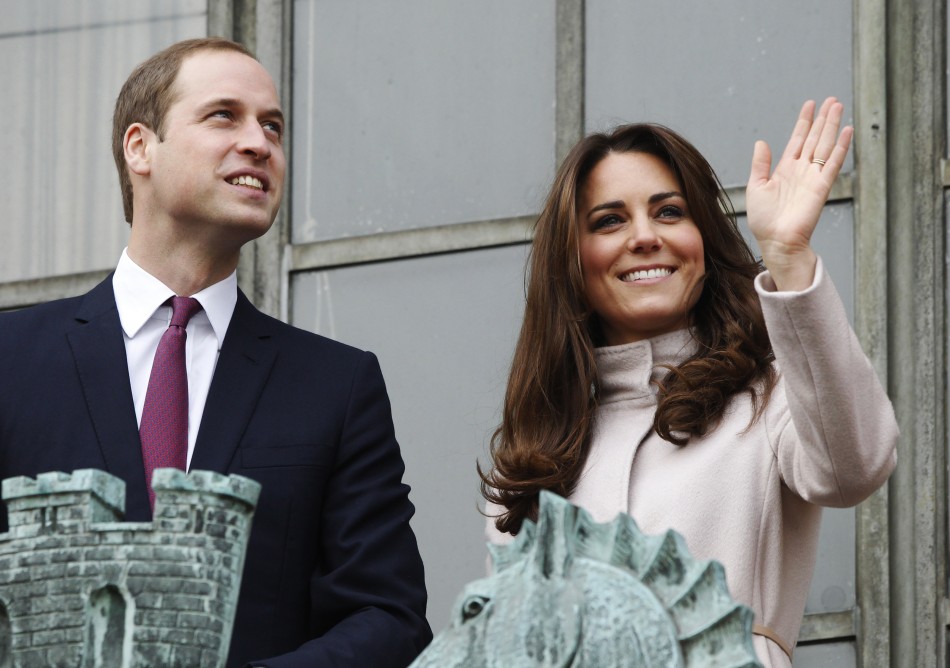
Having devoted considerable time to bemoaning his father’s various foibles and misdeeds on the pages of this blog, it feels somewhat unusual to be charging to the defence of Prince William today, but I do so because a lot of the faux outrage about the Duke of Cambridge’s admission to Cambridge University for what is essentially a privately-funded executive education course is entirely misinformed, off-the-mark and deserves rebuttal.

Perhaps I should not jump on someone who is still in university herself, but Melissa Berrill, writing in The Guardian (and therefore already doing much better than me), seems to have best epitomised the non-story nature of the whole affair in her polemical piece entitled “William’s on his way – and Cambridge should be ashamed”.

The basic thrust of her argument is that all of the work she has done convincing people that Cambridge University is socially inclusive and not the walled-off preserve of the posh, entitled blue-bloods has been undone in a heartbeat, and all because William is coming to study. The horror!

I’d tell them that I’d been to the local state school, and explain that it isn’t like the old days at Cambridge any more. You can’t get in just because you’re rich, or because your dad knows the right people. The admissions system isn’t perfect, but nowadays they work extremely hard to make sure they admit students based on merit, not class or family connections.

It was a spiel that came easily to me, because I’d done it many times before; on countless open days and access visits around the country throughout my degree. It didn’t always convince people – some had an impression burned too deeply to change. But sometimes it did; sometimes it made a difference.

She then proceeds to throw her toys out of the pram:

I could, for example, have spent it [her time] smashing up restaurants in full evening dress. Or snorting champagne up my nostril through a straw. Or posting Facebook pictures of me lying on a bed of gold coins wearing a top hat. For all the difference it will now make, I may as well have spent it doing all these things – because my argument is now worthless.

This would be a great point, a devastatingly effective rebuke to Cambridge University and a nice little dig at the Bullingdon Club too – if only there were any element of truth and reason to it. But there is not, and Berrill torpedoes her own argument in the very next paragraph:

It doesn’t matter that he’s actually been admitted to a 10-week “professional” course whose admissions process doesn’t directly compare to the mainstream Cambridge one – not a single news outlet has bothered to make that distinction and, to the world at large, “William’s going to Cambridge” is the only message that will be taken away.

Now, I flunked out of Cambridge University half way through my Economics degree so maybe I’m not best placed to talk, but as someone who has successfully completed her undergraduate studies at that fine institution, should Berrill (and the many journalists and columnists who have uttered similar words of disapprobation) not be concerned precisely with the truth of the matter rather than the way that it may be erroneously perceived by others? Isn’t the pursuit of truth and knowledge kind of what the whole university and higher education thing is all about? Is Melissa Berrill really saying that because something quite innocent might look bad, we should avoid doing it? And has she herself not aided and abetted  the “news outlets” and the “world at large” in their misunderstanding by joining in this outrage at a totally false straw man argument (that Prince William has somehow snuck in and snatched the coveted university place of some plucky, honest-to-God, working class, AAA-achieving eighteen year old for his own, lazy ends)?

Berrill rages:

Admitting Prince William is an insult to every student, whatever their background, who got into Cambridge by getting the required A-level or degree results. It’s an insult to every student whose A-levels and degree are the same or better than his, and who didn’t get a free pass to Cambridge in spite of them.

Admitting Prince William to this custom-made executive education course is not a particular insult to anyone, and to argue that it is insulting to students in the main academic programme is akin to saying that me watching an Olympic football game at London 2012 was a slap in the face to the Olympic athletes who worked so hard to earn the right to represent their respective countries in the Games. Not so. Just like me at the Olympics, William will be going there to spectate, to soak in the atmosphere, and – crucially – will pay his own way. Just as I did not walk out of Wembley Stadium with a gold medal around my neck, so William will not be walking out with a coveted Cambridge University degree.

This not-so-subtle nuance seems to have evaded the highly educated Oxbridge mind of Melissa Berrill.

If there is to be any outrage, why not get worked up about the fact that it appears that the University’s Cambridge Programme for Sustainable Leadership has custom-made the course for the benefit of one person? Why not check whether or not there is any precedent for offering this type of course to a small group of private individuals, and ensure that the fee payable to the University by William will be the market rate that anybody else would be expected to pay? Why not – if you really want to push the boat out – have a debate about whether executive education is a good thing at all, about the merits of allowing rich and fat executives from FTSE 100 companies to pay lots of money to spend a few weeks on campus getting drunk and hooking up, and walking away with a certificate bearing the name of a famous academic institution?

Why have we not seen these lines of enquiry and debate play out in the newspapers instead of the William-gate or Cambridge-gate style narrative that we have been fed instead? Perhaps because to do so would require some real, actual research and journalism, as opposed to a simple good vs. bad, black/white debate designed to polarise and sell papers.

If we are going to object to something, let’s keep the arguments tight and to the point, not vague and fatuous. Those protesting Prince William’s enrollment at Cambridge have failed this test.

Edumacation, Edumacation, Edumacation

Higher education, solved.


The Guardian trails a new Labour proposal for “debt-free degrees” for up to 50,000 students per year, an idea which may well end up in the Labour party’s 2015 general election manifesto. The Guardian’s political editor, cheerleading the idea, claims that this scheme will “tailor university education more closely to the needs of business and young people”. Of course, it doesn’t take long for the enquiring mind to begin picking holes in the concept.

From the top:

Under the scheme, people in employment will be able to study for a degree relevant to their existing and future work, with the costs being paid jointly by government and their employers. The degrees would carry no fees and the in-work students would receive a wage or training allowance from their employer during their period of study.

There is a world of difference between a short course designed to brush up an employee’s computing skills, or even a slightly longer and more involved course in a field such as project management, and the rigorous demands of a university degree. Whilst an employer may see the immediate short-medium term benefit in paying for their staff to undertake the former on company time, it would be a generous boss indeed who would take the dual hit of lost working time and course fees to fund a whole degree.

The costings for the proposal are worked out with the astonishing level of detail and realism that we have all come to expect from Labour under Ed Miliband’s leadership:

Denham, who will outline the plans in a lecture to the Royal Society of Arts on 16 January, says the government’s financial contribution will be found by redirecting money currently spent on writing off unpayable student debt from fees and maintenance loans, and on student grants.

I have read this sentence through several times, and if it makes any more sense to a reader than it does to me, I would love to have the translation in plain English. You don’t “spend money” writing off debts from unrepayable student loans. And if John Denham, the policy’s champion, is suggesting that the £3bn shortfall between expected and actual repayments on student loans over the course of the next parliament can be easily resolved by tracking down students who have moved abroad and shaking them down for money, or by waving a magic wand and making graduates suddenly earn income above the £21,000 threshold so as to become eligible to make repayments, then I will take this as just another sad sign that Her Majesty’s Loyal Opposition has no grip on economic reality or the way that public finances work. Whenever we are told that the money for some policy “will be found by redirecting money currently spent on…”, I take it as seriously as I would if Denham told me that he would fund his policy through “efficiency savings”.

There is then, of course, the question of the nature and value of these new degrees, were they to be taught in the classroom. If, as the Guardian claims, they are to be closely “tailor[ed] … more closely to the needs of business”, the degrees are likely to be highly specialised, with much less transferability to other fields of work than more generalist degrees. Indeed, any sensible employer acting in their own interests would be almost certain to demand this – if you are going to pay for someone to get a degree, it is in your interests as an employer to make sure that that degree will be of maximum use to the employee whilst they are working for you, and as little use to them as possible when they come to take that degree and use it elsewhere – so as to act as a deterrent to leaving.

But seeing only the positives, Denham imagines that business will embrace the idea of paying for their employees’ qualifications:

Denham says the proposals will prove attractive to many businesses as they will save money on recruitment and retention, having trained handpicked staff. They will also save on in-house training costs. Employers and students will also be able to shape the courses to ensure they are relevant.

But apparently under the precursor to this policy, employers were expected to contribute £3000 towards tuition costs, and would also be expected to pay a wage or training allowance to their employees as they studied “intensively over two years” or longer. I find it hard to imagine that any savings on recruitment, retention or in-house training will be sufficient to make incurring these expenses an attractive option.

The Guardian further joins the Labour Party in proclaiming that the new policy proposal is in direct response to demand from industry and the private sector, as the article continues:

The ideas are likely to be welcomed by business groups. Last July the CBI said both universities and businesses needed to be more imaginative in the way they provided high-quality education that was relevant to the country’s economic needs, and affordable for young people.

The accompanying link in the Guardian article in support of this assertion does not work, which is probably no accident. Although the CBI and others are right to acknowledge that the standard A-levels and three-year degree route is not sufficient to meet the recruitment needs of the British economy in 2014, this is a long way from a plaintive call for the kind of policy that John Denham wants to enact, and it is sneaky in the extreme for the Guardian to shoehorn in this unrelated quote from the CBI’s policy director:

Katja Hall, CBI policy director, said: “The UK needs to vastly increase the stock of workers with higher-level skills to drive long-term growth and stop us falling behind our competitors. We need to tackle the perception that the A-levels and three-year degree model is the only route to a good career.

Acknowledgement of this simple fact by the CBI is a good and obvious thing. Of course rewarding and well-paid careers can be achieved through many routes, and alternatives to the standard path should always be sought and encouraged where they could be of greater benefit to people. But to take this broad and nonspecific statement made by the CBI last year and try to bend it in support of a specific (and particularly ill-thought out Labour policy) is manipulative and disingenuous.

It does not bring me great joy to pick apart a policy supposedly intended to address a real problem – a significant and growing skills gap between the demands of industry and the abilities of those entering the workforce. But this proposal appears completely unworkable to me. In order to get business to embrace it in any large number, it seems to me that the the conditions would have to be so onerous – in terms of the narrowness of  the degree (more akin to a vocational qualification) and the period of time to which the employee is beholden to work for the employer following graduation – that no student in their right mind would sign up. And if Labour do get into government in 2015 and enact the policy in a way that is remotely appealing to potential students, the cost to the employer would be such that very few firms (aside from those wishing to curry special favour with the government in order to achieve other ends) would be likely to subscribe.

If anyone finds my thinking to be flawed, or can argue that this Labour proposal is anything other than an empty, unworkable vessel designed to launch the phrase “debt-free degree” into the public consciousness ahead of the next election, I would be very keen to hear from you.

Use the comments section, as usual.

Jim Murphy: Labour’s Saving Grace?


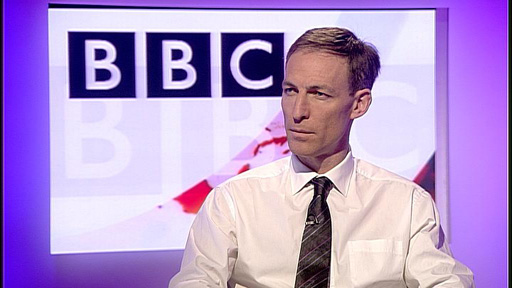
After a day enduring the speeches at the 2013 Labour Party Conference in Brighton, I am rapidly coming to the conclusion that Jim Murphy MP, the shadow Defence Secretary, is the sole saving grace in Ed Miliband’s weak shadow cabinet.

Aside from the much-heralded rollout of a redundant proposal to specifically criminalise attacking a member of the armed forces, his speech – delivered without notes or teleprompter – was the best thing of the day:


Murphy rightly calls out the current government for their mistakes in defence policy, and though Labour’s record in this area is hardly stellar, he manages to land some punches that will hurt the Tories and which should give them serious pause for reflection as to their own conservative priorities and supposed natural affinity with the armed forces.

In so doing, he also managed to tick off an impressive list of Labour policies and pledges, as yet unmatched by the Tories, which would naturally appeal to service members and their families.

Legal aid and entitlements for veterans.

In-service education for serving troops.

Codifying the armed forces bill of rights in the Labour Party rule book.

Denouncing the decision to make tens of thousands of experienced veterans redundant while expecting their roles to be backfilled by reservists in the TA.

Mocking the lamentable fact that Britain’s new aircraft carriers will enter service years before the jets capable of flying from them.

Rightly calling out the government for failing to address the disastrously bloated and inefficient defence procurement system.

In their zealousness (but not effectiveness) to reduce Britain’s budget deficit and roll back the size of the state, the Conservative/Liberal Democrat coalition government has undeniably weakened Britain’s armed forces and military readiness, and Jim Murphy did well to draw blood on all of these points.

It is still a bit rich for Labour to try to seize the mantle of being the party of the armed forces, but Jim Murphy is a talented and competent politician with an obvious affection for and affinity with the military. He may not have owned up to Labour’s own past failings in the defence sphere – no one in the shadow cabinet has managed to do that – but he is no dove, and he clearly has his eye on the future.

Based on his recent performance, Jim Murphy would be a solid pick for the Labour party leadership after Ed Miliband has finished leading them into electoral oblivion.

The Conservative party should watch and beware.