The Road To Rotherham – When Political Correctness Trumps Child Welfare

alexis jay rotherham


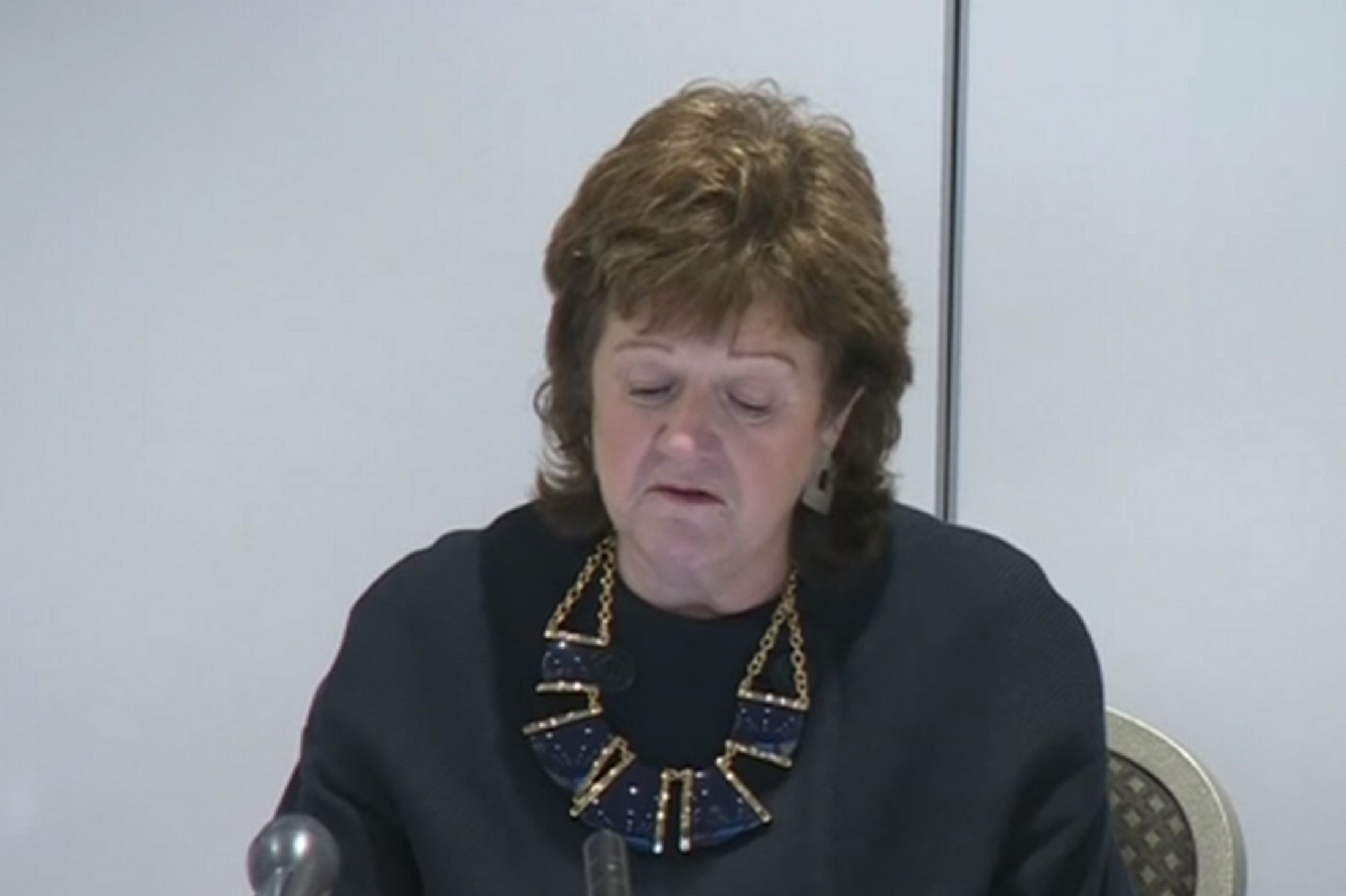
Professor Alexis Jay’s report on child sexual abuse in the town of Rotherham contains truths and revelations so shocking and awful, and on such a scale that it is scarcely possible to believe them.

From the report:

“No one knows the true scale of child sexual exploitation in Rotherham over the years. Our conservative estimate is that approximately 1,400 children were sexually exploited over the full inquiry period, from 1997 to 2013.

It is hard to describe the appalling nature of the abuse that child victims suffered. They were raped by multiple perpetrators, trafficked to other towns and cities in the north of England, abducted, beaten, and intimidated.

There were examples of children who had been doused in petrol and threatened with being set alight, threatened with guns, made to witness brutally violent rapes and threatened they would be next if they told anyone.”

Horrific cases of abuse and neglect going unstopped because of the lethal combination of a failed bureaucracy and individual failings are, of course, nothing new. We see such horror stories only too often, most notably in the death of Baby Peter.

But tragedies such as these are on a far smaller scale than the slow-burning atrocity which took place in Rotherham over a period of sixteen years. The needless death of one child is an abhorrence. The scarring of up to 1500 children’s lives is almost unfathomable.

At times such as this, when we are not too busy breast-beating, it is fashionable to urge calm and wait for the various investigations – 32 of which are already underway in Rotherham – to finish their course. At the other end of the response spectrum, we can expect to see highly emotive calls for the immediate sacking of every public sector worker in the town who was even tangentially connected to the case.

In this case, Yorkshire and Humber’s UKIP MEP, Jane Collins, eagerly stepped up to the plate:

“I categorically call for the resignation of everyone directly and indirectly involved in this case. The Labour council stand accused of deliberately ignoring child sex abuse victims for 16 years. The apologies we have heard are totally insincere and go nowhere near repairing the damage done.

“These resignations should include South Yorkshire’s police and crime commissioner, Shaun Wright. I also call for a criminal investigation by a force not directly linked with this scandal into all those implicated in this scandal. There is no place for these people in public life.”

Fine. This blog will be the last to plead clemency for those at the top who presided over this horror show before moving on to other well-remunerated jobs, especially if their lack of action during the period in question casts doubt on their ability to perform well in their new roles, or to keep the public’s trust. This would certainly include Shaun Wright, the police and crime commissioner.

But the report hints at something far deeper and more insidious which must also be tackled if we are to prevent a recurrence of this scandal, one which is certainly not limited to the Yorkshire town.

The Spectator’s Isabel Hardman, citing Professor Jay’s report, lays it out:

There seemed to be a fear of man rather than of wrongdoing, perhaps even a true definition of political correctness gone mad, that led the council to ‘tiptoe’ around the issue of child sexual exploitation in the Pakistani-heritage community. The report found that there were just two meetings in 15 years about CSE – and they took place in 2011 when the abuse stretched back into the late nineties.

How did this go on for so long? The Jay report is worth reading in full, if only to get a measure of the way apparently well-organised organisations apparently working in a joined-up way managed to fail 1,400 children (at least). But something removed the urgency and made fear of breaking a taboo and being labelled politically incorrect the bigger thing. It was a fear of consequences, of anyone more important and powerful finding out that repeated allegations and internal reports were being ignored and someone being held responsible. ‘An issue or responsibility that belongs to everybody effectively belongs to nobody, and in the case of sexual exploitation of children in Rotherham, accountability was key,’ said the report.

Aside from the usual bureaucratic failures, exercises in self preservation and groupthink which are always offered up as excuses at times like this, it is the apparently terrifying, suffocating fear instilled by a climate of political correctness which emerges as the main culprit in the Rotherham scandal.

When an issue or cultural pathology presents itself in any British community, civic leaders should be able to talk about it directly and work swiftly to address it without fear of reprisal or backlash – though they should also be of sufficient character and moral fibre that they are willing to incur such a backlash. Rotherham, apparently, lacked both attributes – there was a heavily stultifying culture of political correctness which dictated which issues could be examined and tackled, and there was a lack of quality local leadership at any level willing to take on the toxic culture.

This is despite the fact that many people in the local Muslim community were equally outraged by the contents of the report, and declared that they would have willingly participated in efforts to stamp out sexual abuse within their community if only the council had made them aware of the nature and extent of the problem. Once again, the real enemy seems not to be the minority community itself, but rather people within society at large who are trying to curry favour from goodness knows where by wilfully and falsely equating scrutiny with racism.

Consider, by contrast, the lectures and condescension which British politicians are only too happy to dole out to members of Britain’s black community. Echoing similar calls made by President Barack Obama in the United States, David Cameron has been happy to go on record calling for a “responsibility revolution” among black families and black fathers in particular, in order to stem the tide of gun and knife crime in British cities. In these sermons there is no reflection on the socioeconomic circumstances which might lead to higher instances of family breakdown and absentee fathers, just an assignation of blame and a call to do better.

Tumbleweeds gently roll in place of the admonitions that David Cameron and his ministers consistently fail to dole out to other communities facing particularly acute problems of their own. And in the only comparable example, calls by British politicians for the British Muslim community to do more to watch out for and prevent radicalisation and extremism among their disaffected youth, there has been extremely heavy pushback from many prominent people in the media.

This is the insidious power of political correctness gone too far. Often borne out of a genuine desire to be inclusive and avoid giving undue offence, too often it becomes a self-policing dogma that rewards total, unthinking loyalty and the holding of “politically correct” thoughts and positions while punishing and excluding those who are unsure, or who question the status quo.

In these politically correct fiefdoms, groups which enjoy the benefit of politically correct protection are free to live and act unchallenged and unimpeded, while those less astute or well-represented are subject to the laws and rigorous oversight that governs the rest of us. Professor Jay’s report leaves little doubt as to which particular group and community enjoyed de facto immunity from the law in Rotherham.

Of course, the child sexual abuse scandal was not entirely limited to the Pakistani heritage community in Rotherham. And the last thing that anyone should want is to encourage the Britain First-style “Muslim paedos off our streets” marches and battle cries that are becoming increasingly common in the far right community. But where there is a festering problem in any of Britain’s ethnic or religious communities, we need to be able to talk about it frankly and openly without being labelled intolerant or racist. And local authority after local authority, Britain is currently failing this test.

The other most recent example of Britain’s failure to hold all of our diverse religious and ethnic sub-communities to the same standards of behaviour was the Birmingham schools Trojan Horse scandal, which rumbles on and which compromised the educations of thousands of children, who were willfully exposed to some very un-British values at the expense of the taxpayer. As the first concerns were raised and the investigation began, false accusations of racism and Islamophobia not only hampered the work of the Department of Education and thwarted the will of law-abiding non-extremist parents, they also served to sow divisions in the community which persist to this day.

But a compromised education can be repaired. Theocratic teachings and hardline conservative approaches to music, gender inequality and other unwelcome imports from the fifteenth century can, in time, be unlearned. What cannot be undone is the systematic rape and sexual abuse of thousands of British children, some of Pakistani heritage themselves, by malicious adults from their own community – all of which took place under those nose of a local government machine that is big and powerful and only too happy to proactively intervene in citizens’ lives when not constrained by a veto from the forces of political correctness.

Many articles will be written about how this came to happen, and many politicians will say “never again”. But the core enabler of this sexual abuse epidemic is not hard to fathom. The road to Rotherham began when it was made implicitly clear to those in power that political correctness trumps child welfare.

The Curious Appeal Of Basic Income

basic income 1


What if the state stripped away the whole confusing, tangled web of benefits, allowances and tax credits, and replaced them with a fixed weekly government payment to every UK citizen, set according to age and regardless of wealth or employment?

What if an annual stipend of £3,962 for every British adult was the price of ending the endless debate and inaction about Britain’s broken welfare system?

This is the utopian future envisaged by The Citizen’s Income Trust, an organisation that generates ideas and policies around the concept of a guaranteed universal minimum income, or basic income, for everyone – no exceptions.

The New Statesman reports:

The Trust proposes a radical reform of the national welfare system, suggesting the annual spend on benefits should be distributed equally among all citizens, regardless of their income or employment status. Under their proposals, 0-24 year olds would receive £56.25 per week, 25-64 year olds would receive £71 per week and those 65 and over would receive £142.70 per week.

Analysing figures from the 2012-13 financial year, the cost of such a scheme is projected at around £276bn per year – just £1bn more than the annual welfare budget that year –making the implementation of a citizen’s income close to revenue and cost neutral.

Disability and housing benefits would remain intact, but the scheme would replace all other benefits including child benefits, income support and jobseeker’s allowance, national insurance and state pensions. Included in the current annual spend figures is £8bn in Department of Work and Pensions (DWP) administration and £2bn in HMRC tax credit administration and write-offs.

The idea is of particular interest because it is almost revenue neutral. Conservatives and libertarians might argue that the current welfare bill and resultant tax burden is far too high as it is, and that switching one expensive system for another of equal cost would be of no fiscal benefit. This may be true. But it is also the case that four years into a Conservative-led administration, little has been done to effect root-and-branch change of Britain’s welfare system. If not now, when will it happen? Is our current position really the high water mark of what conservatism is able to do to change Britain’s expensive but largely ineffectual system?

An exception must of course be made for Iain Duncan Smith’s Universal Credit programme, which promises to accomplish at least some of the same goals as the Citizen’s Income Trust by streamlining welfare payments into a single payment, calculated by a fiendishly complex formula, designed to ensure that there is a constant financial incentive at every point for citizens to switch from welfare to work when they are able. But Universal Credit doesn’t begin to touch pensions, which remain unreformed and very much the unspoken third rail of British politics. Neither does it address Gordon Brown’s toxic legacy of tax credits, which are essentially government subsidies to business to create more low-paid jobs.

Battle-weary conservatives and libertarians such as Semi-Partisan Sam, long used to a hostile climate for their views, might be forgiven for thinking – with the Cameron government’s popularity at an ebb and with Ed Miliband’s unrepentently unreformed Labour Party ahead in the polls – that the battle for shrinking the state has been lost, and the only scraps left to fight over are questions of how we administrate the massive bureaucracy of redistribution.

Here lies the advantage of the Citizen’s Income Trust’s proposal. The fact that such a radical change wouldn’t cost the treasury any more money forces us to focus not on the costs, but on the other benefits and disadvantages of transitioning to a universal income society. What would be the effects on motivation and incentive to work if the government provided such a floor below which no citizen could fall, unlike the current system of benefits which requires active and continual petitioning on the part of the claimant? And what are the broader moral implications?

A recent article by Noah Gordon in The Atlantic walked through some of these issues as they pertain to the United States, and outlined the beginnings of a conservative case for what they call “guaranteed basic income”:

Apart from lifting millions out of poverty, the plans promote efficiency and a shrinking of the federal bureaucracy. No more “79 means-tested programs.” Creating a single point of access would also make many recipients’ lives easier. If they knew they had something to fall back on, workers could negotiate better wages and conditions, or go back to school, or quit a low-paying job to care for a child or aging relative. And with an unconditional basic income, workers wouldn’t have to worry about how making more money might lead to the loss of crucial benefits.

These are all undeniably advantages that would aid, not hinder, the workings of a lightly regulated labour market such as those in the UK or US. One of the main problems for those on low incomes is that there never arises an opportunity to save and create a personal safety net in case of misfortune. In these circumstances, unforeseen events such as illness, unemployment or even an unexpectedly high bill can lead to disaster, a precipitous drop in living standards, and a return to benefits in an endless inescapable cycle. A basic income would at least do away with this honey trap that keeps so many people mired in poverty.

But a guaranteed minimum income would also perpetuate the scourge of the universal benefit. As the Conservative-led coalition government found when it tried to cap child benefit for higher income earners, there is often huge resistance when something once available to everyone is suddenly means-tested or restricted in any way. But unlike most of the commentary that suggests the solution is not to means-test at all, the problem was that people unneeding and undeserving of a financial benefit were ever receiving it in the first place.

When child benefit was capped in 2012, families with a single earner earning £60,000 or more per year lost the benefit, and the fallout was significant – people still cite the benefit cut high in their reasons for dissatisfaction with David Cameron and his supposed contempt for the Conservative grassroots. Of course, the conservative grassroots should never have been content to pay higher taxes in exchange for getting a fraction of their money back through a universal benefit anyway, but this shortcoming was widely overlooked.

Everyone squeals when a universal benefit is taken away, even when the payments are only subsidising violin lessons, wine club memberships or second holidays abroad. And the fact that a payment intended to help with the purchase of essentials such as children’s clothing or nutritious food is co-opted by the middle classes and those on upper incomes to subsidise luxuries speaks to the tremendous waste that such benefits represent.

The one other area where a minimum universal income holds some appeal is the fact that it attempts to reward work and contributions which are not recognised by the market. From the New Statesman:

A citizen’s income also helps compensate for people’s non-financial contributions in a society and culture such as caring for children or elderly parents, undertaking voluntary work or pursuing hobbies and creative interests. Given the safety net of a small guaranteed income, there’s more room for career changes, education and enterprise projects too.

This side of the argument is one too often overlooked by those on the right. Of course it is right and proper that conservatives should support and defend the role of the free market in Britain – that much is crucial. But sometimes – perhaps forgivably, since the free market is under such constant attack by so many voices on the left – we can overlook the fact that the market does not account for everything, and that there are externalities to be considered too.

At present, negative externalities such as environmental pollution or the social harm caused by bad parenting are inadequately accounted for, if at all. Just because it is difficult to apportion costs to such things doesn’t mean that we are granted a licence to throw our hands in the air and make no attempt – but time and again, this is what we do. Therefore, there is some argument that a minimum income could address this shortfall, though it would certainly be a very blunt instrument with which to tackle a problem that likely needs more surgical – or radical – intervention.

As Gordon writes in The Atlantic:

Yet the effort to create a reform conservatism and reconstitute the GOP as the “party of ideas” seems to demand contemplating legitimately radical new ideas on welfare reform.

Radical thinking is certainly required, in Britain as well as in America. If Iain Duncan Smith’s Universal Credit experiment ever actually rolls out on a significant scale and beds down sufficiently that it cannot be immediately unpicked by an incoming Labour administration, then this might be the start of a different radical solution. But at this point, it seems equally likely that Universal Credit will collapse under a mountain of bad headlines, negative spin from Labour and the ubiquitous government IT contract failures that seem to blight any ambitious effort of any scale. If this becomes the case, could a future British Conservative government turn instead to universal minimum income as an alternative?

The view of this blog is that a basic or universal minimum income should indeed be considered in the event of the failure of Universal Credit – though a higher payment incorporating (and doing away with) housing benefit, making it a truly single payment, would be preferable to the model proposed by the Citizen’s Income Trust. Arriving at this viewpoint requires the realisation that the libertarian ideal is not achieveable in modern day Britain, at least not in the short to medium term – there are simply too many people beholden to the idea of a big, activist state.

But in proposing a basic income, conservatives and libertarians can at least make all of their concessions in one unpalatable gulp. Subsidising those who choose not to work may be distasteful, but it is a concession that has to be made only once, as opposed to endless tweaks and patches to a leaking and inefficient welfare system with numerous defined benefits. The mere fact that the dull debate about the extent and cost of benefit fraud would be eliminated at a stroke is in itself almost enough of a reason to support the idea.

Accepting a basic income could thus be acceptable, and even desirable,  if concessions were won from the left ensuring that other regulations (particularly in the labour market) would be reduced commensurately, leading to a more flexible labour market and a more competitive economy. The left can have their cherished goal of a safety net and minimum guaranteed standard of living below which no citizen may fall, but only if the right can have their prize of light-touch regulation throughout the economy. And as with all the best political deals, both sides could legitimately claim victory.

The Swiss will be the next to decide on whether or not to adopt a guaranteed basic income for all citizens. Theirs will be an interesting test case. But opportunities could soon arise for the radical policy to find its way into the manifestos of Britain’s main political parties – Conservatives in the event that they lose in 2015 and are forced to return to the drawing board, Labour if Ed Miliband decides to actually stand for something at the election, and even UKIP as they seek to square the circle and please their newfound ex-Labour supporters while retaining the backing of their energetic conservative-libertarian wing.

Of these, UKIP would seem the most likely buyers at present. Nigel Farage’s party need a strong narrative to cling to as their core messages on the EU and immigration tumble down the list of voters’ priorities in the general election campaign. What better way to eclipse the shambles of their 2013 party conference than to storm out of the gate with a bold policy proposal that could unite both left and right, whilst simultaneously wrongfooting the two legacy parties?

If we cannot have our libertarian Jerusalem in England’s green and pleasant land, perhaps we could at least be partially satisfied with the curious compromise of universal basic income.

John Major’s Immigration Comments, And The Tory Dilemma

John Major Immigration


In a blast from the past, former prime minister John Major, continuing his recent trend of interventions in the British political debate, has made headlines for supposedly contradicting David Cameron’s stance on immigration.

The Huffington Post reports:

In an apparent snub to David Cameron, the former Conservative Prime Minister said it was admirable that people coming to the UK had the “guts and the drive” to travel thousands of miles to Britain in order to improve their lives, not just to “benefit from our social system”.

Speaking to the BBC Radio 4 programme Reflections with Peter Hennessy, he continued: “I saw immigrants at very close quarters in the 1950s and I didn’t see people who had come here just to benefit from our social system.

“I saw people with the guts and the drive to travel halfway across the world in many cases to better themselves and their families. And I think that’s a very Conservative instinct.”

Of course, John Major is absolutely right. People who make the long journey to Britain in order to build a better life for themselves and their families are highly likely to have drive, ambition and work ethic in greater degrees than the average sedentary Brit. But in seeking to create a story in the middle of political slow news season, many media outlets (including the BBC) have been somewhat disingenuous in the way that they presented Major’s remarks.

The former prime minister was quite specific that he was talking about the kind of immigration that he saw first-hand, growing up and living with his family in Brixton, London. The immigration profile at that time was light years away from the current breakdown of immigration in the 21st century, and crucially did not include large numbers of European immigrants coming to Britain availing themselves of their rights under the EU’s common market. In John Major’s youth, the EU and the dream of ever-closer union was but a twinkle in the eye of the era’s political leaders.

The 1950s did see a period of mass immigration, but it was not of the same scale in absolute numbers and was mostly immigration from the Commonwealth as British passport holders born overseas took advantage of their right to settle in the mother country. To speak in praise of immigration from this era is not necessarily to contradict the government’s efforts to reduce net immigration in the year 2014. Thus it is disingenuous for the British media to take John Major’s praise of a 1950s phenomenon and translate it into criticism of 21st century policy.

The one area where John Major is absolutely right, and was not misrepresented by the media, is his claim that many immigrants do indeed have quite conservative instincts at heart. This instinct can be broken down into two types – social conservatism (particularly the case for immigrants from heavily Catholic countries) and fiscal conservatism. The worry for the Tories is that they are completely failing to tap into either of these sentiments or to build meaningful levels of support among recent immigrants.

But how can the government go about doing this while honouring its pledge to reduce overall net immigration? There is a narrow tightrope to walk between responding to public concern about the current immigration rate and making it clear to existing immigrants that they are welcome, encouraging them to assimilate as quickly as possible and then reaching out to them to turn them into Conservative voters. The margin for error is small, but it should still be possible.

Many recent immigrants come from countries that only a few decades ago struggled to escape from under the heavy yoke of Soviet communism – think Poland or Slovakia as prime examples. There is a love and appreciation for capitalism and the free market among many Poles and Slovaks that is often absent from indigenous British people, who tend to take our system for granted or focus only on its faults. And at a time when Ed Miliband’s Labour party seem to offer heavy regulation and re-nationalisation as their only policy prescriptions, the Conservatives have a ripe opportunity to show that their vision of lower taxes and greater freedom will deliver for everyone in the UK, immigrants firmly included.

There is also political capital to be made in toughening up the rules around access to benefits for newly arrived immigrants. The notion that newly arrived immigrants should be allowed to claim support from a system which they have never contributed towards is just as galling to a Polish family settled in Britain for five years and paying taxes as it would be to any UK citizen. But successfully arguing this point would require deft and precise use of language so that the media has no opportunity to run with the false trope that the evil Tories believe that all immigrants are benefit-scrounging parasites.

In short, the areas where the Conservative party (and indeed UKIP) currently alienate immigrants tend to be around the semantics and tone of the debate, whereas their actual policy prescriptions (maximum freedom, low taxes) make an ideal fit for many prospective immigrant voters.

But the Conservatives should have absolutely no expectations that the media, or the Labour Party, will lift a finger to guide immigrants toward this truth. In fact, if the twisting of John Major’s words today is anything to go by, the opposite will take place – the Conservatives will be painted as heartless and cruel in wanting to enforce stricter entrance criteria, while the many negative ways that Labour policies have the potential to hurt economic migrants will be glossed over and excused.

The irony is that British immigration policy tends to only affect new immigrants once – at the point they enter the UK to settle and work. From that point onward, once they are safely settled and working in Britain, the issue becomes largely irrelevant. Ed Miliband and the Labour Party have thus far managed to coast along on the assumption that they will win the lion’s share of the recent immigrant vote because they tend to advocate for a more laissez-faire border policy. But there is absolutely no reason why this should be the case.

The Conservatives have a compelling message to offer those recent immigrants who will go to the ballot box for the first time in 2015. It is a message of liberty and personal responsibility which should resonate strongly with just the type of people who took a huge risk in packing up their lives and moving to Britain. But for all his well-intentioned words, John Major failed to deliver that message in a way that cut through the skewed agenda of the news editors.

David Cameron and the Conservative Party urgently needs charismatic MPs and councillors to step up, refine and then start sharing this new message, this Conservative pact with recent immigrants. If they do not rise to the challenge, Labour will win the immigrant vote by default once again.

Dear Insert Name, Thanks For Your Generic Efforts, Love DC

David Cameron Robert Halfon Backbencher MP Conservative


Many people, Semi-Partisan Sam included, receive at least one round-robin letter, trumpeting the glittering achievements and detailing the tribulations experienced by far-flung branches of the family, in the run-up to Christmas each year.

Folksy newsletters of this kind have long-attracted a mixture of ire, derision and pity, but we grudgingly read them because were it not for this (and the real-time bragging that takes place on Facebook), we would otherwise have absolutely no idea what’s new with Aunt Cersei and Uncle Jaime in Kings Lynn or cousin Arya in her gap year travels around the world.

But the one thing we round-robin recipients never do is boast about having received the same mail-merged missive as every single one of our other extended family members. This only makes it more odd that Robert Halfon, the Conservative MP for Harlow, took to Facebook today with evident pride to share a letter purportedly written and sent by David Cameron to celebrate the government’s achievements in the year to date.

The mediocre, mail-merged round-robin letter is shown in its banal entirety below:

David Cameron Robert Halfon Backbencher MP Parliament Letter

Cameron’s attempt at a morale-boosting letter is full of the meaningless platitudes about securing a “brighter future for Britain” that one might expect from a tired politician going through the motions on a local radio interview at 6AM, but it is doubtful that the prime minister personally authored the letter whilst away on vacation in Portugal. Far more likely that the job was delegated to a junior special adviser or some other paint-by-numbers Downing Street aide.

But what is truly interesting about this seemingly dull letter is the fact that the only identifying marker tailoring the letter to Robert Halfon is the inclusion of his name after the word “Dear” at the top. From that point onwards, David Cameron’s missive takes a lazy ramble across the current political landscape, touching on high-level achievements rather than the particular work or campaigning issues of Halfon and his fellow backbenchers.

The prime minister proudly acknowledges the “difficult decisions” that were taken to stabilise and return the British economy to growth. With a fanfare he takes credit for reducing the deficit by a third – some credit, considering that the government fell far short of its target on deficit reduction, and that the national debt continues to grow.

In his summer hubris, Cameron goes on to take personal credit for falling unemployment, reduced immigration (again, far from achieving the targets set out in the 2010 general election campaign), improved schools and, at probability’s furthest stretch, the supposed repatriation of previously outsourced and off-shored jobs to Britain. And the memo ends with a limp call to action, exhorting the prime minister’s Westminster foot soldiers to continue fighting the good fight to keep Ed Miliband out of Number 10 Downing Street (and Cameron on the business side of the famous black door).

But would it really have been so hard to add even a dash of customisation before firing out these letters? The recipient in question, Robert Halfon, is a relative newcomer to Westminster having joined the 2010 parliamentary intake, and so does not have a huge stable of stories, anecdotes, policies or victories for a hapless intern to research. But he does have several solid achievements and bold stances to his name that could have been used, had anyone been bothered.

The top paragraph of the Cameron-O-Gram might have approvingly mentioned the successful Fair Fuel campaign led by Halfon, conveyed thanks for leading the way in advocating more youth apprenticeships, or pledged to work with the Harlow MP to address the problem of prohibitively high car parking prices at NHS hospitals. But it did none of these things. In fact, the standardised email to lowly backbenchers went even further in demonstrating its ignorance or indifference to the work of individual MPs by prominently hedging its bets:

“So a big ‘thank you’ for everything you have done to get us this far. And thank you too for your campaigning this past term – whether that be in the local and European elections in May, or in Newark last month, where our Party came together to win our first by-election in government for 25 years.”

“Whether that be…”? Shockingly, David Cameron and his office seem entirely ignorant as to which MPs contributed the most and the least to recent campaigns, despite Grant Shapps’ threat to shame and punish any MP who failed to pull his or her own weight on the campaign trail. People accuse Ed Miliband’s office of being out of control and unable to properly co-ordinate, but now it seems as though the Conservatives are rapidly falling to a similar dull point.

“Letter-gate” reveals a picture of a prime minister and a government that not so long ago fawned over restive backbench MPs to keep them sweet, but which now believes that they can be treated with any amount of contempt given the fact that they will need help from CCHQ to survive the 2015 general election, and will overlook the snub.

And there can be few better ways to showcase this contempt than spamming hardworking backbench MPs with a cheesy, internal and non-specific campaign memo – ostensibly to give thanks for backbench loyalty – which is hardly different to the regular mailing list bulletins “written” by various Tory ministers and still received by Semi-Partisan Sam as a former member of the Conservative party.

At this point in the life cycle of government, a proactive and attentive leader might take the time to properly shore up morale and accrue some goodwill among his troops heading into party conference season. At the very least, a good party leader might feign an interest in the constituency work or personal causes of their MPs. But Cameron seems unable to even fake this enthusiasm.

Ironically, the earnest and hardworking MP who was so delighted to receive this piece of junk mail from Number 10 – the political equivalent of a pizza delivery leaflet shoved through the letterbox – was chastising his constituents, charities and community groups for spamming / petitioning MPs and adding to their workload in precisely this automated fashion only 30 months ago. In February 2011, Halfon wrote:

So what’s the best way to persuade an MP to support your cause? It’s simple. When I get an invite to visit the local branch of an organisation, I will always go. When I get a personalised letter, hand-signed from a chief executive (as opposed to public affairs officer) that contains local statistics and information, how can I not fail to be interested? When a local constituent calls me asking for a meeting, to talk about his or her involvement in her charity, I will always do it. I remember particularly how I was recently lobbied directly in the Commons by a resident who was involved with a breast cancer charity. She had a profound effect on me. I was only too pleased to support her cause.

So my final advice to charities and the voluntary sector is this: forget the impersonal emails, move away from computer generated email campaigns, stop sending reams of paper by post. Make it personalised and local, and you will not just have my real support, but that of many other MPs as well.

To counsel constituents against using inappropriate forms of communication while lauding precisely the same impersonal tactics when executed by 10 Downing Street, as Halfon seems to be doing, is puzzlingly contradictory to say the least. And at a time when Conservative MPs defending narrow majorities most need the help of their leader to retain their seats in 2015, it is especially odd that at least one backbencher is not more offended at being condescended to in this manner.

As the sweltering Parliamentary summer recess rolls on, the question we are left asking is this: With potent threats from both UKIP on the right and Labour on the left, how on earth does David Cameron expect to lead the Conservatives party to a majority and victory in 2015, when he clearly has so little respect for his generals in the field?

A postcard from Portugal would have cost so little, but said so much more.

A Black Flag Flies In London, Revealing A Schism In Britain

Will Crooks Estate Flag London


A black flag was flown from the gates of an east London housing estate, and an entire neighbourhood was effectively declared last week not only to be in solidarity with the people of Gaza and the cause of Palestinian statehood, but – contrary to any available evidence or the residents’ consent – to also be united in a shared, extremist interpretation of the Islamic faith.

As the Guardian reported at the time:

The flag bears similar writing to the jihadi flags that have been flown by the extremist group in Iraq and other jihadi groups since the 1990s. When the estate was approached last night, a group of about 20 Asian youths swore at Guardian journalists and told them to leave the area immediately. One youth threatened to smash a camera.

When a passerby tried to take a picture of the flag on a phone, one of the gang asked him if he was Jewish. The passerby replied: “Would it make a difference?” The youth said: “Yes, it fucking would.” Asked if the flag was an Isis flag, one local man said: “It is just the flag of Allah.” But another man asked: “So what if it is?”

Should the black flag be banned from the streets, as it is in some European countries such as the Netherlands? Absolutely not – the right to free speech and freedom of expression is one area where it is actually right to take a maximalist, uncompromising stance despite the difficulties and tensions that it may cause.

Banning the black flag, despite its similarities to the jihadi flags flown by ISIS, is not the right move. If a private individual wishes to mark themselves out in public as a ideologically extremist bigot with pro-terrorism sympathies, that should be their protected right. But the flag had no place being flown on council-owned housing property as though it spoke for all of the residents when it did not, and so it was right that the flag was removed by Sister Christine Frost, a Roman Catholic nun and local community activist.

Douglas Murray summed up the most appropriate reaction to the provocation at the time in The Spectator, explaining in stark terms the gravity of the fact that some British Muslims chose to proudly display a flag of this type in London, so far removed from the various conflicts:

When historians look back on Europe in this era, they will rub their eyes in disbelief. ISIS is carrying out actual genocide, ethnic and religious cleansing on the people of Syria and Iraq. Their exact ideological soul-mates in Hamas, Hezbollah and al-Qaeda are doing everything they can to set light to the same region. Right now the western states are finally talking of intervening in Iraq to stop ISIS wiping out the ancient Yazidi and Christians communities of Iraq. Yet we do nothing to stop the same murderous ideology thriving here.

Instead another pattern is set. When we see this disgusting ideology at work, as we have done for the last month, much of Europe turns its hatred onto the Saturday people for defending themselves. Israel continues to defend itself. And we may do something to hold back ISIS in Iraq. But what will we do in our societies when we finally realise that behind the flag of Hamas is the black flag of jihad, and that after failing to stand up for the Saturday people there will be fewer people left to stand up for the Sunday people?

Most importantly, what will we do when we wake up to the fact that, far from being in some neighbouring or far-flung country, we have allowed the enemy to plant itself deep inside our own countries?

But perhaps predictably, LondonLive is now reporting that the same young people who raised the flag over a housing estate in east London are complaining that the flag’s very removal is a sign of racism and Islamophibia:

A controversial black flag flown above the gates of an east London council estate is being defended by young Muslims.

The flag – which has been linked to some jihadist groups – has been removed twice by a concerned nun and police officers. 

But youths at the Will Crooks estate in Poplar have today said assumptions that the flag is linked to extremist groups is ‘racist’. 

One youth said: “It’s just racists complaining. If it was the St George’s flag, it would be alright. But this is our version and there’s this big reaction.”

More than the fact that the flag was raised in the first place by one or two deluded hotheads, it is the fact that the flag was then defended by other, supposedly representative local youths, that should give everyone the greatest cause for concern.

Here, in the young peoples’ protest, is the whole problem in a nutshell, the root of the problem with Islamic extremism in Britain. It’s the regrettable attitude by some Muslims that proclaims “You may be English, but we’re Muslim”. It’s the stubborn belief among its adherents that they are Muslims who just happen to live in Britain, rather than British people who happen to follow the religion of Islam. And yes, it’s the craven support from some appeasers on the left, who overlook or excuse the lack of  integration with British society, and echo their accusations of Islamophobia and racism directed at anyone who argues for greater cultural assimilation and the embracing of British values.

The fact that the go-to defence offered up by the local youths was a comparison with the St George’s Flag, one of the home nation flags of the United Kingdom, reveals the height of the mountain that must be overcome. The St George’s Flag belongs just as much to the angry Muslim youths in the Will Crooks housing estate as it does to anyone else in England, but they choose to reject it in favour of a religious flag, despite the fact that their chosen standard has a violent, gory recent history.

In modern Britain (with the partial exception of Northern Ireland, where sectarianism and flags are still linked with intolerance and violence), one’s religion and faith is not demarcated with a flag. Indeed, religion and national identity or patriotism exist, for the most part, on separate planes – and much the better for it. A British Catholic may follow Church doctrine and hold the Papacy in the highest reverence, but will likely identify as British first and foremost, and it is to the country that their primary allegiance lies. The same could be said of most British Jews, or mainstream British Muslims.

But there is a sizeable, vocal block of non-mainstream Muslims who clearly do not identify themselves as British first and foremost, who in some cases feel that they are pitted against their non-Muslim neighbours and compatriots because of their faith. And these people are eagerly capitalising on events taking place many thousands of miles away – in Iraq, Syria and Gaza – to pledge their solidarity with and allegiance to this religious, cross-border fraternity before they give any thought to Britain, the country that gives them life and liberty.

This has to stop, but in order for the situation to change it must first be recognised as a problem. This recognition needs to come from Britain’s mainstream Muslims first and foremost – of course community leaders and parents can only do so much to teach tolerance and British values when social media and internet voices speak the language of extremism, but still an effort must be made commensurate with the scale of the problem.

But the rest of us have a role to play too. Where there is genuine Islamophobia, we must confront it and correct misconceptions about moderate, mainstream Islam. But equally, we must not be cowed into defending extremism when we encounter it, for fear of being labelled racist or intolerant. We have seen the insidious harm that can be done when a blind eye is turned to the extremist threat in the case of the Birmingham “trojan horse” schools scandal.

The people who chose to hung the black flag from the gates of the Will Crooks estate in Tower Hamlets were not merely expressing solidarity with the people of Gaza in the course of the current conflict with Israel. They went above and beyond that statement of solidarity (which was itself inappropriate as it presumed to speak for the whole community without their consent), and flew a flag which they knew to have connotations of violence and extremism. Any pretence that it was all just an innocent misunderstanding was shattered when the flag was re-flown again days after being taken down.

Unless and until the wall of stubborn, self-imposed segregation is broken down between tolerant, mainstream Britain (including moderate British Muslims) and those sullen holdouts who feel stronger identification and fealty to primitive, medieval dogma than to their own country, Britain will continue to wrestle with this toxic (and increasingly existentially threatening) issue.

And before long, an offensive flag flying in the shadow of Canary Wharf will be the very least of our concerns.


Photograph: From Trial by Jeory blog.