Debunking BSE’s ‘Brexit Jobs Threat’ Misinformation Campaign

The “Remain” campaign misrepresent and exaggerate every claim about jobs that might possibly be at risk from Brexit, but fall deafeningly silent on the innumerable jobs which are never created in the first place thanks to Britain’s EU membership

Here is Britain Stronger in Europe’s latest attempt to frighten and deceive the British people into thinking that a vote for independence from the EU’s explicitly political union will somehow cost millions of jobs at home and mysteriously devastate the sixth largest economy in the world.

It’s predictable stuff and spans only 30 seconds – any longer and the cracks in BSE’s argument would start to show – but it is worth watching, if only because it reveals a strategy which will be used to pummel the “Leave campaign” every day between now and the EU referendum.

BSE’s video attempts to take the words of Vote Leave campaign chairman, Dominic Cummings, and use them against the Brexit movement. Whatever Cummings’ other flaws may be (and they are well documented), the point he made here was an honest one and in no way injurious to the Brexit cause, though BSE were more than happy to misrepresent him and throw their hand up in mock horror to score a cheap political point.

What more would we expect from an organisation fronted by intellectual firebrands like June Sarpong?

Continue reading

The New Age Censors: Banning Ideas By Labelling Them ‘Problematic’

Declaring an idea or opinion to be “problematic” has become the activist Left’s tool of choice for shutting down debate and attacking free speech

I have a real issue with the recent hijacking and misappropriation of the word “problematic” by new generation feminists, trigger warning-toting student activists and the right-on Left in general. You could say that I find it…well, problematic.

Until recently, expressing a right-wing opinion or questioning the inexorable rise of identity culture might have seen you branded by the activist Left as being offensive, racist, sexist or oppressive in some other way. The criticism may well have been a shrill overreaction to a perfectly reasonable and valid point, but at least you knew where you stood and of what you were accused. Today, you are far more likely to be noted and quietly logged by the New Age Censors as being “problematic” – someone possessing opinions which do not properly conform to the current orthodoxy.

Take the insult that is university-sponsored sexual consent classes for fully grown adults, in which lecture theatres full of browbeaten good guys (the few potential future rapists never attend, of course) are made to feel like they are a potential threat to society, and that sexual relations between autonomous individuals should be stripped of their intimacy through the adoption of affirmative consent checkpoints at every stage of the relationship.

Frank Furedi writes in Spiked:

Continue reading

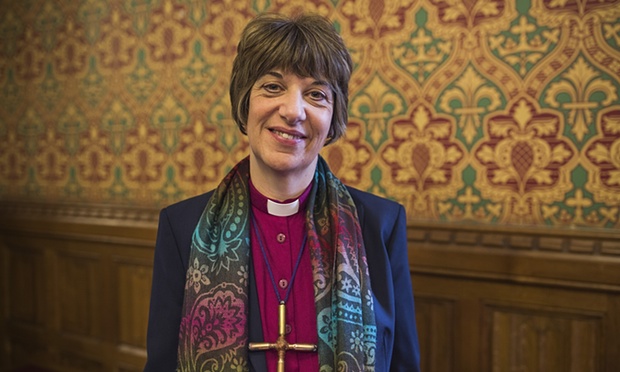
First Woman Bishop In The House Of Lords, Same Rotten Old Theocracy

Rachel Treweek - Bishop of Gloucester - Tax Credits

Don’t cheer for Rachel Treweek as she takes up her unelected, theocratic position in the House of Lords. Chase her – and all of her fellow Lords Spiritual – out of Parliament and back to the pulpits where they belong

So let’s get this straight: Scottish National Party MPs are scolded and warned by the Speaker when they spontaneously applaud what they believe to be a good speech in the Commons chamber, because clapping is wrong and unbecoming. But today, peers give a standing ovation to the first female bishop to take her seat in the House of Lords, and that is A-OK?

The appointment of Rachel Treweek, Lord Bishop of Gloucester, to the red benches is nothing to celebrate. Don’t misunderstand – it’s great that the Church of England now allows women bishops, and some of the first female candidates appear to be excellent theologians and pastoral leaders.

But in every other respect, the enoblement of Rachel Treweek is just another case of the British theocracy doing what it always does – appointing clerics of the favoured national church to unelected positions of power and influence in the heart of our political system. Don’t expect us to cheer on this occasion just because the Lord Bishop in question is a woman. Our belief in equal rights and opportunities for women should not be so glib and superficial.

Continue reading

Interview With Nigel Farage

UKIP leader Nigel Farage on UKIP’s post-election party conference, and the long term prospects for the party beyond the EU referendum

While covering the 2015 UKIP party conference in Doncaster last month, I was able to grab a quick interview with the party leader, Nigel Farage, fresh from the stage after delivering his keynote speech.

This was immediately after what was a successful but fairly unremarkable speech by Farage’s standards, and before Day 1 of the UKIP conference was overshadowed by the row between donor Arron Banks and the party’s sole MP, Douglas Carswell.

As with my interview with Douglas Carswell, I wanted to get Farage to open up about his thoughts for the party looking beyond the Brexit referendum, and how UKIP’s current diverse coalition of different voters could be held together once the unifying goal of the EU referendum has been and gone.

Here is a transcript of my interview with Nigel Farage:

QUESTION: A different tone to this year’s conference. Obviously last year we had the defection of Mark Reckless, looking forward to the election, a bit different this year. Are you pleased with how it went, and are you pleased with the shape of UKIP as you’re fighting the referendum, looking ahead?

NIGEL FARAGE: The general election was very tough for us, you know, a massive amount of effort. Four million votes, very creditable in the circumstances and one seat, so pretty tough. And we’ve had, you know, a summer of regrouping and getting our finances back in shape, we’re now rocking and rolling and ready to go, we’ve got loads of elections to fight next year, but I think winning the referendum matters more than anything and I felt the response I got from the party membership is that they feel the same way too. And we’re going to join hands with the Arron Banks consortium Leave.EU and there’s going to be a united front for those who want to leave the European Union.

QUESTION: Obviously the referendum looms large at the moment, but looking beyond that, how well is UKIP positioned do you think to keep together its diverse support base of ex-Tories, ex-Labour types, libertarians, after the election when that common thread of the referendum is no longer there to hold everyone together?

NIGEL FARAGE: Well you know, there are still plenty of things that will unite us beyond just the European question. A society in which people can aspire to do well, a society where through selection in education we can narrow some of the class gaps, there are lots of things that unite UKIP and I actually think that with Mr. Corbyn as Labour leader there is an even bigger potential marketplace for us there.

To be fair, Farage did not deflect the question, or seek to answer it with some pre-rehearsed talking point. So kudos for that. But his responses did little to change my overall impression of the conference – that UKIP (or at least the party leadership) are so fixated on achieving their long-cherished goal of British secession from the EU that they are willing to let some of the divisions and inherent contradictions within the party go unaddressed for the time being.

From my summary in Day 1 of my UKIP Conference live blog:

There is definitely a degree of Matthew 6:34 to this particular conference (“Take therefore no thought for the morrow: for the morrow shall take thought for the things of itself. Sufficient unto the day is the evil thereof”). And one can understand the strong desire to strive onward to the long-cherished goal of gaining independence from the EU. But I can’t help wondering if UKIP might not pay a price in 2017 or beyond for failing to pay enough heed to the type of party they want to be – and the type of supporters they want – by the time of the next general election.

Time will tell whether this strategy is correct.

Interestingly, both Nigel Farage and Douglas Carswell mentioned the newly-elected Labour leader Jeremy Corbyn, quite unprompted by me. UKIP clearly sees massive potential to win over even more ex-Labour voters, people who may never vote Tory in a million years but who are concerned and repulsed by Labour’s leftward march under Corbyn.

UKIP of course is already the runner-up in well over 100 constituencies, many of them Labour seats in the Midlands and the North. If UKIP are able to stay organised and maintain message discipline – by no means guaranteed – then Labour may well have something to fear on this count.

My live blog from Day 1 of the UKIP 2015 party conference is here.

My live blog from Day 2 of the UKIP 2015 party conference is here.

Nigel Farage - UKIP Conference 2015 - Silhouette - 3

Follow Semi-Partisan Politics on TwitterFacebook and Medium.

The “In” Campaign Reveal Their Best Argument: Cheap International Calls

European Union - Mobile Phone Roaming Charges - 2

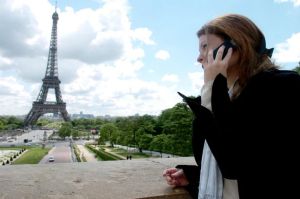
It’s official: the leader of the “In” campaign declares that cheap mobile phone calls from the continent are the best reason for Britain to remain a member of the EU

Five months ago, when columnist Mary Riddell revealed that her love of the European Union is based on the fact that open borders allow her to motorbike around eastern Europe with ease, I wrote:

We see this emphasis on narrow self-interest in other areas too, such as the EU’s plan to ban mobile phone operators from charging exorbitant roaming fees for making calls from other member states, as though the ability of predominantly middle class holidaymakers and business travellers to call and text more cheaply somehow makes up for the erosion of our democracy and national sovereignty.

[..] The Left’s anguish over the prospect of British secession from the European Union has nothing to do with any overriding concern about Britain’s future, or the plight of the unemployed or the working poor. No, it’s simply a collective howl of outrage from a cosseted and sheltered middle class clerisy, terrified at the prospect of losing out on a raft of perks which disproportionately benefit themselves at the expense of everyone else.

Little did I know then that the “Remain” campaign would be so intellectually bankrupt, so totally lacking in good ideas or a positive argument for greater European integration, that the cheap gimmick of cheap international phone calls would be raised up as their openly stated chief benefit of staying in the EU.

As if their “youth spokesperson” June Sarpong had not embarrassed the pro-EU side enough with her ambivalent, paint-by-numbers endorsement in the pages of the Telegraph this week, the chairman of Britain Stronger in Europe – nepotism beneficiary Will Straw – has been working his magic in The Mirror:

Here are eight ways that the British economy and British families are stronger in Europe.

1. Cheaper mobile fees

The cost of using your mobile abroad dropped by 73p for every pound between 2005 and 2011 thanks to an agreement on roaming charges .

And they will be scrapped entirely by June 2017 after the EU forced companies to give a fairer deal.

Unimpeded bike rides and cheap mobile phone calls. This, apparently, is the best that the pro-EU side can muster as both sides fire their opening shots of the Brexit referendum. This, together with the gradual re-emergence of left-wing euroscepticism as a noteworthy force in British politics, give me hope that the eurosceptics may yet carry the day.

Brexit campaigner Pete North does an excellent job of pouring cold water on the europhiles’ claim that the EU is nothing more than a beneficent provider of cheap international roaming charges:

[..] with the advent of smartphones and wifi which is free to use, while it’s a marginal benefit to have no roaming charges, I don’t see why this comes to the top of their list of reasons to stay in the EU. It certainly benefits the eurocrats on large salaries jetting off to Brussels and Strasbourg once a month, but I really couldn’t give a tinkers damn.

But then the fact this comes to the top of their list actually tells you something more fundamental about Will Straw and the Remain campaign. I remember well the campaign mounted by the europhiles to get us to join the ill fated euro currency. They pulled the same trick then saying that it would save us all the inconvenience of having to change money when we go on holiday. The message here is that you are an ignorant pleb incapable of understanding the larger ramifications of surrendering our currency and will vote for it on the basis of convenience when we take our package vacations to Spanish seaside resorts. As patronising as it is, is actually shows these misanthropes really do hold us in contempt. Do they really think we’re going to base our vote on whether we can make a cheap phone call?

I’m with Pete. Is this really the best that the pro-EU side can do?

Do Will Straw and the shambolic “Remain” campaign really think that the British people are so stupid that their votes can be bought with the cheap bauble of low cost mobile phone calls? And worse still, if they really mean what they say, are they really willing to barter away British sovereignty – our right to national self determination – over such trinkets as these?

At best, this is an argument for continued European and international competition, and of the importance of removing barriers to trade and competition. But why do we need a European Parliament – a legislature being the quintessential expression of a nation state – to successfully co-operate to bring about cheaper phone calls? Why do we need European Courts which can overrule our own UK Supreme Court on any matter in order to liberalise energy markets?

Is Will Straw really so dense that he cannot see the ulterior motive at play? Does he honestly not see that the warm, fluffy waffle about international co-operation is just a smokescreen for the deliberate construction of a European superstate with all of the functions and institutions of a nation state?

Of course not. Will Straw knows exactly what the EU is now, and what it is very likely to become in ten, twenty, thirty years’ time. But he also knows that the British people would never vote for this vision of Europe – of Britain as nothing more than a small star on the EU’s flag. So Will Straw has to lie about it. He has to pretend that the political union currently in the process of devouring twenty-eight sovereign countries is a happy, friendly creature which does nothing but bring low-cost flights and cheap mobile phone calls.

That’s what the “In” campaign think of the British people and their capacity to grasp what is at stake in this referendum.

Take what you want from that lesson.
European Union - Mobile Phone Roaming Charges

Agree with this article? Violently disagree? Scroll down to leave a comment.

Follow Semi-Partisan Politics on TwitterFacebook and Medium.