“Ragged Old Flag”, performed by Johnny Cash.
May God continue to bless the United States of America, the United Kingdom, and all those who have served and sacrificed in our armed forces.
“Ragged Old Flag”, performed by Johnny Cash.
May God continue to bless the United States of America, the United Kingdom, and all those who have served and sacrificed in our armed forces.


–
In his latest New York Times column, Thomas Friedman succinctly puts into words what many centrists and probably nearly all frustrated liberals will immediately identify as one of the Obama administration’s biggest political failures thus far into his first term – Obama’s inability to properly sell his accomplishments, and their failure to prevent these accomplishments from being distorted and turned into electoral liabilities by the Republican opposition.
Friedman complains:
Barack Obama is a great orator, but he is the worst president I’ve ever seen when it comes to explaining his achievements, putting them in context, connecting with people on a gut level through repetition and thereby defining how the public views an issue.
True, though this is an age old complaint about Democratic politics – the inability to remain cohesive and on-message, and to deliver a point that is consistent, compelling, and easy to repeat and digest.
On what is perhaps Obama’s signature first term accomplishment – however imperfect it may be – reforming the US healthcare system, Friedman delivers the kind of blunt, incontrovertible smackdown of Republican talking points that make people like me want to shout out in agreement and kiss the screen:
“Obamacare is socialized medicine,” says the Republican Party. No, no — excuse me — socialized medicine is what we have now! People without insurance can go to an emergency ward or throw themselves on the mercy of a doctor, and the cost of all this uncompensated care is shared by all those who have insurance, raising your rates and mine. That is socialized medicine and that is what Obamacare ends. Yet Obama — the champion of private insurance for all — has allowed himself to be painted as a health care socialist.
Yes, yes, a thousand times yes. It’s painful that anyone should have to school the Republican party, the self proclaimed champions of fiscal conservatism, in such basic economic concepts as the free rider problem, but if someone has to do it then there is no one who can do so with more style than Tom Friedman. I’m not sure that I have it in me to hear one more Tea Partier lambasting Obamacare and lamenting that the US now has a socialised healthcare system and that he is being made to pay for his neighbour’s keep, without just straight up asking him “well, what the hell do you think you were doing before, idiot?”
And on the somewhat topical subject of government spending and deficits:
Finally, how did Obama ever allow this duality to take hold: “The Bush tax cuts” versus the “Obama bailout”? It should have been “the Bush deficit explosion” and the “Obama rescue.” Sure, the deficit has increased under Obama. It was largely to save the country from going into a Depression after a Bush-era binge that included two wars — which, for the first time in our history, we not only did not pay for with tax increases but instead accompanied with tax cuts — plus a 2003 Medicare prescription drug bill that we could not afford, then or now. Congressional Democrats also had a hand in this, but the idea that Bush gets to skate off into history as a “tax-cutter” and not as a “deficit buster” is a travesty. You can’t just blame Fox News. Obama has the bully pulpit.
The way in which Democrats managed to lose control of the narrative and allow the party who led America into two unfunded wars, a round of unfunded tax cuts and an unfunded expansion of Medicare (oh yes – socialised medicine, too) to reclaim any credibility whatsoever in terms of economic understanding or fiscal responsibility will forever astound me. And Friedman is right, Obama has the bully pulpit. He, his team and his spokespeople should have been sending out the right message from the start, and not have allowed themselves to have been forced to play defense.
To be fair – and as Friedman notes – sometimes actions speak louder than words, and in several notable instances the Obama administration’s actions have been as much of a reason for disappointment as the selling of their message. For me, the almost unforgivable failure of the Obama administration was the failure to embrace and push forward the Bowles-Simpson deficit reduction plan, which enjoyed considerable support (if not quite enough to mandate an up-or-down vote in the House and Senate) and which would have demonstrated beyond any reasonable doubt that Obama was serious about medium term deficit reduction. The Obama administration’s reticence on this point enraged many a centrist Obama supporter, and led blogger Andrew Sullivan to declare:
My own view, however, is that Obama badly bungled this by not embracing his current position in the State of the Union and pummeling the GOP with it for months. Bowles Simpson was his commission after all, and yet he dropped it like a stone and pandered to his left when he had a perfect moment to pivot to the debt question. Giving the GOP any credibility on debt by offering nothing of real $4 trillion substance until last week may well be seen as Obama’s greatest mistake in his first term. Now that he has finally offered it, his ability to maintain the high ground on a fair measure to tackle the deficit is much reduced from his January possibility. This is not a meep-meep moment. And it could easily have been, if Obama had shown, yes, courage sooner … On this score, leading from behind has been pretty much a disaster. And there is no longer much time to lead from the front.
So there are problems here of action as well as messaging. I don’t yet believe that this is cause for panic – as I have laid out in previous posts, I am very confident that given his opposition, Obama is heading for a likely landslide reelection victory. But an administration – and a party – that fails to create and stick to a positive narrative on so important a topic, deserves their fair share of woe.
But unfortunately it is not just President Obama and his administration that suffer as a result of their baleful communication efforts. For with every day that passes without a compelling, effective message from the administration about achievements won and plans for the future, the unrepentantly unreformed party of George W. “two unfunded wars” Bush and Richard “deficits don’t matter” Cheney will seem to more and more people like a potentially viable alternative to run the show again.

–
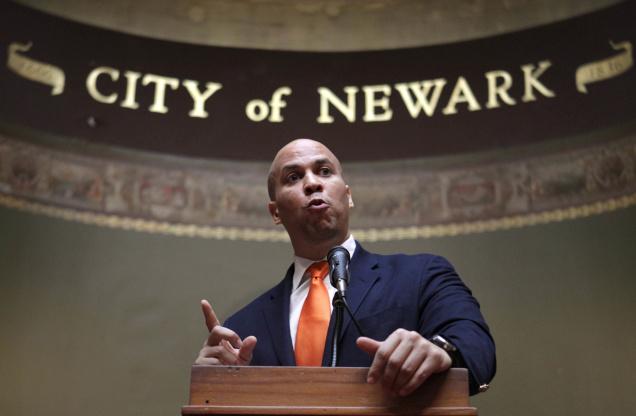
Today’s post is on the furore generated by Newark Mayor Cory Booker’s recent comments on last weeks’ NBC Meet The Press show, in which he appeared as a surrogate for the Obama reelection campaign.
When asked about attacks originating from the Obama campaign and aligned PACs, attacking Mitt Romney’s record at Bain Capital, Mayor Booker essentially said that those attacks were an unfair and unnecessary distraction from the real issues of the election:
“To me, it’s just this — we’re getting to a ridiculous point in America, especially that I know. I live in a state where pension funds, unions and other people are investing in companies like Bain Capital. If you look at the totality of Bain Capital’s record, it ain’t — they’ve done a lot to support businesses, to grow businesses.”
For those unfamiliar with the maelstrom of ridiculousness, accusation, counter-accusation, retraction and non-retraction that these innocuous comments generated, the consequences are related in amusing style by Kathleen Parker at The Washington Post.
Though really if you have taken in any American political news over the past week or so, you can hardly have failed to have heard about this story from one source or another. And in terms of the “press coverage to newsworthiness ratio” mismatch, this story scores quite highly.
As far as I can tell, despite all of the noise and column inches that this “story” has generated, most reasonable people could agree with the following sentiment: that there is nothing wrong with private equity – well, no more than what is right or wrong with any other industry – and the Obama reelection campaign has not publicly suggested otherwise.
No for-profit business is run for the sake of creating jobs – that just happens to be a fortunate side effect of growth and success, and private equity plays an important role in ensuring that capital is allocated most quickly and efficiently to those enterprises that can generate the best return on it. I don’t recall Mayor Cory Booker attacking private equity, capitalism and the American dream when he went on Meet The Press last week, nor Obama himself (though the Obama campaign and associated PACs and campaign surrogates have certainly crossed this line on occasions).
So what exactly is wrong with saying that attacks on private equity are nauseating? It may be a rather strong choice of words, but attacks on private equity are certainly irrelevant. And saying so does not blow apart Obama’s central campaign issue, as many conservative commentators seem eager to believe.
If we leave out the words of the Super-PAC political ads (and really we have to – on both sides, be they Republican and Democrat aligned – because they are loose cannons, unconnected with the campaigns and able to say anything they please regardless of the views of either candidate), what the Obama campaign is trying to point out is that a successful career in private equity is not of itself either a qualification for, nor indication of success at the presidency. Incidentally, one could (and many have) made the same argument about a career in community organising and constitutional law teaching.
Quite a few people work in private equity. And many more people – including ‘normal’ people, through their savings and investments and pensions – benefit from the work that these people do. Having a successful career in private equity does not of itself qualify someone to be President of the United States – it is a hard job, and probably nothing short of a previous stint as Head of State of another powerful nation really qualifies you for it.
And so if the Obama campaign wants to try to draw a contrast between the president’s four years of on-the-job experience and Mitt Romney’s lack thereof, that seems fair enough (though the old “don’t change horses midstream” argument is rather old and worn at this point, especially after George W. Bush’s reelection campaign), and as long as he avoids straying into “the corporations are raping the world” territory he should be allowed to make that point without being jumped on and labelled an anti-capitalist reactionary.
This seems to me like a big fuss about nothing – after eight days, let’s finally move on from this one now.

A new milestone in space this week, as the SpaceX craft successfully docked with the International Space Station in low earth orbit:
Not necessarily as exciting as a manned mission to another planetary body, but (given the current funding and political barriers to that goal which exist in America today) an important step toward human progress in space nonetheless – the first time that a commercially built and operated spacecraft has docked with the space station.
Perhaps it is a good thing that these kind of routine flights are now being handed off in their entirety to the private sector, where they can be refined and made more cost-effective. Now, governmental bodies (well, let’s not kid ourselves, just NASA really) will be free to devote more resources to new programmes with the aim of getting humans beyond low earth orbit again, for the first time since December 1972.

–
Well, stop blogging for a month or so and when you come back, the world has turned a little bit. The ratcheting up of the Euro crisis, the effective end to the Republican presidential nomination process, the sudden and complete inability of David Cameron’s Conservative Party to do anything right, in terms of either action or image… Guess I learned something there. Anyway, picking up where I left off in April…
So much handwringing in the media at the moment about President Obama’s political fortunes and reelection prospects!
From Politico:
Nothing inspires Democrats like the Barack Obama swagger – the supreme self-confidence on stage, the self-certainty in private.
So nothing inspires more angst than when that same Obama stumbles, as he has leaving the gate in 2012.
…
National polls, which had shown Obama with a slight but steady lead over Romney through April, moved into a virtual tie this month — despite Romney’s clumsy conclusion to the GOP race.
And from The Daily Beast:
The dirty little secret of campaigns is that there are usually just two messages. Either: Stay the Course or It’s Time for a Change. When Barack Obama won 53 percent of the popular vote and carried 28 states, just 14 percent of Americans thought we were moving in the right direction. So it was obviously a Time for a Change election. When Ronald Reagan and Bill Clinton coasted to easy reelections, the country’s mood was undeniably Stay the Course. The election coming up in November is stuck in between. Americans don’t know whether to forge ahead or swing back.
And watching from across the pond, The Daily Telegraph:
There are storm clouds on the horizon for Barack Obama’s re-election.
Democrats indulged in over-confidence during the Republican primaries. It was an understandable reaction to the chaos that came with all the pandering to the far-Right and the rise of frankly laughable candidates like Michele Bachmann and Herman Cain in the search for an alternative to Mitt Romney.
After that debacle, the Romney campaign manager’s promise of an “etch-a-sketch” moment to re-shake and re-shape public perception about their candidate seemed a dose too hopeful.
But only a month after the Republican primaries all but officially ended, we have a real horserace on our hands.
…
According to a new Washington Post/ABC poll, 30 percent of Americans say they are worse off than when President Obama took office in the depths of the fiscal crisis. This is comparable to the numbers President George HW Bush faced when he lost re-election to Bill Clinton in 1992.
And right now Obama and Romney are essentially tied when registered voters are asked who would be better at creating jobs and handling the economy.
Why do we do this to ourselves? Why spend so much time speculating about an event the outcome of which is almost a foregone conclusion?
I understand the motives of the professional media. People will not tune in to The Situation Room with Wolf Blitzer or Hardball with Chris Matthews in significant numbers to get their daily dose of the campaign ups and downs if they think that the result is already assured. That would mean less advertising revenues for the networks, and a huge army of unemployed cable news talking heads who would suddenly flood the market and push unemployment back up above 9%. So the word must continue to go out that the uninspirational, unpersonable technocrat who is unable to motivate his base and who campaigns like an electioneering android with a gaffe bug actually poses a serious threat to Obama’s reelection chances.
With regard to the professional media, I think there is also the bias factor. And by that I don’t mean the fact that all news outlets are biased in one direction or another, but actually the fact that all of the television and most print sources (even Fox News to some extent) strive to appear “balanced” when reporting the news, to tell both sides of the story (even if, in Fox’s case, the tone of voice, facial expressions and screen captions help to “guide” the viewer as to which side is correct).
At some point – and not being a student of journalism and media I don’t know when – good television reporting stopped meaning uncovering and reporting the truth, but rather reporting and giving equal weight to both sides of a story. So if Sam says the world is round but Bob says that it is a perfect cube, today’s headline will read “Sam and Bob spar in congress over shape of the world” rather than “Bob effectively ends his career with insane statement”.
But why do we ordinary people do it to ourselves? Are we just led by the media, or is there something else at work too?
I suppose that I will be doing the blogging walk of shame come November this year if the unthinkable occurs and Romney does become president-elect. But seriously. Are we all really so bored and in need of intrigue that we are going to kid ourselves that this one is even going to be close?


