Every American Should Support Brexit

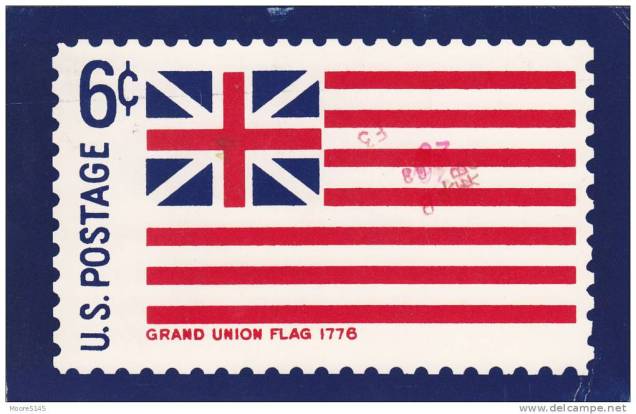
Grand Union Flag

Finally, the democratic case  for Brexit is explained to Americans

With many leading American voices so illogically hostile to Brexit, it is great that one of our own – Ben Kelly of The Sceptic Isle and the Leave Alliancehas seen his concise democratic argument for Brexit published in the New York Times.

Kelly patiently lays out the case for Brexit to an audience which has regrettably proved more likely to skip the democratic question entirely and wrongly view leaving the EU as an illogical, regressive act:

There are worrying levels of resentment in British society. People have little faith in their ability to bring about change through who they vote for and this breeds apathy and represents a grave threat to participatory democracy. And, no, not all of that can be blamed on the E.U., but we have now lost too many policy making powers and essential democratic safeguards. The E.U. maintain exclusive control of our trade policy, fishing and agricultural regulations, and is rapidly gaining power over British policies for foreign affairs, energy, environment, transport and telecommunications.

The E.U. is a supranational government with an executive body in the unelected European Commission, a legislature in the European Parliament and the Council of the E.U., and a powerful judiciary in the European Court of Justice. The “invisible hand” of its power operates through the husks of British political institutions: Our Ministers, MPs and councillors are constrained and must work within imposed parameters that are not conducive to new ideas and innovation. The E.U. hinders effective governance and disempowers and disconnects elected officials from the people who elected them.

When power is so far removed from the people, anger and disillusionment are inevitable. And democracies die when there is little connection between the electorate and those who rule them. Now, there is a pressing need to shift the balance of power back to the people and restore democratic accountability. It is the only hope for rebuilding faith in politics and quelling our current state of discontentment.

Restoring self-governance could inspire British society with a renewed sense of identity, vigor and pride. It means the construction of a new nation and a reversal of the degradation of our political culture. None of this can happen automatically and Brexit is not a silver bullet. But it unlocks the potential for change, and Britain should rise to the occasion.

It should not be necessary to explain these things to Americans, particularly those in the establishment most likely to want Britain to stay in the EU. These people, possessed of a solid understanding of their own nation’s history, should be our natural allies in wanting to free Britain from an increasingly powerful, antidemocratic and unrepresentative supranational government.

The rebellious American colonists because known for the phrase “no taxation without representation”. The EU has not yet – quite – reached the point of directly taxing its citizens, though the day may not be far off. But the phrase “no regulation without representation” applies very well to the Brexit cause. In an age of globalisation, when regulatory harmonisation is important to promote further economic growth, it is more important than ever that the people have an input into the process of making global regulations – particularly when that process has the power to wipe out entire industries at the stroke of a pen.

An independent nation state can wield its “right of reservation” as a last resort, exempting itself from new regulation which it deems particularly harmful to the national interest. A member state of the EU, like Britain, has no such power. The EU has exclusive competency on matters relating to trade, and we must swallow whatever the European Commission agrees on our behalf.

Those roles and institutions within the EU which are directly elected are nothing more than democratic fig leaves. The European Parliament is a toothless rubber-stamping institution which cannot propose new legislation or strike down old. And those who claim that the Council of Ministers or European Council allow national interests to be exerted forget that governing elites from the 28 member states often have far more in common with each other than they do with the ordinary people they represent, and will always face the tendency to do what is best for themselves and the European Union which they serve rather than what is best for the people who put them in office.

In every single way, the European Union as it currently stands should be offensive to the American national psyche. That it is widely popular among American opinion-formers reflects a failure on the part of Brexiteers to do a better job co-opting an important international ally. But more than that it represents a failure of the American elites, who having lost faith and confidence in their own country expect that we should do the same with ours.


USA Declaration of Independence Lying on Grungy Betsy Ross Flag

European Union - United Kingdom - Britain - Flags

Top Image: delcampe.net

Agree with this article? Violently disagree? Scroll down to leave a comment.

Follow Semi-Partisan Politics on TwitterFacebook and Medium.

American Conservatives For Brexit, Part 3

Jim DeMint - Brexit - European Union - EU Referendum

A bold warning against supranationalism

This blog has rarely found common cause with former Senator for South Carolina Jim DeMint, but his OpEd in CapX (written with Nile Gardiner) is a welcome expression of solidarity with the Brexit cause.

From the OpEd:

The contrast could not have been starker – between a message of genuine optimism on the Brexit side, and the language of gloom and doom emanating from the Remain camp. It was frankly sad to witness an intensely negative campaign by those who suggest that Britain will not benefit from being a free and independent nation.

It is unthinkable that Americans would ever subject themselves to the kind of suffocating supranationalism that exists within the EU, with nation states surrendering large amounts of their sovereignty to unelected bureaucrats in a distant capital, with their courts overruled by foreign judges. It is all the more disturbing therefore that the leader of the free world, the president of the United States, has chosen to warn our British friends against leaving the EU.

This very much echoes the sentiments of this blog – the United States branches of government would not for one second tolerate the kind of subjugation to a supranational entity and curtailments on sovereignty that are required of EU member states – therefore, Barack Obama’s intervention in the EU referendum debate was very much a case of “do as I say, not as I do”.

Moving on to security, they point out:

Ignore the childish scaremongering coming from the White House. If the British people decide to leave the EU, their national security will be enhanced, not least because Britain can retake full control of its own borders. And the NATO alliance would actually be strengthened, rather than weakened, if Britain left the EU. The European Commission’s drive to create a European Union Army would draw vital resources away from NATO, and lead to duplication of key military assets in Europe. It is NATO, not the EU, that has secured peace in Europe in the post-World War Two era.

Before concluding:

A British exit from the EU would be good for Britain, Europe, and the United States. A United Kingdom that is not shackled to a declining EU that is mired in a culture of big government, soaring public debt and welfare dependency, would be a better partner for the US. A resurgent, self-confident Britain that looks outward to the world instead of inward, that is free to shape its own destiny, decide its own laws, craft its own foreign and security policies, and negotiate its own trade deals, can only strengthen the Anglo-American Special Relationship. A Great Britain that has absolute control of its own borders will also be a stronger partner in the fight against ISIS and Islamist terrorism.

Our former Heritage Patron, Margaret Thatcher, loved the United States and cherished the bonds that tie our two great nations together. She condemned the European Project, the idea of a European superstate, as “perhaps the greatest folly of the modern era.” The Iron Lady was absolutely right about the dangers of ever-closer union and rampant supranationalism in Europe, and how it threatened both Britain and the transatlantic alliance. We owe a huge debt of gratitude to Lady Thatcher’s leadership on the world stage. Her warnings against a federal Europe have come true. Today, Great Britain has an opportunity to be a free country once again. If the British people seize the day and break free of the EU, this should be a cause for celebration and rejoicing on both sides of the Atlantic.

Jim DeMint and Nile Gardiner are quite right to warn about “rampant supranationalism”. A point which has rarely been made in the EU referendum debate is the fact that no other countries in the world have rushed to replicate the EU model. One might point to the African Union and its Pan-African Parliament, but the two institutions are hardly comparable – the second objective of the African Union is “to defend the sovereignty, territorial integrity and independence of its Member States”, a goal to which the EU most certainly does not subscribe, in theory or in practice.

Look elsewhere in the developed world, to Asia, Australia and the Americas, and there is no desire whatsoever to form a political union based on the supranational form of government, in which a new pan-national entity takes on more and more of the traditional roles of the nation state. This should tell us something – and yet the EU persists with the steady, stealthy implementation of its mid 20th century blueprint even as globalisation and the emerging global regulatory system makes it increasingly irrelevant, a clumsy middleman rather than an effective defence.

And at a time when too many voices from the United States – the one country which should truly understand the desire for independent self government – have been fearfully urging Britain to stay in the EU, it is good to hear some bold conservative voices supporting Brexit.


European Union - United Kingdom - Britain - Flags

Top Image: Washington Post

Agree with this article? Violently disagree? Scroll down to leave a comment.

Follow Semi-Partisan Politics on TwitterFacebook and Medium.

The American Establishment, Having Lost Faith In Their Own Country, Naturally Oppose Brexit Too

Declaration of Independence - United States of America - Founding Fathers - Brexit

How quickly they forget

If there was one country in the world which you might think would understand the importance of democracy, the right to self determination and freedom from unaccountable government, it would be the United States of America.

And so it has been particularly depressing to watch politicians and commentators from the United States dutifully line up to support the European Union and condemn Brexit as some sort of frivolous and deliberate act of economic self-harm with no potential upsides whatsoever.

Latest to join the fray are the Washington Post (in a piece now being widely shared on social media by Remainers) and the New York Times, both of which condemn Brexit as an isolationist fantasy without showing any evidence of having researched the issue in any detail.

First, the Washington Post, which claims that advocating Brexit is to “flirt with economic insanity”:

Countries usually don’t knowingly commit economic suicide, but in Britain, millions seem ready to give it a try. On June 23, the United Kingdom will vote to decide whether to quit the European Union, the 28-nation economic bloc with a population of 508 million and a gross domestic product of almost $17 trillion. Let’s not be coy: Leaving the E.U. would be an act of national insanity.

[..] What this debate is really about is Britain’s place in the world and its self-identity. Britain has long been of Europe but also apart from it. The British Empire was once the world’s largest. To be simply another member of a continental confederation, albeit an important member, offends this heritage. The nostalgic yearning is understandable, but it is not a policy.

Ironically, leaving the E.U. would confirm the U.K.’s reduced status. The U.K. would have to renegotiate its trading agreements with the E.U. and dozens of other countries. A deal with the E.U. is essential. For the U.K., the best outcome would be to retain much of its preferential access, which — as a practical matter — would mean continuing contributions to the E.U. budget and abiding by most E.U. regulations. The status quo would survive, except that the U.K. would have no influence over E.U. policies. Anything less than this would have the E.U. putting its own members at a competitive disadvantage.

One could drive an entire convoy of trucks through the holes in this argument – like the implied assertion that maintaining EEA access would require “abiding by most EU regulations” when in fact it would only mean following those directives and regulations which pertain to the single market (well under half of the total).

Note, too, the dismissive attempt to make euroscepticism sound like a nostalgic hampering for empire. What is really outdated, though, is the WashPost’s antiquated belief that membership of “continental confederation[s]” or giant regional blocs is somehow necessary for national prosperity, despite the Cold War having ended a quarter of a century ago. The Post has made no effort to actually understand what motivates Brexiteers – be it the “liberal leavers” like this blog, or the more traditionalist types in UKIP – and instead falls back on a bed of platitudes and outdated assumptions.

This is the New York Times’ distilled view of Brexiteers:

The euroskepticism that has led to the British referendum, and that forms a strong component of the right-wing nationalist parties on the rise in many European countries, is not about efficiency or history. It is about ill-defined frustration with the complexities of a changing world and a changing Europe, a loss of faith in mainstream politicians and experts, a nostalgia for a past when nations decided their own fates and kept foreigners out. To those who hold these views, the European Union is the epitome of all that has gone wrong, an alien bureaucracy deaf to the traditions and values of its members. Not surprisingly, Mr. Trump and the French politician Marine Le Pen both favor Brexit.

What a condescending view of all Brexiteers, with an insidious Donald Trump comparison as a snobby garnish. The Times is utterly oblivious to the real world of global trade and regulation, and the slowly emerging global single market which is making the EU obsolete, as this blog pointed out yesterday while criticising the Economist’s unsurprising decision to support Remain:

The bloggers of The Leave Alliance in particular have exposed the fascinating world of international trade and regulation, and the slowly emerging global single market – comprised of the real global “top tables” – of which Britain could be a part, if only we had the national confidence to stop hiding behind the euro-parochialism of Brussels.

Meanwhile, the Washington Post concludes:

Viewed this way, Brexit is an absurdity. But it is a potentially destructive absurdity. It creates more uncertainty in a world awash in uncertainty. This would weaken an already sputtering global economy by giving firms and consumers another reason to pull back on spending.

It would be better for the U.K. to stay in the E.U. It would also be better for the E.U., because Britain provides political and intellectual balance. Finally, it would be better for the United States, which doesn’t need a major ally — Britain — to go delusional.

Ah, so that’s what this is really all about – stability and predictability for the United States. It would have been much more honest if the Post had simply admitted this upfront, rather than squandering credibility by feigning concern for Britain’s economic and geopolitical welfare – and then advancing the bizarre notion that America’s strongest and closest ally should continue to tolerate infringements on her democracy which the United States would never accept for itself.

But in one sense the Washington Post is quire right – Brexit would indeed cause some short term uncertainty. That is inevitable when we are dealing with such consequential matters of state. It’s just that some things matter more than the fear of precipitating a period of short term uncertainty. Why should Britain, like a frog placed in cold water, remain fearfully in situ as the temperature increases and the water starts to boil? Because jumping out of the water into dry land would be a “leap in the dark”? Because it would be a departure from the status quo? Well, yes, so it would. But the EU, a relentlessly integrating political union beset by crises of currency, mobility and democratic legitimacy is the proverbial vat of boiling water. “The devil we know” hardly seems to apply here.

The New York Times is no better, beginning with a most ludicrous proposition:

It was Queen Elizabeth’s official 90th birthday celebration last Sunday, and tables for 10,000 guests were set along the Mall in central London. Steadily the rain fell, dripping out of the tubas of the bands and softening the sandwiches, but Her Majesty’s subjects munched on with stoic British spirit, standing up to cheer as she passed.

In her fuchsia coat and matching hat, she waved and grinned as if nothing had changed and never would. But next week, a very great change may come.

On Thursday, Britons will vote in a referendum on whether their country should stay in the European Union or leave it. If a majority opts for “Brexit,” a long earthquake begins. It will topple the old facade of Britishness. It will disrupt, perhaps mortally, the foundations of European unity. The sense of a fateful moment suddenly peaked on Thursday, when, the police say, a young Labour member of Parliament named Jo Cox was shot to death in her West Yorkshire district by a man who is said to have shouted, “Put Britain first!” and to have been involved in the white-supremacist National Alliance in the United States.

All campaigning was suspended for a day of appalled mourning, amid fears that widespread anxiety about European immigration was being inflamed into violent racialism. Ms. Cox was a rising star, admired in and outside Parliament for her selfless energy on behalf of refugees and the poor. Her friends hope her death may cool referendum passions, reminding sullen voters that “not all politicians are in it for themselves.”

Royal ceremonies offer a brief, reassuring illusion of continuity, but at the back of many minds on the Mall was this thought: Could we be saying goodbye not just to this beloved old lady, but to a certain idea of nationhood? An outward-looking, world-involved Great Britain may soon shrink into a Little England.

It is frankly hilarious that the New York Times is trying to portray Brexit as some kind of grievous departure from the proper trajectory of history by referencing the Queen, when Queen Elizabeth II was on the throne several years before the European Coal and Steel Community was even formed, and decades before Britain finally joined the European Economic Community.

In other words, it is the European Union and its hateful, antidemocratic model of supranational governance which is the departure from historical norms, and Brexit the antidote which aims to restore the nation state as the proper guarantor of our basic rights and freedoms. That the New York Times is unable (or unwilling) to admit this only shows just how deeply they buy into the carefully cultivated “inevitability” of the EU.

The venerable Times tarnishes its reputation even further as it moves on to the topic of immigration:

Is it a baseless panic? Many European countries tolerate far higher levels of immigration. Scotland, with a new community of some 55,000 Poles, actively encourages it. In England, support for Brexit and for the xenophobic U.K. Independence Party is often in inverse proportion to the scale of the problem: The fewer immigrants there are in a town, the louder the outcry against foreigners. In contrast, polling in inner London, where about four out of 10 inhabitants are now foreign-born, shows a clear preference for staying in Europe.

This is just appalling journalism. Does UKIP attract a slightly higher proportion of xenophobes than other political parties. Yes, probably. But does that make the party “xenophobic”, as the New York Times casually claims? Absolutely not. One wants to ask Neal Ascherson (the author of the piece) how UKIP’s policy of a points-based immigration policy which stops discriminating against mostly white Europe in favour of a level playing field for immigrants from all countries can possibly be xenophobic. But of course, he would not be able to answer. It is received wisdom that UKIP is a borderline racist party, and so prestige publications like the New York Times are happy to print as much.

The New York Times then makes its own patronising reference to empire:

But there are deeper motives here than anxiety about the exchange rate or banks in London decamping to Frankfurt. Behind Brexit stalks the ghost of imperial exception, the feeling that Great Britain can never be just another nation to be outvoted by France or Slovakia. There’s still a providential feeling about Shakespeare’s “sceptred isle” as “this fortress built by Nature.” Or as an old Royal Marines veteran said to me, “God dug the bloody Channel for us, so why do we keep trying to fill it in?”

And swats away growing public dissatisfaction with political elites as an inconvenient nuisance:

English nationalism, though inchoate, is spreading. For older generations, it was cloaked in British patriotism. But now, having watched the Scots and the Welsh win their own parliaments, England — with no less than 84 percent of Britain’s population — feels aggrieved and unrepresented. And so the English have gone in search of their own identity politics, finding common cause with the general impatience with old political elites that is flaming up all over Europe.

For now, their angry sense of powerlessness is aimed at the European Union. But the truth is that it’s from bloated, privileged London, not Brussels, that the English need to take back control. The Brexit campaign orators, themselves members of that metropolitan elite, have carefully diverted English fury into empty foreigner-baiting. In France this month, English soccer hooligans’ chant was “We’re all voting Out!” as they beat up fans from other nations.

Presumably the New York Times supports the American system of government. One might think that this would lead them to reflexively support a strong and independent nation state organised on the federal model – or something like Brexit followed by constitutional reform to give equal powers and representation to the four home nations of the United Kingdom. And yet in this snivelling OpEd, they search instead for every reason imaginable, however slight, to criticise Brexit and overlook the manifold failings of the European Union. And they deny the independence and model of government which they themselves enjoy to the inhabitants of their strongest and closest ally.

And then comes the “convenience for the United States” argument, underlined with a threat:

It is certain that Brexit would do gross damage to both Europe and America. For the United States, it would mean the failure of many years of diplomacy. Britain would become at once less useful as an ally and less predictable. Washington would turn increasingly from London to Berlin.

Really, to Berlin?

Which is the nation with a blue water navy and armed forces capable of projecting global reach?

Which nation hosts the world’s capital city and leading city of finance?

Which nation is the declared nuclear power and UN Security Council P5 member?

Which nation shares a language and many elements of a culture with America?

There’s been a lot of bluster in this EU referendum campaign, but the notion that the United States would turn away from its only real dependable (and contributing) ally in the world to shack up instead with Germany is, frankly, laughable.

Both of these editorials – Washington Post and New York Times alike – seek above all to problematise the Brexit process, to burden it with what-ifs and doubts and problems while furiously overlooking the many problems with the status quo and the soon-to-be problems about to beset the European Union. They do not begin from a place of objectivity and a willingness to follow the facts. They do not even do justice to America’s own founding values, which would rightly balk at ever joining a democracy-sapping supranational government like the EU.

But most of all, they make it sound like Brexit is just too difficult. That whatever the merits, difficult things are now beyond our capabilities and that we must muddle through with the failing mid-century institutions bequeathed to us by our grandparents. This is fatalistic and depressing in the extreme, but it accurately represents the viewpoint of the establishment in both Britain and America, both world-leading countries which have markedly lost their way in recent years.

President Kennedy once entreated Americans to go to the moon and do the other things not because they are easy, but because they are hard – and because the striving toward an ambitious but difficult goal would be the best way to organise and measure the capabilities of the nation. And before that decade was out, Americans had walked on the surface of the moon.

Now, the two most prestigious newspapers in America are frantically counselling Britain not to reach for the metaphorical moon, not to reach for independence from a suffocating and failing European political union, not to do anything which might in any way rock the boat or stem our slow decline into euro-parochialism and global irrelevance, because doing so would be difficult and would create (shock, horror) a period of uncertainty.

In other words, the American establishment is looking upon Britain as though we have taken leave of our senses even by having this referendum. They, having lost faith in the strength and capability of their own country, expect Brexiteers to similarly write off our own.

But it is not we Brexiteers who are flirting with insanity, as the Washington Post so arrogantly claims. It is America which has lost its way, and the American establishment and political class which could learn something from the scrappy, underdog campaign to free Britain from the EU.

 

European Union - United Kingdom - Britain - Flags

Agree with this article? Violently disagree? Scroll down to leave a comment.

Follow Semi-Partisan Politics on TwitterFacebook and Medium.

Who Is To Blame For Donald Trump?

A problem of American conservatism’s own making

In a recent show, Bill Maher took American conservatives to task for daring to suggest that responsibility for the rise Donald Trump rests with liberals.

Money quote:

Is political correctness out of control? Of course it is. I think I might have done some sort of show about that once [Maher was host of “Politically Incorrect with Bill Maher”]. I’ve been telling liberals when they had spinach on their teeth since 1993. I’ve ridiculed them for everything from offensive Halloween costumes to Islamophobia, from the self esteem movement to college campuses forgetting what free speech is. But none of that justifies embracing a dangerous buffoon, simply because his lack of political correctness is cathartic.

Trump is your problem. But somehow the party of personal responsibility doesn’t want to take responsibility for this one. Somewhere along the way, the slogan went from “Make America great again!” to “Look what you made me do!”

Amen to all of this. American leftists do indeed have much to answer for, but the rise of Donald Trump is not a problem primarily of their making.

It was the tri-cornered hat brigade whose admirable devotion to fiscal responsibility only materialised once Barack Obama took office, and then failed to force any meaningful change in Washington despite many of their number being elected to Congress in the 2010 midterms which, who have a case to answer. They were the Great White Hope whose inevitable failure formed the third strike against the political class.

It was not the Democratic Party which fanned the flames of birtherism (and then considered a nominee for president who was born in Canada) and refused to stand up to angry constituents demanding to see a birth certificate. That was all on the Republicans. Donald Trump led that effort, and nearly the entire GOP sat back with a tub of popcorn, thinking that the circus would benefit them politically. And so it did, until their attack dog finally broke the leash and turned on its handlers.

Has Barack Obama been a decidedly left-wing and in some (though by no means all) ways unimpressive president? Yes, he has. But is he a closet Communist, a secret Muslim planning to enforce hardline Islamism on America or a hopelessly incompetent buffoon? Absolutely not. He is a centre-left politician with undeniable skills, twice elected on a centre-left platform and governing according to a centre-left approach. But in their greed to quickly win back power without doing the hard work of making their own pitch to the voters more appealing, too many Republicans were willing to tolerate and sometimes actively participate in the anti-Obama hysteria for short term political gain.

If Democrats shoulder any responsibility for the danger that Donald Trump could soon be elected US president, it is only because they are now on the verge of nominating Hillary Clinton as their favoured successor – again, a highly competent technocrat and somebody with undeniable experience of executive power at the highest levels, but also somebody with no discernible core beliefs or values beyond the “bridges, not walls” buzzwords du jour.

Clinton’s political judgement has at times been…questionable. And she is dogged by a legitimate and troubling email scandal that cannot be dismissed as a mere partisan attack – to the extent that she is currently under investigation by the FBI. And that is to say nothing of the fact that the American political party supposedly the most committed to equal opportunity and social mobility is complicit in making the presidency a family affair. But none of this is remotely comparable to the danger which the Republican Party has unleashed on the country.

The warning signs were all there four years ago – a GOP primary debate stage filled with candidates like Herman Cain and Michele Bachmann, and whose few quasi intellectuals (like Newt Gingrich) were burdened with so much personal baggage that they were non-starters. Mitt Romney was the GOP’s best bet, but as their chosen candidate he was prone to gaffes and clangers (like the 47% remark) which helped ensure he would never reach the Oval Office. But did this generate any serious introspection as the GOP picked through the wreckage of the 2012 presidential election? No.

2015/16 saw a new slate of Republican candidates ranging from the well-meaning but vaguely ridiculous (Ben Carson) to the gormlessly patrician (Jeb Bush) to the empathy-devoid social conservative (Ted Cruz) to the not-quite-ready (Marco Rubio). No Paul Ryan. No promising new blood. The only candidate who fit the typical mould of a viable centre-right Republican candidate (John Kasich) never stood a chance, because he stubbornly refused to deal out sufficient quantities of crazy every time he opened his mouth.

Yes, the Democrats peddle in identity politics and often come down on the wrong side when it comes to favouring political correctness over freedom of speech, religion and behaviour. But it was the Republicans who opted to whip up (and profit from) blind fury about the state of the country instead of articulating a serious, coherent alternative. And in the end they were beaten at their own game. Why vote for the politician who smirks or winks when someone else is making ignorant, bigoted remarks when now you can vote for the real deal?

None of this means that the Democrats are not firmly capable of pushing Trump over the finishing line in November – as this blog has made clear. If their flawed presidential nominee doesn’t self-destruct on the launch pad before election day, the Left’s unbearable condescension toward those who disagree with them (you’ll see it earlier in the Bill Maher video, where he gloats about being the sole custodian of facts and truth) could well do the job.

But the Democrats and other American liberals did not cause this mess. Donald Trump is the presumptive Republican nominee for president because there is a gaping void where serious, credible conservative policies which speak to Americans from every social strata (and which do not reek so strongly of elitist self interest) should be.

Or as Bill Maher puts it:

The Tea Party is named after a tax revolt. And TEA stands for Taxed Enough Already. And yet two years after Obama lowered taxes on 95 percent of Americans, 90 percent of tea people believed he’d raised them.

So if you don’t know the first thing about the thing you claim is the most important thing to you, are you bright? And is it my fault for pointing out “No”?

And through that gaping void of ignorance rode the host of The Apprentice, a man with no ideology, no policies and no impulse control, a man who gets into Twitter feuds with D-list celebrities and believes that the globalisation of trade can be reduced to a zero-sum game in which America always “wins”.

Oh, there is lots of blame to be appointed for how we arrived in this position. But as Bill Maher says, the party of personal responsibility should stop behaving like a petulant child – an innocent victim on whom Donald Trump was arbitrarily and unfairly inflicted – and take the lion’s share of responsibility themselves.


Donald Trump - school

Agree with this article? Violently disagree? Scroll down to leave a comment.

Follow Semi-Partisan Politics on TwitterFacebook and Medium.

Tales From The Safe Space, Part 39 – UC San Diego, The Koala And The Battle To Censor Student Media

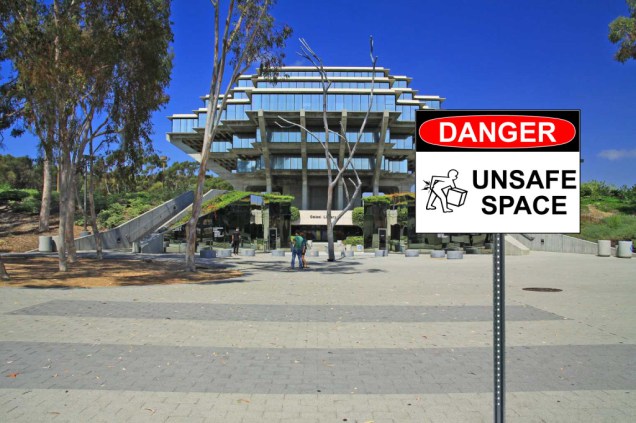
Danger Unsafe Space Sign - The Koala - UCSD

Student identity politics cultists and their craven university administration enablers are now gunning for student journalism and the free press

When University of California – San Diego student publication The Koala published this satirical article, they probably had some idea of the reaction that it would inevitably provoke:

Too long have trigger warnings plagued the airwaves. Too long has the no-blacks rule been removed from our campus. Too long have students not been free to offend their hypersensitive peers. “Spam Musubi only $1” and “Holy shit they opened up Starbucks” have replaced the long-gone chants of “Nigger nigger nigger nigger nigger.” Next week, that will all change.

Administrators at UC San Diego are creating an all new, state-of-the-art Dangerous Space for UCSD students who just don’t feel like their needs have been met on campus. In the past few weeks, the lack of dangerous space at UCSD has become increasingly apparent; students have been lashing out with puppy parades, non-violent protests, and other equally safe gimmicks. Safe spaces at UCSD are commonplace, and threaten individuals who do not like feeling safe. The logical next step has been taken by the university in creating a place to fairly support all UCSD students, continuing the university’s theme of inclusion and equality.

Located in the center of Library Walk, the new Dangerous Space is the ideal place for students to do whatever the hell they want. Senior Frank Yu gave The Koala the following statement: “The needs of dangerous-space students have been overlooked for generations, but UCSD is finally recognizing what means the most to 19-year-old Asian nerds: fucking a dead body with a picture of my waifu taped on the face.”

F. Yu isn’t alone. Not only will this new dangerous space allow people of all ethnicities and sizes – even unnaturally large sizes – it will allow for knifes, guns, opinions that might be different than yours, drug paraphernalia, sharp writing instruments, and explicit pornography.

The new Dangerous Space is guaranteed to get students excited for a good time, and will probably end like all good things do, with body mutilation and feelings of remorse.

Not world class humour, you might think, but certainly something that falls well within the boundaries of constitutionally protected speech in America.

(And from this blog’s perspective, an always-welcome attack by students on the illiberal cancer metastasising through the English-speaking Western academia.)

But on this occasion, the publication was not merely the recipient of angry protests and tearful accusations from “triggered” snowflake students. Instead, the entire weight of the university leadership, egged on by vengeful student protesters, came crashing down on the small student newspaper.

From Inside Higher Ed:

On Nov. 18, the university’s administrators responded to student complaints, condemning the Koala in a statement. “We, the UC San Diego administration, strongly denounce the Koala publication and the offensive and hurtful language it chooses to publish,” several administrators, including the university’s president, stated. The Koala responded to the denouncement by publishing a series of profanity-laden and slur-filled fictional emails meant to be written by administrators.

So far, so unsurprising. Just another craven university administration cowering in fear and issuing Stalin-like denunciations of alleged thoughtcrime at the behest of entitled student protesters.

But it gets worse:

In an attempt to starve out a controversial student publication without violating the First Amendment, the student government at the University of California at San Diego voted last week to cease any funding of student media.

The move — which First Amendment experts said does not pass constitutional muster, despite the student government’s maneuvering to avoid targeting a specific group — came after UCSD administrators condemned the most controversial of the university’s publications amid student protests about racism on campus.

In other words, the officious student council was not satisfied with having bullied the spineless UCSD university administration into denouncing humorous free speech, they wanted to starve The Koala of funding, effectively shutting it down.

In Britain, this would have been a slam-dunk. Game over. But in America, the pesky First Amendment makes such blatant retaliation illegal, and so instead the student government had the bright idea of ceasing funding to all student media organisations – essentially killing off an entire campus industry and ruining everyone’s fun in order to punish one organisation accused of causing “offence”.

The political machinations here are so crude that there is simply no disguising them, try as the student council might:

Student leaders appear to have been worried that if they just ended funding for the Koala, and did so based on its content and language, they would be violating the First Amendment. So later that day, the Associated Students Council voted to defund all student media by removing a section from its constitution about financial support of student media organizations.

The Associated Students provides about $15,000 per year, drawn from student fees, to several student media organizations, including student-run research journals and magazines. The twice-weekly student newspaper, the Guardian, is independent and was not affected.

“When this was brought to council floor, I made it a point to address that this issue was not to be tied to any particular organization,” Dominick Suvonnasupa, the student government’s president, said in an email. “The question was whether to fund media at all, and at the end of the meeting, council decided not to. AS decided to discontinue print media funding as it was determined that there were other areas of campus that could better benefit from the limited resources of the Associated Students. All campus media organizations have received suggestions of alternative funding sources.”

Uh-huh. Sure. And of course the Associated Students Council would have come to exactly the same conclusion, independently, had The Koala not published their heretical article back in November of 2015 (funding was withdrawn from all student publications a week later). Right.

Incidentally, these are exactly the same tawdry tactics which were once used by die-hard segregationists during the last gasp of Jim Crow, where some racist whites chose to privatise their school districts and close their public amenities rather than submit to federally mandated integration. Only now it is moralising student activists and their cowardly enablers within academic leadership who would rather burn all student media to the ground than allow one publication to continue posting material which they find “offensive”. But don’t expect today’s virtue-signalling student activists to note the irony.

Just as many British leftists are desperate for Britain to vote to remain in the European Union in the coming referendum because deep down they don’t think that the people are capable of making the “right choices” if proper democracy was restored with Brexit, so these Social Justice and Identity Politics cultists on both sides of the Atlantic seem to think that fellow students are somehow unable to handle free speech, and that it must therefore be withdrawn or highly circumscribed in order to prevent “harm” from occurring.

Fortunately, the San Diego chapter of the American Civil Liberties Union is now riding to the rescue. From The Daily Caller:

The American Civil Liberties Union (ACLU) filed a lawsuit against the University at California at San Diego (UCSD) for defunding a student publication that offended UCSD students.

[..] The ACLU alledges this action runs afoul of the First Amendment.

“The student government violated the First Amendment in two ways,” a statement from the ACLU read. “First, it targeted the student press by stripping it of revenue that remains available to support other student speech. Second, it retaliated against the editorial viewpoint of The Koala, an action that is not immunized by inflicting collateral damage on all student media.”

Although the organization expressed sympathy with those offended, it asserted The Koala piece was “classic protected speech.”

“Trauma is real,” said David Loy, legal director of the ACLU in San Diego and Imperial Counties, “but censorship is not the cure, because it inevitably blows back on those it purports to protect.”

It is good to see the ACLU come down on the right side of this issue and take up the case of this small student-run publication. One does not have to approve of The Koala, or this article in particular, to decry the way that the UC San Diego student government, drunk on power, sought first to shut down the paper and then effectively silence all campus media as a collective punishment for the heretical editorial viewpoint of one outlet.

The ACLU’s case seems quite watertight, and it is likely that the lawsuit will succeed, but student protesters will not take a defeat lying down. If they cannot accomplish their primary objective (shutting down the offensive publication) or secondary objective (suppressing student journalism altogether) they will come back with a third strategy, and a fourth.

These people are relentless. Caving in to their shrill and authoritarian demands encourages them to come back for more, while rebutting them only encourages the snowflakes to shout louder. All of which might be admirable, if only their cause was a just one. But despite the name, there is nothing “just” about the Cult of Social Justice and Identity Politics.

On the contrary, it is a poisonous, tawdry ideology which preaches personal fragility, collective guilt, voluntary re-segregation and a rampant culture of victimhood. And as such it must be actively opposed on all fronts.

God speed the ACLU lawsuit, and may The Koala survive to publish many more editions filled with edgy, unapologetically provocative student humour.


Safe Space Notice - 2

Top Image: The Koala

Agree with this article? Violently disagree? Scroll down to leave a comment.

Follow Semi-Partisan Politics on TwitterFacebook and Medium.