David Cameron And Donald Trump – Promising Security Over Conservatism

David Cameron - Donald Trump - Conservatism - Conservative Party - Republican - GOP - Ideology - Security

Donald Cameron and David Trump. Or is it the other way around?

In many ways, you couldn’t imagine two politicians more different than Donald Trump and David Cameron.

The British prime minister (despite his best efforts) exudes an air of privileged, private school entitlement at all times, and has a reputation for making withering (if cruel) put-downs of his opponents in the House of Commons. The increasingly presumptive Republican Party presidential nominee, on the other hand, takes pride in being brash and boastful, and his claim to “have the best words” is as laughable as it is factually inaccurate.

Furthermore, David Cameron was quick to weigh in against Donald Trump when Trump made sweeping and inaccurate generalisations about Britain and Muslims, stopping short of the shrieking and hysterical calls for Trump to be banned from entering the UK, but still condemning him in strong words.

And yet, the two politicians – one seasoned in Westminster politics, the other making a virtue of his inexperience in the ways of Washington – are more alike than it first seems.

In seeking to understand the persistent appeal of Donald Trump to a large and broad swathe of the Republican Party base, Einer Elhauge argues that Donald Trump wins because he promises to be The Great Protector, keeping Americans physically safe and financially secure in an uncertain world.

Elhauge writes in the Atlantic:

The message of his Republican opponents has effectively been: We are more faithful to conservative principles. Trump’s message has been entirely different. He essentially says: I will protect you. I’m conservative, but if protecting you requires jettisoning conservative ideology, I will do so. Protecting you is the prime directive. This message has powerful resonance, especially for voters who feel the Republican Party has failed to protect their interests.

You see this pattern in all of Trump’s deviations from conservative orthodoxy. Take the debate over Planned Parenthood. Like all conservatives, Trump opposes abortions. But he stresses he does not want to stop funding their wonderful work protecting women from cervical and breast cancer. The other Republican candidates simply express a desire to destroy Planned Parenthood outright. Trump’s message to voters: The other candidates will adhere rigidly to ideology, even if it needlessly fails to protect millions of women from cancer. I won’t.

[..] Trump’s signature policy is to build a wall to protect his voters’ jobs. What could evoke protection more than building a huge wall? His opponents quibbled about its feasibility but ultimately adopted the same position. Trump’s message to voters: I care about protecting you enough to propose huge historic projects. The other candidates begrudgingly agreed, but their heart is not in it, so they are less likely to follow through.

Free trade is great, Trump says, but it has to be fair. His opponents just adhere to pure free trade, which does increase the economic pie. But economic research shows that free trade harms some subsets of voters, particularly the working-class voters flocking to Trump. The message to his voters: I will favor free trade only to the extent that I can protect you from harm, perhaps by compensating you using the gains of trade. My opponents will favor free trade even if it harms you.

And as it goes for policy, so it goes for style. Trump consistently eschews the hard-headed statements of fidelity to conservative principle or the Constitution which voters hear from Senator Ted Cruz, focusing instead on cultivating the same “your safety first” narrative:

Trump talks endlessly about his polls, because the polls stress that he is strong enough to protect his voters. He speaks extemporaneously and often crassly in a stream-of-consciousness way, which has many pitfalls but emphasizes that his views are unprepared, authentic statements of his views and that he will thus carry out his promises to protect his audience. He responds aggressively to every attack, no matter how minor, conveying the sense that he will also aggressively protect his voters.

It is hard to deny the success of this approach. Many voters, feeling let down by the stewardship of both President Obama and the reactionary Tea Party dominated Congress which followed in 2010, have lost faith in politicians selling explicitly ideological remedies for America’s ills.

Rand Paul, Mike Huckabee and Rick Santorum got nowhere this election cycle, suggesting that the public’s flirtation with Constitutional libertarianism and social conservatism respectively are not the vote-winners they once were. And the same goes on the Left, with Hillary Clinton now pulling clear of Senator Bernie Sanders in the Democratic primary, despite the huge achievements of Sanders’ campaign.

The situation in Britain is strikingly similar. David Cameron’s general election victory – at Labour’s expense and despite the rise of UKIP, the SNP and Green Party on the radical Right and Left – suggests that while a minority of voters (this blog included) crave stronger ideological differences and a move away from consensus politics, a larger number of people looked at the two main parties and went for the option which they believed would deliver them the most security.

Having secured his coveted Conservative majority government in the general election, David Cameron declared in his victorious 2015 party conference speech:

I tell you: our party’s success in growing our economy and winning the economic arguments has never been more vital.

Nothing less than the security of every single family in our country depends on it.

Before concluding:

And now with couples married because of us, working people backed because of us, the NHS safe because of us and children in the poorest parts of the world saved because of us, everyone in this hall can be incredibly proud of our journey – the journey of the modern, compassionate, One Nation Conservative Party.

This was not the speech of a flinty-eyed ideologue yearning to roll back the frontiers of the state. It was the speech of a leader who calls himself a conservative, but is perfectly willing to use the machinery of government to deliver the social and economic outcomes that he wants – in Cameron’s case, building an election-winning coalition by promising physical, social and economic security over and above freedom and individual liberty.

Ed Miliband, to the extent that his weak leadership stood for anything, ran on a platform of fairness and equality, emphasising entitlement over strength and security. And it got him absolutely nowhere.

David Cameron and the Conservatives, by contrast, ran on a platform of stability and security as the only objective. It wasn’t thrilling, inspiring or glamorous, but given the weakness of his opponents, it was enough to deliver a parliamentary majority that almost nobody predicted.

You can argue that David Cameron represents everything that is ideologically vacuous and wrong with modern British conservatism – as this blog does, loudly and often. But what you cannot do is deny the fact that Cameron has hit on a winning electoral strategy.

That’s why David Cameron ran for re-election with a manifesto pledging a creepy, statist “plan for every stage of your life”.

That’s why the Conservative Party talks about creating a strong economy not as an end in itself, but only in the context of generating more taxes to pay for ever more public services.

That’s why there is not an ancient right or civil liberty that David Cameron and Theresa May will not gladly crush in their effort to be seen as strong in the fight against terrorism.

Sure, they may look and sound different – almost complete opposites, in style and temperament. But both Donald Trump and David Cameron are both essentially playing the same trick – or perpetrating the same fraud – on their respective electorates, depending on your outlook.

Donald Trump was once a Democratic Party supporter and donor, talked up his great friendship with the Clintons and held positions which are diametrically opposed to his current conservative stances. David Cameron, meanwhile, calls himself a Conservative but is busily implementing Tony Blair’s fourth term New Labour agenda.

Neither man is what he publicly claims to be. And certainly neither Donald Trump nor David Cameron can fairly be described as small-c conservatives.


Donald Trump - Make America Great Again - Hat

Agree with this article? Violently disagree? Scroll down to leave a comment.

Follow Semi-Partisan Politics on TwitterFacebook and Medium.

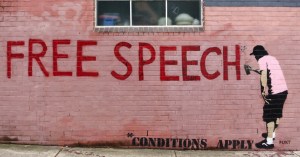
Hate Speech / Free Speech

Earlier this month I had the privilege of attending an event organised by Spiked, entitled “A New Intolerance On Campus”.

The final panel of the day focused on the question “Is hate speech free speech?”, and while it was a little unbalanced (Dan Hodges was due to provide the counterpoint opinion but was unfortunately unable to attend) there were eloquent arguments in favour of unrestricted free speech from Brendan O’Neill, Maryam Namazie and particularly Douglas Murray.

While the arguments expressed here will be familiar to anyone who closely follows the debate on free speech and the climate of censorship on university campuses – particularly those who have read Mick Hume’s worthwhile book “Trigger Warning: Is The Fear Of Being Offensive Killing Free Speech” – the video is still worth a watch.

Free Speech - Conditions Apply - Graffiti

Agree with this article? Violently disagree? Scroll down to leave a comment.

Follow Semi-Partisan Politics on TwitterFacebook and Medium.

OscarsSoWhite: The Self-Flagellating, Social Justice Academy Awards

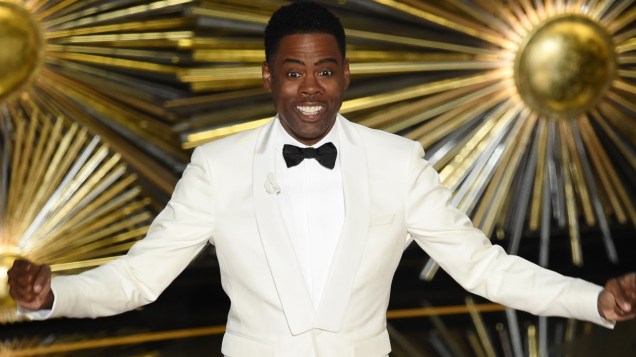
Chris Rock - Oscars Monologue - OscarsSoWhite

Chris Rock’s opening monologue was brilliant – but bombarding Oscars viewers with four hours of social justice preaching was too much, and served the messengers far more than the causes they promoted

At the opening of Chris Rock’s excellent hosting of the 88th Academy Awards in Hollywood, the comedian made a joke which sets some very important and much-needed context for the #OscarsSoWhite and social justice-obsessed debate leading up to the star-studded ceremony.

From the New York Times transcript of Chris Rock’s remarks:

It’s the 88th Academy Awards. It’s the 88th Academy Awards, which means this whole no black nominees thing has happened at least 71 other times. O.K.?

You gotta figure that it happened in the 50s, in the 60s — you know, in the 60s, one of those years Sidney didn’t put out a movie. I’m sure there were no black nominees some of those years. Say ‘62 or ‘63, and black people did not protest.

Why? Because we had real things to protest at the time, you know? We had real things to protest; you know, we’re too busy being raped and lynched to care about who won best cinematographer.

You know, when your grandmother’s swinging from a tree, it’s really hard to care about best documentary foreign short.

It is great to see Chris Rock – incidentally, one of the many high profile comedians who now refuse to perform on American college campuses because of the stultifying and censorious climate created by Social Justice Warrior (SJW) activists – making this point, which frequently gets lost in our climate of perpetual outrage.

(Though sadly, because everything and everyone is “problematic” these daysand because Social Justice Warriors ruin everythingthe bien pensant criticism of Rock’s monologue is already gathering steam).

Is it perhaps unfortunate that there were no black nominees among the various acting categories? Maybe so – although it was hardly statistically unlikely, given the fact that African Americans make up just thirteen per cent of the US population. But the mere fact that we are now arguing about whether black actors (Hispanics and other minorities seemed to do quite well in terms of winning awards) are being systematically excluded from the ultimate expression of Hollywood elitism shows in itself just how far we have come.

This is not to negate the very real discrimination against black people which still exists, particularly in the criminal justice system and law enforcement – notably several high profile killings of unarmed black suspects by the police. This blog covered the Michael Brown shooting in Ferguson, Missouri and I offered my own sympathetic perspective from having spent many months and years visiting the St. Louis area.

But one has to go back only a few short decades to encounter a time when the threat to “black bodies” (a strange term which is increasingly fetishised in the media – particularly through use by writers such as Ta-Nehisi Coates, whom I greatly admire even when we disagree) was far more universal, and not primarily the concern of black teenagers murdered while committing a minor misdemeanor, or black actors shunned by the movie industry.

What became increasingly concerning as the Oscars wore on, though, was the fact that Chris Rock’s excellent, light-hearted but pointed acknowledgement of the controversy and the shortcomings of Hollywood, was only the first salvo in a barrage of social justice virtue-signalling and white guilt self-flagellation which ultimately consumed the entire ceremony. Every segment between awards seemed to have to involve conspicuous references to the #OscarsSoWhite drama, which became grating and unnecessary after awhile.

Some people were quick to sanctimoniously declare that this was deserved:

https://twitter.com/gmgannon/status/699455425633243137

Because not only does every occasion now have to be a teaching moment for the social justice agenda, the point must be laboured again and again. Not because it does anything to actually improve the availability of good roles for black actors in Hollywood, but because each presenter who touched on the theme was then able to imbue themselves with the same “I’m part of the solution, not the problem aura”.

This reached a heady climax when Vice President Joe Biden made a surprise appearance on stage to introduce Lady Gaga and plug his campaign against sexual assaults at college. While every decent person should be able to get behind the idea that nobody should be raped while studying at university, or indeed at any other time, this was then followed by the pernicious idea that “It’s on us” (i.e. perfectly innocent members of the public) to prevent rape.

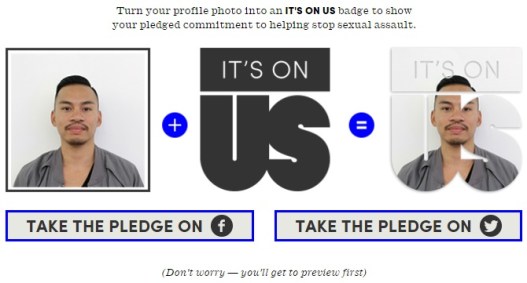
The organisation promoted by Vice President Biden, ItsOnUs.org, asks us to take the following actions in our own lives:

To RECOGNIZE that non-consensual sex is sexual assault.

To IDENTIFY situations in which sexual assault may occur.

To INTERVENE in situations where consent has not or cannot be given.

To CREATE an environment in which sexual assault is unacceptable and survivors are supported.

The first pledge seems perfectly reasonable. But the remainder seek to transform us into perpetually vigilant informants and secret police agents, scanning crowds and charging to intervene in situations where we are uncertain that consent has been given, even when we lack critical context.

The idea that the average person will ever have the opportunity to “intervene in situations where consent has not or cannot be given” is particularly ludicrous – but these days, one can quite easily imagine squads of purse-lipped student “consent educators” roaming popular nightspots and breathalysing couples leaving bars and clubs to ensure that sexual relations do not follow the consumption of beer (heaven forfend).

But scroll to the end of the ItsOnUs website and you’ll see the only possible tangible outcome of the campaign – the ability to superimpose the organisation’s logo on to your social media profile picture, thus allowing those who take the pledge to ostentatiously parade their “I, too, am not a rapist” credentials before their equally vapid friends.

It's On Us - Rape Culture - Sexual Consent - Oscars - Joe Biden

The idea that college campus rape can be prevented by mandatory sexual consent workshops, “raising awareness” or taking online pledges in a blaze of self-promotion is utterly ludicrous. Nobody who has been raised since childhood to disrespect women or act in a sexually entitled and bullying way is going to be reformed or turned away from committing rape by being lectured by an earnest Social Justice Warrior. The revolution which must happen is in our homes, our morals and our family life, and will not be accomplished through lectures from the stage of the Dolby Theatre in Los Angeles.

But words are very much the SJW tool of choice, and the extent to which language is being weaponised in furtherance of a certain narrow agenda again became much clear later in the Oscars ceremony.

The BBC reported:

And oh, were there causes! A whole smorgasboard of enlightened liberal issues, as if everyone thought they had to live up to the tone of noble chastisement set by the diversity issue. Lady Gaga, seated at a starkly lit white piano, sang ’Til It Happens to You, the song she wrote for the campus-rape documentary The Hunting Ground, and though it’s a lugubrious number, her goggle-eyed manner seemed like an attack on the audience.

The movement for transgender rights was propped up by several mentions of the forward-thinking phrase “gender confirmation surgery”.

This, of course, is in relation to the film “The Danish Girl”, the biographical portrayal of the life of Lili Elbe, one of the first recipients of sex change surgery, who transitioned from male to female.

Eddie Redmayne’s Oscar nominated performance was by all accounts outstanding, and the issues raised about the prejudice, discrimination and abuse suffered by many transgender people are real and worthy of serious discussion. But this cannot come at the expense of our language and our shared perception of reality, and unfortunately the attempt to shoe-horn the new phrase “gender confirmation surgery” (as opposed to gender reassignment surgery) into the Oscars ceremony does just that.

You may recall attempts in the more conservative, right-wing media over the past decade to re-name suicide bombings as “homicide bombings”. This seemed to stem from the feeling that to focus on the suicide of the perpetrator gave undue prominence to the terrorist and detracted from the victims, which was of particular concern to conservative news outlets covering terrorist attacks against Israel and the West.

Unfortunately, the phrase “homicide bombings” also sows confusion, obfuscates reporting and makes it much harder for people to understand what has taken place. All bombings (or all successful ones, anyway) are homicide bombings by definition, since their purpose is to kill people. But not all bombings also involve the deliberate suicide of the perpetrator in the explosion. This is a characteristic unique to suicide bombing, and is what makes it distinct from, say, the IRA’s bombing of the 1984 Conservative Party conference in Brighton, England, where the bomber set the explosive device a month prior to the attack and was well out of harm’s way when it took place.

Regular bombing versus suicide bombing – an important distinction in terms of terrorist tactics is mirrored and emphasised by a difference in language. In the case of suicide bombing, the language rightly calls our attention to the unique aspect of that style of attack. Calling it “homicide bombing” makes such attacks indistinguishable from any other terrorist attack, and actively decreases our understanding. Some conservatives believe that this mangling of language is nonetheless desirable in order to express our particular disapproval of suicide bombing. Most sensible people would scoff at such a fatuous and superficial idea.

And this is exactly what we saw take place on stage at the Oscars last night. Not a suicide bombing, thank God. But an attempt to forcibly change the language we use, stripping away the most descriptive part of a commonly used phrase like “gender reassignment surgery” by substituting the word “confirming” instead, in order to bestow our further approval on the act.

Prevailing sentiment dictates – quite probably correctly – that transgender people are born into the wrong bodies, and that surgery which physically changes their genitalia and appearance is therefore merely correcting a mismatch between physical reality and mentally experienced reality. But now, it is no longer politically correct to talk about somebody changing their gender through means of surgery, because that sounds too drastic. Now we must say that the surgery merely “confirms” their existing, mentally experienced gender. Surgically removing a penis and creating an artificial vagina can no longer be described truthfully as a medically significant and life-changing physical alteration, but merely a “confirmation” of someone’s inner being.

Regardless of one’s thoughts about transgender issues, there should be no disputing that forcibly mutilating our shared language just to signal our approval or disapproval of an act – at the expense of clear meaning – is not merely an act of wishful thinking, trying to conjure a new reality by stating it loudly enough, but is also a bleakly totalitarian way to approach the issue. And yet this, too, was preached to us during the Oscars ceremony.

All in all, it was quite an evening.

White privilege-shaming in nearly every segment. Sexual consent shaming from no lessa figure than the Vice President. All capped off with a deliberate attempt to wrest control of the English language, bending it away from reality and toward to the will of the Social Justice Warriors and their remarkably intolerant form of tolerance.

And this is just Hollywood – that bastion of progressive opinion – talking to itself, preaching fervently to the choir.

If this is what they are prepared to inflict on themselves, God only knows what forms of indoctrination, shaming and corrective punishment lie in store for the rest of us.


OscarsSoWhite - Academy Awards - Social Justice - Virtue Signalling - 2

Agree with this article? Violently disagree? Scroll down to leave a comment.

Follow Semi-Partisan Politics on TwitterFacebook and Medium.

Tony Blair And The Shell-Shocked Centrists: The Fears Of A Fading Elite

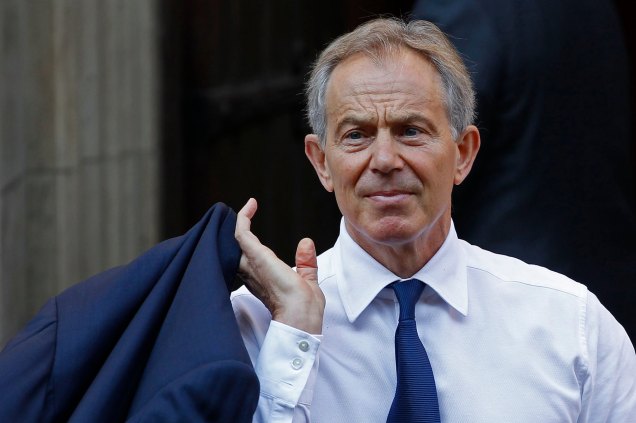
Tony Blair - New Labour - Centrism

Pity Tony Blair. Unloved and discredited in his own country, he still fails to understand the role he played in the anti-centrist backlash on both sides of the Atlantic

A panicked, uncomprehending Tony Blair is struggling to understand the appeal of left-wing insurgents such as Bernie Sanders and Jeremy Corbyn, LabourList reports:

Tony Blair has said he finds it difficult to understand the surge to prominence of Jeremy Corbyn and Bernie Sanders amid doubts over both men’s capacity to win general elections.

The former prime minister said the two veteran left-wingers faced a “question of electability” but admitted that stagnating living standards for people on lower- and middle-incomes had generated anger at elites in Britain and the US.

Blair also warned political parties they would be powerless to help people unless they “selected someone who is electable”.

[..] Blair, who was speaking to The Guardian and The Financial Times, said candidates who could “rattle the cage” were emerging, in a reference to Corbyn, who came from the left fringe to easily beat the party establishment to claim the Labour leadership, and to Sanders, who hopes to emulate him by winning the Democrat nomination ahead of Blair’s friend Hillary Clinton.

“It’s very similar to the pitch of Jeremy Corbyn,” Blair said. “Free tuition fees: well, that’s great, but someone’s going to have pay for it. An end to war, but there are wars.”

Where to begin?

Let’s start with Tony Blair’s “pass the smelling salts!” terror at the supposedly unhinged and crazy far-left politics of Bernie Sanders. That’s the same Bernie Sanders who would be chased out of Britain with flaming torches and pitchforks for being too right-wing, were he the UK prime minister, thanks to his support of private sector-delivered healthcare and the right to bear arms.

The interesting thing – and Todd Gillespie at Spiked has also picked up on this – is that with his support for civil liberties and the rights of the individual over the big guy (corporation or government), Bernie Sanders is in some ways a better conservative standard-bearer than most of the people currently squabbling for the US presidency – and certainly far more so than our own Coke Zero Conservative prime minister, David Cameron.

In many ways, when Tony Blair comes charging into the US presidential contest in support of Hillary Clinton and against Bernie Sanders, he is not making the principled case for a pragmatic, centre-left policy platform capable of winning elections, as he so smugly claims. After all, the American Right is also tearing itself apart at the moment, and there is nothing to say that Sanders could not defeat one of the more inexperienced or unpalatable GOP candidates still standing.

No, what Tony Blair is doing here is siding with the political elite – of which he is very much a part – and the tired old orthodoxies which people have grown so heartily sick of that they are now desperately casting around for alternatives in people like Donald Trump and Bernie Sanders. A former Labour prime minister who remembered anything at all about his party’s roots might not be quite so quick to publicly embrace a US presidential candidate awash in Wall Street donations and influence.

But Blair genuinely can’t see the problem with consistently, publicly and unapologetically siding with globalisation’s winners and richest beneficiaries while either ignoring or actively harming those who are left behind. And he cannot understand why this fawning deference to money and power is creating a populist backlash which has changed the course of his party.

Which brings us on to Jeremy Corbyn. LabourList’s report of Tony Blair’s comments continues:

He suggested the sudden rise of Corbyn and Sanders, each after years spent toiling in relative obscurity on the left of their parties, reflected a loss of faith in the centre-ground of politics as well as the changing technology of political communications.

“I think there is a combination of factors behind these movements which are happening both sides of the Atlantic. Part of it is the flatlining of lower and middle income people, the flatlining in living standards for those people, which is very frustrating. It’s partly an anger for sure at the elites, a desire to choose people who are going to rattle the cage.

“And it’s partly also about social media, which is itself a revolutionary phenomenon which can generate an enormous wave of enthusiasm at speed. When I first started in politics, these things took so long to build up momentum; your decision points were well before that moment was achieved. But it’s also a loss of faith in that strong, centrist progressive position and we’ve got to recover that…

“One of the strangest things about politics at the moment – and I really mean it when I say I’m not sure I fully understand politics right now, which is an odd thing to say, having spent my life in it – is when you put the question of electability as a factor in your decision to nominate a leader, it’s how small the numbers are that this is the decisive factor. That sounds curious to me.”

Blair is absolutely right that there has been a loss of faith in centrist politics. But centrist politics is not an innocent victim. Centrist politics has delivered a cross-party political consensus which was defiantly pro-European in face of public euroscepticism, which doggedly refused to talk about immigration even as a centre-left New Labour government spurned transitional controls and allowed hundreds of thousands more economic migrants a year into Britain without ever consulting the people, which sought to label anyone who questioned this policy as racist, and which trotted out the same tired old tropes about Our Beloved NHS and precious public services while doing almost nothing new or radical to reshape them for the twenty-first century.

Many people in Britain yearn for more genuinely left-wing solutions to be offered by a political party. Many would like the railways renationalised, and the energy companies too. This blog believes that such moves would be hugely regressive and statist, and very quickly result in poorer service and less choice for consumers. But those who believe in nationalisation deserve a voice in the political debate – a voice which Labour studiously excluded for many years. If Tony Blair seriously believed that high-handedly shutting people out of his party would store up no resentment for the future and possibly one day result in a backlash, then he is quite delusional.

Blair acts as though the rise of Jeremy Corbyn is merely a function of social media, and angry far-leftists hijacking the conversation. But it goes far deeper than that. The rise of Corbyn on the British Left, Sanders on the American Left and Trump on the Right are not an inchoate expression of public rage, but rather an indicator that a fully rational public has finally realised that the political consensus of the main political parties is not delivering what they need – be it middle class job security or success on the world stage.

The growth and prosperity delivered by the centrist political consensus in Britain has not been experienced uniformly by all citizens. That much is understandable – different policies will impact different socio-economic groups differently. What is unacceptable, though, is the fact that the centrists from both main parties never made a concerted effort to tweak those policies to help people who were left behind. They simply advocated more of the same.

More European Union. More government spending on the bloated, unreformed welfare state. More uncritical praise for the NHS. And more of the depressing view of Britain as nothing more than a nation of schools, hospitals and public services rather than a great nation built on our commercial, private sector initiative, and with boundless untapped potential.

Choose to treat the people like mindless, avaricious consumers rather than thinking, engaged citizens with a stake in their world, and you had better make damn sure that you deliver sufficient prosperity to keep everyone happy and distracted. This is how the centrists have treated us for years – essentially saying “you leave the global governance and great ideological questions to us, and in exchange we will deliver you a cheap supply of flat-screen TVs and other consumer goods”.

But when not everybody can afford the flat-screen TV or the iPhone or to scramble on to the property ladder, they start to look around them and notice things. Awkward things. Things like the fact that they no longer have the final say in issues affecting them, because sovereignty has been outsourced to the European Union. Or things like the character of their towns and cities – even their whole country – visibly changing because of levels of immigration about which they were never consulted. Or things like a broken welfare state which ensnares some people in lifelong dependency while allowing others to fall straight through the safety net to their deaths.

Brendan O’Neill picks up on this point – the fact that it is those who have not benefited economically from centrist consensus politics who are most likely to recognise that all is not well with our democracy – in his excellent piece in the Spectator:

The Third Wayists are quaking in their boots. The middle-class, middle-of-the-road technocrats who have dominated politics for the best part of three decades are freaking out. These people who bristle at anything ideological, are disdainful of heated debate, and have bizarrely turned the word ‘moderate’ into a compliment feel under siege. And no wonder they do, for on both sides of the Atlantic their very worst nightmare — a revenge of the plebs — is becoming flesh.

You can see this sometimes clumsy but nonetheless forceful reassertion of pleb power in everything from Trumpmania to the staggering back to life of Euroscepticism — or what snooty moderates call ‘Europhobia’, because every point of view that runs counter to their own must be a mental illness, right?

[..] In both Middle America and Middle England, among both rednecks and chavs, voters who have had more than they can stomach of being patronised, nudged, nagged and basically treated as diseased bodies to be corrected rather than lively minds to be engaged are now putting their hope into a different kind of politics. And the entitled Third Way brigade, schooled to rule, believing themselves possessed of a technocratic expertise that trumps the little people’s vulgar political convictions, are not happy. Not one bit.

And with regard to euroscepticism specifically:

We’ll see more of this in the coming months, more defamation of those who dare to say: ‘I don’t like Brussels.’ But Euroscepticism represents, not some swirling, xenophobic disgust with Europeans, as it has been pathologised by the pleb-fearing PC lobby, but a people’s feeling of exhaustion with the ossified oligarchy of the Brussels machine. It speaks to a desire among ordinary people to take back some control over their lives and destinies. And as The Economist pointed out, this Eurosceptic urge is strongest among the less well-educated — that is, the plebs, those tired of being treated as welfare, nudging and paternalism fodder by the new political elites.

So bring it on, this revenge of the plebs. Let’s cheer their rude, intemperate injection of ideology into the flat, lifeless sphere politics has become over the past 20 years. And let’s enjoy the squirming of an aloof political class and commentariat who mistakenly thought they had put the pesky masses and their troublesome views out to pasture.

If Tony Blair does not understand the anger and disillusionment directed not just at him but toward consensus politics in general – and there is no reason to doubt that his bewilderment is genuine – then one has to ask: what happened to the political nous of the man who won three consecutive general elections for Labour?

Why, when he has one foot firmly planted on each side of a massive new fault line emerging in our politics – not between Left and Right but between consensus politics’ winners and losers – is Tony Blair unable to understand his own starring role in precipitating the earthquake?


Bernie Sanders - Refutes Bernie Bros

Agree with this article? Violently disagree? Scroll down to leave a comment.

Follow Semi-Partisan Politics on TwitterFacebook and Medium.

Support David Cameron? I’d Rather Feel The Bern

Bernie Sanders For President

Bernie Sanders or David Cameron? There’s no contest

At a time when far too many conservatives on both sides of the Atlantic have revealed themselves to be either snarling authoritarians (Marco Rubio, Donald Trump) or patrician, vacuous hairdos (David Cameron), the search for authentic commitment to individual liberty can sometimes lead to unexpected places.

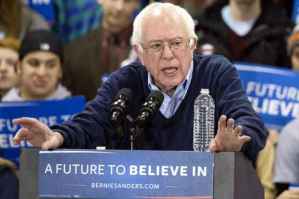
Spiked are now making the controversial argument that this search leads all the way to Vermont, and to US presidential candidate Bernie Sanders.

Todd Gillespie writes:

Despite being slammed by some as a big-government lefty, Sanders’ track record is more complicated — and arguably more libertarian than has been appreciated. Even libertarian stalwart Ron Paul has come out in support of Sanders’ small-government credentials, shortly after his son, Rand, left the Republican race.

Bernie has espoused positions similar to Rand’s, even joining with him to oppose government surveillance. Last year, Sanders wrote a blistering criticism of the ‘Orwellian’ practice of spying on citizens. He voted against the 2001 Patriot Act and its dreadfully named replacement, the Freedom Act, in 2015 — both of which Clinton supported. He is arguably the only candidate left who takes positions that can legitimately be described as libertarian.

He supports freedom of speech. He backs net neutrality and opposes attempts to censor the internet. In 2005, he introduced the Stamp Out Censorship Act, which sought to prohibit the government enforcing ‘indecency fines’ on non-public media (it failed to pass). Recently, addressing students at Liberty University (a Christian institution whose president has just endorsed Donald Trump), most of whom think very differently to Sanders, he said ‘it is vitally important for those of us who hold different views’ to engage in debate.

Anti-surveillance. Anti-censorship. Pro civil liberties. Pro free speech. All more than can be said of many American conservatives, who ostentatiously flaunt their love of the Constitution – by which they mean the Second Amendment, while conveniently overlooking the First and Fourth Amendments.

Gillespie continues:

Sanders’ right-wing critics write him off as a big-state socialist. But a better label might be ‘libertarian socialist’. Yes, he has a vision of centralised government spending funded mainly by tax hikes on big business, but Comrade Bernie also envisages having a private sector with greater employee ownership. He has introduced legislation several times to increase government funding for centres that would provide training and technical support for the promotion of worker ownership and participation. He introduced the Rebuild America Act 2015, proposing an extra $1 trillion investment to renew America’s crumbling infrastructure, increasing airport capacity, improving and expanding railways, roads, bridges and broadband connection. He also wants to end crippling student debt and drastically increase loans to fuel small-business innovation. You can’t accuse him of thinking small.

Of course there is also much in Bernie Sanders’ platform to abhor – the punishing effective tax rates which would be required to fund this social democratic revolution, the increase in the size of government and the stripping away of agency and responsibility from free citizens to make their own decisions and take their own risks, for a start.

But perhaps it is also a sign of the divergence between the American and British political spectrums that I quite often find myself nodding along in agreement when the ornery senator from Vermont opens his mouth to speak. Perhaps when you move far right enough in your British politics (many certainly seem to think I am Thatcher on steroids) you actually break through and register on the far left of the US political scale.

And one thing is certain – if Bernie Sanders were prime minister of the United Kingdom, we would have a far more ideologically conservative leader than we currently have in David Cameron.

Spot The Socialist - David Cameron vs Bernie Sanders - Semi Partisan Politics - Sam Hooper

Agree with this article? Violently disagree? Scroll down to leave a comment.

Follow Semi-Partisan Politics on TwitterFacebook and Medium.