Fighting Censorious, Safe Space Authoritarianism With Comedy

If the Cult of Social Justice and Identity Politics is the disease, comedy and the human instinct to ridicule the absurd are penicillin

Stand-up comedian Steve Hughes has an excellent rejoinder to the current illiberal mantra, held by all devotees of the Cult of Social Justice and Identity Politics, that “sticks and stones may break my bones, but words can kill me stone dead“.

In this excellent excerpt from an old routine, Steve Hughes skewers this baseless assertion and rejects the constant attempts to equate hearing disagreeable words with incurring physical harm.

As Hughes rightly says, when one is offended, absolutely nothing happens. The sky does not fall, pestilence and famine do not rain down on the Earth, one is not physically injured. On being offended, one can either respond and make a stand, or choose to let it go – both are valid options and people are free to choose between them, depending on the individual circumstances.

What is not valid are the attempts to circumscribe free speech – particularly the current fad of calling for “free speech, not hate speech” without realising the inherent contradiction – because the fear of giving or receiving offence is now so great that it overrides our commitment to the principles of a free, democratic society.

But though we must be vigilant in pushing back against these attacks on free speech, with university leaders and professors in particular needing to finally step up and take a stand for academic freedom, it is also worth recalling something which blog pointed out last year:

We must never forget that our best weapon in the fight against these petty, censorious students, these Orwellian tyrants in gestation, is the simple act of ridicule.

The more we take seriously and earnestly debate with these student babies, coming up with detailed arguments as to why it is in everyone’s interests that they tolerate the presence of someone with different ideas on their campus – or why they are wrong to terrify their professors with accusations of supposed microaggressions to the extent that they become unable to properly teach – the more their hysteria can begin to seem like a valid world view.

But of course it is not. Just as nobody takes seriously that diminished rump of eccentrics who maintain that the world is flat, so we should be careful not to take the bait every time some wobbly-lipped student demands the purging of a challenging book from the academic syllabus or the revocation of an honorary doctorate from a partisan figure.

That doesn’t mean that we sit back and do nothing, allowing these baby-faced tyrants to have their way. But it does mean all of us choosing more carefully how and when we pick our battles, and being willing to sit out a few rounds to let Trey Parker, Matt Stone and the good people at The Onion pick up the slack once in awhile.

Sometimes, earnestly engaging with those who seek to curtail freedom of speech and behaviour in the name of protecting the perpetually vulnerable from taking offence can be counterproductive, because deploying the well-trodden earnest arguments in favour of free speech only provides the Identity Politics cultists with another opportunity to state their toxic credo all over again.

Far better, in these circumstances, to keep one’s powder dry and let the comedians do the leg work instead.


Safe Space Notice - 2

Agree with this article? Violently disagree? Scroll down to leave a comment.

Follow Semi-Partisan Politics on TwitterFacebook and Medium.

Tales From The Safe Space, Part 38 – DePaul University Administrators Complicit In Disrupting Free Speech

It is not enough to issue mealy-mouthed apologies to speakers and societies after their events have already been ruined by militant student protesters. Free speech must be robustly defended by university administrators at the very moment it is being threatened – something which few liberal university leaders have the courage or character to do

Read this shocking account of how Vichy administrators at DePaul university, entirely cowed and captured by the militant Cult of Social Justice and Identity Politics, allowed violent and threatening protesters to shut down a private speaking event organised by DePaul College Republicans.

Michael Sitver writes:

I never realized that forcibly shutting down a private speaking event was considered free speech. I was also surprised to learn that assaulting a police officer is now a form of protest. It certainly never occurred to me that making violent threats towards a speaker was a constitutionally protected right. In fact, I was pretty confident all three of these acts were illegal…highly illegal.

Yet, yesterday I saw radical protesters do all three of these things, without consequence. DePaul University administrators looked on dispassionately, as if this was an every-day occurrence. Watching this all unfold, I had to wonder for a moment whether DePaul administrators were defending some bizarre form of free speech I had never heard of.

They weren’t. They knew they were tolerating a dangerous suppression of speech, but in the face of adversity they chose to do the easy thing, rather than the just thing. As usual.

Years of inaction by university administrators has left radical student activists feeling they are immune from the law. Free from consequences, or dissenting opinions, endowed with a feeling of moral high-ground, students have taken increasingly drastic steps to suppress other opinions, and conservative opinions in particular.

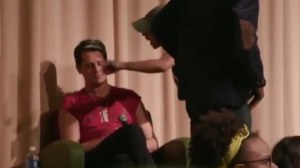
I watched from the front row yesterday as a whistle-blowing “protester” stormed the stage of an event featuring conservative commentator Milo Yiannopoulos, with about a dozen more radicals following behind him. The event was privately organized by students, requiring months of planning and painstaking fundraising, but that never even factored into their heads. Administrators have handed them a bubble, a “safe space” where they don’t need to consider the impact of their actions on other students.

After the foul-mouthed and intimidating protest continued (one of the protesters simulated punching Milo Yiannopoulos in the face), the event was ultimately cancelled. The screeching, hysterical mob had their victory, aided and abetted by the silent university administrators who reportedly skulked in the corner and refused to take any action – save forbidding on-site security and the Chicago Police from removing the protesters and allowing the event to proceed.

Stories like this are now a dime-a-dozen. Almost every day brings some new egregious case of free speech suppression by supposedly “oppressed” protesters, grown increasingly emboldened with the knowledge that their universities would never dare to bring disciplinary proceedings against them for fear of unleashing the full force of mob justice.

But though these outrages are now common, we should not lose sight of what is lost when the forces of censorship and thought control succeed in one of their grotesque actions. In this case, the DePaul Republican society had fundraised extensively and gone to a significant effort to organise a high-profile event and attract a well-known if controversial speaker (Milo Yiannopoulos including the stop as part of his “Dangerous Faggot” tour of the United States). Many hours and many thousands of dollars doubtless went into organising the event. And hundreds of students made efforts to attend, in some cases travelling from far afield.

The very least that these students should have been able to expect from their university is that the leadership foster an environment of free speech in which the event could take place, and that administrators come down decisively on their side when their lawful event was disrupted. And yet DePaul University signally failed to fulfil this most elementary of duties, ostensibly because the victims were conservative and the perpetrators shielded by the blame-proof cloak of the Black Lives Matter movement.

Sitver continues:

While an invited speaker was harassed and harangued by protesters, DePaul administrators cowered indecisively in a corner. Faced with a serious challenge to first-amendment rights on their campus, they were visibly frightened of confronting the protesters, who tied themselves to the “Black Lives Matter” movement.

Administrators had fought against hosting the conservative event for over three months. As they watched the event unravel, they seemed almost relieved to see the radical protesters fulfil their wishes. The rights implications were utterly lost on them. All they wanted was a nice, quiet, homogeneously-thinking campus.

Only days before the event, administrators had demanded that DePaul College Republicans, the club that hosted the event, pay hundreds of extra dollars in security costs. This was a clear breach of contract, but the organizers paid the fee under threat of cancellation. Yet, after ordering a dozen security officers, the administrators prevented them from restoring order, forcing them to stand down.

I talked to a few of the dozen Chicago police officers eventually called into the building, and they were irate. They were well-trained, and well-equipped to handle scenarios such as this. They wanted to do their job, and remove the protesters, but administrators demanded they stand passively and watch. Once again, violence prevailed over free speech on a liberal college campus, and the administration was 100% complicit.

And the great sickness at the heart of the academic establishment which allowed these protesters to act with such impunity is revealed in the official response of DePaul University president Dennis Holtschneider, who made absolutely clear that his sympathies lay with the belligerent protesters and not the innocent student society which had its long-planned event ruined in a brazen attack on free speech.

Immediately after the event, Holtschneider wrote:

Mr. Yiannopoulos and I share very few opinions.  He argues that there is no wage gap for women, a difficult position to maintain in light of government data.  As a gay man, he has claimed that sexual preference is entirely a choice, something few if any LGTBQ individuals would claim as their own experience.  He claims that white men have fewer privileges than women or people of color, whom he believes are unfairly privileged in modern society — a statement that is immediately suspect when white men continue to occupy the vast majority of top positions in nearly every major industry.

Generally, I do not respond to speakers of Mr. Yiannopoulos’ ilk, as I believe they are more entertainers and self-serving provocateurs than the public intellectuals they purport to be.  Their shtick is to shock and incite a strong emotional response they can then use to discredit the moral high ground claimed by their opponents. This is unworthy of university discourse, but not unfamiliar across American higher education.  There will always be speakers who exploit the differences within our human community to their own benefit, blissfully unconcerned with the damage they leave behind.

In other words, Holtschneider cannot even bring himself to unequivocally condemn the acts of the protesters – rather, he begins with this lengthy and cowardly disclaimer, making it crystal clear to any would-be student tormentors that he disagrees with pretty much everything that Yiannopoulos says and believes. Such a statement, it hardly needs pointing out, should be utterly redundant in a university setting. Whether the university president agrees or disagrees with the views expressed by a lawfully invited speaker is utterly irrelevant when it comes to condemning the subsequent disruption of the event. Yet Holtschneider is so terrified of his restive student population that he has to get his disclaimer in quick and early.

The statement continues:

Now that our speaker has moved on to UC Santa Barbara and UCLA, we at DePaul have some reflecting and sorting out to do.  Student Affairs will be inviting the organizers of both the event and the protest — as well as any others who wish — to meet with them for this purpose.  I’ve asked them to reflect on how future events should be staffed so that they proceed without interruption; how protests are to be more effectively assisted and enabled; and how the underlying differences around race, gender and orientation that were made evident in yesterday’s events can be explored in depth in the coming academic year.

This is about the tamest statement of disciplinary intent one could imagine. University administrators will not be summoning and ordering those who participated in this suppression of free speech to attend and account for their actions – rather, they will merely be “invited” to share their thoughts, and come armed with reflections on how things might be done differently next time.

At this point it is worth reminding ourselves that it is the university administrators who are supposed to be the authority figures, not the anti free speech student protesters. And when students have egregiously violated the university’s own code of conduct – as Sargon of Akkad shows conclusively that they did – campus authorities have considerable scope in imposing sanctions on the guilty parties. Yet the DePaul hierarchy seems so terrified of incurring the wrath of their own students that the most they are willing to do is meekly request a sit-down with the young woman who jabbed her fist mere inches from the face of an invited guest speaker.

At the end of his statement, Holtschneider does manage to scrape together the basic decency to apologise to the DePaul College Republicans for the disruption and abandonment of their event. But free speech is not something which can be protected in retrospect, or the harm inflicted by its suppression made good by a subsequent apology. Either a speaker is able to air his thoughts in the public square, free from intimidation and undue disruption, or he is not.

Issuing an apology once an event has already been disrupted and abandoned does nothing to redress the injury to free speech which has taken place. If anything, failing to tackle disruptive protests as they occur and relying on subsequent mealy-mouthed apologies exacerbates the problem, emboldening militant students to repeat the same childishly aggressive behaviours again and elsewhere, knowing that they will be free to achieve their aims while any mild repercussions will lag long behind.

Thus far, in the battle for academic freedom and free speech rights on campus, university authorities have been found dangerously wanting. At best they are paralysed by an overwhelming fear of their most militant students and the potential disruption (and potentially career-ending bad PR) they can bring, and at worst they are outright collaborators in the activists’ efforts to suppress freedom of speech and establish a culture of intellectual and ideological homogeneity on campus.

This is untenable. Academic institutions cannot properly function when the most immature and authoritarian students are flattered and pandered to by terrified university leaders. And neither can conservative students alone be expected to keep the flame of academic freedom and free speech alive while fully grown academics cower in the corner and shamefully shirk their own duties.

University administrations should be championing the cause of academic freedom and providing vital air cover to students on the front line of the debate. But sadly, at present many university leaders would rather stab such students in the back rather than openly support their right to freedom of speech and expression.

And for this cowardice they should feel heartily ashamed.


DePaul University - Milo Yiannopoulos - Protest - Free Speech

Safe Space Notice - 2

Agree with this article? Violently disagree? Scroll down to leave a comment.

Follow Semi-Partisan Politics on TwitterFacebook and Medium.

This EU Referendum Is Of Existential Importance. So Why Is The Campaign Rhetoric So Unequal To The Occasion?

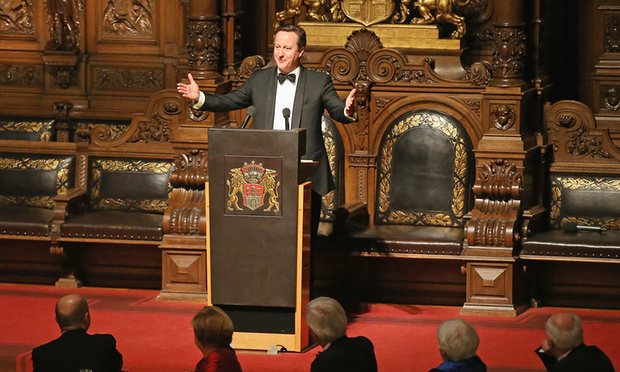
David Cameron - EU Referendum - European Union - Brexit - Speech - Rhetoric

The age of glib soundbites and dumbed-down, instantly shareable viral social media memes is perfectly suited to the Remain campaign’s strategy of sowing fear, uncertainty and doubt as widely as possible. But if we still lived in the age of great political speeches, the Brexiteers would be winning this EU referendum by a landslide

Because I’m an oddball, sometimes I like to spend time reading or listening to great political speeches from the past – particularly those from American politics.

Two of the more obvious such speeches – JFK’s “We Choose To Go To The Moon” and Theodore Roosevelt’s “Dare Mighty Things” – have been forcing themselves repeatedly to the forefront of my mind lately, though until tonight I was unsure why.

Then this evening I stumbled on this 2011 article by Peggy Noonan, Wall Street Journal columnist and former speechwriter for President Ronald Reagan. Though the article’s discussion of social media shows its age, it makes for an interesting read today:

One way to change minds about the current crisis is through information. We all know this, and we all know about the marvellous changes in technology that allow for the spreading of messages that are not necessarily popular with gatekeepers and establishments. But there’s something new happening in the realm of political communication that must be noted. Speeches are back. They have been rescued and restored as a political force by the Internet.

In the past quarter-century or so, the speech as a vehicle of sustained political argument was killed by television and radio. Rhetoric was reduced to the TV producer’s 10-second soundbite, the correspondent’s eight-second insert. The makers of speeches (even the ones capable of sustained argument) saw what was happening and promptly gave up. Why give your brain and soul to a serious, substantive statement when it will all be reduced to a snip of sound? They turned their speeches into soundbite after soundbite, applause line after applause line, and a great political tradition was traduced.

But the Internet is changing all that. It is restoring rhetoric as a force. When Gov. Mitch Daniels made his big speech – a serious, substantive one – two weeks ago, Drudge had the transcript and video up in a few hours. Gov. Chris Christie’s big speech was quickly on the net in its entirety. All the CPAC speeches were up. TED conference speeches are all over the net, as are people making speeches at town-hall meetings. I get links to full speeches every day in my inbox and you probably do too.

People in politics think it’s all Facebook and Twitter now, but it’s not. Not everything is fractured and in pieces, some things are becoming more whole. People hunger for serious, fleshed-out ideas about what is happening in our country. We all know it’s a pivotal time.

Look what happened a year ago to a Wisconsin businessman named Ron Johnson. He was thinking of running for the Senate against an incumbent, Democratic heavy-hitter Russ Feingold. He started making speeches talking about his conception of freedom. They were serious, sober, and not sound-bitey at all. A conservative radio host named Charlie Sykes got hold of a speech Mr. Johnson gave at a Lincoln Day dinner in Oshkosh. He liked it and read it aloud on his show for 20 minutes. A speech! The audience listened and loved it. A man called in and said, “Yes, yes, yes!” Another said, “I have to agree with everything that guy said.” Mr. Johnson decided to run because of that reaction, and in November he won. This week he said, “The reason I’m a U.S. senator is because Charlie Sykes did that.” But the reason Mr. Sykes did it is that Mr. Johnson made a serious speech.

A funny thing about politicians is that they’re all obsessed with “messaging” and “breaking through” and “getting people to listen.” They’re convinced that some special kind of cleverness is needed, that some magical communications formula exists and can be harnessed if only discovered. They should settle down, survey the technological field and get serious. They should give pertinent, truthful, sophisticated and sober-minded speeches. Everyone will listen. They’ll be all over the interwebs.

What a strange idea: the internet restoring rhetoric as an important part of our political debate. While this positive trend may have flared briefly in America for a time as Noonan indicates, we have certainly seen no comparable renaissance of political speechwriting here in Britain. Sure, Nigel Farage can deliver a withering put-down in the European Parliament and the SNP’s Mhairi Black can make sentimental lefties go all misty-eyed, but as a rule, for at least the past thirty years, political speeches in Britain have been pedestrian and utterly forgettable.

This is rather odd. Britain is currently engaged in an existential debate over whether we leave or remain in the European Union, the seriousness of this one issue dwarfing any mere general election, as the prime minister himself has opined. Surely the speeches made by our politicians should therefore reflect the gravity of the decision before us. But does our rhetoric meet the level and tone required of such a debate? Hardly.

As an ardent Brexiteer, one of the main problems I encounter when debating the issue with people – particularly online – is that abstract concepts such as democracy and self-determination are much harder to put into words or summarise with a glib but memorable phrase, while the fearmongering rhetoric of the Remain campaign naturally lends itself to viral sharing. It is much easier to (falsely and hysterically) declare that pensioners will be £32,000 worse off or that 100,000 marriages in London will fail because of Brexit than to explain the intangible importance of living in a properly free society – and almost inevitably the person attempting to argue the side of self-governance ends up sounding ponderous and vague in contrast with the swivel-eyed certainties uttered by Remainers.

And when eurosceptics try to dial up the rhetorical heat, too often it comes off badly. While UKIP-ish phrases like “we want our country back” are certainly memorable, they also have a distinctly nativist twang which alienates a good many people even as it fires up true believers. It is the same story with these key phrases, repeated over and over again by the official Vote Leave campaign, from their daily emails to the phrases of key surrogates:

We send £350 million a week to the EU – enough to build a new hospital every week

250,000 EU migrants a year come to the UK and five new countries are in the queue to join – including Albania, Serbia, and Turkey – it’s out of control and damages the NHS

It’s safer to take back control and spend our money on our priorities

This is apparently the best that the cream of Britain’s eurosceptic talent can do – an utterly unbelievable pledge about diverting 100% of our current EU contributions, including the rebate, to building new hospitals, and an unconnected pivot from the NHS to it being “safer” to spend money on our priorities. One can just about see what Vote Leave is trying to do, but it is an amateurish, almost childlike attempt at political messaging.

Meanwhile, here is the slicker effort from Britain Stronger in Europe:

Britain is stronger, safer and better off in Europe than we would be out on our own.

Join the campaign to remain in Europe – and let’s secure a stronger Britain that delivers opportunity now and for future generations

Never mind that it is based on a lie. A lie repeated identically and often enough can be incredibly effective, as it is with Vote Leave’s misrepresentation that leaving the political organisation known as the EU means leaving the continent of Europe. There is also more of a positive message here – where Vote Leave talk about Brexit being “safer”, suggesting danger and a defensive attitude, Stronger In talk about “deliver[ing] opportunity now and for future generations”, exuding positivity for today and for tomorrow as well.

Only when the message delivery window is longer than a quick email or a short social media meme does the Brexit side begin to redress the balance. Put aside their dubious and counterproductive tactics for a moment, but Vote Leave spokespeople like Michael Gove and Daniel Hannan (even Nigel Farage) can paint an extremely attractive picture of Britain outside the European Union in a speech, particularly when they aren’t butchering the idea of how to go about achieving their goal.

Even more pertinently, look at the Flexcit plan for leaving the European Union, which is increasingly being seized upon by key influencers who despair of Vote Leave’s amateurism and lack of a clear, risk-minimising Brexit plan. Flexcit itself is a 400 page document, while the summary pamphlet clocks in at a still substantial 40+ pages. At a recent TED-style talk in central London, Dr. Richard North (Flexcit’s primary author) took an hour to lay out the ideas and reasoning behind it. Though the Leave Alliance network of committed bloggers (full disclosure: I am one of them) do a sterling job of breaking down and simplifying the concepts so as to sell them more effectively to key influencers and the public, Flexcit will never be an easily-shared, one page meme on Facebook. Nor should it be. Serious and weighty issues require serious responses.

But increasingly it appears that the Leave camp will be punished at the ballot box for the fact that its core argument about democracy and self-determination cannot be boiled down to a single positive phrase or graphic in the same way as the establishment-backed Remain campaign can churn out endless content, together with slick but abhorrent messages from professional agencies:
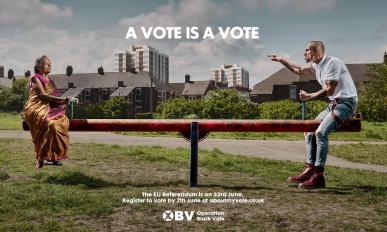
Operation Black Vote - OBV - A vote is a vote - EU Referendum - European Union

Of course Vote Leave are guilty of shameless fearmongering too, never more so than with this dreadful fearmongering ad about Turkey joining the EU:
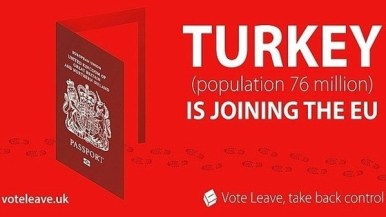
Vote Leave - Turkey Joining EU

But whether it is raising fears of knuckle-dragging, Brexit supporting skinheads or the armies of Turkish immigrants who will apparently all decamp to Britain en masse at the first opportunity, both are seen as highly effective tools by their respective campaigns, and both rely on communicating a primitive, fear-based message not with rich rhetoric but with a short, sharp visual, the better to hold our limited attention spans.

In many ways, it is a tragedy for the Brexit cause that this opportunity to extricate ourselves from an unwanted supranational government of Europe has come about when the internet has taken off and the average person’s idea of profound political engagement is liking and sharing the latest snide Huffington Post article with their friends on Facebook. When the debate over whether or not Britain should join Europe raged in the late 1960s and early 70s, the art of making serious (if not quite great) speeches was still just about alive – Hugh Gaitskell’s famous address to the Labour Party conference warning against joining the EEC stands as one such example of memorable oratory, culminating in the famous “thousand years of history” quote:

We must be clear about this; it does mean, if this is the idea, the end of Britain as an independent European state. I make no apology for repeating it. It means the end of a thousand years of history. You may say: “Let it end.” But, my goodness, it is a decision that needs a little care and thought.

But when the history of Britain’s 2016 EU referendum comes to be written, what will we remember? Of all the particularly dramatic moments in the campaign to date, none of them have been speeches. Sure, sometimes the fact of a speech has been newsworthy, such as when an unexpected establishment figure has been wheeled out to say that Brexit will usher in the apocalypse, but the content – the oratory itself – has rarely raised hairs or stiffened spines.

In fact, proving Eleanor Roosevelt’s famous assertion that great minds discuss ideas, average minds discuss events and small minds discuss people, the media has determinedly reported almost exclusively on the latter two. Of course that is always the temptation for journalists, but our politicians have hardly given the media much to work with on the ideas front, even if they were minded to cover them.

This is a depressing state of affairs. This most important debate should be bringing out the best in our politicians and our media. We should be witnessing a straight-up fight between advocates of the democratic, independent nation state and those who ardently believe in the euro-federalist dream, adjudicated by a press corps  beholden to neither side and always willing to challenge baseless assertions rather than merely provide a “fair and balanced” platform for two partisan idiots to yell at each other for an equal amount of time.

In this debate, our elected leaders should be role models in setting the tone of the debate. Of course they are not, because our professional political class are very much part of the problem – the main reason why Brexit should only be the first step in a broader process of constitutional reform and democratic renewal in Britain.

But here we are, a country administered by followers rather than leaders, watched over by a childish and corrupted press who would rather giggle about the referendum’s personal dramas than fulfil their democratic function. And too little time before the referendum to hope that anything much will change.

All of which is bad for Brexiteers. After all, this is an age when scaremongering claims and assertions about the supposed cost of Brexit can be “quantified”, slapped on a smug little infographic and shared ten thousand times before breakfast, while the importance of self-determination an democracy – the ability of the people to influence the decisions which affect them and dismiss those with power – is almost impossible to boil down to a single eye-catching number, despite being the most precious benefit of all.

Without honest political leaders to establish a narrative and bigger picture – and without a robust media to report – it is effectively left to well-intentioned citizens to hold the grown-up debate amongst themselves, citizens who (for all their pluck) often struggle to cut through the noise of the vapid official campaign.

What’s most galling about all of this is the fact that there are many people alive today who have living memory of hearing great political rhetoric deployed in service of consequential issues – if not in Britain, at least in America:

The Only Thing We Have To Fear Is Fear Itself.

We Choose To Go To The Moon.

The Great Society.

I Have A Dream.

Ask Not What Your Country Can Do For You.

Robert Kennedy’s speech on the assassination of Martin Luther King.

Tear Down This Wall.

And even Britain has managed to offer worthy efforts, including:

We Shall Fight On The Beaches.

The Few.

The Winds Of Change.

The Lady’s Not For Turning.

The Grotesque Chaos Of A Labour Council.

What words uttered by our contemporary politicians during this EU referendum will be long remembered or quoted fifty years from now?

My prediction: not a damn one. But at least there will be a great treasure trove of vapid tweets and misleading infographics for historians to pick through as they wonder why Britain signed away her freedom.

 

European Union - United Kingdom - Britain - Flags

Top Image: Guardian

Support Semi-Partisan Politics with a one-time or recurring donation:

Agree with this article? Violently disagree? Scroll down to leave a comment.

Follow Semi-Partisan Politics on TwitterFacebook and Medium.

Social Justice Commandments: Being A Good Parent Perpetuates Unfair Privilege

Bedtime Story

The warped philosophy of social justice decrees that good parents are part of the problem, not the solution

For more evidence of the sickness at the heart of our universities, I present the professor from Warwick University – my alma mater – who thinks that parents who read to their children are gifting them with unfair privilege over other kids whose parents are too busy watching Britain’s Celebrity Animals Bake-Off On Ice to lavish their own children with similar attention.

From the ABC summary of the segment on Australian radio:

[Professor Adam] Swift in particular has been conflicted for some time over the curious situation that arises when a parent wants to do the best for her child but in the process makes the playing field for others even more lopsided.

‘I got interested in this question because I was interested in equality of opportunity,’ he says.

‘I had done some work on social mobility and the evidence is overwhelmingly that the reason why children born to different families have very different chances in life is because of what happens in those families.’

Once he got thinking, Swift could see that the issue stretches well beyond the fact that some families can afford private schooling, nannies, tutors, and houses in good suburbs. Functional family interactions—from going to the cricket to reading bedtime stories—form a largely unseen but palpable fault line between families. The consequence is a gap in social mobility and equality that can last for generations.

Already this sounds ominous. And though Swift gets his mention of “equality of opportunity” in nice and early, the draconian means by which he wants to achieve this equality are quite something to behold:

‘What we realised we needed was a way of thinking about what it was we wanted to allow parents to do for their children, and what it was that we didn’t need to allow parents to do for their children, if allowing those activities would create unfairnesses for other people’s children’.

The test they devised was based on what they term ‘familial relationship goods’; those unique and identifiable things that arise within the family unit and contribute to the flourishing of family members.

For Swift, there’s one particular choice that fails the test.

‘Private schooling cannot be justified by appeal to these familial relationship goods,’ he says. ‘It’s just not the case that in order for a family to realise these intimate, loving, authoritative, affectionate, love-based relationships you need to be able to send your child to an elite private school.’

Note what Swift has done here. First of all, he posits a dystopian world where “we” have any right to “allow” parents to do certain things or raise their children in certain ways, the corollary to which is that these mystical external authority figures also have the power to prohibit parents from engaging in certain everyday activities.

But worse, he has made an arbitrary judgement with relationship to these “familial relationship goods”. You might think that it is up to individual parents and families to decide what is good for their young ones, or what is most needed to ensure that they thrive and become well-rounded, successful people. But you would be wrong. Because Adam Swift has a definitive list of all the things needed to create a well-behaved, social justice loving adult, and private schooling ain’t on the list.

And that’s when it gets really crazy:

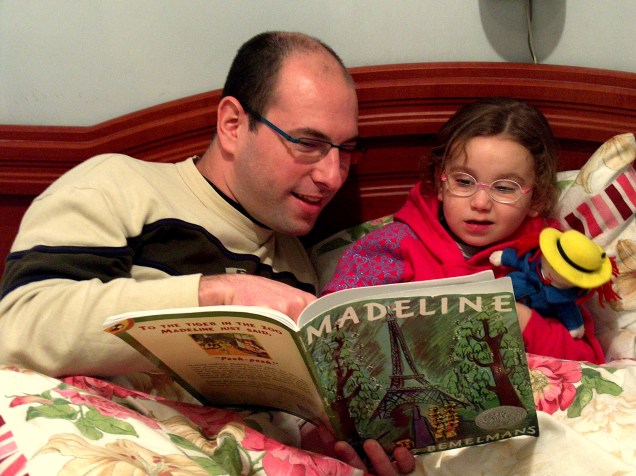
In contrast, reading stories at bedtime, argues Swift, gives rise to acceptable familial relationship goods, even though this also bestows advantage.

‘The evidence shows that the difference between those who get bedtime stories and those who don’t—the difference in their life chances—is bigger than the difference between those who get elite private schooling and those that don’t,’ he says.

This devilish twist of evidence surely leads to a further conclusion—that perhaps in the interests of levelling the playing field, bedtime stories should also be restricted. In Swift’s mind this is where the evaluation of familial relationship goods goes up a notch.

‘You have to allow parents to engage in bedtime stories activities, in fact we encourage them because those are the kinds of interactions between parents and children that do indeed foster and produce these [desired] familial relationship goods.’

How gracious of Swift, allowing parents to continue to read to their children at bedtime, even though the unfair privilege they bestow by doing so eats away at his enlightened, equality-loving soul.

Swift continues:

‘We could prevent elite private schooling without any real hit to healthy family relationships, whereas if we say that you can’t read bedtime stories to your kids because it’s not fair that some kids get them and others don’t, then that would be too big a hit at the core of family life.’

So should parents snuggling up for one last story before lights out be even a little concerned about the advantage they might be conferring?

‘I don’t think parents reading their children bedtime stories should constantly have in their minds the way that they are unfairly disadvantaging other people’s children, but I think they should have that thought occasionally,’ quips Swift.

So by all means continue to read to your children, if you must. But you should feel very guilty while you do so, and chastise yourself once little Timmy has fallen asleep, while meditating on the various ways he will grow up to oppress those unfortunate children whose parents did not read to them.

Which, of course, is the one thing missing from Adam Swift’s “analysis” – any thought or mention of the parents who do not read to their children. As with everything else in the victimhood-soaked world of social justice, where everything must be viewed through a lens of privilege and oppression, only those who work hard and do the right thing are subject to criticism. Those who do the wrong thing, by contrast, are continually excused and stripped of any agency for their own actions – a condescending behaviour which actually does more to dehumanise them than any “harm” they incur from the privileged.

In the entire segment, Swift has no words of reproach for those parents who do not read to their children at bedtime. He neither suggests that this might be through their own fault, or that they need to anything to rectify the situation. It is simply taken as a given that they will continue to be bad parents, helpless to modify their behaviour, and that the only thing society can do in response is to worsen the overall standard of parenting in order to prevent the worst parents from feeling bad or experiencing the consequences of their own actions.

And this, right here, is at the root of our society’s decay. We now simply accept and nod our heads while academics airily consider how best to bring everyone down to the same, lower level of attainment rather than striving to confer as many of the benefits currently enjoyed by the rich (or those with good parents) on all. The insidious Cult of Social Justice and Identity Politics has done its work well, because many of us now look at inequality and feel the instinct to tear the successful down (or at least actively thwart their rise) rather than building others up.

Fortunately, Adam Swift is not about to be given wide-ranging power over how people raise their children. But it is worth noting the type of outcomes which one might get when beady-eyed authoritarianism (where external authority figures “allow” graciously parents to do things) meets the warped Social Justice view of inequality.

For so long as these ideas remain abstract discussions between philosophers, there is limited real-world harm. But when more young people who have percolated in this environment all through university start entering the job market and getting themselves elected to local and national government, we will have a real problem on our hands.

In Britain, the Labour Party is already very hostile to the idea of private schools, while many in the Conservative Party are themselves quite paternalistic and keen for the state to regulate behaviour. And while neither party has not yet succeeded in shoehorning government fully into the parent-child relationship (except for Scotland, where the SNP is making a game attempt at taking over from parents), it may well be only a matter of time.


Bedtime Stories

Safe Space Notice - 2

Top Image: Wikipedia

Bottom Image: Guardian

Agree with this article? Violently disagree? Scroll down to leave a comment.

Follow Semi-Partisan Politics on TwitterFacebook and Medium.

Notes: The Moral Rot Behind The ‘Fight For 15’ Campaign

Fight for 15 - Care Workers

Notes – a new feature I’m trialling on the blog, in an attempt to publish the occasional random thoughts which never coalesce into a concise argument with a proper beginning, middle and an end. These will be sporadic, and if I haven’t contradicted myself at least once by the end of the year then I’m probably not doing it right.


My favourite fast food restaurant in the United States without a doubt is Chick-Fil-A. If they franchised internationally and I had the spare cash, I would open one here in London and it would easily do as well as recent US arrivals Five Guys and Shake Shack.

The reason that Chick-Fil-A is so good – besides the great tasting food – is the service, which (at least in the locations I have visited) goes above and beyond what one might expect in any fast food restaurant in Britain. As you arrive, a team member is always on hand to open the door for you and give you a warm greeting. That’s nice. Then, somebody with a smiling countenance and a decent command of English takes your order, usually getting it right the first time. And while you are sitting at the table eating, another team member circulates the restaurant offering to top up patron’s drinks from the soda fountain. Not only is there bottomless soda, you don’t even have to stand up and wipe the grease from your fingers to get your own refill.

When I go to my local McDonald’s on Kilburn High Road, I don’t expect any of this. I know that the restaurant will be in a state of perpetual chaos whether it is rammed at lunchtime or if tumbleweeds are blowing through in the dead hours. I know that asking for an extra barbecue sauce is like asking the server if they will donate a kidney. I know that the person taking my order will be unfriendly verging on hostile at least half the time, and I learned the hard way the necessity of carefully examining the contents of the bag to catch the frequent mistakes in the order before leaving the store.

What has recently made my local McDonald’s much better is the fact that they have just installed the new automatic order terminals. And now, I never have to have another human interaction there again, because the computer does it for me. I never went to McDonald’s for the stellar service or pleasant dining experience, and so I am happy to interact with a machine instead of a human being.

This is what Fight for 15 campaigners and other proponents of a higher minimum wage don’t get. If the labour is not worth $15 an hour and people do not want to pay the prices required to sustain profit margins with artificially higher labour costs, employers will look to replace human labour with technology as soon as it becomes practicable to do so. Somewhere like Chick-fil-A, a more traditional values-oriented chain with a premium on customer service, can perhaps withstand the tide. But McDonald’s and most other fast food retailers can not. The price of virtue-signalling middle class campaigners taking time off from their college classes or creative industry jobs to campaign for higher wages for fast food workers is that many of the latter will be thrown onto the unemployment scrapheap. Perfectly good entry-level jobs will be lost, and the ladders to better employment which they provide destroyed, just so that Guardian readers can feel better about themselves.

From Breitbart:

Wendy’s fast food restaurant chain says it will begin offering self-serve kiosks at its 6,000-plus locations across America, making them available to costumers by the end of 2016.

The fast food giant’s decision to move toward automation comes just as “Fight for $15”–a progressive protest movement, pushing minimum wage hikes–is applying pressure on state governments to raise wages for low-skilled fast food workers.

Last August, Wendy’s CFO Todd Penegor told investors that mandated wage hikes will cause his company to pursue other innovative avenues that could lead to fewer jobs for low-skill workers.

“We continue to look at initiatives and how we work to offset any impacts of future wage inflation through technology initiatives, whether that’s customer self-order kiosks, whether that’s automating more in the back of the house in the restaurant,” Penegor said, adding that “you’ll see a lot more coming on that front later this year from us.”

On the same conference call, Wendy’s CEO Emil Brolick said that individual Wendy’s franchises “will likely look at the opportunity to reduce overall staff, look at the opportunity to certainly reduce hours and any other cost reduction opportunities, not just price.”

But let’s look at another job staffed largely by people on minimum wage – the caring industry. This is a hard job, one whose financial rewards in no way meet the stresses and challenges of the work, looking after the health and sometimes social needs of elderly people. Some people in this line of work go above and beyond the call of duty, adding infinitely more value to the lives of the people in their care than will ever be reflected in their pay packets. Why? Because we don’t care about our aged relatives, particularly here in the West.

Well, maybe that’s unfair – we do care about them sentimentally speaking. But when it comes to putting our money where our mouth is, the indifference curve between purchasing a marginal improvement in quality of life for an elderly relative and buying the new iPhone is skewed horribly against grandpa. And if we can store our ageing relatives away in warehouses staffed by well-meaning but overwhelmed eighteen year olds, eye-rollingly disinterested others with hopefully one or two saints thrown in to ensure some minimum quality of life, that’s fine by us.

We could end the sorry drip-drip of nursing home abuse scandals tomorrow if we wanted to – by giving the profession the respect that it deserves, requiring some kind of training or qualification before employees are entrusted with vulnerable human beings, and ensuring that an attractive career path is in place for carers. That we fail to do so is a reflection not on government, not on the employers, but on ourselves. We permit this to happen, each one of us.

I’ve never understood why the Fight for 15 and minimum wage campaigners chose to go to the wall fighting for the rights of burger flippers to be paid in some cases significantly more than their labour is worth, while all the time there is a population of living saints among us – the carers, people who clean up the blood (and worse) in our care homes, and provide a vital measure of compassion and comfort to people in the sunset of their lives – being paid equally poorly. I am no advocate of wage controls, but the person who goes above and beyond to provide just a moment of personalised attention to a neglected older person despite having been on their feet for 12 hours straight seems to be an infinitely better figurehead for the movement than the person who operates the deep fat fryer at KFC.

If anything, Fight for 15 is a giant abdication of personal responsibility, declaring to the world that we are too lazy or selfish to stop eating manufactured food that costs almost nothing to produce or pay care workers a pittance while still expecting them to be Florence Nightingale, and that we would much rather the government step in to artificially hike the wages of those we are unwilling to pay better ourselves. The average Fight for 15 campaigner is quite happy to continue eating cheap fast food – they just want government to assuage their guilty consciences by topping up the wages of those whose labour does not command the minimum price.

Maybe this just speaks to the sickness at the heart of our decadent, self-absorbed late-stage imperial decline-ravaged Western society – our hearts brim over with compassion for the person who remembers not to put the pickle in our 99p cheeseburger, while we utterly neglect our ageing relatives and those who care for them on McDonald’s money.


Semi Partisan Notes - semipartisansam

Agree with this article? Violently disagree? Scroll down to leave a comment.

Follow Semi-Partisan Politics on TwitterFacebook and Medium.