Will All Those In Favour Of Open Borders Please Stand Up?

No Borders No Nations Stop Deportations protest banner

Will the Left’s unspoken, newly-extremist position on immigration and open borders be their political undoing?

Using Brexit and Trump as a smokescreen, many leftists have quietly moved towards a de facto “open borders” position on immigration without ever actually uttering the words or having the courage to declare their intentions in public.

Whether it is members of the anti-Trump “resistance” in America or bitter defenders of the European Union in Britain, opposition to what they see as an ongoing regressive right-wing coup is prompting many on the Left to adopt an uncompromising, extremely permissive stance on immigration which previously existed only on the libertarian fringes and which many leftists themselves once opposed.

This extremist new position is red meat for many left-wing activists, particularly certain elements of the Hispanic voting bloc whom Democrats need to fire up and turn out on election days (as well as for self-proclaimed “citizens of the world” living in newly-fascist Britain). But is the Left’s closed information loop of outrage causing them to diverge from popular opinion at a time when conservatism is otherwise discredited and electoral gains are there for the taking? By tying themselves so closely and unapologetically to people who came to and live in the country illegally, have left-wing parties put themselves on a collision course with the electorate?

Vox’s Dara Lind chronicles the strange journey on which the Democrats have embarked:

The thing is, about 10 years ago, many Democrats — including, notably, Schumer — would have championed many of the Trump administration’s enforcement proposals, from increased local cooperation with immigration enforcement to a physical barrier on the US/Mexico border, even if they weren’t part of a deal to legalize unauthorized immigrants. And they’d certainly accept them, happily, alongside legalization.

Absolutely. Applying the Left’s contemporary standards, only a decade ago the likes of Chuck Schumer and Nancy Pelosi were supporters of an oppressive, white nationalist agenda – as, in fact, was Hillary Clinton, who once voted to strengthen and expand border fencing between the US and Mexico. This is how far the Left has come on the subject of immigration, in a very short space of time.

More:

But it’s certainly true that Democrats in 2017, in general, tend to criticize the use of immigration enforcement, and tend to side with those accused of violating immigration law, as a broad matter of principle beyond opposing the particular actions of the administration.

This goes beyond simply representing members of their own communities (and potential electoral constituencies). The activist defense of immigrants caught crossing the border, especially the Central American children and families that now make up a large share of people entering the US without papers, has led Democrats to take a much firmer stance in defending them as humanitarian victims who deserve the chance to seek and receive asylum in the US.

In fact, you would be hard pressed to get a Democratic politician to name a single category of illegal immigrant whom they do not consider worthy of amnesty and eventual citizenship. Accusations of racism and oppression come easily to them, yet they are suddenly struck dumb when asked what kind of border security or immigration enforcement measures they would actually support.

And sometimes this leads the Democrats to new heights of extremism:

More broadly, Democrats are no longer as willing to attack “illegal immigration” as a fundamental problem anymore.

That rhetoric, too, came in part from DREAMers, who didn’t like being talked about as victims of their parents’ crimes who came to the US “through no fault of their own.” Instead they’ve portrayed their parents as “the original DREAMers” — a line that Nancy Pelosi followed in September when she said that DACA recipients’ parents “did a great thing” in bringing their children to the US.

Violating US immigration law is now “a great thing”, in the words of the Democratic Party Minority Leader. It is one thing to turn a blind eye to the abuse of the rule of law, as many on the Left have done for some time regarding immigration. But it is quite another thing altogether to praise that lawbreaking and hold it up as a paragon of civic virtue. This position totally undermines any remaining protestations that the Left are interested in any kind of immigration enforcement, and shows that their idea of “immigration reform” basically means unconditional amnesty with not even a token gesture for conservatives.

Lind’s article is worth reading in full, since she delves into some of the structural reasons why immigration activist voices now carry so much more weight within the Democratic Party, particularly the trade union shift from opposing illegal immigration to protect their dwindling memberships to supporting illegal immigration to boost their enrolment. But whatever the cause, the degree to which Democrats have lurched to the Left on immigration is alarming, and of concern to anybody who would like to see comprehensive reform in which amnesty is given only in exchange for a serious boost to future enforcement.

Andrew Sullivan thinks that the Left are marching off a cliff with their newfound extremism on immigration, and says as much in his weekly column for New York Magazine:

This is, to be blunt, political suicide. The Democrats’ current position seems to be that the Dreamer parents who broke the law are near heroes, indistinguishable from the children they brought with them; and their rhetoric is very hard to distinguish, certainly for most swing voters, from a belief in open borders. In fact, the Democrats increasingly seem to suggest that any kind of distinction between citizens and noncitizens is somehow racist. You could see this at the last convention, when an entire evening was dedicated to Latinos, illegal and legal, as if the rule of law were largely irrelevant. Hence the euphemism “undocumented” rather than “illegal.” So the stage was built, lit, and set for Trump.

He still tragically owns that stage. What Merkel did for the AfD, the Democrats are in danger of doing for the Trump wing of the GOP. The most powerful thing Trump said in the campaign, I’d argue, was: “If you don’t have borders, you don’t have a country.” And the Democrats had no answer, something that millions of Americans immediately saw. They still formally favor enforcement of immigration laws, but rhetorically, they keep signaling the opposite.

I was also astounded when the Democrats chose to devote a large section of their 2016 party convention to sharing their stage with confessed and unrepentant illegal immigrants. Though I cannot claim to have predicted Donald Trump’s election victory, in hindsight it is clear that moments like this just killed whatever enthusiasm existed for Hillary Clinton in the key swing states which she went on to narrowly lose.

When you refuse to condemn any form of illegal immigration, make the concerns of illegal immigrants one of your main priorities (often over and above born and naturalised citizens) and actively praise their lawbreaking, you have adopted an open borders position. You just don’t possess the courage to come out and say so, for fear of the political consequences. Apparently the Democrats are quite happy to ignore the concerns of Middle America, but are not yet quite ready to publicly give them the middle finger.

It is not unreasonable for people to ask politicians and political parties who embrace illegal immigration exactly what (if any) immigration controls they would actually accept. In fact, the only reason that Democrats are not routinely put on the spot and shamed into answering this question is because a spineless, complicit Washington DC media tacitly agrees with the new extremist position (or at least is too scared of being called “racist” by social justice activists to do their job).

To be clear: the idea of deporting all (or even most) people currently living illegally in the United States is unworkable as it is cruel – many people in this position did what anyone else would have done, given their situations and the immense pull factors of demand for labour and sporadic enforcement. Moreover, many illegal immigrants have lived most of their lives in America and are effectively Americans in pectore. Many are probably model citizens. Some would likely become the best of America.

But if the rule of law means anything at all, violating US immigration law while others endured stress, incurred expense and lost time following the legal process cannot be rewarded unconditionally. Illegal immigrants should be lifted out of the shadows and freed from a fearful half-life which does nobody any good, but only after following a similar process to legal immigrants. And there must be proper border enforcement in return, so we do not end up back in the same situation in two decade’s time. Immediately upon amnesty being granted to otherwise law-abiding illegal immigrants, the Left must give up their defence of sanctuary cities which make a mockery of the law. Donald Trump’s wall is overly expensive, impractical and largely pointless, but existing fencing should be fortified and new technologies deployed to stop illegal crossings. In other words, there must be a meaningful quid pro quo.

Neither side in American politics has acquitted itself very honourably when it comes to immigration reform, but at present it is the Left who are rapidly lurching toward a more extremist position, led by their activists on a collision course with a more sceptical public.

And going into the next electoral cycle, all the shrieking about Trump’s “racist” wall will not disguise the fact that the Left have something far more radical in mind.
 

Immigration Reform

Support Semi-Partisan Politics with a one-time or recurring donation:

Agree with this article? Violently disagree? Scroll down to leave a comment.

Follow Semi-Partisan Politics on TwitterFacebook and Medium.

The Conservative Party Has Lost The Pulse Of The Nation

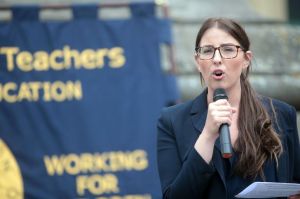
Laura Pidcock - Labour MP North West Durham - 2

Labour’s statist, redistributionist policies are as bad as ever, but unlike the Tories they increasingly have the pulse of the nation

Once again I find myself in the strange position of agreeing with a stridently left-wing MP in their criticism of this drifting Conservative government and the failing centrist consensus which it represents.

As Jon Trickett continues to curate LabourList for the week, North West Durham MP Laura Pidcock writes:

Those people who sit on the government benches, who speak very well and pronounce their excellence and their firm grasp of the system, probably do believe it was their hard work that got them there. I’m sure they believe that it was some unique brilliance that put them in a position of power, not their childhood classrooms with numbers in single figures; not their personal allowances whilst at university: not their ability to recover from failures, because of the large cushion they sit upon. Not everybody who is wealthy and privileged is like this, but it certainly – and evidently – it makes it harder for those that are to understand the reality of what is happening to ordinary people.

This is why you get a system like universal credit, like the bedroom tax, the rape clause, the sanction system, the work capability assessments and he hugely alienating disability benefits system. It is why there are fines and punishments associated with all aspect of working class life: parking, smoking, littering, debt payments, libraries, electricity meters. When I had a book that was overdue to return to the Commons Library, I did not receive a fine. Undoubtedly it was assumed that I was too busy, that I had better things to be doing. Do the same presumptions apply to 99 per cent of Britain? Of course, not. On the contrary, they seen are lazy, feckless and are perceived to be “cheating” the system for turning up minutes late to a benefits assessment. Then they are hit where they won’t recover: through their finances, and so the cycle continues.

Of course, Pidcock ultimately goes on to spoil it all with economically illiterate class envy and a programme based more on tearing down the privileged rather than giving greater opportunities to the underprivileged:

We must expose the absurdity of our current system, we should shine a light on the cosy, privileged networks which lock out our people, our communities and our class. We have to call out poverty pay for what it is: it is robbery from the real wealth creators.

This much at least is socialist piffle. Yes of course there are some exclusive, exclusionary networks that are unwelcoming to minorities and working class people, and this is reprehensible when it occurs. And yes, recruitment to the SpAdocracy and cadre of parliamentary researchers and advisers which acts as a recruitment pool of future MPs is often too narrowly targeted at people from the same homogeneous background. But as this blog discussed yesterday in the wake of the Oxford University diversity non-scandal, the real issue is a problem with the supply of qualified people from under-represented backgrounds, not a lack of demand for them.

Most institutions remotely connected with government are under huge pressure to improve their diversity ratios, and face constant political pressure and bad publicity when they fail to do so. The fact that insufficient progress has been made tells us that the pipeline of qualified (or interested) candidates remains restricted, not that willing and capable people are necessarily being turned away.

But strip away the leftist agenda and the rest of Pidcock’s criticism is spot-on. Of course there are honourable exceptions, but MPs sometimes manage to display a remarkable lack of empathy for the struggles of the squeezed middle. This manifests in a multitude of ways, and is by no means restricted to the Conservative Party.

The London-raised metro-left Labour MP parachuted into a safe Northern constituency but boasting a voting record more attuned to the priorities of Islington than Darlington is every bit as out of touch as the privately-educated Tory MP who cannot comprehend why a six-week gap between applying for Universal Credit and receiving a payment might be problematic. Or the Tory MP who is confused that a selfish housing policy which chronically restricts the supply of housing stock to benefit older homeowners simultaneously alienates younger voters. Or the rural Tory MP who devotes all their energy to supporting NIMBY causes and then wonders why each election leaves him with fewer and fewer colleagues from urban constituencies.

My concern is not that the Labour Party is suddenly coming up with compelling, inventive new solutions to the problems we face as a country. By and large, they are not. My concern is that Labour are at least correctly identifying some of those problems and speaking to them in a way which makes people think they care, while the Conservative Party steams on in the same dismal direction as before, bereft of vision or policy ideas and with an unfortunate tendency to loudly insist that everything is great when everybody can see otherwise.

My concern is that more than four months after a general election result which has seemingly prompted no change in strategy by Theresa May’s government, Labour MPs are starting to make more sense – and sound more like they live in the real world – than their Conservative counterparts.

And when that happens, it usually means that the out-of-touch party is heading for a spell on the Opposition benches.


Laura Pidcock - Speech

Support Semi-Partisan Politics with a one-time or recurring donation:

Agree with this article? Violently disagree? Scroll down to leave a comment.

Follow Semi-Partisan Politics on TwitterFacebook and Medium.


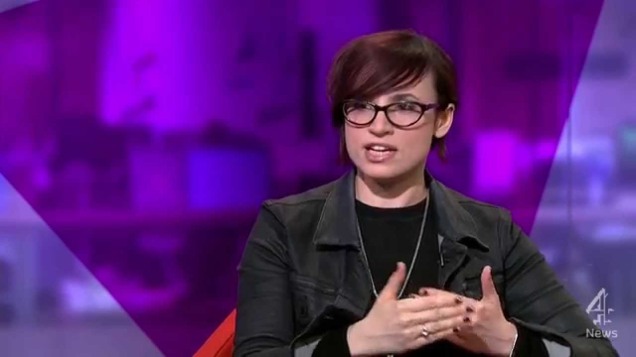
Laurie Penny, Gaslighter

Laurie Penny

According to Laurie Penny, conservatives are the true enemies of free speech and the illiberal student activists who beat them up, ‘no platform’ their speakers and disrupt their events are merely questioning the establishment

As they stagger on under the “leadership” of Theresa May, this Conservative government continues to cast about aimlessly for some kind of raison d’être, a justification for showing up for work in the morning which sounds marginally more noble than “because daytime TV sucks”.

And so it came to pass that the unremarkable minister for universities, Jo Johnson, decided to jump on the increasingly popular right-wing bandwagon of bashing identity politics, demanding that universities uphold a commitment to free speech and promise not to use no-platforming or safe spaces to suppress the exchange of ideas on pain of being fined or even deregistered as an institution by the Office for Students.

This is all incredibly boring. Jo Johnson was head of the Downing Street Policy Unit from 2013-2015 under David Cameron, right at the time when illiberal identity politics zealots were cementing their power. If Johnson had a burning desire to protect free speech, he could have persuaded Cameron to take up the cause. He did not do so. It is also curious that he now wants to become a crusader for free speech when working for an authoritarian prime minister whose every instinct points the opposite way, toward more regulation and censorship. In short, this whole thing is a PR stunt by a rudderless Tory Party chasing headlines rather than following an ideological compass.

But all this is only to be expected. More noteworthy is the response to Johnson’s posturing by identity politics priestess Laurie Penny, who took to the New Statesman to claim not just that conservatives are exaggerating the threat to free speech but that it is entirely a figment of their imagination.

Penny’s article begins dishonestly, and then gets worse:

The nonsensical consensus amongst the centre-right that today’s students are a bunch of censorious cry-babies plays well with the base, so Johnson Minor has jumped on the rickety bandwagon barreling down the road to the palace of convenient fictions, where a delicate banquet of delusion will be served to those whose cash and status protect them from ever having to hear their opinions questioned by a bunch of rowdy kids.

Conservatives seeking protection from having their opinions questioned? This is an interesting inversion. Rather than trying to minimise the issue and argue that the threat to free speech on campus has perhaps been blown out of proportion and is perhaps not as bad as portrayed, Laurie Penny insists – rather shamelessly – that the problem does not exist at all, that it is all a figment of our imagination.

Penny must be a secret neo-conservative fan girl because this is a consummate Karl Rove strategy, whereby she shamelessly accuses her opponents of the identity politics Left’s own glaring flaws. Where is the lengthy list of prominent left-wing speakers who have been banned from college campuses by conservatives? Where are the left-wing professors who fear for their job security if they question conservative ideas? Where are the left-wing students expelled or suspended from college because they made conservatives feel “unsafe” and contributed to a hostile, non-inclusive atmosphere? They don’t exist.

The problem is not that crusty old establishment figures are upset that brave, radical students are questioning their judgment. The problem is that these illiberal students do not merely question ideas, they actively suppress them on the grounds that they amount to dangerous “hate speech” with the power to wound or even kill. Yet through immense self-deception, Penny is able to cast actions which deliberately prevent speech from taking place as mere protest:

This is a non-controversy, and it’s unbelievable that otherwise intelligent commentators are taking it seriously. “No-platforming” is just another word for student protest – the practice of opposing invited speakers with bigoted views is a time-honoured one. The cooked-up row over “student censorship” is led by the sort of trembly-whiskered outrage-merchants for whom “censorship” means “making me feel bad about holding certain views”.

But protesting an idea and infringing on the rights of another person to express that idea are two very different things. One could excuse any act of violent oppression using Penny’s logic. “But lynching is just another word for protest”, said the Klansman to the sheriff as he was caught red-handed tying a noose. “I believe that black men are a menacing sexual threat to white women. Doesn’t matter if it’s true or not, I sincerely believe that it is and on that basis you have no right to stop me stringing up DeShawn over here for making my wife stare at him lustfully”.

And so it is with the SJWs. They sincerely believe that words are violence (or at least some of them do – I can’t help but think the smarter ones know full well that words are not deadly, but pretend that they are as justification for censoring unwanted ideas) and on that basis they claim the right to “protest” by shutting down the offensive speech, preventing it from taking place or exacting severe physical, financial or bureaucratic consequences for the speaker who dares to persist.

Laurie Penny continues:

There is, I ought to say, a rhetorical difference here that causes some confusion. Today’s students are simply more likely to use the language of empathy and trauma in their politics. They’re more likely, initially, to say “this book about how women aren’t really human might make some of us feel unsafe” than they are to say “this book is bullshit”. They’re more likely to say “you’re doing harm” than they are to say “fuck you”.

This is partly because a lot of today’s young radicals come from demographics for whom it’s far more dangerous to say “fuck you”. They are young women, young queer people, young people of colour. Their way of questioning authority is simply less actively aggressive. Today’s angry young people are more likely to show you their scars than their fists. That might be passive-aggressive, but it’s not politically unsound.

This is nonsense. Today’s SJWs and Antifa (the movement’s Faith Militant) are equally happy inflicting scars as they are flaunting their own to garner sympathy. It doesn’t take long to dig up both high-profile and more obscure cases where the pseudo-victimhood of supposedly marginalised and oppressed groups morphed suddenly into violent aggression on campus.

Witness student Bonita Tindle pushing and shoving a white male student who had the temerity to wear his hair in dreadlocks. Witness the recent incident at University of California – Santa Cruz, in which protesters shut down a meeting of the College Republicans and one protester claimed that she literally felt unsafe meeting in a library which was previously used by college Republicans. Witness the aggression of Jerelyn Luther getting hysterical about Halloween costumes. Witness Black Lives Matter shutting down an ACLU free speech event at William and Mary College, holding up banners declaring that speech kills. Note, too, the rising trend of outraged leftists demanding that speakers and publishers of wrongthink retract their “harmful” ideas and articles rather than going to the effort of disproving them. The Cult of Social Justice and Identity Politics is causing many on the Left to forget how to argue at all.

Laurie Penny dismisses the current ideological focus on “harm” as a mere difference in rhetoric compared to previous generations, which is blatantly false. If you think a prominent idea is “bullshit” and evidently false then you generally relish the opportunity to publicly tear it down and discredit its proponents. But the SJWs do not do this. All too often, they don’t even attempt to engage with the substance because they claim that even hearing contrary thoughts expressed will do them physical and emotional harm.

There is hardly a shortage of literature and academic research on the rise of victimhood culture and learned fragility/unresilience. One thinks particularly of the paper “Microagression and Moral Cultures” by Bradley Campbell and Jason Manning, which discussed the difference between dignity, honour and victimhood cultures, or Jonathan Haidt’s development of these ideas.

Laurie Penny is doing a fantastic job of telling often well-meaning leftists exactly what they want to hear. She seeks to assuage any doubts that some wavering souls may feel about their movement’s snarling illiberalism by waving away any concerns as the desperate squeaking of a racist, misogynist old guard who are simply upset at the loss of their hegemony. After all, it is much easier to dismiss concern as the self-interest of oppressive powers rather than reflect on the ideological oppression they themselves are inflicting in the name of social justice.

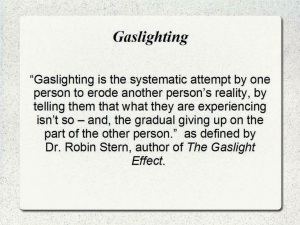
But in telling conservatives that persistent, concrete efforts by the Left to paint their ideas as intolerably extremist and forbid their expression on campus are merely imagined, Penny is actively gaslighting. She is engaging in that coercive, manipulative behaviour more common to spousal abusers by portraying her opponents as crazy and flat-out denying observable reality in order to delegitimise conservative concerns about free speech suppression.

That Laurie Penny feels able to lie and deceive so freely in the pages of the New Statesman shows just how strong the Cult of Social Justice and Identity Politics has become. Adherents to this illiberal, censorious cult no longer fear being discredited or held to account for their lies. So complete is their control over academia and so cowed and enslaved are the media and many politicians that people like Laurie Penny can now create their own reality and demand that others accept it as real.

If a conservative were to insist that capitalism was completely flawless or deny that poverty exists, they would be laughed out of town and rightly lose all credibility. Yet Laurie Penny can use her exalted perch in the New Statesman to deny that things we can all see taking place on Western university campuses are even happening at all, yet still be taken seriously the next time she spouts off on TV.

That’s the protective power of the Cult of Social Justice and Identity Politics at work.

That’s how close conservatives and defenders of free speech are to losing this war.


Gaslighting definition - Dr Robin Stern

Support Semi-Partisan Politics with a one-time or recurring donation:

Agree with this article? Violently disagree? Scroll down to leave a comment.

Follow Semi-Partisan Politics on TwitterFacebook and Medium.

Does Oxbridge Discriminate?

Brideshead Revisited - Oxbridge - Social Class - Discrimination

Oxbridge has every incentive to admit more students from disadvantaged and minority backgrounds. If diversity has failed to improve then it is our fault as individuals, families, communities and voters for failing to provide elite universities with a bigger, better talent pool

Another day, another tedious story about Oxbridge being a terrible bastion of privilege and discrimination where the few working class students who manage to evade the perimeter and matriculate find themselves mocked mercilessly by Bullingdon toffs while students of darker complexion are forced to drink from separate water fountains.

The trigger for this year’s rehashing of the predictable dirge was a freedom of information request submitted by Labour MP David Lammy, who selectively requested and interpreted data to paint the bleakest possible picture of barriers to elite higher education in Britain.

The Guardian reports on the “shocking” findings, and then have the temerity to criticise the Oxford University press office for daring to defend themselves rather than meekly accepting criticism and submitting to corrective punishment:

Oxford and Cambridge have been accused of failing to engage in serious debate over their lack of diversity by the former education minister David Lammy, who first highlighted the issue with data obtained by freedom of information requests.

The Labour MP said the universities had been “trying to make journalists change their stories” rather than address how little progress they were making in recruiting talented students by race, social class and location in England and Wales.

His accusation came after sparking national controversy over data – first published in the Guardian – that showed that as many as 16 Oxbridge colleges failed to offer any places to black British applicants in 2015, the most recent figures under the FOI request.

Note that when leftists call for a “serious debate” on something, in actual fact they do not want a debate at all. What they want is for you to flop over submissively on the ground and agree to whatever Utopian socialist pipe dream they have in mind. Back in the real world, Oxford and Cambridge do little else these days other than engage in never-ending symposia about diversity. The reason that these debates don’t satisfy the Left is because they do not end with Britain’s elite universities sacrificing their brands and academic standards by further lowering their entrance requirements to attract less qualified applicants who happen to tick the right diversity checkboxes.

David Lammy huffs in the Guardian that “seven years have changed nothing at Oxbridge”, but this is totally untrue. Elite universities are falling over themselves to admit minority and working class students to improve their admissions statistics. They face immense political and even financial pressure to do so. Seven years have indeed changed Oxbridge, but only in the direction of being even more amenable to considering applications from underrepresented groups. What has not changed, though, are the stubborn social and environmental factors which continue to restrict the pool of minority applicants in which Oxbridge and other elite universities must fish.

Of course, Labour were quick to pile on with predictable, cookie-cutter criticism:

Angela Rayner, Labour’s shadow education secretary, said: “This is the latest damning evidence on the government’s failure to widen access to our most selective universities.

“The proportion of comprehensive school pupils getting in to top universities under the Tories is lower than when Labour left office, and this data shows that the problem is especially serious at Oxford and Cambridge.

“Ministers claim their system is working, but these figures show that it isn’t.”

Because any imbalance simply must be the fault of institutions, and ultimately the government who wield absolute power over everything and everyone. The idea that poverty, social stability, family structure, engaged parenting or personal responsibility might play a part in the under-representation of certain groups at Oxbridge is unthinkable. Heavens, no. Successive British governments have created a perfectly egalitarian society, and the only reason that the enrolment at Oxford University does not perfectly match the makeup of the general population is because evil admissions officers in Oxford colleges harbour a seething, visceral hatred of poor, brown kids.

Lammy goes on to complain:

During this period [2010-2015], an average of 378 black students per year got 3 A grades or better at A-levels. With this degree of disproportionately against black students, it is time to ask the question of whether there is systematic bias.

Really? Now is the time? I’m so glad, because this conversation is indeed long overdue. Nobody has once raised the issue until this watershed moment, courageously midwifed into existence by David Lammy. At long last we can finally ask why, a time when every other institute of higher education in the country have conspicuously prostrated themselves before the Cult of Social Justice and Identity Politics, Oxford and Cambridge continue to openly revel in institutional racism.

This is asinine.

Getting angry at Oxbridge for not admitting more ethnic minority and working class applicants is putting all the blame for societal, cultural and family problems at the foot of higher education. I am technically a BAME individual (oh, how I hate that stupid, infantilising acronym) from a poor, single-parent family, yet I was admitted to Cambridge University and neither experienced discrimination while there nor witnessed anybody else facing discrimination. On the contrary, there was a rigorous, fiercely intellectual atmosphere (aside from all the drinking and punting) which cared only about what you think, not what you look or sound like.

If anything, given the incentives and political pressure faced by universities today, I would not be surprised if many elite institutions already do more than they should to correct for social and government policy failures by accepting students from under-represented backgrounds that would not stand a chance if they were white and middle class. I know that if I was a university administrator and my performance appraisal, reputation or funding were at stake then I would be very tempted to selectively lower standards.

To properly address this issue we need to have “honest conversations” not about institutional discrimination but about family structure, culture, parenting, wealth and both primary and secondary education. We need to ruthlessly eliminate influences which tell certain impressionable youngsters that academic achievement is uncool, that being a useless parent is socially acceptable, and which peddle myths about Oxbridge based on hazy recollections of Brideshead Revisited.

We also need to stop the media hand-wringing. Hysteria about the lack of BAME people at Oxbridge only feeds a false narrative that minorities are unwelcome at Britain’s elite universities. It is very hard to increase representation when you simultaneously tell a certain group that they probably won’t get in to Oxbridge and will likely have a very bad time there if they do manage to beat the odds.

What we cannot do is expect our best universities, the engine of Britain’s innovation and research, to expend scarce time and resources bringing some candidates up to the basic level they need to be starting at. Some remedial classes are already offered to students who arrive at universities without the required study skills. It would be unfortunate if this reactive solution were to bed down at Oxbridge.

It is very convenient for politicians such as David Lammy to point to an evil, imaginary bogeyman which is responsible for a lack of diversity rather than admitting the more complex and intertwined failures which contribute to the problem. But as a “BAME” person (ugh) from a relatively disadvantaged background who was accepted into Oxbridge, the narrative being spun by the Left smacks of cynicism and a lack of serious thought.

To be clear, I’m not suggesting that discrimination does not exist at the margins, or in the form of so-called microaggressions. I’m sure that it does. But I do not believe that it is systemic, particularly given that Oxbridge faces so many incentives and coercions to increase diversity.

Rather than badgering our elite universities to fix upstream issues and single-handedly correct disparities in the opportunities available to different demographic groups, we need to call individuals, families, communities and (yes) government to account for their failings and shortcomings. We need to foster a universal culture of ambition and respect for academic achievement which transcends lines of gender, ethnicity, wealth, culture or social background. This probably means making a thousand small and often inconvenient changes to the way that we behave as individuals, parents, teachers, students and policymakers, which is much harder work than joining the David Lammy Chorus and blaming everything on discrimination.

But the easy solutions are rarely the correct ones, and when it comes to increasing minority representation at our elite universities we must do what is hard rather than what feels good.

Formal Hall - Fitzwilliam College Cambridge University

Support Semi-Partisan Politics with a one-time or recurring donation:

Agree with this article? Violently disagree? Scroll down to leave a comment.

Follow Semi-Partisan Politics on TwitterFacebook and Medium.

The Best One Percent

In his brief remarks to the media, General John Kelly, chief of staff to President Donald Trump, momentarily made everybody else in Washington D.C. look small

Good speeches do not always have to be painstakingly crafted well in advance and written down or beamed onto a teleprompter. Neither do good speeches always require a grand event as their backdrop. Sometimes the most stirring speeches can be extemporaneous, or at least appear relatively spontaneous when delivered.

And into this latter category fall the remarks made yesterday by former Marine Corps general John Kelly, chief of staff to President Donald Trump. Kelly was seeking to defend his boss from accusations that the president had been dismissive bordering on callous when making a telephone call of commiserations to the wife of a fallen US soldier killed in an ambush in Niger, a call which was overheard by a Democratic congresswoman and reported to the media.

I make no comment about the individual circumstances of the case here, though many other media organisations have seen fit to voyeuristically pick over what should be an intensely private moment in order to extract political advantage from it. For those interested, the two opposing sides are effectively summarised here and here.

Far more inspirational than this tawdry back-and-forth, however, were the words of Chief of Staff John Kelly, who sought to end the unseemly debate by describing to the press corps in detail the process which takes place when a US service member is killed in action overseas. These remarks range from the very detailed and practical (describing exactly what happens to the body and where it is taken) to the profound, and are worth quoting at length.

Kelly begins:

Most Americans don’t know what happens when we lose one of soldiers, sailors, airmen, Marines, our Coast Guardsmen in combat. So let me tell you what happens:

Their buddies wrap them up in whatever passes as a shroud, puts them on a helicopter as a routine, and sends them home. Their first stop along the way is when they’re packed in ice, typically at the airhead. And then they’re flown to, usually, Europe where they’re then packed in ice again and flown to Dover Air Force Base, where Dover takes care of the remains, embalms them, meticulously dresses them in their uniform with the medals that they’ve earned, the emblems of their service, and then puts them on another airplane linked up with a casualty officer escort that takes them home.

A very, very good movie to watch, if you haven’t ever seen it, is “Taking Chance,” where this is done in a movie — HBO setting. Chance Phelps was killed under my command right next to me, and it’s worth seeing that if you’ve never seen it.

So that’s the process. While that’s happening, a casualty officer typically goes to the home very early in the morning and waits for the first lights to come on. And then he knocks on the door; typically a mom and dad will answer, a wife. And if there is a wife, this is happening in two different places; if the parents are divorced, three different places. And the casualty officer proceeds to break the heart of a family member and stays with that family until — well, for a long, long time, even after the internment. So that’s what happens.

This is made all the more poignant by the fact that John Kelly suffered the loss of his son – First Lieutenant Robert Kelly – in Afghanistan, and presumably experienced this same heart wrenching process, something invisible to most civilians in the age of an all-volunteer professional army.

The brief core of Kelly’s remarks then focus on the fine qualities of the men and women who serve in the US military, before defending the actions of his boss. First, the praise:

Who are these young men and women? They are the best 1 percent this country produces. Most of you, as Americans, don’t know them. Many of you don’t know anyone who knows any one of them. But they are the very best this country produces, and they volunteer to protect our country when there’s nothing in our country anymore that seems to suggest that selfless service to the nation is not only appropriate, but required. But that’s all right.

Goodness me, that’s powerful. Remember, this is a former Marine Corps general and the serving chief of staff to President Trump, and he is saying that the state of the country is such that America is no longer worthy of the sacrifice made by its men and women in uniform. Think on that for a moment.

And then comes the necessary defence of President Trump, in which Kelly references his own painful loss:

So he called four people the other day and expressed his condolences in the best way that he could. And he said to me, what do I say? I said to him, sir, there’s nothing you can do to lighten the burden on these families.

Well, let me tell you what I told him. Let me tell you what my best friend, Joe Dunford, told me — because he was my casualty officer. He said, Kel, he was doing exactly what he wanted to do when he was killed. He knew what he was getting into by joining that 1 percent. He knew what the possibilities were because we’re at war. And when he died, in the four cases we’re talking about, Niger, and my son’s case in Afghanistan — when he died, he was surrounded by the best men on this Earth: his friends.

That’s what the President tried to say to four families the other day. I was stunned when I came to work yesterday morning, and broken-hearted at what I saw a member of Congress doing. A member of Congress who listened in on a phone call from the President of the United States to a young wife, and in his way tried to express that opinion — that he’s a brave man, a fallen hero, he knew what he was getting himself into because he enlisted. There’s no reason to enlist; he enlisted. And he was where he wanted to be, exactly where he wanted to be, with exactly the people he wanted to be with when his life was taken.

That was the message. That was the message that was transmitted.

This next section (which reminds one of Cicero’s exclamation O Tempora, O Mores!) is good too, because it is so obviously heartfelt coming from somebody from an older generation raised in a dignity culture:

It stuns me that a member of Congress would have listened in on that conversation. Absolutely stuns me. And I thought at least that was sacred. You know, when I was a kid growing up, a lot of things were sacred in our country. Women were sacred, looked upon with great honor. That’s obviously not the case anymore as we see from recent cases. Life — the dignity of life — is sacred. That’s gone. Religion, that seems to be gone as well.

Gold Star families, I think that left in the convention over the summer. But I just thought — the selfless devotion that brings a man or woman to die on the battlefield, I just thought that that might be sacred.

Kelly ends with this scathing criticism of politicians such as the congresswoman who saw fit to leak details of President Trump’s telephone call to one of the families:

I’ll end with this: In October — April, rather, of 2015, I was still on active duty, and I went to the dedication of the new FBI field office in Miami. And it was dedicated to two men who were killed in a firefight in Miami against drug traffickers in 1986 — a guy by the name of Grogan and Duke. Grogan almost retired, 53 years old; Duke, I think less than a year on the job. Anyways, they got in a gunfight and they were killed. Three other FBI agents were there, were wounded, and now retired. So we go down — Jim Comey gave an absolutely brilliant memorial speech to those fallen men and to all of the men and women of the FBI who serve our country so well, and law enforcement so well.

There were family members there. Some of the children that were there were three or four years old when their dads were killed on that street in Miami-Dade. Three of the men that survived the fight were there, and gave a rendition of how brave those men were and how they gave their lives.

And a congresswoman stood up, and in the long tradition of empty barrels making the most noise, stood up there and all of that and talked about how she was instrumental in getting the funding for that building, and how she took care of her constituents because she got the money, and she just called up President Obama, and on that phone call he gave the money — the $20 million — to build the building. And she sat down, and we were stunned. Stunned that she had done it. Even for someone that is that empty a barrel, we were stunned.

But, you know, none of us went to the press and criticized. None of us stood up and were appalled. We just said, okay, fine.

So I still hope, as you write your stories, and I appeal to America, that let’s not let this maybe last thing that’s held sacred in our society — a young man, young woman going out and giving his or her life for our country — let’s try to somehow keep that sacred. But it eroded a great deal yesterday by the selfish behavior of a member of Congress.

As a speech, this has pretty much everything. It might not have been the most stirring or poetic, but John Kelly is a blunt, military man and to have spoken in the cadence of John F Kennedy or Barack Obama would have been totally false and out of character. The authenticity of Kelly’s remarks derive from the seriousness of the subject, the dignified way in which a story of personal loss was mentioned (compared to the overt emotionalism of many contemporary speakers) and the workmanlike delivery.

What John Kelly did more than anything else was shame the people who had sought to cynically use a story based on the death of American soldiers for their own purposes – be it Democratic politicians looking for more character flaws in Trump, Republican politicians who sought to defend Trump or the media who saw a potentially juicy mini-scandal which would generate pageviews and ad revenue.

He shamed a group of neophytes and cynics, people who by and large did not serve in uniform themselves, but saw fit to pontificate on the protocol governing military rituals as though they were discussing any old arcane political dispute. Kelly effectively contrasts the quiet, selfless duty of American soldiers with the self-aggrandising behaviour of American politicians. And there can be few among the Washington DC political class, who measure their popularity by the number of their Twitter followers and see themselves as the centre of the universe, who did not come out of that press conference feeling at least slightly chastened.

This can also only be good for the career and reputation of John Kelly himself, who has faced scepticism that he would be able to rein in the excesses of the Trump administration and criticism for those occasions when that superhuman feat eluded him. By briefly lamenting that women are no longer honoured in today’s America (putting aside the fact that such 1950s-style honour was a double-edged sword), Kelly not-so-subtly denounced his own boss, whose record of behaviour towards women is not good. Criticising the politicisation of gold star families during the Democratic National Convention served the same purpose. Thus, Kelly successfully burnished his image as a man serving out of duty to his country and respect for the office of president rather than admiration for the individual who currently holds that office.

I struggle to think of a contemporary British political speech of similar power and worth. Does anybody recall any of the speeches given this party conference season, besides the slow-motion self-destruction of Theresa May? Has there been a British political speech in the last decade which made the heart beat a little faster or brought a lump to the throat?This is made even more depressing when one remembers that John Kelly is not even a politician – he is a retired general pressed into service to steady a wobbling first-year Trump administration.

Kelly’s remarks are a fine example of an effective speech, composed and well delivered under difficult circumstances, with a hostile media audience ready to throw hard-to-defend accusations against his equally hard-to-defend boss. Yet by the time he was done, John Kelly walked out of that briefing room ten feet taller while everyone else visibly shrank in moral stature.

That’s impressive. I would like to import just a fraction of that ability to Westminster.


UPDATE: 21 October

This report from the Washington Post suggests that John Kelly’s account of Representative Frederica Wilson’s speech at the newly-opened FBI building was not accurate. This in no way detracts from the power of the speech or even necessarily mean that Gen. Kelly’s righteous indignation was altogether misplaced, but the record should be corrected.


UPDATE: 22 October

Having sat back rather pleased with myself, thinking I might have written something vaguely original, I discovered today that Jonah Goldberg was simultaneously coming to the same conclusion in his G-file newsletter.

Goldberg sees in Kelly’s speech the same thing that I see – a dignified admonishment to President Trump as much as to the media or the Left:

The trends Kelly alludes to are real and lamentable, and they predate Donald Trump’s arrival on the national political scene. But it strikes me as indisputable that Trump personifies these trends, and if Kelly were not trying to do his job, he would acknowledge that.

Perhaps Kelly was criticizing the Gold Star Khan family in his remarks about the convention. But he could just as plausibly have had the president in mind. We need not rehearse all of the ways in which Donald Trump — who has bragged of his adultery and sexual assaults and who has insulted women’s looks — has less than an exemplary record of honoring the sanctity of women.

I understand that many Christian groups have convinced themselves that Trump is an instrument of God, but let us not delude ourselves that he is also a man of God.

It is also worth pointing out the media’s evident latent, automatic animosity toward any member of the Trump administration, merited or not. When it was shown that John Kelly misreported the content of Rep. Wilson’s speech at the opening of the FBI Academy, nearly all the media ran with a headline about Kelly being wrong, or even lying. They neglected to point out that the video evidence actually also underlined the truth of what Kelly was trying to say – that on the occasion of the dedication of a building to the memory of slain law enforcement officers, the politician present chose to make the occasion about herself.


John Kelly - White House chief of staff - press briefing - Donald Trump call to military families

Support Semi-Partisan Politics with a one-time or recurring donation:

Agree with this article? Violently disagree? Scroll down to leave a comment.

Follow Semi-Partisan Politics on TwitterFacebook and Medium.