Tracey Crouch, Tax Credits And The Unravelling Of The Left Wing Mind

Tracey Crouch MP

When even Tracey Crouch’s sympathetic  words on tax credits provoke left-wing fury, there is no hope for real welfare reform in Britain. And no hope for the Labour Party, either

Had Conservative Sports Minister Tracey Crouch known about the outrage that would be whipped up by her interview in The Spectator before she gave it, she would quite possibly have chosen to go without the glowing portrait by Isabel Hardman in order to avoid the deluge of left-wing bile which immediately followed.

Unfortunately for Crouch, there is no telling which harmless phrase or action will send the modern British Left into a full-on social media jihad, and so she has had to spend the better part of today apologising for offending the Poor and Vulnerable.

Here is the part of Crouch’s Spectator interview with Isabel Hardman that caused so much left-wing outrage:

But given Crouch knows what it means to struggle to make ends meet, isn’t she worried about the cuts to tax credits that will hit families not unlike the one she grew up in? She’s happy to defend these controversial reforms that have agitated so many of her colleagues. ‘I think it’s about communication,’ she says, adding:

‘We will be discussing this, and I’m sure that DWP are looking at all of these issues, in great detail but I think at the end of the day one of the kindest things that we can do is try to help people to support themselves and work around their finances: some of my most heartbreaking cases are those that come to me saying that they are struggling and then you go through with them their expenditure and income – I’m not generalising at all, I’m talking about some very individual cases – and actually they just haven’t realised some of the savings that they need to make themselves, you know it can be… things like paid subscriptions to TVs and you just sit there and you think you have to sometimes go without if you are going to have people make ends meet.’

Fairly innocuous stuff, no? Just look at all of the caveats, provisos and exemptions in Crouch’s words:

“I’m not generalising at all”

“I’m talking about individual cases”

“Some of my most heartbreaking cases”

“One of the kindest things we can do”

There’s no reasonable way that you can read Tracey Crouch’s words and come away thinking that here is some callous, unfeeling elitist who thinks that people are poor through their own fault. There just isn’t. Tracey Crouch is hardly some monacle-squinting, golden pocketwatch-twirling Monopoly man, looking down on the working poor from a lofty aristocratic perch and finding them wanting.

And yet that’s exactly how her interview is being spun by the perpetually outraged Left. The Daily Mail provides a good sampling of the preening, self-righteous virtue signalling which followed Crouch’s interview. First Labour pile on:

Shadow Treasury minister Rebecca Long-Bailey said: ‘Another day and yet more evidence of out of touch Tory MPs insulting working people in low pay in what has been a further torturous week for George Osborne on tax credits.

‘It’s outrageous for a serving minister to claim that working families simply need to ‘go without’ in order to make ends meet. Losing £1,300 a year isn’t about cutting back on luxuries, it’s about families being able to pay the bills.’ 

And then come the Lib Dems, twisting the knife:

Liberal Democrat president Sal Brinton said: ‘This is hypocrisy at its worst. For a Tracey Crouch, someone on a ministerial salary, to turn around to the people who are going to be hit by her Government’s heartless cuts to tax credits and tell them it’s now their fault for not budgeting properly shows just how utterly out of touch the Tories are.’

I re-emphasize: Tracey Crouch was talking specifically about poor budgeting decisions made by certain individual constituents, emphasising multiple times that she was not generalising from the examples that she gave. And yet still we are treated to this hand-wringing mock horror from the Left, as though the Sports Minister had called for all tax credit recipients to be sent to the workhouse.

When the entitlement culture runs so deep that a government minister who grew up relatively poor cannot give true personal testimony about the importance of budgeting, or cite real-life examples of those struggling on low incomes who had not considered every option for reducing their outgoings, what hope can there possibly be for meaningful welfare reform?

What chance can there ever be of lifting people out of the benefit trap, into entry level employment and then onward and upward in self-sustaining careers when as honest and humble an MP as Tracey Crouch cannot even make a factual statement about her constituent cases without being vilified by left-wing activists?

Unfortunately, the reality of modern Britain is that too many people work hard in very low-paying jobs which are only financially viable when topped up by government tax credits. Gordon Brown can splutter and roar all he likes about the supposed virtues of his benefits brainchild, but the cold hard reality is that tax credits promote a form of welfare dependency.

Yes, it’s more noble form of dependency because the recipient is working – often very hard – for their low wages. But dependency means coming to rely on something day-to-day in order to maintain a certain standard of living. People rage against the Evil Tories for daring to consider tax credit changes in their effort to restore fiscal sanity to Britain, but have no words of condemnation for the moralising New Labour government who made millions more people dependent on welfare in the first place.

When I grew up poor in Essex, we didn’t have a Sky TV subscription. We didn’t even have a colour television until I reached secondary school in the 1990s – I watched Neighbours and Newsround in black and white. These things were not the essentials of life, much as I would have loved them, and so we went without.

Fast forward to 2015 and a Netflix subscription is no more necessary now than an expensive Sky subscription was in the early nineties. So why, exactly, was Tracey Crouch wrong to call attention to cases where those on low incomes had not considered cutting down on unnecessary expenditure?

As Julia Hartley-Brewer notes in the Telegraph:

In reality, the only people who are out of touch with how ordinary people live are Labour MPs like Rebecca Long-Bailey, who appear to think that Sky TV is some kind of inalienable human right to be funded out of taxpayers’ hard-earned cash.

Everyone has to make choices about what they can and can’t afford to spend their money on. Tracey Crouch was simply pointing out what every ordinary family in Britain knows: you have to cut your cloth according to your means.

But you can’t say that any more, according to the Left. To acknowledge the basic economic truth that poor people cannot purchase unlimited luxury goods is grossly offensive – not to the millions of low paid people who already strive to live within their means, but rather to those who do not, and the Labour politicians who cheer for their “right” to never have to collide with fiscal reality.

The government’s approach to tax credits is flawed, and considering other areas of continued state profligacy (universal pensioner benefits, for example) there is no great reason why tax credit recipients must swallow such a harsh dose of George Osborne’s fiscal medicine upfront while others slip by unchallenged. And Labour might have a realistic chance at forcing an important, beneficial concession from the Chancellor on this topic, if only they could stop the bickering and infighting long enough to organise themselves.

But when Labour MPs charge mindlessly into battle against the Conservatives (especially a self made Tory Minister like Tracey Crouch) in defence of the Universal Human Right to subscription TV, of all stupid things, they make no serious point, they win no new allies, and they help precisely no one.

But then that’s the Labour Party and the modern British Left in a nutshell. Noisily hating the Tories and whining about fairness but not doing, saying, thinking or proposing a damn thing to hold the current government to account or make anyone’s lives permanently better.

Tracey Crouch - Sports Minister

Agree with this article? Violently disagree? Scroll down to leave a comment.

Follow Semi-Partisan Politics on TwitterFacebook and Medium.

The Daily Toast: Hugo Rifkind On The Dilemma Of Labour Party Centrists

Labour Centrists

Why don’t those members and activists who hate the new direction of the Labour Party simply leave?

It’s hard to bring yourself to leave an organisation when you have convinced yourself that everyone outside of it is hateful, immoral and evil. That’s the point Hugo Rifkind makes in his latest piece for the Spectator, a reflection on why there has been no hint of a centrist exodus from the Labour Party in the Age of Corbyn, despite much grumbling and plotting.

Rifkind wonders out loud:

What is wrong with these people? It’s like they’re children. Part of the madness comes, I suppose, from social media, whereby every utterance is ‘campaigning’, even if you’re just doing it in the office, on the loo. The bulk of it, though, is the idea that Labour people have to be Labour forever, even if they completely disagree with Labour, or else they’re not Labour. It’s weird and it’s needy and it’s anti–intellectual, and it makes no sense at all. They went big on this during the leadership election, when a host of people with politics virtually indistinguishable from Jeremy Corbyn’s were kicked out on the basis of prior support for the Greens or the Scots Nats. Because, of course, if they were true Labour they’d support Labour even while disagreeing with Labour, because that’s what Labour does.

Why does it? Nobody else behaves like this. Nobody else turns party into a tribe, not just putting loyalty over policy, but feigning a virtue with it, too. In any other party, anyone who disagreed with the party line as often as Corbyn has might have been expected to resign at least once, if only out of embarrassed deference to the voters who had blithely ticked the ‘Labour’ box. Perhaps due to its history, though, Labour is not merely a jumble of policies in the manner of other parties. Labour is a ‘movement’ and if you aren’t with it, you’re against it. No matter which direction it currently happens to be moving in.

An interesting argument, but it’s hardly as if the other main political parties are chock full of people who resign in fits of pique and then come crawling meekly back in rhythm with party policy. The only really noteworthy defections of the past few years are those of Mark Reckless and Douglas Carswell – both from the Tories to UKIP.

So while the gulf between the Corbyn left and the Blairite centre of the Labour Party may be particularly large, right-wing Tory MPs such as John Redwood and Bill Cash – with no frontbench career aspirations of their own to worry about – are just as unlikely to leave the Conservative party in disgust at David Cameron as Chuka Umunna or Andy Burnham are about to forsake Labour out of despair with Corbyn.

Rifkind closes by admonishing the centrists:

This is what happens when you brainwash yourself into believing that your lot are the only good guys; when you forget that it’s not the club that matters, but what the club does. This is what happens when you grow so used to feeling superior to everybody outside Labour that you can no longer properly believe such people are proper, moral humans at all. It’s not a church. It’s not a sin to go somewhere else for a bit if you need to. Not when the nuts do it, and not when you do either. Pull yourselves together. People are laughing.

This part is very true, and speaks to a sickness at the heart of the Labour Party – and the British Left in general – which this blog was one of the first to report on, and the most consistent in highlighting.

There are many reasons why Jeremy Corbyn’s leadership of the Labour Party is not yet provoking an exodus. First, there is the hope that Corbynism may yet prove to be a passing phase, and that a couple of years of underperformance or a 2020 general election defeat will shock the Left back to its senses. Second, there is the self-protective instinct most Labour MPs have over their political careers – breaking away to start a new political party rarely leads to career advancement and power. But thirdly, there is what Hugo Rifkind calls the “tribal” instinct – that same stubborn unwillingness to leave which kept Jeremy Corbyn in the Labour Party for all his long wilderness years, and which now keeps the centrists grimly hanging on.

Would it be so hard for the centrists to step away from the Labour Party had they not grown up telling themselves that the Evil Tories represent everything bad about Britain, that Britain’s greatness can be summed up by the output of our public services alone, and that Labour have a monopoly on both wisdom and compassion? Probably not. But they did, and they still do.

Back when the Labour leadership contest was still raging, this blog argued:

If Jeremy Corbyn is not the answer to Labour’s irrelevance, whoever ends up taking the party forward will need to explicitly make peace with capitalism, and undo the bad blood created by Gordon Brown’s brooding statism and the hand-wringing “predators vs producers” equivocation of Ed Miliband. And this will require explicitly praising the virtues of capitalism, and potentially letting the Jeremy Corbyn-led wing of the party split off and float away back to the 1970s.

This does not mean that the remaining rump of the Labour Party should then cast itself as just another centrist alternative to the Tories – British politics desperately needs real ideological variety and choice. But the future ideological lines will be drawn over how to make capitalism work for all the people, with laissez-faire small government types on one side, and bigger government interventionists on the other.

[..] Sniping at capitalism while conspicuously enjoying the fruits of all that it provides has proven to be a deeply unconvincing platform. And it won’t become any more convincing, or win Labour any new voters, by the time of the next election.

So can a Labour Party at peace with the free market still stand for anything, and be a party of clear principle and ideological coherence? Absolutely. But it won’t happen by chance, it will require careful and determined consideration.

But Jeremy Corbyn did win the contest, and it is clear that the Labour Party will not “make peace” with capitalism so long as he remains leader. And in some ways that’s fine – I supported Jeremy Corbyn’s candidacy precisely because I wanted to end the stale centrist consensus which currently grips British politics.

However, it does leave those centrists in a bind: disagreeing with nearly everything their leader says, used to attacking capitalism themselves in their lazy campaign rhetoric, but increasingly coming to appreciate capitalism the more they look at Corbyn’s alternative.

If Corbyn looks as though he will stay in power up to the 2020 general election, at some point the centrists will have to jump. And when they do, they will be ruthlessly attacked and vilified by precisely those voices who currently believe that virtue and salvation can only be found within the Labour Party.

But if the centrists wish to stay in politics and be taken seriously, what other choice will they have?

Jeremy Corbyn - Labour Leadership Election - Victory Nears

Agree with this article? Violently disagree? Scroll down to leave a comment.

Follow Semi-Partisan Politics on TwitterFacebook and Medium.

The Daily Smackdown: Europhiles Cry About The “Brexit Bullies”

BSE - Britain Stronger in Europe - Crybabies

It is laughable for Britain Stronger in Europe to claim that the Prime Minister and the Confederation of British Industry were “threatened” by two teenage hecklers

The Britain Stronger in Europe campaign group sent this victimhood-wallowing missive to their supporters today:

We always knew UKIP and the Leave campaigns would try and pull the wool over people’s eyes – we didn’t know they’d try and threaten them.

But this week the Head of Vote Leave tweeted: “You think this is nasty you ain’t seen nuthin yet (sic).” Classy, hey?

It’s clear what type of campaign they’re going to run, Samuel – they can’t win the argument so they’re going to try to silence anyone who disagrees with them. We can’t let them win.

Sounds like something serious happened, right? Wrong.

The “threat” that so upset BSE was a couple of young Vote Leave activists who stood up in the middle of a speech the Prime Minister was giving to the CBI and started shouting “CBI, voice of Brussels!” over and over again.

While it’s a documented fact that the CBI grossly misrepresented a survey of their membership to falsely claim that a majority of British firms back staying in the EU, these two first-time hecklers were hardly political heavies sent to intimidate the opposition. In fact, they were pretty poor even by modern dumbed-down heckling standards – the prime minister came off looking simultaneously wittier and more serious by the time the Vote Leave duo were escorted from the hall.

Watch this video of the encounter, and judge for yourself who comes across as calmer and more intelligent:

Hilariously, BSE are now parading the incident to their supporters as evidence of some dastardly eurosceptic plot to threaten all those sweet, innocent europhiles.

And now failed Labour leadership candidate Chuka Umunna is getting in on the act too, writing in the Telegraph:

Rather than seeking to promote debate, however, the leave campaigns are now desperately trying to shut it down and muzzle those who take a different view. They are behaving like gangsters, trying to close down the debate with behaviour that has no place in public life.

In their repeated attacks on the Confederation of British Industry (CBI), trying to force the organisation’s hand and sit out of this debate, Vote Leave’s is making a concerted attempt to stifle the views of some of the country’s largest businesses. Protests outside the CBI conference, disrupting speeches, aggressive letters – these bully boy tactics are a sign they are losing the argument rather than embracing it.

Well excuse me, but I can’t find a violin small enough to play in mournful solidarity with the mighty CBI, let alone the Prime Minister of the United Kingdom – who has the bully pulpit of his high office and the entire machinery of government with which to campaign against Brexit. It is frankly ludicrous to suggest that eurosceptics possess the official, financial or physical muscle to drown out the europhile message in the way that BSE pretend.

But what we lack in a bully pulpit, we eurosceptics more than compensate for by the simple virtue of being right. Right on the facts, and on the right side of history, too.

The pro-EU campaigns will inevitably get away with a lot of lies and distortions during this referendum campaign, simply because it will not be possible for us Brexiteers to refute each and every single one of them. But one thing that BSE and other europhile campaigns absolutely must not be allowed to get away with is successfully portraying themselves as the plucky underdog, fighting an uphill struggle against the mighty forces of euroscepticism.

I don’t think that there is currently a great chance of that happening, but we should take care to slap down any attempts to portray the pro-EU juggernaut as some kind of rough-and-ready insurgency. Nothing could be further from the truth.

But I do hope that someone remembers Chuka Umunna’s impassioned defence of the CBI – and how he came out swinging in support of downtrodden multinational corporations in their battle to be heard over the little guy – the next time he runs for the Labour leadership.

EU Democracy - Brexit

Agree with this article? Violently disagree? Scroll down to leave a comment.

Follow Semi-Partisan Politics on TwitterFacebook and Medium.

Coca-Cola: Where The War On Christmas Meets The War On Sugar

Coca Cola Christmas Truck - 2

The solution to the obesity crisis lies with adults and parents, not the nanny state

What happens when the War on Christmas meets the War on Sugar?

We are about to find out. On 17 December, the Coca-Cola Christmas Truck (from the famous television commercials) will roll into Leicester on the final stop of its UK tour, bringing holiday refreshment to boys and girls in the Midlands. A lovely festive occasion, you might think.

Wrong. According to the League of Virtue-Signalling Health Nuts*, the Coca-Cola Christmas Truck is a menace, bringing nothing but dental cavities and Type II diabetes to the hapless people of Leicester – innocent and impressionable souls who have no option but to ceaselessly guzzle from any can of carbonated toxicity placed within arm’s reach. Yes, Evil Santa is on his way to waterboard your kids with unwanted soda.

Leading the moralising charge against Coca-Cola is Keith Vaz, who thinks that sugary drinks belong in a locked cupboard under the sink, next to household bleach and drain cleaner. From the BBC:

Keith Vaz insists he does not want to be a “killjoy”, but said the truck would send the wrong message in a city where Type 2 diabetes is rising and a third of children have tooth decay.

He predicts people will protest if the truck does come to the city.

[..] “I know people like special things happening at Christmas, but Coca-Cola are coming to promote their product and in each can of Coke there are seven teaspoons of sugar,” he said.

Meet sugar, the new asbestos.

Of course Keith Vaz has form when it comes to demonising Coca-Cola. The MP for Leicester East also protested loudly against the company’s sponsorship of the London Eye, on the basis that the presence of a red-hued circle on the London skyline would instantly hypnotise Londoners into a soda-consuming trance. Really, it’s beyond parody.

This is just the latest in a long line of attempts to get the already over-active British nanny state to regulate such things as how much sugar we consume, how and where we enjoy tobacco, when we are allowed to gamble and even when we can shop.

Just last month, celebrity chef Jamie Oliver gave evidence to a parliamentary health committee and called for a “sugar tax” to stop all of us uneducated plebs from getting too carried away with the Mars bars and sugary beverages (Oliver himself only uses Moral Sugar in his recipes and chain restaurants, naturally).

But an ostentatious concern for public health is only part of the story. Leicester also hosts one of Europe’s latest Diwali celebrations, where it is traditional to hand out – you guessed it – Indian sweets. Unsurprisingly, nobody is seeking to cancel Diwali or launching a public campaign aimed at Hindus, encouraging them to swap the gulab jamun for carrot sticks – because Diwali is not a global corporation, and many of the sweets are home made.

No, the protests against the Coca-Cola Christmas truck are sadly just another case of left-wing virtue-signalling. Keith Vaz and most of the protesters know deep down that the only way to tackle the obesity crisis is for adults and parents to exercise greater responsibility over what they feed themselves and their children, sometimes facilitated by better and more accessible education. But that’s just too dull, so instead they have to invent the menace of the Great American Corporate Bogeyman coming to give our children diabetes as yet another excuse to suck the joy out of life.

There’s nothing wrong with enjoying a glass or two of Coca-Cola, especially at Christmas. What’s really dangerous is treating grown adults and teenagers like mindless lemmings liable to developing a soda addiction at the mere sight of a big red truck. But because people like Keith Vaz derive their power and authority from presuming to tell us how to behave, we can only expect more such finger-wagging, faux-outraged protests in the future.

Maybe better to send the Coca-Cola Christmas Armoured Personnel Carrier to Leicester in place of the truck this year, just in case things turn ugly.

* Not (yet) a real organisation.

Coca Cola Christmas Truck

First published at Conservatives for Liberty

Conservatives for Liberty are holding a lobby evening on Wednesday
25th November called Forgive us our Trespasses: The moral case for
choice and responsibility. This event gives you the opportunity to
hear from a number of MPs about why they believe in individual choice,
and to ask them any pressing questions you may have.

The evening will focus on freedom of choice and the belief that adults
should be free to weigh pleasure and risk and decide for themselves
when it comes to products such as cigarettes, e-cigarettes, alcohol,
and fatty or sugary foods. You can read more about the evening here.

If you want to attend, you will need to RSVP by emailing
stephen@con4lib.com. This event will be held in parliament, and the
details of the Committee Room will be sent to people who sign up. We
have a limited capacity, so you are encouraged to RSVP soon.

In the spirit of freedom of choice, and in true Conservatives for
Liberty style, there will be drinks after the event in a nearby pub.

Further details and updates can be found on our Facebook event here.

Bottom Image: coca-cola.co.uk

Agree with this article? Violently disagree? Scroll down to leave a comment.

Follow Semi-Partisan Politics on TwitterFacebook and Medium.

The Daily Toast: To Win, Eurosceptics Must Show That The EU Is Outdated

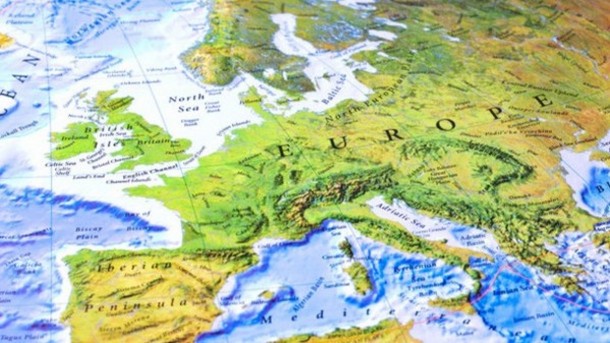
Old Europe Map

Another new initiative for Semi-Partisan Politics – counterpart to The Daily Smackdown (same basic idea, but reversed). Will focus on a different praiseworthy or perspective-changing article, argument or action each day

Allister Heath has a good piece in the Telegraph, where he observes that the europhiles may end up wrong-footing themselves in the coming referendum by buying into the lazy, two-dimensional caricature of eurosceptics as ornery traditionalists who are stuck in the past and afraid of the future.

Heath rightly points out that the europhiles dismiss or underestimate we Brexiteers at their peril, writing “it is always a fatal error to assume that your political opponents are evil or stupid”. I certainly hope that this rule holds true just as it did for Ed Miliband’s vacuous, virtue-signalling Labour Party at the general election.

The hopes of many a lefty were extinguished on May 7  when it emerged that the left-wing echo chamber on Twitter was in fact not representative of the country, and that people other than psychopaths and billionaires actually voted Tory in good conscience. So by all means, let them assume once again that anyone who doubts the inherent virtue of the European Union must be a grumpy retired colonel, a Mafeking stereotype from a run-down coastal town.

Heath writes, in praise of campaign group Vote Leave:

Vote Leave’s core argument is that the EU’s institutions remain stuck in the post-1945 era: an industrial and agricultural world dominated by a few rich nations and overshadowed by the Cold War. In those days, bureaucratic centralism was the fashionable answer; 60 years on, the EU’s creaking, lumbering structures cannot cope with change involving genetic engineering, cybercrime, driverless cars and digital manufacturing.

They are just as debilitated when it comes to addressing contemporary geopolitical risks, including the crisis in the Middle East, the rise of terrorist organisations such as Isil, or even negotiating bilateral trade deals with emerging economies. It is Europe that now has a protectionist mindset, pretending that its borders stop at the Mediterranean while looking on uselessly as Syria is engulfed in a humanitarian catastrophe.

Rather than advocating a retreat into splendid isolation – which is what pro-EU activists wrongly assume Eurosceptics believe – Vote Leave will be calling for increased and improved international cooperation to deal properly with the forces that are changing the world. This, it will argue persuasively, requires different institutions to those that exist today: structures that can tackle problems quickly and that allow decentralised cooperation between nations.

I have my grave doubts about Vote Leave, for reasons well summarised over at the blog Vote to Leave the EU. There are serious doubts as to whether Brexit is the true goal of that group’s leadership, or if they are simply agitating for an initial “no” vote to then strengthen Britain’s hand for a future, “serious” renegotiation with the aim of securing a slightly sweeter deal. But Heath’s broader point is a very good one.

What threadbare arguments could have been made for the European Union back in the 1950s when the world was indeed divided into distinct and competing supranational blocs have lost all of their potency in the twenty-first century multi-polar word. For too long, europhiles have been allowed to portray themselves as forward-looking and progressive. And some really do believe it to be true. But it is increasingly hard to believe that Britain’s national interest is best served when represented through the collective voice of twenty-seven other distinct countries, each with their own unique circumstances and agendas.

Heath continues:

The future will belong to shifting networks of nations, not to monolithic empires. Voters will have to be empowered and kept involved, rather than bypassed through undemocratic transnational democracies. The Inners, who for decades have claimed to represent modernity, are about to be wrong-footed by a campaign and arguments that they will find very difficult to respond to.

It is absolutely essential that this is the case, if we are to achieve the goal of Brexit. This cannot be a campaign focused on some chimerical, glorious past, and if it becomes such a campaign we will be ripped to shreds and lose our last, best hope of regaining national sovereignty.

That means we must focus on all of the things that Allister Heath talks about in his article – how an independent Britain will be free to pursue advantageous commercial and diplomatic deals in our own interest rather than holding one 28th of a say over the common European position, how Britain’s membership fee can be repurposed and reallocated to focus on our own priorities and incentives, and more. But that’s all long term.

We also need an immediate plan mapping out what British secession from the European Union actually looks like. It is imperative that the “Leave” campaign pushes such a plan, otherwise voters will (rightly) conclude that a vote to leave the EU is a leap into the unknown, and choose the stultifying status quo as the safer option.

At present, you would be forgiven for thinking that there is no such plan. Neither of the two main campaign groups spend any time talking about what Brexit might actually look like. Vote Leave certainly don’t mention one (quite probably because Brexit is not their end goal), while Leave.EU are more focussed on attacking the EU than promoting a positive vision of post-EU Britain.

But such a plan does exist. It’s called Flexcit, and if I keep banging on about it on this blog in the coming weeks and months it is only because I have come to realise that the referendum cannot be won without a clear and unambiguous plan for Brexit, and it is high time some of the “heavyweight” eurosceptics publicly adopted this plan or ventured one of their own.

Flexcit is a serious, pragmatic plan which outlines a step-by-step process for leaving the EU and rejoining the world. It doesn’t make undeliverable promises of free chocolate and rainbows for everyone, but it is comprehensive and rigorous, and does what it says on the tin. As I have already said, every serious eurosceptic and Brexit campaigner should read it and give it fair consideration.

Only then, with the referendum won and Britain taking her first steps in the world as a truly independent and sovereign nation once again, can we do as Allister Heath says and show the vanquished europhiles just how forward-looking and ambitious we Brexiteers are for our country.

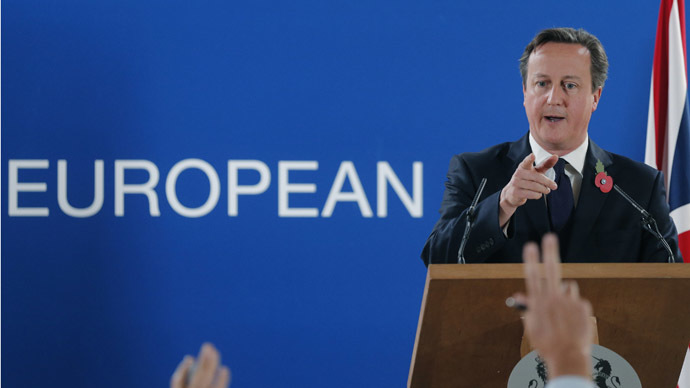
David Cameron - EU Referendum - Brexit - Human Rights Act

Further reading:

The British Model

Is the penny dropping about Vote Leave’s true intentions?

Agree with this article? Violently disagree? Scroll down to leave a comment.

Follow Semi-Partisan Politics on TwitterFacebook and Medium.