Brussels Attacks: Solidarity With Belgium Today, But What About Tomorrow?

Bruxelles - Brussels - Terrorist Attack - Brandenburg Gate - 3

Solidarity is great. What’s next?

There is a very familiar pattern to all of this.

A bloody Islamist terrorist attack brings carnage and fear to the streets of a major Western city.

Everyone from heads of state to the man next door rush to publicly register their shock and solidarity on Twitter.

Someone inevitably pops up after a few hours to lecture us that there is nothing Islamic about Islamic State, and that we should really be calling them Daesh, or “so-called Islamic State”.

Someone else usually pops up to say something incredibly bigoted or ignorant about all Muslims.

Impromptu shrines appear in a major square of the afflicted city, with candles, chalk drawings and sometimes a bit of impromptu John Lennon.

And the day closes with Europe and America’s major landmarks illuminated to resemble the national flag of the afflicted nation. They’re getting really good at that part now.

Fast forward a day, and plans are well afoot to grant even more powers to the well-meaning but overstretched security services – who were unable to make use of their current extensive powers to thwart the attack – and generally at the expense of our civil liberties. Particularly our rights to privacy and free speech.

Fast forward a month, and we have all moved on. Domestic political concerns, celebrity scandals and daily life have reasserted themselves.

I think we can all agree that we’ve got the public grief, cathartic expressions of solidarity and stern faced authoritarianism down to a fine art at this point.

When are we going to start acknowledging – and maybe even tackling – the root causes?


Bruxelles - Brussels - Terrorist Attack - Le Monde - Cartoon

Agree with this article? Violently disagree? Scroll down to leave a comment.

Follow Semi-Partisan Politics on TwitterFacebook and Medium.

The Leave Alliance Campaign For Brexit: Citizen Democracy In Action

The Leave Alliance Launch - TLA - 2

This EU referendum is about the people, not the Westminster elite. Fortunately, there now exists a truly independent Brexit group – the only genuinely grassroots campaign fighting the referendum, and the only one with a credible plan for safely leaving the European Union

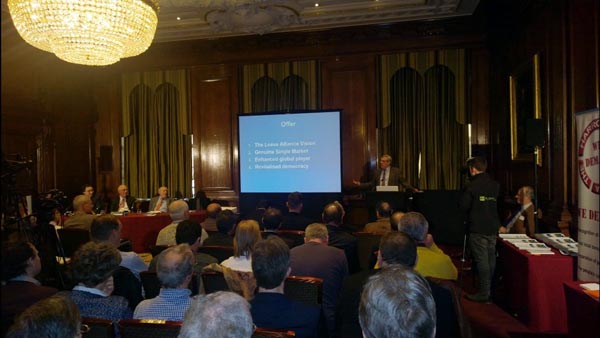
Last week – on Budget day, in fact – the Leave Alliance of individuals and groups campaigning for Britain to leave the European Union held its launch in Westminster.

Don’t worry, you’re not the only one who didn’t realise that anything had happened. The media is still having trouble wrapping their collective mind around the fact that in a referendum, the voices of politicians are no more important than those of ordinary citizens. That’s why every time Boris Johnson opens his mouth to utter his latest half-baked Brexit plan it is considered front page news, but when a group of private citizens and organisations form an independent campaign group to fight a national referendum it is deemed so un-newsworthy that it receives barely a ripple of attention.

Even when that launch takes place in the heart of Westminster, literally down the street from certain venerable news organisations (hello, Spectator), the idea of the Westminster media dispatching a journalist or two to see what was happening in their own back yard is apparently unthinkable. Every last resource simply had to be committed to this year’s Pulitzer Prize-winning coverage of George Osborne’s 2016 Budget, Omnishambles Revisited.

To be fair, The Leave Alliance – of which this blog is an enthusiastic supporterdid register a mention in Christopher Booker’s Telegraph column:

[Boris] Johnson’s empty-headed amateurishness only typifies the fatal failure of any of his allies in the “Leave” campaign to agree on a plausible, properly worked-out exit plan. One after another they come up with their own equally half-baked suggestions, which only demonstrate how none of them have done their homework. This is giving Cameron’s “Project Fear” an open goal, by failing to show how we could practically leave the EU while continuing to enjoy full access to the single market.

The only group that has done so, the Leave Alliance – launched last week with support from the Bruges Group, the Campaign for an Independent Britain and others – is too small to bid for the lead role in the campaign (although I am told on good authority that its expert and exhaustive analysis of all the options has been found very useful by civil servants).

But for a full account of the Leave Alliance launch you have to turn to the blogosphere. Lost Leonardo, writing at the Independent Britain blog, provides this summary:

The Leave Alliance (TLA) is a network of new and established political groups, bloggers and tweeters who are committed to winning the EU referendum for the “leave” side. What makes TLA unique among the declared leave groups is its support for a credible Brexit plan.

Flexcit: The Market Solution is a six-phase plan for recovering Britain’s national independence in stages, as part of a continuous process, rather than as a one-time event. That change of perspective shifts the Brexit debate firmly in the direction of pragmatic and practical politics. The exact form that our post-Brexit deal takes is less important than our vision for what we will do with our national independence. Self-governance means taking responsibility unto ourselves and, if our politicians are any indication, a long process of discovery and rediscovery lies ahead.

So as to short cut the economics- and trade-centred debate that has been allowed (some might say encouraged) to obscure the more important political question—who governs Britain?—the Flexcit plan advocates remaining in the Single Market and then working to create a genuine free trade area in Europe whilst also rebuilding the national policy-making framework and enhancing our democracy by means of The Harrogate Agenda.

This gravity of this referendum on Britain’s EU membership compels us all to think as fully engaged citizens, not merely as frightened consumers or “low information voters” easily manipulated by the cynical propaganda emanating from the major Remain and Leave campaigns. And in this campaign, it is the Remain campaign which benefits from our ignorance and the Leave campaign which is strengthened by knowledge.

When people educate themselves about the European Union, its history and its workings, they almost inevitably become more eurosceptic as the scales fall from their eyes and they realise that the EU is in fact not just a friendly club of like-minded countries who gather together to braid each other’s hair and have a good chat.

As I recently confessed:

Growing up, I was the most ardent European Union supporter and federalist imaginable. I firmly believed that the age of the nation state was over, that patriotism was silly and gauche, and that our only hope of a prosperous future lay in dissolving ourselves into a greater European collective. Adopting the euro, creating an EU army – you name it, I believed in it.

[..] Only when my appreciation for democracy and self-determination (and small-c conservatism) caught up with my authoritarian Utopianism did I realise that the accumulated wisdom of the British people might exceed my own, and that there may be good reasons to be sceptical of the European Union. And only when I came to realise the extent to which the EU is a creation of a small group of European intellectuals and political elites who thought that they knew best – and that the only way to bring about their creation was through stealth and subterfuge, never declaring the ultimate federal destination of travel – did I come to see how profoundly wrong it is.

[..] There is indeed an army of swivel-eyed ideologues in this EU referendum debate. And though they would hate to admit it, it is those on the Remain side who are most likely to be impermeable to facts, and who are least likely to have ever held a different view on the EU and been on an intellectual journey to arrive at their present position.

And as a rule of thumb, it is generally wisest to listen to those who can show evidence of having thought deeply about an issue and been persuaded by the steady accumulation of evidence to revise their thinking, rather than those who were born with their deeply-engrained love of the European Union pre-programmed in their brains.

One of the reasons I am proud of my association with The Leave Alliance is the fact that it is full of other people who, like me, have been on an intellectual journey. Sure, some of us saw through the EU from the beginning, but others – myself included – were won over to the side of Brexit by the steady accumulation of incontrovertible evidence.

We count Britain’s foremost authority on the European Union among our number, as well as several independent writers who possess more patiently acquired knowledge about the global regulatory environment than most of the Westminster media combined.

And if nothing else, the fact that the Westminster media failed to cover something as significant as the Leave Alliance launch – despite the fact that it was happening right in their midst – should be enough to convince anyone of the importance of doing one’s own research on Brexit, and not relying on any one single source or campaign when making this most important of decisions.


European Union - United Kingdom - Britain - Flags

Agree with this article? Violently disagree? Scroll down to leave a comment.

Follow Semi-Partisan Politics on TwitterFacebook and Medium.

What Conservative Government? – Part 4, Iain Duncan Smith Resignation

Iain Duncan Smith - IDS - Resignation

How many more ideologically principled, Thatcher-style conservatives can David Cameron’s centrist political machine afford to alienate?

There is a telling line in James Kirkup’s excellent, fair assessment of the full context behind Iain Duncan Smith’s resignation:

The Prime Minister has already done things that will underpin his eventual legacy: winning the Scottish independence referendum and the general election.

Kirkup probably meant this as praise, but in reality it is the most damning indictment of the current conservative government imaginable – far worse than anything that Iain Duncan Smith said in his resignation letter.

Because it is quite true – some of the greatest accomplishments of David Cameron and his core team of loyalists since 2010 are avoiding having the country disintegrate on their watch, and managing to win a second general election against a historically weak Labour leader pursuing a transparently flawed strategy. If the bar for success in British government has truly been set so low then we are in real trouble.

But David Cameron is not a visionary leader. He came to power in 2010 promising to get Britain through difficult economic times, and was re-elected in 2015 promising to be a reasonably competent Comptroller of Public Services. And to be fair to the man, he never really promised to be a great statesman or a formidable world leader.

Being a doggedly centrist technocrat is all well and good, but eventually people quite rightly start to ask what your government is for, besides acquiring the reins of power and then keeping hold of them for as long as possible. David Cameron’s best answer – the main headline from the Conservative Party’s 2015 general election manifesto – was that we should vote Tory because they have a “plan for every stage of your life“.

Nobody within the Conservative Party seemed to care that this sounded alarmingly socialist and suggestive of the Nanny State – people craved security above freedom, it was believed, and so that’s what would be promised and delivered. More of the status quo, whether the status quo worked well or not.

In other words, as this blog has long been saying and my Conservatives for Liberty colleague Paul Nizinskyj has now eloquently written, David Cameron’s role model is far more the steady pair of hands in tough times rather than the visionary, bloody minded reformer – more Ted Heath than Margaret Thatcher.

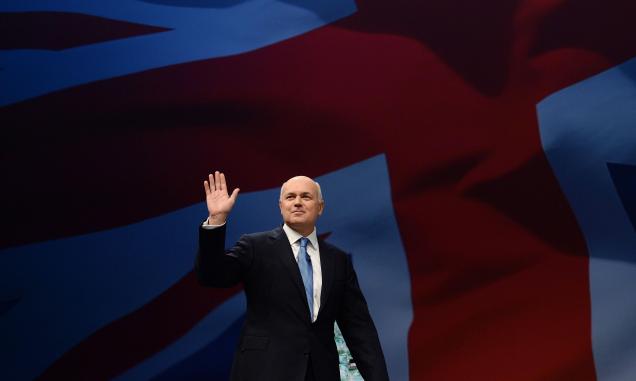
I won’t lie: my first reaction on hearing the news that Iain Duncan Smith – who together with Michael Gove is one of the few Conservative heavyweights left with any discernible core conviction – had finally snapped and told George Osborne exactly what to do to himself was “great – anything to make the smug little cretin sweat”.

Because George Osborne is David Cameron with less charisma. And since David Cameron has almost no charisma of his own, that puts George Osborne well into negative territory. Given the fact that his blunders (the Omnishambles Budget, tax credits, PIPs) have done as much to colour the political landscape as his “victories”, I also find his reputation as a master political strategist to be hugely overinflated.

If running to the political centre by jettisoning core conservative principle by adopting left-of-Labour policies like a £9 minimum wage counts as political genius then sure – anybody who can successfully cross-dress as a politician from a different party to pick off some extra votes is a master strategist. But it makes George Osborne a lousy conservative.

Not everything in Osborne’s budget was wrong. Should the thresholds for tax brackets move upwards with inflation? Ideally yes, they should do so every year to neutralise the effect of fiscal drag. But to package measures such as this with reductions in the Personal Independence Payments to hundreds of thousands of disabled people is frankly idiotic.

In some ways, this is emblematic of the ridiculous nature of the Budget spectacle, a choreographed event which encourages the Chancellor of the Exchequer to play god with other minister’s departments, either stealing their flagship ideas (as with academies) or otherwise presenting them out of context. But it also speaks to this government’s utter failure to enact a bold, coherent and unapologetically conservative agenda.

Janet Daley sums it up perfectly:

Mr Osborne’s reputation as a tactical political genius has gone south too. Maybe that’s been the problem all along: his understanding of politics was all about tactics – about messaging and grids, presentational gloss and re-branding – and had nothing to do with fundamental, irreconcilable principle. I am prepared to guess that he quite literally does not understand politicians who are prepared to risk everything for an idea, a conviction: a personal moral mission.

He thinks that they are bloody-minded and naive, with no comprehension of the modern science of winning elections. But that, it seems, is not what the people believe: they are beginning to think that their leaders should stand for something, should have a fundamental sense of what they are in politics for. It’s what they call “authenticity”, and it could turn out to be more of a winner than all the clever marketing techniques in the world. Imagine that.

I understood what Michael Gove was trying to accomplish at Education. And I get what Iain Duncan Smith was wrestling with at the Department for Work and Pensions, and admire his semi-successful efforts to get people into work, and to make that work pay more than dependency on the state. Unlike many others who write sanctimoniously but ignorantly about the issue, I have witnessed the welfare state up close, and seen exactly what our “compassionate” system is capable of doing to people when the dead-eyed state machine is responsible for their lives.

I get all of that. But I have no idea what David Cameron is trying to accomplish as prime minister, or what George Osborne thinks he is doing at the Treasury. Because it certainly isn’t paying down Britain’s debts, as they both like to claim. Nor is it guarding Britain’s sovereignty and place in the world – Cameron has gutted Defence, and is in the process of tricking the British people into voting to remain in what he falsely claims to be a “reformed” European Union.

Neither Cameron or Osborne are motivated by the desire to roll back the state and make the British people more free – their heavy-handed government is all for ever-greater restrictions on both ancient and recent hard-won civil liberties, and is seemingly anxious to sacrifice what freedom we have left upon the altar of “national security”.

There is almost nothing about shrinking the state and expanding personal liberty in this government. But there are lots of policies – cutting state spending on the poorest and weakest in society while continuing to lavish stage largesse on wealthy older people (through non-means tested benefits and the lack of a housing supply policy to benefit the young) – which play right into Labour’s hands, making the Tories (and those who support them) look like nothing more than selfish, grubby opportunists, lining the pockets of the already wealthy while others suffer.

In short, I don’t know what this Conservative government is for, besides trying to stay in power and preventing Labour from stealing it. And apart from the work he was doing in his own department, I suspect that Iain Duncan Smith didn’t know either, no matter how much obligatory praise he heaped on Cameron in his resignation letter.

So I cannot do anything but endorse Iain Duncan Smith’s decision to quit. The final straw was no doubt Downing Street’s insistence that Duncan Smith come out all guns blazing in defence of the welfare cuts in the Budget, while simultaneously planning to walk back the proposals themselves – making IDS look like the crazed ideologue and Cameron / Osborne as the calm voices of reason. Who would want to stick around to be treated in that way?

And if Iain Duncan Smith’s resignation destabilises the government – so what? We currently have a nominally conservative prime minister who is busily enacting Tony Blair’s fourth term of office. We effectively already have a Labour prime minister – or a New Labour one, at least.

Maybe an improbable defeat to Jeremy Corbyn’s Labour Party – or a good scare, at least – is the shock the Tories need to dig deep and find a real conservative leader.


Postscript: Iain Duncan Smith’s full resignation letter – which this blog believes was far too generous and courteous – is shown below.

I am incredibly proud of the welfare reforms that the government has delivered over the last five years. Those reforms have helped to generate record rates of employment and in particular a substantial reduction in workless households.

As you know, the advancement of social justice was my driving reason for becoming part of your ministerial team and I continue to be grateful to you for giving me the opportunity to serve. You have appointed good colleagues to my department who I have enjoyed working with. It has been a particular privilege to work with excellent civil servants and the outstanding Lord Freud and other ministers including my present team, throughout all of my time at the Department of Work and Pensions.

I truly believe that we have made changes that will greatly improve the life chances of the most disadvantaged people in this country and increase their opportunities to thrive. A nation’s commitment to the least advantaged should include the provision of a generous safety-net but it should also include incentive structures and practical assistance programmes to help them live independently of the state. Together, we’ve made enormous strides towards building a system of social security that gets the balance right between state help and self help.

Throughout these years, because of the perilous public finances we inherited from the last Labour administration, difficult cuts have been necessary. I have found some of these cuts easier to justify than others but aware of the economic situation and determined to be a team player I have accepted their necessity.

You are aware that I believe the cuts would have been even fairer to younger families and people of working age if we had been willing to reduce some of the benefits given to better-off pensioners but I have attempted to work within the constraints that you and the chancellor set.

I have for some time and rather reluctantly come to believe that the latest changes to benefits to the disabled and the context in which they’ve been made are a compromise too far. While they are defensible in narrow terms, given the continuing deficit, they are not defensible in the way they were placed within a Budget that benefits higher earning taxpayers. They should have instead been part of a wider process to engage others in finding the best way to better focus resources on those most in need.

I am unable to watch passively whilst certain policies are enacted in order to meet the fiscal self imposed restraints that I believe are more and more perceived as distinctly political rather than in the national economic interest.

Too often my team and I have been pressured in the immediate run up to a budget or fiscal event to deliver yet more reductions to the working age benefit bill. There has been too much emphasis on money saving exercises and not enough awareness from the Treasury, in particular, that the government’s vision of a new welfare-to-work system could not be repeatedly salami-sliced.

It is therefore with enormous regret that I have decided to resign. You should be very proud of what this government has done on deficit reduction, corporate competitiveness, education reforms and devolution of power. I hope as the government goes forward you can look again, however, at the balance of the cuts you have insisted upon and wonder if enough has been done to ensure “we are all in this together”.
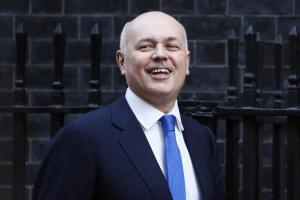
 

Iain Duncan Smith

Agree with this article? Violently disagree? Scroll down to leave a comment.

Follow Semi-Partisan Politics on TwitterFacebook and Medium.


Preventing People From Attending Donald Trump Rallies Is Undemocratic

Donald Trump Protesters - St Louis

Shutting down political rallies with the threat of violence and blocking public access to hear a political candidate speak is not behaviour worthy of any citizen of a democracy

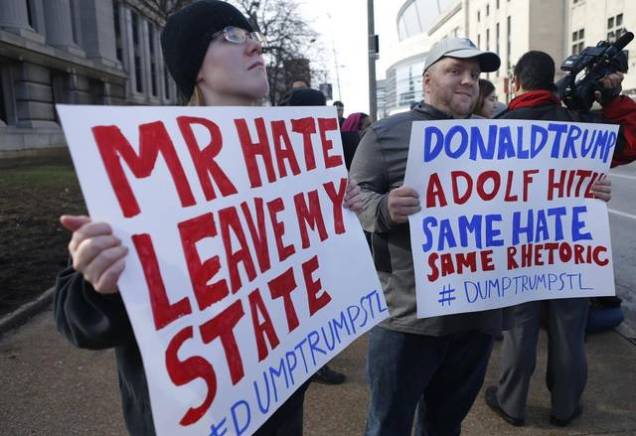
People have every right to feel alarmed or even scared about the presidential candidacy of Donald Trump. This blog believes that a Trump presidency, were he to secure the Republican nomination and win the general election, would be jarringly populist at best and economically ruinous at worst, though I dismiss any alarmist talk that Trump is in any way equivalent to the Nazis or other genocidal fascists.

Such hyperbole from anti-Trump activists is thoroughly unhelpful at a time when tempers are already flaring on both sides. After all, if you are a supporter of Donald Trump then having an angry college student yell in your face that you are supporting the new incarnation of Hitler will likely make you quite unreceptive to engaging in further debate and potentially being persuaded to change your views.

But the invective (on both sides) and hand-writing hysteria (primarily from the anti-Trump crowd) are nothing compared to the more blatantly anti-democratic methods by which some liberals are now attempting to shut down Donald Trump’s message rather than take it on in the battle of ideas.

The Huffington Post reports that some demonstrators are now attempting to block public access to Donald Trump rallies to prevent his supporters from hearing him speak, under the banner “Shut Down Trump”:

Protesters on Saturday blocked the roads leading to a Donald Trump rally in Fountain Hills, Arizona.

[..] An ABC 15 anchor reported at least three people had been arrested in connection with the protests. Deputy Joaquin Enriquez, a spokesman for the Maricopa County sheriff’s office, told ABC 15 the arrests were for blocking the road, not protesting.

The roadblock didn’t stop some determined people from getting out of their cars and walking to Trump’s rally.

Tomas Robles, executive director of Living United for Change in Arizona, a workers’ rights organization, told HuffPost that law enforcement was cooperative and treated protesters fairly. He said some Trump supporters “did try to get get aggressive,” but they were not violent.

“It was a peaceful protest, we got our point across, and we showed the nation and our state that just because Arizona at a time has been seen as anti-immigrant and somewhat racist, this is not that state anymore,” he said. “We’re not going to allow people like Trump to spew that rhetoric.”

Note the authoritarian tinge to the words of Tomas Robles, one of the protesters quoted by Huffington Post. Because he and his organisation disagree with Donald Trump, they are “not going to allow” him to air his views in public – at a political rally of all places, that most sacrosanct of venues in terms of the necessity for free speech.

While the rally in question went ahead, the demonstration prevented many Trump supporters from attending and forced others to abandon their cars and walk the rest of the way to the venue:


Hilariously, the Huffington Post – clearly sensing that running a story about liberal activists interfering with a political rally might not sound terribly progressive – felt the need to add the following editor’s note to the end of the article:

Editor‘s note: Donald Trump regularly incites political violence and is a serial liar, rampant xenophobe, racist, misogynist and birther who has repeatedly pledged to ban all Muslims — 1.6 billion members of an entire religion — from entering the U.S.

The obvious implication of this note is that it is perfectly appropriate and justified to stifle and attempt to shut down some forms of speech, and that we shouldn’t think badly of the protesters because they are waging war against a bad person who thinks the wrong things as opposed to a good person, “one of us”, who holds the correct beliefs and whose speech should be protected.

Or in other words: “Don’t worry, Trump and his supporters had it coming. They are bad people”.

The furious liberals outraged at the rise of Donald Trump need to realise that their usual tactic of shouting, screaming and now blockading things that they dislike is actually feeding – not killing – the beast. Maybe they do realise, but simply don’t care. Maybe the opportunity to signal their own moral virtue by ostentatiously raging against Trump is all that they care about.

But until Trump’s most ardent enemies on the Left learn to use their words rather than their fists they will only succeed in undermining free speech and American democracy, making Trump stronger all the while.


Donald Trump Rally

Agree with this article? Violently disagree? Scroll down to leave a comment.

Follow Semi-Partisan Politics on TwitterFacebook and Medium.

Nothing Positive To Say About The EU? Just Bash The Leave Campaign

Owen Jones, unable to think of one positive thing to say in support of the European Union, focuses his attention on mocking the Leave campaigns

Owen Jones can’t make a full throated defence of the European Union and Britain’s place in it, because in his heart of hearts he knows the EU to be a bad, terminally unreformable institution in which we should play no further part. Of that I am absolutely convinced, no matter how deep in his subconscious Jones may have buried his natural euroscepticism.

But to avoid alienating his virtue-signalling left-wing readership who instinctively support the EU (either out of simplistic internationalism or the cynical knowledge that being in the EU imposes stricter employment and social laws on the UK than British voters would likely tolerate themselves), Jones has walked back nearly all his earlier principled criticism of Brussels, and now bleats the usual fantastical nonsense about staying in the EU to transform it into some kind of socialist utopia.

Thus, unable to make a passionate argument in favour of the European Union, Jones must content himself with making snide observations about the Leave campaigns (who regretfully seem to provide him with near endless material). He cannot make an honest intellectual or moral case for Remain, so he deflects by snarking at those who want to reclaim British democracy by leaving.

And so we get stuff like this, in which Jones wastes an entire YouTube video smugly pointing out that pro-Brexit Conservatives are moaning about the Remain campaign waging “Project Fear” when many of them adopted similar arguments against Scottish independence during the 2014 referendum, and against Labour and the SNP in the general election last year. Because, according to this bizarre logic, two wrongs (the Evil Tories doing it before, and the Remain camp doing it now) cancel each other out.

Jones scoffs:

Project Fear. That is how Chris Grayling, who is a Tory cabinet minister who supports Brexit – Britain leaving the European Union – that’s how he is describing the campaign led by the government to stay within the European Union. As soon as I heard him describe the campaign to stay in in those terms, all I could think was “you cheeky git!” It reminds me of the Yiddish expression, chutzpah.

[..] Then there’s Michael Fallon, the Defence Secretary, who in the weeks before the general election said “Ed Miliband stabbed his own brother in the back to become Labour leader. Now he is willing to stab the United Kingdom in the back to become prime minister”. Again, you had co-ordinated attacks by big businesses warning of economic calamity were Labour to enter Number 10. Project Fear on speed, quite frankly. The whole campaign was waged on the basis of fear.

Now, the people complicit with that included, obviously, the likes of Chris Grayling and his colleagues in the Conservative cabinet, and the Conservative backbenches who now support Brexit and who are angry at those tactics, as they see it, being employed against them.

We can expect to see a lot more of this finger-wagging nonsense over the next few months from those who are determined to keep Britain inside the European Union.

Some of them refuse to make positive arguments for the European Union because they actually rather dislike it, but hold Britain in such low regard that they believe that despite being many times the size of independent countries like Australia and New Zealand, Britain is uniquely incapable of functioning independently outside of a regional political union.

Others shy away from talking up the European Union because they genuinely love the institution, want us to integrate even more deeply and therefore worry that they might get too carried away praising Brussels and so harm their own side.

Others still dislike the European Union and know full well that Britain could prosper outside this anachronistic mid-century supra-national political union, but persuade themselves to support Remain for fear of the social stigma that comes with declaring oneself a eurosceptic in certain circles.

But in no case will they be honest with the British people, because they have all come to the conclusion that telling what they see as difficult truths – in their case, that the European Union is a good thing for a, b and c reasons, and Britain should continue to participate because of x, y and z – will not win the referendum, but that Fear, Uncertainty and Doubt (FUD) will do the job quite nicely.

Owen Jones rightly bristles at the way that the “No” campaign wielded this tactic in the Scottish independence campaign, which would make you think that he opposes it being used by any group and in any context. But apparently not so. Because Conservative Leave supporters “brought it on themselves” by utilising FUD tactics in the past, the Remain camp should not be criticised for doing so now.

It is a shame to see Owen Jones – at his best an intelligent and articulate voice on the Left – frittering away his time on the EU referendum campaign by pointing out the foibles and tactical hypocrisies of the Leave campaign. But what other choice does he have? Despite knowing full well that the EU is unreformable, Jones has committed to supporting Britain’s continued membership.

I think that this is a betrayal of the democratic accountability and local control that Jones spends much of his time promoting. And I suspect that he does, too. Which is why we can all expect to see lots more “gotcha” videos on YouTube criticising individual members of the Leave campaign, but not a damn thing praising the European Union or explaining how this magical socialist “reform” of the EU is to be achieved.

After all, nothing distracts from a guilty conscience like pointing out the flaws, failings and inconsistencies of other people.


European Union - United Kingdom - Britain - Flags

Agree with this article? Violently disagree? Scroll down to leave a comment.

Follow Semi-Partisan Politics on TwitterFacebook and Medium.