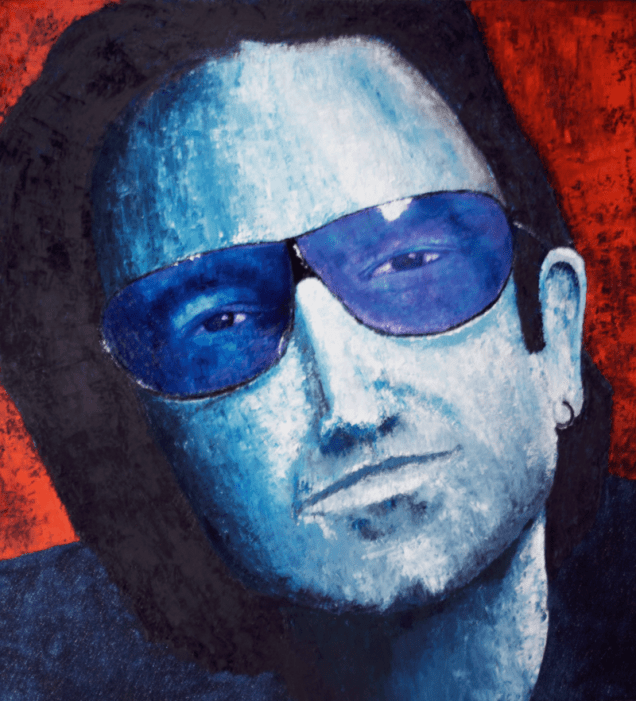
U2’s Bono Named Woman Of The Year

bono-glamour-woman-of-the-year

Glamour magazine is so hard-stretched to find enough worthy female candidates for its Women of the Year shortlist that any progressive male with a decent track record of philanthropy is now in with a shot of winning the prize

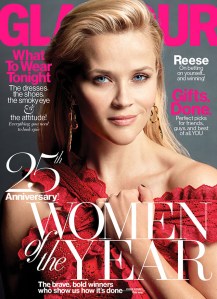
Meanwhile, back in SJW-land, life goes on as normal… Glamour magazine has named Bono as one of its Women of the Year.

Now, parents can tell their daughters that one day they too can grow up to be Bono, that designer stubble-sporting, wraparound sunglasses-wearing crooner. Though of course in the age of identity politics, this was always self-evidently the case – it simply involves standing up, declaring that “I identity as the lead singer of Irish rock band and celebrity philanthropist U2” and then demanding that everybody else bow down and play along with your delusion, lest they be accused of intolerance or oppression.

But of course Glamour magazine is doing this to make a Worthy Point, and so we must all nod our heads at their little stunt and murmur “how provocative and brave”.

Christiane Amanpour gushingly writes in the magazine:

When humanitarian and rock icon Bono learned that he was being honored by Glamour as the first-ever Man of the Year, he called his wife of 34 years, Ali Hewson, to give her the news. “I asked did she think I deserved it. She wasn’t sure,” Bono tells me with a laugh. “She said I’ve work to do!”

U2’s front man has no doubts. “I’m sure I don’t deserve it,” he says. “But I’m grateful for this award as a chance to say the battle for gender equality can’t be won unless men lead it along with women. We’re largely responsible for the problem, so we have to be involved in the solutions.”

I’m on Glamour’s side: I think Bono is the perfect choice for this first-time honor because, now 56, he’s been trying to do good for as long as he’s been making music. I first met Bono, born Paul David Hewson, in Sarajevo over New Year’s 1996, shortly after peace accords ended the Bosnian civil war that November. It was the first time in four years that the guns were silent and the people of that beautiful city could celebrate by taking to the concert halls and cafés. I got pulled into a crowded car one night, heading for a party, and there was Bono. Our two-decade humanitarian friendship was launched.

And while my friend has sold 170 million albums and won 22 Grammys, what I admire most about him is his extraordinary talent for tackling problems that seem intractable—and making mighty and measurable gains. It’s not every superstar (or, for that matter, statesman) who can bring about $100 billion in debt cancellation for 35 of the world’s poorest countries, or persuade the U.S. government to pony up the largest contribution ever for lifesaving AIDS drugs in Africa, as President George W. Bush did in 2004.

Now Bono has created Poverty Is Sexist, a new campaign specifically aimed at helping the world’s poorest women—those who survive on less than $2 a day. “Women bear the burdens of poverty,” Bono says, meaning they are far less likely than men to have access to food, clean water, education, and health care; laws in many parts of the world don’t protect them from sexual violence or allow them to own the land they work. By establishing Poverty Is Sexist, Bono is making it clear that powerful men can, and should, take on these deep-rooted issues.

Poverty is sexist? Give me a break. By this alarmist logic, anything impacting men and women differently is inherently sexist, and therefore in need of immediate corrective action by government or other actors. Pregnancy? Utterly outrageous that women are left to bear the burden alone. Money should be poured into womb transplant research and artificial gestation technology so that men can either be surgically forced to bring 50 percent of new life to term themselves, or all of humanity can outsource the job to technology in the name of equality.

Real, grinding poverty – better thought of as the absence of wealth – is debilitating and responsible for nearly all of Beveridge’s famously identified Five Giant Evils. It should be tackled on that basis, not devalued and politicised by slapping an additional identity politics label onto poverty, as though calling it names will make it go away.

But a man winning an award designed for women?

The Telegraph’s Radhika Sanghani is unconvinced:

Glamour’s editor-in-chief Cindi Leive, tried to justify the decision: “We’ve talked for years about whether to honour a man at Women of the Year and we’ve always kind of put the kibosh on it. You know, men get a lot of awards and aren’t exactly hurting in the awards department. But it started to seem that that might be an outdated way of looking at things and there are so many men who really are doing wonderful things for women these days.”

Yes, there are. And none of these men who do “wonderful things for women these days” become women themselves by doing so.

Sanghani continues:

I know these decisions come from a good place. The UN’s appointment was probably meant to be a symbol to raise awareness, while Glamour referenced the #HeForShe movement as part of their reasoning for choosing Bono – saying gender equality will never be achieved unless privileged white men get on board.

Yet underneath the humour (see Tweet embeds for the best Bono jokes going around today) there is an uncomfortable feeling that no woman was good enough for the position. That Glamour couldn’t find a tenth inspiring woman deserving of the award, while the UN couldn’t find another Emma Watson to make empowerment appealing to the masses. Even Bono, gets it, telling the magazine: “I’m sure I don’t deserve it.”

There you have it; straight out of the 2016 Woman of the Year’s mouth – a man doesn’t deserve to have an award celebrating women. Who would have thought it?

I am less confident that these decisions come from a good place.

When Caitlyn Jenner won Glamour’s Woman of the Year award last year, at least the former Bruce Jenner made the effort to physically transition from male to female and begin living as the latter before being given her award. But those who worried about excessive fluidity in gender identity didn’t realise how quickly things would develop. Fast-forward just one year and now one might find oneself publicly declared a different gender just for doing a bit of charity work.

Together with some other individuals from my old firm, I once spent a day re-painting a community centre for elderly residents in east London, and another day teaching employment and job-searching skills to young NEET (not in employment, education or training) teenagers. Does that entitle me to be named as a contender for either Septuagenarian or Disadvantaged Kid of the Year?

We can trace this kind of stunt back to Bill Clinton – he who spoke of “super-predators” and did as much as anyone to promote mass incarceration – being lauded as the “first black president” back in 2008.

At one time we could dismiss stunts such as this from the Congressional Black Caucus as isolated incidents. But we seem to have reached critical mass with this phenomenon where it is now considered hip, edgy and provocative to deliberately misgender people, both as a way of generating controversy to keep public attention fixed on something increasingly irrelevant (print magazines) and to further undermine the idea of biological gender altogether.

This is becoming ridiculous. It is one thing for grown adults to declare that they wish to identify as a different gender – to which the polite response should be to comply with their request, no matter one’s personal stance on transgender issues. But it is another thing entirely for the media to start bestowing new gender identities on unwitting people as a signal of approval of their actions.

Gender is innate, and means far more than simply being a pat on the head for good work, even for a lifetime of charitable service. If U2’s Bono actually wants to be a woman, there is a clear and well-trodden path laid out for him to do so and many people will light the way with glowsticks and strew it with petals.

But assuming that he does not in fact want to become a woman, Bono should demonstrate real respect for women by refusing to participate in this insidious game, and decline the Glamour award.
 

glamour-women-of-the-year

Top Image: Rene Romero, Wikimedia Commons

Support Semi-Partisan Politics with a one-time or recurring donation:

Agree with this article? Violently disagree? Scroll down to leave a comment.

Follow Semi-Partisan Politics on TwitterFacebook and Medium.


Identity Politics Gave Us President Trump; More Identity Politics Will Not Make Things Better

identity-politics-us-presidential-election-donald-trump-white-working-class

Identity politics cultists created Donald Trump, President-Elect Edition, and from much of their subsequent complaining they haven’t learned a single thing from their mistake

Blogger and polemicist Phil Hendren is in unsparing mood as he takes the identity politics Left to task for their role in provoking the alleged “whitelash” which confounded the opinion polls and made Donald Trump president-elect of the United States last Tuesday.

Hendren’s critique is worth quoting at length, as he writes:

Of course, the political earthquakes have been followed in each case with a sentimental reaction that is both odd and downright scarier than the actual earthquake. This has been coupled with a lack of self-awareness by the losing side.

Be it Brexit or Trump we’ve seen knee-jerk reactions that ponder upon whether democracy is such a great idea after all. Amazingly we have idiots screaming about fascism whilst simultaneously suggesting that something be done about the pesky plebs that voted one way or the other.

They moan about bigotry whilst suggesting that the franchise be removed from certain people who are not suitably intelligent or are too old to be trusted with a vote - call me old-fashioned but that is bigotry right there.

You listen to analysts who say they are “just reporting the data” that tell you Trump scored well with “white males without a college degree”. Has there ever been a more obvious coded dog whistle for “stupid white trash”?

The same thing happened in Britain after the Brexit vote. People started arguing that it was those with less education that voted Leave, the implication being that the stupid unenlightened were to blame.

It astounds me that, as the hand-wringing goes on, there persists, even in defeat, a complete and total contempt for some part of the electorate by the chattering class and the elite.

Don’t they get it? Do they really not see that it is precisely that attitude toward the great unwashed that has caused them to lose? Don’t they also realise that they’re witnessing the ultimate end game of their own orthodoxies?

For the past 20 years, the dominant orthodoxy in the West has revolved around the politics of Identity. We’ve been constantly reminded that humanity should be pigeonholed into groups based on race, gender, sexuality or the Other.

The elephant in the room of this orthodoxy has been the marginalisation of the considered dominant social identity, be it so-called ‘cis-gender’ (essentially a pejorative for someone who’s gender identity is in line with their biology) ; heterosexuals; or good old whitey - aka ‘the oppressor’.

Is it any wonder that these groups have reacted by taking on the clothes of Identity Politics themselves? Anyone that claims to be shocked or disgusted by this development is, to put it as bluntly as I can, a fucking idiot.

If you constantly dehumanise people by making them the sum of arbitrary labels, and then you push the view that each of these groups is structurally disadvantaged by the oppressor then you inevitably structurally disadvantage the oppressor who begins to feel, rightly or wrongly, oppressed.

It isn’t fucking rocket science.

The vote for Brexit and the vote for Trump do not represent some sort of uprising of white supremacy, or the normalisation of misogyny and racism. They represent the inevitable consequence of this misanthropic orthodoxy that has infected the chattering class, the Academy and the elites.

Did I vote for Brexit? No, I was a reluctant (and regretful) Remainer. Would I have voted for Trump? Hell no. He’s an illiberal social authoritarian that supports ridiculous left wing protectionism, but I get why people did.

Until the elite and chattering “enlightened” class begin to realise that they’ve created this. That they are to blame for it, these political earthquakes will keep on coming.

My emphasis in bold.

As an anti-Trump conservative watching the reaction to Trump’s election with amazement and concern, I am absolutely stunned by the lack of introspection and self-awareness displayed by much of the Left.

As this blog has already noted, Donald Trump supporters propelled their man to the White House largely by following the proven playbook of the leftist Social Justice Warriors, and they were able to do so because of the pervasive victimhood culture which has been nurtured and aggravated in America by a succession of cynical politicians and activists.

As Hendren rightly notes, if you atomise society into “separate but equal” identity groups based on race, gender or sexuality, you inevitably spark an arms race of perceived oppression and claims of vulnerability which far exceed the actual real oppression which may still exist. Grievance group is pitched against grievance group in the battle of public sympathy, with only one constant – that “cisgender” white men are always portrayed at the top of the Hierarchy of Oppression, always cast as the villains – whether they live in a New York condominium with gold-plated elevators or an Appalachian trailer park on the outskirts of a town being ravaged by crystal meth and heroin addiction.

I’ve warned about this before, in the context of the oppressive climate faced by young conservatives on college campuses, pointing out that it will not be long before those with conservative views tire of being bullied, censored and portrayed as “hateful” by the social justice mob which the tacit consent of spineless university administrators, and begin to use the same language of vulnerability and victimhood to elicit public sympathy for their own plight. Conservatives see other “identity groups” taking this approach and winning their battles to silence criticism and elevate themselves to a privileged, untouchable position on campus, and already we signs of some harried conservatives adopting the same approach.

So it is outside the university campus too, in wider society. Many millions of decent, non-racist and non-sexist people, often (but not exclusively) white, have been told increasingly stridently that questioning open borders or very recent new norms around gender identity and sexuality is tantamount to “hate” – that they are, in fact, bigots. Leftist identity politics cultists have increasingly deployed the nuclear option accusations of racism, sexism and homophobia against anybody who displays the slightest hesitation in embracing their worldview, leaving no way to distinguish and flag genuinely racist, sexist or homophobic opinions or actions when they occur.

And now we face the worst-case scenario, a white working class which sees other minority groups claiming vulnerability and oppression to demand sympathy and claim perks, and which has decided to think of itself as an oppressed minority group too. A very large, very powerful minority group, as it turns out.

We even get an eerily prescient prophecy that this will come to pass in a 2008 essay by Mark Schmitt in Prospect Magazine, written six months prior to the election of Barack Obama in his battle against John McCain.

Schmitt suggests:

That leaves Republicans with a single alternative, one that’s embodied in the slogan of McCain’s first general-election advertisement: “The American President Americans Are Waiting For.” It’s the politics of identity–not necessarily racial or ethnic identity but identity as an American. The blog FiveThirtyEight.com, which has been gathering all sorts of data relevant to the Electoral College vote, recently noted a fascinating demographic fact: About 7 percent of people refuse to answer the Census questions about ethnic origin and instead write in “American.” Those defiant Americans are overwhelmingly found in the states and counties that turned away from the Democratic Party in 2000 and 2004–the Appalachian belt running from West Virginia through Kentucky, Tennessee, and southern Ohio–which are also the counties where Barack Obama has done worst in the primaries.

David Frum calls explicitly for this brand of identity politics, declaring that while the Republican Party’s issue positions have evolved over the years, “there is one thing that has never changed: Republicans have always been the party of American democratic nationhood,” whereas Democrats “attract those who felt themselves in some way marginal to the American experience: … intellectuals, Catholics, Jews, blacks, feminists, gays–people who identify with the ‘pluribus’ in the nation’s motto, ‘e pluribus unum.'” In case it’s not clear, in Frum’s Latin, “pluribus” means “parasites,” and he tells us helpfully, “As the nation weakens, Democrats grow stronger.”

In Frum’s book, this ugly bit of identity politics is carefully nestled within thousands of words about policy. And this is how the code is supposed to work. The GOP’s attack on “liberals” was always an attack on people not quite like “Americans”–secular, cosmopolitan, educated, egalitarian.

[..]

Traditionally, the phrase “identity politics” has referred to the Democratic coalition’s caucuses, interest groups, and competitive claims of wrongs to be righted and rights to be granted. Identity politics on the left, according to this very conventional wisdom, opened the door to an alternative politics of national identity on the right. And yet in 2008, the Democratic presidential nomination battle between an African American and a woman has not exacerbated left identity politics but brought it to a peaceful close. Obama is not Jesse Jackson; Hillary Clinton is not former Rep. Pat Schroeder. He chose to campaign on national reconciliation, she on bread-and-butter economics and her expertise on military affairs. Whereas McCain–a man whose known positions on the war and on the economy are deeply unpopular, whose other positions are endlessly shifting, whose party and ideology are rejected–is recast entirely in terms of his biography, his honor, his character, his American-ness.

This year the Republican argument is reduced to its barest essence: Americans versus “pluribus,” unprotected by the politeness of issues or safer symbolism. Hence McCain’s slogan, the politics of the flag pin, the e-mails charging that Obama doesn’t salute the flag, and the attempt to associate him with the anti-American politics of 1968, when he was 7 years old. This, then, may be the ultimate high-stakes gamble for the party of confident risk-takers: Accept that everything else–ideas, competence, governance–is gone, and instead of trying to reconstruct it, as the books recommend, bet everything on the bare essentials of Republican identity politics, “The American President Americans Are Waiting For.”

“The American President Americans Are Waiting For”. “Make America Great Again”. Schmitt wasn’t too far off in his prediction of the winning message, albeit eight years later than originally planned.

Read the whole article if you have time – the foreshadowing is quite spooky.

This is in significant part why Donald Trump will be taking the presidential oath of office on 20th January 2017 – because the American Left succeeded in shattering American society into a fractured group of warring special interests and victim groups, claiming nearly all of them for its own side but leaving the largest – the white working class – to the Trump-led Republicans.

And still they don’t see it. Still they rail against the ignorant, inbred hicks with their backward, racist ways. Still they treat the plurality of Americans who voted for Donald Trump as stupid, unwitting enablers of fascism (at best) or actively hateful “deplorables” at worst, unaware that every further such comment only serves to prove to the white working class that they are indeed under attack, and that they were right to band together and vote based partly (even largely) on the solidarity of identity.

At some point, somebody fairly prominent on the American Left is going to have to wake up, reach this conclusion and then have the courage to stick their head above the parapet and urge their fellow travellers to stop their destructive course of action. With their hysterical anti-Trump rhetoric, the American Left not only obscure Donald Trump’s many real and tangible flaws, they actively feed the monster which they fear the most.

Now that the populist Right are catching up with the new rules of the game, playing the identity politics card is turning into something approaching Mutual Assured Destruction. Sure, you can do it, but pandering to the politics of identity is now all but guaranteed to provoke an equal and opposite reaction from those being singled out as oppressors. And whoever wins on any given day, the country is left more divided, more bitter and less able to knit back together with goodwill when it comes time to govern.

The American Left needs to step back from this madness. Now.


white-trash

Support Semi-Partisan Politics with a one-time or recurring donation:

Agree with this article? Violently disagree? Scroll down to leave a comment.

Follow Semi-Partisan Politics on TwitterFacebook and Medium.

Music For The Day

This Remembrance Sunday, take some time to switch off from “broadcast” mode and enjoy a few moments of quiet reflection

The second movement (Andante) of Samuel Barber’s violin concerto, Op. 14, performed by Hilary Hahn with the Saint Paul Chamber Orchestra under Hugh Wolff.

As Michael Steinberg summarises in programme notes for the San Francisco Symphony:

The Andante begins with another inspired melody, this one given to the oboe. With touching tact, Barber lets the oboist bask in that glory, for the violin enters and occupies itself with quite different, more rhapsodic material; only at the recapitulation does the violin take the oboe theme, singing it molto espressivo low on the G-string. The coda, one of Barber’s most beautiful pages, is one of the products of the revision.

Listen to the whole piece here.

Now seems to be a particularly good time to enjoy the music of a quintessentially American composer. What were Samuel Barbers’ own personal political views? Would he be a Clintonite or a Trumpist if he were still alive and lived through the 2016 presidential election campaign? Would he believe that we are Stronger Together, or want to Make America Great Again? Would we consider Barber acceptably progressive or deeply intolerant by today’s standards?

Who cares? Today we know Barber as an American composer, not as a progressive or a conservative. Some things – like art, at its best – transcend our fierce little contemporary political debates. A point well worth keeping in mind on a day in which we recall that we are very much part of history, but blessed to be burdened with the the problems of 2016 rather than those of 1916 or 1936.


samuel-barber-us-postage-stamp

samuel-barber-concerto-for-violin-and-orchestra

Support Semi-Partisan Politics with a one-time or recurring donation:

Agree with this article? Violently disagree? Scroll down to leave a comment.

Follow Semi-Partisan Politics on TwitterFacebook and Medium.

Left-Wing Brexit Acceptance Award

madaleina-kay-european-union-brexit-cartoons-unicorns-and-leprachauns-2

Finally, a prominent left-wing voice that accepts the result of the EU referendum and does not drip with contempt for democracy and the people’s choice to leave the EU

In his latest piece for the Independent, John Rentoul gives us that rarest of things from the political Left – a gracious and measured acceptance of Brexit.

Right off the bat, Rentoul declares:

There are two common views among people who wanted to stay in the EU that I think are mistaken. One is that David Cameron made a foolish and unforgivable mistake in promising the referendum. The other is that the result was obtained by a campaign of lies.

My contentions are that Cameron was forced to promise a referendum by the very democratic pressure that produced the vote to Leave, and that the referendum was about as fair as the rough and tumble of democracy usually is.

And Rentoul is quite right, I think, to state that with the rise of UKIP, never-ending power grabs from an increasingly tone-deaf EU and the systematic crises (euro, migration) facing the union, a referendum was ultimately coming, one way or another, regardless of whatever David Cameron did:

Cameron knew that if he didn’t promise a referendum, his party would become even harder to manage and it would lose votes to Ukip. As it turned out, he had a choice between cutting his throat and slitting his wrist: he could lose the election in 2015 and be thrown out of office or he could lose the referendum a year later and be thrown out of office. Being a politician – that is to say, human – he chose to maximise his chance of winning in 2015 and hoped that winning in 2016 would take care of itself.

Rentoul accurately notes that euroscepticism is hardly a new phenomenon in Britain. While we may not have been asked our opinion on the matter since the 1975 referendum, there has always been a significant chunk of the population opposed to our EU membership, even before mass immigration from eastern Europe or the euro crisis  were factors:

It may be objected that polls did not find that the EU was a priority for voters, and that support for leaving became significant only after the 2008 banking crisis. But there has been a majority in the British public for leaving or for reducing the EU’s powers since 1996, according to the British Election Study (page 6), and immigration has been named as one of the three most important issues facing Britain since 2001, according to Ipsos MORI.

But even more encouraging (from a Brexiteer’s perspective) is Rentoul’s refusal to fall back on lazy Remainer self-delusions that the Leave campaign had a monopoly on lies and misinformation, and that it was this uniquely one-sided dishonesty which somehow tricked a gullible population and swung the referendum:

The second complaint by many Remainers is that the people voted to Leave on the basis of disinformation. There is an implication that journalists failed in their duty to fact-check the post-truth politics – a criticism that must sound familiar in America.

But I don’t think the argument holds up. One of the surprising things about the referendum was that we didn’t hear that much about Eurosceptic press barons dominating the debate. This may be because they didn’t. The media landscape in Britain has been utterly transformed by the internet – as I know well, working for the first national newspaper to go online-only.

If you look at the readership of British newspapers, print and online, not only does The Independent have more readers than The Sun – not many people know that – but the total readerships of newspapers advocating Leave and Remain were about the same (of the 13 weekday newspapers, the Mail, Telegraph, Express, Star and Sun advocated Leave, with 95m monthly readers; the Guardian, Mirror, Independent, Standard, Times, Daily Recordand Scotsman advocated Remain, with 97m monthly readers; the Metro had no position). There are other new news sources online, Buzzfeed and other rivals of The Independent that I won’t mention, but overall I think the media was fairly evenly balanced.

As Rentoul points out, the Evil Murdoch Press doesn’t have quite the vice-like grip over the minds of the British people as many a Corbynite (or even a New Labour centrist) likes to believe. People consume their news from a variety of sources, and exist in social media bubbles of all kinds – pro-EU as much as eurosceptic.

More:

All the same, there were claims made in the campaign that were – I prefer not to call them lies – not absolutely evidence-based. The most prominent was the claim by the Leave campaign that the UK sends £350m a week to the EU. We don’t. It’s about half that. The Leave people justified it by saying it would be £350m if we didn’t have the rebate negotiated by Margaret Thatcher in 1985. Their argument is that politicians will be tempted to negotiate the rebate away in future – Tony Blair, for example, allowed it to be diluted when new countries joined the EU in 2004.

Most journalists reported that it wasn’t true. The trouble is that saying, “It’s not £350m a week it’s £180m a week,” didn’t really help the Remainers. It drove them mad because the Leavers kept on using the £350m, and the Remainers kept saying it wasn’t true, drawing attention to it, and reminding voters that we send a sum of money too big to be understood to the EU every week.

Besides, the Remain campaign was putting out leaflets claiming that for every pound we put into the EU we got £10 back. I wouldn’t describe that as absolutely evidence-based either.

Many of us – this blog included – campaigned long and hard and angrily about Vote Leave’s disingenuous “£350 million for the NHS” pledge, pointing out that it was false and that it served as a greater propaganda tool for the Remain campaign with which to attack Brexiteers than as an argument for leaving the EU. But Rentoul is quite right – the true figure of c. £180 million is just as impactful, and quantitative scaremongering claims by the Remain campaign were no less manipulative and deceitful.

This blog has been busy handing out awards for grotesque Brexit catastrophisation with some relish, so it is only fair to acknowledge times when those from the political Left exceed the low expectations which have too often been set by politicians and the media class. Rentoul’s overall assessment is quite right – the EU referendum campaign was cacophonous and messy, but it was in no way tilted in favour of the underdog, insurgent Leave campaign, and would never have succeeded if it had not ignited already-latest anti-EU feelings among entire swathes of the British people.

So credit where credit is due: John Rentoul is one of vanishingly few prominent left-wing commentators to broadly accept the result of the EU referendum with no ifs, buts or asterisks. If only other left-wing politicians and commentators found it within themselves to do the same, their political movement might not now be facing unprecedented unpopularity and rejection by the British people.


European Union - United Kingdom - Britain - Flags

Support Semi-Partisan Politics with a one-time or recurring donation:

Agree with this article? Violently disagree? Scroll down to leave a comment.

Follow Semi-Partisan Politics on TwitterFacebook and Medium.

The Seven Deadly Sins Of Momentum – NHS Edition

seven-deadly-sins-of-momentum-nhs-edition

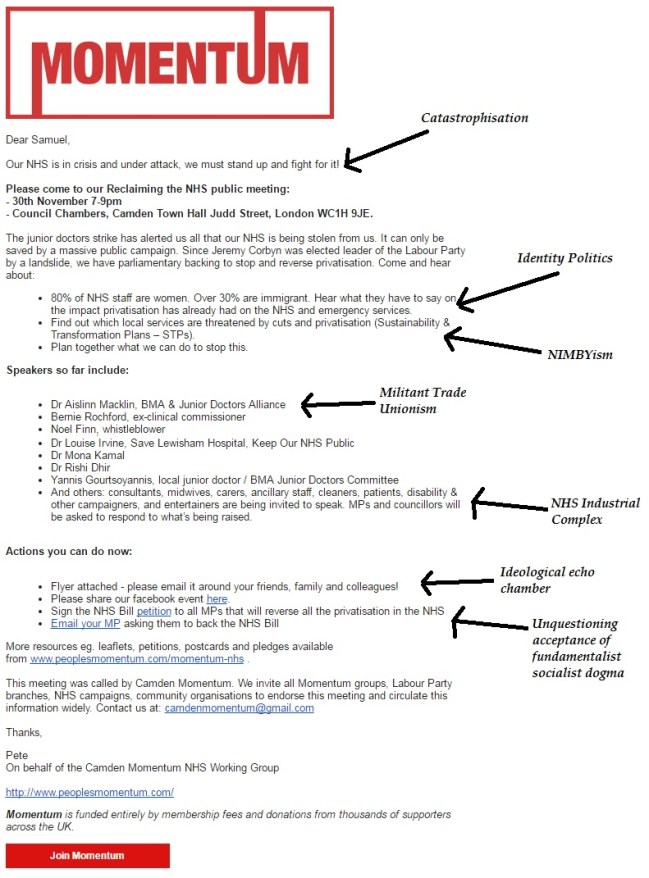
Catastrophisation, Identity Politics, NIMBYism, Militant Trade Unionism, the NHS Industrial Complex, Ideological Echo Chambers and Socialist Fundamentalism – the Seven Deadly Sins of Britain’s NHS-worshipping Taliban

This charming missive from the Camden Momentum NHS Working Group pinged its way into my mailbox this afternoon, and in an idle moment I thought I would point out all of the things that are wrong with it, and which actively undermine the vital cause of healthcare reform and thwart necessary moves to improve healthcare outcomes for ordinary Britons, all for the sake of rigid adherence to failed socialist dogma.

The email reads in part:

Our NHS is in crisis and under attack, we must stand up and fight for it!

Please come to our Reclaiming the NHS public meeting:
– 30th November 7-9pm
– Council Chambers, Camden Town Hall Judd Street, London WC1H 9JE.

The junior doctors strike has alerted us all that our NHS is being stolen from us. It can only be saved by a massive public campaign. Since Jeremy Corbyn was elected leader of the Labour Party by a landslide, we have parliamentary backing to stop and reverse privatisation. Come and hear about:

  • 80% of NHS staff are women. Over 30% are immigrant. Hear what they have to say on the impact privatisation has already had on the NHS and emergency services.
  • Find out which local services are threatened by cuts and privatisation (Sustainability & Transformation Plans – STPs).
  • Plan together what we can do to stop this.

The Seven Deadly Sins of Momentum and assorted other NHS-worshippers that I have identified are as follows:

1. Catastrophisation. Perpetually suggesting that the NHS is on the brink of destruction. Leftists have been making these breathless allegations during Tory administrations going back to the 1950s, including some long spells of Conservative rule, and yet miraculously the NHS survives – and with it, our unthinking devotion to government-provided healthcare. The hysterical alarmism card is really starting to get quite tiresome at this point. The NHS is far more likely to bury all of us (after quite possibly hastening us toward an early demise) than we are to bury the NHS.

2. Identity Politics. There is always time for identity politics now. If NHS acolytes can find an ethnic, gender or sexuality angle to support their argument they will inevitably do so, because they know just how fatal an allegation of institutional racism or sexism can be.

3. NIMBYism. A monolithic, socialised government healthcare delivery organisation must ration and allocate resources across the country in the most efficient way possible if it is to stand a chance of functioning correctly. Yet at every opportunity, NHS worshippers protest reorganisations that would close small and failing departments in favour of building regional centres of excellence because despite living in the age of the car and the air ambulance, these people come out in hives if they are not within five minute’s walk an NHS building at all times.

4. Militant Trade Unionism. Leaked emails revealed months ago that the junior doctors’ strike was nothing more than a tawdry, grubby pay dispute, with BMA chiefs and key junior doctor agitators deliberately hoodwinking the public by pretending that it was a high-minded dispute about public safety or indeed the very future of the NHS. Of course, every grubby public sector strike in history has been defended on the grounds that participants are engaged in a selfless stand for public safety, and in 2016 we really should be capable of seeing through these left-wing political antics.

5. Supporting the NHS Industrial Complex. The UK’s National Health Service is the fifth biggest employer on the face of the Earth, employing nearly as many people as global fast food giant McDonald’s and many more than the Indian railways, all to service a country of just 65 million people. When nearly the entirety of Britain’s healthcare sector is nationalised, there is inevitably a vast ecosystem of suppliers, support businesses, lobbyists and vested interests with every incentive to maintain the status quo so that they can continue milking the system. But such is the reflexive, unquestioning love that many have for the NHS that we never really stop to consider whether it is run for our benefit, or for the benefit of those vested interests. Just as the military-industrial complex has been a very real phenomenon in the United States of America following World War 2, so the NHS-industrial complex is a real phenomenon in modern Britain. We should be less credulous and recognise this fact.

6. Ideological echo chamber. As the UK general election, Brexit and the election of Donald Trump as US president have shown, by living in an hermetically sealed ideological bubble in which people talk only to others of the same political viewpoint, consume only news sources which validate their existing biases and mistake social media “clicktivism” with real activism and change, leftists end up talking to themselves while ignoring the wider country. The NHS cultists can continue to share social media memes and infographics all they like, but they are only preserving the failing status quo and making it impossible for reformers to be heard.

7. Socialist fundamentalism. Nothing reveals the NHS cultists’ devotion to socialist ideology over and above actual healthcare outcomes more than their blind, hysterical insistence that all privatisation must be eliminated and every NHS service brought back in-house as a matter of ideological purity rather than clinical value. These people will only be happy when the government (through our tax pounds) funds and delivers every single aspect of healthcare, from support functions like laundry, catering, cleaning, construction, marketing, staffing and management through to the front-line clinical work. Never mind the fact that no other advanced country in the world successfully operates a healthcare system as completely nationalised as the one which they favour. Forget learning from best practice around the world, or (heaven forbid) trying something new and bold. No, NHS cultists insist that Britain is to be a socialist beacon to the world, and if you or I have to die because of substandard care in order to glorify their vision of socialised healthcare then so be it.

What do you think? Would you change any of these Seven Deadly Sins, or add any others?

Please share your thoughts in the comments.


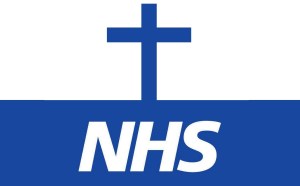
NHS Logo - Cross - National Religion - Worship - Idolatry

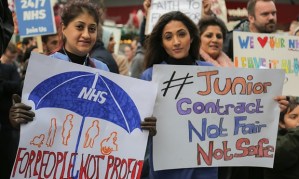
NHS Junior Doctors Contract Strike

Support Semi-Partisan Politics with a one-time or recurring donation:

Agree with this article? Violently disagree? Scroll down to leave a comment.

Follow Semi-Partisan Politics on TwitterFacebook and Medium.