Music For The Day

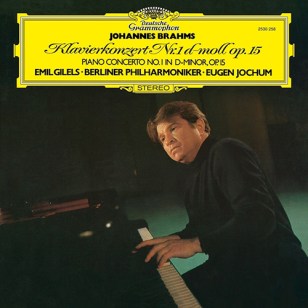
One of my favourite pieces today, the Brahms Piano Concerto No. 1. Here we have the second movement, in a recording by Emil Gilels with the Berlin Philharmonic Orchestra, conducted by Eugen Jochum.

Against some stiff competition, this remains my favourite recording of the work (though Radu Lupu gave it a run for its money in a live performance with the LSO / Colin Davis I attended at the Barbican back in 2002).

Listen to the piano’s final entrance, from 12’02” onwards, the delicate falling notes from 12’18” and the trills from 13′ leading to the hushed re-entry of the orchestra. Magical.


brahms-piano-concerto-no-1-emil-gilels-berlin-philharmonic-orchestra-eugen-jochum

Follow Semi-Partisan Politics on TwitterFacebook and Medium.

Donald Trump Victory Reaction: Jessica Valenti’s Insults and Self-Righteous Outrage Will Not Win Back Trump Voters

boy-shouting-microphone

Hating on Trump supporters may feel good, but it comes at a high price

Guardian columnist Jessica Valenti prefers to wrap the comforting blanket of moral outrage tight around her and hunker down for a long and dehumanising war of attrition against Donald Trump supporters rather than put the national interest and social cohesion of America over her own short-term desire for catharsis.

Following on from the Mike Pence / Hamilton the Musical saga, in a piece entitled “Vote shaming Trump supporters is fair. What they have done is shameful”, Valenti spits:

You don’t get to vote for a person who brags about sexual assault and expect that the women in your life will just shrug their shoulders. You don’t get to play the victim when people de-friend you on Facebook, as if being disliked for supporting a bigot is somehow worse than the suffering that marginalized people will endure under Trump. And you certainly do not get to enjoy a performance by people of color and those in the LGBT community without remark or protest when you enact policies and stoke hatred that put those very people’s lives in danger.

Being socially ostracized for supporting Trump is not an infringement of your rights, it’s a reasonable response by those of us who are disgusted, anxious, and afraid. I was recently accused by a writer of “vote shaming” – but there’s nothing wrong with being made to feel ashamed for doing something shameful.

Before concluding:

Whether it’s Pence at a play or your Trump-voting uncle at Thanksgiving, there are people right now who should be made to feel uncomfortable. In a time when there is so much to protest, so much work to do, the booing is necessary – shame on us if we ever stop.

Valenti has learned nothing – absolutely nothing from this election. She would rather stew in her own ideological bubble, wallow in her own supposed victimhood and demonise a vast swathe of the country for their decision, yet expect these people to listen to her advice when it comes to picking a candidate in 2020.

Or perhaps Valenti doesn’t actually care whether many of the Trump supporters actually vote for her favoured Democratic candidate. She would be more than happy for them to sit at home on election day 2020, let down by Trump and unmotivated by anyone else, their lives continuing to become steadily worse, their economic position and job security still being eaten away without any attempt at remedy from Washington. Perhaps Valenti is fine with all of that – I doubt that she personally knows or counts among her smug little friendship circle a single person like those she is busy demonising in her Guardian column.

Valenti tries to invoke the politics of victimhood to make Trump voters (too often portrayed as a homogeneous bloc by leftists who would otherwise recoil from stereotyping) seem like the cruel oppressors here. Yet she is blind to the possibility that people fortunate enough to live in New York City and act on stage in the biggest hit musical theatre show of the decade – and the Brooklyn-dwelling US Guardian columnists who cheer them on – might be the ones with privilege and airy disregard for those without power and influence in the modern world, rather than a a hateful white, male auto-assembly worker in Michigan or a call centre worker in Wisconsin.

Being the bigger person means having empathy for those who disagree with you, even those who spurn and insult you at times. It means having the humility to consider the possibility that while Donald Trump may indeed be a bad president-elect and a worse man, many of the people who voted for him did so not as an endorsement of his worst qualities but through lack of a less-flawed messenger for the ideas he advocated which (rightly or wrongly) resonated with people. It means having the courage to consider that maybe some of those ideas might actually have merit.

Jessica Valenti does not need to be the bigger person today. She can probably afford to indulge in her Trump tantrum – which unfairly targets millions of decent Americans along with the man himself – through inauguration day, and perhaps a little longer. And to be clear, this blog is not suggesting that Valenti has no right to be upset by the result, or to express her objections to Donald Trump, just that she should find a less bitter, more constructive and narrowly-targeted way to do so.

But if Valenti and her fellow left-wing anti-Trump cohort want to win back political power, it would help an awful lot if she, together with many of the other transparently privileged media commentators and celebrities in the country were to put a sock in the tirade, get out of Trump voters’ faces for a few minutes and actually considered trying the Good Cop approach to outreach and persuasion for a change.

But who am I kidding? She won’t do it. After all, it just feels so good to stamp one’s feet and shout at the Evil Bad Men (and self-hating women) who picked Donald Trump over Hillary Clinton. And the pursuit of that warm glow of self-righteous outrage blinds the Jessica Valentis of this world to the fact that with every new column, they only strengthen Trump’s support and set themselves back even further on the path to genuine political renewal.


donald-trump-presidential-election-victory-speech-2

Top Image: Pixabay

Support Semi-Partisan Politics with a one-time or recurring donation:

Agree with this article? Violently disagree? Scroll down to leave a comment.

Follow Semi-Partisan Politics on TwitterFacebook and Medium.

Meet Donald Trump, Special Snowflake

https://www.youtube.com/watch?v=5sIyZ4yaDfg

Donald Trump’s reputation as a brave warrior against political correctness is a big fat lie – he has always been happy to use free speech-busting, SJW tactics to attack and silence his critics

In a move which perfectly illustrates the yawning chasm between the “two Americas”, the cast of hit Broadway musical “Hamilton” saw fit to deliver a rather patronising end-of-show lecture on equality, diversity and tolerance to vice president-elect Mike Pence, who was sitting in the audience.

Telling the audience that there was “nothing to boo” (many of them seemed to disagree, and heartily booed Mike Pence when he first took his seat in the theatre and again when the cast addressed him as he was leaving), cast member Brandon Victor Dixon said:

Vice-president elect Pence, we welcome you and we truly thank you for joining us at Hamilton: An American Musical. We really do.

We, sir, are the diverse America who are alarmed and anxious that your new administration will not protect us, our planet, our children, our parents — or defend us and uphold our inalienable rights, sir.

But we truly hope that this show has inspired you to uphold our American values and work on behalf of all of us. All of us.

We truly thank you for sharing this show — this wonderful American story told by a diverse group of men, women of different colors, creeds, and orientations.

It is actually not a bad speech, and was certainly delivered with an eloquence and dignity which has been largely missing from both sides of this dismal presidential election.

One can take issue with the idea that people need to be constantly nurtured by successive presidential administrations and “protected” by government, but Donald Trump has said enough inflammatory and offensive things on his path to the White House that nobody can say that all of the trepidation is unjustified, or that some people are not in legitimate need of reassurance – either because of things that the president-elect himself has said, or by irresponsible scaremongering by those opposed to Donald Trump.

And yes, one could also rightly point out that it doesn’t say much for America’s social cohesion and inclusivity when the producer of Hamilton: An American Musical could authorise such a speech in the sure knowledge that the words addressed to Mike Pence would speak for every single one of the cast and crew (as they almost certainly did). How many Trump voters or conservatives in general work in musical theatre, or dare to admit their political preferences if they do?

As Brandon Victor Dixon boasted, there was indeed every kind of diversity standing on that stage at the Richard Rodgers Theatre in New York. Every kind of diversity apart from intellectual and political diversity.

But of more interest than the cast’s speech itself, though, is the response it provoked from president-elect Donald Trump, who now seems to have been given back full control of his Twitter account after anxious aides confiscated his devices in the closing days of the campaign to prevent any final day gaffes or Twitter wars.

Trump clearly did not take kindly to seeing his future vice president lectured on American values by a cast of musical theatre actors, and fired off this angry tweet:

And then this one, when the rage had still not subsided eight minutes later:

The theatre must always be a safe and special place? Really? I can think of at least one American president in history who had a decidedly unpleasant experience in a theatre, 151 years ago. And during his pivotal and historic presidency, Abraham Lincoln withstood insults and diatribes far worse than anything ever levelled at Donald Trump, and did so with infinitely more grace.

But mark what we are witnessing here: Donald Trump, slayer of political correctness, fighter of censorship, champion of free speech and supposed scourge of the Identity Politics Left, now using exactly the same language of grievance and victimhood to portray himself as a victim in a bid for the moral high ground.

Jonah Goldberg warned months ago that while Donald Trump is quite happy to profit from being seen as an anti-PC warrior, he is also ruthless in using PC tactics himself when he feels under attack:

This idea that Donald Trump is against political correctness is just a fiction. He’s against being held accountable to people to political correctness for himself but he is delighted to use the exact same bullying tropes of political correctness against other people. He’s done it against me when he tried to get me fired from National Review, saying I was insulting to women and that I have to apologise or resign or be fired because I was so insulting to women. What did I do that was so insulting to women? I said that Donald Trump is staying up late into the night like a teenage girl, tweeting. Which was A, accurate, and B, accurate.

During the primaries when Jeb Bush had a completely understandable and forgivable gaffe about women’s health issues, for weeks Donald Trump was talking about how horrible Jeb Bush was on women’s issues, playing these politically correct cards. He’s a nearest weapon to hand arguer in all things because he does have no philosophy, he has no intellectual grounding whatsoever.

And again here:

Nor is he the enemy of political correctness they make him out to be. Trump is perfectly happy to invoke and deploy PC arguments and standards against his opponents, he just wants to be immune from their sting himself.

And now, perhaps, people will start to realise that the man they just elected to the White House is not actually for free speech and against censorship and thin-skinned intolerance in principle, but only when those behaviours stand in his way or threaten to make him look foolish.

In this way and so many others (like the laughable idea that he is a conservative, and that his miraculous Damascene conversion from being a stereotypical wealthy New York liberal is in any way sincere), Donald Trump has conned his way to the White House. And as we have seen, his impulsive nature means that President Trump will inevitably react to events before his aides can restrain him or urge him to rise above minor slights and insults to portray a presidential calmness. Therefore, it will not be long until Trump is exposed as the thin-skinned, criticism averse, dissent silencing authoritarian that he is.

Inauguration Day itself will be one of the first big challenges – there are plans afoot for millions of protesters to descend on Washington D.C. and numerous other cities to voice their opposition to the supposed Trump agenda. Will Trump be seen tweeting responses and insults to the protesters from the presidential platform now being built on the steps of the Capitol, as he watches the inauguration festivities taking place? Will he demand that the National Mall be made a “safe space” free of political dissent as he and Melania take the limousine drive down to the inauguration site?

For those who have so far been willing to overlook them, Donald Trump’s grave character defects were always going to be exposed by events. And now it seems that we didn’t even have to wait until he placed his hand on the Bible and gave the oath before the portrayal of Trump as a happy warrior against censorship was exposed as a sham.

This probably will not bother Donald Trump’s most ardent supporters just now. While the president-elect demands safe spaces for himself, he at least continues to throw rhetorical bombs at all of the “right” people to keep his base happy. But one day that will change.

In a couple of years, when Donald Trump’s political agenda is quite possibly mired in gridlock and the Republican Party faces a difficult set of midterm elections, some of those Trump supporters, unhappy with the slow delivery of Trump’s promised land of milk and honey, may wish to register their anger at the president. And if they do so, the president will attack them too, just as he attacked the hated SJWs and college snowflakes and identity politics zealots during the campaign. But it will not feel so good when the president is demanding a safe space free from the criticism of his own one-time supporters.

Funny. I wonder how many Trump voters realised that they were electing the biggest and most precious snowflake of them all to the most powerful job in the world.


mike-pence-hamilton-an-american-musical-theatre-new-york-cast-speech-donald-trump-safe-space

Safe Space Notice - 2

Support Semi-Partisan Politics with a one-time or recurring donation:

Agree with this article? Violently disagree? Scroll down to leave a comment.

Follow Semi-Partisan Politics on TwitterFacebook and Medium.

Donald Trump Victory Reaction: Nicholas Kristof Compares Surviving President Trump To Suffering From Mental Illness

donald-trump-election-victory-protest-your-vote-was-a-hate-crime-banner

No, processing Donald Trump’s election victory is not like recovering from addiction

One of the more painful aspects of Donald Trump’s shock election victory, for me, has been having to watch journalists and commentators whom I have previously respected gradually lose all sense of perspective and become almost offensively hysterical in their overwrought catastrophisation of the election result.

This blog was also very much against a Trump victory, but much of the mainstream media commentary seems to have descended into a nationwide, mutually-reinforcing panic attack, like a group of young kids watching a scary movie at a sleepover and then seizing on every nighttime creak or rustle to convince one another that they are being haunted by the monster from the television.

Godwin’s Law is now being proved with such regularity – by supposedly serious journalists writing above the line, and not just the online commentators beneath it – that cataloguing individual instances of Donald Trump victory catastrophisation has become pointless.

And we are not just talking about the more sensationalist, web-based outlets here. One expects little better from the Huffington Post, Buzzfeed or the likes of Everyday Feminism. But now even the New York Times has fallen victim to the great national hysteria – star columnist Nicholas Kristof can presently be found comparing the forthcoming suffering of American leftists under the incoming Trump administration to the pain of people suffering from addiction and mental illness.

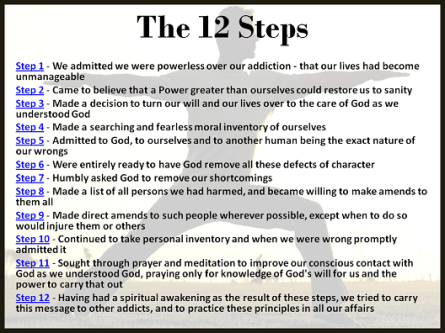
I’m not joking – Kristof has just published a column in which he outlines his own patented “twelve-step program” for coming to terms with a Donald Trump presidency.

Kristof begins:

Traumatized by the election results, many Americans are asking: What now? Here are steps that any of us can take that can make a difference at the margins. Onward!

Traumatised? Really? Isn’t that a word that might be better reserved for veterans who watched their friends killed in action or had their own limbs blown off by IEDs, or the victims of sexual assault and other violent crime? Do we really want to extend that term to encompass the tears and frustration of Hillary Clinton supporters as Donald Trump made a mockery of the opinion polls and won a four-year term as US president?

Some highlights from the Kristof 12-steps:

2. I WILL try to do small things in my own life, recognizing that they are inadequate but at least a start: I will sign up on the Council on American-Islamic Relations website, volunteering to fight Islamophobia. I’ll call a local mosque to offer support, or join an interfaith event. I will sign up for an “accompany my neighbor” list if one exists for my area, to be an escort for anyone who is now in fear.

Because in the blink of an eye and before Trump has even taken office, America has become such a seethingly dangerous place that minorities can no longer walk the streets unaccompanied? Has Nicholas Kristof given absolutely zero thought to how this alarmist, apocalyptic language might be contributing (or indeed be the largest contributor) to the fear which he describes?

3. I WILL avoid demonizing people who don’t agree with me about this election, recognizing that it’s as wrong to stereotype Trump supporters as anybody else. I will avoid Hitler metaphors, recognizing that they stop conversations and rarely persuade. I’ll remind myself that no side has a monopoly on truth and that many Trump supporters are good people who want the best for the country. The left already has gotten into trouble for condescending to working-class people, and insulting all Trump supporters as racists simply magnifies that problem.

Credit where it’s due. Kristof manages something close to magnanimity here, but his call for fellow progressives upset at the election to avoid demonising Donald Trump supporters would be all the more convincing if it didn’t come in the middle of a hysterical article comparing a Trump presidency to living with serious mental illness.

More:

5. I WILL support groups like the Southern Poverty Law Center that fight hate groups, and back the center’s petition calling on Donald Trump to disavow bigotry. Depending on my interests, I’ll support an immigration rights group, the A.C.L.U. or Planned Parenthood. And I’ll subscribe to a newspaper as one way of resisting efforts to squelch the news media or preside over a post-fact landscape — and also to encourage journalists to be watchdogs, not lap dogs.

That would be the same Southern Poverty Law Center which has utterly capitulated to ideological leftist Islamism-deniers, and which has the nerve to place tireless fighters against extremism such as Maajid Nawaz and Ayaan Hirsi Ali on a list of supposed anti-Muslim bigots, in a desperate bid to placate and appeal to goodness knows who.

The ACLU of course does some vital work defending civil liberties, but it too has started to crumble under pressure from the Cult of Social Justice and Identity Politics, and is now just as zealous about protecting non-existent positive “human rights” as defending genuine civil liberties and Constitutional protections. One can still make an argument for joining the ACLU in an attempt to change it from within (it is less far gone than, say, the UK’s Liberty) but somehow I don’t think that this is what Kristof has in mind.

More:

7. I WON’T let it slide if a friend makes degrading comments about a minority or women. Even if it’s over Thanksgiving dinner, I’ll push back and say something like: “Come on! You really think that?!” Similarly, I may not be able to prevent a sexual predator from reaching the White House, but at events I attend, I may be able to prevent a sexual predator from assaulting a drunken partygoer.

8. I WILL resist dwelling in an echo chamber. I will follow smart people on Twitter or Facebook with whom I disagree. I will also try to enlarge my social circle to include people with different views, recognizing that diversity is a wonderful thing — and that if I know only Clinton supporters, then I don’t have a clue about America.

Again, credit where credit is due. We should all have the courage to take a stand where we see overt racism or sexism occurring in front of us. Confronting these bad ideas and exposing them to the unforgiving light of public ridicule is one of the best means of defeating them. But Kristof has clearly attended one “rape culture” seminar too many, and would have us all patrol every party we attend with a pocket breathalyser, pouncing on amorous couples to ensure that no alcohol has been consumed and that the appropriate consent forms have been signed.

It is also laudable that Kristof encourages people to look beyond their own ideological echo chamber and acknowledge the legitimacy and fundamental decency of those Americans who hold sincere political differences. However, one gets the feeling that this “step” might be the stumbling block for many leftists, just as some recovering addicts pause when confronted with Steps 8 and 9 (making amends to those they have harmed). It does not come naturally to many people to expand their social circles to incorporate those with different viewpoints and values – indeed, many people assiduously prune their social circles to achieve the precise opposite in the quest for ideological homogeneity.

More:

11. I WILL take on sexism and misogyny, which in forms like domestic violence, sexual assault and sex trafficking affect women and girls across the country. Even today, Republicans and Democrats should be able to work together to get funding for women’s shelters or to prosecute pimps.

Even today? What is that supposed to mean? That however bad Donald Trump and Republicans may be, with the right outreach it may just still be possible to convince these heartless conservatives that sex slavery, rape and domestic violence are bad things? Well, I should hope so. This wouldn’t even need saying, were it not for the fact that many people who read Kristof’s column have been fed a steady diet of propaganda suggesting that Donald Trump is about to make his own unreconstructed attitude towards women compulsory for all men in the country.

And finally:

12. I WILL not lose hope. I will keep reminding myself that politics zigs and zags, and that I can do more than shout in the wind. I can fight for my values even between elections, and even at the micro level I can mitigate the damage to my neighbors and attempt to heal a social fabric that has been rent.

“A social fabric that has been rent” – a nicely passive way of describing the division in America, as though the Kristof-reading American Left had absolutely nothing to do with the rending of America’s social fabric.

Look: the offensive thing here is not necessarily the content of Kristof’s article or the sentiments he expresses. As I have acknowledged, many of the points are actually very laudable calls for all of us to be better, more engaged citizens – something that this blog heartily approves of, and has long called for. What is really offensive is the fact that Kristof felt it in any way appropriate to compare the disappointment of losing an election with the torment of addiction, that he packaged this collection of decent advice and condescension in the guise of a 12-step program.

Imagine for a moment that Nicholas Kristof had written an article encouraging disappointed Clinton supporters to view the next four years as a painful course of chemotherapy. Imagine the outrage which would rightly be prompted by comparing the pain of electoral defeat with the ravages of cancer. But when it comes to addiction and mental health, apparently everything is fair game. It is perfectly acceptable for wealthy, pampered Manhattanites to compare their suffering to that of people suffering from mental illness.

Or imagine that the positions were reversed and a right-wing columnist had compared the suffering of conservatives under a Clinton administration to people trying to recover from addiction. Again, that columnist would immediately be hauled over the coals by the perpetually outraged Left.

This is another one of those occasions where the decadent metro-left grants itself a waiver from the outrage and opprobrium it would rain down on anybody of more conservative persuasion who dared to do the same thing. It’s fine for Nicholas Kristof to talk about processing a Democratic electoral defeat as though it is in any way similar to working through mental health issues, because he does it for the Greater Good of the leftist cause, but heaven forfend that anybody else speak too casually about a “traditionally marginalised group”.

Do these people have any conception of how hysterical and arrogant they sound?

Go back to Step 3 and do it right this time. Because this is NOT how America will knit back together after the election. Nicholas Kristof should be heartily ashamed of himself.
 

twelve-12-steps-addiction

donald-trump-presidential-election-victory-speech

Support Semi-Partisan Politics with a one-time or recurring donation:

Agree with this article? Violently disagree? Scroll down to leave a comment.

Follow Semi-Partisan Politics on TwitterFacebook and Medium.

The Myth Of Post-Factual Politics

post-factual-post-truth-democracy

The term “post-truth politics” is starting to become an emotional comfort blanket for those people unwilling to examine the reason for legitimate electoral failure

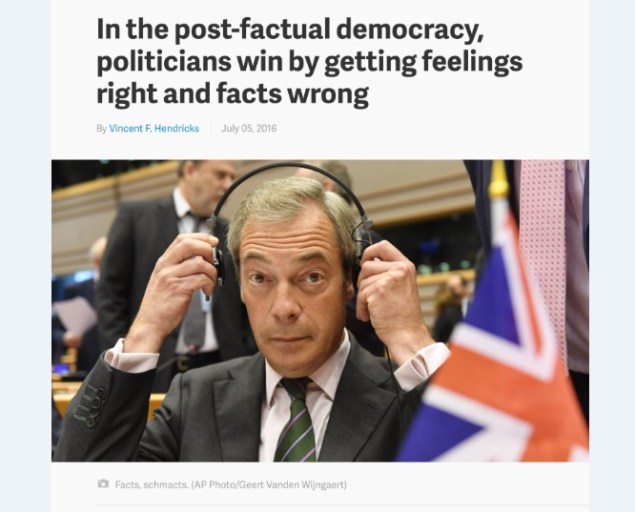
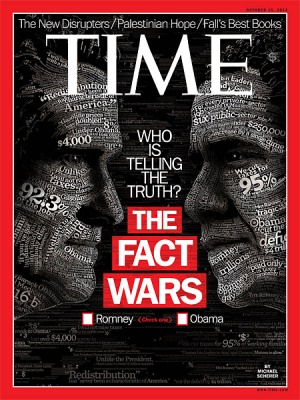
In these interesting times, a lot is being made of the idea that we live in a supposedly “post-truth” or “post-factual” society, where political debates take place and elections are swung not on the basis of evidence and rationality but rather on the basis of bluster and superstition.

Even those of us who supported either Brexit or the election of Donald Trump (this blog was strongly in favour of the former but against the latter) should acknowledge that there is a degree of truth to this criticism of the modern media landscape. As this Buzzfeed article makes clear, when there is a whole industry comprised of people producing inflammatory, fake pro-Trump news articles to earn ad revenue from the clicks of credulous partisans eager to have their existing biases confirmed, something is clearly awry.

But it is also true that dismissing electoral losses as the result of dumb people being duped in a lamentably post-factual world – just as some Trump supporters prepared for defeat by insisting that losing to Hillary Clinton could only be the result of a shadowy conspiracy – is an emotional comfort blanket too easily seized by people who don’t want to do the hard work of understanding why their own ideas were rejected by the public.

I recently attended the debate marking the launch of the 2017 Orwell Prize in London, where the panel – including Polly Toynbee and the excellent Christopher Snowdon – debated the role of the media and of “experts” in the recent EU referendum. Snowdon gives an excellent summary of his own remarks here, and concluded his speech:

Lying may be more morally objectionable, but bullshit is more common and it is just as damaging to public understanding of the world we live in. My argument is not that we are living in a truthful age. On the contrary, there is bullshit everywhere but deliberate political lies make up a very small portion of it – and that portion is not growing.

As long as people have an appetite for having their biases confirmed, newspapers will continue printing bullshit. As long as people think they can get away with it, they’re going to mislead the public. I don’t think we live in the post-truth era because I don’t think there was ever an era of truth. We are still in the pre-truth era and probably always will be.

As the other panellists – Toynbee most forcefully, of course – lamented the way in which the Evil Murdoch Press had supposedly manipulated its uniquely gullible readership with lies and disinformation while Evil politicians like Michael Gove encouraged people to ignore the pro-Remain advice of self-described “experts”, thus causing Brexit, I felt the need to take a stand. So at the appropriate time I seized the microphone and pointed out that wheeling out expert after expert to repeat the establishment line that Brexit would ruin the British economy (as though none of these experts didn’t let their personal biases and preferences colour their opinions) made all other aspects of the decision secondary considerations.

Sky News and the BBC had an endless parade of self-described experts talking about the theoretical economic consequences of Brexit, yet hardly any time was given to experts on governance, democracy, history or constitutional matters. At some point a decision was made that this debate would be All About Economics, and nothing else. One can dispute the dismal predictions of the Remain campaign’s economic “experts” – this blog certainly did – but at least we discussed economics. There was barely a proper discussion about democracy or the constitutional implications of staying or leaving the EU.

This was unfortunately taken by the debate’s moderator to mean that “feelings matter too”, which is not what I was saying at all. My point was that qualitative facts are every bit as important as quantitative ones, and often even more so. I would have expected more sympathy for my viewpoint – among the trendy-lefty, pro-Corbyn crowd at the event were countless people who clearly spend much of their time railing against free markets and capitalism, yet who seem to unquestioningly believe that the slightest potential threat to future GDP growth would make seceding from the European Union in pursuit of democratic renewal a calamitous idea.

When it comes to British membership of the EU, the Remain campaign’s Project Fear spoke only about numbers (and skewed ones at that), with only the occasional bit of fluff about “friendship ‘n cooperation” thrown in as a rhetorical garnish. My point was that in voting for Brexit, it is not that the British people disregarded the numeric facts entirely, but rather that they cared more about other, qualitative facts. Facts to which the Remain campaign never sought to acknowledge, let alone tackle.

The facts vs emotion reduction which met my contribution to the Orwell debate and which now colours nearly all of the media coverage of our supposedly “post-truth society” is therefore a bit too simplistic. There are quantitative facts but there are also qualitative facts – truths which are not based on emotion or hunch or prejudice, but which nonetheless cannot be added up in an Excel spreadsheet, slapped on an infographic and shared on social media.

I voted for Brexit because I believe that the EU actively harms and undermines the democracies of its member states, by deliberate design. I marshalled many facts to back up this position during the campaign – from primary and secondary historical sources, the stated positions of current EU leaders and various other proofs. Just because they are not quantifiable and I could not declare (for example) that leaving the EU will make Britain 11.2% more democratic and give the people 8.4% more control over the decision makers does not make the facts on which I argued my case untrue. And reducing those qualitative facts about democratic control, accountability and the known history and trajectory of the EU as mere “emotion” unfairly diminishes those facts.

When Brexiteers present quotes from EU “founding fathers” speaking of their vision for a federal Europe and tie them to quotes and draft bills from contemporary EU politicians pushing towards the same goals, these are facts. They are not quantifiable, but they are solid facts, much more than mere emotion. And they deserved to be considered and engaged with, yet by and large they were not during the campaign.

Modern politics has become excessively numbers driven. But when the Overton Window is so narrow, the range of policy options so constrained and politics largely reduced to the technocratic management of our public services then that probably becomes inevitable. And we must counter this trend by giving more of a focus to narratives and general principles again. That will lead to greater political engagement.

At present there is far too much self-satisfied criticism of “post-factual politics” in which defeated pro-EU supporters express alarm that people supposedly ignored the only facts available to them and made irrational decisions against their own self interest, and this is not so. There were other, unquantifiable facts which moved people to vote for Brexit. And these pivotal criteria deserve to be acknowledged as legitimate facts, not dismissed as mere emotions.

It is easy and comforting to believe that one’s own side thinks and acts according to reason, logic and evidence while one’s opponents are moved by base emotion, superstition or prejudice. But the divide is very rarely so clear.

And if the “post-truth politics” crowd do not soon realise this and practice some humility, that emotional comfort blanket could all too quickly become a funeral shroud when they next face the electorate.


time-magazine-the-fact-wars

Support Semi-Partisan Politics with a one-time or recurring donation:

Agree with this article? Violently disagree? Scroll down to leave a comment.

Follow Semi-Partisan Politics on TwitterFacebook and Medium.