From The Annals of Bad Lawmaking

Sometimes they can’t help themselves. Politicians latch on to a word or a concept that is (often rightly) repugnant to almost everyone, and then, with great fanfare, roll out a new law supposedly desired to prevent said thing, or at least to impose tougher penalties on those people who do the Bad Thing.
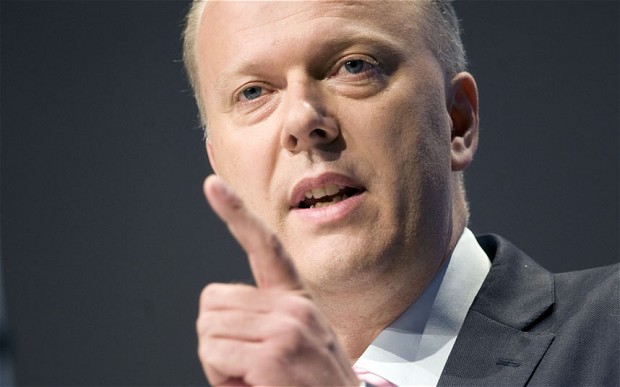
He's had another idea.
He’s had another idea.

The Bad Thing in this case is training to be a terrorist (or undertaking “terrorism training” as the Guardian reports), the penalty for which is due to increase from a current maximum sentence of 14 years to a life sentence under the new proposals.

The Telegraph, who broke the story, note:

The maximum sentence for a range of terrorist offences, including weapons training, will be increased, under plans being drawn up by security officials.

Current laws allow such offenders to be jailed for 14 years. The new regime will allow judges to impose life terms.

Significantly, that would also mean extremists would be subject to additional monitoring when they are eventually released.

And as with most tinkerings to existing laws in Britain, this one is so riddled with generalisations, non sequiturs and loopholes that there is more daylight than content in the proposals. As we have also come to expect, we see the additional empowering of the police and security services to monitor and meddle in a person’s life for evermore, long after they have completed their punishment and served their time. Here are a few of the more obvious flaws, off the top of my head:

1. In the marginal case, how do you tell the difference between someone who has gone to another country and undertaken weapons training of some kind with no real intent to cause carnage back home in Britain or elsewhere, and one who has attended a bona fide “terrorism training camp”? The last time I checked, there was no formal accreditation of terrorist training institutions against which MI6 can cross-check, or formal evidence of graduation given to successful students. Certainly, we can all picture in our minds the images of masked men with guns and suicide vests running through obstacle courses, but the reality is probably somewhat less clear-cut. Who will be the final arbiter of these too-close-to-call decisions?

2. How will anyone accused of this crime ever receive a fair trial? If it is alleged by the prosecution that they have attended a terrorist training camp, it is highly likely that the evidence required to convict them will be of a secret nature, which if made public would jeopardise the foreign intelligence that Britain is collecting. Scenarios such as these tend to lead to secret trials without juries, where the life and liberty of the accused is decided by a solitary judge behind closed doors, with no public scrutiny.

3. Someone who has acquired skills which could – and only could – be used to harm the general population has yet to really commit any offence against British society or soil. Yes, the fact that a person has gone to a “dangerous” country and spent time in the company of other people holding “extremist” views may greatly increase the probability that they plan to turn knowledge into action (and so, perhaps, warrant greater monitoring of their actions by the security services), but until they actually make concrete plans to do so, arresting and imprisoning them for any length of time sits far too squarely in the category of punishing thought-crime for my liking.

4. It is entirely possible (as has been proven multiple times) to inflict massive damage and loss of life in a terrorist act without ever actually having left Britain to receive training elsewhere. It may seem remarkable that British laws and public policy are still being drafted in 2014 which do not account for the reality of the internet, but here we have just such a case. What is the real difference between a person downloading instructions to make and place a bomb from a source on the internet, and going to another country to receive that same tuition face-to-face? Why does the government seek to punish one more than the other? And how do we distinguish between someone who idly (or accidentally) downloads instructions for making a bomb with no malicious intent, and one who intends to put the knowledge to immediate use?

Why, indeed, does the government seek to do any of the things that these new measures will allow it to do?

Very little of it truly has to do with improving public safety. That is done (rightly or wrongly) mostly behind the scenes, in terms of adequately funding the security services and giving them sufficient remit to do their work. What this is about is not protecting the public, but rather being seen to be doing something. Chris Grayling, the Justice Secretary, is able to look busy and important, and taking firm action at just the time when many of what the Telegraph describes as “radicals jailed after the September 11, 2001, attacks” are approaching the end of their custodial sentences.

That is not to dismiss the real problem facing the government, which the Telegraph rightly lays out:

Security sources estimate that more than 100 British nationals have fought in Syria, backing rebel groups linked to al-Qaeda.

British nationals are also said to be involved in extremist activity in countries including Somalia and Yemen.

These are thorny problems with grave implications if they are not properly met. And in some cases, changes to the laws and sentencing guidelines may well be valid. But the current package being put forward by the government, as outlined so far in the press, appears to be fundamentally unserious. Why is the focus on criminalising the acquisition of the knowledge of terrorism rather than its practice, as manifested either by helping terrorist groups in other countries or conspiring to commit terrorism at home in Britain? These offences would not only be much easier to recognise and prove in court, but also take us away from the path toward thought-crime down which legislation such as that proposed inevitably leads us.

Last-minute lawmaking on the fly. Draconian new powers that are justified using unassailably valid examples, but which could equally be applied to much less clear-cut cases. Government desperate to be seen to be taking bold, decisive action rather than calmly contemplating the best course of action.

This is becoming very familiar.

On Loyalty and Anzac Biscuits

The British coalition government continues to act in an entirely clueless and dysfunctional way when it comes to planning the events to commemorate the upcoming centenary of the First World War. In addition to beginning a pointless and unnecessary argument about why the war was fought, the government has seemingly now decided that it will be beneficial to snub Australia and New Zealand by minimising the contribution that they made to the Allied war effort.

Apparently Australia and New Zealand don't count.
Apparently Australia and New Zealand don’t count.

The Telegraph reports:

The latest row follows a briefing to Australian journalists by Whitehall officials that no events were being planned to mark their country’s contribution and that internal discussions on the plans do not mention Australia or New Zealand. The briefing disclosed, instead, that officials were concentrating on promoting the role played by so-called New Commonwealth countries, those which achieved independence since 1945.

The countries singled out for promotion were India, Bangladesh and Nigeria, along with other west African nations. The reports state that this is to promote “community cohesion” in the UK.

This is unacceptable.

It’s one thing to foolishly overlook an arcane point when conducting international diplomacy, but that is not what we are talking about here. It seems instead that the government has taken a deliberate decision to snub two of our closest allies and Commonwealth partners, and then to brief the precise details of this snubbing to the press. A greater diplomatic faux-pas and insult to our friends can scarcely be imagined.

16,000 Australians and 18,000 New Zealanders gave their lives in support of the Allied cause in World War 1. This, to me, is not a contribution of blood and treasure that can justifiably be overlooked for any reason.

Let us compare this brazen ingratitude and ignorance on the part of some within the British government with the words of the Australian Minister for Defence at the outbreak of war in 1914:

“Australia will recognise that she is not merely a fair-weather partner of the Empire, but a competent member in all circumstances.”

And the Leader of the Opposition, Andrew Fisher:

“Should the worst happen, after everything has been done that honour will permit, Australians will stand beside the mother country to help defend her to our last man and our last shilling.”

And, most poignantly, the Treasurer, Sir John Forest:

“If Britain goes to her Armageddon, we will go with her. Our fate and hers, for good or ill, are as woven threads.”

If it is the honest view of the British government that social cohesion in our country is so bad that we now need to snub some of our closest friends and allies in order to curry favour with any particular group for the ominous and opaque purpose of “community cohesion” then we should all be a lot more worried about the true state of our nation.

As a long-time lover of Anzac biscuits and someone who cares deeply about Britain’s international relations and wants to see Britain nurture its relationships with proven and time-tested allies, especially those with whom we share such obvious historical and cultural bonds, I hope that a swift apology and a 180 degree U-turn on this foolish and gravely insulting stance to be quickly and publicly forthcoming from the government.

Given the government’s recent ability to shoot itself in the foot, however, I hold out limited hope.

On Booty Calls and Morning Croissants

The BBC reports that French president Francois Hollande has been accused by a French magazine of having an affair with a 41-year-old actress, Julie Gayet. The article reveals:

The magazine’s print edition came out on Friday and shows pictures it claims support the rumours that the 59-year-old president routinely spends the night with Ms Gayet at a flat not far from the Elysee Palace.

The pictures show the pair arriving separately. Mr Hollande, wearing a helmet, is on a motorbike driven by a chauffeur.

The magazine claims the president’s bodyguard arrives the following morning to deliver croissants.

I like the detail of the morning croissants. Even if one is sneaking out of the Elysee Palace late at night to get some action, one still needs a decent continental breakfast so as to appear statesmanlike again the next morning.

Just as with the fictional American President Grant in the US drama “Scandal”, skulking around the capital city in the dark with limited protection, exposing oneself (and the  secure, uninterupted governance of one’s nation) to any risk of kidnapping, physical harm, blackmailing or worse in the pursuit of a booty call, is probably not behaviour that voters would wish to see in a serving head of state. Transgressions which take place before taking office, honestly explained, atoned for and forgiven by the electorate, are one thing. Actively committing further such acts whilst in office is another matter entirely.

The BBC article reports that though Hollande is making noises about potential legal action against the magazine Closer, he does not deny the specific allegations of the affair.

Although, if ever proven true, this would represent a severe lapse in acceptable personal standards of behaviour, and of presidential decorum on the part of Hollande, the solitary refreshing fact (if that term may be used) in the sordid allegation is that Francois Hollande does not continually preach to his people about the sanctity of traditional marriage in the way that some politicians in the UK, but particularly America, insist on doing.

In contrast to the likes of Newt Gingrich or Rudy Giuliani, both adulterers with serial failed marriages to their names, the French president does not devote his every waking hour to fretting about the potential impact of allowing gay people to wed on the institution of holy matrimony.

And for not adding his voice to the hypocritical cacophony of self-righteous moral preaching, we still owe Francois Hollande our thanks.

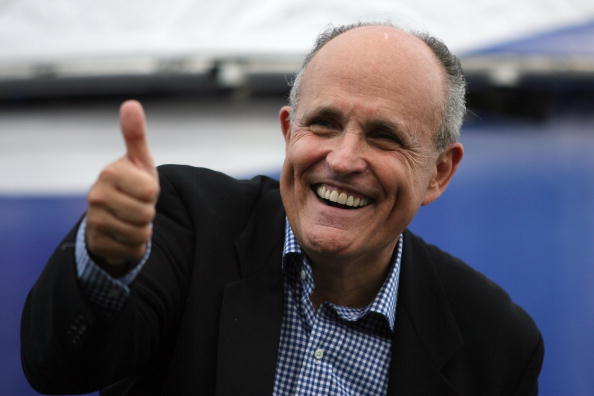
You don't want to know why Rudy Giuliani is smiling.
You don’t want to know why Rudy Giuliani is smiling.


Lost In Translation

The Daily Mail reports the confounding story that a baby boy was rushed to hospital in north Wales because his parents were unable to fill his prescription – because the prescription was written in Welsh only.

A sick baby was rushed to hospital after a supermarket pharmacy refused to hand his medication to his father because part of the prescription had been written in Welsh.

Aled Mann, 34, took the prescription from the family doctors to his local Morrisons pharmacy counter after his one-year-old son Harley developed a chest infection.

But staff at the supermarket in Bangor, north Wales, refused to give him the steroid tablets because they could not read the note as not all of it was in English.

The father was ultimately able to return to the GP surgery and get a new prescription printed in English and have the prescription filled, but the baby’s condition worsened overnight requiring hospitalisation, leading to speculation and conjecture that the delay (and hence the pharmacy’s unwillingness to fill a prescription that it could not adequately verify) was to blame.

The incident seems to have caused something of an uproar, but not in quite the way that I imagined. For some reason I had expected the consternation to centre on the fact that GPs in Wales are able to issue prescriptions in a language not spoken by the majority of the people in that country (and therefore inevitably more difficult for patients to redeem), but instead the ire is trained more squarely at the retailer, Morrisons, for not making sufficient effort to cater to the needs of the customer.

I love Wales and admire its people, history and natural beauty very much, so I am going to tread carefully here. I’m also a fervent unionist, as any frequent reader of this blog will know, and believe that Wales should remain an integral part of the United Kingdom – but again this is not relevant to the point I am about to make.

To me, this is an issue of public safety. Surely, in a country where everyone speaks English and only a relatively small minority speak or otherwise use the Welsh language, it is in the interests of the patient, and of common sense, for the prescription to be printed in the language which is common to everyone.

The undercurrent of sentiment surrounding the story seems to be that the Welsh parents were in some way discriminated against, and that their baby’s life was endangered, due to the fact that they receive their family healthcare services in the Welsh language. We can thus extrapolate and infer that the correct thing to have done, in the eyes of those who are upset, would have been for Morrisons to employ either only bilingual speakers in their stores, or to ensure that there is at least one bilingual speaker on hand in the pharmacy department at all times. Indeed, the Mail records Arfon Wyn, a local councillor, saying as much on the record:

‘This is totally diabolical. It is the trend of these large supermarkets not to employ bilingual local people and so such terrible events as this can take place.’

But would the real discrimination not arise if employers felt compelled, or were legally compelled, to hire only bilingual speakers at the expense of English-only speakers? Indeed, given that only 15% of Welsh citizens are able to read, write and speak the language with fluency, could it not also precipitate an enormous skills gap and labour shortage?

Here is an image of the prescription in question:

welshprescription

As readers can clearly see, the instructions on the prescription are printed bilingually, in both English and in Welsh. I understand that this is in accordance with the Welsh Language (Wales) Measure 2011, which also created the role of Welsh Language Commissioner who is entrusted with ensuring that Welsh is not treated less favourably than the English language in Wales, and that people can live their day-to-day lives through the medium of Welsh if they choose to do so. The patient-specific parts of the prescription, however, contain crucial information which is in Welsh only.

I would suggest that Dr. Ieuan Parry’s office is not serving its patients very well by providing prescriptions that run the risk of not being understood. Legally, they are completely in the right – indeed, Welsh is technically the only language accorded anything like official status in the whole of the UK – but practically and morally, I am not so sure.

I understand that the maintenance and preservation of the Welsh language is a very dearly held and important issue for some people. But we are talking about a medical prescription for a baby boy being printed with the key parts only in Welsh, a language with which 73% of the people have no familiarity (according to the 2011 census). Some may choose to be outraged at Morrisons for falling short, but I choose to feel more disappointment in the fact that patient safety was effectively jeopardised in pursuit of what seems to be a transparently cultural or political end.

If the goal is the preservation and extension of the Welsh language, Welsh-only prescriptions seems a lousy way of advancing that dream.

Or am I missing something?

Britannia Contra Mundum

Not necessarily the end of the world.


Britain, according to Mary Riddell writing in The Telegraph, is the friendless pariah of Europe.

Riddell informs us that our economy is in the doldrums, our foreign policy is a shambles and we are actively alienating the very people who we need to come riding to our rescue:

…the issue of Britain’s global influence should preoccupy every parliamentarian.

Our current position is not hard to plot. Hiding under a duvet of doubt and debt, Britain – so recently the buccaneer of the world – has become insular to the point of agoraphobia. Recession and hardship at home have made the UK a nation of political navel-gazers. The cost-of-dying debate, over whether we could possibly justify the cost of our wars, has been superseded by a cost-of-living crisis: gas bills have supplanted gas masks.

According to this defeatist and self-flagellating line of argument, it is Britain, the weak country, which needs to curry favour with her European neighbours, and not the other way around. Apparently it has gotten so bad that as a nation we are now suffering from some kind of identity crisis:

But inward-looking politics are bolstering, rather than reducing, Britain’s identity crisis. With power ebbing away abroad and the spectre of Scottish independence at home, Britons are wondering: who are we?

This comes as news to me, and probably to many other people who feel comfortable in our national identity and don’t feel the need to vex themselves with recurring thoughts of national inferiority or separatism.

I seem to remember urging against this type of declinist, pessimistic, self-defeating talk only very recently in “Why Britannia Rules”, but my small backwater blog has clearly made no impact on the mood of feeling in the British commentariat. As I said then, when everyone was tearing their hair out and prophesying the end of Britain after Parliament voted against military action in Syria:

We are British. We are a great country. Our economy may still be in the toilet, and we may be governed at present by dilettantish non-entities in the mode of David Cameron, George Osborne and Nick Clegg, but these things shall pass. And when they do, Britain will still be a great country.

What I wrote was true then, and it is true now. But this is where Mary Riddell really loses the plot:

With dangers abroad and our economic destiny far from assured, it is imperative that Britain should re-establish its identity and global niche. The irony is that our best hope is the one that politicians hesitate to flaunt, and that many citizens revile. The EU remains the largest single economy in the world, has the second biggest defence budget after the US and boasts the diplomatic muscle recently used by its (previously maligned) foreign policy chief, Baroness Ashton, in helping to secure the recent Iranian nuclear pact.

In what precise way has Britain lost her identity? Did this happen while I was sleeping?

The EU may indeed remain the largest economy in the world, but it is not the “largest single economy”, as Riddell and anyone with the slightest knowledge of current divergent conditions in Greece and Germany knows all too well. Whether we swoon with delight over our membership of the European Union and ever-closer union with our continental neighbours or chafe at the smothering bureaucracy of the whole project and yearn to leave, we still trade with the EU. And contrary to the shrieks of some scaremongers, even if Britain were to leave the EU, this trade would cheerfully continue by necessity and mutual benefit. Some unscrupulous commentators phrase their warnings in such a way as to leave the impression that all of Britain’s trade with Europe would cease and disappear in a puff of smoke if we were to leave the EU, a ludicrous and obviously nonsensical notion.

And are we really going to start talking national defence as a reason to lash ourselves ever tighter to the mast of the European Union? The EU may have the second biggest defence budget after the US, but this is a meaningless fact when you consider the obvious fact that the member states of the EU do not act with one common military purpose. Indeed, of the EU member states it is really only Britain and France that possess any capability to project significant force without airlift or blue water navy support from the United States. Furthermore, Britain’s military actions in recent years have primarily taken place either through NATO or in concert with our chief ally, the United States. It is hardly as though we would be putting any much-loved and time-tested military partnership with the Europeans at risk by disengaging from the EU, as no such partnership exists.

We are then supposed to believe that Britain is in danger of severing  herself from some great source of “diplomatic muscle” as a result of our ambivalence about Europe. But I could well point out that weighing against Riddell’s one example of EU foreign policy success (Baroness Ashton’s help in securing the recent Iranian nuclear pact) are the many times when other powers have looked at the incoherence or tense nature of European joint foreign policy and either laughed at it, rudely dismissed it or used it as an opportunity to divide and conquer.

Then comes the obligatory “but of course there are a few small issues that need ironing out” remark in reference to the EU’s many flaws, together with the standard plea to refrain from throwing the baby out with the bath water:

While no one doubts that reforms are needed, EU membership makes us an influential part of the largest global trading bloc. As Douglas Alexander, the shadow foreign secretary, and Ian Kearns write in their new book, Influencing Tomorrow, the EU is “not just an instrument for amplifying our power, but also for promoting peace and security and defending democracy and human rights”.

I can only despairingly repeat (as though to a brick wall) the fact that Britain, as one of the world’s few truly indispensable nations, would remain strong and secure whether or not we are an “influential part of the largest global trading bloc”. Indeed, I would further argue that we are not, have not been and are unlikely to become as influential as we should be within an EU structure which gives veto power to countries which are relative minnows or which have strongly divergent interests to Britain’s, and that by freeing ourselves from the yoke of so much European regulation and counterproductive harmonisation attempts we would have the potential to soar higher and achieve even more. But Mary Riddell seems too afraid of the world and too doubtful of Britain’s enormous advantages and assets to ever acknowledge this possibility.

None of this is to say that the right answer is for Britain to leave the European Union under any and all circumstances. It is just to point out that there needn’t be such a bone-chilling fear of secession and the idea of Britain standing on her own two feet like so many other sovereign nations manage to do. It is partly this fear that colours and undermines our relationship with the EU, and makes the current raw deal that we get from our membership a self-fulfilling prophecy. If our European partners believe that we are desperate to remain a part of the club at any price, the price that they are certain to demand and extract from us in each and every nation will be that much higher.

So rather than running into the arms of the EU in a scrabble to find identity and protection, as Riddell advocates in her less-than-stirring peroration, we should actually embrace some of the insularity (if we must call it that) that so many of the commentariat class seem to scorn, at least in terms of our approach to the European Union.

In order to prosper, Britain must look inwards at ways to release our own inherent national dynamism and competitiveness, rather than outwards for reassurance and protection in a world which will surely offer neither.